Pharaoh Merneptah: The Warrior Successor and the Secret of the Israel Stele

Pharaoh Merneptah was the 13th son and successor of Ramesses II. His ten-year reign is famous for the Israel Stele, the first historical mention of Israel, and his decisive victory over a coalition of Libyans and Sea Peoples. His tomb, KV8, is one of the largest in the Valley of the Kings, showcasing the monumental scale of late 19th Dynasty architecture. As a ruler who ascended the throne in his 60s, he successfully maintained Egypt's imperial integrity during a period of transition and global unrest.

Ascending a throne after a legend is never an easy task. For Merneptah, the fourth pharaoh of the 19th Dynasty, that legend was his own father: Ramesses II, arguably the most powerful ruler in Egyptian history. Because Ramesses II lived into his 90s, he outlived his first twelve sons. Consequently, Merneptah did not ascend the throne until he reached his late 60s.

Despite his advanced age and the “shadow” his father’s 66-year reign cast, Merneptah proved himself an energetic and decisive leader. He defined his ten-year reign (c. 1213–1203 BC) through massive military victories and architectural ambition. Today, he remains most famous for a single block of black granite known as the Israel Stele, which contains the earliest known reference to “Israel” in world history.

Beyond this, his tomb in the Valley of the Kings (KV8) stands as a testament to the sheer scale of late New Kingdom engineering. This guide delves into the life of the “Elder King,” who held an empire together during a time of global upheaval, proving he acted as much more than just a placeholder for his famous father.
FUN

The Prince Who Waited: Early Life and Accession

The Prince Who Waited Early Life and Accession

Merneptah spent most of his life as a prince rather than a king. As the son of Queen Isetnofret I, he grew up during the golden age of the Ramesside period, witnessing the height of Egypt’s imperial power.

A Long Apprenticeship

For decades, Merneptah served as a high-ranking military commander. By Year 40 of his father’s reign, he held the title of Overseer of the Army. This military background proved vital when he eventually took the throne. When his elder brother, the famous prince-scholar Khaemwaset, died in Year 55, Merneptah finally became the official Crown Prince and Regent. For the last 12 years of his father’s life, Merneptah effectively ran the country, handling the day-to-day administration of the Egyptian empire while the older Ramesses II remained on the throne.

Moving the Capital

Upon his accession, Merneptah made a strategic shift in geography. While his father had focused heavily on the northern capital of Pi-Ramesses, Merneptah moved the administrative heart of the country back to Memphis. He built a grand palace adjacent to the Temple of Ptah, signaling his devotion to the god of craftsmen and his desire to reconnect with Egypt’s traditional religious and administrative roots.

FUN

Military Prowess: Defending the Borders

Military Prowess Defending the Borders

Merneptah did not allow his advanced age to hinder his military duties. In Year 5 of his reign, he faced a massive existential threat from a coalition of Libyans and the mysterious Sea Peoples.

The Libyan Invasion

The Libyan King Meryre led a coalition of Libu, Meshwesh, and Kehek groups, supported by Mediterranean “Sea Peoples” like the Shardana and Lycians. They attempted a full-scale invasion of the western Nile Delta, bringing their families and cattle, intending to settle permanently in Egyptian territory.

The Battle of Perire

Merneptah responded with overwhelming force. According to his inscriptions, the sun god Ra appeared to him in a dream, handing him a sword and telling him to “cast away thy fearful heart.” He mobilized the Egyptian chariot corps and infantry, meeting the invaders at the Battle of Perire.

  • The Tactics: Merneptah utilized superior Egyptian archery to thin the enemy ranks before a devastating chariot charge.
  • The Result: The battle lasted six hours. The Egyptians killed over 6,000 Libyans and captured thousands more. To document the victory, the Egyptian army collected the hands (and other body parts) of the fallen enemies to provide an accurate body count for the Pharaoh.

Pacifying Canaan

While the western threat was the most severe, Merneptah also conducted a campaign in the Levant. He quelled revolts in cities like Ashkelon, Gezer, and Yanoam. It was during this campaign that he encountered the group identified in his victory monument as “Israel,” solidifying his status as a warrior-king who successfully maintained the borders his father had established.

Alexander the Great: Travel the Path of a Pharaoh-King

Alexander the Great became Pharaoh in Egypt (332 BC). He founded Alexandria, a world capital,...
Related post
FUN

The Israel Stele: A Historical Landmark

The Israel Stele A Historical Landmark

In 1896, the renowned archaeologist Flinders Petrie discovered a massive black granite slab in Merneptah’s mortuary temple at Thebes. This monument, now famously known as the Israel Stele (or the Victory Stele of Merneptah), changed our understanding of ancient Levantine history forever.

The First Mention of Israel

The stele primarily celebrates Merneptah’s victory over the Libyans, but the final lines turn toward his campaigns in Canaan. One specific sentence stands out to historians and theologians alike: “Israel is laid waste, his seed is not.”

This represents the earliest extra-biblical reference to a group called “Israel.” Unlike the other conquered entities listed—such as Ashkelon or Gezer, which use the hieroglyphic symbol for a “city-state”—the scribe used the symbol for a “people” or an “ethnic group” for Israel. This suggests that during Merneptah’s reign, Israel existed as a nomadic or semi-nomadic group without a fixed capital city.

The Exodus Connection

Because of this inscription, many scholars identify Merneptah as the most likely candidate for the Pharaoh of the Exodus. If Israel was already a recognized group in Canaan by Year 5 of Merneptah’s reign, it places the biblical narrative within the late 19th Dynasty. While no direct Egyptian records confirm the plagues or the parting of the sea, the stele provides the firmest archaeological “anchor” for the presence of Israelites in the region during this era.

King Menkaure: Who Completed the Giza Necropolis

King Menkaure (also known as Mycerinus) was a pharaoh of Egypt's Fourth Dynasty who completed...
Related post
FUN

KV8: The Monumental Tomb of Merneptah

KV8 The Monumental Tomb of Merneptah

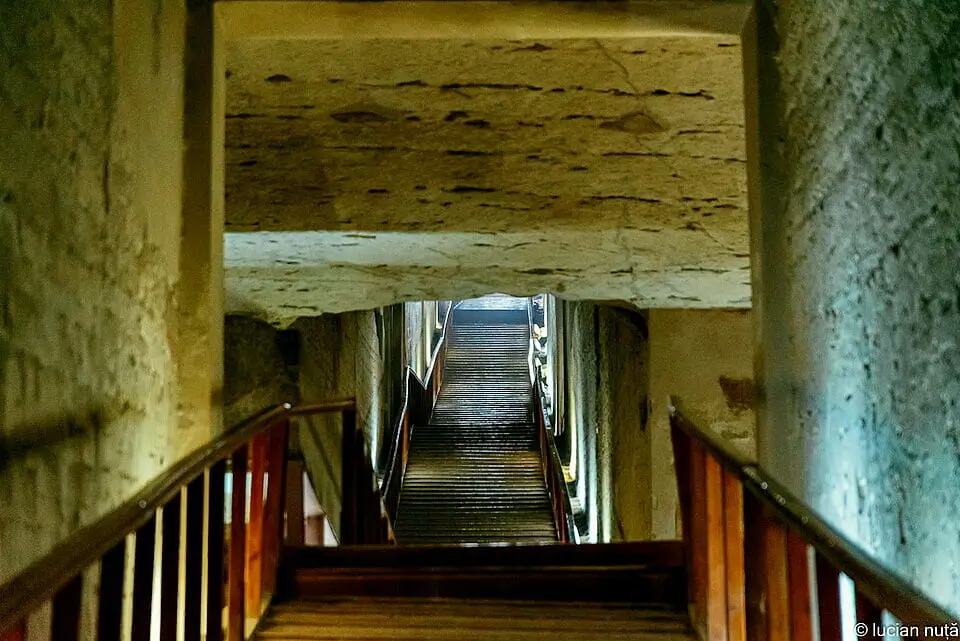
While his father built the small but beautiful KV7, Merneptah constructed one of the most imposing sepulchers in the Valley of the Kings: KV8.

Engineering on a Massive Scale

KV8 is the second-largest tomb in the valley, following only the massive complex built for the sons of Ramesses II (KV5). The tomb follows a straight-axis design, typical of the late New Kingdom, but its dimensions are staggering.

  • The Sarcophagus Problem: Merneptah’s red granite outer sarcophagus was so enormous that the workers could not fit it through the corridors. In a desperate move of ancient “renovation,” the builders had to hack away the stone door jambs of several gates just to slide the massive box into the burial chamber.
  • The Burial Chamber: The “House of Gold” (burial chamber) features high ceilings and eight massive pillars. Even after centuries of flooding, the astronomical decorations on the ceiling remain visible.

The Decorative Program

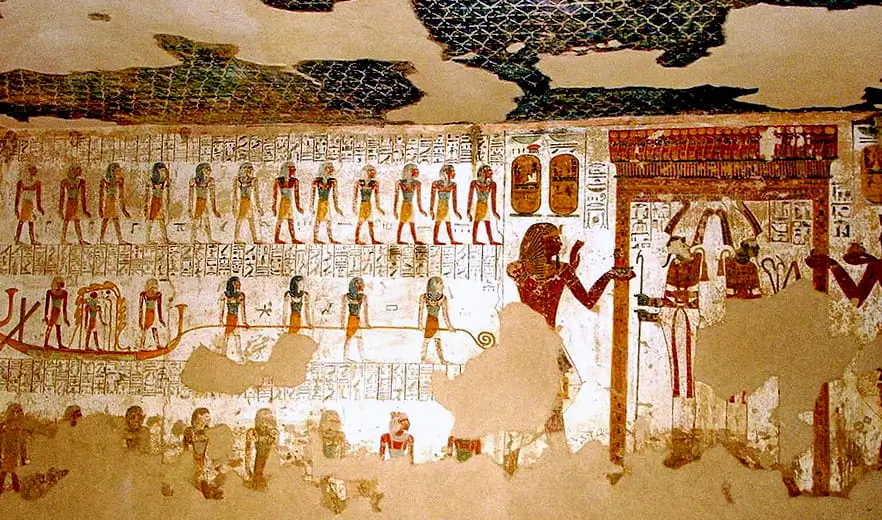
The walls of KV8 contain a complete set of Egyptian funerary texts, designed to guide the Pharaoh through the underworld:

  • The Litany of Re: Welcoming the sun god.
  • The Book of Gates and Book of Amduat: Describing the twelve hours of the night.
  • The Book of the Earth: A rarer text that focuses on the sun’s journey through the deepest parts of the world.

The Mortuary Temple: The Palace of Heritage

The Mortuary Temple The Palace of Heritage Merneptah

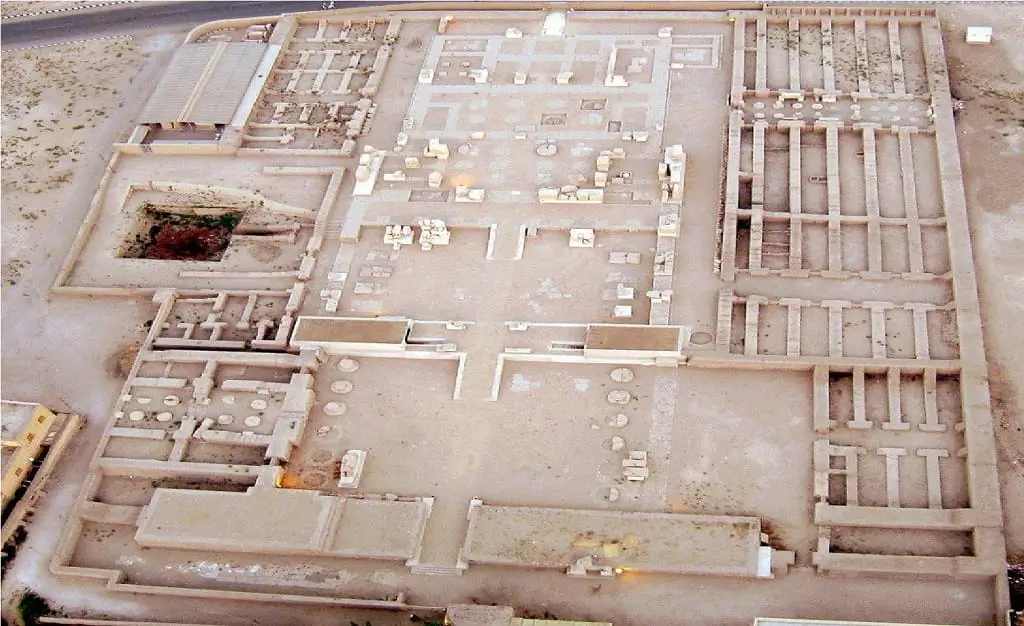
Merneptah built his mortuary temple—the place where his cult would be maintained after his death—on the West Bank of Thebes. However, his construction approach was one of “efficient recycling.”

Repurposing the Past

Merneptah built his temple directly behind the grand mortuary temple of Amenhotep III. By his reign, Amenhotep’s temple had suffered significant earthquake damage. Merneptah took advantage of this, using the fallen blocks and statues of his predecessor to build his own sanctuary. Modern archaeologists found that many of Merneptah’s walls are actually “sandwiches”—older, beautifully carved blocks from the 18th Dynasty hidden inside 19th Dynasty masonry.

The Swiss Restoration

Thanks to the work of the Swiss Institute for Architectural and Archaeological Research, the site is now an open-air museum. Visitors can see the foundations of the palace, the reconstructed sanctuary, and the very spot where the Israel Stele once stood.

Mentuhotep II: Egypt’s Unifier and Founder of a Golden Age

Discover Pharaoh Mentuhotep II, the warrior king who ended a century of civil war. He...
Related post
FUN

Art and Iconography in the Late 19th Dynasty

Art and Iconography in the Late 19th Dynasty - Merneptah

Merneptah’s reign marked a stylistic shift in Egyptian art. While the early 19th Dynasty under Seti I favored delicate, high-relief carvings, the later Ramesside period moved toward a more functional and monumental style.

  • The Transition of Style: Artists under Merneptah began using deeper sunk reliefs, which proved more durable against the elements and allowed for faster completion of massive projects.
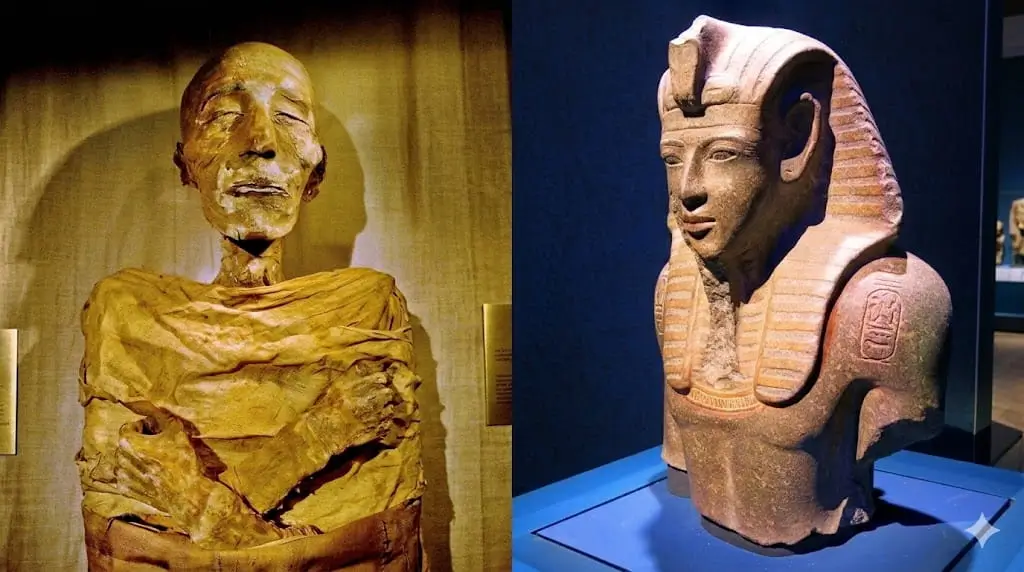
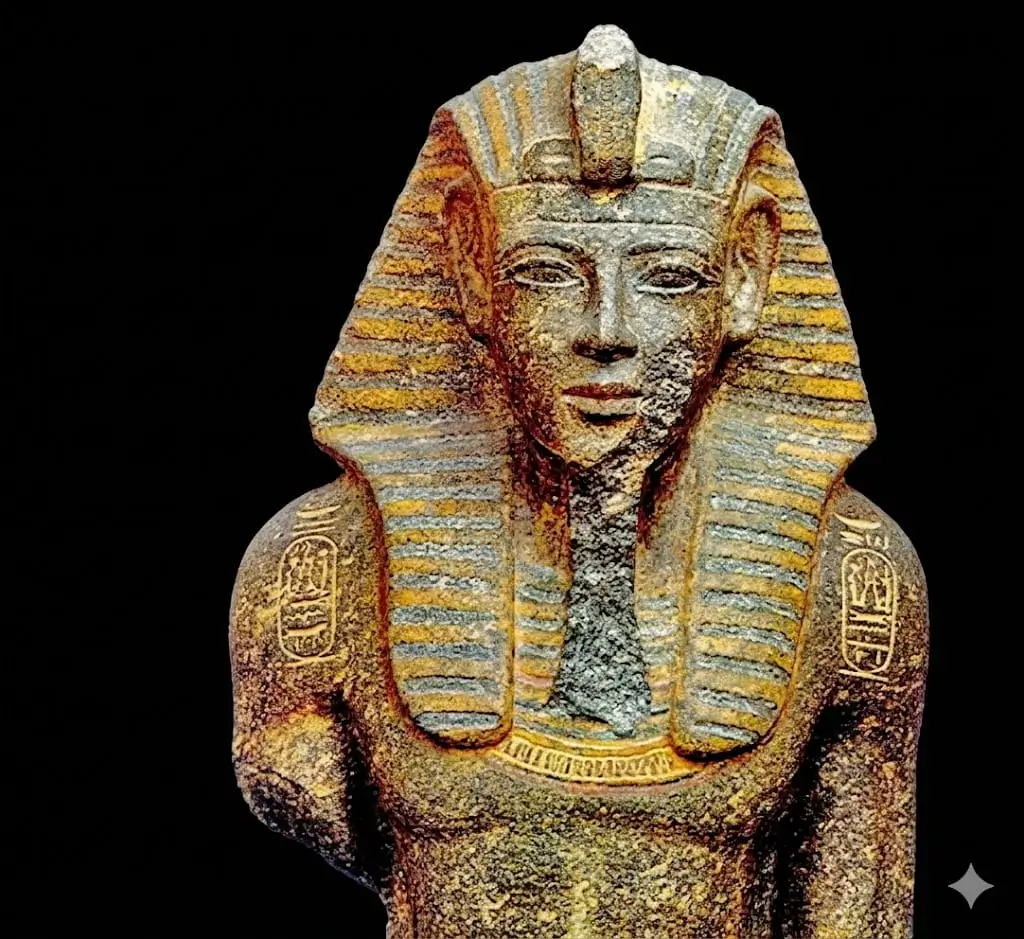
  • The Royal Image: Statues of Merneptah often mirror the colossal proportions established by his father, yet his facial features carry a distinct individuality. His portraits typically display a prominent, slightly hooked nose and a more mature, somber expression compared to the idealized youthfulness of early New Kingdom pharaohs.

The Pharaoh’s Mummy: A Physical Profile

The Pharaoh’s Mummy A Physical Profile Merneptah

In 1898, Victor Loret discovered Merneptah’s mummy in the royal cache of KV35, where it had been moved for protection during the 21st Dynasty.

  • Physical Appearance: Examination of the mummy revealed that Merneptah was a tall man for his time, standing approximately 1.71 meters. He possessed a high, narrow head and a distinctive “eagle-like” nose.
  • Health and Age: At the time of his death, Merneptah was likely in his late 70s. Medical scans indicate he suffered from severe osteoarthritis and atherosclerosis (hardening of the arteries), common conditions for an older ruler of his status.
  • The “Exodus” Myth: Despite popular legends suggesting the Pharaoh of the Exodus drowned in the Red Sea, Merneptah’s mummy shows no signs of drowning. Instead, it suggests a natural death following a long and physically taxing life.

The Aftermath: Dynastic Instability

Merneptah’s death in Year 10 of his reign triggered a period of internal strife that eventually brought the 19th Dynasty to a close.

The Conflict with Amenmesse

A mysterious figure named Amenmesse seized power in Upper Egypt shortly after Merneptah’s death. Whether Amenmesse was a rebellious son or a grandson of Ramesses II remains a subject of intense debate. This usurpation created a “split kingdom” for several years, challenging the legitimacy of Merneptah’s chosen heir, Seti II.

The End of an Era

The civil unrest eroded the centralized power Merneptah had worked so hard to maintain. Within two decades of his death, the 19th Dynasty collapsed entirely, ending with the reign of Queen Tausret. This instability set the stage for the 20th Dynasty and the rise of Ramesses III, who would have to face the Sea Peoples once again.

The Legacy of the Elder King

Pharaoh Merneptah remains one of the most intellectually significant figures for modern historians. He was a king who spent his entire life preparing for a role he held for only a decade, yet he made every year count.

He successfully defended Egypt’s borders against the first wave of the Sea Peoples, moved the administrative capital to ensure better governance, and built a tomb that challenged the very limits of Egyptian engineering. Most importantly, his Israel Stele provides the world with a vital historical “anchor,” linking the ancient Egyptian records with the burgeoning history of the Levant. Merneptah was not merely a shadow of Ramesses II; he was the stabilizer of an empire, a warrior of necessity, and the last great pharaoh to see the New Kingdom at its full, unified strength.

The best tour in Egypt of a 7-day duration....
Enjoy a private 4 days Dahabiya Nile cruise Aswan to Luxor to visit ancient Egypt landmarks in Luxor & Aswan joining a private tour guide....
God_Anubis_Icon

2 week group private tour – Egypt and Jordan

Our US-based agency takes small groups of experienced travelers to the most beautiful and exotic places in the world. In Dec ’19 – Jan ’20, we used the services of Egypt Fun Tours to plan, organize, and conduct an amazing trip to Cairo, Giza, Saqqara, Luxor, and Aswan. The New

More »

Amazing tour to the pyramids of Sakkara and Dahshur

This week we had a great tour with Mohamed to the pyramids of Sakkara and Dahshur, as well as Memphis. He tailored the tour to our preferences, took a lot of time with us, and gave us detailed background information on everything. It was also great that he never tired

More »

Great one day tour in Cairo

My husband and I had a long layover in Cairo on our way to Kenya in 2010. Since we had never been to Egypt, we decided to sign up for a one-day tour with Egypt Fun Tours Day Trips. Our guide was there when we arrived and quickly guided us

More »

Amazing Experience

Hamada was incredible! So knowledgeable and kind. He had information about every item, street corner, and relic we looked at. Any questions we had, he had answers! He even made sure to give us tips while walking through the crowds so that we would feel more comfortable when being approached

More »

Great layover Tour!!

I had an excellent layover tour with Hani. He is knowledgable, fun, and passionate about his city. I went for a tour of the pyramids, sphinx, and to a papyrus factory which were all great. Ask him any question about Egyptian history and he will surely know the answer! Also

More »
God_Anubis_Icon

Top-rated Tour Packages

God_Anubis_Icon