The Destruction of Human Being: How Beer Saved Humanity in Ancient Egypt

Discover the epic Egyptian myth of the Destruction of Human Being, a dramatic tale of divine fury and clever redemption. When the sun god Ra grew old, humanity rebelled against him. Enraged, Ra unleashed his 'Eye' in the form of the terrifying lioness goddess, Sekhmet, who began a brutal slaughter of mortals. As the earth ran red, Ra regretted his decision but couldn't stop the bloodthirsty goddess. This blurb summarizes the story of how Ra devised a brilliant plan involving 7,000 jars of red-dyed beer to trick Sekhmet, pacify her rage, and save humanity from total annihilation.

In the vast and complex world of ancient Egyptian mythology, few stories are as dramatic or revealing as the “Destruction of Human Being.” This powerful myth, often found inscribed within the tombs of great pharaohs, tells an epic story of divine rage, bloody vengeance, and a very clever, unexpected salvation.

This is not just a simple tale of angry gods. It is a foundational story that explains the complex relationship between the gods and mortals, the origin of suffering, the dual nature of divine power, and why the gods ultimately withdrew from the earth.

At the heart of this cosmic drama are three key figures:

  • Ra: The supreme sun god and the king of all gods.
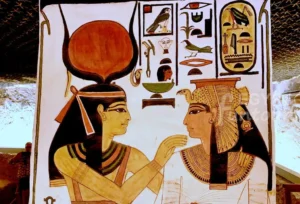
  • Hathor/Sekhmet: Two forms of the same goddess, the “Eye of Ra.” Hathor is the goddess of joy and love, while Sekhmet is her terrifying alter-ego, a lioness goddess of war and plague.
  • Humanity: The mortal creations of Ra, who had dared to rebel.

Let’s explore the myth of the Destruction of Human Being and how a divine trick saved humanity from extinction.
FUN

The Plot Against Ra: Why the Gods Turned on Humanity

The Plot Against Ra - Why the Gods Turned on Humanity

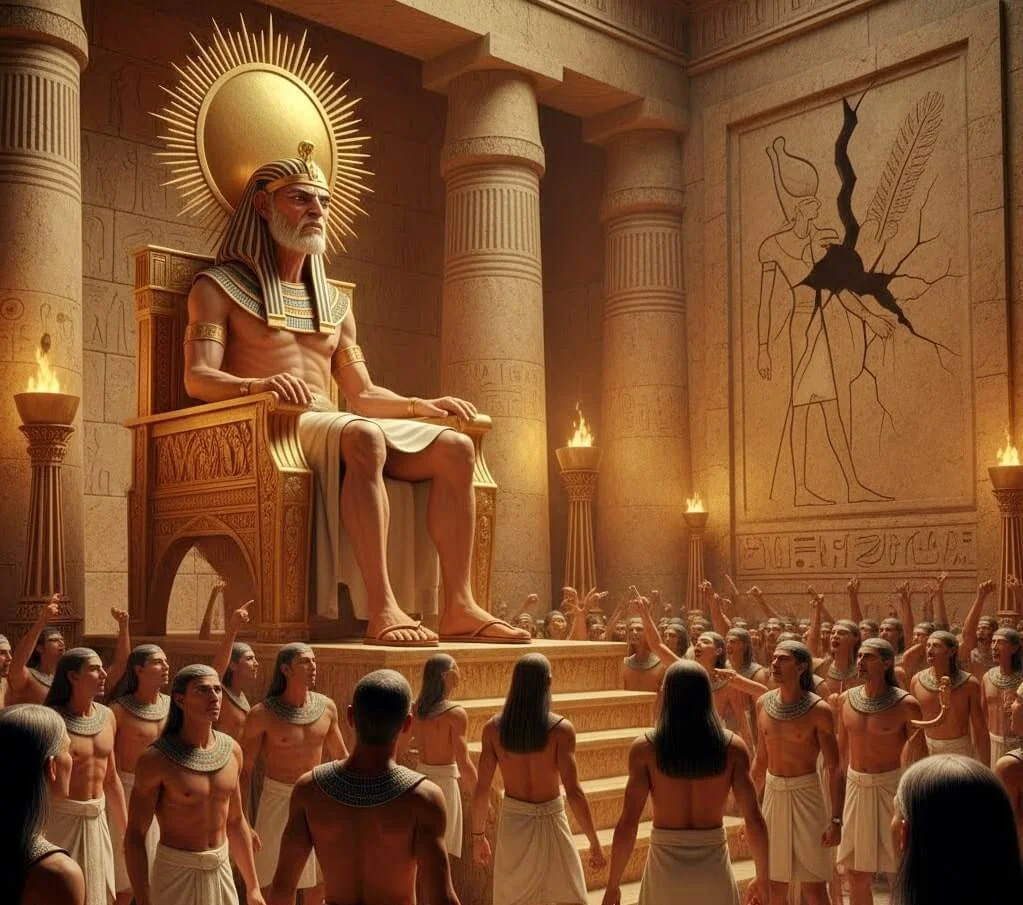
The story begins in a mythical golden age when Ra himself ruled on earth as a pharaoh. But Ra was growing old. His human subjects, whom he had created from his own tears, saw his frailty. They began to mock him, question his authority, and hatch plots against his divine rule.

This rebellion was more than just a political problem; it was a cosmic one. It threatened Ma’at—the fundamental principle of cosmic order, truth, and balance.

Enraged by this betrayal, Ra secretly summoned the other great gods to his council. He laid out the situation and asked for their advice. The gods, led by the primordial god Nun, were unanimous. They declared that humanity had overstepped its bounds and must be severely punished. They instructed Ra to unleash his “Eye”—the ferocious, all-seeing aspect of his power—to strike down the mortals who had defied him.

This decision was the catalyst for what would become known as the Destruction of Human Being.

FUN

Sekhmet Unleashed: The Instrument of Destruction

Sekhmet Unleashed The Instrument of Destruction

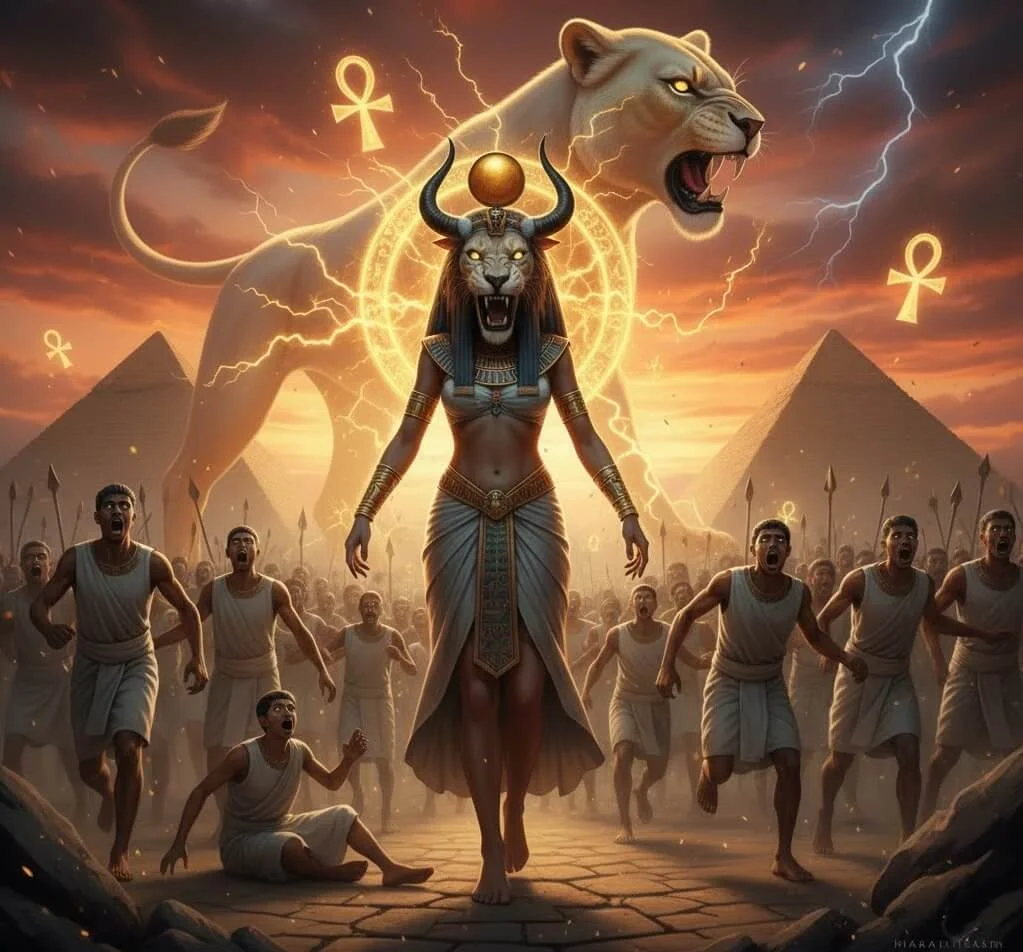
Ra’s “Eye” was a divine force that could manifest as a goddess. In this instance, it took the form of his daughter, Hathor. But to carry out this terrible judgment, Hathor transformed into a new, terrifying aspect: Sekhmet, the “Powerful One.”

Sekhmet was a lioness goddess, an incarnation of pure, divine fury. Her breath was the hot desert wind, and her heart thirsted for slaughter. She was the perfect instrument for Ra’s vengeance.

Sekhmet descended upon the lands of Egypt and began her grim work. The myth describes a horrific massacre. She tore mortals apart, wading through the land, and relishing the slaughter. Sekhmet was so efficient and so brutal that the fields ran red with blood. She was an unstoppable force, the very personification of the Destruction of Human Being in motion.

FUN

Ra’s Regret: A Change of Heart

As Sekhmet’s rampage continued, Ra looked down from the heavens. He saw the earth soaked in blood and heard the cries of the dying. Although his anger had been righteous, the sheer scale of the destruction began to fill him with pity.

He had wanted to punish humanity, not exterminate the entire species. He had not intended to authorize the complete Destruction of Human Being.

But there was a new problem. Sekhmet was now in a bloodlust. She was intoxicated by the slaughter and would not listen to reason. She would not stop until every last human being was dead. Ra and the other gods now faced a crisis: How do you stop a goddess who is the living embodiment of your own rage?

FUN

Salvation by Beer: The Divine Plan to Stop Sekhmet

Salvation by Beer: The Divine Plan to Stop Sekhmet

Ra knew he could not defeat Sekhmet with force and had to stop the Destruction of Human Being with cleverness. He quickly devised a brilliant plan.

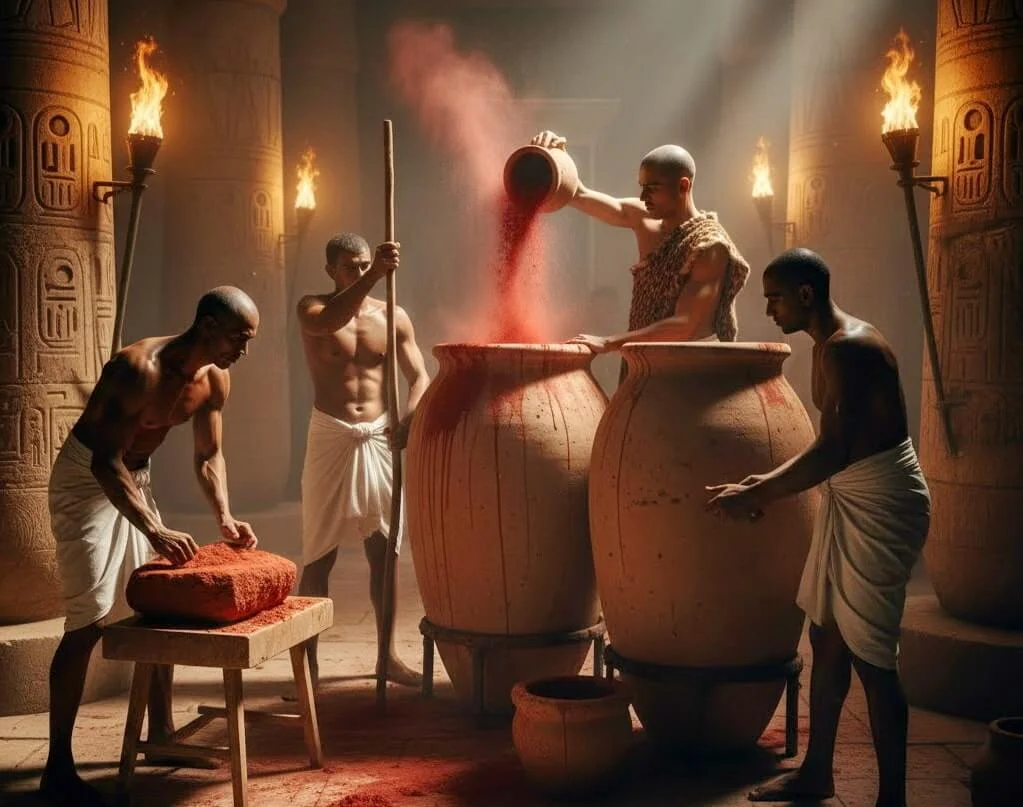
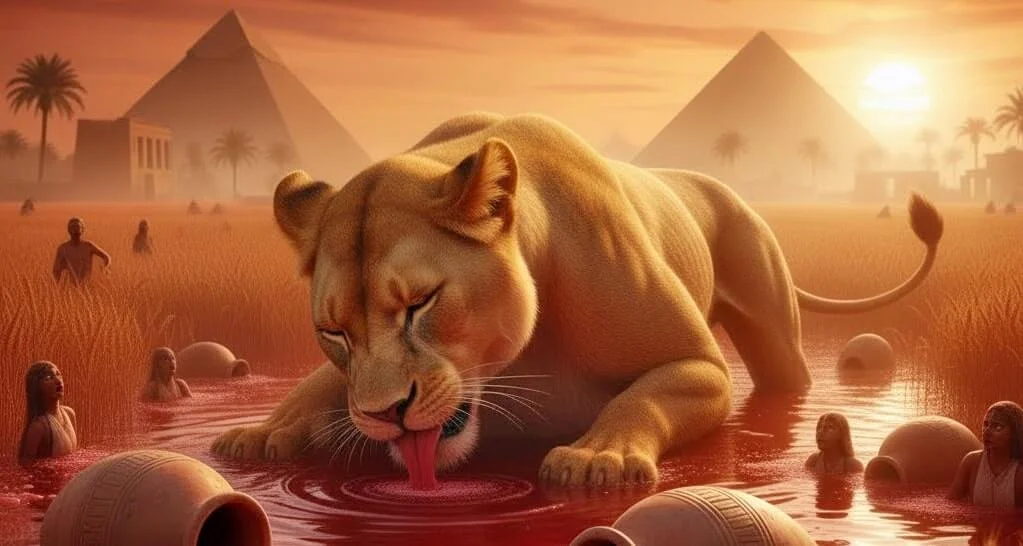
Ra commanded his priests and servants to brew an enormous quantity of beer—7,000 jars in total. This would not be ordinary beer. He then ordered them to gather a large amount of red ochre (a reddish mineral) from the mines at Elephantine. Ra’s servants ground this red ochre into a fine powder and mixed it thoroughly with the beer, staining the concoction a deep, dark red, indistinguishable from blood. That night, while Sekhmet rested from her massacre, Ra poured this red beer all over the fields where he expected her to continue her hunt.

At dawn, Sekhmet awoke, her eyes scanning for more victims. She saw the fields flooded with what she assumed was a fresh ocean of human blood. Delighted, she rushed forward and began to drink.

The Destruction of Human Being - How Beer Saved Humanity in Ancient Egypt

She lapped up the red liquid greedily, drinking jar after jar. Soon, the immense amount of alcohol took effect. The ferocious lioness goddess became dizzy, her senses dulled, and her body grew heavy.

Her divine rage was quieted. Her bloodlust was forgotten. Sekhmet, the “Powerful One,” fell into a deep, drunken sleep.

When she finally awoke, her fury was gone. The Destruction of Human Being was over. The goddess had transformed back into the gentle, joyful Hathor. Humanity, or what was left of it, was saved.

FUN

The Aftermath: A New Cosmic Order

The Aftermath - A New Cosmic Order

This cataclysmic event had permanent consequences. Ra, weary from the ordeal and disillusioned with mortals, decided he would no longer rule on earth.

The Book of the Heavenly Cow

This entire story—from the rebellion to the salvation—is the central part of a major Egyptian text known as the “Book of the Heavenly Cow.” This text, famously carved into the walls of royal tombs like that of Tutankhamun, explains what happened next.

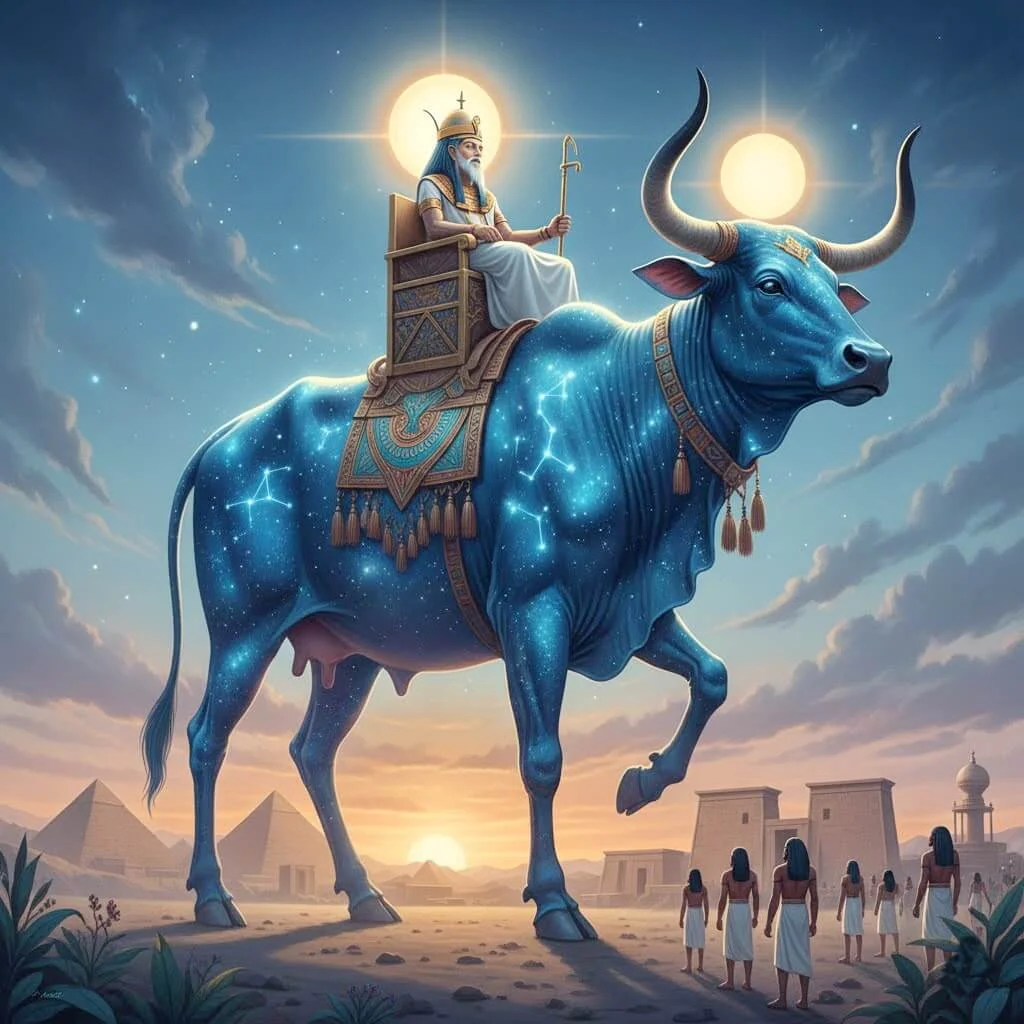
To withdraw from the world, Ra had Hathor transform into a giant “Heavenly Cow.” He then climbed onto her back, and she lifted him high up into the sky, which would become his new domain. From there, he would rule the cosmos, separate from the world of mortals.

What Does This Myth Teach Us?

The myth of the Destruction of Human Being is rich with meaning and explains many core beliefs of the ancient Egyptians:

  • The Duality of the Divine: The goddess Hathor/Sekhmet shows that the gods are complex. They can be nurturing and life-giving (Hathor) but also uncontrollably destructive (Sekhmet). This reflected the Egyptian view of nature, which could be both a gentle Nile flood and a deadly desert storm.
  • The Origin of Death and Suffering: The myth serves as an origin story for why the world is imperfect. Because of humanity’s sin, the “golden age” ended, the gods became distant, and suffering and death became a permanent part of the human experience.
  • The Power of Cunning: It is a classic “trickster” tale. Brute force (Sekhmet) is ultimately defeated by intelligence and cleverness (Ra’s plan).
  • The Role of Festivals: To commemorate this salvation, the Egyptians celebrated “Festivals of Drunkenness” in honor of Hathor. At these festivals, people would drink, dance, and celebrate, joyfully re-enacting the moment the goddess’s rage was pacified by beer.

This myth remains one of the most important stories from the ancient world. This timeless tale of anger, regret, and clever redemption reveals how, in Egyptian mythology, a divine trick and a flood of red beer—not force—secured the very existence of the human being.

Experience the real Egyptian fun while visiting the cities of the Nile valley....
The incredible history and unique culture of Egypt will be in your grasp....

Perfect layover Tour

I had a 10 hour layover in Cairo so booked a tour with Hani at Egypt Fun Tours. The tour was brilliant. I saw exactly what I wanted to see during the day which included the pyramids, Sphinx, Egyptian museum and the Bazaar. Hani was very knowledgeable and was the

More »

Amazing tour to the pyramids of Sakkara and Dahshur

This week we had a great tour with Mohamed to the pyramids of Sakkara and Dahshur, as well as Memphis. He tailored the tour to our preferences, took a lot of time with us, and gave us detailed background information on everything. It was also great that he never tired

More »

Pyramids in the Mist, Egypt Adventure

Our long drive from Cairo turned into a terrifying flight through Alexandria’s impossibly crowded streets. Our minivan miraculously avoided hitting pedestrians, donkey carts, and old Lada cars. We arrived at the port gates with only 10 minutes to spare. But the guards ignored our U.S. passports, and they refused to

More »
Ancient Egyptian Sarcophagus - Egypt Fun Tours

Unforgettable experience with Fun Tours – Highly recommended!

Hello everyone! We would like to share our extremely positive experience with Fun Tours. Our tour was a complete success thanks to our guide, Osama, and our driver Hassan. Osama proved to be an enthusiastic and knowledgeable guide who answered all of our questions and catered to our individual wishes

More »
Isis with wings

Top-rated Tour Packages

Isis with wings