Life and Duty: Companions, Hunters, and the Elite
The status of Dogs in Ancient Egypt was cemented by their utility and deep emotional bond with their owners. Dogs were integrated into almost every facet of life, from securing food for the pharaoh to offering comfort in the home.
The Hunter’s Partner: Hunting Scenes and Reliefs
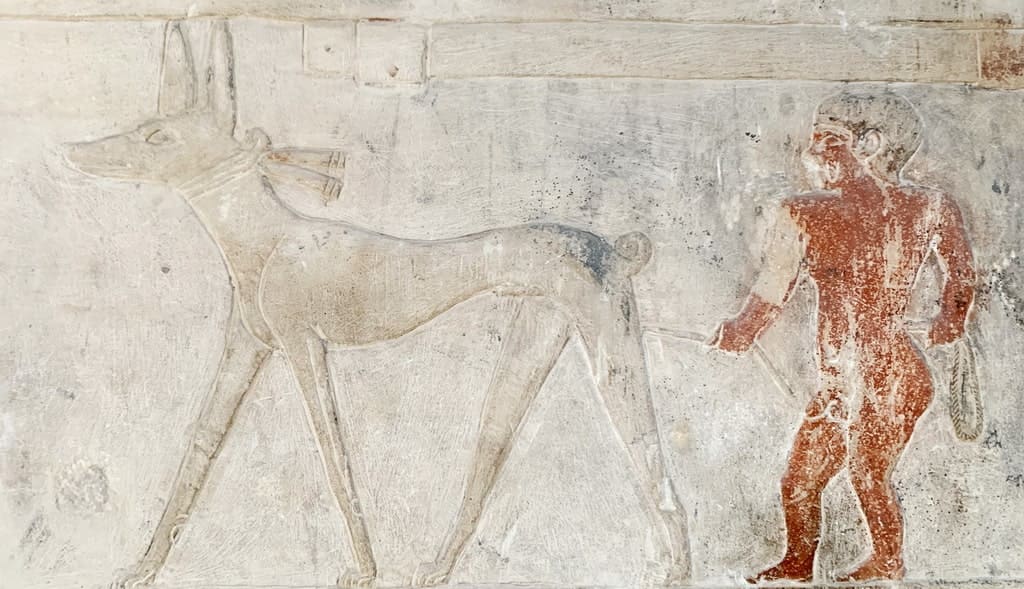
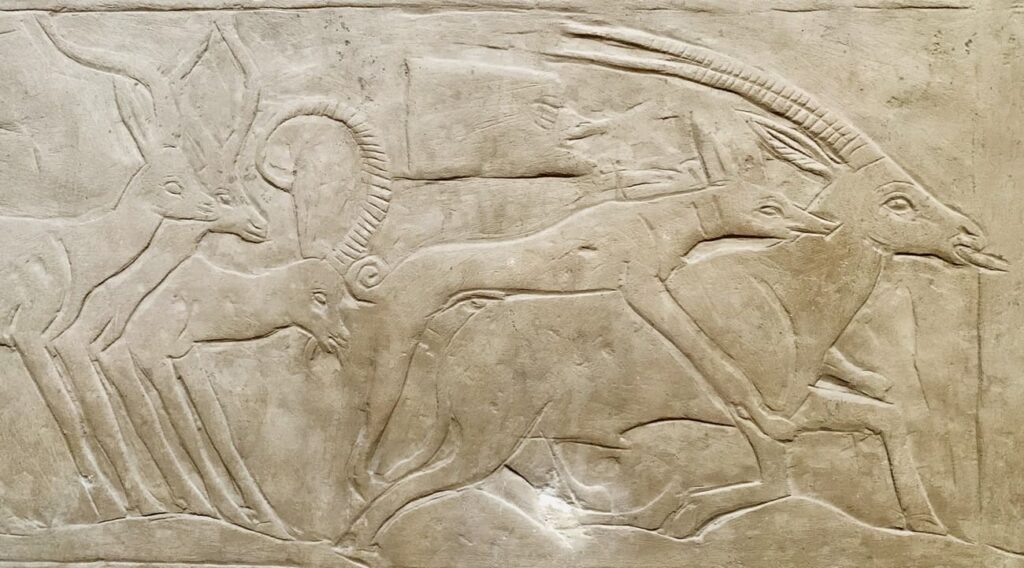
Hunting was an essential royal and noble pursuit. Dogs were indispensable to this activity. Sighthounds, like the Tesem, excelled at chasing down fast desert game. These dogs worked in coordinated packs. Reliefs on tomb walls show the dogs bringing down gazelles, hares, and wild oxen. Therefore, the dog was vital to supplying meat for the nobles’ table and the temple offerings.
The dog’s skills were valued highly. Texts often boast about the speed and intelligence of a specific hunting dog. Consequently, a powerful hunter was often depicted standing proudly with his favorite canines. This visual connection emphasized the owner’s wealth and skill.
Personal Naming Conventions: Loyalty and Affection
The Egyptians showed immense personal affection for their pets. They did not regard them as mere tools. They gave their dogs individualized, meaningful names. These names were often inscribed on stelae or even on their collars.
Examples of Ancient Egyptian Dog Names include:
- Amu (The Reliable)
- Nefer (Good/Beautiful)
- Abutiu (Brave, a famous dog of King Antef II)
- Ikeni (The Watchman)
These names reveal the qualities the Egyptians valued most: loyalty, watchfulness, and reliability. Furthermore, when a dog died, the owner often expressed profound grief. This emotional connection highlights the dog’s status as a family member.
Affection and Grief: The Evidence of Burial
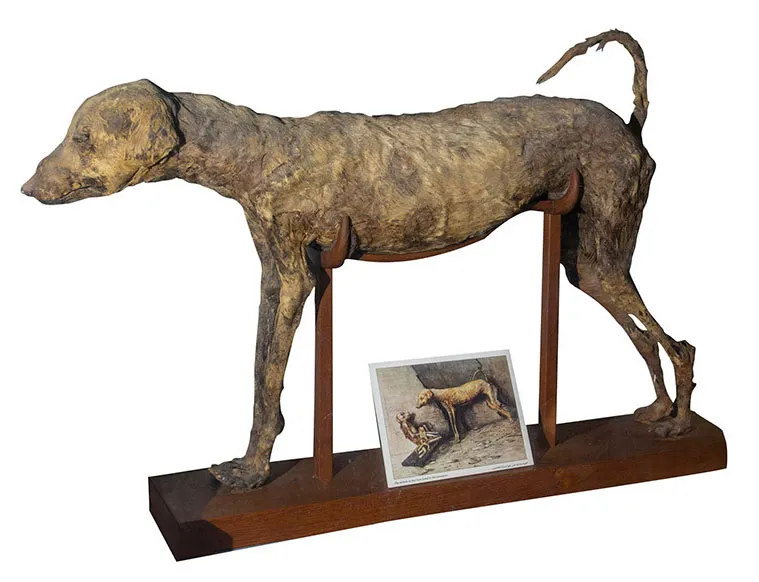
The ultimate proof of affection lies in funerary practices. Wealthy Egyptians sometimes chose to be buried with their cherished pets. This was not a sacrifice. Instead, it was an honor. The owner sought to continue the bond into the next life.
Archaeologists have uncovered dog graves with elaborate provisions. These graves included food, linen wrapping, and even miniature coffins. Furthermore, specific tombs were dedicated solely to dogs of high status. These tombs confirm that some canines were treated with the reverence of minor royalty. The loyalty of the dog was expected to continue eternally.
High-Status Accessories: Ancient Egyptian Dog Collars
Dogs belonging to the elite were often adorned with luxurious accessories. Ancient Egyptian Dog Collars were functional and decorative. They were usually made of durable leather. However, collars belonging to royal or noble dogs featured exquisite materials. These included bronze, gold plating, and semi-precious stones.
These collars often bore inscriptions. They identified the dog’s name and its owner’s title. In addition, the engravings sometimes included protective spells or images of the gods. This infusion of protective magic turned a simple collar into an artifact of social and religious significance. The collar served as a testament to the dog’s status within the household.