
Goddess Meret: Egyptian Goddess of Music, Joy, and the Nile’s Rhythm

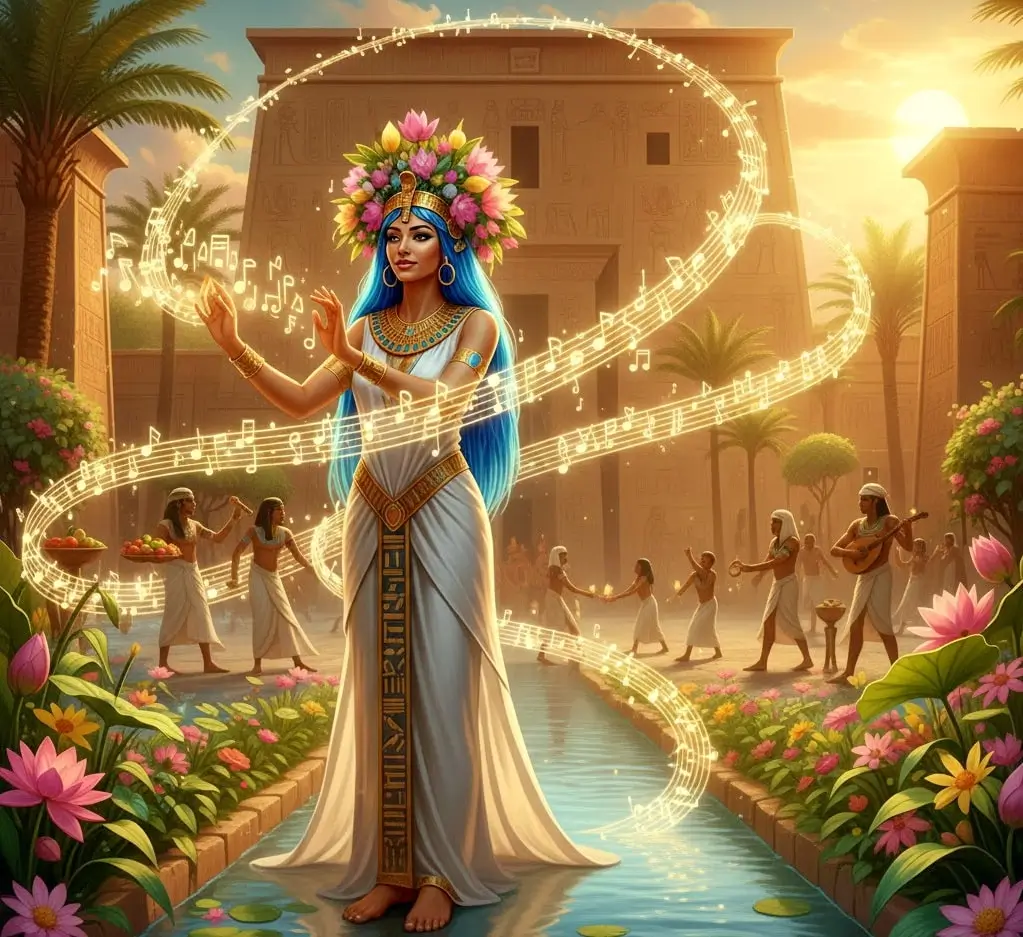
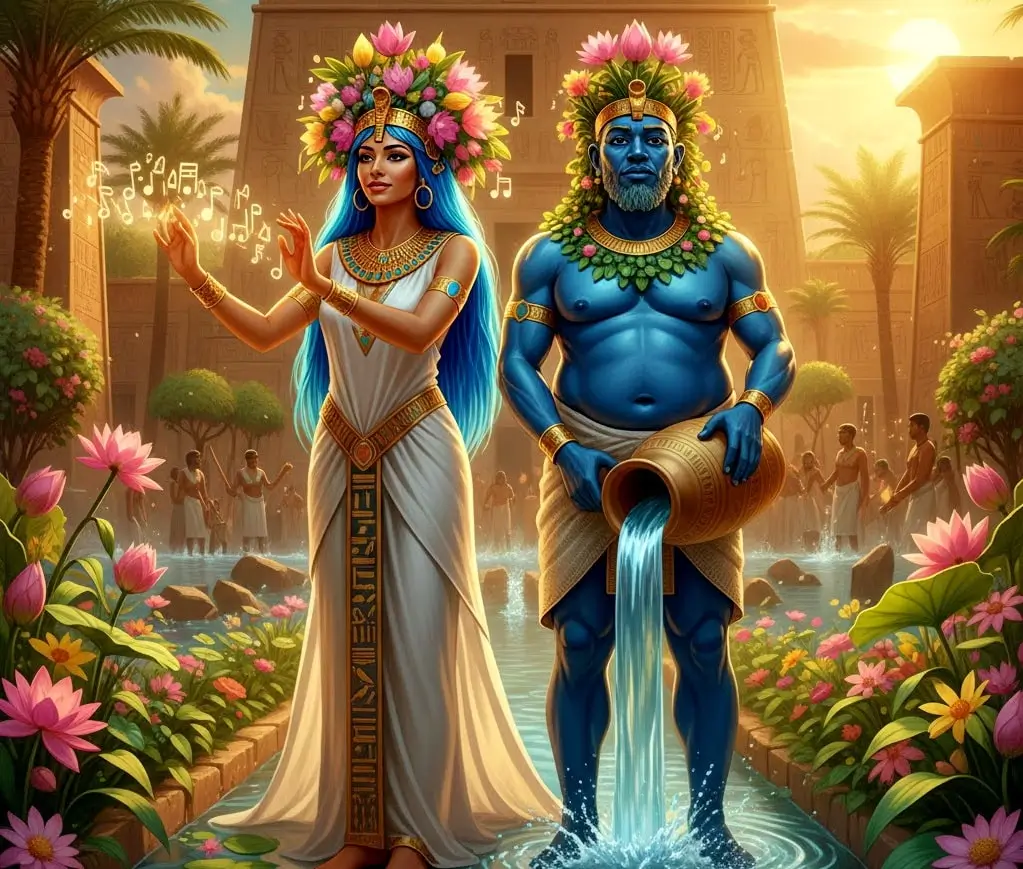
Meret (meaning "the beloved") is the ancient Egyptian goddess who embodies the vibrant spirit of music, joy, and the life-giving rhythm of the Nile River. She does not belong to the major Ennead but grew essential through rituals. She partnered with Hapi, the god of the Nile flood, symbolizing the harmonious celebration and prosperity that accompanied the crucial inundation. Artists depicted her performing a gesture of clapping or conducting. Her role ensured the successful, joyful performance of religious rites and the maintenance of cosmic harmony.

Welcome to the Harmony of Meret: The Beloved Goddess

Goddess Meret (meaning “the beloved”) stands as the ancient Egyptian goddess who embodies the vibrant spirit of music, joy, and the life-giving rhythm of the Nile River. She does not belong to a major mythological cycle like the Ennead. Instead, her profound importance grew directly from the daily experiences and essential religious practices of the people. She partnered with Hapi, the corpulent god of the Nile flood, symbolizing the harmonious celebration and prosperity that accompanied the crucial annual inundation. Artists depicted her performing a unique gesture of clapping or conducting. Her role ensured the successful, joyful performance of religious rites and the maintenance of cosmic harmony. Goddess Meret represents the beautiful and necessary blend of spiritual expression and agricultural reality in Egyptian culture.
The eye of Horus

Origin, Etymology, and Fluidity

Origin, Etymology, and Fluidity

Meret’s presence consistently ties into the vital rhythms of Egyptian existence. While she does not feature in the grand state myths, her role within daily temple and agricultural rites made her indispensable.

Etymology and Essence: The Meaning of “Beloved”

Her name, “Meret,” translates directly to “the beloved” or “the one who loves.” This name perfectly captures her essence as a deity associated with harmony, celebration, and the bountiful blessings of the land. She represents the celebratory heart of Egyptian culture. Furthermore, this focus on joy and love distinguished her from deities whose focus was destruction or cosmic struggle.
Fluid Origins and Essential Associations

Meret’s origins are somewhat fluid, reflecting her function as a localized or ritualistic deity rather than a cosmic creator. Her importance grew from the immediate, vital rhythms of life. They closely associated her with the annual Nile inundation, a critical event that brought fertility and sustenance to all of Egypt. This connection made her an essential figure in rituals celebrating the river’s abundance. Her power was practical and immediately felt by the populace.

Consort of Hapi, God of the Flood

Meret frequently appears as the consort of Hapi, the god who personified the chaotic, corpulent floodwaters of the Nile. Together, they represented the complete, dynamic forces that nourished the land. Hapi brought the physical water, the raw, essential material. Meret symbolized the joy, music, and offerings that accompanied the successful flood. This partnership underscores her role in transforming a raw natural event (the flood) into a cultural celebration (prosperity).

Golden Scarab

Roles: Music, Ritual, and Cosmic Harmony

Roles Music, Ritual, and Cosmic Harmony

Meret’s primary responsibilities revolved entirely around sound, movement, and the perfect performance of sacred acts.

Meret’s Primary Domain: Music and Celebration

Meret embodied the very act of celebration and the harmonious sounds that filled temples and festivals.

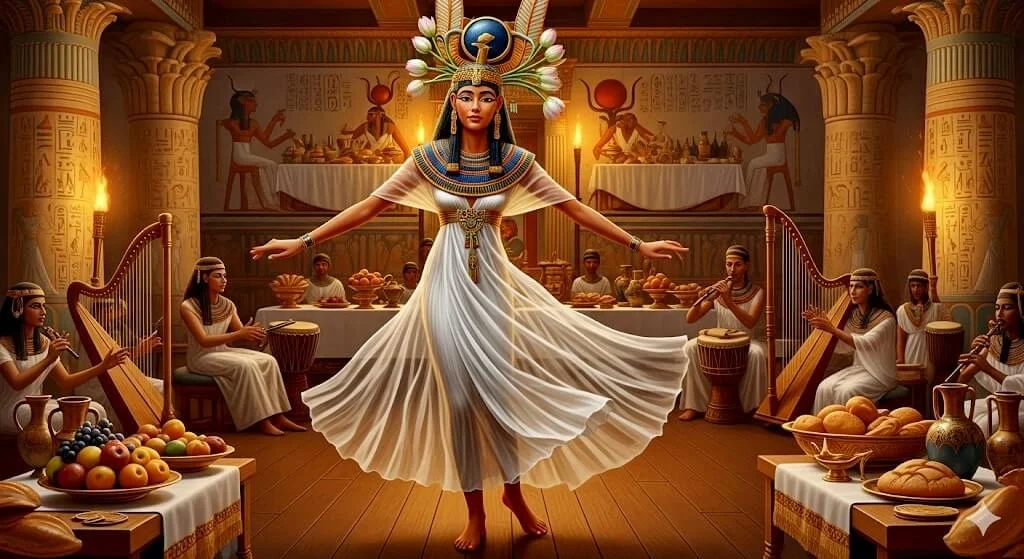
  • The Embodiment of Rhythm: She was the goddess of music, singing, and dancing. She presided over the rhythmic movements and chants that animated religious ceremonies. Priests and priestesses would often invoke her during these rites, seeking her blessing to ensure successful performances and divine favor.
  • Presiding over the Ritual: Her presence was essential for proper worship. She ensured the performance of religious rites was pleasing to the gods. She oversaw the offering bearers and the rhythmic movements of temple dancers. This role highlights her belief that the how of the ritual—its harmony and rhythm—was as important as the what.

Meret and the Rhythms of the Nile

Her connection to the Nile inundation was profound and indispensable.

  • Orchestrating Prosperity: As the life-giving waters rose, Egyptians performed rituals to honor both Hapi and Meret. She orchestrated the joyful sounds that accompanied the fertile flood. This responsibility highlights her importance in maintaining the cosmic order and the prosperity of Egypt. She inspired the chants and hymns that marked the beginning of the agricultural cycle, transforming the act of farming into an act of worship.
  • Cosmic Harmony: Meret symbolized the divine harmony necessary for effective worship. She took the practical necessities of life—like the Nile flood—and infused them with celebratory, spiritual meaning.

Ma’at: Harmony, Order, and Cosmic Balance in Ancient Egypt

To stand amidst the wonders of Egypt is to encounter an entire civilization rooted in...
Related post
The eye of Horus

Iconography and Symbolic Identity

Iconography and Symbolic Identity

Artists typically depicted Goddess Meret distinctively and recognizably, ensuring her unique function was immediately clear to the worshiper.

The Distinctive Appearance of Meret

Her visual form immediately identified her with her musical and celebratory functions.

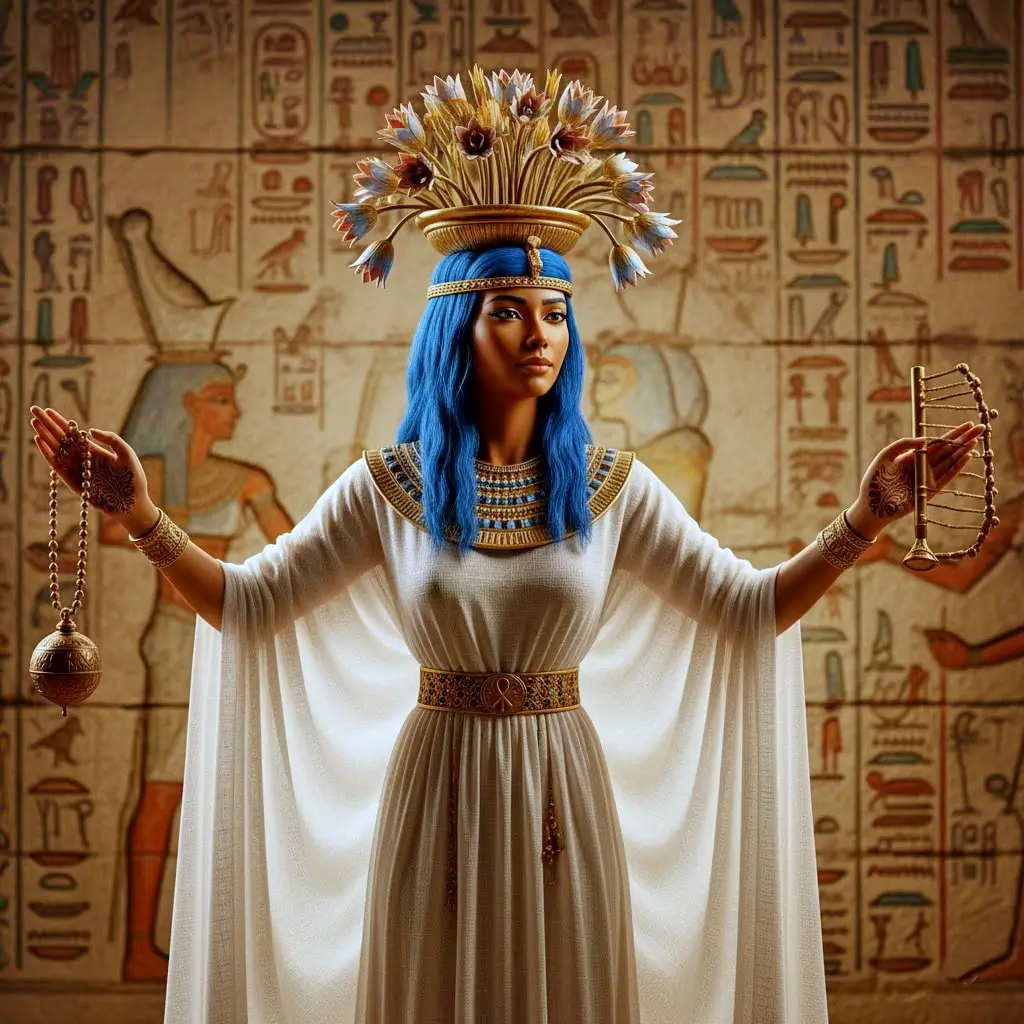
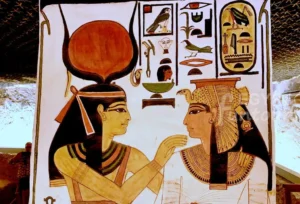
  • The Gesture of Clapping and Conducting: They often showed Meret as a woman with her arms outstretched, performing a gesture of clapping or conducting music. This active pose suggested sound and motion rather than the static power of creator gods.
  • Attributes and Offerings: Sometimes, she holds an offering bowl, emphasizing her role in temple rituals and the receiving of gifts. Her headdress often included symbols related to the Nile or offerings. You might also find her with a menat necklace or a sistrum, instruments strongly associated with joyous, musical goddesses like Hathor, further linking her to these powerful themes.

The Concept of the “Two Meret Goddesses”

Meret’s symbolic adaptability allowed her name to be used in broader contexts, particularly regarding funerary rites.

  • Funerary Harmony and Lamentation: She sometimes appears in pairs, representing the “Two Meret goddesses” or Mertae-sisters. In this context, these figures symbolized the harmonious lamentations and ritual music performed by other powerful goddesses, particularly Isis and Nephthys, during funerary rituals. This shows her ability to embody harmonious sound, even the sacred, structured sounds of mourning, which ensured the proper passage of the deceased.
  • Symbolic Adaptability: This use of her name highlights that Meret represents the concept of sacred, harmonizing sound, making her a flexible and potent symbol across different spheres of life and death.

Neith: The Primordial Creator and Warrior Goddess of Ancient Egypt

Neith is one of the most ancient and formidable deities in the Egyptian pantheon, serving...
Related post
Golden Scarab

Worship, Cultural Impact, and Legacy

While Goddess Meret did not command the extensive cults of goddesses like Isis or Hathor, her presence was deeply ingrained in Egyptian religious life.

The Nature of Meret’s Cult

Meret’s worship centered around specific rituals rather than grand, independent temple structures.

  • Worship within Broader Cults: She had no major temple complexes dedicated solely to her. Instead, her cult flourished within the broader worship of the Nile gods and other major deities. Her power was honored through the actions of the priests, dancers, and musicians she inspired.
  • The Nile Inundation Festivals: Her central importance in the rituals and ceremonies surrounding the annual rise of the Nile made her necessary to every community that relied on the flood.

Serqet: The Scorpion Goddess of Healing, Magic, and Protection

Discover the paradox of Serqet, the ancient Egyptian scorpion goddess who transformed deadly venom into...
Related post
The eye of Horus

Meret’s Enduring Legacy

Her enduring legacy lies in her representation of cosmic harmony and the essential role of music and joy in religious devotion.

  • The Holistic Nature of Spirituality: Meret reminded ancient Egyptians that even the most sacred acts could be filled with celebration and rhythm. She underscored the holistic nature of their spirituality, where the practicalities of agriculture blended seamlessly with the spiritual expressions of music and dance.
  • The Rhythm of Life: Meret stands as the subtle, yet indispensable, deity who provided the beautiful, necessary harmony to the functional world. Her influence permeated the joyous aspects of Egyptian life, from the fertile fields flooded by the Nile to the sacred halls of the temples.

Current weather in Egypt

God_Anubis_Icon

Lenka Traverlers

Egypt Fun Tours was contracted by our travel agency, Lenka Travelers, to arrange and guide us through parts of Egypt and Jordon. They did a fabulous job. The hotels, restaurants, places we visited, and transportation were the best. Our guide in Egypt, Mohammad, was very knowledgeable, spoke perfect English, and

More »

Egypt Fun Tours – Does it All!

My husband and I visited Egypt in March 2013. First, let me say, ‘Go, go, go!’ – it’s safer and definitely friendlier than many places we’ve visited. Tourism is drastically down – thanks mostly to media misinformation – so it’s a great time to visit to avoid line-ups and crowds

More »
Tailored Services for Corporate Business Transportation Needs

On time, adaptable, and fun!

My friend and I planned a whirlwind trip to Dubai, the Dead Sea, Petra, Cairo, Luxor, and Sharm el Sheikh for early November 2011 – 6 cities in 10 days! We allotted one afternoon and evening for Cairo, and we wanted to see as much as we could! We drove

More »

My Dream Came True

I had waited 60 years to get to Egypt; in fact, it was my 60th birthday gift to myself. I went with my oldest daughter, and the experience was excellent. It was meticulously planned by the tour company and was designed for me and my daughter. I never had a

More »
group tour of wonders

Solid Tour Company

Last year (2010) my wife and I did a 20 day trip in Egypt, mostly Do-It-Yourself. However, one of the first things we did was a trip to Bahariya oasis and to the White Desert — not so easy to do yourself, so we needed an agency. After e-mail back-and-forths

More »
God_Anubis_Icon

Top-rated Tour Packages

God_Anubis_Icon