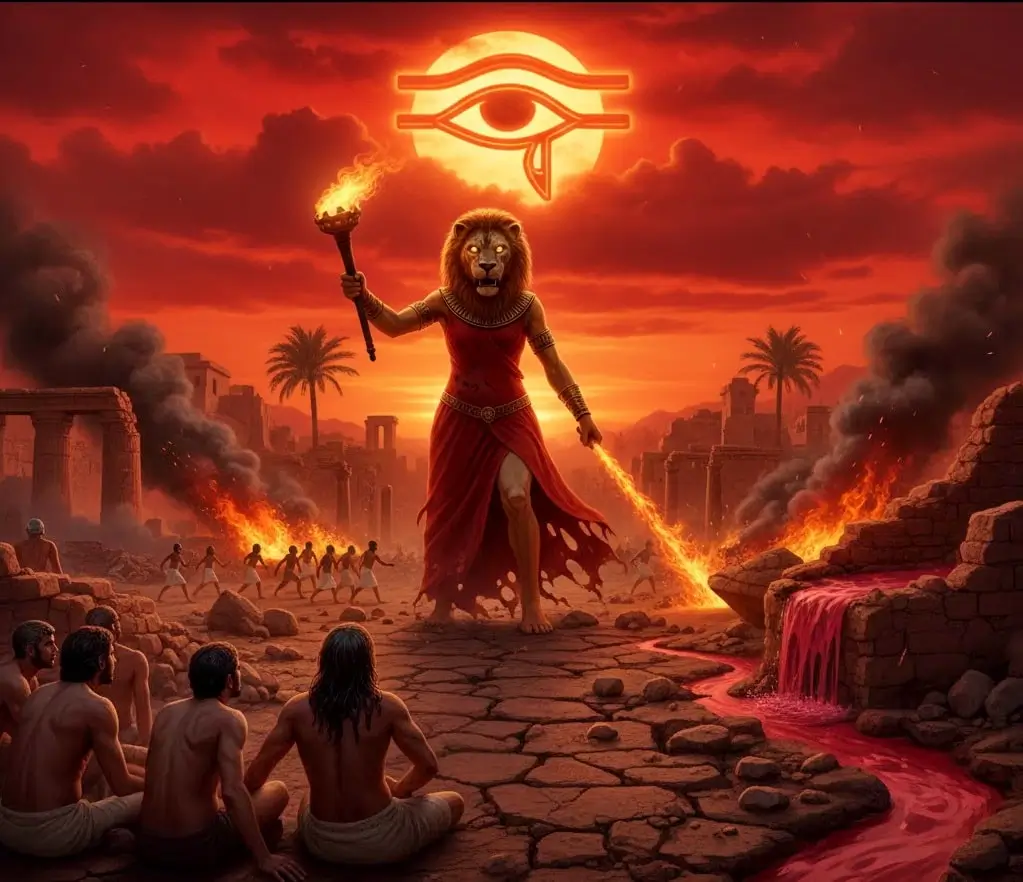
The Sun God’s political brilliance was not limited to benevolence. It possessed a terrifying, unified, feminine, destructive side: the Eye of Ra. This force was too potent to leave unchecked. Therefore, pharaohs brilliantly managed it, splitting their identity into a strategic duality. This dual nature of the Volatile Eye of Ra became a core mechanism of state control.
This duality appears most famously through two sister-goddesses, Hathor and Sekhmet. While seemingly opposite—Hathor embodies love, joy, and fertility; Sekhmet embodies plague, destruction, and rage—they are truly two faces of the same powerful solar entity. In effect, their unified identity provided the Egyptian state with the ultimate sanction: absolute cosmic terror and absolute divine favor.
The pharaoh’s challenge was not eliminating this volatility, but controlling it. Indeed, the successful management of the Volatile Eye of Ra—transforming pure destructive potential (Sekhmet) into manageable prosperity and power (Hathor)—became a central pillar of dynastic rule. Consequently, analyzing the Hathor Sekhmet political power reveals how kings maintained order using the threat of divine punishment alongside the promise of solar blessing.
The successful management of the Sekhmet-Hathor dichotomy was entirely dependent upon the pharaoh’s ability to command the core solar force. (Dive deeper into the theological foundations of this command by reading The Eye of Ra.)