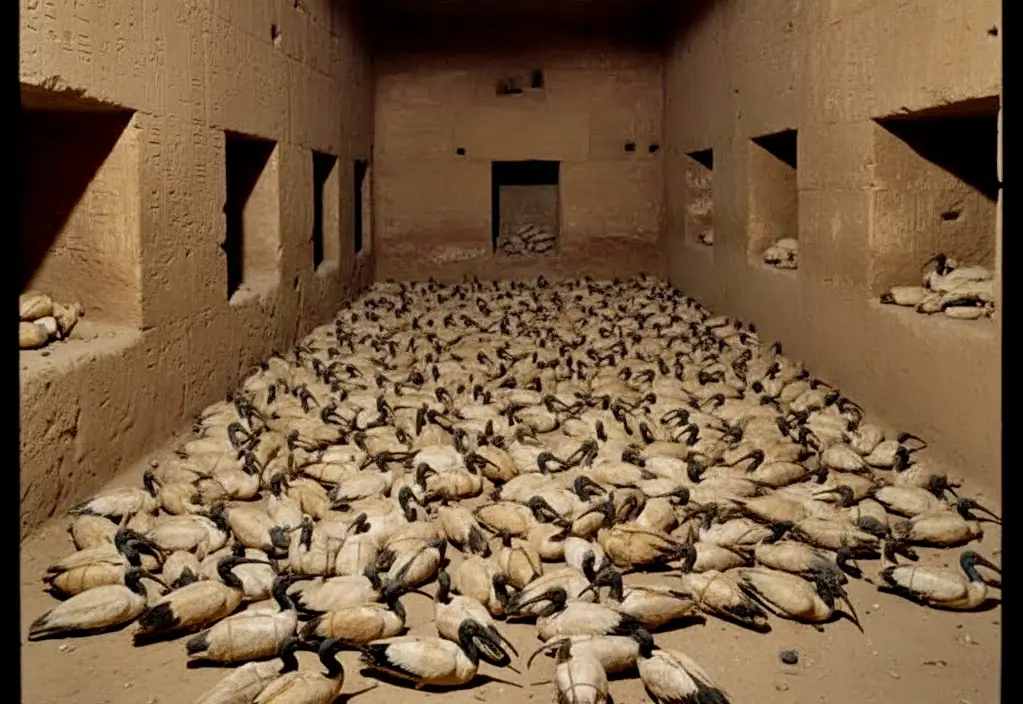
The sheer demand for millions of votive offerings created a specialized and paradoxical existence for the Ibis bird. Despite being the emblem of the god of wisdom, these birds lived short, often difficult lives within the cultic industry.
Captive Breeding Operations
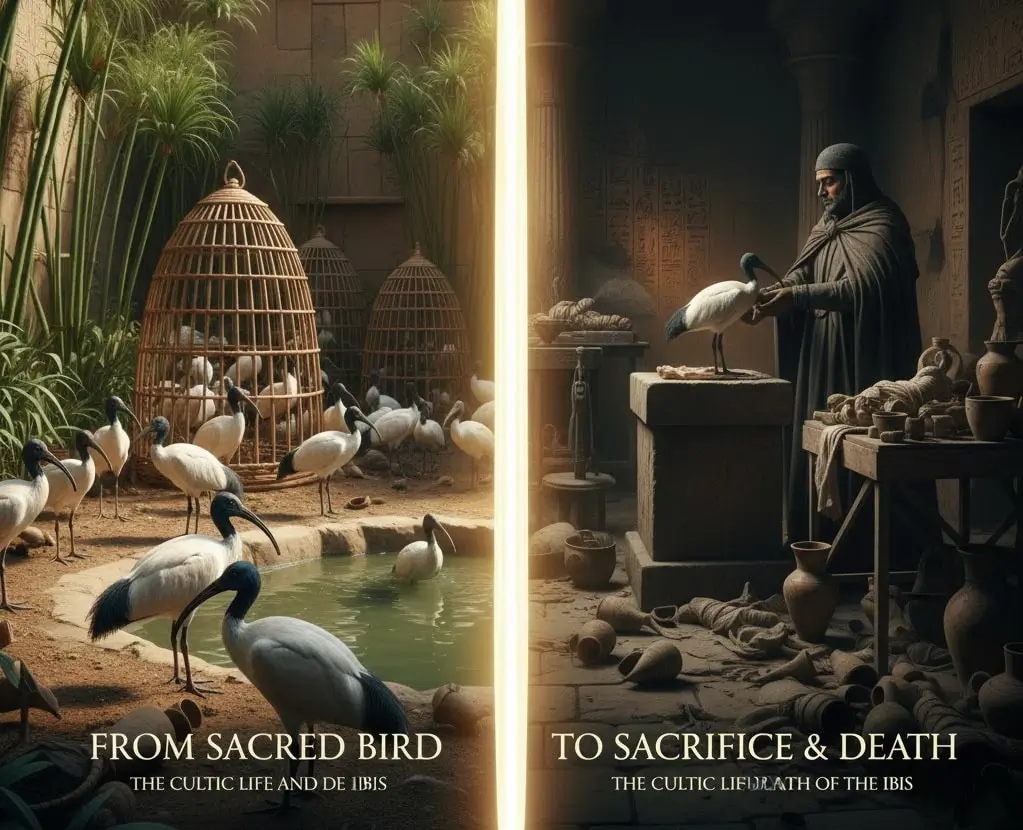
Archaeological and pathological evidence strongly suggests that the vast majority of the birds were not captured in the wild. The volume of the Ibis mummies from Saqqara simply exceeded the capacity of sporadic hunting.
- Breeding Centers: This points to large-scale, controlled breeding operations. Priests and specialized staff managed immense aviaries and pens, likely locating them near Hermopolis Magna and the major necropolises.
- Malnutrition Evidence: Studies of the birds’ skeletons and feathers show clear signs of malnutrition and stress. This confirms that they raised the birds in crowded, artificial conditions, where they often suffered from inadequate space and diet before their ritual sacrifice.
- The Mummification Process: Once the Ibis was ready for offering, it underwent a specific ritual process. The highly efficient mummification reflected the industrial scale of the operation:
- Death: Priests generally killed the birds quickly, often using a sharp blow or wringing the neck, to fulfill the offering contract.
Preparation
Staff desiccated the body using natron and packed it with sand or sawdust.
- Wrapping: The Ibis was then meticulously wrapped in linen bandages, ensuring a proper, respectful presentation for the god.
- Entombment: Workers typically placed the finished mummy inside a simple, cone-shaped pottery jar or sometimes a more elaborate wooden box before placing it into the deep catacombs.
The cycle was relentless. The cult created a system where they systematically bred and sacrificed the very animal revered for order and wisdom to maintain popular devotion to that god.