
Unveiling God Bes: The Ancient Egyptian Protector of Home and Joy
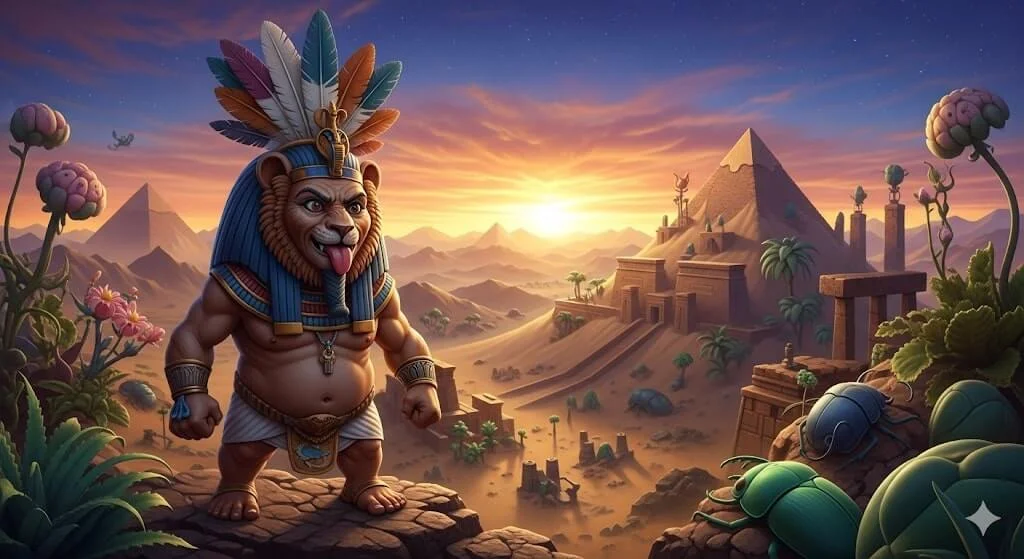
Explore the fascinating world of the Egyptian god Bes, ancient Egypt’s most unconventional protector. Far from the grand state temples, this fierce, lion-featured dwarf god was a beloved guardian of the home. Discover how his magical, apotropaic power protected families, mothers in childbirth, and vulnerable children from evil, all while his dual nature as a merry deity brought joy, music, and celebration into the household.
Psusennes I: The Silver Pharaoh of Tanis
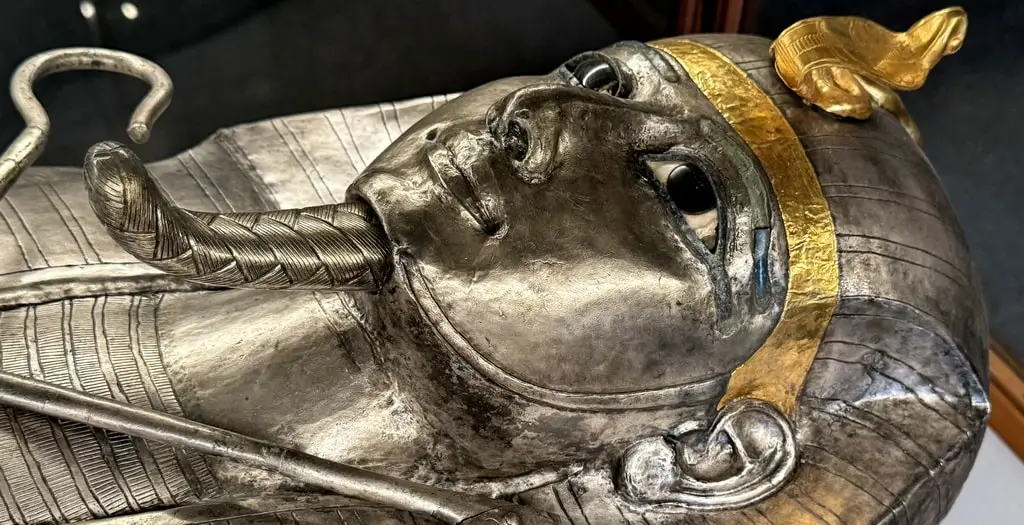
King Psusennes I, the “Silver Pharaoh” of the 21st Dynasty, is famed for his intact tomb discovered at Tanis. Buried in a unique solid silver coffin with a stunning gold mask, his unlooted treasures reveal the surprising wealth of the Third Intermediate Period, rivaling Tutankhamun’s discovery.
The Sphinxes of Tanis: Ancient Egypt’s Masterpieces of Usurpation
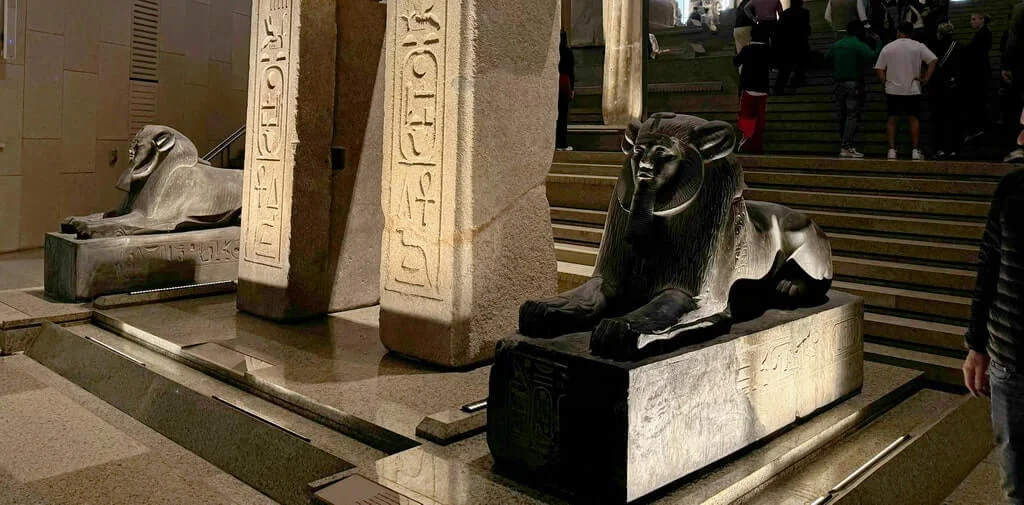
Uncover the mystery of the Sphinxes of Tanis, the “stolen” masterpieces of the Nile Delta. While these magnificent granite guardians proudly display the cartouches of Ramesses II, their stern, rugged features reveal a secret: they were actually sculpted centuries earlier during the Middle Kingdom. Explore how these powerful statues became the ultimate symbols of royal usurpation, repurposed by successive pharaohs to claim ancient glory as their own.
Amenhotep III: The Dazzling Sun Disk and Golden Age Pharaoh
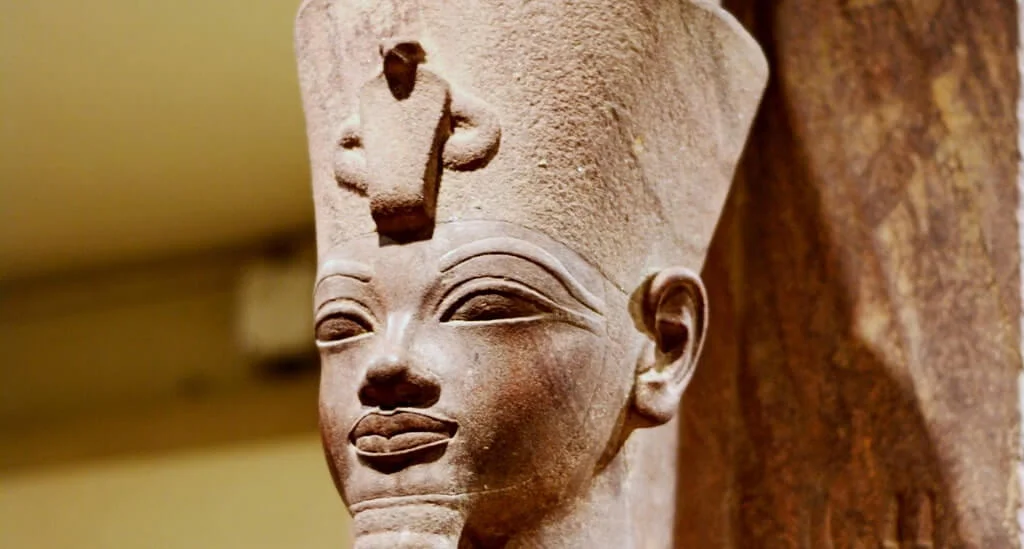
Amenhotep III (reigned c. 1388–1351 BC) was one of ancient Egypt’s most magnificent and powerful pharaohs, presiding over the zenith of the New Kingdom’s international prestige and wealth. Often called “The Dazzling Sun Disk,” he maintained peace across his vast empire through diplomacy and strategic alliances, secured primarily through marriage treaties, rather than constant warfare. Amenhotep III’s reign was a time of immense building activity, most famously the magnificent Temple of Luxor and his massive mortuary complex on the West Bank of Thebes, marked today by the colossal Colossi of Memnon. His focus on luxurious living, massive building projects, and diplomatic stability made his era a peak of Egyptian artistic and economic prosperity, setting the stage for the religious revolution of his son, Amenhotep IV (Akhenaten).
The Alabaster Sphinx: Memphis’s Majestic Guardian
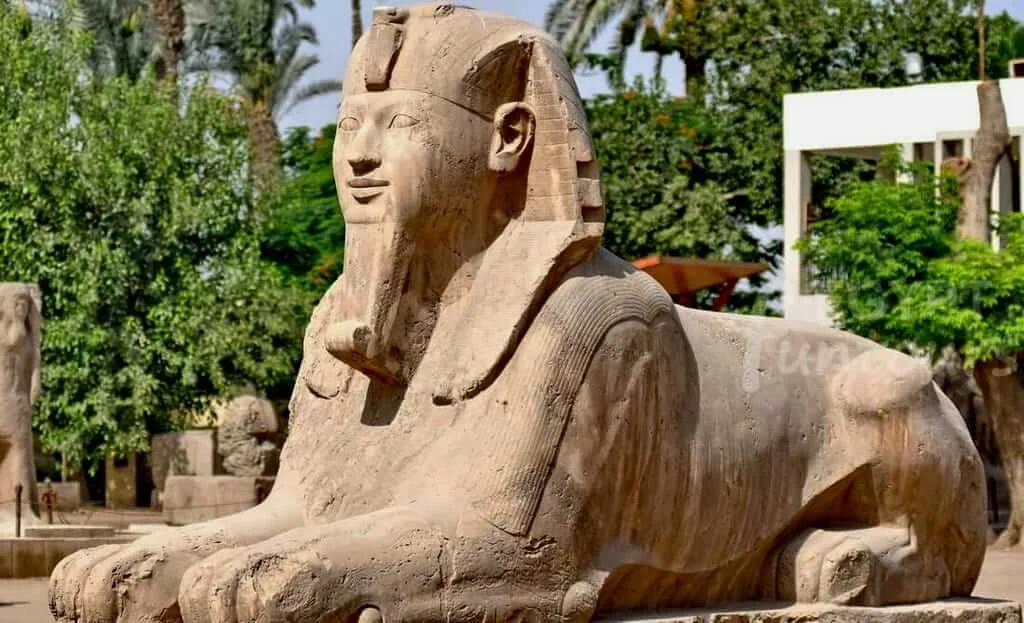
The Alabaster Sphinx of Memphis is a colossal ancient Egyptian statue, carved from a single block of calcite alabaster, currently displayed at the Memphis Open-Air Museum. Dating to the New Kingdom (likely the 18th Dynasty), it measures about 8 meters (26 ft) long and is one of the largest monuments ever made from this material. It features the body of a lion and a human head, serving as a powerful guardian. Although it has no inscription, its style suggests it may represent Pharaoh Amenhotep II or Queen Hatshepsut.
🐑 God Khnum: The Definitive Guide to the Egyptian Creator God
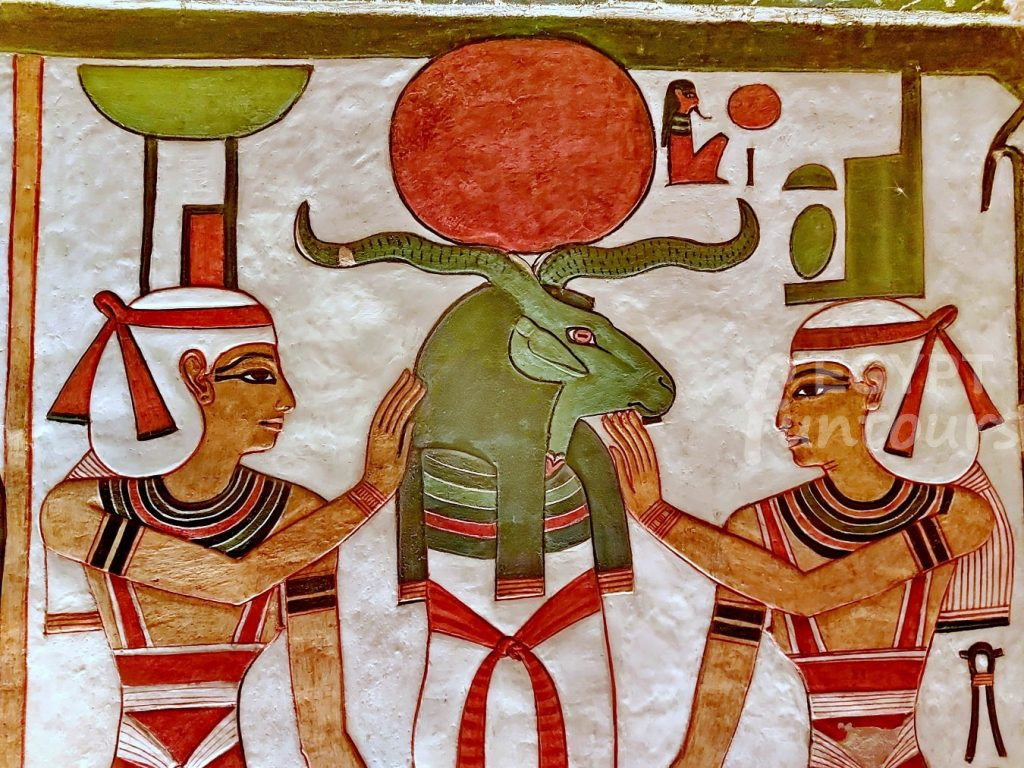
Khnum is the ancient Egyptian ram-headed creator god and master artisan. Known as “the divine potter,” he famously fashioned the bodies of humans and their life-force (ka) on his potter’s wheel using the clay of the Nile. His primary cult center was Elephantine, situated at the First Cataract. Therefore, he was revered as the absolute controller of the Nile River, responsible for releasing the life-giving annual flood. Khnum’s powerful ram symbolism represents fertility and virility, cementing his role as both the supreme originator of life and the divine sustainer of Egypt.
Goddess Mut: Divine Mother, Queen of Thebes, and Consort of Amun

Mut is a major ancient Egyptian goddess whose name literally means “Mother.” She rose to prominence during the New Kingdom as the powerful consort of the state god Amun, forming the central female figure in the Theban Triad alongside their son, Khonsu. Mut embodied the concept of the divine mother and queen. She is primarily depicted as a woman wearing the crowns of Egypt or, uniquely, as a vulture. Her cult center was the vast sacred precinct at Karnak, specifically the Temple of Mut, which housed hundreds of statues linking her to the fierce war-goddess Sekhmet.
The Theban Triad: Amun, Mut, And Khonsu

The Theban Triad was the principal family grouping of deities worshiped in the city of Thebes (modern Luxor) during the New Kingdom era of Ancient Egypt. It comprised the god Amun, the hidden one and King of the Gods; his consort Mut, a powerful mother goddess often associated with lions; and their divine son, the moon god Khonsu. This triad formed the religious core of the Karnak and Luxor temples and was central to the annual Opet Festival, symbolizing the cyclical renewal and legitimacy of pharaonic power.
God Khonsu: The Definitive Guide to the Egyptian Moon God and Traveler

Khonsu (also spelled Khons or Khensu) is the ancient Egyptian god of the Moon, time, and fertility. His name means “Traveler,” a reference to the moon’s nightly journey across the sky. He was a powerful nocturnal deity who measured the passage of time. As a result, he offered protection to travelers and helped ward off evil spirits and disease. Khonsu formed a crucial part of the famous Theban Triad alongside his father, Amun, and his mother, Mut. He is typically depicted as a youthful man with a side-lock of hair (signifying youth) and wearing a crescent moon and full disk headdress.
God Sobek: Guide to the Crocodile God of Power, Fertility, and the Nile
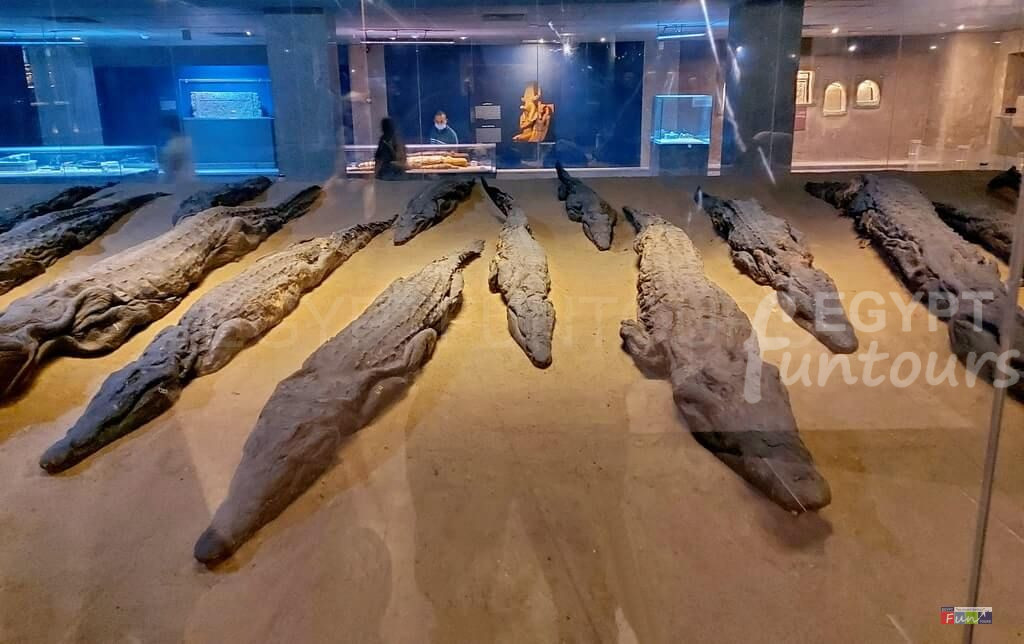
Sobek stands as one of the most ancient and enigmatic deities in the Egyptian pantheon. He is the formidable god of crocodiles, the Nile River, military strength, and fertility. Uniquely, Sobek embodied a striking duality. He was both a menace of chaos and a powerful, benevolent protector. He commanded the raw, untamed power of the Nile, representing the unpredictable threat of the river. Yet, he was simultaneously revered as a healer, a protector of the pharaohs, and a loyal ally to the supreme gods. His unique crocodile form made him a tangible, constant presence in the daily lives of the ancient Egyptians.
Amun: The Hidden One Who Became King of the Gods in Ancient Egypt
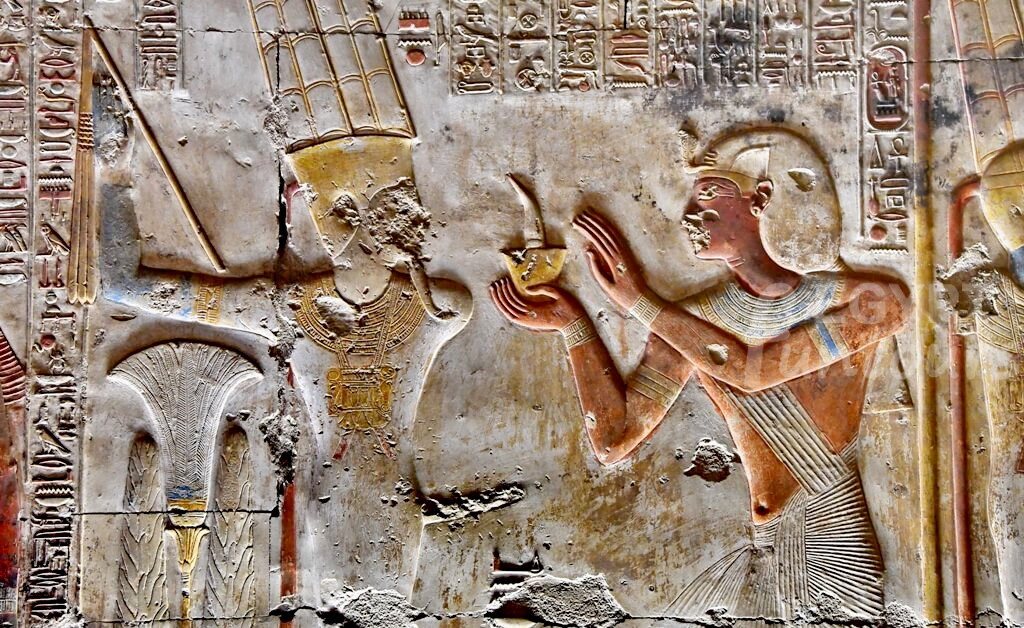
God Amun stands as one of the most powerful and enduring deities of the Egyptian pantheon, evolving from an obscure local god in Thebes (Waset) into the “King of the Gods.” This comprehensive guide explores his dramatic ascent, detailing his pivotal role during the New Kingdom when pharaohs like Thutmose III and Amenhotep III dedicated the monumental temples of Karnak and Luxor to his worship. You will discover his complex identity, from the mysterious, invisible aspect (“The Hidden One”) to his syncretism with the sun god Ra (Amun-Ra), and learn about his sacred family (Mut and Khonsu). Understand how this “Hidden One” became the imperial god who shaped political power and religious doctrine for over a thousand years.
God Thoth: The Egyptian God of Wisdom, Writing, and the Moon

Thoth (or Djehuty) is one of the most important and powerful ancient Egyptian gods. He is the ultimate deity of Wisdom, Writing, Magic, Science, and the Moon. He served as the divine Scribe of the Gods and the constant mediator in cosmic disputes, most famously in the battle between Horus and Set. Thoth embodies the personification of divine intelligence and the maintenance of universal order (Ma’at). Artists depicted him in two distinct forms: the Ibis-headed man and the Baboon. His chief cult center was the city of Khmunu, which the Greeks renamed Hermopolis Magna.