Ramesses III: The Life, Wars, and Death of Egypt’s Last Great Pharaoh

Explore the turbulent reign of Ramesses III, the last great warrior pharaoh of Egypt's New Kingdom. This article delves into his defining moment: the brutal land and sea battles where he repelled the mysterious "Sea Peoples," saving Egypt from the Bronze Age Collapse engulfing its neighbors. But his victory was short-lived. We examine the internal crises that defined his later years, from crippling economic struggles to the first recorded labor strike in history, and uncover the shocking palace intrigue of the "Harem Conspiracy" that ultimately led to his assassination.
WhatsApp
Email
Print

Many know Ramesses the Great (Ramesses II). His namesake, Pharaoh Ramesses III, faced an even greater challenge: saving Egypt from total collapse. He ruled during global chaos and faced mysterious invaders, managed internal unrest, and met a grisly end. He died not in battle, but inside his own palace. This is the story of the New Kingdom’s last great warrior pharaoh, his victories, and his tragic assassination.

Who Was Pharaoh Ramesses III?
Who Was Pharaoh Ramesses III

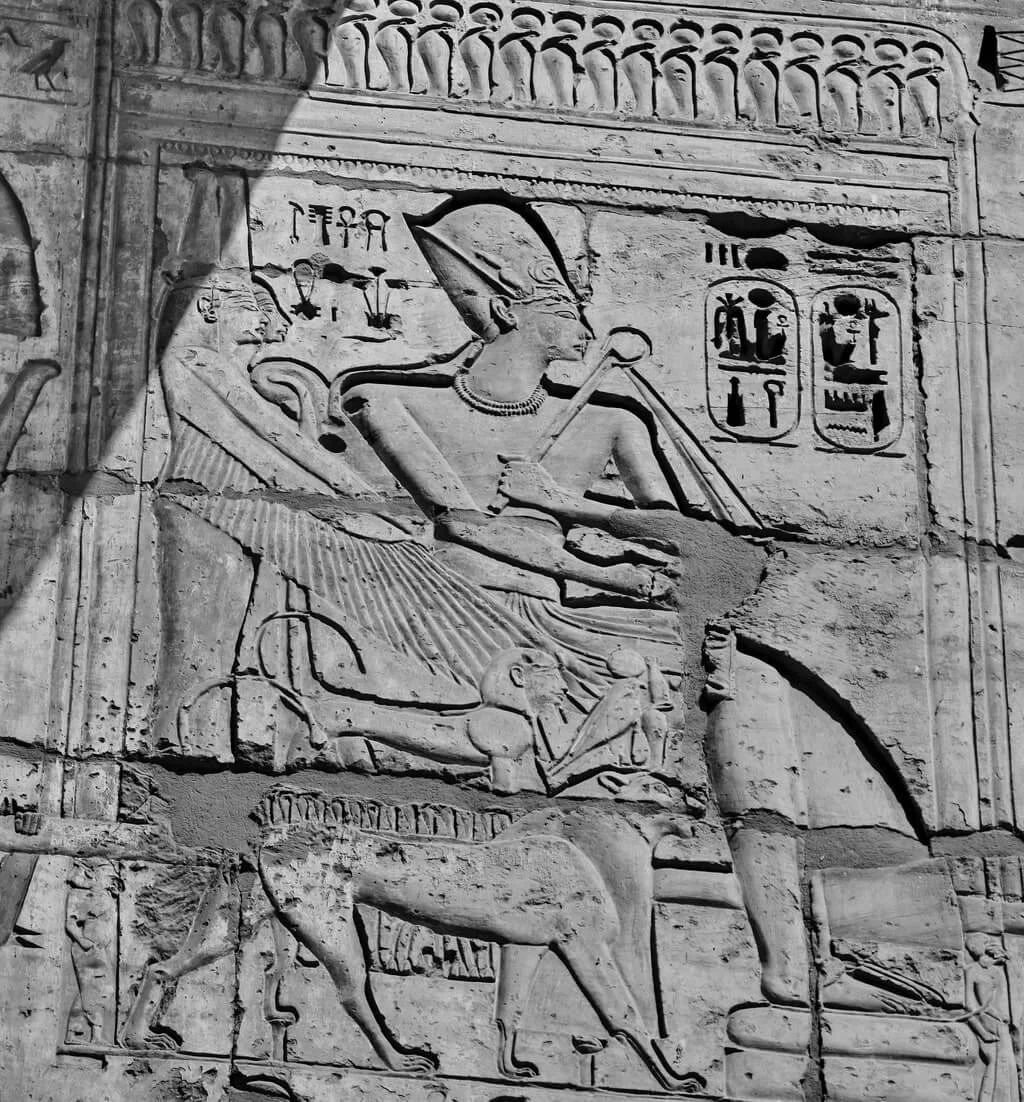
Pharaoh Ramesses III (or Ramses III) ruled Egypt from roughly 1186 to 1155 BCE. He was the second ruler of the Twentieth Dynasty. Many consider him the New Kingdom’s last monarch with true centralized power.

His father, Setnakhte, founded the dynasty after a period of civil unrest. Ramesses III’s goal was clear. He wanted to emulate the legendary Ramesses II and restore Egypt’s glory.

He inherited a stable kingdom, but the world around it was collapsing. The Bronze Age was ending in catastrophe. Empires like the Hittites fell. Major cities across the Mediterranean burned. This chaos marched directly toward Egypt.
The eye of Horus

A World in Collapse: The War Against the Sea Peoples

A World in Collapse - The War Against the Sea Peoples

The war against the “Sea Peoples” defined Ramesses III’s reign. This was not a single nation. They were a mysterious confederation of migrating warriors from the Aegean and Mediterranean.

These groups, like the Peleset (likely the Israelies), Tjekker, and Denyen, had already shattered the Hittite Empire. They destroyed kingdoms in Anatolia and Syria and moved as a whole population, not just an army. They brought families and possessions in ox carts, carving a path of destruction. In Ramesses III’s eighth regnal year, this massive invasion force reached Egypt.

The Land and Sea Battles

Pharaoh Ramesses III met this threat with brilliant strategy. He first confronted their land army in Palestine and halted its advance.

The decisive conflict was the Battle of the Delta, a brutal naval engagement. Ramesses III cleverly lured the Sea Peoples’ fleet into the Nile’s narrow channels. His inscriptions at Medinet Habu describe the trap:

“I had the river-mouths prepared like a strong wall, with warships, galleys and coasters… They were manned completely from bow to stern with brave warriors carrying their weapons.”

Egyptian ships were perfect for the river, not the open sea. Egyptian marines and archers on the riverbanks rained arrows on the enemy. As ships drew close, Egyptian grappling hooks pulled them in. Soldiers boarded the enemy vessels and overwhelmed them.

The victory was total. Ramesses III saved Egypt from the region’s widespread collapse. He settled the captured Sea Peoples in Egypt, neutralizing them as a threat.

Golden Scarab

Medinet Habu: A Fortress of Propaganda and Piety

Medinet Habu - A Fortress of Propaganda and Piety

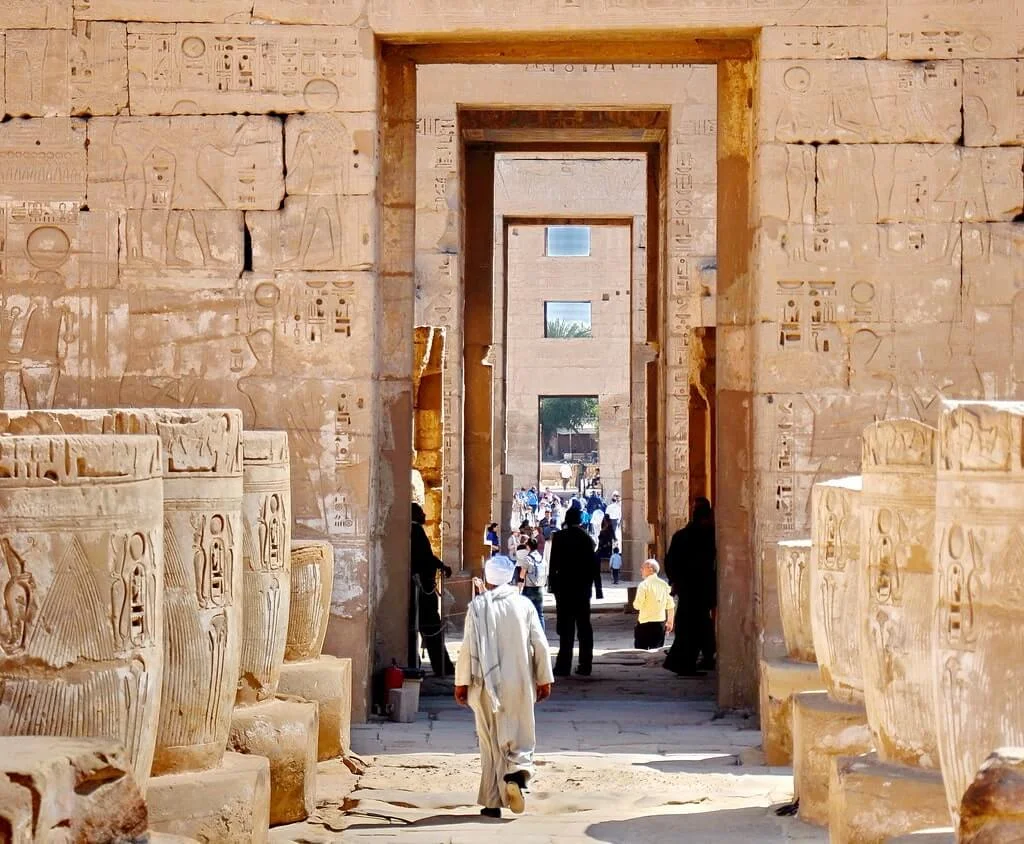
Pharaoh Ramesses III built Medinet Habu to celebrate his victory and honor the gods. It is one of Egypt’s most magnificent mortuary temples.

Medinet Habu sits on the West Bank of Luxor (ancient Thebes). It was more than a temple; it was a massive, fortified administrative center. Its great walls and gateways symbolized royal power.

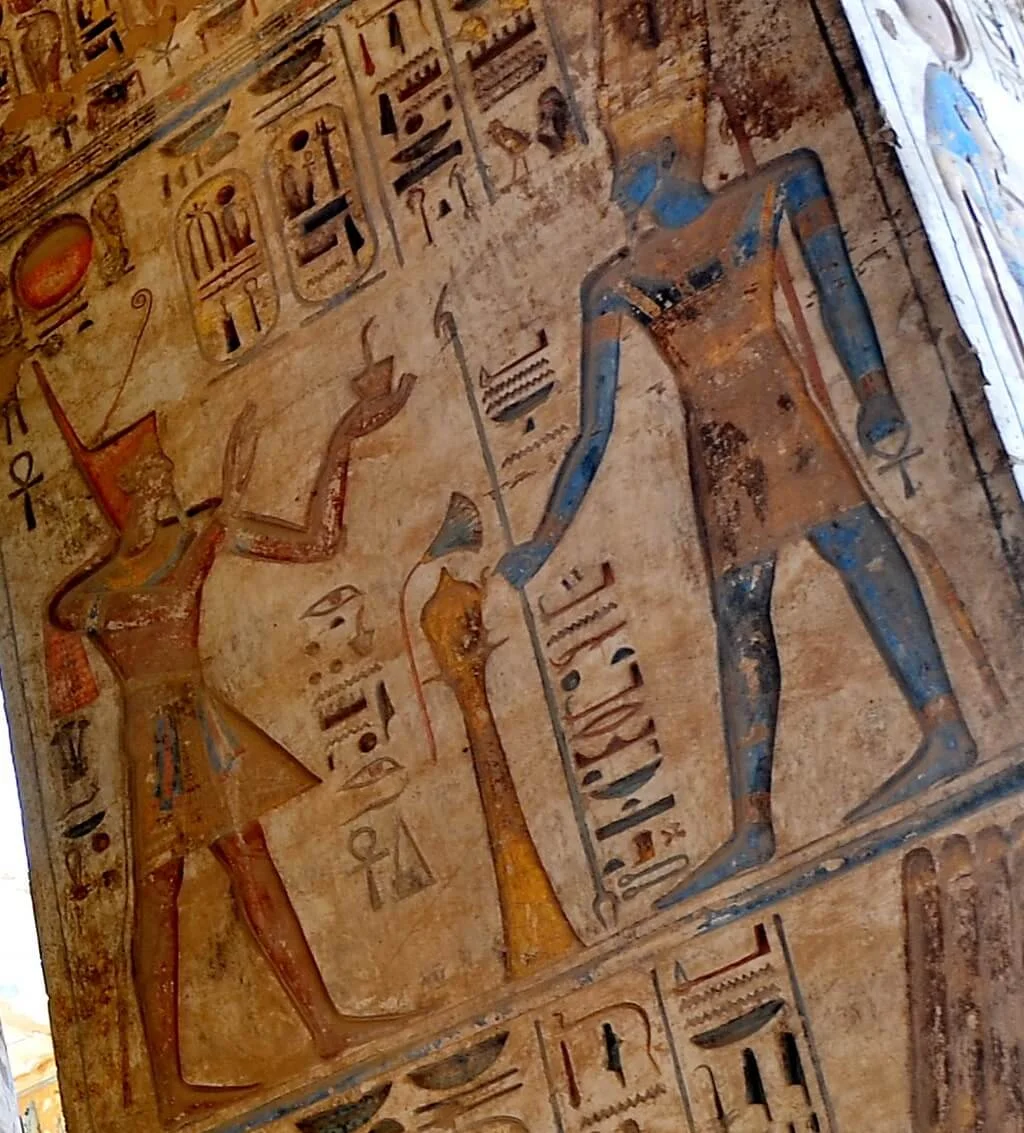
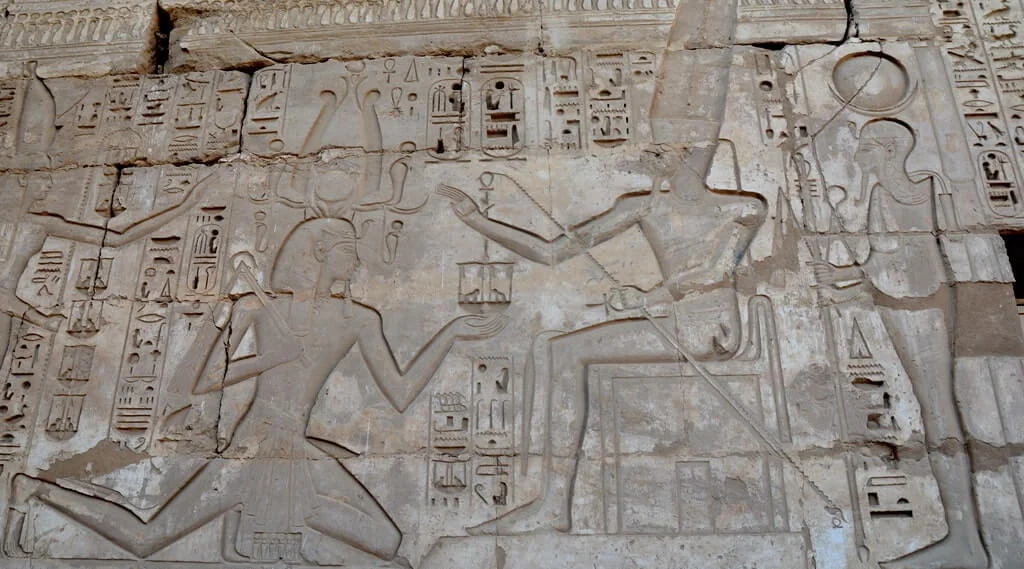
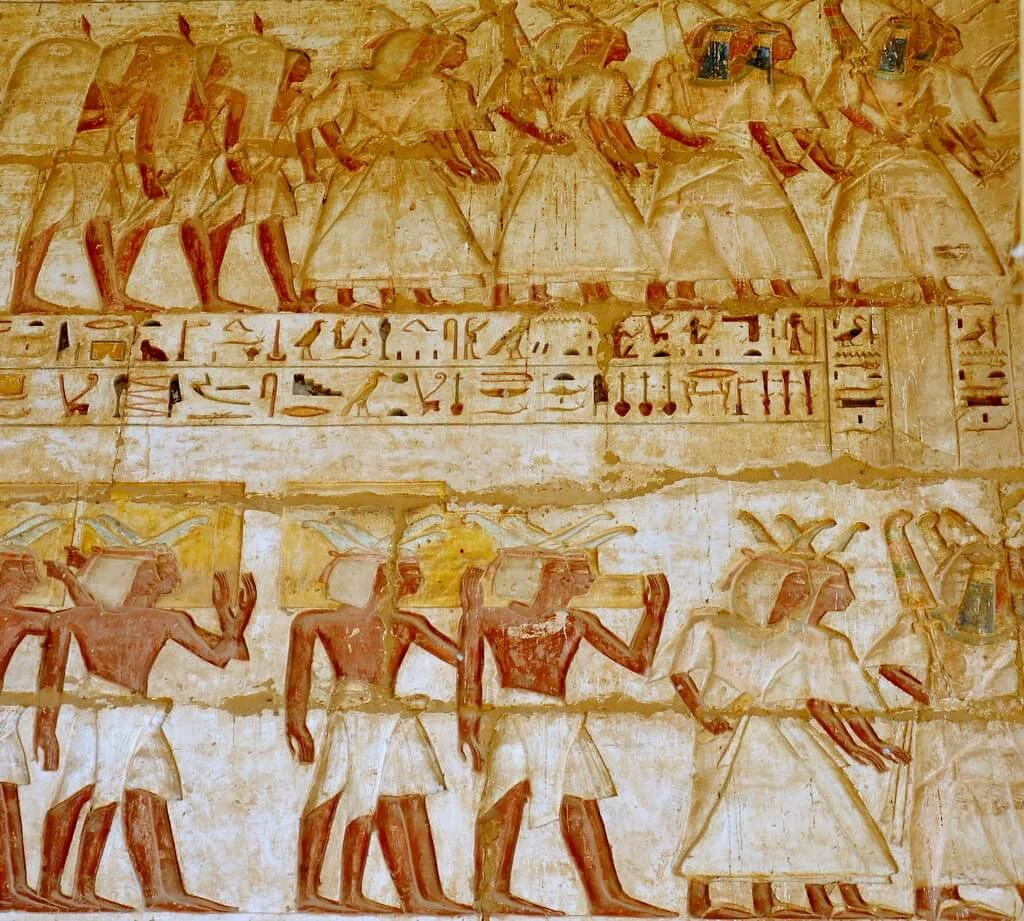
For historians, its walls are a stone history book. The reliefs provide our main account of the wars. They are, however, propaganda. They depict the pharaoh as Egypt’s heroic protector. The carvings graphically show naval battles, soldiers counting severed enemy hands, and prisoners presented to the gods.

Internal Troubles: The Cracks Begin to Show

Internal Troubles The Cracks Begin to Show - Pharaoh Raomsses III

Ramesses III projected an image of total control, but the reality was complex. The successful wars were incredibly costly.

Mounting economic problems plagued his reign:

  • Supply Chain Failure: Records show grain shipments to the tomb-builders at Deir el-Medina often arrived late.
  • Corruption: High-ranking officials grew corrupt. Authorities recorded many tomb robberies and embezzlements.
  • The First Labor Strike: These issues led to the first recorded labor strike in history. Around his 29th year, the unpaid and starving tomb workers threw down their tools. They marched on the temples, chanting, “We are hungry!”

This event was a profound shock. It showed the vast state bureaucracy was failing. The pharaoh’s divine authority could no longer guarantee order.

Alexander the Great: Travel the Path of a Pharaoh-King

Alexander the Great became Pharaoh in Egypt (332 BC). He founded Alexandria, a world capital,...
Related post
The eye of Horus

The Harem Conspiracy: A Royal Assassination

The Harem Conspiracy A Royal Assassination - Pharaoh Ramsses III

The internal rot climaxed in Ramesses III’s final days. While the pharaoh celebrated at Medinet Habu, a plot grew within his palace. We call this the Harem Conspiracy.

One of his secondary wives, Queen Tiye, orchestrated the plot. Her motive was simple. She wanted her son, Pentaweret, to seize the throne and bypass the chosen heir, the future Ramesses IV.

The plot was vast. It involved high-ranking court members, military commanders, servants, and even magicians. They crafted wax figures to curse the pharaoh. The Judicial Papyrus of Turin preserves the conspiracy’s details and the conspirators’ trials.

How Did Ramesses III Die?

For centuries, his exact cause of death was a mystery. The Judicial Papyrus only says the conspirators “overthrew their lord.” His mummy showed no obvious wounds.

That changed in 2012.

Modern CT scans of Ramesses III’s mummy revealed a shocking injury under the linen bandages. Someone had slit his throat.

Forensic analysis found a deep, 7-centimeter-wide cut. It severed his trachea, esophagus, and major arteries. The injury was instantly fatal. This proved the Harem Conspiracy succeeded. The assassins had murdered the pharaoh.

The Aftermath and the Cursed Prince

His rightful heir, Ramesses IV, conducted the trials after Ramesses III’s death. He captured the plotters and brought them to justice. The court sentenced many to death. Others had to take their own lives.

Many believe the mummy “Unknown Man E” is Pentaweret, the prince at the plot’s center. This mummy is a disturbing sight. It is a young man, and his face is contorted in a permanent scream. He was buried in a ritually “unclean” goatskin. DNA analysis confirms he was a close relative of Ramesses III. Forensic evidence suggests he died by strangulation or self-hanging.

This is likely the body of the failed usurper, denied a proper burial and damned for eternity.

King Chephren (Khafre): The Pharaoh of the Sphinx and the 2nd Pyramid

King Chephren (Khafre) is the master of the Giza Plateau. While his father, Khufu, built...
Related post
Golden Scarab

The Legacy of Egypt’s Last Warrior King

The Legacy of Egypt's Last Warrior King

Pharaoh Ramesses III was the last of the great pharaohs. He defended Egypt from the destruction that ended the Bronze Age for everyone else. He was a master military commander and a great builder.

However, his reign marked a turning point. The economic problems and internal divisions he faced only worsened after his death. The pharaoh’s power declined rapidly. His successors, a long line of short-lived Ramesses (IV through XI), ruled over a shrinking empire. They faced rampant tomb-robbing and the eventual fracturing of Egypt.

Ramesses III held the line. He was the last man to do so. He saved Egypt, but he could not save the golden age of the pharaohs.

Psusennes I: The Silver Pharaoh of Tanis

King Psusennes I, the "Silver Pharaoh" of the 21st Dynasty, is famed for his intact...
Related post
The eye of Horus

Frequently Asked Questions (FAQ)

Was Ramesses III related to Ramesses II (the Great)? No, he was not a direct descendant. He was the son of Setnakhte, the founder of the 20th Dynasty. He chose the name “Ramesses” to intentionally model his reign after the great Ramesses II of the 19th Dynasty.

What happened to Egypt after Ramesses III died? After his assassination, Egypt entered a period of slow decline. The power of the pharaohs weakened, while the High Priests of Amun at Thebes gained more control. This eventually led to the end of the New Kingdom and the beginning of the Third Intermediate Period.

Who exactly were the Sea Peoples? This remains one of history’s great mysteries. They were not a single ethnic group but a collection of different peoples from the Aegean and Mediterranean. These may have included proto-Greeks, Sardinians, and Sicilians. Many believe the Peleset, one of the most prominent groups, were the Philistines who later settled in Canaan.

Walk in the Footsteps of a Pharaoh with Egypt Fun Tours

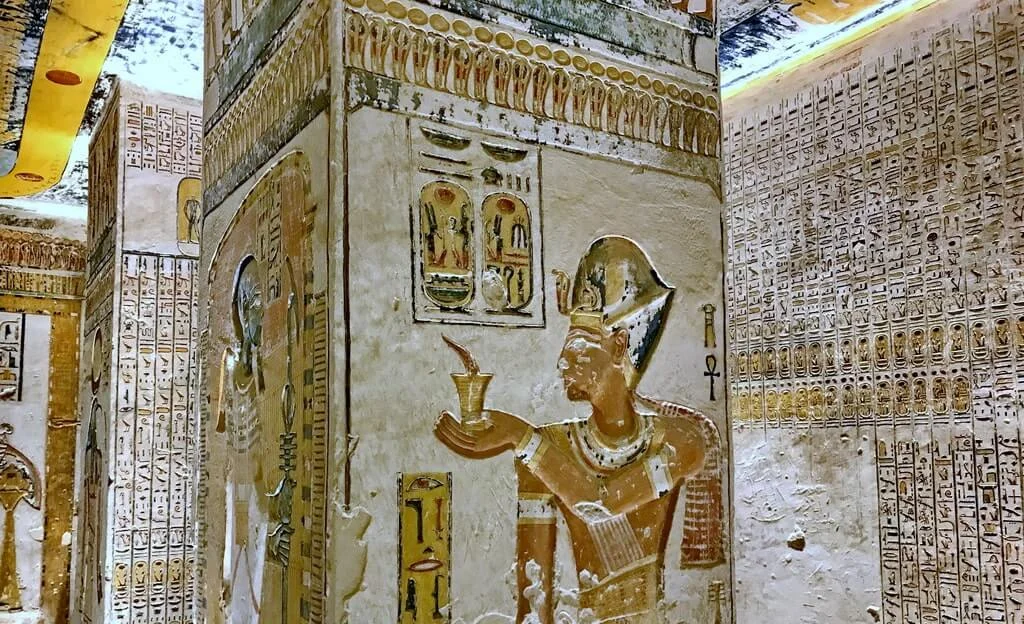
The story of Ramesses III isn’t just written in history books; it’s carved into the magnificent walls of his tomb (KV11) and his vast mortuary temple at Medinet Habu. Don’t just read about this legendary pharaoh—witness his legacy for yourself. Egypt Fun Tours brings this ancient world to life, with expert guides who can translate the hieroglyphs, explain the epic battle scenes, and guide you through the very halls built to secure his eternal glory.

God_Anubis_Icon

Great layover tour

First things first…I was in Cairo about a week before the protests of 2011 started. As far as the tour was concerned, I was very pleased. I was met at the airport by a knowledgeable guide (Sara) who spoke great English and a driver. They took me to Giza first,

More »
A Royal Commission The History of Al-Rifa'i Mosque

Highly recommended

Salam, This company is very responsive and accommodating. From the moment we started to chat via email, to the moment we left Egypt at the airport, these fellows were very professional. The tour covered most of what we wanted to see! We customized it to our needs and added some

More »

Excellent Tour

Really excellent tour from Mohamed, and we learned so much about Egypt and went to places we never would have found as tourists at home. My girlfriend had a 12 hour stop over on the way to Ethiopia and it was the perfect way to see Cairo. I hope people

More »

Valley of Whales – Wadi El Hitan and Wadi El Rayan

What a blast! It was an amazing day and a 5-star day trip. Everything was organised from A to Z by Hamada and Mohamed at Egypt Fun Tours in a timely manner. Pick up/drop off from/to the hotel, exquisite lunch and snacks, 4×4 jeep. Everything was as advertised. Also, the

More »

Big tick off our bucket list!

Booked the evening before and were able to do everything we hoped to in a day, with a knowledgeable guide & at a reasonable price! Lunch was included and absolutely delicious! Learnt about the history of Egypt, which was the most important part of sightseeing in Cairo/Giza. Hamada also gave

More »
God_Anubis_Icon

Top-rated Tour Packages

God_Anubis_Icon
WhatsApp
Email
Print