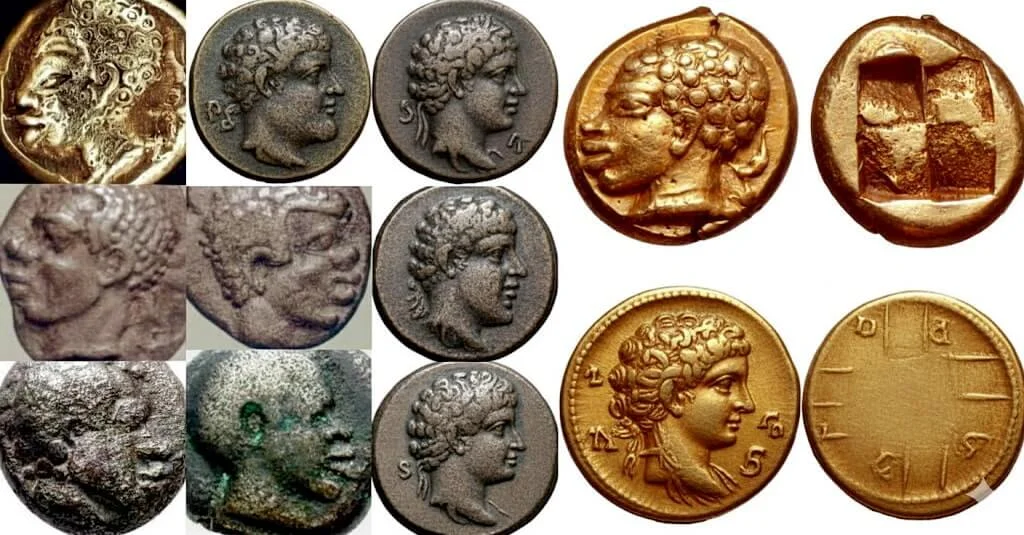
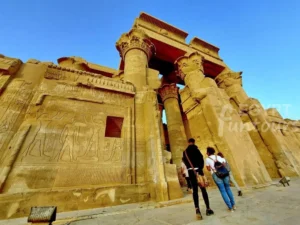
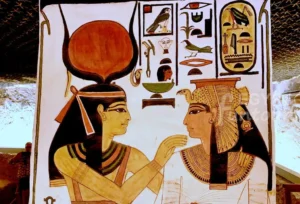
The Egyptian influence on Greek civilization is evident in the coinage of the Ptolemaic dynasty in Hellenistic Egypt. Coins became a powerful tool for the Ptolemies to legitimize their rule and showcase the fusion of Greek and Egyptian traditions. Before the Greeks, Egypt had no standardized monetary system; it relied on a barter economy and precious metal bullion. The Ptolemies introduced a sophisticated trimetallic system, mirroring Greek city-states, to finance their military and trade.
Early Ptolemaic coins featured distinct Greek iconography. They showed the bust of Ptolemy I or an eagle on a thunderbolt, a symbol of Zeus. Over time, the designs began to include Egyptian elements. Later Ptolemaic coins demonstrate this blending of cultures. The rulers wore Egyptian crowns, and the coins depicted syncretic gods like Zeus-Ammon, which combined the Greek king of gods with the principal Egyptian deity.
These coins circulated widely. They had a practical economic purpose, and they also visually communicated the dynasty’s effort to unify two distinct cultures under their rule.
Egyptian Lore’s Impact on Greek Literature
How Egyptian Stories Influenced Greek Writers
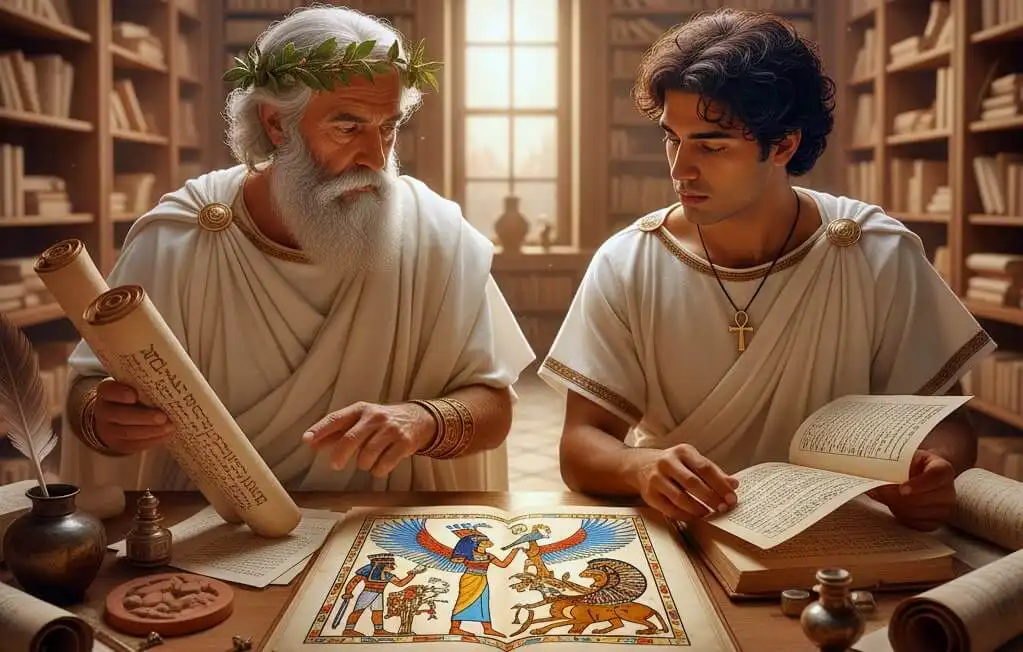
Ancient Egyptian literature, particularly its rich tradition of moral tales, myths, and wisdom texts, profoundly influenced Greek writers and philosophers. The Greeks, fascinated by Egypt’s antiquity and esoteric knowledge, absorbed Egyptian literary themes and narrative structures during the Hellenistic period. Egyptian wisdom texts provided practical advice on ethics and virtuous living. They bear a striking resemblance to later Greek philosophical dialogues and fables.
The “Tale of Sinuhe,” an Egyptian narrative, shares themes with Greek epic poems. Both stories feature a hero’s journey and a struggle with fate. Greek literature also adopted the Egyptian priest as a trope. They often portrayed them as a source of profound knowledge. For instance, in Plato’s dialogues Timaeus and Critias, Egyptian priests reveal the story of Atlantis.
This intellectual exchange enriched Greek literature. It added new philosophical dimensions and complex narrative forms. Greek writers built upon Egypt’s ancient literary heritage.
Ancient Egypt’s Lasting Gift to Greece and Western Culture
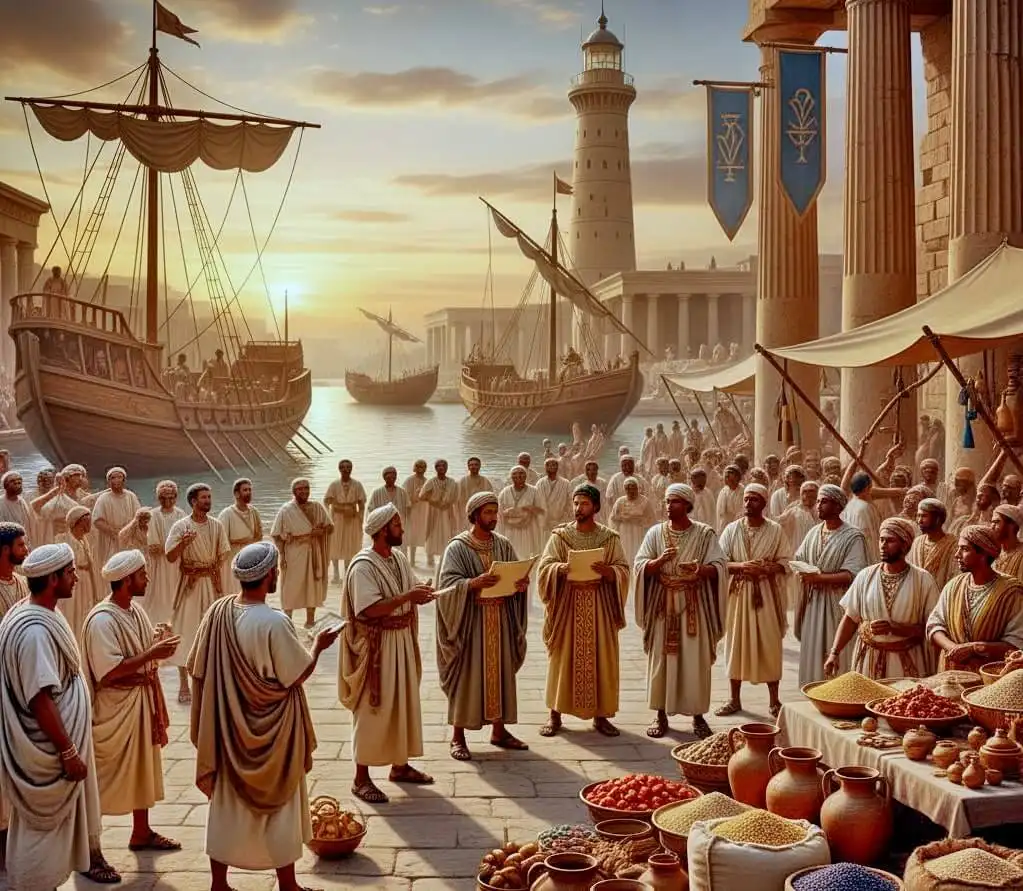
The Egyptian influence on Greek civilization was profound and multifaceted. Its wisdom flowed north, leaving an indelible mark on Greek society, from the spiritual to the intellectual.
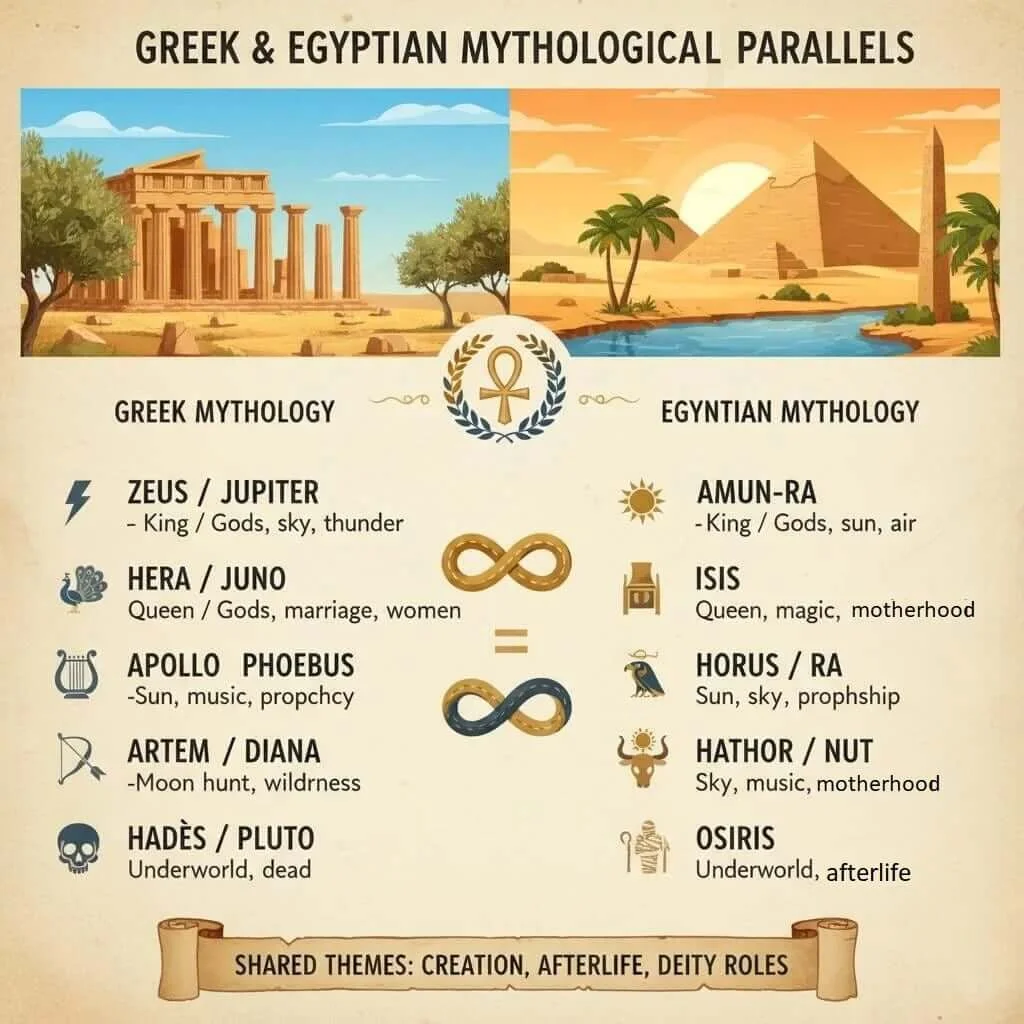
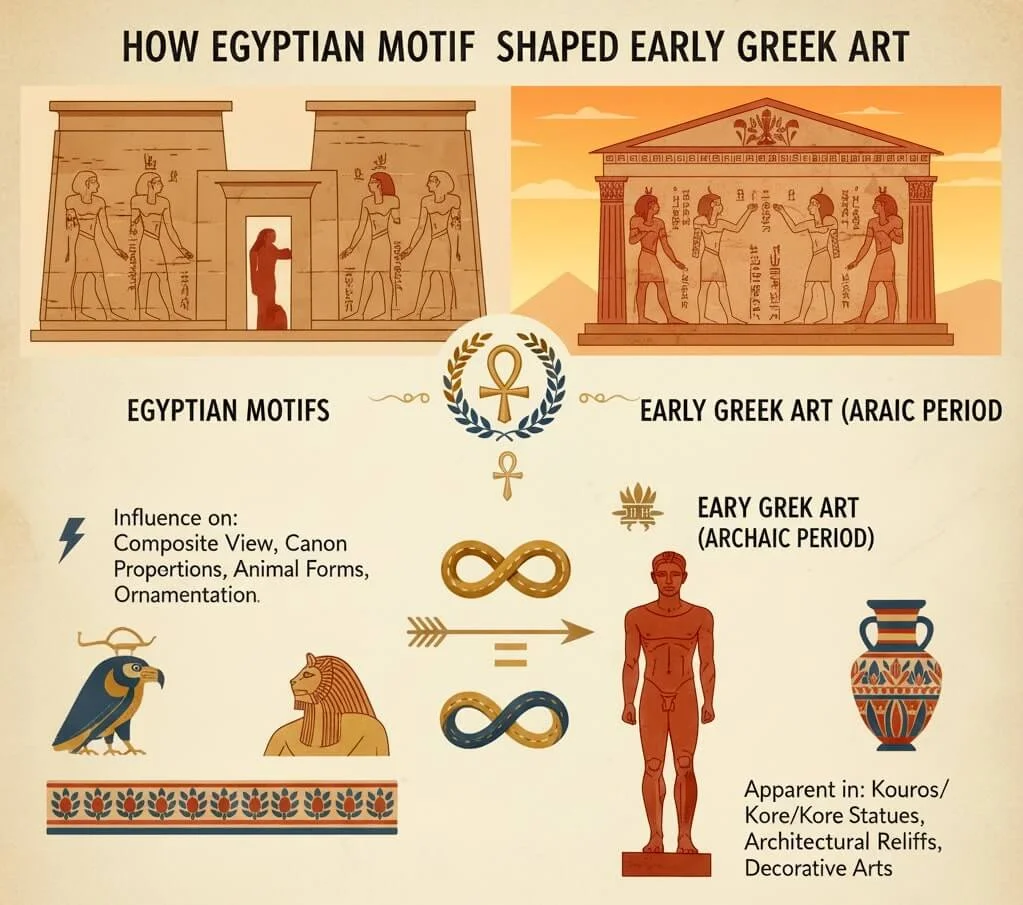
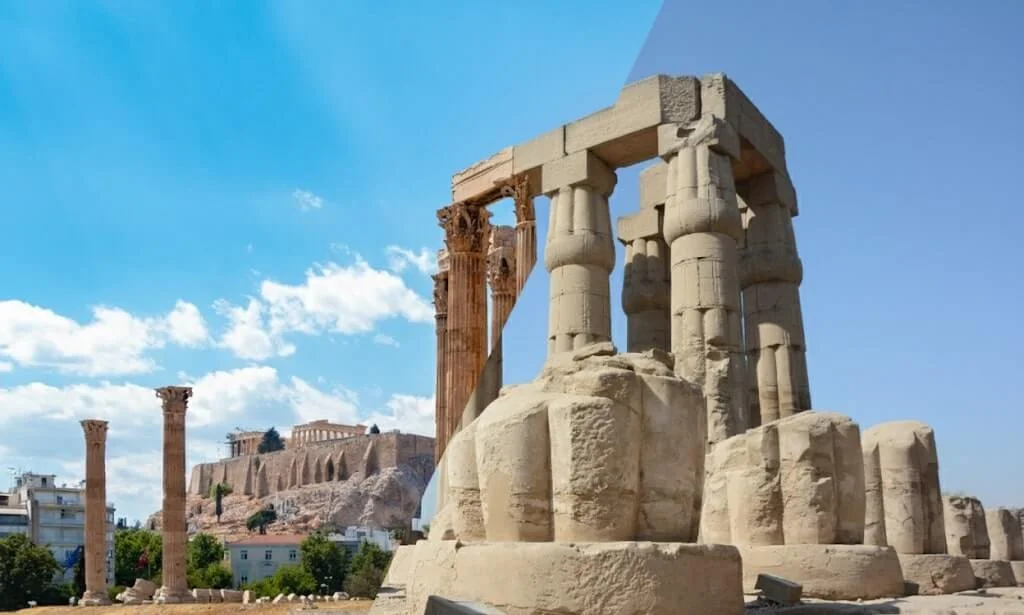
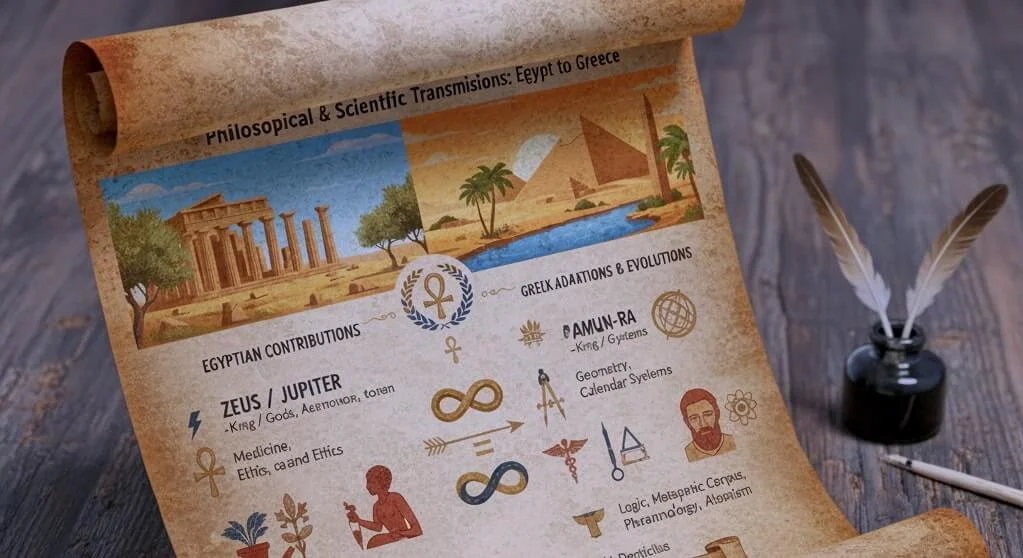
Egyptian deities like Isis and Osiris joined the Greek pantheon. Their stories and rituals enriched Greek religious life and influenced beliefs about the afterlife. Greek artists and architects studied Egypt’s monumental works. They adopted new techniques and methods that redefined Greek sculpture and design.
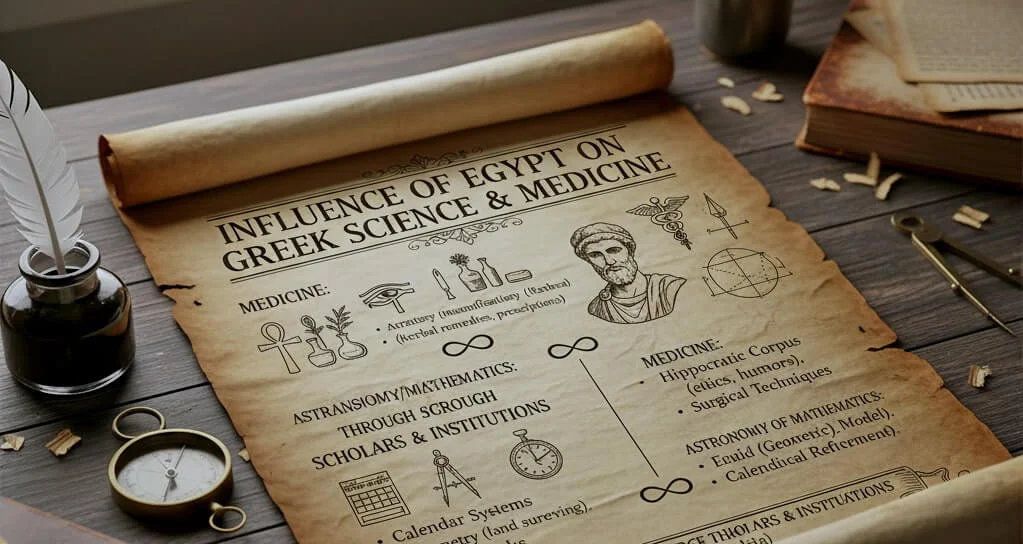
This was more than just an artistic exchange; it was a sharing of knowledge. Greek minds like Pythagoras and Plato traveled to Egypt, absorbing ancient wisdom in geometry, astronomy, and medicine. This vibrant connection between two great civilizations created a foundation that would help shape the Western world for generations.