
Fifth Dynasty of Egypt: A New Era for the Old Kingdom
The Old Kingdom is famously known as the “Age of the Pyramid Builders.” During the Fourth Dynasty, Egypt reached a monumental peak. However, a massive shift occurred around 2494 BCE. The power transitioned to a new line of rulers, marking the start of the Fifth Dynasty. This was more than a change in royal bloodlines. It represented a fundamental transformation in how pharaohs viewed the divine. Furthermore, it changed how they managed their complex state machinery.
From Giza to the Solar Cult
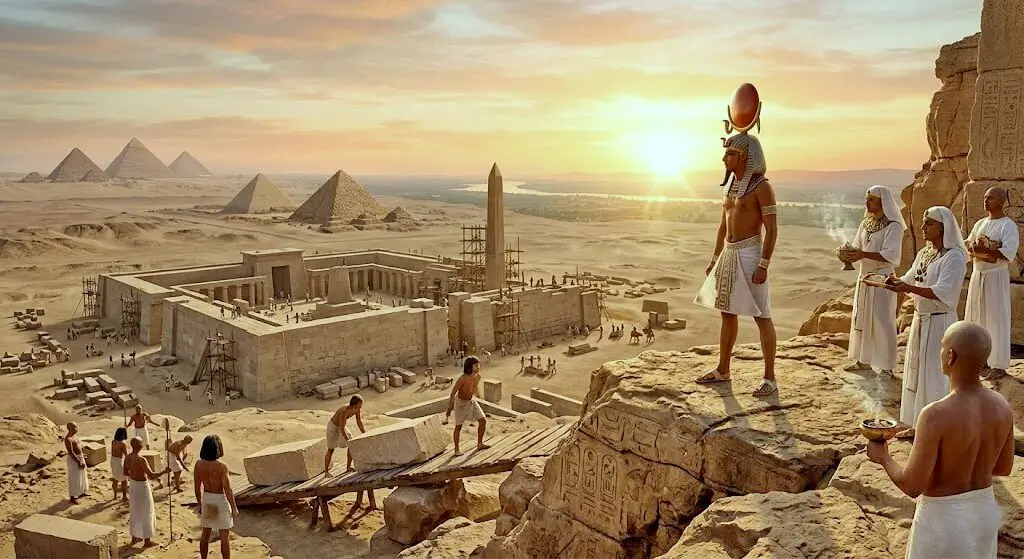
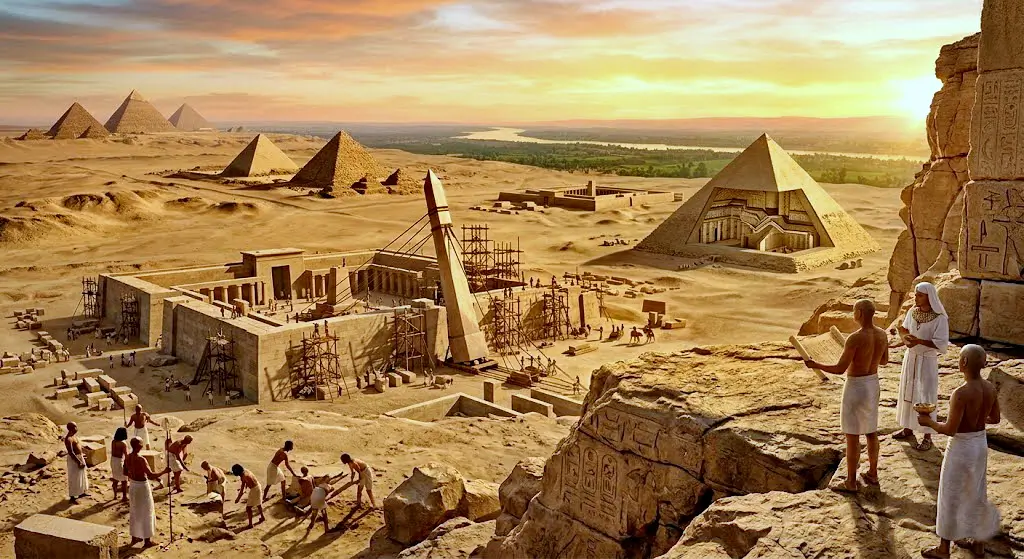
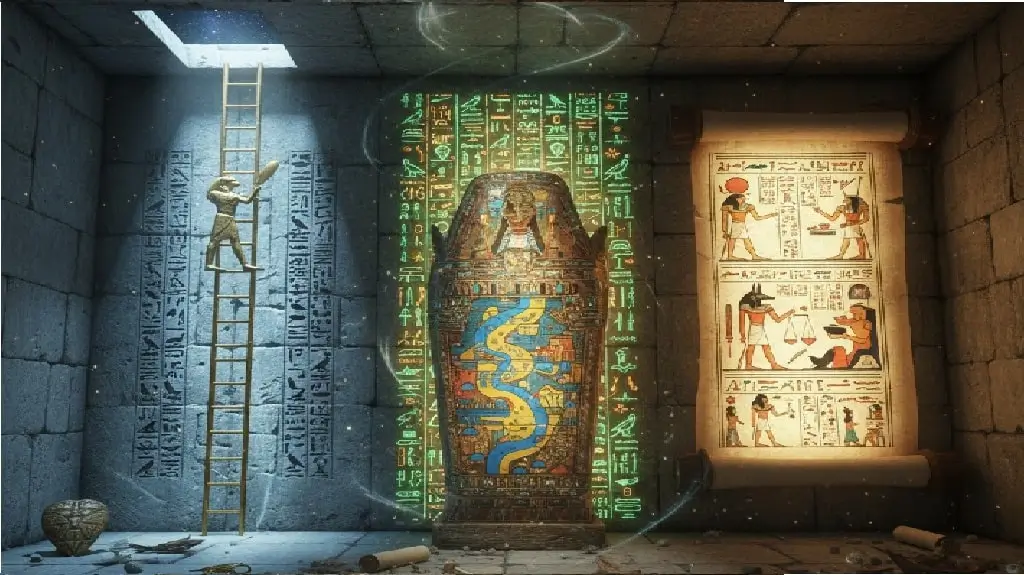
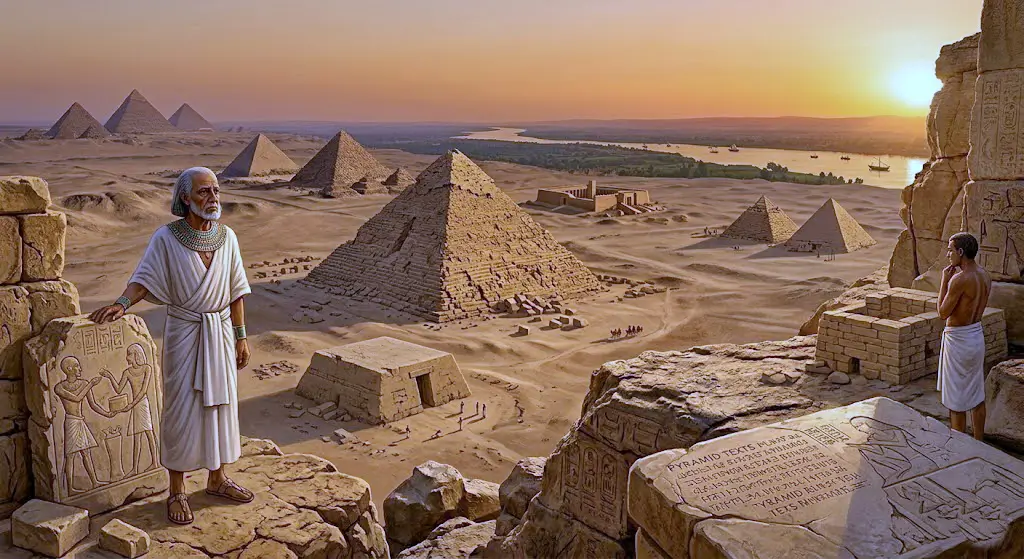
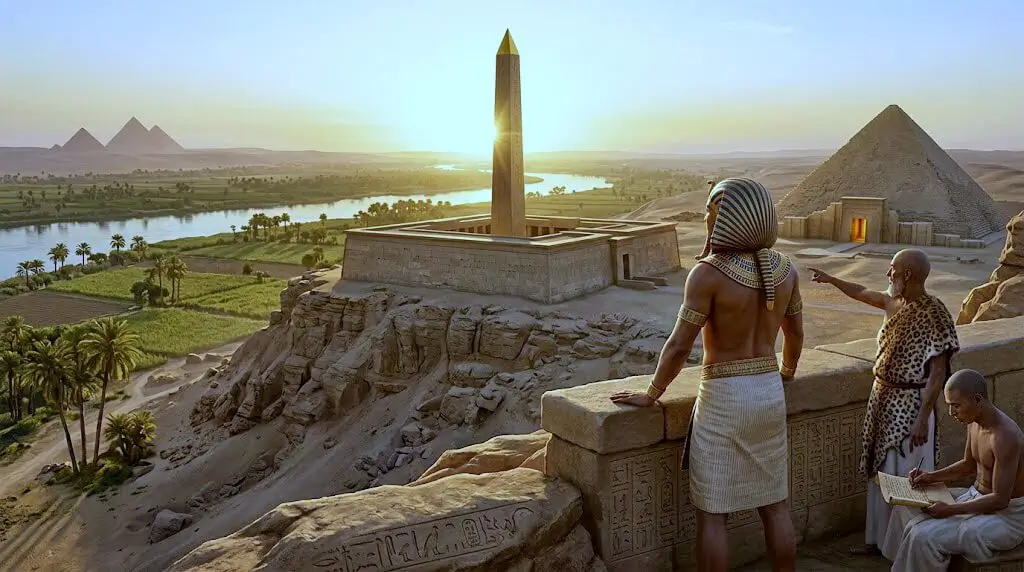
The Fourth Dynasty pharaohs focused on the massive Giza necropolis. In contrast, the rulers of the Fifth Dynasty sought a deeper, solar-focused connection to the cosmos. Consequently, this era became defined by the rise of the sun god, Ra. The kings established unique Sun Temples at Abu Ghurab to honor him. Additionally, they introduced the revolutionary Pyramid Texts. These were the first spells etched directly onto the walls of a royal tomb. As a result, these inscriptions forever changed the trajectory of Egyptian funerary practices.
The Evolution of Egyptian Governance
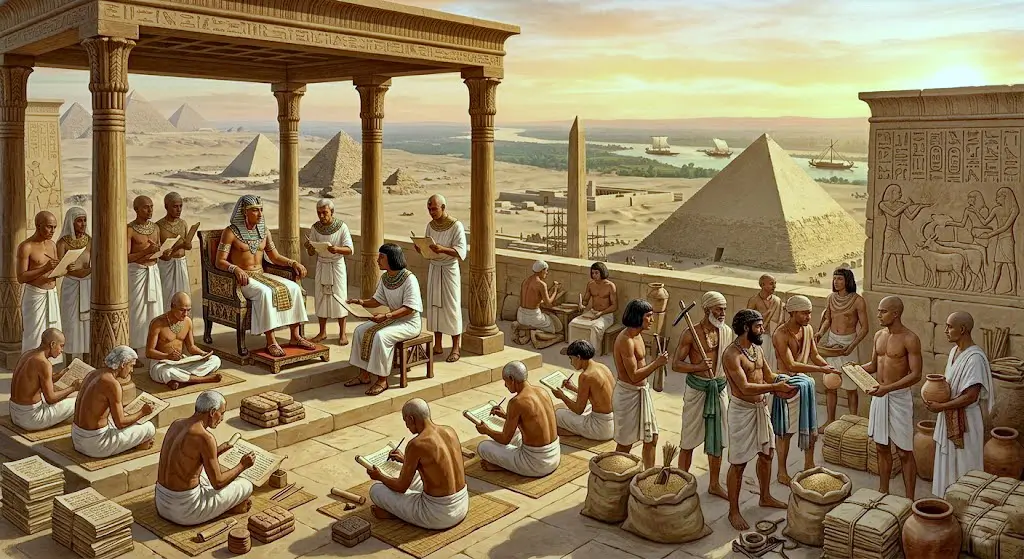
During this period, the absolute power of the king began to shift. Specifically, royal authority started to give way to a more professional, sophisticated bureaucracy. This dynasty was not just about building monuments; it was about administrative refinement. Through the study of the Abusir papyri, we gain incredible insights into how the state functioned.
Exploring the Sun Kings
In this article, we will move beyond the common stories of pyramid construction. Instead, we will uncover the true nature of these “Sun Kings.” We will investigate how they balanced ancient traditions with the needs of a growing society. Moreover, we will explore the profound religious changes that shaped Egypt for the next two thousand years. This is the story of a civilization in transition. It was a time when the rays of the sun guided the state, even as the first seeds of future decentralization were being sown.
The Kings of the Fifth Dynasty of Egypt: A Chronological List
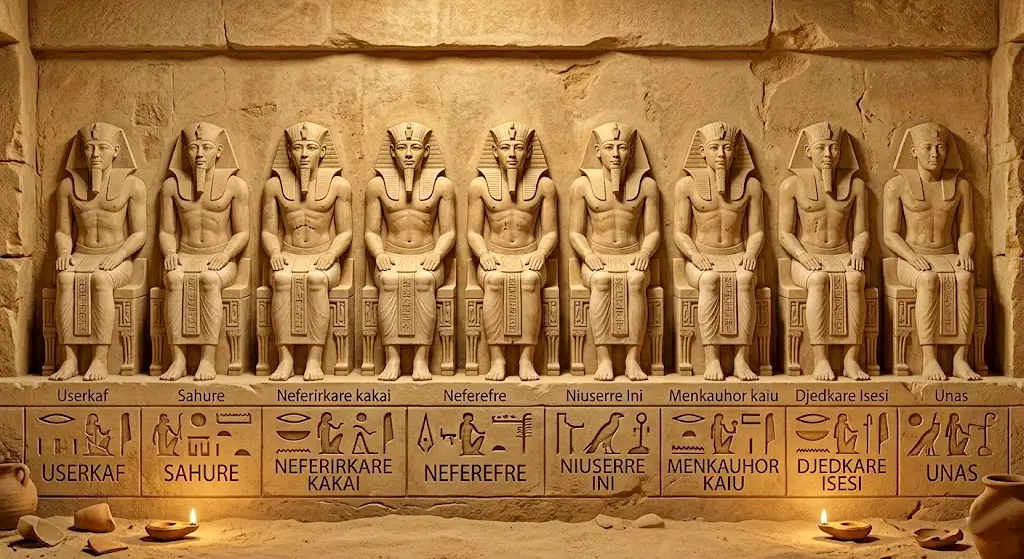
To provide your readers with a clear, authoritative reference, this section outlines the pharaohs who shaped the Fifth Dynasty of Egypt. Their individual contributions, from religious innovation to administrative reform, define the legacy of this fascinating period.
Key Rulers of the Dynasty
- Userkaf (c. 2494–2487 BCE): As the founder of the Fifth Dynasty of Egypt, Userkaf broke from the Fourth Dynasty’s traditions. He prioritized the sun god Ra and established the first Sun Temple at Abu Ghurab.
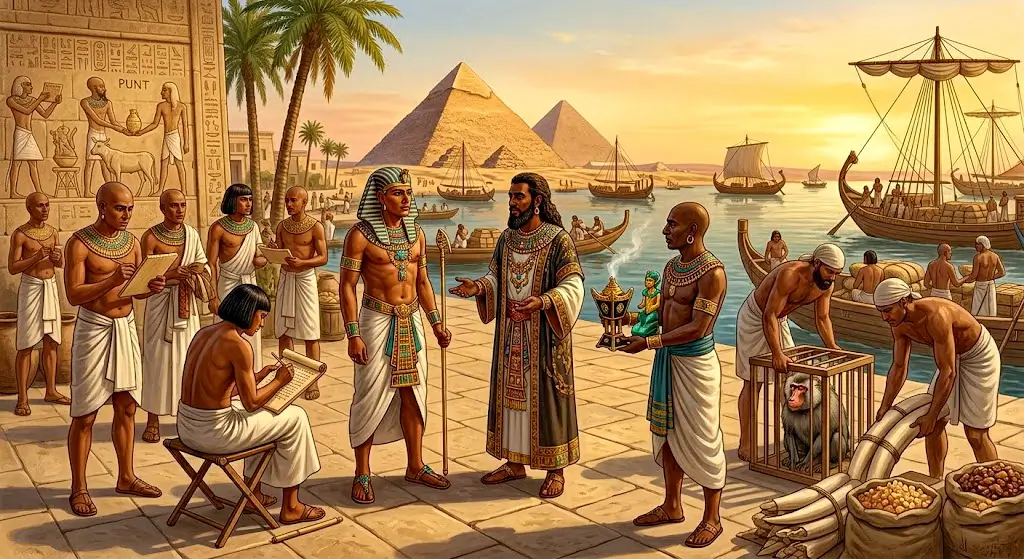
- Sahure (c. 2487–2475 BCE): Sahure is renowned for his active foreign policy. He expanded trade expeditions to the Levant and solidified Egypt’s regional influence.
- Neferirkare Kakai (c. 2475–2455 BCE): He continued the development of the Abusir necropolis. His reign saw the continued expansion of the complex bureaucracy that defined the administration of the Fifth Dynasty of Egypt.
- Neferefre (c. 2455–2453 BCE): Although his reign was brief, his unfinished pyramid at Abusir remains a significant archaeological site that reveals the technical challenges of the era.
- Niuserre Ini (c. 2453–2422 BCE): Niuserre is famous for the construction of the most complete Sun Temple at Abu Ghurab. His long reign allowed for extensive architectural and religious consolidation.
- Menkauhor Kaiu (c. 2422–2414 BCE): While his reign is less documented, he maintained the solar focus established by his predecessors and continued the state’s administrative stability.
- Djedkare Isesi (c. 2414–2375 BCE): A crucial reformer, Djedkare Isesi professionalized the bureaucracy. His long reign facilitated the provincial power shifts that eventually led to the decentralization seen in the later Fifth Dynasty of Egypt.
- Unas (c. 2375–2345 BCE): As the final king of the dynasty, Unas revolutionized Egyptian history by engraving the first “Pyramid Texts” onto his tomb walls. This final act solidified the religious legacy of the Fifth Dynasty of Egypt for centuries to come.