The Unification Battle by King Narmer
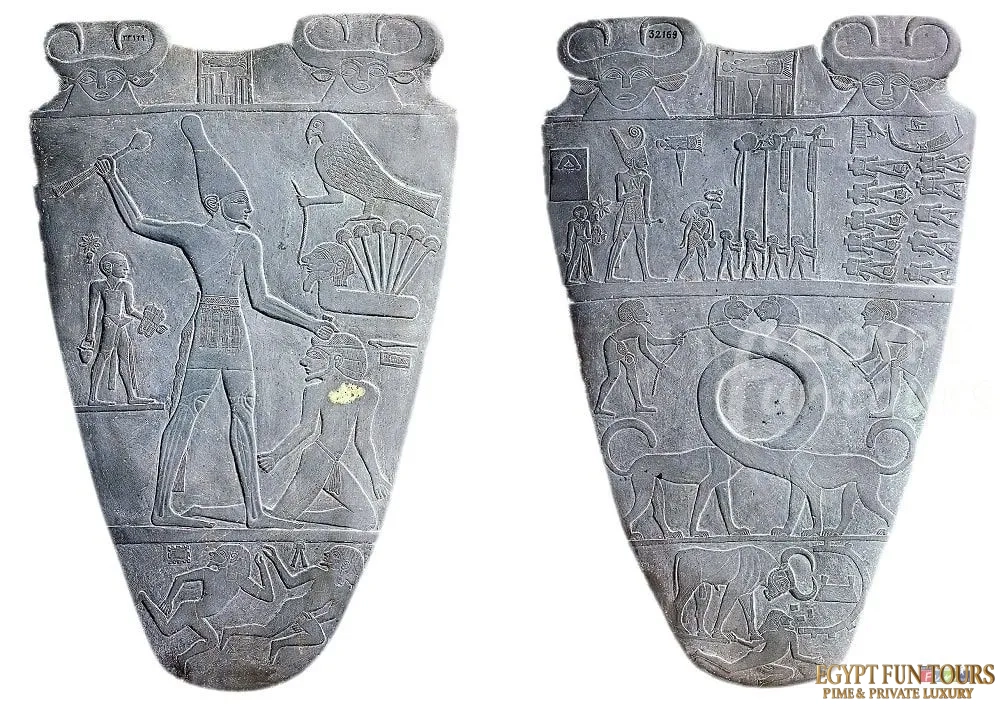
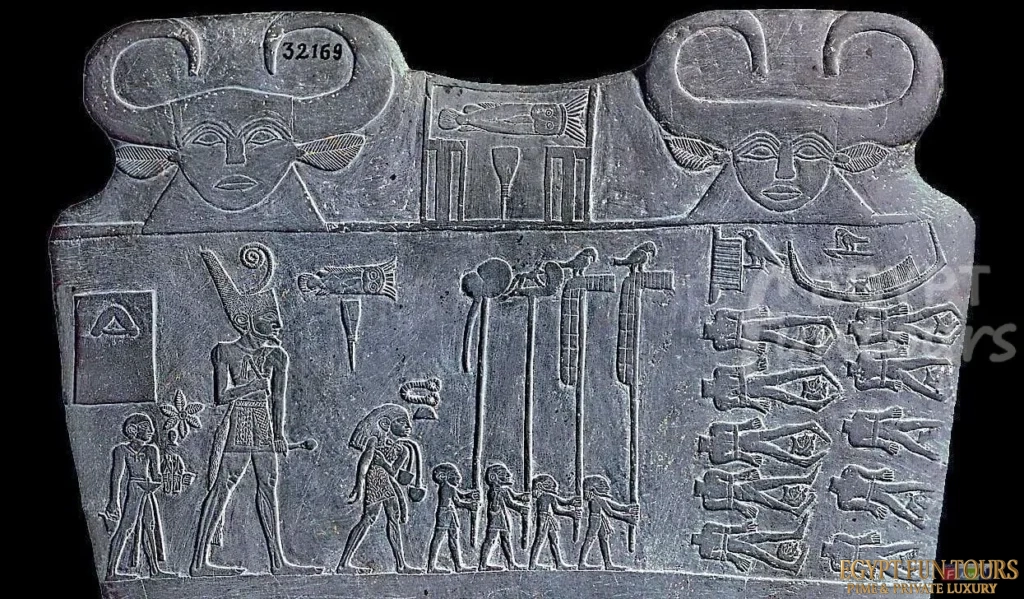
The unification battle of King Narmer is shown on his Palette from ancient Egypt’s Predynastic Period. This cosmetic palette is a stone slab with a central hollow used for mixing makeup. However, palettes also took on a commemorative role and were made from valuable materials. The Narmer Palette, made of schist, is a triangular slab measuring 64 x 42 cm.
Archaeologists found the palette in 1898 among the ruins of the Temple of Horus at Hierakonpolis, near Edfu. It dates to around 3000 BC and is now housed in the Egyptian Museum in Cairo. Narmer, also known as Menes, was the first monarch recorded on the Royal List of Abydos. This list includes the names of almost all pharaohs of the Nile Valley. Historians consider him the founder of the First Dynasty and a forefather of Egyptian government.
The unification battle of King Narmer, around c.3100 BCE, marked the beginning of the early dynastic period. This battle led to the creation of the first royal dynasty in Egypt, with Narmer emerging as the first pharaoh. His name, Menes, means “He Who Endures,” signifying his enduring legacy in Egyptian history. Together, these elements illustrate not only the foundational role Narmer played in Egyptian governance but also the pivotal event that initiated this significant epoch in ancient Egypt.
The iconographic study of this palette shows the goal of glorifying Narmer’s persona and enables us to comprehend his reign’s political importance. The piece is etched on both sides with reliefs and depicts the effort to unite the country’s north and south. The first unified capital of Egypt was named Memphis.