The Eighth Dynasty of Egypt: The Final Twilight of the Old Kingdom

The Eighth Dynasty of Egypt represents a critical transition between the monumental Old Kingdom and the fragmented First Intermediate Period. Struggling against severe environmental shifts, economic instability, and the rising power of provincial governors, these Memphite pharaohs desperately attempted to maintain traditional royal authority. While archaeological evidence—such as the pyramid of Qakare Ibi and the Coptos Decrees—is sparse, it reveals a dynasty fighting to preserve the administrative and religious structures of the past. Ultimately, the Eighth Dynasty stands as a poignant symbol of a civilization’s resilience, marking the final attempt to hold together a fading empire before the rise of a new regional order.
The eye of Horus
WhatsApp
Email
Print

The Twilight of the Old Kingdom: Unmasking the Eighth Dynasty

History often celebrates Egypt’s grand achievements. We marvel at the Giza pyramids and the vast wealth of the New Kingdom. However, the “lost” periods offer the deepest insights into how a civilization survives. The Eighth Dynasty of Egypt is one of these enigmatic thresholds. It was a brief, ghostly succession of rulers who clung to Memphite traditions as their world began to fracture.

Pepi II reigned for an exceptionally long time, which destabilized the nation. Following his death, the divine pharaoh’s absolute authority began to wane. By the start of the Eighth Dynasty, Memphis had lost its centralized power. For modern historians, this period serves as a vital case study in the struggle for continuity. These leaders wore the crown as a heavy burden while they watched their state decentralize.

A Struggle for Stability

Why did this dynasty fail to hold control? Was it the inevitable collapse of the Sixth Dynasty‘s structure? Perhaps a combination of climate shifts, administrative decay, and the rising power of local governors caused the downfall.

This article views the Eighth Dynasty as a final, desperate attempt to preserve the Old Kingdom. We will examine the scattered archaeological evidence and the royal decrees found at Coptos. We will also analyze the austere, final pyramids built at Saqqara. Join us as we uncover the story of these forgotten rulers. They stood at the precipice of the First Intermediate Period, fighting to keep the old traditions alive as the shadows of fragmentation gathered.

The Context: A Kingdom in Flux

To understand the Eighth Dynasty, we must look at the years preceding it. The stability of the Old Kingdom did not vanish overnight. Instead, it eroded through a combination of environmental changes, economic exhaustion, and a significant shift in political power.

The Shadow of Pepi II

The long reign of Pepi II is often blamed for the structural decline of the Sixth Dynasty. While his rule lasted for decades, the latter years of his life saw the central government lose its grip on the distant provinces. As the aging monarch became increasingly isolated in Memphis, local officials—known as nomarchs—began to consolidate power in their own regions. By the time Pepi II died, the administrative machinery that had built the pyramids was already creaking under the weight of its own bureaucracy.

Environmental and Economic Pressures

Recent paleoclimatic studies suggest that Egypt faced a series of severe droughts during this transition. A drying Nile meant lower agricultural yields, directly threatening the state’s food security. Because the economy relied entirely on the surplus generated by the Nile’s annual flooding, these poor harvests stripped the pharaoh of the resources needed to pay the army and maintain a massive civil service. With the grain stores empty, the loyalty of the provincial governors became a commodity that the throne could no longer afford to buy.

The Rise of the Nomarchs

As the central authority weakened, the role of the nomarch transformed. Originally, these governors were royal appointees who served at the king’s pleasure. During the transition to the Eighth Dynasty, they evolved into hereditary rulers of their own territories. They stopped looking to Memphis for guidance and began acting as independent lords.

They built their own tombs, managed their own local economies, and commanded their own militias. This shift effectively ended the absolute monarchy of the Old Kingdom. The Eighth Dynasty pharaohs, therefore, found themselves in a precarious position. They were kings in title, but they were effectively trapped in Memphis, ruling over a kingdom that was rapidly shrinking in all but name.

Divider

The Historiographical Problem of the Eighth Dynasty of Egypt

The Eighth Dynasty of Egypt poses a unique challenge to modern Egyptologists. Because the period was marked by political turmoil, contemporary records are frustratingly scarce and often contradictory. To understand this era, we must navigate the conflicting narratives left by ancient writers and historical lists.

Manetho and the Mystery of the Eighth Dynasty of Egypt

The primary source for the chronology of this period is Manetho, an Egyptian priest who wrote the Aegyptiaca in the third century BC. His account of the post-Old Kingdom period is notoriously confusing. Manetho described a series of short-lived rulers, famously claiming that the Seventh Dynasty consisted of 70 kings who reigned for only 70 days.

Most modern scholars view this as a symbolic representation of total anarchy rather than a literal historical record. When we reach the Eighth Dynasty, Manetho lists approximately 27 kings who reigned for 146 years. This high count of rulers suggests a time of rapid turnover, where the “throne” in Memphis changed hands with alarming frequency. Historians now argue that these kings were likely trying to legitimize themselves by maintaining a royal lineage that had, in practical reality, already collapsed.

King Lists and the Eighth Dynasty of Egypt

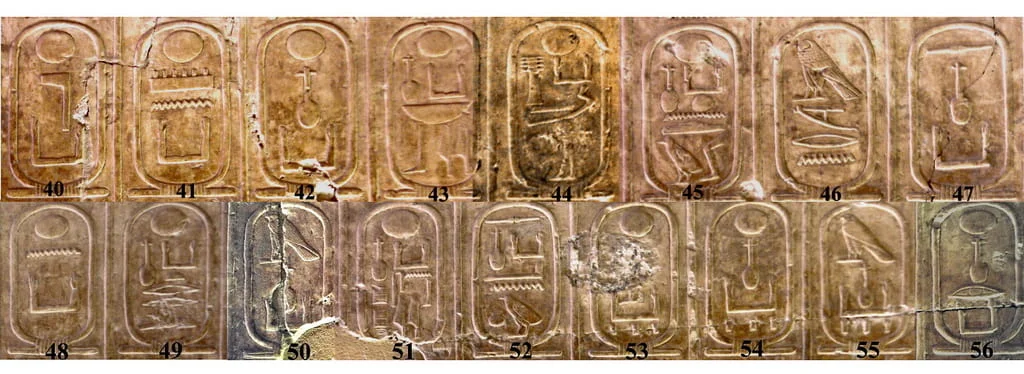
We also examine the Abydos King List, which Seti I commissioned centuries later, to verify the names of these rulers. This list notably includes several kings of the Eighth Dynasty, such as Netjerikare and Menkare. The presence of these names on a formal monument reveals that later monarchs still recognized these pharaohs as legitimate successors.

However, the Turin Canon presents a different picture. This document, once much more complete, shows significant erasures and gaps for the period following the Sixth Dynasty. These discrepancies highlight a fundamental problem: the Eighth Dynasty of Egypt existed in a state of historical erasure. While tradition labels them “kings,” their actual impact on the country’s administration remained so limited that even later Egyptian chroniclers struggled to agree on their identities or the length of their reigns.

Was there a Seventh Dynasty?

A crucial part of the debate surrounding the Eighth Dynasty of Egypt involves the existence of the Seventh Dynasty itself. Many scholars today suggest that later historians created the “Seventh Dynasty” as an entirely fictional construct to bridge the gap between the Old Kingdom and the Eighth Dynasty. If the Seventh Dynasty never existed, the Eighth Dynasty represents the immediate and desperate continuation of the Memphite state. This theory helps explain why the Eighth Dynasty rulers adopted names like “Neferkare”—they attempted to project an image of continuity by channeling the prestige of Pepi II, the last great ruler of the Old Kingdom.

Golden Scarab

The Known Rulers and Archaeological Evidence of the Eighth Dynasty of Egypt

The Known Rulers and Archaeological Evidence of the Eighth Dynasty of Egypt

Despite the political fragmentation of the era, the Eighth Dynasty of Egypt left behind enough traces to confirm that a central government continued to function from Memphis. While these rulers lacked the massive resources of their predecessors, their efforts to assert legitimacy provide a fascinating glimpse into the final years of the Old Kingdom.

The Memphite Seat and the “Neferkare” Continuity

The pharaohs of the Eighth Dynasty of Egypt were acutely aware of their precarious position. To bolster their authority, many adopted the throne name “Neferkare.” By doing so, they explicitly invoked the memory of Pepi II, the last great king of the Sixth Dynasty. This was more than just a naming convention; it was a political strategy. By linking their identity to the long-reigning monarch of a stable era, they hoped to convince the increasingly independent provincial nomarchs that the divine order of the Old Kingdom remained intact.

Qakare Ibi: A Pyramid in Decline

Perhaps the most tangible piece of evidence for the Eighth Dynasty of Egypt is the pyramid of Qakare Ibi at Saqqara. Unlike the towering monuments of Giza, Ibi’s pyramid is small and constructed primarily of mud-brick, with a core of limestone rubble.

Its modest scale is a powerful indicator of the state’s dwindling resources. The pyramid builders no longer had access to the massive labor forces or the wealth required for stone-clad, monumental architecture. Yet, the presence of pyramid texts inside Ibi’s burial chamber is significant. It proves that even in these final, fading days, the kings of the Eighth Dynasty of Egypt were still committed to the traditional funerary rites that ensured a pharaoh’s journey to the afterlife.

The Coptos Decrees: Administrative Reach

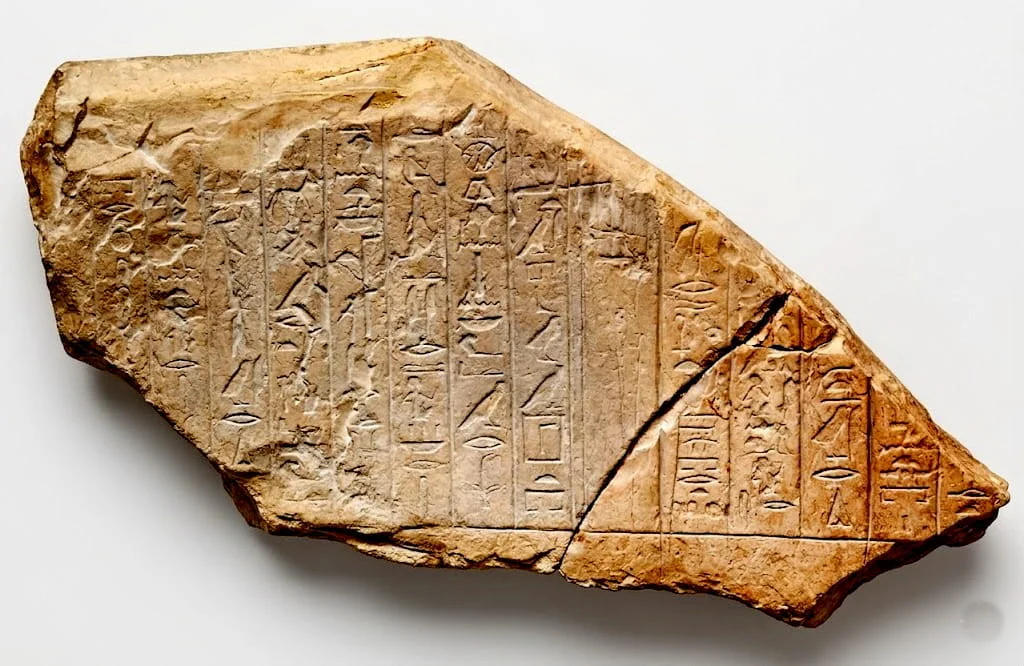
If the pyramids show us the ritual life of the Eighth Dynasty of Egypt, the Coptos Decrees show us their administration. These royal decrees, carved into stone stelae, were sent from the palace in Memphis to the temple of Min at Coptos in Upper Egypt.

The decrees grant tax exemptions and protection to the temple and its personnel. For historians, these documents are vital. They confirm that the kings of the Eighth Dynasty of Egypt still issued orders that reached the deep south.

The effectiveness of these decrees remains debated. Some argue they were merely symbolic gestures. Regardless, they demonstrate that the central state still held significant weight. Provincial temples clearly still sought royal validation for their privileges.

These small, stone-carved messages were the final threads holding the kingdom together. They document a desperate, long-distance effort to maintain the bureaucratic traditions of an empire that had already begun to dissolve.

The eye of Horus

Culture and Society During the Eighth Dynasty of Egypt

While the central government struggled to maintain its political authority, the underlying culture and social structure of the Eighth Dynasty of Egypt remained surprisingly resilient. The collapse was largely confined to the elite echelons of power; for the average Egyptian, daily life continued within the familiar rhythms of the Nile.

Religious Continuity Amidst Political Decay

Religion served as the primary glue holding society together during the Eighth Dynasty of Egypt. Even as royal authority waned, the cults of the gods and the traditional funerary beliefs remained absolute. The elite continued to commission elaborate false doors and offering stelae, hoping to secure their status in the afterlife.

This period saw a “democratization of the afterlife,” a process that began earlier but accelerated during this time of uncertainty. Funerary texts, which were once the exclusive domain of the pharaoh, began to appear in the tombs of non-royal officials. This shift suggests that when the king could no longer provide the absolute spiritual guarantees of the past, the people turned toward a more personal, localized connection with the divine.

Artistic Trends and Craftsmanship

The art of the Eighth Dynasty of Egypt is often described by scholars as “provincial” or “reduced.” We see a departure from the idealized, rigid perfection of the Old Kingdom. Instead, there is a rise in more expressive, individualized portraiture in tomb reliefs.

Because the central workshops in Memphis were no longer churning out standardized pieces for the court, local artisans took more creative control. This led to a diversification of artistic styles across the provinces. While some might view this as a decline in quality, it actually represents a period of stylistic liberation. The rigid state-controlled aesthetic was replaced by a more varied and regional visual culture that reflected the new, fragmented reality of the Egyptian state.

The Life of the Elite

For the nobles and the priestly class, the Eighth Dynasty of Egypt was a time of strategic navigation. They were caught between the traditional loyalty owed to the throne and the practical necessity of aligning with local power brokers.

We see this reflected in the biographical inscriptions of the period. Officials increasingly boasted about their own local achievements—feeding the hungry, protecting their districts from famine, and managing irrigation projects—rather than focusing on their service to the pharaoh. This shift in the subject matter of tomb biographies is telling. It marks a transition where personal and regional stability began to matter more than national service, providing a clear window into how the social hierarchy was recalibrating as the Old Kingdom structure finally gave way.

Divider

The End of an Era: Transition to the Ninth Dynasty of Egypt

The End of an Era Transition to the Ninth Dynasty of Egypt

The final collapse of the Eighth Dynasty of Egypt was not an explosion, but a slow exhaustion of the Memphite ideal. By the end of this period, the mechanisms of the Old Kingdom had become shadows, unable to exert the influence necessary to hold the Two Lands together. The transition to the Ninth Dynasty marks the moment these shadows finally dissolved, giving way to a new political reality centered in the middle of the country.

The Rise of Heracleopolis Magna

As the Memphite kings struggled to maintain their tenuous grip, a new power center began to emerge at Heracleopolis Magna. Located in the Faiyum region, this city was strategically placed to control both Upper and Lower Egypt. The leaders of this region—the future kings of the Ninth Dynasty—did not necessarily see themselves as usurpers at first. Instead, they likely viewed themselves as the only stable force remaining in a landscape fractured by famine and civil unrest.

While the pharaohs of the Eighth Dynasty of Egypt were buried in the fading traditions of Saqqara, the Heracleopolitan rulers were consolidating their own military and economic power. They offered an alternative to the administrative paralysis of the north, eventually rendering the Memphite court obsolete.

The Fall of Memphis

The precise details of how the Ninth Dynasty replaced the Eighth are lost to time, but the outcome was decisive. The transition was essentially the final death knell for the centralized Old Kingdom. When the Heracleopolitan kings eventually assumed the double crown, they were acknowledging that the center of gravity had shifted away from the ancient capital.

The Eighth Dynasty of Egypt had spent its final years desperately trying to hold the past in place. When the Ninth Dynasty ascended, the pretense was finally dropped. Egypt entered the First Intermediate Period in earnest, a time defined by regional conflict and a complete departure from the unified, pyramid-building grandeur of the age that preceded it. The era of the god-king who managed everything from a single throne in Memphis had concluded, leaving behind a kingdom that would have to reinvent itself to survive the coming decades of uncertainty.

The Legacy of the Eighth Dynasty of Egypt

The Eighth Dynasty of Egypt remains a captivating study in the persistence of tradition. While it is easy to characterize this period solely as a time of failure or decline, doing so overlooks the remarkable tenacity of the Memphite state. These rulers stood at the twilight of the Old Kingdom, holding onto the symbols and administrative structures of their ancestors even as the social and economic foundations of their world shifted beneath them.

A Dynasty Refusing to Vanish

By examining the modest pyramid of Qakare Ibi, the administrative survival documented in the Coptos Decrees, and the symbolic continuity of the “Neferkare” name, we see a dynasty that refused to vanish quietly. They were not merely waiting for the end; they were actively attempting to navigate a crisis that no previous generation had faced. Their struggle highlights a universal historical truth: institutions often cling to their established identities long after the reality they were built to govern has irrevocably changed.

The Bridge to a New Reality

Ultimately, the significance of the Eighth Dynasty of Egypt lies in its role as a bridge. It marks the final, fragile link between the monolithic grandeur of the pyramid builders and the fragmented, competitive reality of the First Intermediate Period. This was the moment when the absolute authority of the pharaoh began to disperse, paving the way for the rise of regional power centers that would eventually redefine the Egyptian state.

Lessons from a Fading Empire

As we look back on this era, we gain more than just a list of names or a timeline of decay. We gain an understanding of the immense structural and human pressures that shaped ancient Egypt. The Eighth Dynasty serves as a poignant reminder that even the most enduring civilizations are defined as much by how they manage their crises as by how they build their monuments. In the silence of their smaller tombs and the brevity of their reign, we find the echoes of a kingdom that, even in its final hours, fought to maintain the divine order that had defined its golden age.

The eye of Horus

Eighth Dynasty of Egypt (FAQs)

Did the Eighth Dynasty of Egypt really consist of 70 kings in 70 days?

Most modern Egyptologists believe this claim, recorded by the historian Manetho, is symbolic rather than historical. It likely reflects the complete political chaos and rapid succession of leaders at the end of the Old Kingdom, rather than a literal count of 70 separate, short-lived pharaohs.

Why is the Eighth Dynasty of Egypt often considered part of the First Intermediate Period?

While some scholars categorize the Eighth Dynasty as the final act of the Old Kingdom, others group it with the First Intermediate Period due to the extreme decentralization and loss of royal power. It serves as the bridge between the unified Old Kingdom and the fragmented era that followed.

What evidence remains of the Eighth Dynasty of Egypt?

Evidence is scarce but significant. Key remnants include the pyramid of King Qakare Ibi at Saqqara, the Coptos Decrees (stelae documenting royal tax exemptions for temples), and the inclusion of Eighth Dynasty kings in the Abydos King List, which serves as a record of legitimate Memphite rulers.

Why did Eighth Dynasty pharaohs use the name “Neferkare”?

Many rulers of the Eighth Dynasty of Egypt adopted the throne name “Neferkare” to associate themselves with Pepi II, the last great ruler of the Sixth Dynasty. It was a strategic political move to project stability and legitimize their authority by anchoring their reign in the memory of the Old Kingdom’s golden age.

Was the Eighth Dynasty of Egypt destroyed by climate change?

Climate data suggests that a series of severe droughts and lower Nile floods occurred during this period. These environmental pressures weakened the economy and food supply, which likely exacerbated the existing administrative decay and made it easier for regional governors (nomarchs) to break away from the central government.

Recommended Readings: Essential Academic References

The State of Egypt in the Eighth Dynasty” by Hratch Papazian

(Published in: Towards a New History for the Egyptian Old Kingdom: Perspectives on the Pyramid Age)

This is perhaps the most crucial modern academic resource on the subject. Papazian provides a detailed analysis of the political and administrative landscape of the Eighth Dynasty, moving beyond the “anarchy” narrative to examine how the state actually functioned during these final years.

Analyzing Collapse: The Rise and Fall of the Old Kingdom” by Miroslav Bárta

Bárta’s work is indispensable for understanding the broader systemic issues that led to the end of the Old Kingdom. He explores the “anatomy” of civilization collapse—bureaucratic bloat, climate change, and elite competition—which provides the perfect intellectual backbone for your “Context” section.

The Oxford History of Ancient Egypt, edited by Ian Shaw

A standard, high-quality reference that offers a well-balanced chronological view of the transition from the Old Kingdom into the First Intermediate Period. It is excellent for fact-checking your timeline and ensuring your historical synthesis remains mainstream and credible.

Droughts, Famine and the Collapse of the Old Kingdom: Re-reading Ipuwer” by Fekri A. Hassan

(Found in: The Archaeology and Art of Ancient Egypt: Essays in Honor of David B. O’Connor)

Hassan’s work is essential for anyone wanting to discuss the environmental factors (like the 4.2-kiloyear event) that contributed to the instability leading into the Eighth Dynasty.

Divider

Jeep Safari in the Sahara

I contacted Hani two days before I went to Egypt and asked him if it was possible to combine two of their tours as we were short on time. We had planned to stay in Cairo but with the uprising we decided it would be safed outside of the hot

More »

Great guided tour of pyramids

We travelled to Cairo on Friday, May 3, 2019, from Toronto. We landed at 0530 and were met by a representative of Fun Tours at the departure gate. We were only on a layover of 6 hours, and the tour company came with a private van, water, a driver, and

More »

Islamic cairo and khan el khalili- great tour

Wonderful tour with the guide Hamada. I did not feel rushed at all. He explained a lot of facts about the city, the mosque, the water storage room, and also brought me to no-hassle shops. He picked a great place to eat and have Turkish coffee and a cold lemon

More »

Valley of Whales – Wadi El Hitan and Wadi El Rayan

What a blast! It was an amazing day and a 5-star day trip. Everything was organised from A to Z by Hamada and Mohamed at Egypt Fun Tours in a timely manner. Pick up/drop off from/to the hotel, exquisite lunch and snacks, 4×4 jeep. Everything was as advertised. Also, the

More »
God_Anubis_Icon

Top-rated Tour Packages

God_Anubis_Icon
WhatsApp
Email
Print