Paradise Found: The Field of Reeds (Iaru)
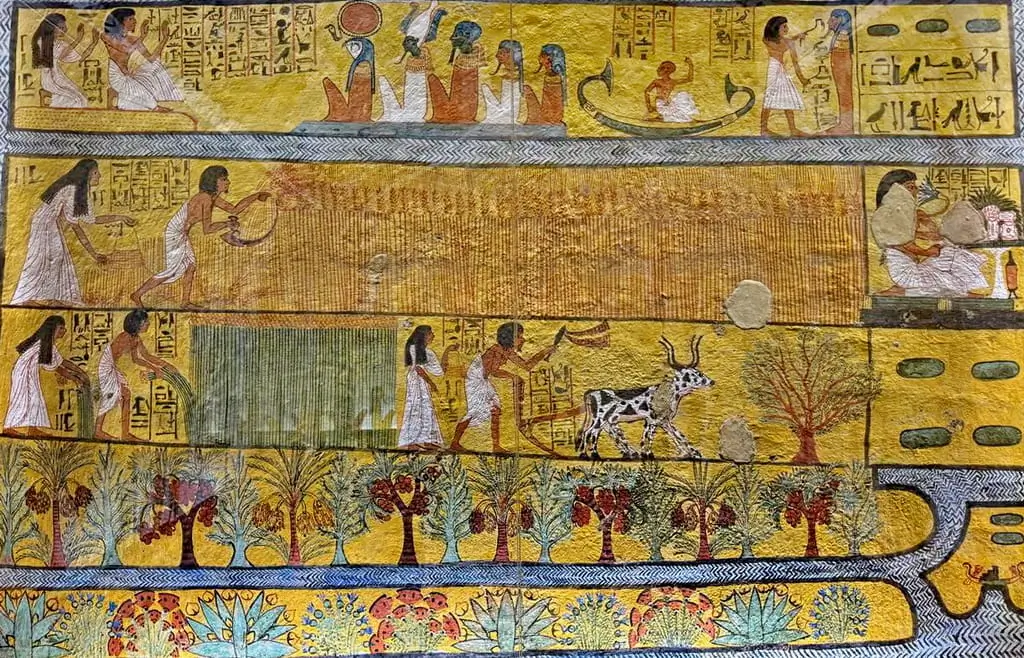
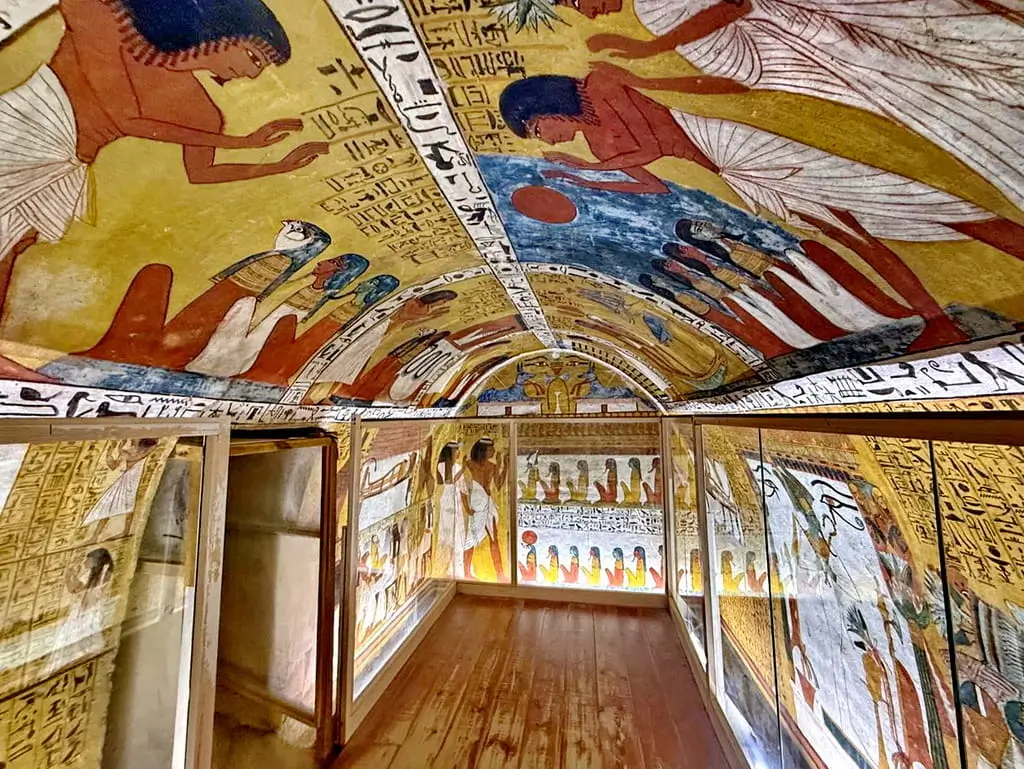
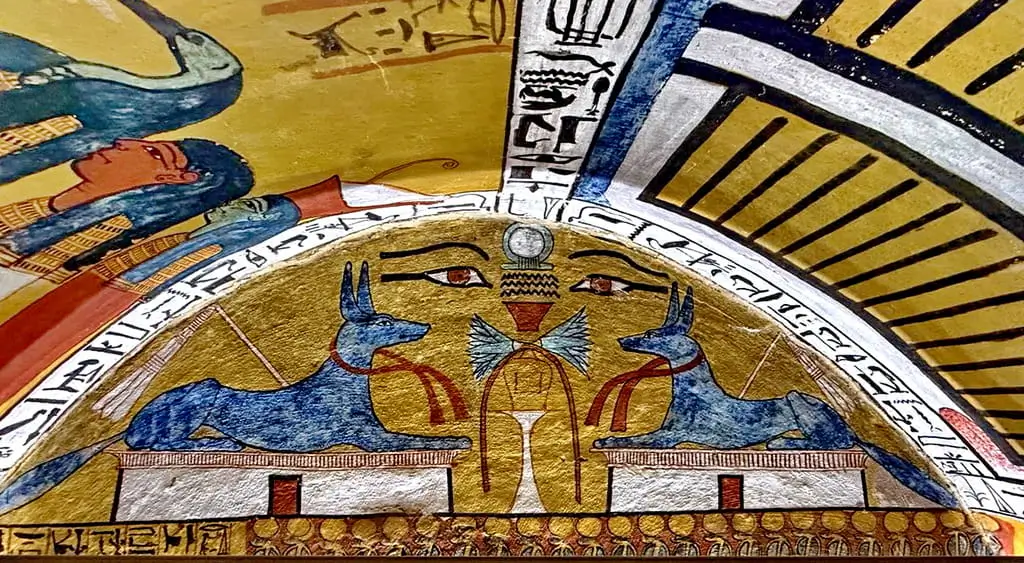
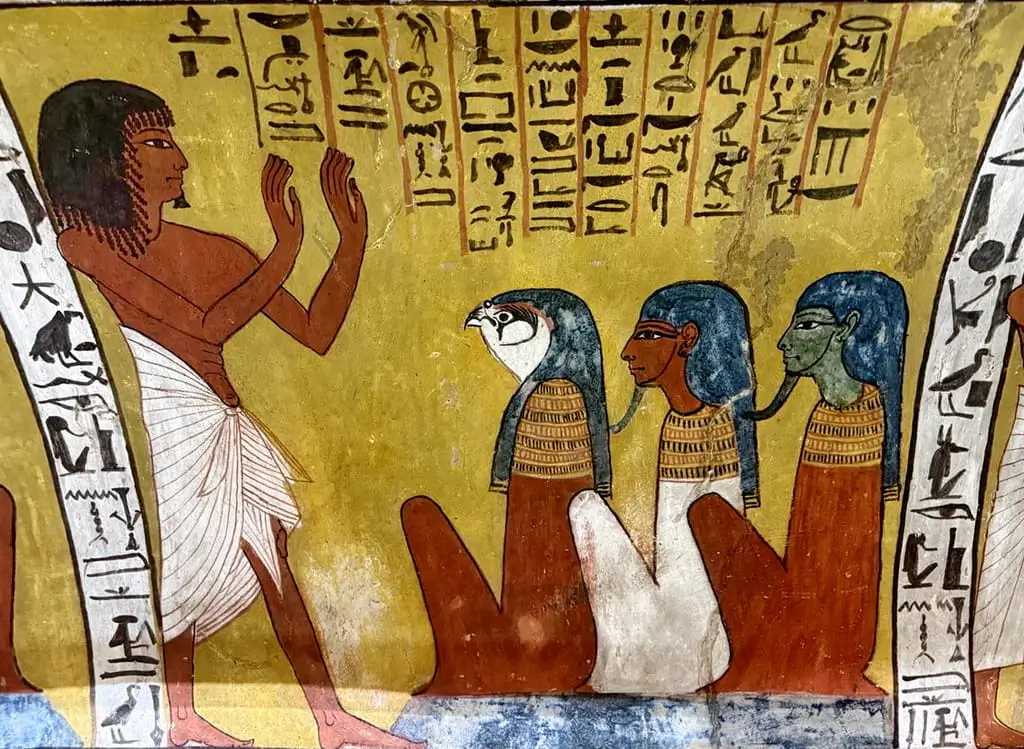
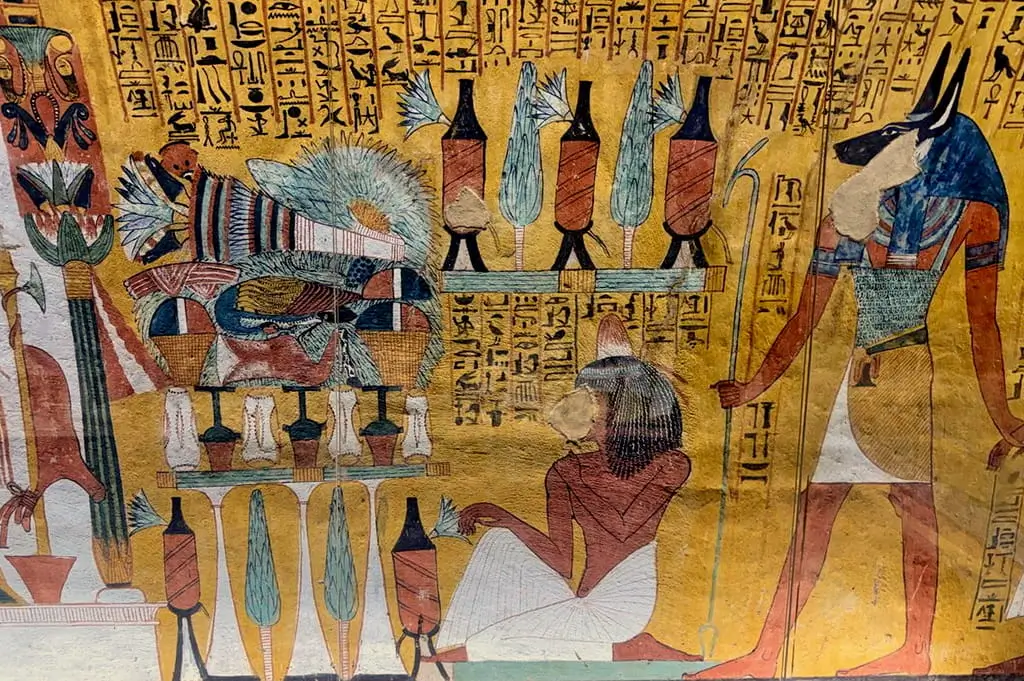
Undoubtedly, the centerpiece of the entire tomb—and perhaps the most famous mural in all of Deir el-Medina—remains the stunning depiction of the Field of Reeds. While many Egyptian tombs focus on the terrifying obstacles of the underworld, this specific section of TT1 highlights the reward. Therefore, it serves as the ultimate “happy ending” for Sennedjem’s earthly journey.
A Perfected Version of Egypt
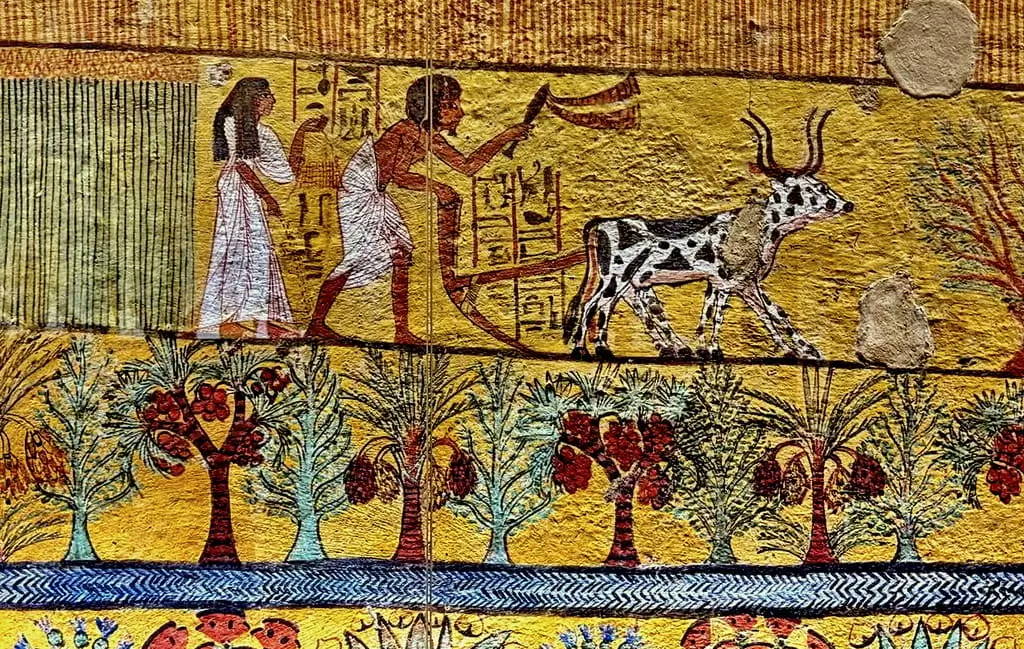
In essence, the Egyptians envisioned the Field of Reeds (Iaru) as a mirror image of the Nile Valley, but without the hardships of drought, famine, or exhaustion. On the northern wall, we see Sennedjem and his wife, Iy-neferti, engaging in agricultural labor. However, they do not perform the grueling toil of a peasant. Instead, they participate in a ritualized, eternal joy. Notice how the wheat grows taller than the people and the trees hang heavy with ripe fruit. Consequently, this scene tells the viewer that in the afterlife, nature provides in abundance for those who lived a righteous life.
Symbolism of the Harvest
Furthermore, the act of harvesting carries deep symbolic weight. By reaping the grain, Sennedjem participates in the cycle of Osiris, the god of regeneration. Just as the farmer cuts the grain only for it to grow again, the gods “harvest” the deceased from the earth only to grant them rebirth in the celestial fields. Moreover, the presence of the couple working together highlights the Egyptian belief that family bonds remained unbroken even after death.
Artistic Composition and Color
From an artistic perspective, this section represents a masterclass in composition. Because the artist set the figures against that signature vibrant yellow background, the greens of the crops and the whites of the linen garments pop with extraordinary clarity. In addition, the artist meticulously organized the registers to show different stages of the harvest—from plowing with oxen to reaping with sickles. As a result, the wall functions as both a religious map and a beautiful work of landscape art.
The Discovery of TT1: An Intact Time Capsule
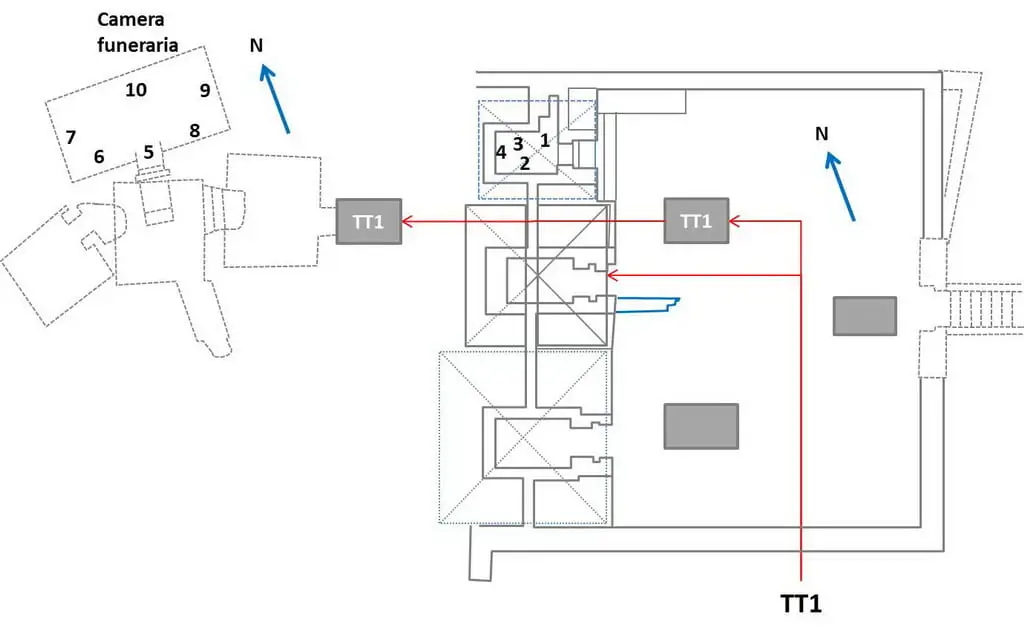
Switching our focus from the spiritual to the historical, the story of how archaeologists found the Tomb of Sennedjem carries nearly as much drama as the art itself. In 1886, a resident of Deir el-Medina led the French archaeologist Gaston Maspero and the Spanish diplomat Eduardo Toda to a sealed entrance that had remained untouched for over three millennia.
A Rare “Unplundered” Find
Unlike the famous royal tombs, which ancient looters almost always emptied, TT1 remained completely intact. Because debris buried the entrance and the world forgot its location, the treasures inside stayed exactly where the family had left them. When Toda first entered the chamber, he encountered twenty mummies, including Sennedjem, his wife, and their descendants, resting peacefully amidst their funerary furniture.
What Was Inside?
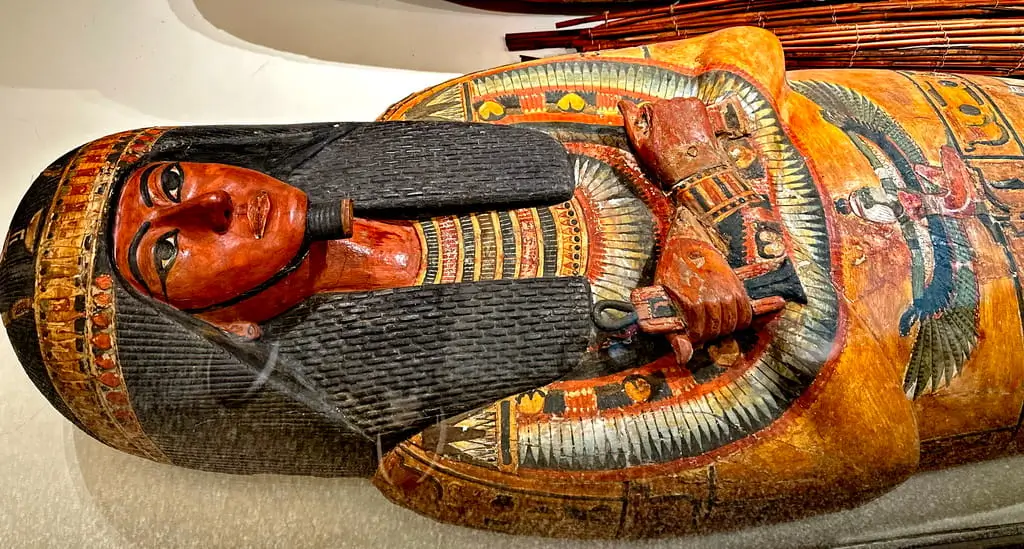
Beyond the mummies themselves, the tomb contained items that provide an intimate look at New Kingdom life:
- The Sarcophagi: Intricately painted wooden coffins that mirror the vibrancy of the murals.
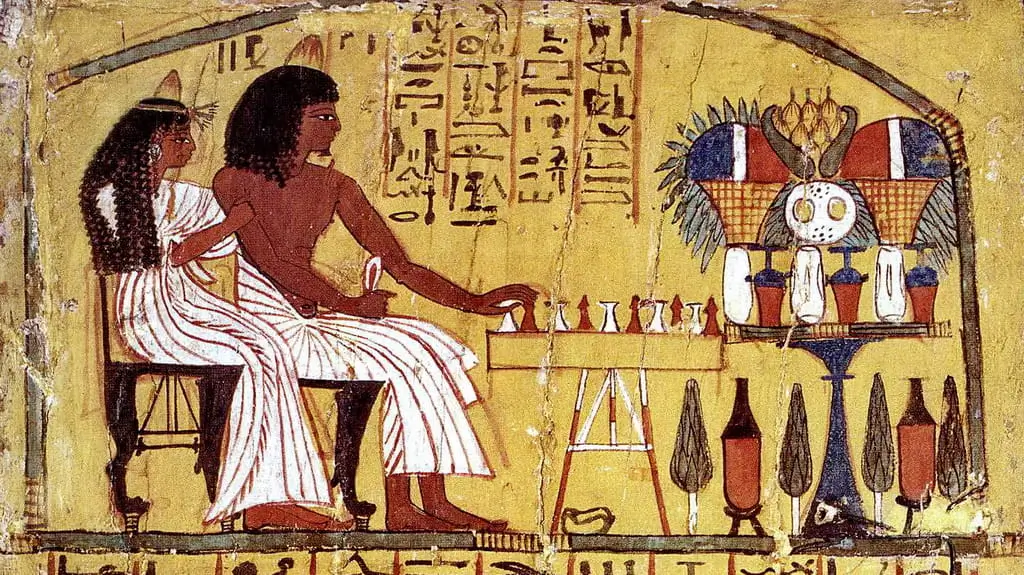
- The Senet Board: A game found in the tomb, which we now know served as a metaphor for navigating the afterlife.
- Daily Tools: Because Sennedjem worked as an artisan, his measuring rods and cubit sticks lay beside him, linking his professional identity to his eternal soul.
Today, while the Egyptian Museum in Cairo now houses the mummies and most of the artifacts, the “soul” of the discovery remains in the tomb. By visiting the site, you stand in a space that maintained its silence and darkness for 3,200 years until that pivotal day in 1886.