The Unfinished Obelisk: Guide to Ancient Egypt’s Engineering Failure

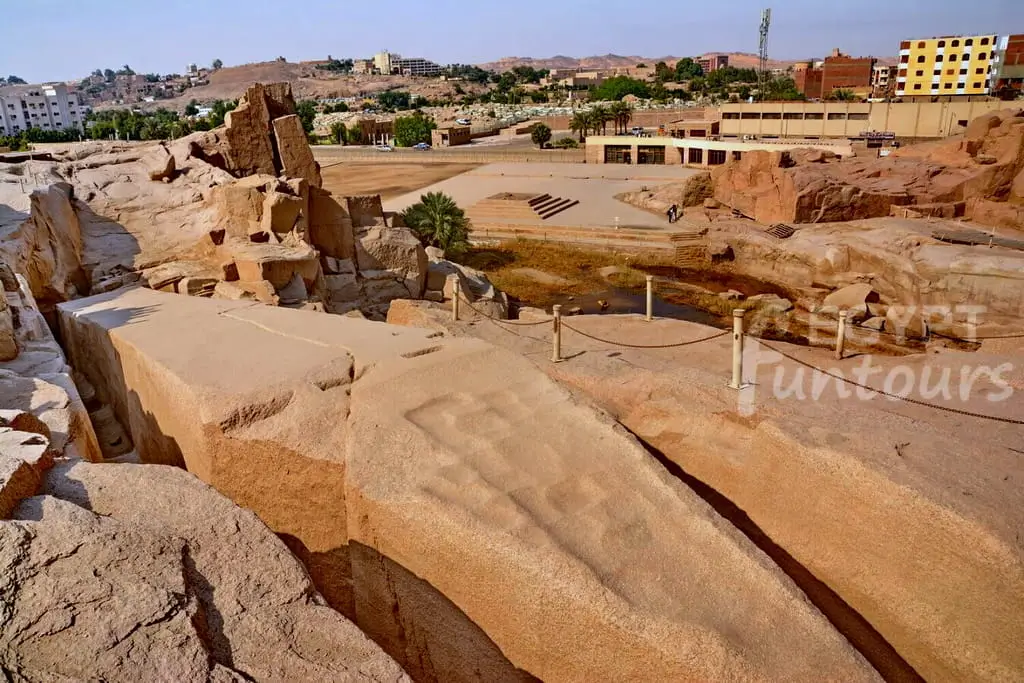
The Unfinished Obelisk stands as a haunting monument to the sheer scale of Ancient Egyptian ambition and the unpredictable reality of engineering. Commissioned by Queen Hatshepsut in the 18th Dynasty, this 1,200-ton granite monolith was designed to be the largest obelisk ever erected, intended to pierce the sky as a "petrified ray" of the sun god. However, as workers painstakingly hammered the bedrock with dolerite pounding balls, a massive crack splintered the stone’s heart, forcing the architects to abandon the project mid-carve. Today, this frozen construction site in the Aswan quarries serves as an unparalleled archaeological blueprint, revealing the exact tools, labor organization, and logistical strategies used by the ancients to move mountains.

The Unfinished Obelisk: A Giant Sleeping in the Stone

The northern granite quarries of Aswan house a silent colossus. This massive monument is known worldwide as the Unfinished Obelisk. While most Egyptian treasures stand tall in temples, this one remains attached to the bedrock. It offers a rare, frozen moment in archaeological history. Consequently, we can study the exact tools and techniques of the 18th Dynasty.

The Scale of an Ancient Dream

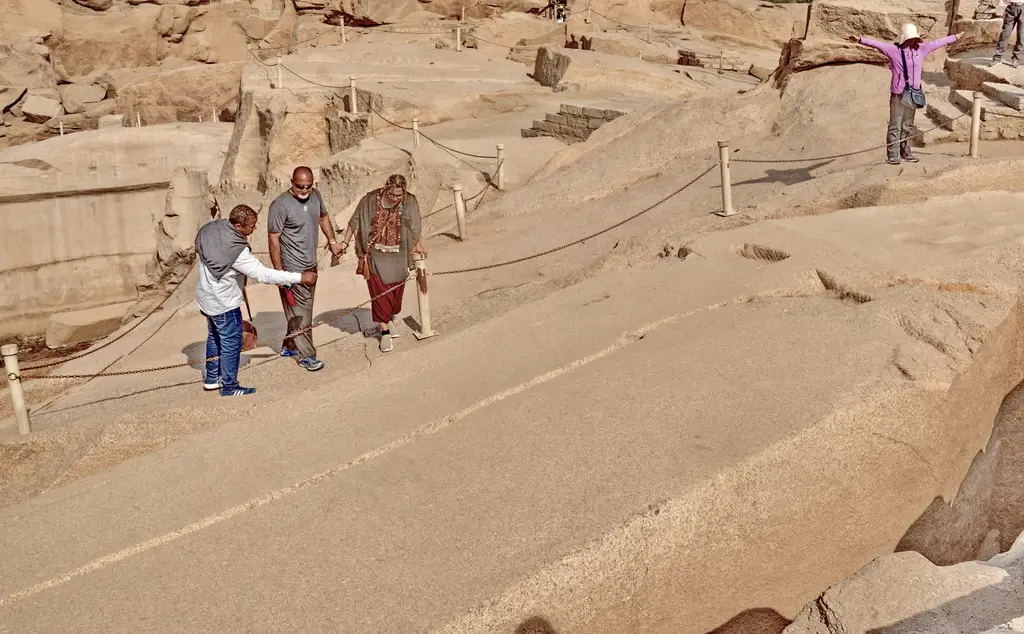
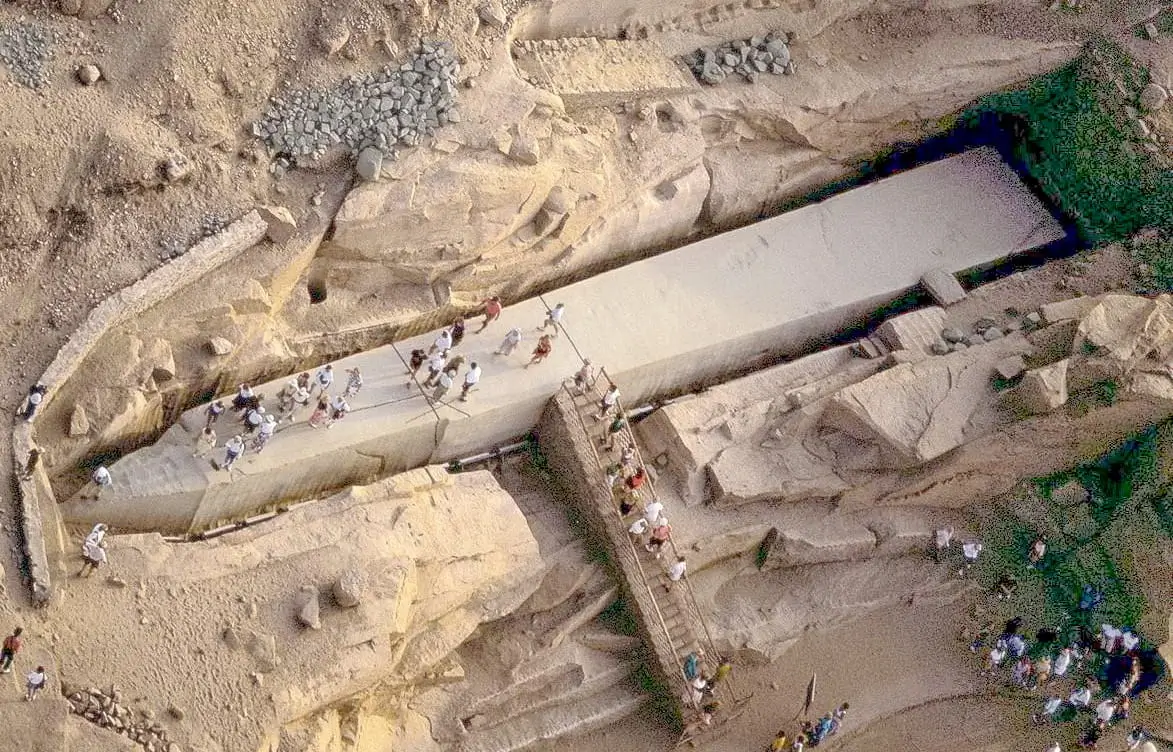
Ancient laborers carved this monolith with incredible precision. If they had finished it, the stone would have weighed nearly 1,200 tons. This figure makes it the heaviest single piece of stone ever worked by human hands in antiquity. Moreover, the pillar stretches 42 meters across the quarry floor. However, a catastrophic flaw in the granite halted the work forever. Today, visitors walk along the trenches to see where the dream died.

The Historical Context: Queen Hatshepsut’s Solar Ambitions

Hatshepsut - 4-Night Movenpick Darakum

The Legacy of a Female Pharaoh

Most historians believe Queen Hatshepsut commissioned this specific project. She reigned during the 18th Dynasty and transformed Egypt through architecture. Because she needed to justify her right to rule, she built monuments of incredible size. This obelisk was her most ambitious attempt to outshine her predecessors.

The Sacred Meaning of the “Tekhenu”

The Egyptians did not view these stones as mere decorations. Instead, they called them “tekhenu,” which translates to “petrified rays of the sun.” These pillars acted as a physical bridge between the mortal world and the sun god, Ra. For this reason, the engineers sought the purest red granite in the empire. They wanted a stone that would glow when hit by the morning light.

A Competition of Heights

Hatshepsut already possessed two massive obelisks at the Temple of Karnak. Nevertheless, she demanded something even more spectacular for her jubilee. She ordered a stone that was one-third larger than any existing monument. This decision forced her master builders to experiment with new scales of labor. As a result, they began work on the massive slab we see today in Aswan.

The Political Message of Granite

Beyond religion, the project served as a display of imperial logistics. Moving such a heavy object required thousands of sailors and engineers. By initiating this work, the Queen proved her total control over the Nile’s resources. Thus, the obelisk became a symbol of her political stability. Unfortunately, nature had other plans for the Queen’s grand design. Despite their best efforts, the stone eventually revealed a fatal secret.

FUN

Engineering the Impossible: Tools and Labor of the Aswan Quarry

Engineering the Impossible Tools and Labor of the Aswan Quarry

The Hardness of Red Granite

Engineers chose the Aswan quarry because of its high-quality “Rose Granite.” This stone is incredibly dense and durable. Consequently, it resists erosion better than limestone or sandstone. However, its hardness presented a massive challenge to ancient workers. Because they lacked steel or iron tools, they had to find a creative way to “cut” the rock.

The Secret of Dolerite Pounding

Instead of using chisels, the laborers used dolerite balls. Dolerite is a volcanic rock that is even harder than granite. Thousands of these spherical stones have been found scattered around the site. Furthermore, these balls weigh between 4 and 12 pounds each. Workers would lift these stones and smash them against the granite surface with great force.

A Process of Pulverization

This method did not actually “cut” the stone in a traditional sense. Rather, the constant pounding pulverized the granite into a fine powder. Afterward, the workers would sweep the dust away to reveal a slightly deeper indentation. Despite the simplicity of the tool, this process was extremely effective. In fact, modern experiments suggest that a worker could remove about 5 millimeters of rock per hour using this technique.

The Trenching System

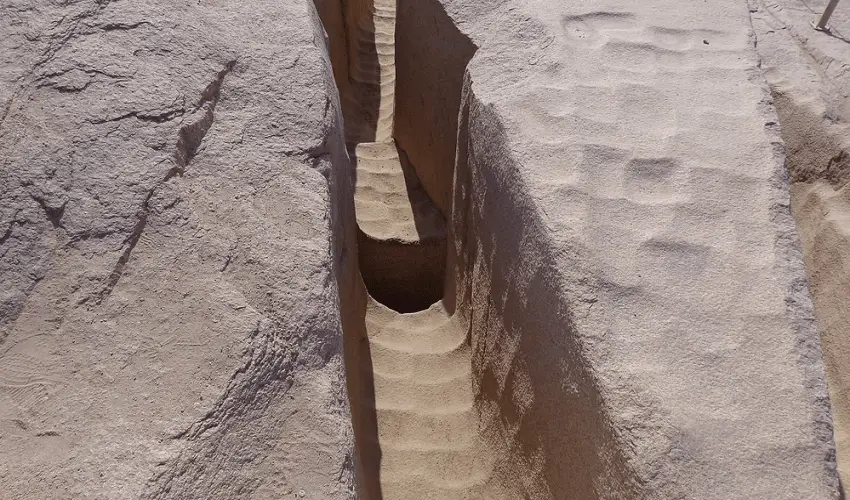
To isolate the obelisk from the bedrock, the laborers carved deep vertical trenches. You can still see these narrow channels surrounding the monolith today. Because the trenches are very narrow, the workers had to stand inside them while they pounded the walls. Therefore, the work environment was incredibly cramped and loud. Furthermore, the heat in the Aswan quarries often reaches extreme levels, making the labor even more dangerous.

Organizing the Workforce

Managing such a project required military-like precision. Historical estimates suggest that hundreds of men worked in synchronized shifts. These laborers likely stood in rows, pounding the stone in a rhythmic pattern to maintain efficiency. Additionally, supervisors used measuring strings and red ochre paint to ensure the lines remained perfectly straight. Thus, the quarry was not just a workplace; it was a site of highly organized industrial engineering.

Preparing for the Final Separation

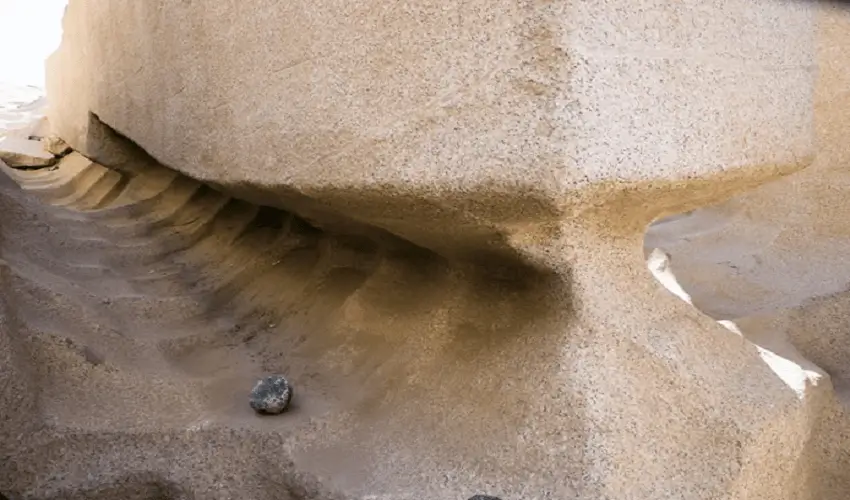
Once the sides were deep enough, the engineers had to tackle the most difficult part of the job. They needed to detach the bottom of the obelisk from the ground. To achieve this, they likely carved horizontal slits into the base. Afterward, they would insert wooden wedges into these gaps. By soaking the wood with water, the wedges would expand with enough pressure to “pop” the stone away from the bedrock. Unfortunately, the workers never reached this final stage for the Unfinished Obelisk.

FUN

The Anatomy of a Crack: Why the Project Was Abandoned

The Anatomy of a Crack Why the Project Was Abandoned

The Discovery of the Fatal Flaw

While the workers pounded away at the granite, a disaster occurred. A massive fissure appeared across the body of the stone. This was not a minor surface scratch. Instead, the crack ran deep into the heart of the monolith. Because the Egyptians required perfect, solid stone for their obelisks, this development was a total catastrophe.

The Science of Geological Stress

The Science of Geological Stress

Modern geologists have studied the site to understand why the stone failed. Granite contains internal stresses that accumulate over millions of years. When workers remove the surrounding rock, the pressure changes rapidly. Consequently, the stone can “relax” and snap like a rubber band. For this reason, the very act of carving the obelisk likely caused it to break.

A Desperate Attempt to Pivot

The architects did not give up immediately after the first crack appeared. If you look closely at the surface, you can see secondary markings. These lines suggest that the engineers tried to downsize the project. They likely hoped to salvage a smaller obelisk from the remaining healthy section of rock. Nevertheless, a second crack soon followed the first.

The Cost of Abandonment

Leaving a 1,200-ton project behind was a massive economic blow to the 18th Dynasty. Thousands of hours of labor were suddenly rendered useless. Furthermore, the loss of the “Rose Granite” was significant because this specific quarry was a crown asset. Therefore, the decision to walk away was likely made by the highest levels of the Egyptian court. They realized that no amount of effort could fix a broken spine of stone.

A Gift to Modern Archaeology

While the ancient engineers felt despair, modern scientists feel gratitude. Because the workers abandoned the site so suddenly, they left their process exposed. We can see the half-finished trenches and the rough-hewn surfaces. Consequently, the Unfinished Obelisk serves as a “fossilized” blueprint of ancient construction. It provides more information than a finished, polished monument ever could.

FUN

Transportation Theories: Moving a 42-Meter Giant

Transportation Theories Moving a 42-Meter Giant

The Problem of Weight and Friction

Even if the stone had remained intact, the greatest challenge still lay ahead. The engineers had to move 1,200 tons from the quarry to the Nile River. This journey involved crossing uneven terrain and soft sand. Because wheels would have collapsed under such a load, the Egyptians relied on sledges. To reduce friction, they likely poured water or oil onto the sand in front of the runners.

The “Nile Barge” vs. “Canal” Debate

Once the obelisk reached the river, the logistics became even more complex. Some experts believe the workers built a massive wooden barge directly around the stone. Others suggest that engineers dug a canal from the Nile to the quarry. By flooding the canal, they could float the barge directly under the obelisk. This method would use the buoyancy of the water to lift the weight.

Navigating the First Cataract

The journey to Karnak Temple was not a straight path. Aswan is famous for its “cataracts,” which are dangerous rapids and rock formations in the Nile. Therefore, the sailors had to wait for the annual flood season. During this time, the water level rose significantly, covering the dangerous rocks. Moving the obelisk during high tide was the only way to ensure its safe arrival in Luxor.

The Religious Significance of the Pyramidion

Ancient Egyptian Obelisk

The Point of Divine Union

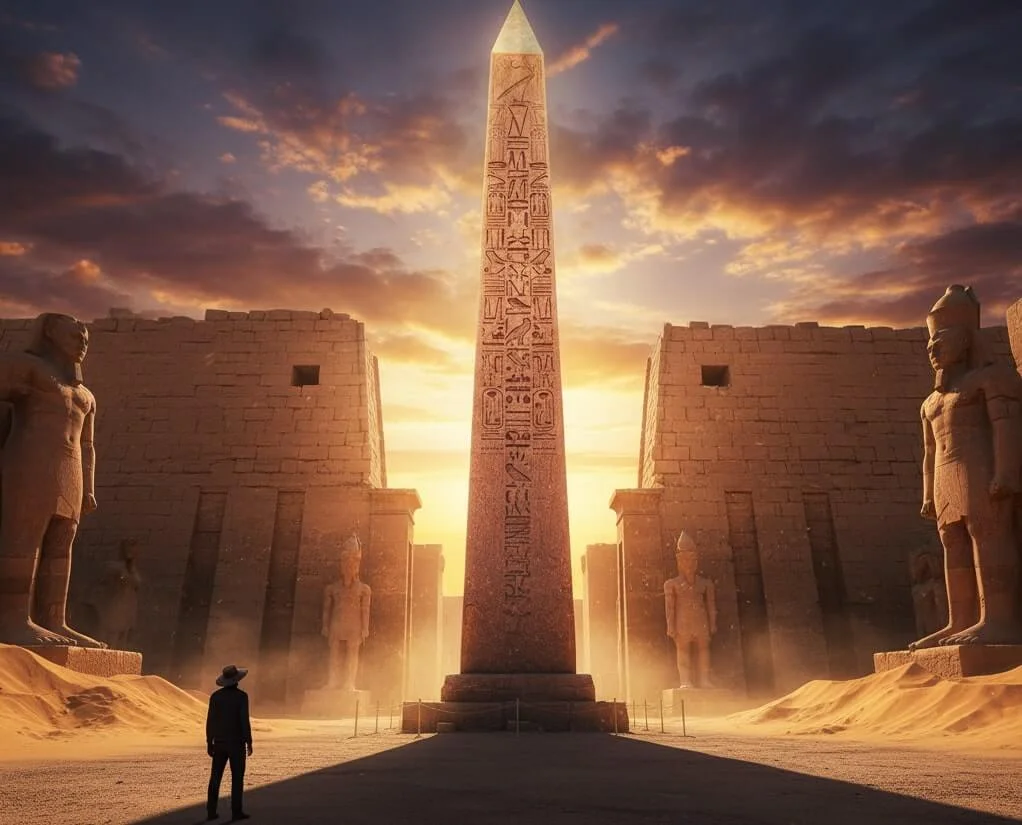
The most sacred part of any obelisk is its pointed top. This pyramidal cap is known as a pyramidion. In Ancient Egyptian, they called this shape the “benben.” It symbolized the primordial mound where the world began. Furthermore, the Egyptians believed the sun god, Ra, perched upon this point at the moment of creation. Thus, the pyramidion acted as a literal receiver for divine energy.

Capping the Giant in Gold

Architects did not leave the granite bare at the top. Instead, they often covered the pyramidion with electrum. Electrum is a natural alloy of gold and silver. Consequently, the tip would shine brilliantly in the desert sun. On clear mornings, the first rays of light would hit the gold cap and reflect across the city. This visual effect reinforced the pharaoh’s connection to the heavens. For Queen Hatshepsut, the Unfinished Obelisk was meant to be the tallest “sunbeam” ever created.

Hieroglyphs and Solar Rituals

While the Unfinished Obelisk remains blank, its finished counterparts provide a clue to its purpose. Finished shafts were covered in vertical lines of hieroglyphs. These texts usually praised the sun god and recorded the pharaoh’s victories. Furthermore, the inscriptions were often filled with bright colors or gold leaf. If completed, the Aswan monolith would have told the story of Hatshepsut’s divine right to rule. It would have served as a permanent witness to her devotion to the gods.

FUN

Visiting the Aswan Quarry (Travel Guide)

Visiting the Aswan Quarry (Travel Guide)

Getting to the Site

The Unfinished Obelisk is located in the Northern Quarry of Aswan. It is only about 2 kilometers from the city center. Therefore, you can easily reach it by taxi or a short microbus ride. Most visitors combine this stop with a trip to the Philae Temple or the High Dam.

2026 Visitor Information

Planning your visit requires attention to the local climate and current regulations. Below is the essential data for the 2026 season:

Item Details
Ticket Price (Adult) $4.50 USD
Ticket Price (Student) 50% (Requires a valid ISIC card)
Opening Hours 7:00 AM – 4:00 PM Daily
Best Time to Visit November to February (Early morning)
Average Visit Duration 45 to 60 Minutes

Professional Travel Tips

  • Beat the Heat: Aswan temperatures can exceed 40°C even in the spring. Arrive exactly at 7:00 AM to enjoy the site before the sun becomes too intense.
  • Look for the Tool Marks: Do not just look at the obelisk from a distance. Walk into the viewing trenches. You can see the actual rhythmic pounding marks left by the dolerite balls 3,500 years ago.
  • Wear Proper Shoes: The quarry floor is made of rough, uneven granite. Avoid wearing sandals; sturdy walking shoes are necessary for safety.
  • Photography: The best light for photographing the deep “stress crack” is usually between 8:00 AM and 10:00 AM.

The Unfinished Obelisk: A Monument to Human Effort

The Unfinished Obelisk A Monument to Human Effort

The Unfinished Obelisk is a masterpiece of what could have been. It shows us that the Ancient Egyptians were not magical; they were incredibly disciplined and organized. They pushed the limits of their technology until the stone itself gave way. By standing at the edge of the quarry, you see more than just a broken rock. You see the sheer scale of human ambition.

FUN

5 Must-See Details at the Quarry

5 Must-See Details at the Quarry

1. The Ochre Marking Lines

While the stone itself is impressive, the marks of the planners are even more revealing. You can find faint remnants of red ochre lines on the granite surface. Ancient surveyors used these lines to snap perfectly straight boundaries for the carvers. They act as the “pencil marks” of a 3,500-year-old blueprint.

2. The Dolerite “Work Stations.”

Look closely at the vertical trenches surrounding the obelisk. You will see rhythmic, concave scoop marks in the walls. These marks show exactly where individual workers stood. Each “scoop” represents the reach of a single laborer’s arms as they swung their dolerite pounding stones.

3. Ancient Graffiti and Inscriptions

The quarry walls contain more than just tool marks. Archaeologists have discovered rock art panels and inscriptions nearby. Some depict boats carrying massive obelisks, while others show the dwarf god Bes, who was believed to protect and entertain the workers during their grueling labor. There is even a royal decree from Thutmose III ordering the extraction of two obelisks in the 25th year of his reign.

4. The “Second” Unfinished Obelisk

Most tourists only see the famous 1,200-ton giant. However, a smaller, partially excavated obelisk lies in a less-visited section of the quarry. If you explore with a keen eye, you can see how workers practiced smaller-scale extractions before attempting the record-breaking colossus.

5. The Abandoned Worker Paths

Connecting the different extraction pits is a network of worn walking paths. These tracks were carved into the rock by thousands of pairs of sandaled feet over centuries. Walking these paths today allows you to literally follow in the footsteps of the New Kingdom’s master stonemasons.

Egypt's world heritage sites in Cairo and El Fayoum Oasis....
Discover the remarkable wonders of Cairo and Giza....

Amazing one day tour

Fantastic tour. We were picked up at the airport early in the morning (6 am), and were dropped off in the evening after discovering amazing Cairo. The guide was knowledgeable and took us to many hidden places, which we wouldn’t have found without him. Thank you!

More »
3-day desert safari trip from Cairo—Egypt Fun Tours

Book with Egypt Fun Tours!!

In April 2011, my husband and I, after great debate, took a trip to Egypt. Because of the political situation, we decided to book a tour for our time in Cairo and Luxor. We are very happy that we did, since these are two cities that should not be missed.

More »

My Dream Came True

I had waited 60 years to get to Egypt; in fact, it was my 60th birthday gift to myself. I went with my oldest daughter, and the experience was excellent. It was meticulously planned by the tour company and was designed for me and my daughter. I never had a

More »
Isis with wings

Top-rated Tour Packages

Isis with wings