Egypt “Ms Re”
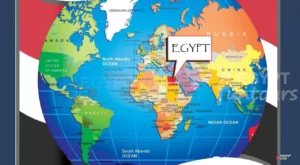
Since the beginning of time, a mysterious place inhabited by increasingly more mysterious people has chosen to alter the course of human history and propel humanity into a new era of development and technological advancement to build heaven on earth. According to all criteria, Egypt’s ability to withstand the ravages of time and pursue the vision of knowledge is a real miracle. In every way, from geographical location to natural resources, Egypt has been blessed in such a way that we have been able to build an immortal civilization that has changed the course of history and innovated to the highest level, such that they have been able to catch the stars with its bare hands in the process.
“In every way, from geographical location to natural resources, Egypt has been blessed in such a way that we have been able to build an immortal civilization that has changed the course of history.”
Overview of Egypt’s historical development
Egypt’s history dates back to 8000 BCE. However, most of its glory centers on the last 5170 years. During this time, a single ruler named Menes (or Narmer) unified Egypt and founded the first dynasty. The annual Nile River flood, which the ancient Greek historian Herodotus called “the Gift of the Nile,” brought on an agricultural revolution. This revolution generated enormous wealth and fueled immortal projects. Egypt established its reputation as a powerful kingdom over the centuries.
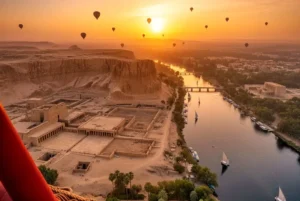
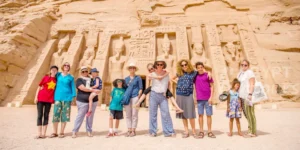
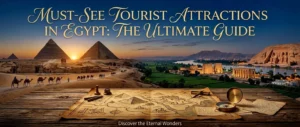
Many great pharaohs and powerful people worked for the next three millennia to bring the kingdom to new heights. These pharaohs included Queen Hatshepsut and King Ramses the Great. During this period, Egyptians built many great monuments. They also created countless beautiful artifacts to preserve their legacy for future generations. Some of these monuments include the Great Pyramids of Giza, the Sphinx, the Abu Simbel temple, the Karnak temple, and the Valley of the Kings.
From Foreign Rule to Modern Day
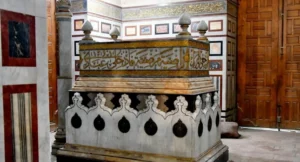
The Persians defeated the last native dynasty in 341 BC. Following them, the Greeks, Romans, and Byzantines arrived. Then came the Coptic era. Finally, Arabs led by Amr Ibn Alas arrived in the 7th century. They introduced Islam and the Arabic language. The Mamluks and the Fatimids followed. They filled the city of Cairo with countless mosques and schools, such as Al-Azhar.
The Ottoman Empire took control of the nation in 1517. Egypt remained under Ottoman administration until the empire was defeated in 1517. It then came under British rule in 1882. The country gained its independence in 1922.