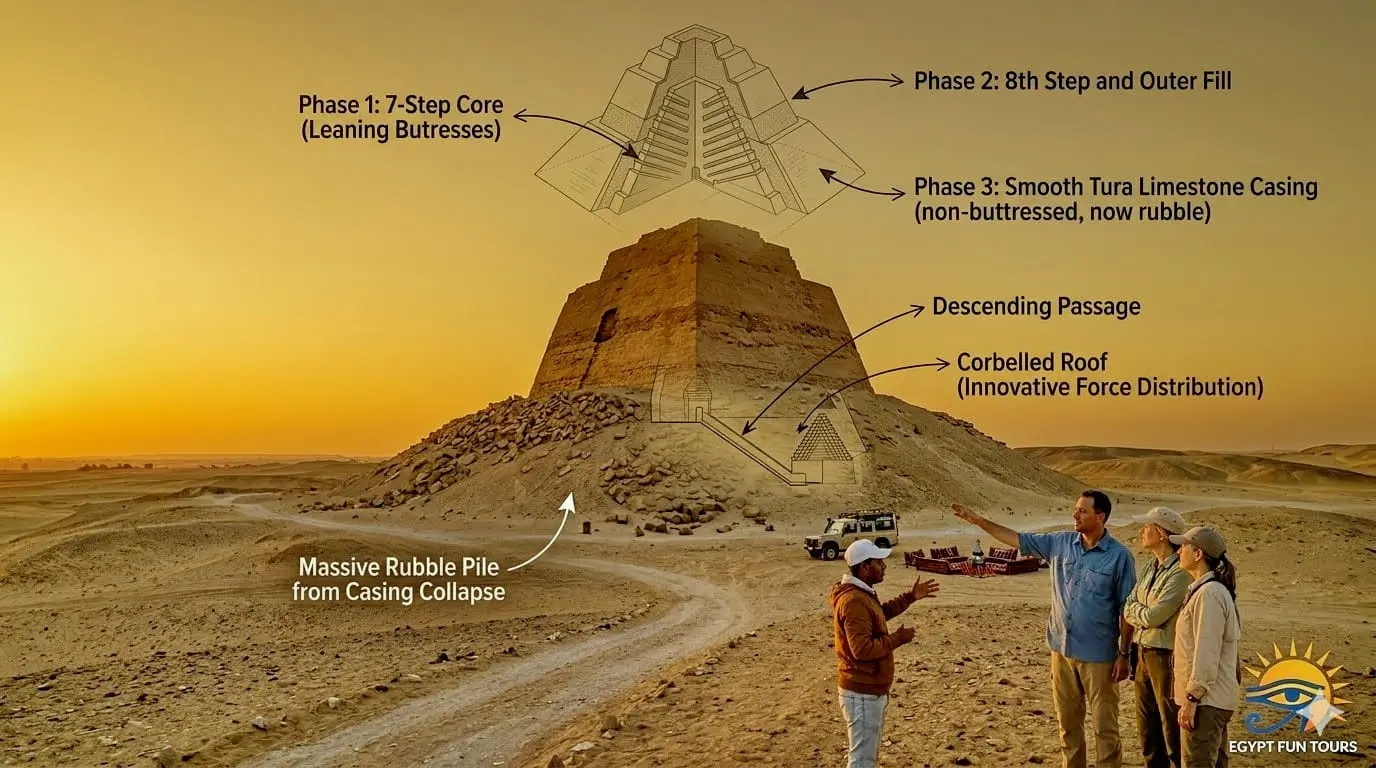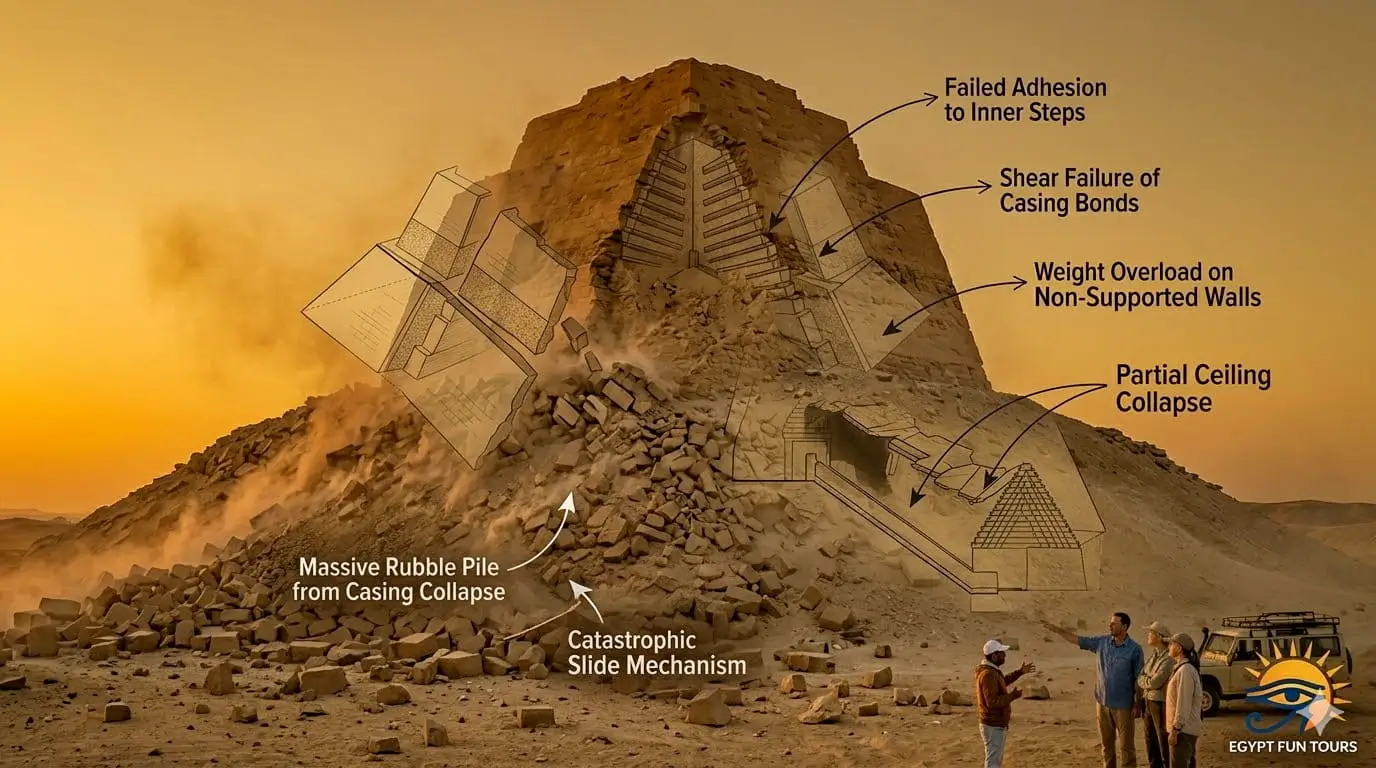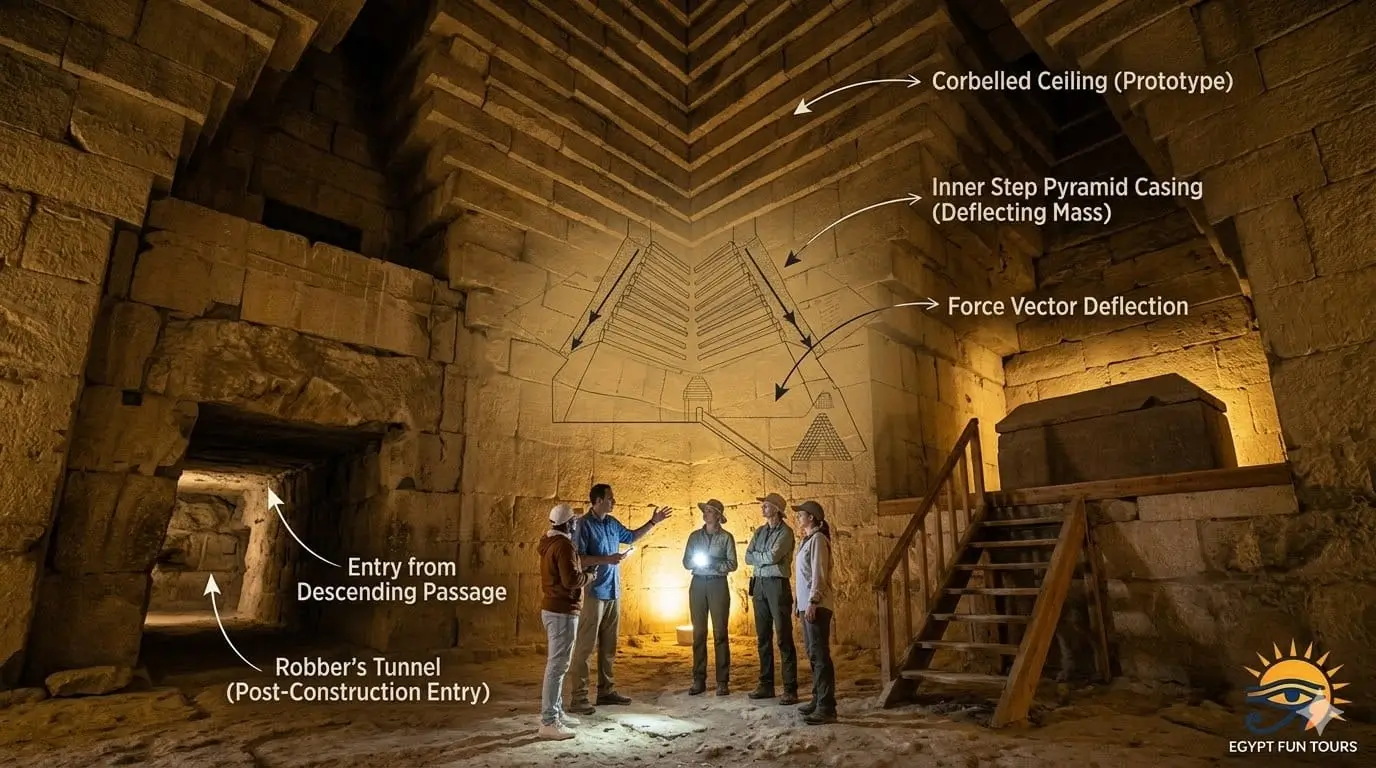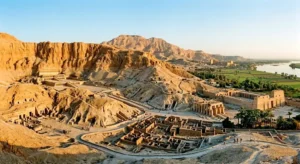
Rising like a lonely sentinel from the desert sands, the Meidum Pyramid is one of the most striking sights in Egypt. Most travelers flock to the Great Pyramids of Giza. They stand in long lines to see the Sphinx. However, those who venture just 100 kilometers south of Cairo discover a different kind of magic. Here, the desert is silent. The air is still. In the center of this vast emptiness stands a structure that looks less like a tomb and more like a medieval fortress.
Locals call it El-Haram el-Kaddab, or the “False Pyramid.” Its bizarre, tower-like shape defies the classic triangular silhouette we associate with ancient Egypt. Yet, this crumbling giant holds the secrets to the greatest architectural evolution in human history. It is the bridge between the experimental Step Pyramid of Djoser and the perfection of the Great Pyramid of Khufu.
In this ultimate guide, we will peel back the layers of mystery surrounding this Fourth Dynasty masterpiece. Whether you are a history enthusiast or a curious traveler planning your next Egypt Fun Tours adventure, this is the definitive story of Meidum.
The History: Who Built the Meidum Pyramid?
To understand the Meidum Pyramid, we must first understand the ambition of the Old Kingdom pharaohs. They did not just want to build tombs. They wanted to build stairways to the heavens. Before Meidum, pyramids were built in steps. After Meidum, they were smooth and majestic. But who exactly was the mastermind behind this transition? This remains one of the most debated topics in Egyptology.
The Duel of Two Kings: Huni vs. Sneferu
History is often written by the victors, but in the case of Meidum, the signatures are blurry. For decades, scholars believed that Pharaoh Huni—the last king of the Third Dynasty—commissioned the project. It makes sense chronologically. Huni likely wanted a grand monument to cement his legacy. However, there is a catch. No contemporary inscriptions within the pyramid mention Huni’s name. Instead, many archaeologists now credit Pharaoh Sneferu, the founder of the Fourth Dynasty. Sneferu was a prolific builder. He was the “King of Pyramids.” In addition to Meidum, he built the Bent Pyramid and the Red Pyramid at Dahshur.
Why the confusion? Huni probably began the construction as a traditional step pyramid. When Sneferu took the throne, he did something radical. He decided to fill in the steps with limestone casing. He wanted to turn a jagged staircase into a smooth-sided “true” pyramid.
Expert Note: This transition marks the exact moment when Egyptian architecture changed forever. Sneferu wasn’t just building a grave; he was inventing a new way to reach the gods.