
Third Dynasty: The Administrative Foundation of the Old Kingdom

The Third Dynasty of Egypt (c. 2686–2613 BCE) served as the foundational era of the Old Kingdom, marking a transformative shift toward centralized administration and monumental stone architecture. By establishing Memphis as the political capital and empowering the pharaoh as a divine mediator of cosmic order, the dynasty successfully unified the state’s resources. The visionary partnership between King Djoser and his architect, Imhotep, introduced the groundbreaking Step Pyramid at Saqqara, which pioneered the use of cut stone and established the enduring ideological and structural frameworks that allowed Egyptian civilization to flourish for millennia.
The eye of Horus
WhatsApp
Email
Print

The Third Dynasty of Egypt (c. 2686–2613 BCE) stands as a monumental bridge between the formative struggles of the Early Dynastic Period and the towering achievements of the Old Kingdom. This era, characterized by unprecedented architectural innovation, administrative centralization, and the emergence of divine kingship, laid the structural and ideological foundations for the civilization that would endure for millennia. By moving the capital to Memphis and commissioning the revolutionary Step Pyramid at Saqqara, the rulers of this dynasty transformed Egypt into a highly structured, prosperous, and culturally vibrant state. In this article, we explore how the Third Dynasty solidified the royal power and bureaucratic frameworks that defined the trajectory of ancient Egyptian history.
Divider

The Rise of Memphis and Administrative Centralization

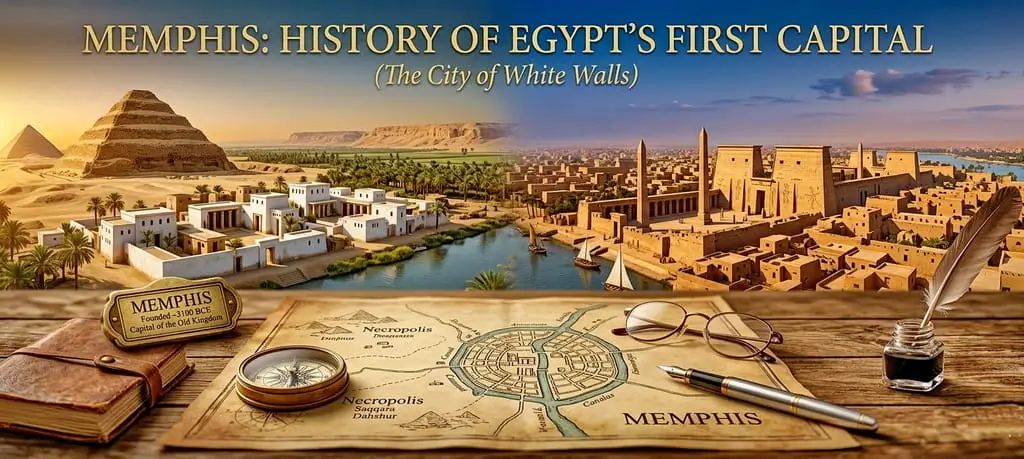
Memphis; History of Egypt’s First Capital (The City of White Walls)

The transition to the Third Dynasty marked a fundamental shift in Egyptian governance. Rulers established Memphis as the administrative heart of the nation. This strategic location at the apex of the Nile Delta allowed pharaohs to manage resources effectively from a central, commanding position.

This centralization extended beyond geography into the state bureaucracy. Third Dynasty rulers sought to unify the country under direct royal authority. Several key elements defined this new era of management:

  • The Vizierate: The vizier became the pivotal link between the pharaoh and the state. Consequently, this official managed the treasury and the judiciary. Furthermore, the vizier orchestrated massive royal construction projects.
  • The Nome System: The government codified the division of the country into administrative districts, or “nomes.” As a result, local governors reported directly to the central government. This system ensured better tax collection and resource control.
  • The Bureaucratic Elite: A specialized class of scribes and officials emerged during this period. Because their status relied on royal service, they fostered a culture of loyalty. This efficiency enabled the state to undertake monumental architecture.

Ultimately, these administrative structures created a stable, scalable framework. Thus, the Egyptian state transitioned into a cohesive, centralized nation-state. This new capacity allowed the government to mobilize labor and wealth on an unprecedented scale.

The Divine King and the Ideology of Power

King Djoser

During the Third Dynasty, the concept of kingship underwent a profound transformation. The pharaoh was no longer just a leader; he became a living god. This shift turned the monarch into the ultimate mediator between the people and the divine realm. Consequently, the king’s primary duty became the preservation of ma’at, which represents cosmic order, truth, and justice.

Several factors solidified this new ideological authority:

  • Solar Theology: Pharaohs began aligning themselves more closely with solar deities, which elevated their status significantly.
  • Temple Construction: The state invested heavily in building grand temples throughout the kingdom. Therefore, these structures served as physical manifestations of the king’s divine favor.
  • Ritual Authority: The king personally performed essential religious rites. Thus, he ensured the annual flooding of the Nile and the continued prosperity of the land.

This religious elevation provided the political legitimacy needed to rule a vast, unified territory. Because the king was divine, the people viewed his commands as sacred law. Furthermore, this belief system motivated the entire population to contribute to state projects. Since the pharaoh ensured their eternal well-being, citizens willingly supported his monumental goals. Ultimately, this fusion of religion and politics created the enduring power structure of the Old Kingdom.

Golden Scarab

The Architectural Revolution: Djoser and Imhotep

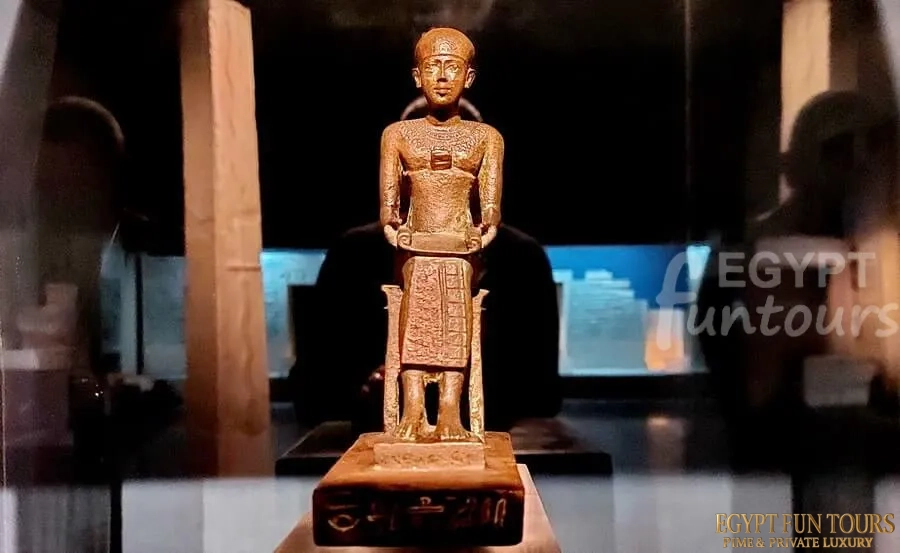
Imhotep Egypt Fun Tours

The Third Dynasty achieved its most enduring legacy through a radical transformation in construction techniques. Before this period, royal burials consisted of simple, mud-brick mastabas. However, the visionary official Imhotep changed this tradition by introducing the large-scale use of cut stone. This shift marked the birth of monumental architecture in Egypt.

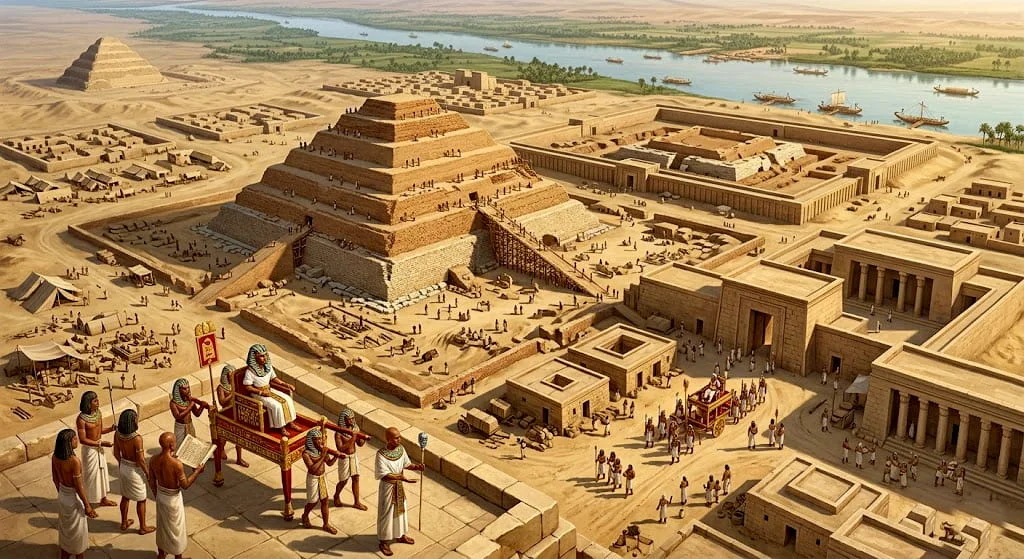
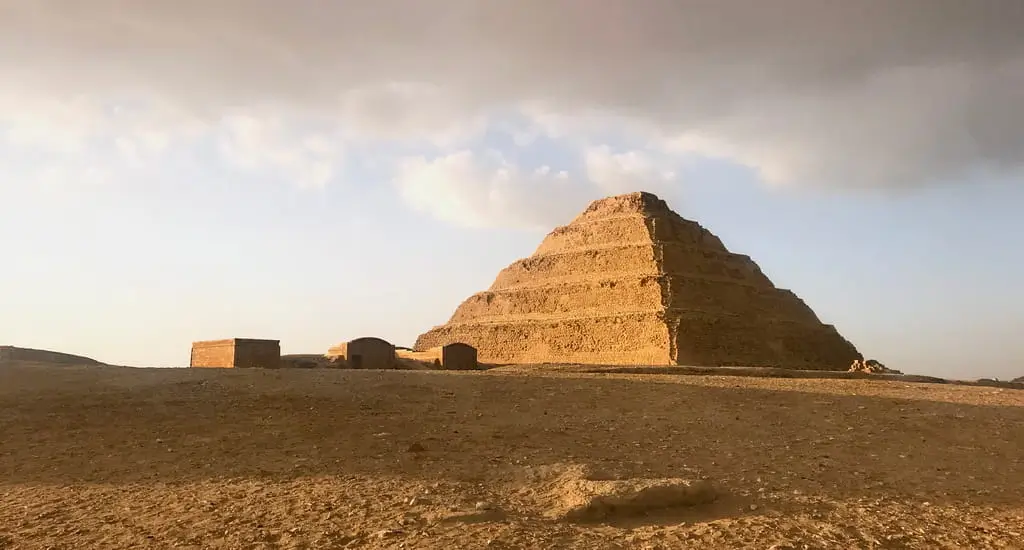
At the center of this revolution was the Step Pyramid complex at Saqqara, designed by Imhotep for King Djoser. This masterpiece redefined the royal tomb:

  • The Design: Imhotep stacked a series of six mastabas of decreasing size, creating a structure that ascended toward the heavens.

  • The Materials: By utilizing limestone rather than mud-brick, the architects ensured the tomb would endure for eternity.
  • The Complex: The pyramid stood within a vast enclosure containing courtyards, temples, and shrines intended for royal rituals.
  • The Heb Sed Court: This area allowed the pharaoh to perform the renewal rites necessary to maintain his divine power.

Imhotep’s success elevated the status of the architect to a new level. Because of his genius, he was eventually deified, becoming a rare example of a non-royal figure achieving such high religious status. Furthermore, this transition to stone architecture required massive organization of labor and resources. Consequently, it proved that the centralized state could successfully manage complex, multi-year projects. This accomplishment directly paved the way for the smooth-sided pyramids built in the following centuries.

Successors of Djoser: Expanding the Third Dynasty of Egypt

Successors of Djoser Expanding the Third Dynasty of Egypt

Following the groundbreaking reign of Djoser, the Third Dynasty of Egypt continued to prioritize architectural innovation and state consolidation. Although Djoser is the most famous figure of this era, his successors were instrumental in refining the structures and administrative policies that defined the Third Dynasty of Egypt.

  • Sekhemkhet: This ruler attempted to surpass the achievements of his predecessor by commissioning the “Buried Pyramid” at Saqqara. Although the structure remained incomplete upon his death, it serves as a testament to the ambitious building programs characteristic of the Third Dynasty of Egypt.
  • Khaba: Archaeologists attribute the Layer Pyramid at Zawyet el-Aryan to this ruler. Through the study of this site, researchers gain further insight into the experimental construction techniques employed during the Third Dynasty of Egypt.
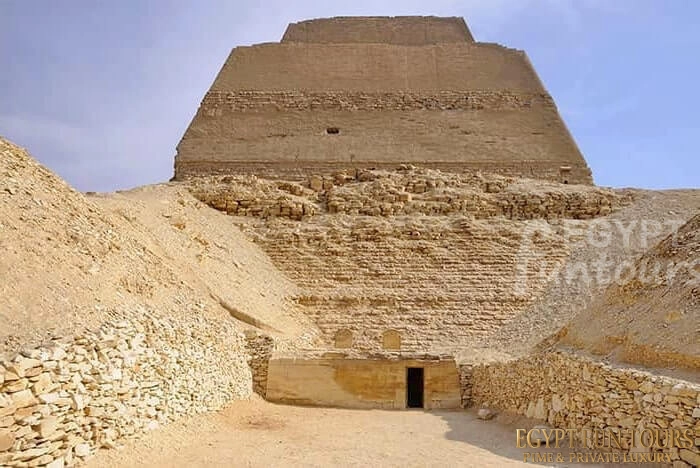
  • Huni: As the final king of the Third Dynasty of Egypt, Huni oversaw a period of relative stability that prepared the kingdom for the transition to the Fourth Dynasty. Some scholars associate him with the Meidum Pyramid, a project that demonstrates the evolving engineering capabilities that emerged during the Third Dynasty of Egypt.

Ultimately, these rulers demonstrated that the administrative systems established early in the Third Dynasty of Egypt were both durable and effective. By maintaining the centralization of power and continuing to invest in grand architectural projects, these kings ensured that the Third Dynasty of Egypt left a lasting legacy of stability and innovation.

The eye of Horus

Artistic and Cultural Flourishing in the Third Dynasty of Egypt

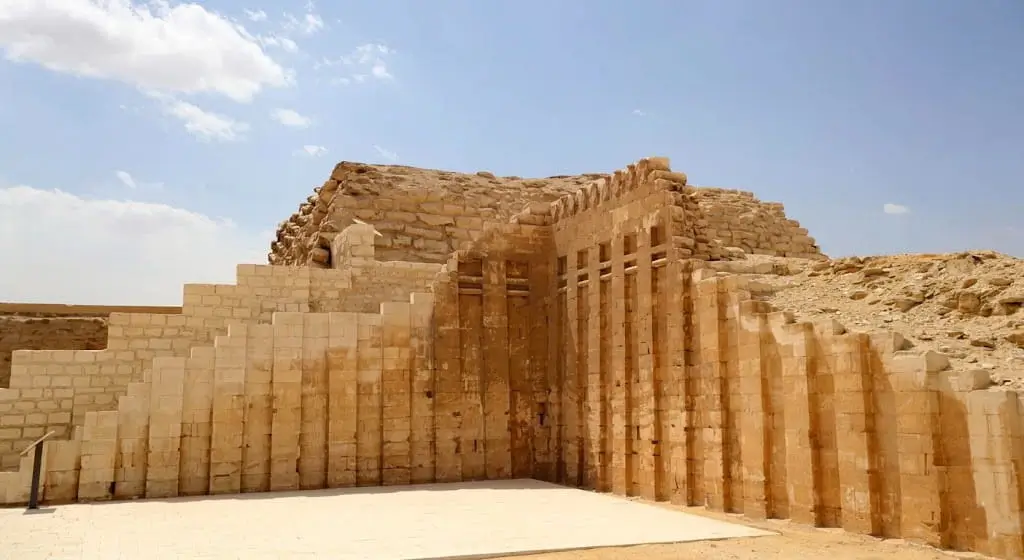
The Southern Tomb of King Djoser; Decoding the Mystery of Saqqara’s Blue Chambers

The cultural life of the Third Dynasty of Egypt was as innovative as its architecture. Because the state was prosperous and centralized, artisans had the resources to experiment with new mediums and styles. Consequently, this era laid the artistic groundwork for the iconic Egyptian aesthetic that would follow.

  • Refinement of Statuary: Sculptors began to master the representation of the human form in stone. For instance, the famous seated statue of Djoser shows a level of realism and dignity previously unseen in earlier dynasties.
  • Hieroglyphic Development: During the Third Dynasty of Egypt, the use of hieroglyphics became more standardized. Officials and priests used these symbols more frequently in royal monuments to record state events and religious rituals.
  • Religious Iconography: Artists solidified the iconography of Egyptian deities during this time. Because the king was viewed as divine, religious art often emphasized the connection between the pharaoh and the gods.
  • Luxury Goods and Craftsmanship: The elite class grew during the Third Dynasty of Egypt. Therefore, demand increased for finely crafted jewelry, stone vessels, and decorative items. Archaeologists have found evidence of these high-status goods in tombs, reflecting the wealth of the period.

Ultimately, these artistic developments were not merely decorative. They served as essential tools of royal propaganda. By commissioning high-quality art, the rulers of the Third Dynasty of Egypt reinforced their divine authority and the order of the state.

Key Artifacts of the Third Dynasty of Egypt

Step Pyramid of Djoser Saqqara 2026 hydraulic lift theory illustration

Key artifacts from the Third Dynasty of Egypt (c. 2686–2613 BCE) reflect the era’s major shift toward monumental stone architecture and the refinement of state-sponsored art.

Significant artifacts and archaeological findings include:

  • Blue Faience Tiles from Djoser’s Funerary Complex: Thousands of these blue-green glazed tiles were discovered lining the subterranean “Blue Chambers” beneath King Djoser’s Step Pyramid and Southern Tomb at Saqqara. These tiles were designed to evoke the appearance of reed matting and held symbolic value related to regeneration in the afterlife.
  • Limestone Reliefs from Djoser’s Complex: The walls of the funerary apartments were faced with sculpted limestone blocks, some of which feature relief carvings of King Djoser performing the Heb Sed race, a ritual to renew his divine power.
  • The Step Pyramid of Djoser: While it is a monumental structure rather than a small portable artifact, the complex itself is the primary archaeological find of the dynasty. It represents the first large-scale use of cut stone in Egyptian history, marking a major departure from earlier mud-brick construction.
  • Mastaba Reliefs of Hesire: High-ranking officials of the era, such as Hesire—who served as a Chief of Dentists and Physicians—left behind ornate wooden panels decorated with fine relief carvings. These artifacts demonstrate the high level of artistic skill and the status of the bureaucratic elite during the Third Dynasty.

Please note that many items often labeled in search results as “Third Dynasty” artifacts—such as gold funerary masks, coffins from Tanis, or statues of gods like Horus or Ptah—frequently belong to the Third Intermediate Period (c. 1070–664 BCE), a completely different era of Egyptian history.

Divider

The Transition to the Fourth Dynasty: A New Era Begins

the meidum pyramid in fayoum attractions things to do in fayoum egypt fun tours

The final years of the Third Dynasty of Egypt functioned as a period of profound preparation for the monumental achievements of the subsequent era. As the administrative systems and architectural expertise matured, the state became uniquely positioned to undertake the even more ambitious projects that would define the Fourth Dynasty.

The shift between these eras was marked by several critical developments:

  • Engineering Advancements: The technical knowledge gained from the step-pyramid designs of the Third Dynasty of Egypt was directly applied to the construction of smooth-sided pyramids.
  • Centralization Consolidation: By the time the Third Dynasty of Egypt concluded, the centralized bureaucratic framework was fully operational, allowing for the mobilization of labor on an unprecedented scale.
  • Ideological Maturation: The concept of the pharaoh as a divine being, which flourished during the Third Dynasty of Egypt, reached new levels of sophistication and was further reflected in the grand scale of Old Kingdom funerary architecture.
  • Continuity of Power: The seamless transition from the last ruler of the Third Dynasty of Egypt to the first of the Fourth suggests a period of internal stability rather than upheaval.

This era served as a vital foundation for the Old Kingdom. By successfully managing resources, refining stone construction, and solidifying divine kingship, the rulers of the Third Dynasty of Egypt ensured that the following centuries could witness the rise of the Great Pyramids at Giza.

Recommended Readings for the Third Dynasty of Egypt

Comprehensive Histories and Overviews

Archaeology and Site-Specific Studies

Specialized and Primary Sources

  • Die Inschriften der 3. Dynastie” by J. Kahl, N. Kloth, and U. Zimmermann: For those interested in a technical corpus of Third Dynasty inscriptions, this is a vital scholarly reference.
  • The Tomb of Hesy” by J. E. Quibell: A classic archaeological report documenting one of the most important non-royal figures of the Third Dynasty, whose tomb provides crucial insight into the art and status of the period.

Accessible Introductions

The eye of Horus

The Lasting Legacy of the Third Dynasty of Egypt

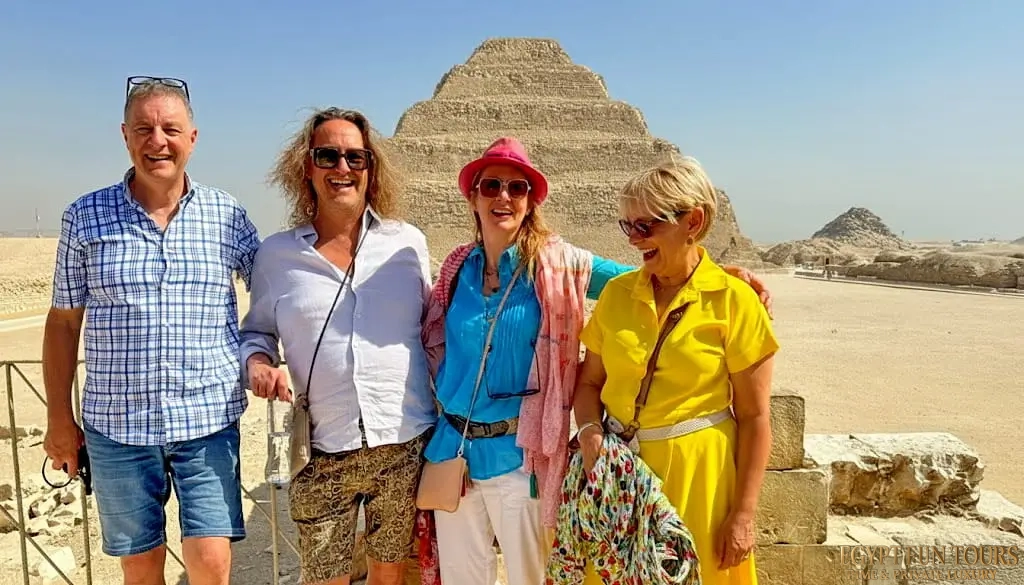
The Step pyramid tour from Cairo Airport

The Third Dynasty of Egypt was far more than a mere prelude to the more famous Old Kingdom dynasties; it was the crucible of the Egyptian state. By successfully integrating centralized administration with revolutionary architectural ambition, the rulers of this period created a blueprint for governance and monumental construction that would sustain Egypt for over two millennia.

The transition from mud-brick to the permanence of stone, spearheaded by Djoser and Imhotep, was an act of profound political and theological engineering. This shift did not just create a tomb; it solidified the king’s status as a divine mediator, whose duty to preserve ma’at became the bedrock of national unity. Furthermore, the establishment of a robust bureaucracy and the standardization of state functions ensured that the kingdom could manage resources, labor, and ideology on a scale never before witnessed in history.

(FAQs) About the Third Dynasty of Egypt

To better understand this pivotal era, here are some of the most common questions regarding the Third Dynasty of Egypt.

  • What defined the Third Dynasty of Egypt? This period is primarily recognized as the dawn of the Old Kingdom, marked by the transition to monumental stone architecture and the centralization of the Egyptian state.
  • Who was the most famous pharaoh of this era? King Djoser is the most celebrated ruler of the Third Dynasty of Egypt, largely due to his commissioning of the revolutionary Step Pyramid at Saqqara.
  • What was the significance of Imhotep? Imhotep was Djoser’s visionary vizier and architect. He is historically credited as the first architect known by name, as he pioneered the use of cut stone for royal funerary complexes.
  • Why was the capital moved to Memphis? Rulers established Memphis at the apex of the Nile Delta to effectively manage the resources of both Upper and Lower Egypt from a central, commanding position.
  • How did religion influence the government? During the Third Dynasty of Egypt, the pharaoh was viewed as a living god. This ideological shift solidified the king’s authority and provided the political legitimacy necessary to rule a unified territory.
  • Did the Third Dynasty use the same pyramids as those at Giza? No. The Third Dynasty of Egypt focused on experimental, tiered structures like the Step Pyramid, which paved the way for the smooth-sided pyramids built in the later Fourth Dynasty.
Divider
Giza pyramids Tours - Egypt Fun Tours

Thanks to egypt fun tours!

Thank u Hani for the enlightening tour of Giza and Saqqara. Thank u also for the great recommendation – Felfela – which we enjoyed a lot. returning the commission u got at the papyrus shop was something we didn’t expect and truly appreciate. shookran!

More »
4 Days Egypt Experience for Solo Woman Egypt Fun Tours min 1

Amazing experience

My husband and I had a ten-hour layover in Cairo and luckily found Egypt Fun Tours while researching tour companies online. The owner, Hamada, picked us up from the airport and brought us around Cairo. He took us to see the pyramids, which was a memory I will never forget.

More »

Like two days of touring in one day!

I had a 12 hour stay in Cairo- and had made no plans on how to spend it until 8pm the night before departure. I emailed Egypt Fun Tours in a panic and they responded immediately. They made it incredibly easy to arrange a tour and we made arrangements via

More »
Amir review, October, 2025

BEST EGYPT VISIT EVER

My entire family enjoyed every day of our EGYPT 🇪🇬 vacation.. Our tour guide helped us set up the entire trip from beginning to end .. He helped us in every way .. Transportation, meals , shopping , museum , history , just everything .. and my kids love him

More »

Great guided tour of pyramids

We travelled to Cairo on Friday, May 3, 2019, from Toronto. We landed at 0530 and were met by a representative of Fun Tours at the departure gate. We were only on a layover of 6 hours, and the tour company came with a private van, water, a driver, and

More »
God_Anubis_Icon

Top-rated Tour Packages

God_Anubis_Icon
WhatsApp
Email
Print