The Twenty-Seventh Dynasty of Egypt: The First Persian Period

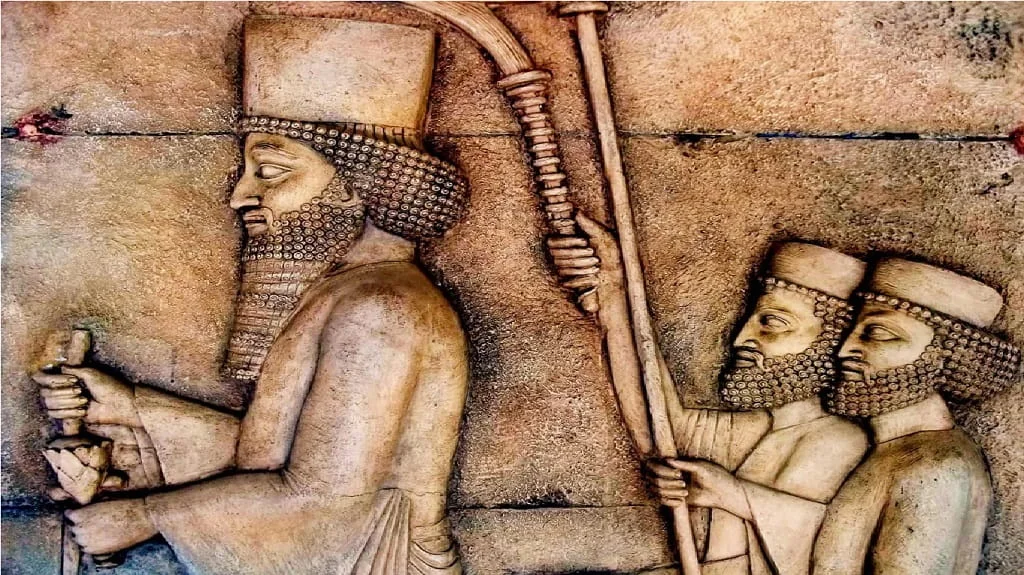
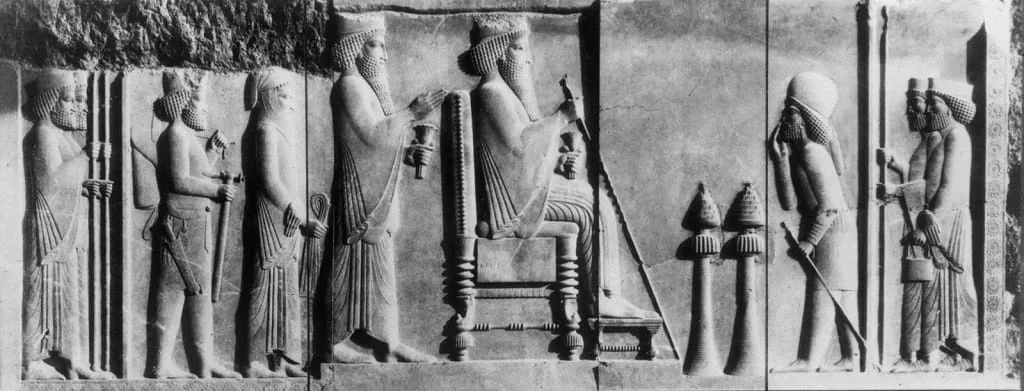
The Twenty-seventh dynasty of Egypt (c. 525–404 BCE) marks the complex era of the First Persian Period, which began following the Achaemenid conquest at the Battle of Pelusium. Rather than ruling strictly as detached foreign occupiers, early Persian emperors like Cambyses II and Darius the Great adopted traditional pharaonic titles, underwent native coronation rituals, and actively collaborated with the local elite. While Darius I successfully integrated his rule by codifying Egyptian laws and investing in major infrastructure projects like the Temple of Hibis and the Red Sea canal, his successor Xerxes I shifted to a harsh policy of heavy imperial taxation and temple suppression. This financial exploitation sparked decades of violent guerrilla warfare in the Nile Delta, ultimately leading to a successful native rebellion under Amyrtaeus that liberated Egypt and brought an end to over a century of Persian dominance.
The eye of Horus
WhatsApp
Email
Print

The Twenty-seventh dynasty of Egypt (c. 525–404 BCE) marks a dramatic and controversial turning point in the Late Period, introducing Egypt’s first prolonged era of foreign imperial rule. Following the sudden collapse of the Saite Renaissance at the Battle of Pelusium, the vast Achaemenid Persian Empire absorbed the Nile Valley into its global domains.

Yet, this period was far more complex than a simple military occupation. Rather than ruling from afar as detached conquerors, powerful Persian emperors like Cambyses II and Darius the Great took up the traditional titles, crowns, and religious duties of native Egyptian pharaohs. For over a century, Egypt became the ultimate crown jewel of the Persian Empire, serving as a vital nexus where Near Eastern imperial ambition met millennia of deeply rooted pharaonic tradition.
Divider

The Persian Invasion and the Reality of Cambyses II

The Persian Invasion and the Reality of Cambyses II

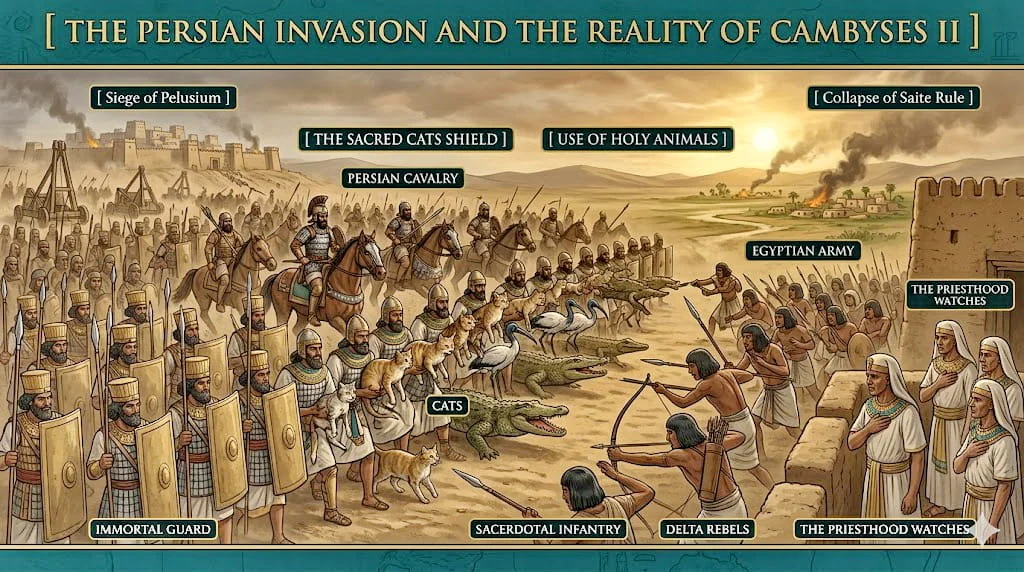
The independent Saite era ended suddenly in 525 BCE at the Battle of Pelusium. The victorious Persian King, Cambyses II, quickly claimed the Egyptian throne. Ancient Greek writers created a dark legend around this conquest. The historian Herodotus claimed that Cambyses II was a mad tyrant. He wrote that the Persian king slaughtered sacred animals, burned temples, and mocked native gods. However, modern archaeology tells a very different story.

We can find the truth in the autobiography of Udjahorresne. He was a powerful Egyptian priest and naval commander. He served the Saite kings and later worked directly for Cambyses II. Udjahorresne carved his life story onto a famous stone statue. This primary source reveals that he personally coached the Persian king in royal etiquette. The text proves that Cambyses II did not destroy the culture. Instead, he underwent traditional coronation rituals to become a legitimate, native-style pharaoh.

Key Facts of the Early Persian Rule

  • Royal Titles: Cambyses II adopted traditional Egyptian throne names to respect local customs.
  • Local Cooperation: The Persian king actively hired the existing Egyptian elite to run the government safely.
  • Imperial Order: The Persians wanted a stable state. They protected local temples to prevent dangerous public revolts.

Of course, the loss of independence caused real pain. Yet, the image of a mad Persian tyrant is largely a myth. Disgruntled local priests and hostile Greek writers created this propaganda much later. In reality, the twenty-seventh dynasty of Egypt began with a clever political compromise.

Golden Scarab

Darius I and the Era of Integration

Darius I and the Era of Integration

The Twenty-seventh dynasty of Egypt reached its economic and architectural peak under Darius I, also known as Darius the Great. He ruled from 522 to 486 BCE. Unlike Cambyses, Darius never lived in Egypt. He governed the Nile Valley from his grand palaces in Persia. Yet, he treated Egypt with immense care and respect.

Darius I understood that a stable empire required happy citizens. Therefore, he did not force Persian customs on his subjects. Instead, he ordered his officials to gather the old legal texts of Egypt. He codified traditional Egyptian law, which earned him great respect from local priests and judges.

Monumental Achievements under the Twenty-Seventh Dynasty of Egypt

Darius I invested heavily in Egyptian infrastructure and religion. His projects beautifully blended Persian power with pharaonic style:

  • The Temple of Hibis: Darius built this magnificent sandstone temple in the remote Kharga Oasis. It remains one of the best-preserved monuments from the entire Late Period.
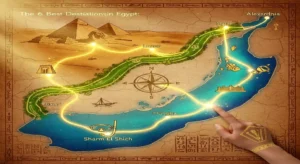
  • The Red Sea Canal: He successfully dug a massive waterway connecting the Nile River to the Red Sea. This brilliant engineering project boosted international trade across the ancient world.
  • The Suez Stelae: Darius erected five giant granite monuments along the canal channel. These pillars featured identical inscriptions written in Old Persian, Elamite, Babylonian, and Egyptian hieroglyphs.
The eye of Horus

Rebellion, Heavy Taxes, and the Decline of the Twenty-Seventh Dynasty of Egypt

Rebellion, Heavy Taxes, and the Decline of the Twenty-Seventh Dynasty of Egypt

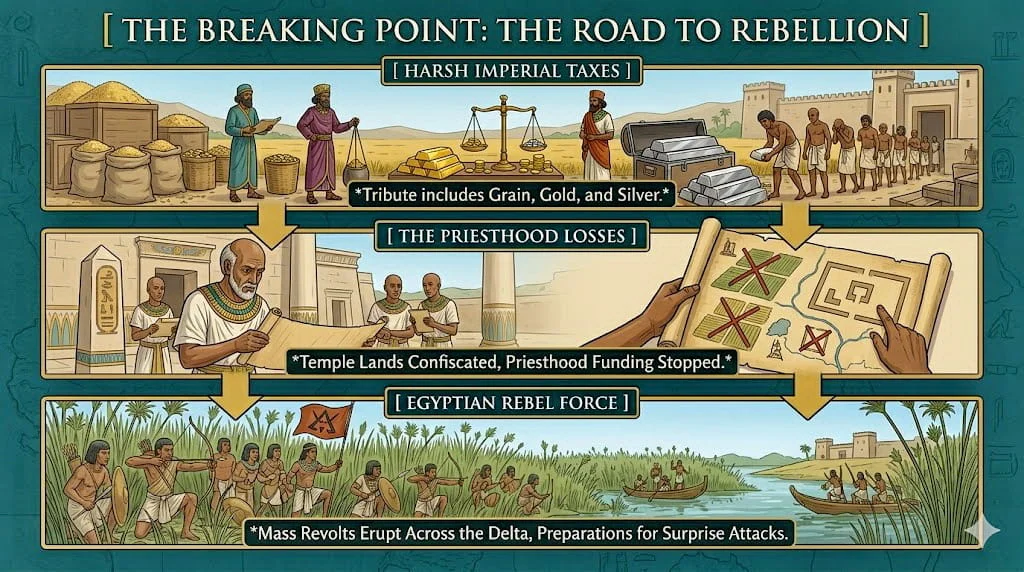
The peaceful integration of Darius I did not last forever. Following his death, his successor, Xerxes I, took the throne. Xerxes had a completely different philosophy of leadership. He did not care about native titles, nor did he try to please the local priesthood. Instead, Xerxes treated Egypt purely as a conquered territory. He appointed his brother, Achaemenes, as the local governor, or satrap. Together, they imposed harsh financial policies on the population.

Rebellion, Heavy Taxes, and the Decline of the Twenty-Seventh Dynasty of Egypt

The Breaking Point of Persian Rule

  • Heavy Taxation: The Persians demanded massive amounts of Egyptian grain, gold, and silver to fund their expensive wars against Greece.
  • Temple Suppression: Xerxes stopped sending funds to local temples. He even confiscated lucrative lands from the powerful priesthood.
  • Violent Revolts: These actions caused immediate fury. Major rebellions erupted across the western Delta, creating a state of constant guerrilla warfare.

The twenty-seventh dynasty of Egypt grew increasingly weak during the reigns of Artaxerxes I and Darius II. The Persians spent decades fighting off these persistent native uprisings. By the end of the fifth century BCE, the local populations were fully prepared to expel their foreign rulers for good.

Divider

The Collapse and Legacy of the Twenty-Seventh Dynasty of Egypt

The Collapse and Legacy of the Twenty-Seventh Dynasty of Egypt

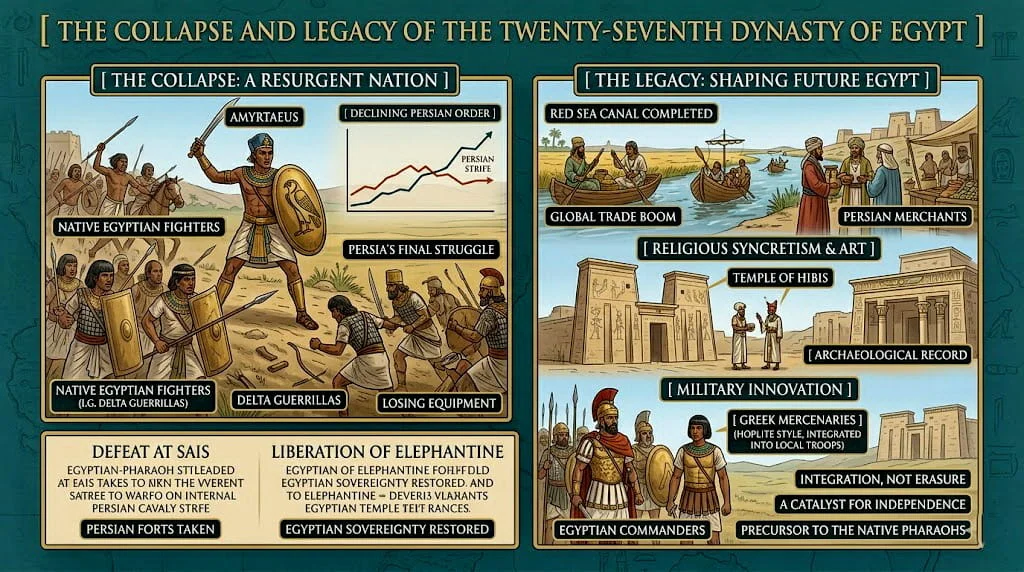
The Persian grip on the Nile Valley finally broke in 404 BCE. Following the death of Darius II, a brilliant Egyptian leader named Amyrtaeus seized his moment. He came from the western Delta city of Sais, the proud home of the previous dynasty.

Amyrtaeus led a fierce, highly organized guerrilla war against the Persian military forces. He successfully drove the occupying army out of Lower Egypt. By 400 BCE, he liberated the entire country, including the southern stronghold of Elephantine. Amyrtaeus then established the short-lived Twenty-Eighth Dynasty, ruling as the sole pharaoh.

The Lasting Impact of the First Persian Period

While the Twenty-Seventh Dynasty of Egypt began with immense geopolitical chaos, its long-term effects deeply reshaped the ancient world:

  • Global Infrastructure: The massive Red Sea canal built by Darius I permanently altered global maritime trade routes between Africa and Asia.
  • Architectural Shifts: Isolation in the Western Desert protected the Temple of Hibis, creating an invaluable archaeological record of Late Period art.
  • Military Evolution: Decades of fighting the Persians forced native Egyptian leaders to rely heavily on Greek mercenaries, a tactic that defined later military strategy.

Ultimately, the twenty-seventh dynasty of Egypt proved that pharaonic culture could absorb foreign rulers without losing its core identity. The Achaemenid emperors claimed the crowns of the pharaohs, but the ancient traditions of the Nile Valley outlasted the Persian throne.

The eye of Horus

FAQs About the Twenty-Seventh Dynasty of Egypt

Who was the first king of the twenty-seventh dynasty of Egypt?

The first king of the Twenty-Seventh Dynasty of Egypt was Cambyses II. He was the son of Cyrus the Great, the founder of the Achaemenid Persian Empire. Cambyses II conquered Egypt in 525 BCE after defeating the native Egyptian forces at the historic Battle of Pelusium.

Did the Persian emperors rule as traditional pharaohs?

Yes, early Persian emperors like Cambyses II and Darius I officially ruled as true Egyptian pharaohs. They adopted traditional royal titles, wore native crowns, and protected local religious customs to maintain political stability and secure the support of the powerful Egyptian temple priesthood.

Why did Egypt revolt against the First Persian Period?

Egypt revolted against Persian rule due to harsh imperial taxes and a deep lack of cultural respect from later rulers. While Darius I respected local traditions, his successor, Xerxes I, imposed heavy financial burdens on the population, confiscated lucrative temple lands, and treated Egypt purely as a conquered province.

How did the twenty-seventh dynasty of Egypt finally end?

The Twenty-Seventh Dynasty of Egypt ended in 404 BCE when a native leader named Amyrtaeus led a successful guerrilla war against the occupying military forces. He drove the Persian army out of the Nile Delta and Lower Egypt, successfully liberating the country and establishing the Twenty-Eighth Dynasty.

To understand the broader socio-political structure and how this era fits into the macro-cycles of pharaonic power, see our master guide on The Dynasties of Ancient Egypt.


Divider

Excellent Layover Tour

I would recommend Egypt Fun Tours to everyone who is looking for either a cultural or relaxing trip in Egypt. I was recently on a private layover tour and could not have been any happier with my day in Cairo. My tour guide, Hani was waiting just outside immigration and

More »

Great layover Tour!!

I had an excellent layover tour with Hani. He is knowledgable, fun, and passionate about his city. I went for a tour of the pyramids, sphinx, and to a papyrus factory which were all great. Ask him any question about Egyptian history and he will surely know the answer! Also

More »

Outstanding layover tour

I had the opportunity to do a layover tour with Egypt Fun Tours this Friday, and it was amazing. I had a 10-hour layover tour in Cairo, and I was met by Mohamed on time at the airport. He picked me up in a clean, new, safe, and comfortable van.

More »

A great day!!!!

Thank you Hamada for an incredible day! Thank you for the stories and the history, you are so knowledgeable and we didn’t feel rushed at all or like we missed out on things, will definitely be recommending this tour to everyone 🙂

More »

One of the best tours I have ever had!

I was thoroughly impressed by the professionalism of this tour company. I emailed to inquire about the Cairo layover tour about 30 hours before my flight was scheduled to leave from New York. I was pleasantly surprised to get a quick response confirming the tour and assuring that a guide

More »
God_Anubis_Icon

Top-rated Tour Packages

God_Anubis_Icon
WhatsApp
Email
Print