Foreign Conquest and Assimilation within the Dynasties of Ancient Egypt

An extraordinary feature of Egyptian civilization was its ability to conquer its conquerors. Over three thousand years, foreign invaders repeatedly breached Egypt’s borders, seized the capital, and took the throne. However, these foreign rulers did not replace Egyptian culture with their own. Instead, they quickly adopted traditional pharaonic customs to legitimize their rule, becoming authentic links within the dynasties of ancient Egypt.
The Hyksos: The First Foreign Pharaonic Rule (15th Dynasty)
During the Second Intermediate Period, a group of Levantine peoples known as the Hyksos crossed the eastern Delta. They established a capital at Avaris and took control of Lower Egypt.
- Cultural Adoption: The Hyksos did not destroy Egyptian administration. Instead, their rulers took traditional pharaonic titles, adopted Egyptian court protocols, and wrote their names in hieroglyphic cartouches.
- Technological Integration: While they maintained their own West Semitic names, they integrated seamlessly into the framework of the dynasties of ancient Egypt. They introduced vital military technologies, including the horse-drawn chariot and the composite bow, which later Egyptian kings used to forge an international empire.
The Libyans and the Strategy of Marriage (22nd and 23rd Dynasties)
By the end of the New Kingdom, Libyan military mercenaries had settled in large numbers throughout the western Delta. As central pharaonic power weakened, these Libyan chieftains peaceably assumed control of Lower Egypt.
To solidify their positions within the dynasties of ancient Egypt, these Libyan pharaohs adopted a masterful political strategy. They revived ancient administrative titles and married their sons and daughters into the existing high priesthood of Amun at Thebes. By blending their military strength with traditional Egyptian religious offices, they ruled successfully for over two centuries without sparking domestic cultural rebellions.
The Kushites: The Black Pharaohs of the South (25th Dynasty)
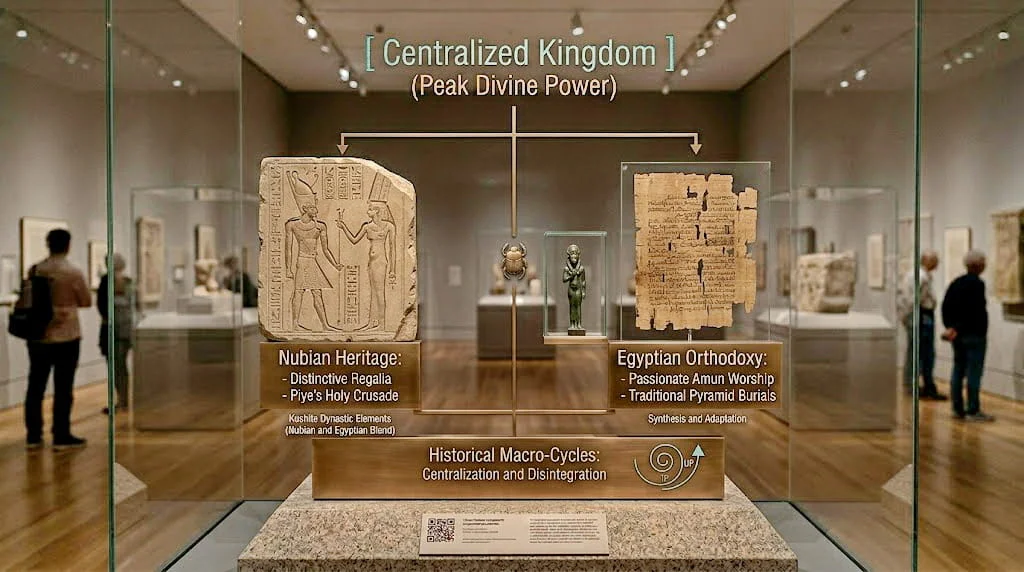
The ultimate example of cultural assimilation came from Nubia, located in modern-day Sudan. For centuries, Egyptian pharaohs had traded with, campaigned in, and colonized Nubia. During this time, the Nubians deeply embraced the worship of the Egyptian creator god, Amun.

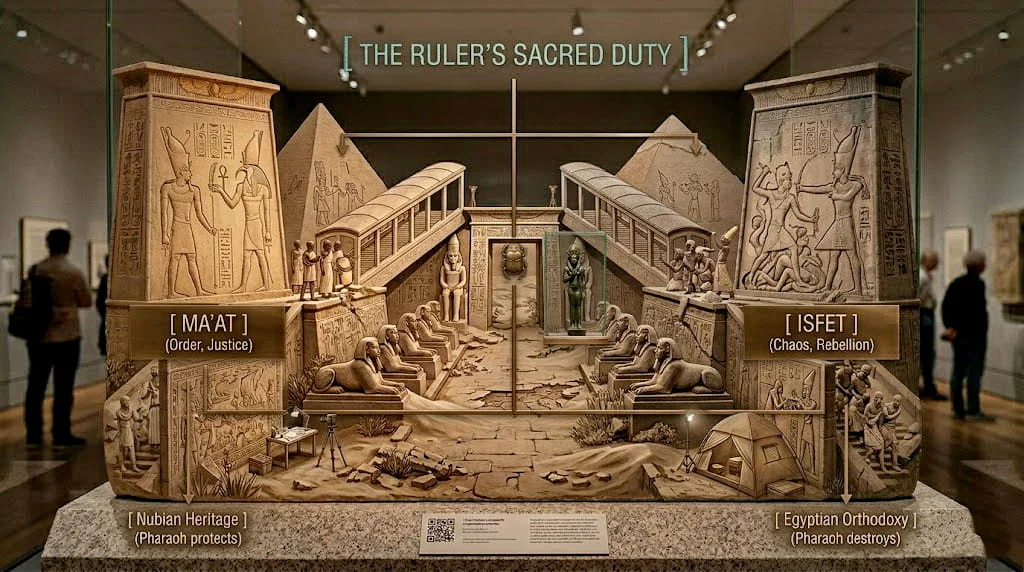
When Egypt fractured into rival factions during the Third Intermediate Period, the Kushite King Piye marched north from his capital at Napata. He did not launch his invasion to destroy Egypt, but to save it from its own internal chaos.
- Restoring Ma’at: Piye viewed his campaign as a holy crusade to restore Ma’at and protect the temples of Amun.
- The Revivalists: The Kushite pharaohs became great cultural revivalists. They commissioned art, literature, and temple reliefs that intentionally mimicked the classical styles of the Old and Middle Kingdoms. They even revived the ancient tradition of pyramid burials at El-Kurru and Nuri, proving their devotion to the oldest customs of the dynasties of ancient Egypt.
The Persians and Ptolemies: The Twilight of Dynastic Rule
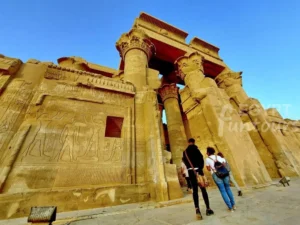
Even during the twilight of pharaonic independence, this assimilation pattern continued. When the Persians conquered Egypt, forming the 27th Dynasty, Cambyses II and Darius I carved their names into temple walls as legitimate pharaohs. Later, following the conquests of Alexander the Great, the Greek Ptolemaic Dynasty built massive traditional temples at Edfu, Dendera, and Philae. They depicted themselves on these walls wearing double crowns, sacrificing to native deities, and upholding the ancient cosmic laws.
By demanding that every conqueror bow to the ancient theological template, the dynasties of ancient Egypt maintained their cultural independence and spiritual identity until the Roman Empire finally converted Egypt into a provincial breadbasket.
The Enduring Legacy of the Dynasties of Ancient Egypt
The long story of the dynasties of ancient Egypt is not just a collection of dates, wars, and ruined monuments. Instead, it represents one of the most successful social and political systems ever created by humanity. For over 3,000 years, this framework survived environmental disasters, internal civil wars, and foreign invasions.
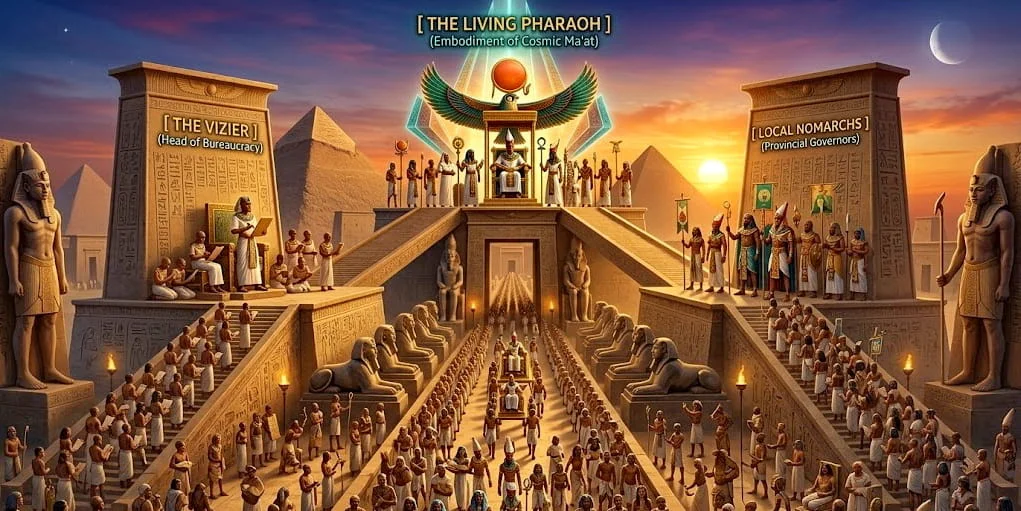
The secret to this incredible longevity lay in its flexibility. A dynasty did not end just because a biological family died out. The system survived because the office of the pharaoh was divine. Any leader who took the throne—whether a local vizier, a female regent, or a foreign conqueror—could maintain the unbroken chain of history by embracing Ma’at and taking the sacred Five-Fold Titulary.
When the last native ruling house fell, and the Roman Empire eventually turned Egypt into a province, the era of the pharaohs came to an end. Yet, the monuments, the records, and the systemic framework left behind by the dynasties of ancient Egypt continue to captivate the modern world. They stand as an eternal monument to a civilization that mastered the art of political continuity and cosmic balance.