Origins of Ancient Egypt: The Prehistoric Dawn of Pharaonic Civilization

Discover the true origins of ancient Egypt, tracking an epic prehistoric journey from lush African savannas to the dawn of the Pharaohs. This comprehensive guide reveals how a dramatic climate crisis dried the Green Sahara, forcing nomadic herders—the builders of the world’s oldest stone calendar at Nabta Playa—to seek refuge in the fertile Nile Valley. Explore the rapid evolution of early farming cultures, the birth of humanity’s first true cities at Hierakonpolis and Abydos, and the invention of the earliest hieroglyphic writing, all culminating in King Narmer’s historic unification of the Nile corridor around 3100 BCE.
The eye of Horus
WhatsApp
Email
Print

Ancient Egypt did not begin with the Great Pyramids. The iconic Pharaonic story actually started much earlier. Thousands of years of deep geological shifts occurred first. Early humans evolved along the Nile River over millennia. This vast era represents the true origins of ancient Egypt. Prehistoric groups forged the first concepts of writing and religion here. They invented urban engineering and divine kingship long before the Old Kingdom. To understand Giza or King Tut, you must explore this prehistoric crucible.

Our journey stretches across millions of years. First, we explore a prehistoric marine ocean. Next, we witness a lush, green savanna. Finally, we analyze the sophisticated nation-state of the Predynastic Period. Environmental crises forced early humans to innovate. These ancient triumphs made the glory of the Pharaohs possible. Read on to discover how Egyptian civilization truly began.

🏛️ Discover Deep History with Egypt Fun Tours

You can see the roots of Pharaonic culture beyond the standard tourist tracks. Egypt Fun Tours offers curated, scholar-led archaeological expeditions. We guide you through the oldest prehistoric pottery halls in Cairo. We also take you to the sacred ancestral sands of Abydos. Connect directly to the birthplace of civilization with our team.

Explore Our Custom Archaeological Itineraries Today

Divider

Geological Foundations: The Prehistoric Seas and Canyons of Egypt

Geological Foundations The Prehistoric Seas and Canyons of Egypt

The modern Egyptian landscape hides a dramatic deep-time history. Millions of years ago, the Nile River did not exist. Instead, a vast, warm body of water covered the entire region. Scientists call this prehistoric waterscape the Tethys Ocean.

Billions of tiny marine organisms lived in this warm sea. They left behind trillions of microscopic shells. Over millions of years, these shells compressed into massive layers of rock. Today, this rock forms the famous limestone beds of the Giza Plateau. When you look at the Pyramids, you are looking at the floor of an ancient ocean. Eventually, the prehistoric sea retreated northward. Around six million years ago, a massive predecessor river emerged. Geologists call this ancient waterway the Eonile. During this era, the Mediterranean Sea dried up completely.

The Eonile responded by cutting a deep canyon into the bedrock. This canyon was deeper and longer than the American Grand Canyon. The ancient abyss dropped sharply right through modern Cairo and Aswan. Later, the Mediterranean refilled and flooded the canyon. Rivers from the Red Sea hills slowly deposited mud into the gulf. This rich sediment created the fertile Nile Valley floor.

During this geological transformation, early human ancestors arrived. Homo erectus migrated out of the East African Rift Valley. They used Egypt as a land bridge to reach Europe and Asia. These early ancestors left behind early stone tools. You can still find their teardrop-shaped Acheulean handaxes today. They sit embedded high up on the desert terraces above the modern Nile.

🗺️ Witness the Rocks of Prehistory with Egypt Fun Tours

The stones of Egypt tell a story older than humanity itself. Our specialized tour packages take you straight to the geological origins. You can touch the marine limestone fossils built directly into the Giza monuments. Let our expert guides show you the ancient desert terraces where prehistoric tools still rest.

Book Your Deep-Time Egyptian Adventure Today

Golden Scarab

The Green Sahara and the Prehistoric Origins of Ancient Egypt

Visiting the Petrified Forest; A Practical Guide

The Sahara Desert did not always look dry and sandy. Long ago, lush green grasslands covered this massive region. Monsoon rains fed deep lakes across North Africa. Elephants, giraffes, and wild cattle roamed the plains freely. During this wet phase, nomadic humans lived far away from the Nile River. The river valley was a wild, swampy jungle back then. Dangerous crocodiles and hippos ruled those muddy waters. People naturally preferred the open savanna for hunting and gathering.

Around 6000 BCE, the global climate shifted dramatically. The life-giving rains vanished over a few centuries. The fierce desert expanded rapidly across the grasslands. This environmental crisis triggered a massive human migration. Scattered groups fled the drying plains for survival. They marched toward the only reliable water source left: the Nile River. This movement concentrated human population and energy inside a narrow river corridor. This forced crowding directly sparked the origins of ancient Egypt.

Before the final migration ended, humans achieved major technological breakthroughs. Deep in the Western Desert sits an archaeological site called Nabta Playa. Here, prehistoric herders built the world’s oldest known astronomical calendar. They arranged large standing stones in a precise circle. This prehistoric circle successfully tracked the arrival of the summer solstice. The stones told the community exactly when the monsoon rains would arrive.

Meanwhile, early communities in Lower Egypt adopted structured farming practices. Ancient sites like Fayum and Merimde show the earliest mud huts. These people stored domesticated wheat in underground clay pits. They stopped chasing wild game across the open plains. Instead, they anchored themselves permanently to the fertile soil. This critical shift set the stage for true civilization.

🏜️ Trek to Prehistoric Frontiers with Egypt Fun Tours

Most tourists only see the temples, but the desert holds the earliest keys to Pharaonic history. At Egypt Fun Tours, we take you deeper. Let us guide you to the Nubian Museum in Aswan to see the actual reconstructed stone circle of Nabta Playa. Discover the incredible survival stories written into the sand before the First Dynasty.

Secure Your Specialized Historic Tour Spot Now

The eye of Horus

The Badarian Culture: Agricultural Origins of Ancient Egypt

The Badarian Culture Agricultural Origins of Ancient Egypt

The Badarian culture pushed civilization forward along the Nile. Archaeologists discovered this early society near the modern village of Al-Badari. They represent the oldest farming tradition in Upper Egypt.

Badarian Pottery: Masters of the Prehistoric Kiln

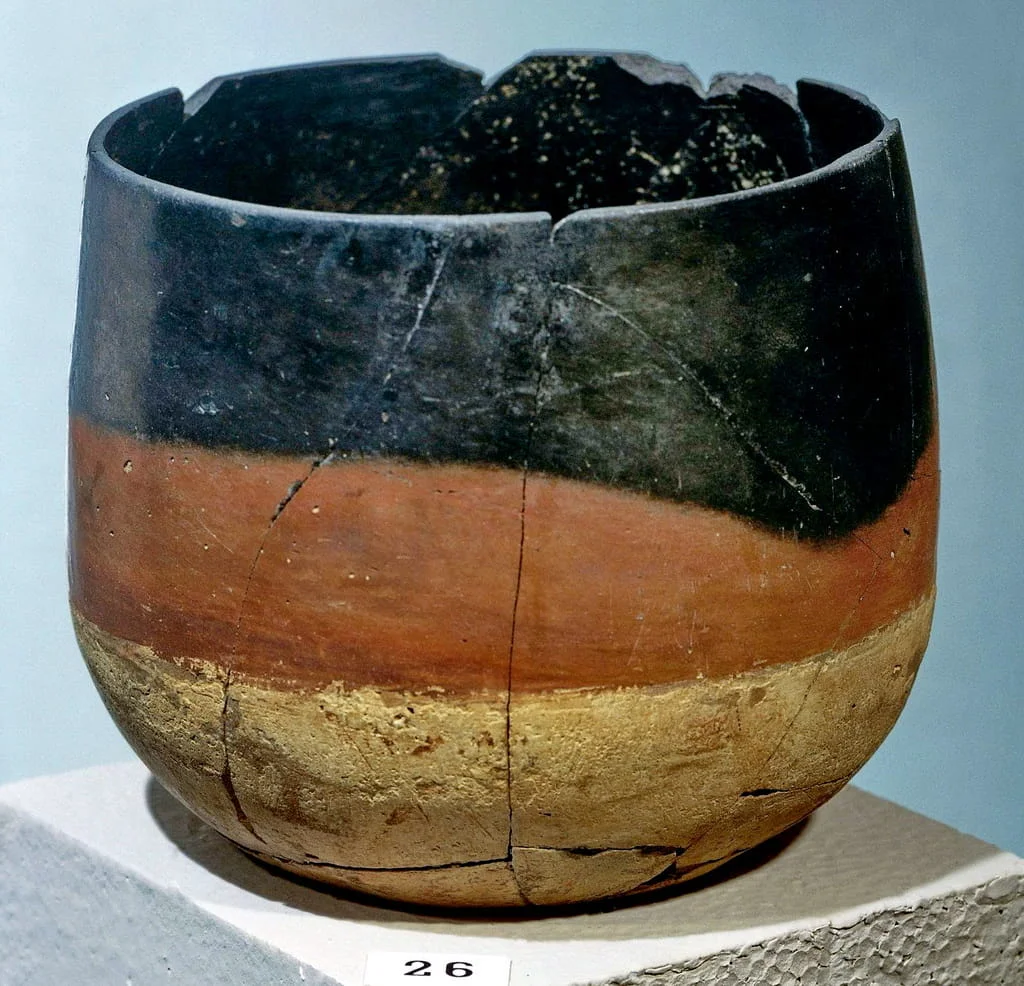
Badarian craftsmen excelled at creating ceramics. They produced beautiful, distinctive black-topped pottery. They shaped these clay vessels entirely by hand. Artisans lacked the mechanical potter’s wheel during this early era. Authentic Badarian black-topped pottery. Source: DEA PICTURE LIBRARY / De Agostini via Getty Images

Look closely at the image above. You will see how thin the clay walls are. Craftsmen smoothed the exterior surfaces with small river stones. They polished the clay until it shone brightly. This technique created a striking, glossy finish before firing.

Early Egyptian Burial Practices and Beliefs in the Afterlife

Thousands of ancient graves reveal deep spiritual beliefs. The Badarians buried their dead in a tight fetal position. The bodies almost always faced the West. This specific funerary tradition lasted for the next 3,000 years of Pharaonic history.

They packed the graves with valuable items. Friends buried the deceased with ivory jewelry, copper pins, and glazed beads. Interestingly, some graves contained far more wealth than others. This economic gap proves a social hierarchy was already forming along the Nile.

Chalcolithic Copper Innovations and Early Tools

The Badarians were highly innovative engineers. They crafted sharp flint tools for daily hunting. They also engineered specialized stone sickles to harvest grain crops efficiently. Furthermore, they became the first people in Egypt to manipulate copper. Workers hammered raw copper into small pins and decorative beads. This breakthrough marked the regional birth of the Chalcolithic Age. The Badarian culture eventually evolved into the sophisticated Naqada culture.

🏺 Walk Among the First Masterpieces with Egypt Fun Tours

You can view these exact thin-walled Badarian pots in person. The ground floor of the Egyptian Museum houses these ancient treasures. Our specialized Cairo tour packages include expert Egyptologist guides. We show you the literal artifacts that launched the origins of ancient Egypt.

Divider

The Predynastic Expansion: The Naqada Cultures

The Predynastic Expansion The Naqada Cultures

The Badarian culture eventually transitioned into the highly influential Naqada civilization. This era represents the true explosive growth phase in the origins of ancient Egypt. Historians divide this long prehistoric era into three distinct chronological phases.

  • Naqada I (Amratian Phase): Communities expanded rapidly along the Nile Valley. Artisans carved detailed human figurines from bone and ivory. They also crafted stone cosmetic palettes shaped like wild desert animals. International trade networks flourished as villages imported valuable lapis lazuli from Asia.
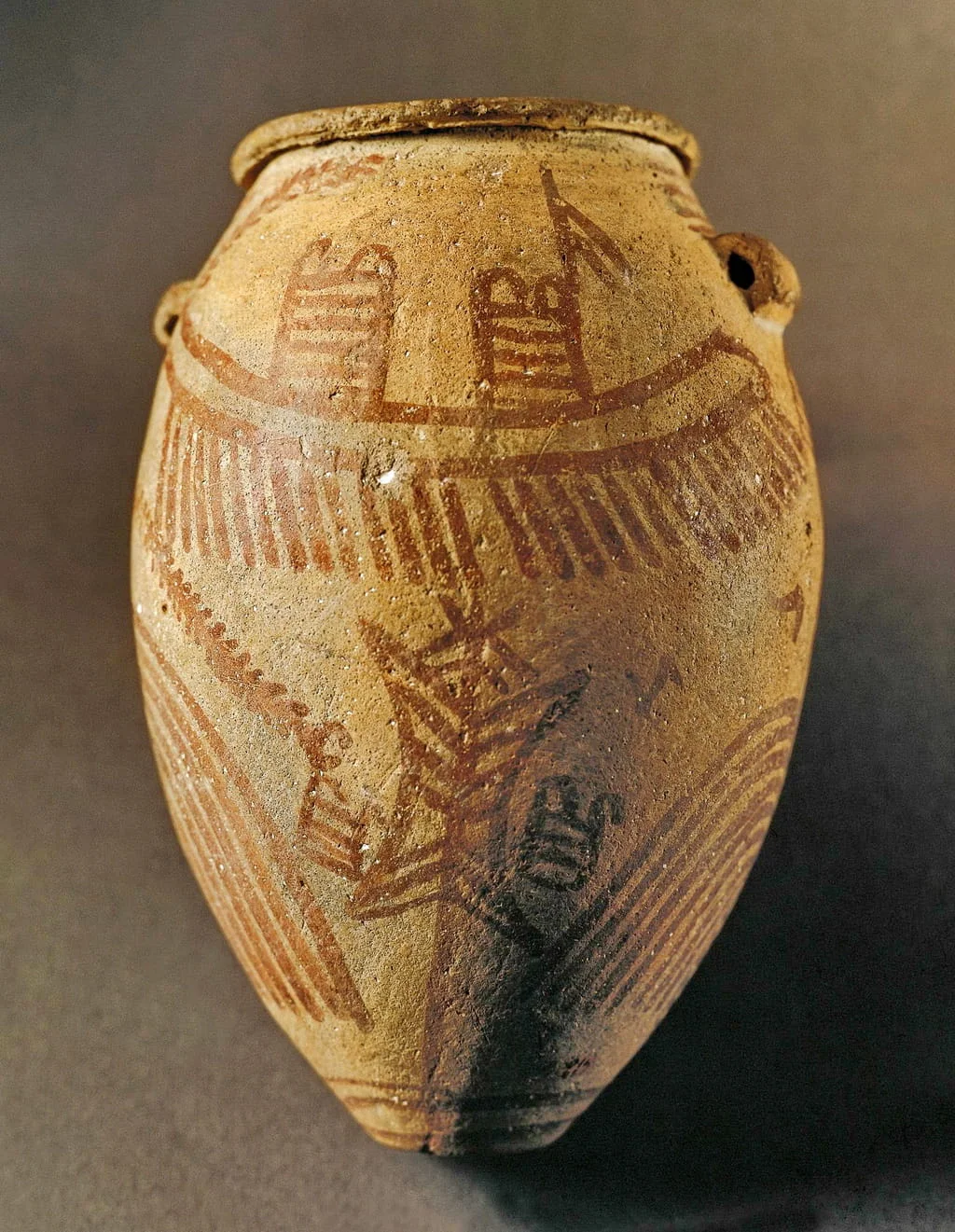
  • Naqada II (Gerzean Phase): Rural farming villages evolved into humanity’s first true cities. Major urban power centers grew at Hierakonpolis and Abydos. Potters invented advanced marl-clay jars decorated with large Nile boats. Elite leaders built painted tombs, proving a powerful ruling class controlled the region.
  • Naqada III (Protodynastic Phase): This final era marks the direct countdown to the Pharaonic Age. Administrators at Abydos invented the world’s earliest hieroglyphic writing to track tax goods. Powerful regional warlords, including the legendary Scorpion King, consolidated military power under a single crown.

➔ Expand Your Knowledge: Read Our Complete Guide to the Predynastic Period

Want to explore these three prehistoric cultures in absolute detail? Read our comprehensive standalone guide: The Predynastic Period of Egypt: Complete Guide to the Naqada Culture. Discover the deep social structures, artifact analyses, and urban architecture that built the foundations of the Nile.

🏺 Discover the Roots of Trade with Egypt Fun Tours

You can track these ancient global networks yourself. The oldest trading artifacts sit displayed inside the grand halls of Cairo. Let Egypt Fun Tours design your custom historical itinerary. Our elite Egyptologist guides will bring the fascinating Naqada I collections to life.

Reserve Your Scholarly Egypt Tour Spot Now

The eye of Horus

King Narmer and the True Origins of Ancient Egypt
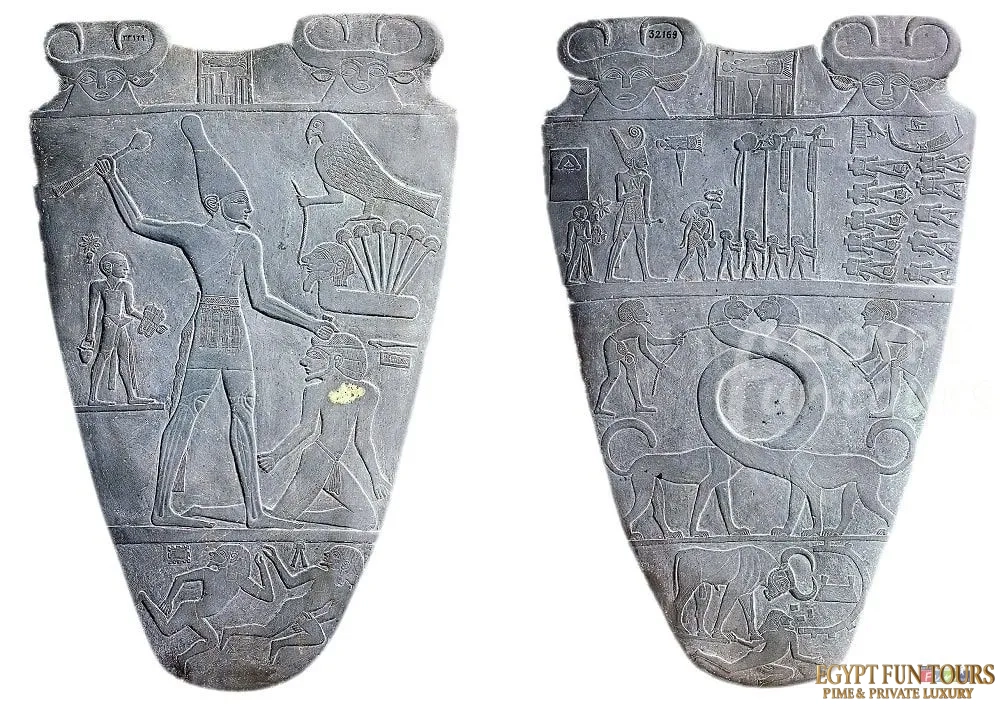
Narmer Palette unification battle by king narmer egypt fun tours

The separate cultures of Upper and Lower Egypt finally fused into a single nation-state around 3100 BCE. King Narmer achieved this monumental feat through military conquest and political alliance. He stands as the ultimate founding father of Pharaonic civilization.

The Narmer Palette: The Decisive Victory of Unification

Archaeologists found the single most important artifact of this political transition at Hierakonpolis. This ceremonial dark green siltstone slab is known as the Narmer Palette. It records the literal birth of unified Egypt.

Look closely at the legendary artifact pictured above. On one side, Narmer wears the tall White Crown of Upper Egypt while smiting a northern captive. On the reverse side, the triumphant king marches forward wearing the Red Crown of Lower Egypt. This visual display proves he conquered the Nile Delta. He combined the two lands into one kingdom.

The Pharaonic Roadmap: The Major Eras That Followed

Narmer’s triumph launched the First Dynasty. His conquest stabilized the Nile Valley for the next 3,000 years. This event transformed the origins of ancient Egypt into a grand historical timeline.

Historical Era Key Highlights Historical Dates
Early Dynastic Period The consolidation of early state power and creation of the capital at Memphis. c. 3100 – 2686 BCE
Old Kingdom The legendary “Age of the Pyramids.” Workers built Saqqara and the Giza Plateau monuments. c. 2686 – 2181 BCE
Middle Kingdom A brilliant cultural renaissance period focused on art, poetry, and regional literature. c. 2055 – 1650 BCE
New Kingdom The grand “Egyptian Empire” era featuring Tutankhamun, Hatshepsut, and Ramesses II. c. 1550 – 1069 BCE
Late & Greco-Roman Eras Foreign rulers like Alexander the Great take control until Roman annexation. 332 BCE – 641 CE

👑 Touch the First Kingdom with Egypt Fun Tours

The Narmer Palette sits as a crown jewel inside the Grand Egyptian Museum. You can stand inches away from the stone that recorded the unification of humanity’s first nation-state. Let Egypt Fun Tours handle your custom itinerary. Our expert scholars will decode every single hieroglyph on this stunning artifact for you.

Where to Witness the Origins of Ancient Egypt Today

Most travelers only visit the colossal stone temples of Luxor or the smooth pyramids of Giza. However, you can easily trace the incredible prehistoric roots of this civilization across several specialized locations.

The Grand Egyptian Museum and Tahrir Museum (Cairo)

The ground floors of these world-class museums house the ultimate physical artifacts of prehistory. You can stand inches away from the ultra-thin Badarian pottery vessels. You can also view the sharp ripple-flaked knives of the Naqada II period. The legendary Narmer Palette stands as a central masterpiece in this collection. It marks the precise moment human history shifted into the Pharaonic Age.

The Nubian Museum (Aswan)

This spectacular museum contains an absolute prehistoric treasure. Curators completely reconstructed the original stone calendar circle from Nabta Playa here. You can walk around the actual standing stones that tracked the summer solstice over 7,000 years ago. It offers a haunting, beautiful look at human ingenuity before the invention of the wheel.

🗺️ Walk the Path of Prehistory with Egypt Fun Tours

You do not have to explore these deep historical origins alone. At Egypt Fun Tours, we design tailored, scholar-led itineraries that bridge the gap between geology and the Pharaohs. Let our expert Egyptologists reveal the hidden stories of the ancient desert plains.

Design Your Custom Archaeological Journey Today

Frequently Asked Questions About the Origins of Ancient Egypt

What was Egypt like before farming began?

Before farming took root, Egypt formed part of a lush, green savanna known as the Green Sahara. Nomadic hunter-gatherers tracked large wild animals across open grasslands. The Nile Valley itself remained a swampy, dangerous jungle filled with hippos and crocodiles.

What environmental crisis sparked the origins of ancient Egypt?

Around 6000 BCE, the global climate shifted dramatically. The monsoonal rains stopped falling, and the Sahara savanna dried into a harsh desert. This severe environmental crisis forced scattered nomadic groups to migrate into the narrow Nile River corridor to survive.

Who was the very first King of Egypt?

King Narmer is widely recognized as the first king to fully unify Upper and Lower Egypt under a single crown around 3100 BCE. Before him, proto-kings like the Scorpion King ruled regional territories during Dynasty 0.

Did writing exist in Egypt before the Pyramids?

Yes, writing emerged long before the Old Kingdom pyramids. Archaeologists discovered the world’s oldest phonetic hieroglyphs inside Tomb U-j at Abydos. These tiny bone tags date back to the prehistoric Naqada III period (around 3200 BCE).


Divider
Cairo belly dance show - Egypt Fun Tours

The BEST tour – a dream come true

I’ve been dreaming of going to Egypt since I was 7 years old. At 37, I finally made it. Even with the warnings that it’s not safe for Americans. Thankfully, Egypt Fun Tours quickly put any worry aside. Hamada, the owner, was recommended by a friend. He was our personal

More »
Premium Cairo Tour Package Egypt Fun Tours

THE MOST AMAZING TRIP

Hi Hamada! Sorry, we were so quick to say goodbye—my mom was fading 🙂 I just wanted to say thank you for THE MOST AMAZING trip… You thought of every detail, improvised, adapted, overcame every challenge, multitasked personalities, and did it all with grace, intelligence, and kindness. From the bottom

More »

Cairo Day Trip

Great trip organised. I had a 12-hour layover in Cairo and had a great time with Sherif, who answered every question I had on ancient Egypt. Highly recommend.

More »

Layover Tour in Cairo

This August, my boyfriend and I had quite a long layover in Cairo, 9 hours to be exact. Instead of wasting our time at the airport, we decided to do a layover tour of the city. I had been before, but my boyfriend hadn’t, so we wanted to hit the

More »

One of the best tours I have ever had!

I was thoroughly impressed by the professionalism of this tour company. I emailed to inquire about the Cairo layover tour about 30 hours before my flight was scheduled to leave from New York. I was pleasantly surprised to get a quick response confirming the tour and assuring that a guide

More »
God_Anubis_Icon

Top-rated Tour Packages

God_Anubis_Icon
WhatsApp
Email
Print