Shoshenq II: The Enigma of the Silver Pharaoh

Shoshenq II (Heqakheperre Setepenre) remains a legendary figure in Egyptology as the only pharaoh of the 22nd Dynasty whose royal burial completely escaped ancient tomb robbers. Discovered by Pierre Montet at Tanis in 1939, his intact tomb revealed spectacular riches, most notably a breathtaking falcon-headed anthropoid coffin crafted entirely out of pure silver. Ruling a politically fragile Egypt for a brief window around 890 BCE, this enigmatic king's short reign and sudden death from a systemic infection left behind a dazzling time capsule that rivals the artistic craftsmanship of the New Kingdom.
The eye of Horus
WhatsApp
Email
Print

When people think of intact royal tombs filled with breathtaking treasures, King Tutankhamun instantly comes to mind. Yet, deep in the Nile Delta, another pharaoh lay hidden from the world for nearly three millennia, surrounded by spectacular riches. This ruler was Shoshenq II (Heqakheperre Shoshenq), a mysterious king of the Twenty-second Dynasty whose legacy remains cast in solid silver.

Ruling during the politically complex Third Intermediate Period, Shoshenq II left behind very few traditional stone monuments. For centuries, historians knew almost nothing about his life or the length of his reign. He seemed to be a minor footnote in the grand lineage of the Libyan kings who ruled Egypt.

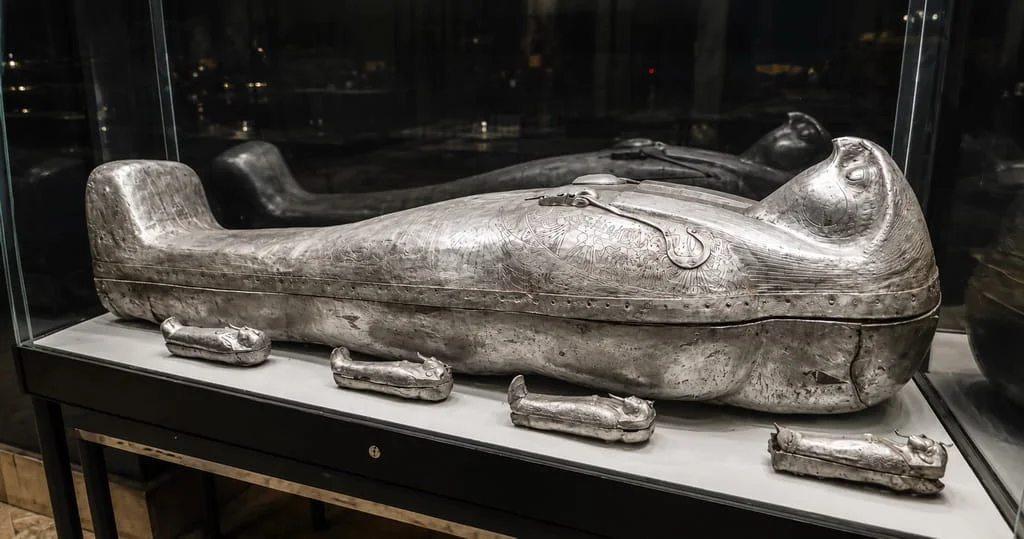
Everything changed in 1939 when French Egyptologist Pierre Montet made a stunning discovery at the ancient site of Tanis. Inside a plundered tomb complex, Montet breached an undisturbed burial chamber and found Shoshenq II. The pharaoh rested inside a magnificent, hawk-headed coffin made of solid silver, instantly earning him the title of the “Silver Pharaoh.
Divider

The Forgotten Discovery: Pierre Montet at Tanis

The Forgotten Discovery Pierre Montet at Tanis

The discovery of Shoshenq II remains one of the greatest stories in modern archaeology, yet few people know it. In March 1939, French Egyptologist Pierre Montet was excavating the ancient delta capital of Tanis. He uncovered a royal tomb complex belonging to the kings of the 21st and 22nd Dynasties.

While exploring the tomb of King Psusennes I, Montet stumbled upon an unexpected, walled-off chamber. When his team breached the ancient limestone blocks, they did not find an empty room. Instead, they discovered the pristine, unplundered burial site of Shoshenq II. He was tucked away securely inside the tomb of his royal relatives. The timing of this incredible find was tragic. Montet made his discovery right as Europe stood on the brink of World War II. Because global headlines focused entirely on the looming war, the “Silver Pharaoh” never received the massive international fame that King Tutankhamun enjoyed just a decade earlier.

Golden Scarab

Shoshenq II: The Treasures of the Silver Pharaoh

Shoshenq II The Treasures of the Silver Pharaoh

Inside the cramped burial chamber, the wealth on display stunned the excavation team. Because ancient Egyptians valued silver far more than gold due to its extreme scarcity in the Nile Valley, the choice of burial materials carried deep spiritual and economic meaning.

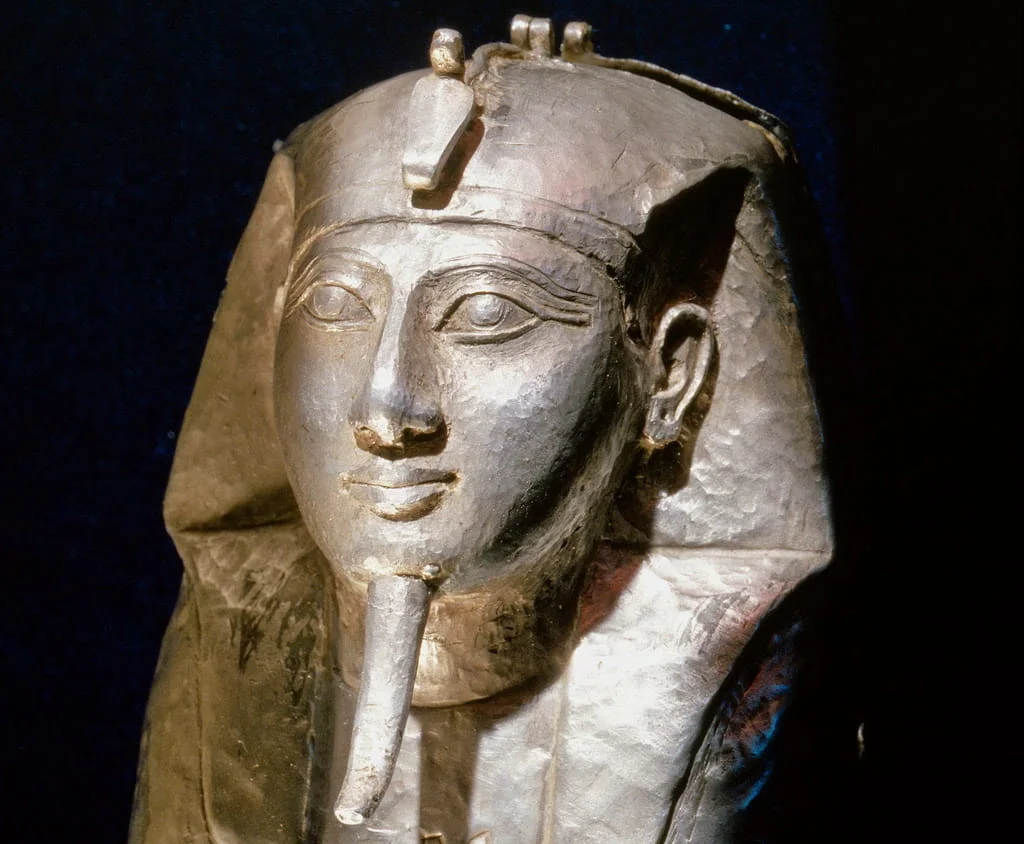
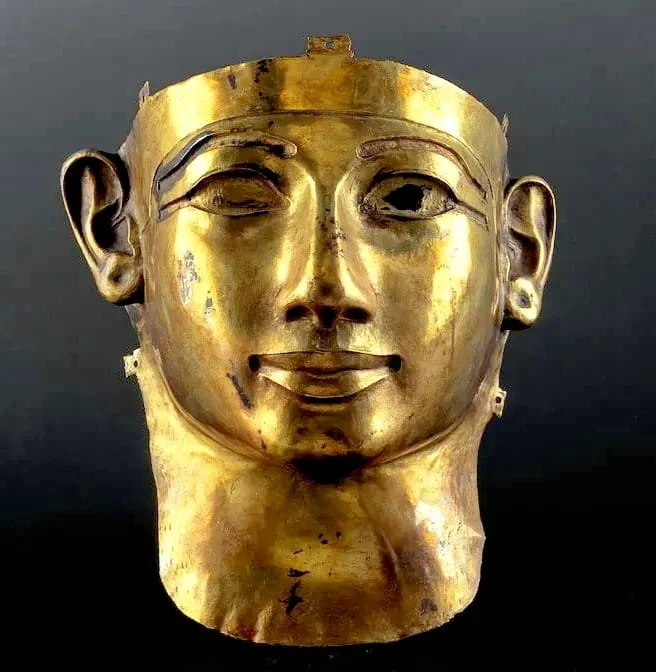
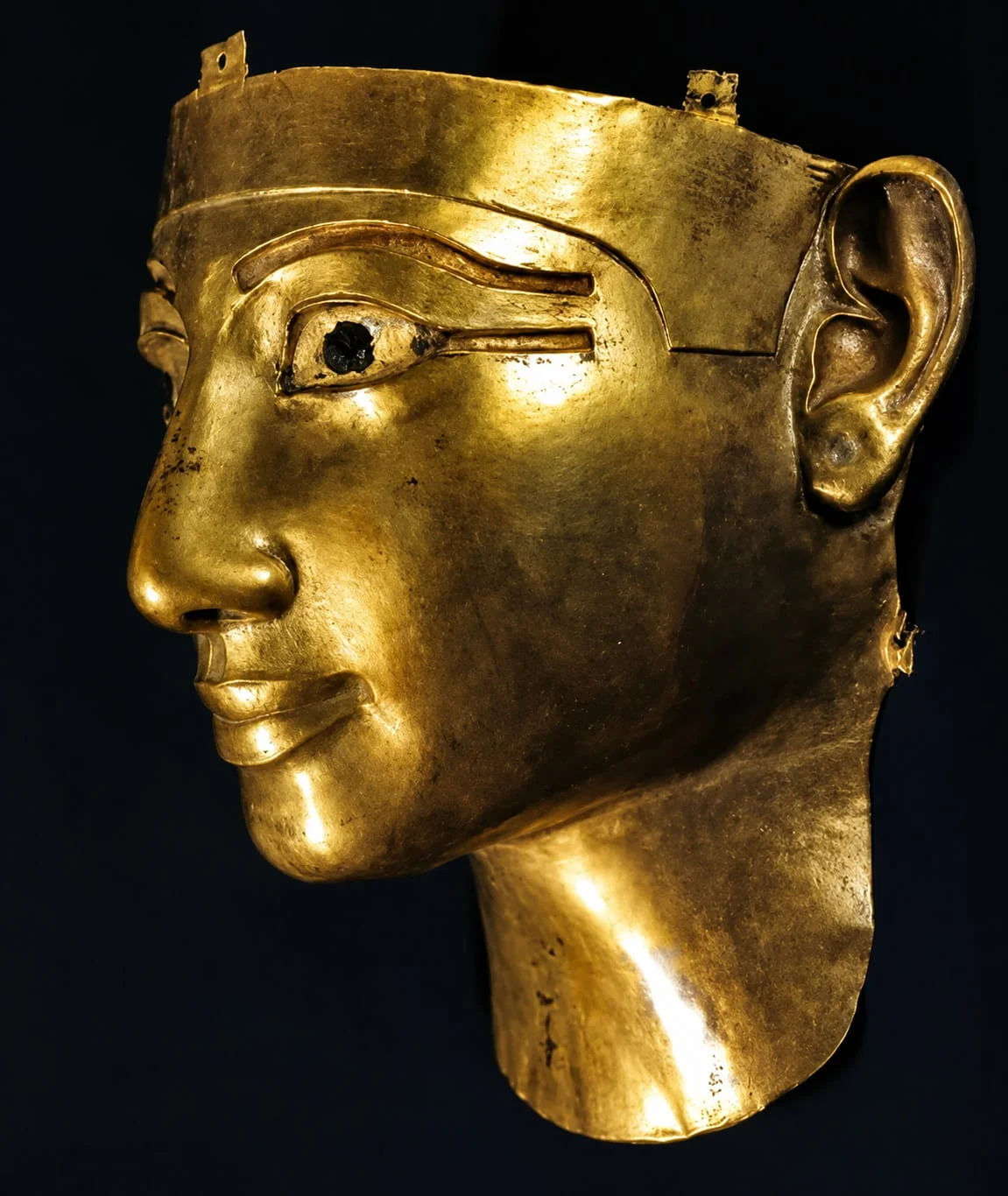
The centerpiece of the entire find was a breathtaking, hawk-headed coffin crafted from solid silver. The hawk design directly honored Sokar, an ancient and powerful god of the underworld. Inside this spectacular silver shell, archaeologists found a beautifully detailed gold funeral mask covering the pharaoh’s face.

Shoshenq II

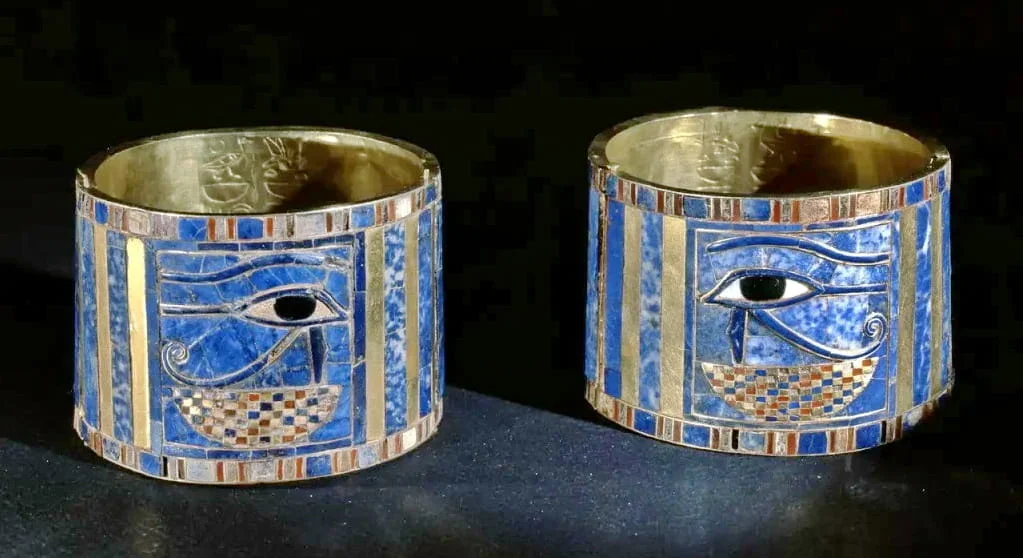
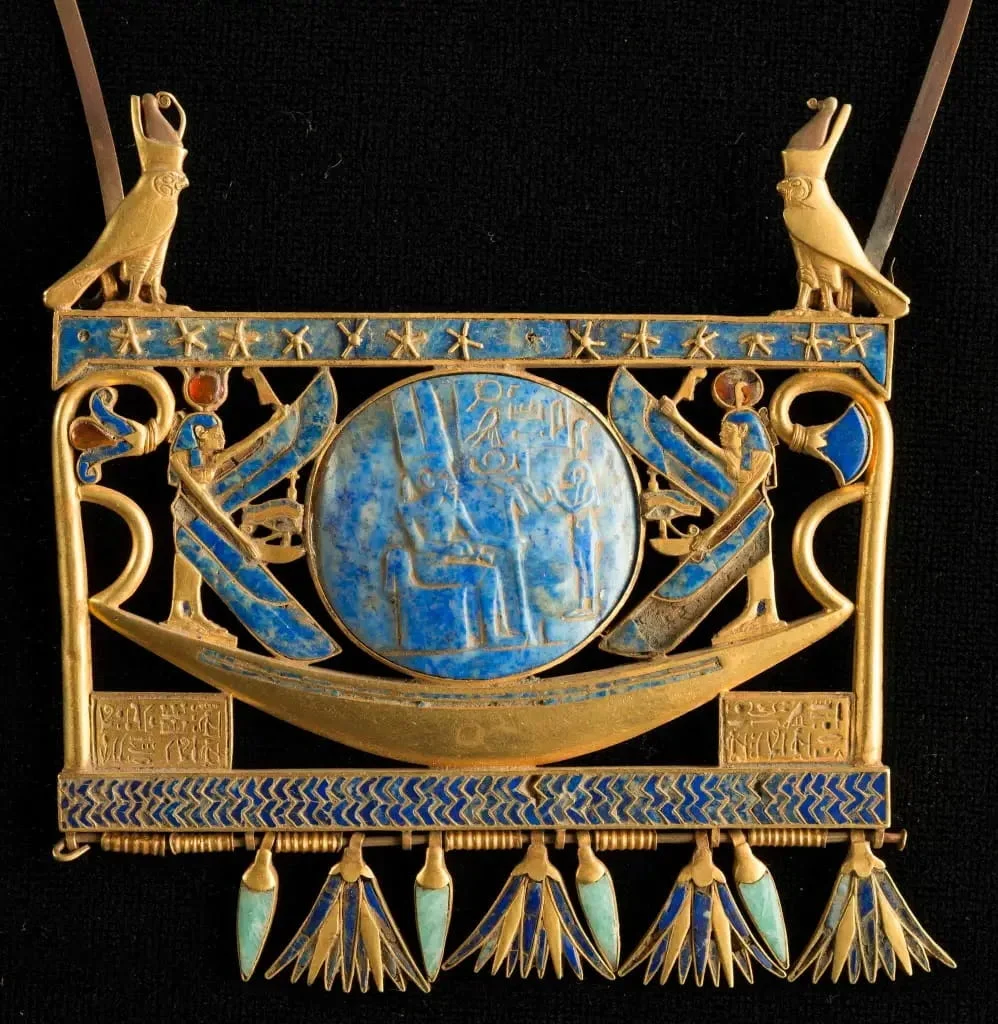
Beyond the coffin, the tomb contained an array of masterfully crafted jewelry. The body of Shoshenq II was adorned with heavy gold bracelets, intricate pectorals, and protective amulets embedded with semi-precious stones. The discovery proved that even during the politically fractured Third Intermediate Period, Egypt’s rulers still commanded immense wealth and exquisite artistic skill.

The eye of Horus

The Chronological Puzzle: Who Exactly Was Shoshenq II?

The Chronological Puzzle Who Exactly Was Shoshenq II

While the discovery of his tomb revealed immense physical wealth, it also sparked a complex historical mystery. Archaeologists and Egyptologists immediately faced a difficult question: where exactly did Shoshenq II fit into the 22nd Dynasty family tree?

The historical record from the Third Intermediate Period is notoriously fragmented. Shoshenq II left behind no major temple walls detailing his achievements, and no administrative records tracking his years on the throne. This lack of data led to two major competing theories among modern scholars.

Theory 1: The Short-Lived Co-Regent

Many Egyptologists believe that Shoshenq II never actually ruled Egypt as a sole, independent pharaoh. Instead, evidence suggests he was the son of King Osorkon I and served strictly as a co-regent.

Under this theory, Osorkon I appointed his son to rule alongside him to ensure a smooth transition of power. However, Shoshenq II likely died prematurely before his father passed away. This would explain why his burial took place inside a borrowed chamber in a relative’s tomb rather than in his own grand monument.

Theory 2: An Independent Interim King

Other prominent scholars, including historian Jürgen von Beckerath, argue that Shoshenq II was indeed an independent monarch. They place his brief reign between the rule of Osorkon I and Takelot I, lasting for roughly one to two years around 890 BCE.

Supporters of this theory point to the distinct artistic style of his grave goods and jewelry. They argue that the exquisite quality of the craftsmanship matches a specific, narrow window of time in the early 22nd Dynasty that can only be explained by a brief, independent reign.

Divider

Medical Clues: What the Mummy Tells Us

Medical Clues What the Mummy Tells Us

Fortunately, the pharaoh’s physical remains provided a few solid answers that stone monuments could not. When scientists examined the mummy of Shoshenq II, they discovered valuable biological clues about his life and sudden death.

The physical analysis revealed that Shoshenq II was a relatively young man when he died, likely in his late 20s or early 30s. More importantly, the examination uncovered the direct cause of his untimely death. The young king suffered a severe head injury that became infected, leading to fatal septicemia (blood poisoning).

This sudden medical crisis perfectly explains his abrupt departure from history. Whether he was a co-regent or a brief sovereign, his unexpected death caught the royal court by surprise, forcing them to bury their young “Silver Pharaoh” quickly with the finest treasures they could assemble.

The eye of Horus

The Legacy of the Silver Pharaoh Today

The Legacy of the Silver Pharaoh Today

The story of Shoshenq II bridges the gap between historical obscurity and archaeological brilliance. Though his name was largely forgotten by history, the incredible preservation of his burial site reshaped our entire understanding of the Third Intermediate Period. He proved that even during an era of political fracture, Egyptian artisans maintained an extraordinary level of mastery.

Today, the breathtaking treasures of Shoshenq II have left the damp ruins of Tanis behind. His iconic hawk-headed silver coffin, radiant gold burial mask, and masterfully crafted jewelry are proudly displayed inside the Grand Egyptian Museum (GEM) in Giza. There, his pristine collection stands alongside the world’s greatest ancient treasures, allowing global visitors to admire the unmatched skill of the Delta craftsmen.

Ultimately, Shoshenq II reminds us that the sands of Egypt still hold deep secrets. He stands not just as a minor name on a royal king list, but as the “Silver Pharaoh”—a ruler whose sudden death left behind a timeless testament to Egypt’s enduring wealth and artistry.


Divider

Very Considerate and Helpful

Guide and driver were on time, open to my requests and took care that I felt safe and saw the Pyramids and parts of old cairo during my less than 24 hour stay between flights. Office staff were great in communicating by email before and during the trip.

More »

11 Wonderful Hours in Cairo

I had an 11 hour layover in Cairo, and it couldn’t have been better spent than with Manal from Egypt Fun Tours. I was able to adjust my tour once we left the airport and Manal had some really great suggestions when I told her what it was I wanted

More »

Well Done

All aspects of the experience were considered and well taken care of. Knowledgeable and friendly guide and organized itinerary.

More »

Like two days of touring in one day!

I had a 12 hour stay in Cairo- and had made no plans on how to spend it until 8pm the night before departure. I emailed Egypt Fun Tours in a panic and they responded immediately. They made it incredibly easy to arrange a tour and we made arrangements via

More »
God_Anubis_Icon

Top-rated Tour Packages

God_Anubis_Icon
WhatsApp
Email
Print