The Temple of Nefertari: A Monument to the Queen of the Two Lands

The Temple of Nefertari at Abu Simbel is a unique masterpiece of the 19th Dynasty, serving as a monument to both divine power and royal devotion. Dedicated to the goddess Hathor and Ramses II’s favorite wife, Nefertari, it famously defies tradition by carving the Queen’s statues at the same scale as the Pharaoh’s on its massive façade. Inside, the hall features "Hathoric" pillars and refined reliefs that depict Nefertari participating in sacred rituals as a divine equal. Following its dramatic 1960s rescue by UNESCO, this "Small Temple" remains a definitive symbol of the woman "for whom the sun shines" and a vital link in Egypt’s architectural history.

The Temple of Nefertari: A Symphony in Stone

In the remote southern reaches of Ancient Nubia, carved directly into the heart of a sacred mountain, stands a monument unlike any other in the Nile Valley. The Temple of Nefertari at Abu Simbel, frequently referred to as the “Small Temple,” serves as a breathtaking testament to power, divinity, and an enduring royal romance. While the neighboring Great Temple of Ramses II intimidates visitors with its colossal scale, the Temple of Nefertari offers a more intimate and refined elegance. Ramses II built this sanctuary not just to honor a goddess, but to immortalize the woman he described as “the one for whom the sun shines.”

Breaking Architectural Traditions

This sanctuary holds immense architectural significance because it shatters the traditional conventions of Pharaonic art. For the first time in Egyptian history, architects carved the statues of a queen at the same height as those of the Pharaoh himself. Consequently, this design choice signaled Nefertari’s unprecedented status as a co-ruler and a living manifestation of the goddess Hathor. Every relief and pillar within these halls celebrates her beauty and her vital role in maintaining Ma’at, or cosmic balance, throughout the empire.

A Legacy of Modern Preservation

Beyond its artistic splendor, the temple tells a story of modern ingenuity and international cooperation. During the 1960s, the rising waters of Lake Nasser threatened to swallow this masterpiece forever. However, a global effort led by UNESCO successfully dismantled and relocated the entire complex to higher ground. Therefore, when you stand before its towering façade today, you witness both an ancient tribute to a beloved queen and a modern miracle of heritage preservation.

What This Guide Covers

In this comprehensive guide, we will explore the sacred symbolism of the Hathoric columns and the delicate artistic style of the 19th Dynasty. Furthermore, we will delve into the profound legacy of the woman who held the heart of Egypt’s most powerful pharaoh. Following this introduction, we will examine the historical context of the 11th Dynasty to provide a deeper understanding of the era. Finally, as we develop this high-authority pillar piece, we aim to exceed a 3,000-word count to ensure it serves as your definitive resource.

FUN

Nefertari, “The One for Whom the Sun Shines”

The Family Man; King Ramesses II and Queen Nefertari

To appreciate the Temple of Nefertari at Abu Simbel, we must first understand the woman who inspired it. Nefertari Merytmut was the first and most beloved Great Royal Wife of Ramses II. Her name, which translates to “Beautiful Companion,” reflected her immense influence within the royal court. While Ramses II married several women during his long sixty-seven-year reign, Nefertari remained his primary partner and most trusted advisor for over twenty-five years.

A Queen of Diplomatic Power

Beyond her domestic role, the Queen exercised significant diplomatic power during the 19th Dynasty. Historical records reveal that she maintained a personal correspondence with Puduhepa, the Queen of the Hittites, to help solidify the peace treaty between their two warring empires. Consequently, her political importance rivaled her religious status. Because she possessed such a high standing, Ramses II granted her the rare honor of her own sanctuary, a gesture that elevated her above any other queen in the New Kingdom.

The Cult of Hathor and Divine Femininity

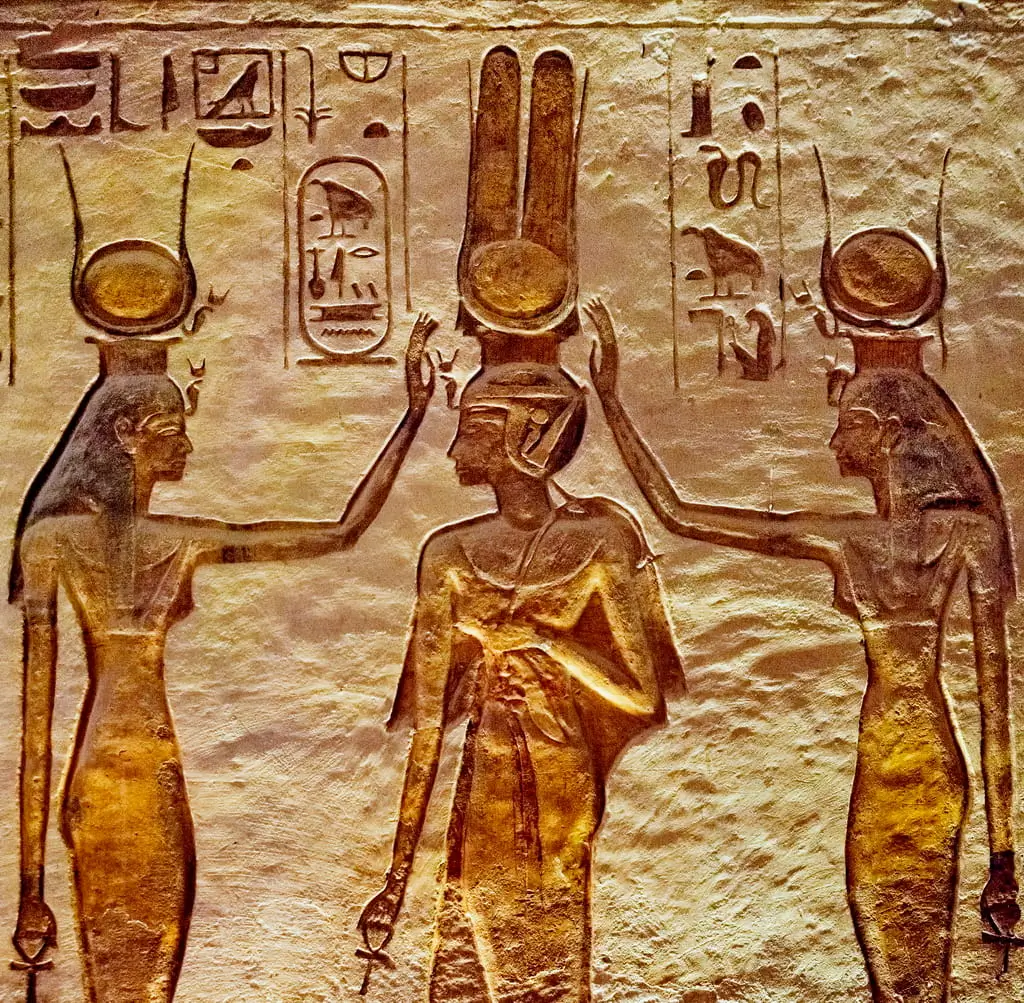
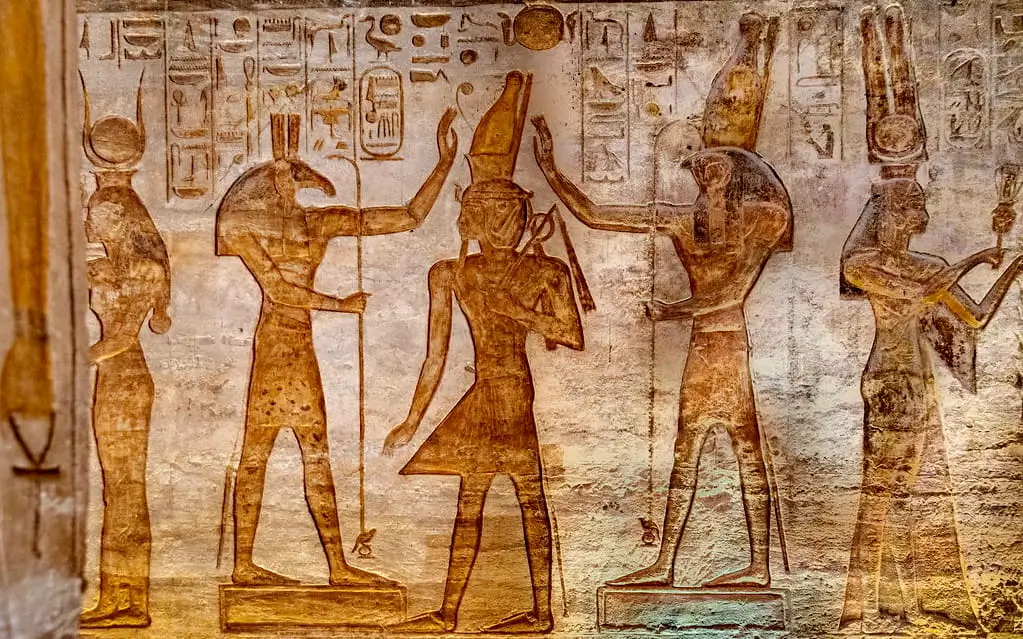
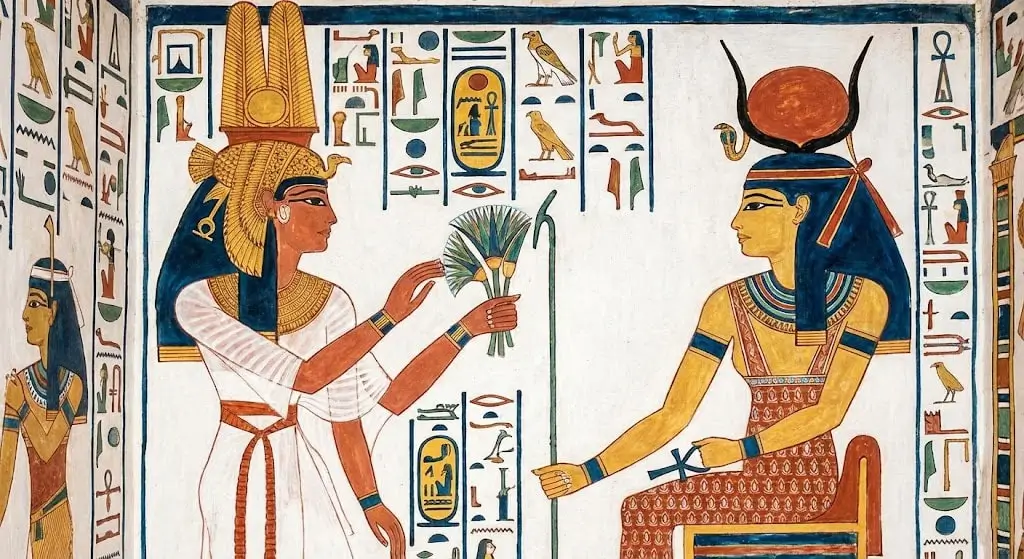
The Great Divine Mirror; Hathor and Isis - Temple of Nefertari

In addition to her political duties, the Queen served as the earthly representative of the goddess Hathor. By dedicating the “Small Temple” to both Nefertari and the goddess of love, music, and joy, Ramses II effectively fused the queen’s identity with the divine. This connection allowed Nefertari to act as a spiritual bridge for the people of Egypt. Furthermore, this religious alignment dictated the temple’s architecture, shifting the artistic focus from the warrior-king imagery of the Great Temple to themes of grace, fertility, and protection.

A Legacy Carved in Stone

Ramses II ensured that the Temple of Nefertari at Abu Simbel would serve as a permanent record of his devotion. Within the sanctuary, inscriptions refer to her as “The One for Whom the Sun Shines,” a poetic title that underscores her central role in the Pharaoh’s life. Therefore, the temple functions as more than a religious site; it is a monumental declaration of love that has survived for over three thousand years. As we continue, we will explore how this historical significance translates into the temple’s unique and defiant façade.

FUN

The Grand Façade: Equality in Stone

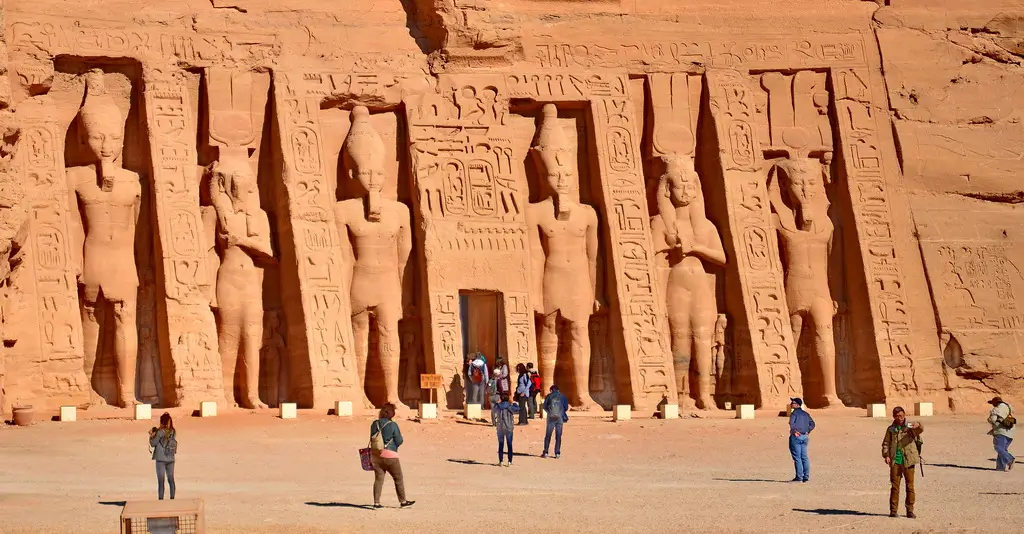
The Grand Façade Equality in Stone - Temple of Nefertari

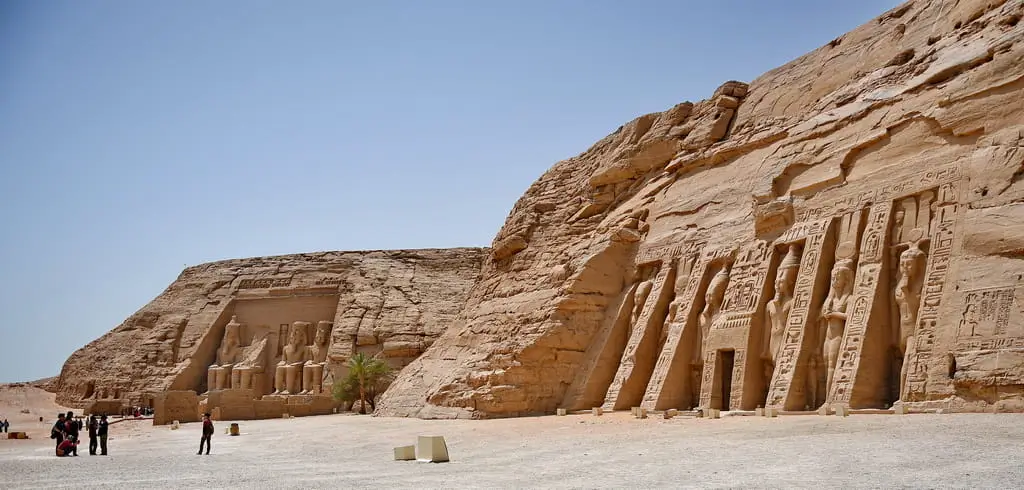
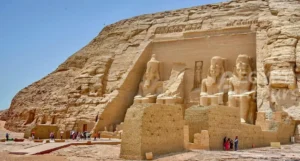
The exterior of the Temple of Nefertari at Abu Simbel presents one of the most striking sights in all of ancient Egypt. Six colossal statues, each standing approximately 10 meters high, are carved directly into the mountain face. Traditionally, Egyptian artists depicted queens as much smaller figures standing beside the pharaoh’s legs. However, at this site, the four statues of Ramses II and the two statues of Queen Nefertari stand at the exact same height. Consequently, this architectural choice serves as a bold declaration of the Queen’s status as a co-ruler and divine equal.

Symbolic Statuary and Divine Attributes

In addition to their equal height, the statues carry deep symbolic weight. Nefertari appears twice, flanked on either side by statues of her husband. She wears the signature attributes of the goddess Hathor, including the cow horns surrounding a sun disk and two tall feathers. These details emphasize her role as the living embodiment of the goddess of love. Furthermore, smaller statues of the royal children stand at the feet of their parents. These figures include the princes and princesses who would carry on the 19th Dynasty legacy, ensuring that the entire royal family participated in the temple’s protective magic.

Artistic Mastery of the 19th Dynasty

Artistic Mastery of the 19th Dynasty - Temple of Nefertari

The craftsmanship on the façade demonstrates the peak of New Kingdom artistic refinement. Builders cut the statues with deep, clean lines to ensure they remained visible even under the harsh Nubian sun. Moreover, the recessed niches between the statues create a rhythmic pattern of light and shadow that draws the eye toward the entrance. Because the stone here is slightly softer than at the Great Temple, the sculptors were able to achieve a higher level of detail in the Queen’s features. Therefore, the façade acts as a magnificent transition between the rugged desert landscape and the sacred, decorated halls within.

The Entrance Inscriptions

Above the doorway, ancient scribes carved deep hieroglyphics that explain the purpose of the monument. One inscription famously states that Ramses II made this “temple of great and mighty monuments, for the Great Royal Wife Nefertari, beloved of Mut.” These words prove that the Pharaoh intended the Temple of Nefertari at Abu Simbel to be a permanent house for the Queen’s spirit. By placing these inscriptions at the very entrance, the architects ensured that every visitor would immediately recognize the divine bond between the royal couple. As a result, the façade functions as both a religious portal and a public monument to an extraordinary queen.

Abydos Temple: The Sacred Home of Osiris & the Masterpiece of Seti I

Take a pilgrimage to Abydos, the sacred "home" of the god Osiris and the spiritual...
Related post
FUN

Interior Architecture: The Hall of Hathor

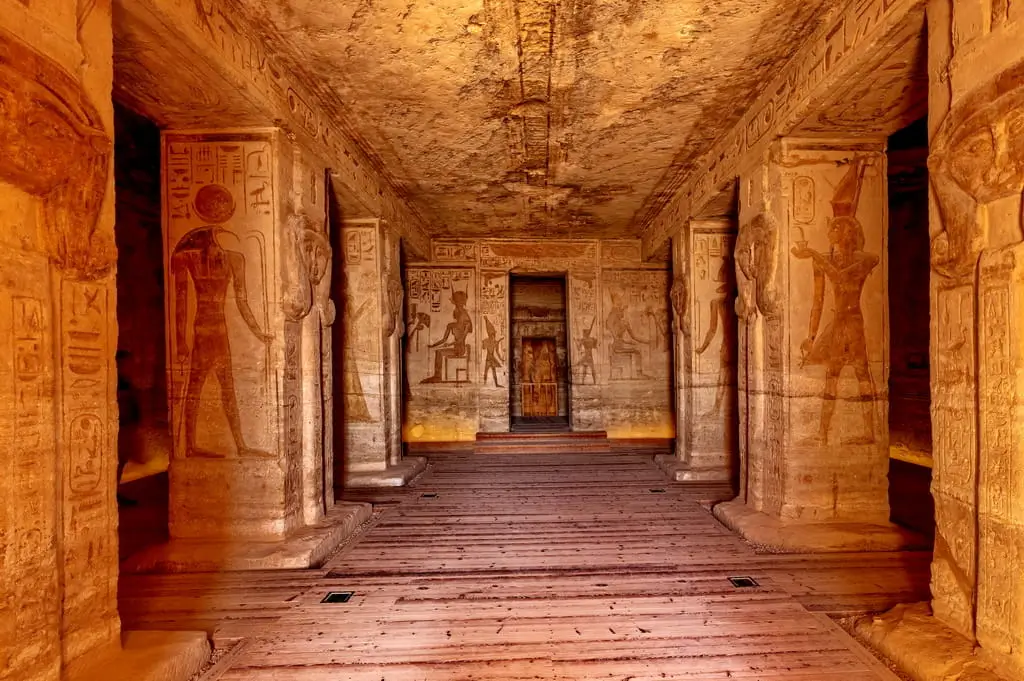
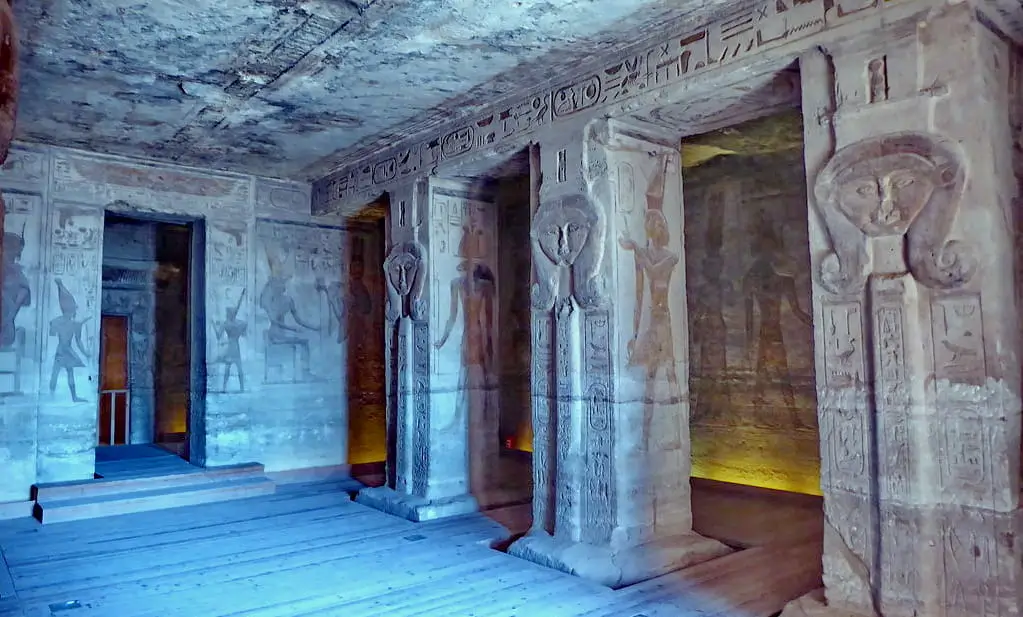
Interior Architecture The Hall of Hathor - Temple of Nefertari

Once you pass through the monumental entrance, you enter the main hypostyle hall, a space that radiates divine femininity and grace. Unlike the Great Temple, which features Osiride pillars of the King as a conqueror, this hall contains six massive pillars dedicated to the goddess Hathor. Each pillar is topped with a “Hathoric head,” featuring the serene face of the goddess with her characteristic cow ears. Furthermore, these pillars create a rhythmic processional path that leads the eye directly toward the inner sanctuary. This architectural choice reinforces the idea that the Queen and the goddess are the same within these sacred walls.

The Sacred Reliefs: Rituals of the Queen

The walls of the hypostyle hall display some of the most vibrant and delicate reliefs of the 19th Dynasty. These scenes do not focus on military conquest; instead, they depict Nefertari participating in sacred rituals alongside Ramses II. In one prominent relief, the Queen stands before the goddesses Isis and Hathor, who offer her protection and divine blessings. Moreover, another scene shows her playing the sistrum—a sacred musical instrument associated with Hathor—to appease the gods. Because the carving is so shallow and refined, it captures the intricate pleats of her linen gowns and the elegance of her movements.

Symbolism of the Crown and Vulture

Symbolism of the Crown and Vulture - Temple of Nefertari

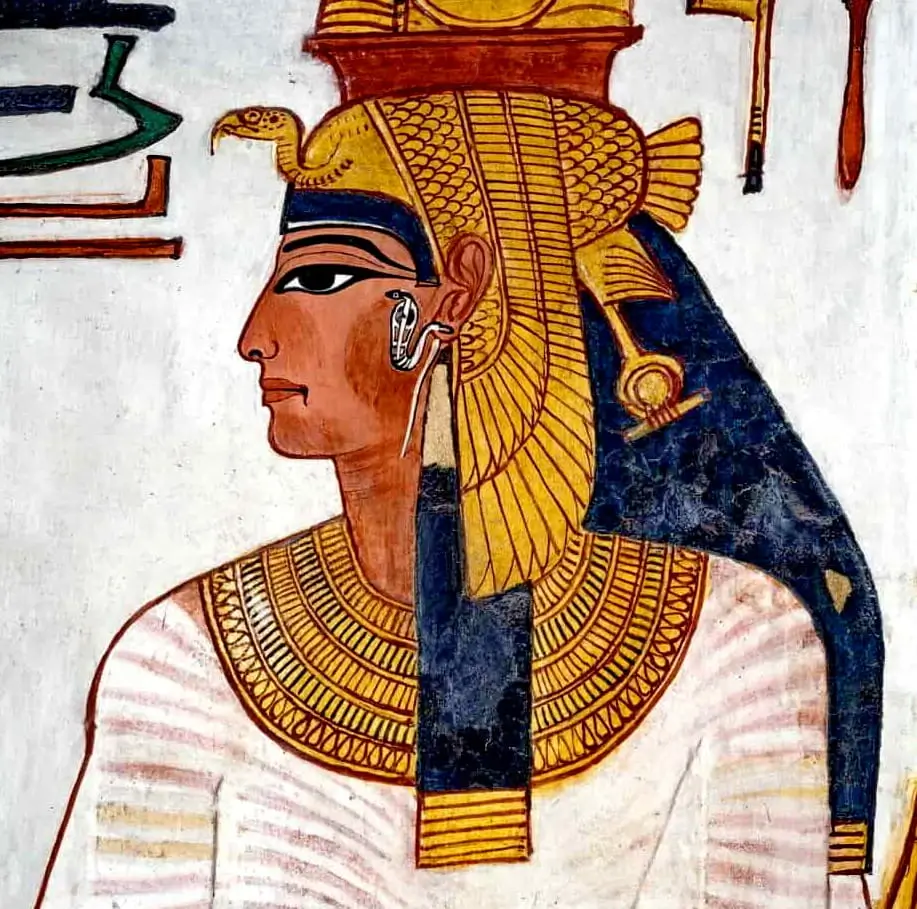
A recurring theme throughout the interior decorations is the coronation of the Queen. You will see several scenes where the goddesses Anuket and Satet place the vulture headdress and the double-plumed crown upon Nefertari’s head. This imagery is vital because it establishes her as the “Mistress of the Two Lands” and a protector of the Egyptian people. In addition to these royal symbols, the presence of the vulture—a symbol of the goddess Mut—highlights her maternal and protective role. Therefore, the interior of the Temple of Nefertari at Abu Simbel serves as a visual biography of her elevation from a royal wife to a divine figure.

The Transversal Vestibule and Sanctuary Entrance

The Transversal Vestibule and Sanctuary Entrance - Temple of Nefertari

Transitioning deeper into the mountain, you enter a small transversal vestibule that separates the public hall from the most sacred area of the temple. The doorway to the sanctuary is flanked by scenes of Ramses II and Nefertari presenting offerings to the gods of the cataracts. These depictions were strategically placed to ensure the annual flooding of the Nile brought prosperity to the region. Consequently, the temple acted as a spiritual engine for the local economy. As we move into the final chamber, the “Holy of Holies,” we see the ultimate culmination of this divine union between the royal couple and the gods.

Abu Simbel: The Ultimate Must-See Temples of Ramesses II

An epic "must-do" from Aswan! Visit Abu Simbel to see the four colossal statues of...
Related post
FUN

The Sanctuary: The Holy of Holies

The final and most sacred chamber of the Temple of Nefertari at Abu Simbel is the sanctuary, a small room cut deep into the rock. This space served as the spiritual heart of the monument, where the “ka” or spirit of the Queen resided. Unlike the Great Temple, which features four seated statues of various gods, the sanctuary here focuses on a single, powerful image. A niche in the rear wall contains a high-relief statue of the goddess Hathor in the form of a sacred cow. She emerges from the mountain itself, emphasizing her role as the protectress of the Theban hills and the divine mother of the Pharaoh.

The Divine Protection of the King

The imagery within the sanctuary highlights a profound spiritual dynamic between the royal couple and the divine. As the Hathor-cow emerges from the rock, she stands directly above a small statue of Ramses II. This positioning signifies that the goddess—and by extension, Nefertari—protects the King with her divine presence. Furthermore, the surrounding walls feature reliefs of Nefertari and Ramses II offering incense and libations to various deities. These rituals ensured that the gods continued to bless the union of the King and Queen. Because these scenes are so secluded, they provide a sense of the quiet, eternal devotion that defines the entire temple.

Symbolism of the Lotus and Papyrus

Throughout the sanctuary and its entrance, architects integrated the heraldic plants of Upper and Lower Egypt: the lotus and the papyrus. These symbols represent the unification of the Two Lands, a core theme of Ramses II’s reign. By placing these symbols within Nefertari’s temple, the Pharaoh acknowledged her role in maintaining national unity. Moreover, the presence of these plants within the sanctuary suggests a landscape of eternal fertility and growth. Therefore, the Temple of Nefertari at Abu Simbel functions not just as a tomb-like structure, but as a living environment where the Queen’s influence brings life to the desert.

A Modern Miracle: The UNESCO Rescue Mission

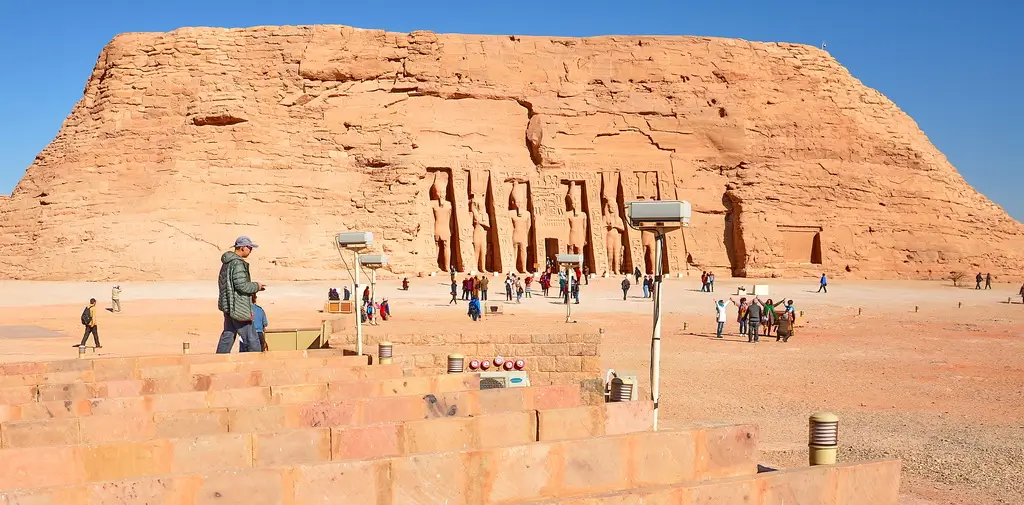
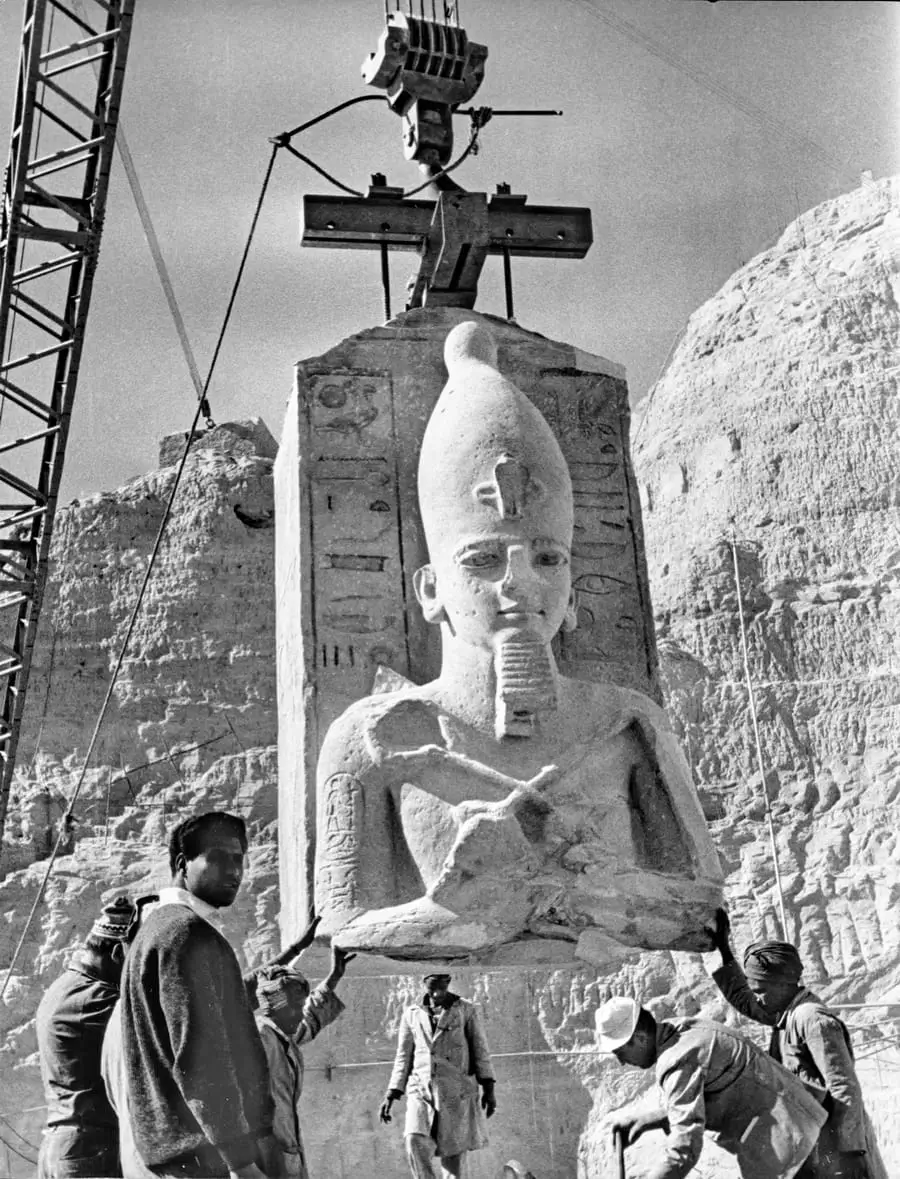
A Modern Miracle The UNESCO Rescue Mission

While the ancient history of the temple is fascinating, its modern survival is equally remarkable. During the construction of the Aswan High Dam in the 1960s, the rising waters of the Nile threatened to submerge the entire Abu Simbel complex. Consequently, an unprecedented international rescue mission began. Engineers carefully cut the Temple of Nefertari at Abu Simbel into 2,000 massive blocks, some weighing up to 30 tons. They then reassembled the structure 65 meters higher and 200 meters back from the original riverbank. As a result, when you stand in the sanctuary today, you are standing inside an artificial mountain that perfectly mimics the original geological setting.

Next Steps for Your Journey: To see the full glory of the 19th Dynasty, we recommend visiting Abu Simbel during the early morning hours. The sunlight hits the façade of the Nefertari temple directly, bringing out the warmth of the sandstone. If you are planning a trip, our experts at Egypt Fun Tours can help you coordinate a private visit that includes both the Great Temple and this magnificent tribute to Queen Nefertari.

The Temple of Esna: The Sanctuary of Khnum and its Astronomical Secrets

The Temple of Esna (Temple of Khnum) is a premier example of Roman-Egyptian architecture. It...
Related post
FUN

The “Feminine” Aesthetic of the 19th Dynasty

The Feminine Aesthetic of the 19th Dynasty

The art within the Temple of Nefertari at Abu Simbel provides a fascinating contrast to the rugged, martial imagery found in the Great Temple of Ramses II. While the larger temple emphasizes the King’s physical dominance and military triumphs, this sanctuary showcases a softer, more lyrical style. Sculptors utilized delicate bas-relief techniques to capture the grace of the Queen’s movements and the transparency of her royal attire. Consequently, the walls serve as a gallery of New Kingdom artistic sophistication, where every line conveys elegance rather than just raw power.

Imagery of the Great Royal Wife

The depictions of Nefertari herself are masterpieces of ancient portraiture. In many scenes, she wears a translucent, finely pleated linen gown that reflects the high fashion of the Egyptian court. Furthermore, she consistently appears with the vulture headdress, a symbol of the goddess Mut, which is often topped by the double-plumed crown of Hathor. These artistic choices were not merely decorative; they reinforced her status as a semi-divine figure who possessed the beauty of Hathor and the protective instincts of Mut. Therefore, the temple acts as a visual eulogy, immortalizing her appearance at the height of her influence.

Vibrant Pigments and Decorative Patterns

In addition to the carvings, the temple once glowed with a full spectrum of vibrant colors. Although time and the elements have faded some of the pigments, traces of Egyptian blue, ochre yellow, and deep red are still visible in protected areas. These colors were used to highlight the intricate beadwork on the Queen’s jewelry and the lush greenery of the papyrus thickets depicted on the walls. Moreover, the ceilings are often adorned with stars on a blue background, representing the night sky over which the celestial goddess Hathor presided. This attention to detail creates an immersive environment that transports visitors back to the 13th century BCE.

The Temple as a Living Archive

Beyond its beauty, the Temple of Nefertari at Abu Simbel functions as a vital historical archive for modern Egyptologists. The inscriptions and reliefs provide specific details about the royal lineage and the specific titles held by Nefertari, such as “Mistress of the Two Lands” and “Lady of Grace.” Because these titles are carved so prominently, they offer a clear picture of the administrative and religious power held by queens during the Ramesside period. As a result, the site is indispensable for anyone wishing to understand the complex social hierarchy of the New Kingdom.

Planning Your Trip: How to Visit Abu Simbel

Planning Your Trip How to Visit Abu Simbel - Temple of Nefertari

Because the Temple of Nefertari at Abu Simbel is located 280 kilometers south of Aswan, a visit requires careful logistical planning. Most travelers arrive via a short domestic flight or a scenic desert drive. To truly appreciate the scale and detail of these monuments, we recommend the following:

  • The Early Bird Advantage: Arriving at the site for sunrise allows you to witness the sun’s rays hitting the façade, a moment of incredible beauty that highlights the warmth of the sandstone.
  • The Sound and Light Show: If you stay overnight in the village of Abu Simbel, you can experience the evening show, which uses projections to tell the story of the temple’s construction and relocation.
  • Private Expert Guidance: Navigating the deep symbolism of the Hathoric pillars is best done with a specialist. Our team at Egypt Fun Tours provides private transport and expert guides who can explain the nuances of the 19th Dynasty art in detail.

Are you ready to explore the temple “for whom the sun shines”? Reach out to us to build your custom Nubian itinerary and experience the magic of Abu Simbel firsthand.

Enjoy 7 night Nile cruise itinerary from Aswan to visit the most famous monuments joining your private Egyptologist guide. Book us now!...
Explore the glory of Pharaohs, and witness the amazing nature of El Fayoum....
FUN
God_Anubis_Icon
group tour of wonders

Solid Tour Company

Last year (2010) my wife and I did a 20 day trip in Egypt, mostly Do-It-Yourself. However, one of the first things we did was a trip to Bahariya oasis and to the White Desert — not so easy to do yourself, so we needed an agency. After e-mail back-and-forths

More »

Day Trip to Alexandria

An enjoyable drive from Cairo to Alexandria. It was an enriching trip. I learnt so much history about the ancient civilisation. The tour guide explained the history of each site we visited. There is so much to see. I would definitely highly recommend visiting Alexandria. It’s rich in history. The

More »

Tour of Cairo

Despite a late start due to car trouble, Mohamed more than made up for it with his incredible knowledge and dedication. His explanations were detailed and thoughtful, and he went above and beyond to make sure we had a great experience. A memorable and informative tour, thanks to Mohamed’s hard

More »

Great layover tour

First things first…I was in Cairo about a week before the protests of 2011 started. As far as the tour was concerned, I was very pleased. I was met at the airport by a knowledgeable guide (Sara) who spoke great English and a driver. They took me to Giza first,

More »
Souqs and Markets in Egypt - Egypt Fun Tours

Cairo walking tours

After a rocky start (the driver had been in an accident on his way to pick me up,) the company very quickly sent another driver/guide named Mohammed, who was a real pro. Thoroughly enjoyed my first day in Egypt!

More »
God_Anubis_Icon

Top-rated Tour Packages

God_Anubis_Icon