

A Day in the Life of a Pharaoh: The Toughest Job in Egypt

Forget the life of pure luxury. Discover the pharaoh's real job. This article delves into the demanding "day in the life of a pharaoh," exploring their daily duties as a high priest, supreme judge, and military commander, and the crushing divine burden they carried from sunrise to sunset.

When you picture a day in the life of a pharaoh, you probably imagine a life of absolute luxury: fanned servants, endless feasts, and a golden throne. But forget the luxury for a moment. What was the pharaoh’s real job?

The truth is, being pharaoh was arguably the toughest, most stressful, and most demanding job in the ancient world.

The pharaoh was considered a “living god” on Earth. This wasn’t just a title—it was a 24/7 job description with the highest possible stakes. Their core duty was to maintain Ma’at, the divine order and balance of the entire universe. If they failed, the gods would be angry, the Nile wouldn’t flood, and chaos would destroy Egypt.

This divine role placed them at the very top of the Ancient Egyptian Jobs pyramid. But this power came with immense personal responsibilities. So, what did a day in the life of a pharaoh really look like?

FUN

A Pharaoh’s Day in the Life: The Morning Ritual as High Priest

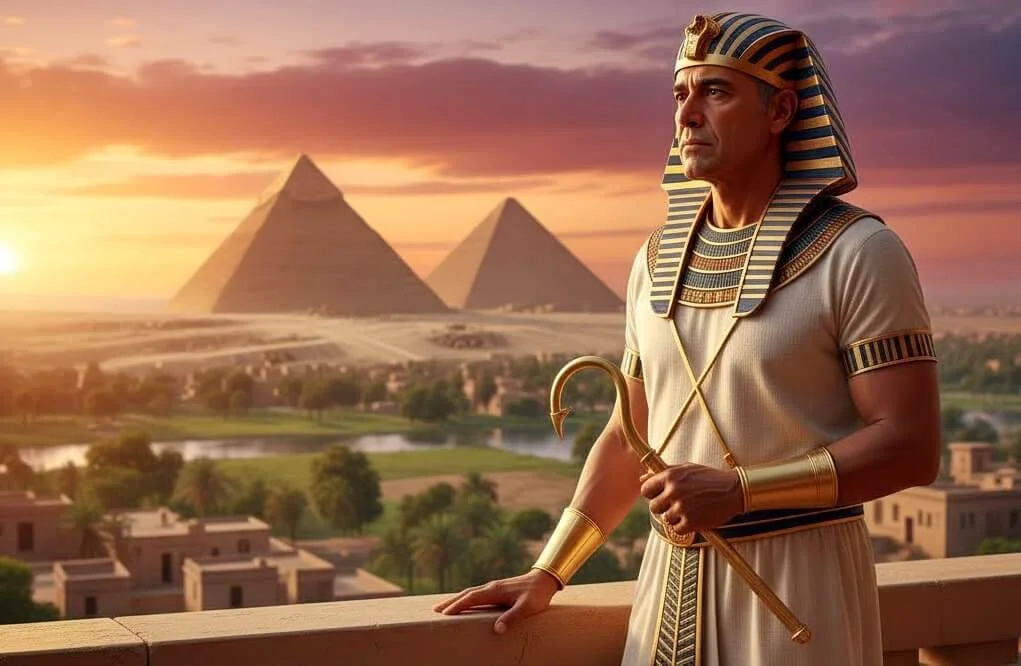
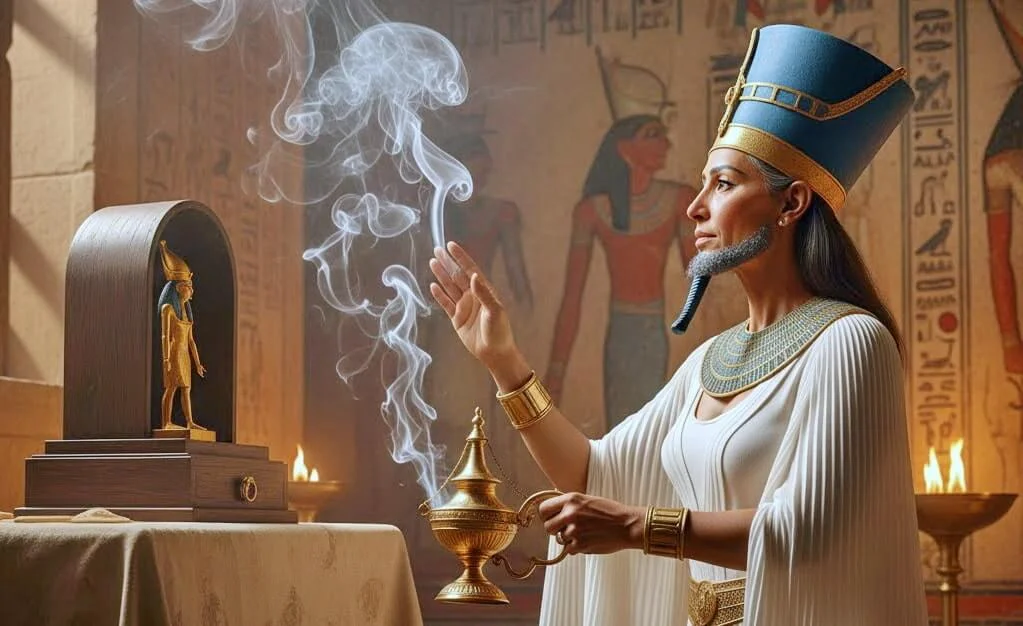
The pharaoh’s day began before sunrise. This wasn’t just a routine; it was the most critical part of his day in the life as pharaoh. As the living embodiment of the god Horus, the pharaoh was the High Priest of every temple in Egypt. He was the only person truly able to communicate directly with the gods.

While he delegated most duties, the pharaoh had to perform the critical morning rites himself, either in the grand temples or his own private palace sanctuary.

  • Purification: The day began with a sacred bath to purify the pharaoh’s body.
  • Dressing: He was dressed in perfect white linen, his ceremonial false beard, and one of his many divine crowns.
  • Waking the God: The pharaoh would then enter the temple’s inner shrine, break the clay seal on the door, and “wake” the cult statue of the god (like Amun-Ra). He would anoint the statue with oils, dress it in fine fabrics, and present it with a morning “meal” of bread, beer, and fruit.

This single act was the most important of the pharaoh’s daily duties. By “feeding” the god, he renewed the cosmic pact, ensuring the sun would rise and Ma’at was preserved for another day.

FUN

The Morning Court: A Pharaoh’s Day as Head of State & Judge

The Morning Court; A Pharaoh's Day as Head of State & Judge

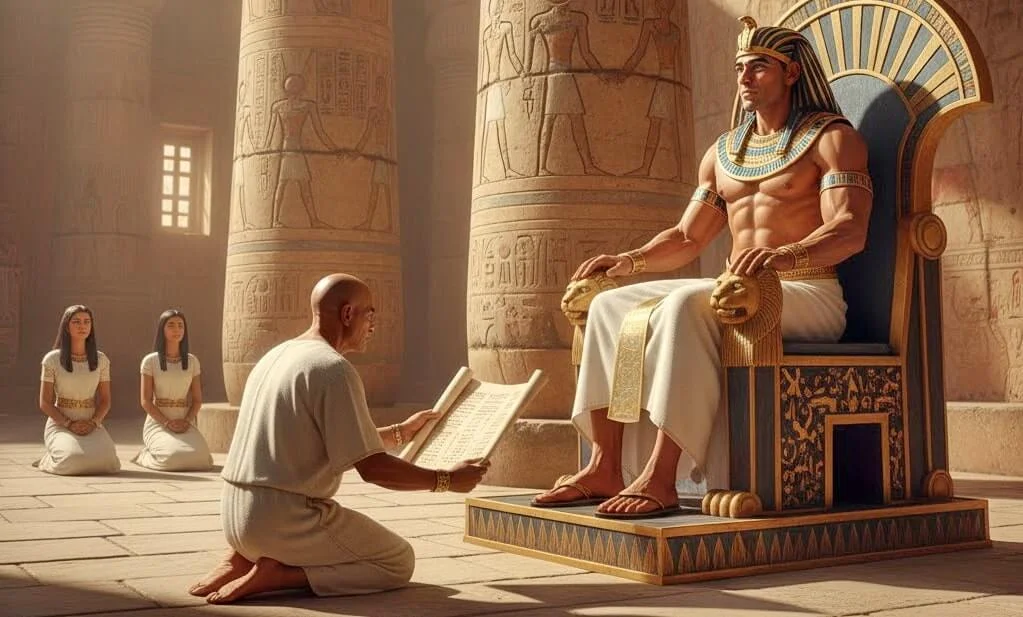
After the gods were served, the next phase of a day in the life of a pharaoh began: the “office job.” He would move to the great audience hall to act as the head of state and the ultimate judge.

The Supreme Judge

As the living source of Ma’at, the pharaoh was the supreme judge of the land. All laws came from him, and the most complex legal cases were brought to his court.

  • He would hear disputes between high-ranking nobles.
  • He listened to appeals from commoners who felt they were wronged by lower courts.
  • His word was final, his judgment considered divinely inspired.

This judicial role was a core part of the pharaoh’s responsibilities—to be the shepherd of his people and the ultimate source of justice.

The Chief Executive

This is where the pharaoh ran the country. His first and most important meeting was with the Vizier, the prime minister of Egypt.

The Vizier was the pharaoh’s right-hand man, overseeing the entire government. He would present a daily report on the “State of the Two Lands,” and the pharaoh would make the final decisions on:

  • Tax Collection: Were the granaries full?
  • Public Works: He would review reports on his great building projects—a new temple, a canal, or his own tomb.
  • Foreign Affairs: He would read messages from spies and allied kings.
  • Resource Management: He approved the budget for everything, from funding an army to allocating grain for artisans.

The Unification Battle by King Narmer

The Unification Battle by King Narmer The unification battle of King Narmer is shown on...

Related post
FUN

The Pharaoh’s Day as Military Commander

The Pharaoh's Day as Military Commander

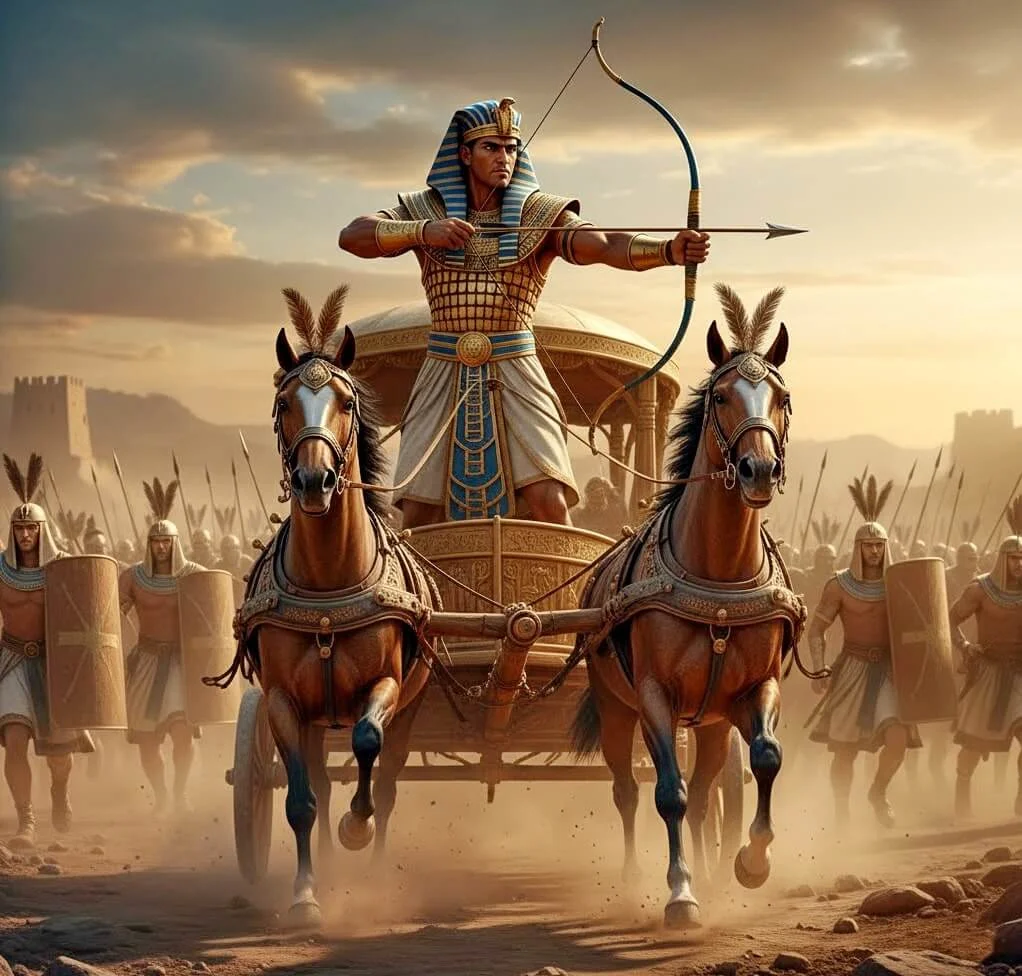
A key part of a day in the life of a pharaoh was to be the “smiting arm” of Egypt—its protector and military commander. The forces of chaos were always pressing in on Egypt’s borders, and it was his divine duty to destroy them.

In peacetime, his afternoon might be spent:

  • Meeting with his top generals to review army readiness.
  • Inspecting the elite chariot divisions.
  • Reviewing reports from border fortresses in the south (Nubia) and east (Sinai).

In times of war, this duty became terrifyingly literal. A day in the life of a pharaoh on campaign was not one of courtly comforts, but of leading the charge. Stone reliefs famously show pharaohs like Ramesses II in their war chariots, single-handedly scattering the enemy. This was both propaganda and a genuine expectation: the living god had to physically destroy the enemies of Ma’at.

Pharaoh Merneptah: The Warrior Successor and the Secret of the Israel Stele

Pharaoh Merneptah was the 13th son and successor of Ramesses II. His ten-year reign is...
Related post
FUN

The End of the Pharaoh’s Day: The Crushing Weight of Divinity

The End of the Pharaoh's Day; The Crushing Weight of Divinity

The pharaoh’s day didn’t end at sunset. He had evening rituals to perform, state banquets to attend (which were political and religious events), and a nation to worry about.

Beyond the “tasks,” the true weight of the pharaoh’s job was the crushing burden of accountability.

  • If the Nile flooded too low and caused a famine, it wasn’t bad luck. It was the pharaoh’s fault.
  • If a plague swept through Thebes, the pharaoh had failed in his rituals.
  • If the army was defeated, it meant Ma’at was broken, and the pharaoh had failed to keep cosmic order.

While a simple farmer worried about his own small field, the pharaoh was personally responsible for the sun rising, the Nile flooding, and the health of every person in his kingdom. The luxury and power were real, but they were simply the compensation for having the most stressful, demanding,C and impossible job—a burden renewed with every single day in the life of a pharaoh.

The 10 Plagues of Egypt: Biblical Miracle, Natural Disaster, or Both?

Uncover the history, science, and theology behind the 10 Plagues of Egypt. This guide dissects...
Related post
FUN

Walk in the Footsteps of the Pharaohs with Egypt Fun Tours

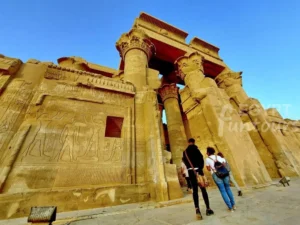
Want to see where the pharaoh’s demanding day took place? While you can leave the divine burden of Ma’at behind, you can still explore the magnificent temples where they performed their daily rituals and the grand audience halls where they ruled as a living god. Join Egypt Fun Tours to walk through the real-life locations behind the power and majesty of Egypt’s greatest rulers and see the world they built.

Discover the heritage of the Pharaohs and enjoy the water world in Hurghada....
Sailing across a series of one-kind temples & tombs....
God_Anubis_Icon
Souqs and Markets in Egypt - Egypt Fun Tours

Cairo walking tours

After a rocky start (the driver had been in an accident on his way to pick me up,) the company very quickly sent another driver/guide named Mohammed, who was a real pro. Thoroughly enjoyed my first day in Egypt!

More »

Goes well beyond “tour”

I am tempted to say “my friend Hani” runs an amazing service, because that is how he makes you feel. I first went on the 9-hour layover tour in summer 2011. Hani and driver picked me up at the airport at 3am, and by the time I left at noon

More »
6 Days Elegence of Egypt Group Tour - Cairo and nile cruise affordable tour

Superbly organized

I can’t recommend them enough. I got into Cairo on a 12-hour layover at 2:00 AM. By 3:15 Hani and his driver were meeting me at the airport. For the next five hours we strolled through lovely downtown Cairo & over the Nile, wandered through (friendly, well-organized) Tahrir Square, toured

More »

Layover Tour in Cairo

This August, my boyfriend and I had quite a long layover in Cairo, 9 hours to be exact. Instead of wasting our time at the airport, we decided to do a layover tour of the city. I had been before, but my boyfriend hadn’t, so we wanted to hit the

More »
hani ahmed 1

Hani Was our Awesome Tour Guide!

We had an 11-hour layover in Cairo on 12/15/2011. We wanted to go to see the Pyramids, Tahrir Square, and possibly the museum. We were so lucky to have a guide, Hani from Egypt Fun Tour, who made it possible to see all the above, plus the Bazaar, and time

More »
God_Anubis_Icon

Top-rated Tour Packages

God_Anubis_Icon