Egypt During the Roman Era: Society, Administration, and Legacy

Egypt under the Roman Empire (30 BCE – 641 CE) became a crucial, but deeply subjugated, imperial province often referred to as Rome's "breadbasket." Native Egyptian society was at its lowest point, rigidly divided into two classes: the privileged ruling elite, composed primarily of Romans, Greeks, and some Jews, who controlled all administration, wealth, and power; and the native Egyptians, who were systematically excluded from military service and government. This majority population was relegated to the toiling class, enduring heavy taxation and poverty to support the immense economic demands of the Roman Empire.

Egypt during the Roman era

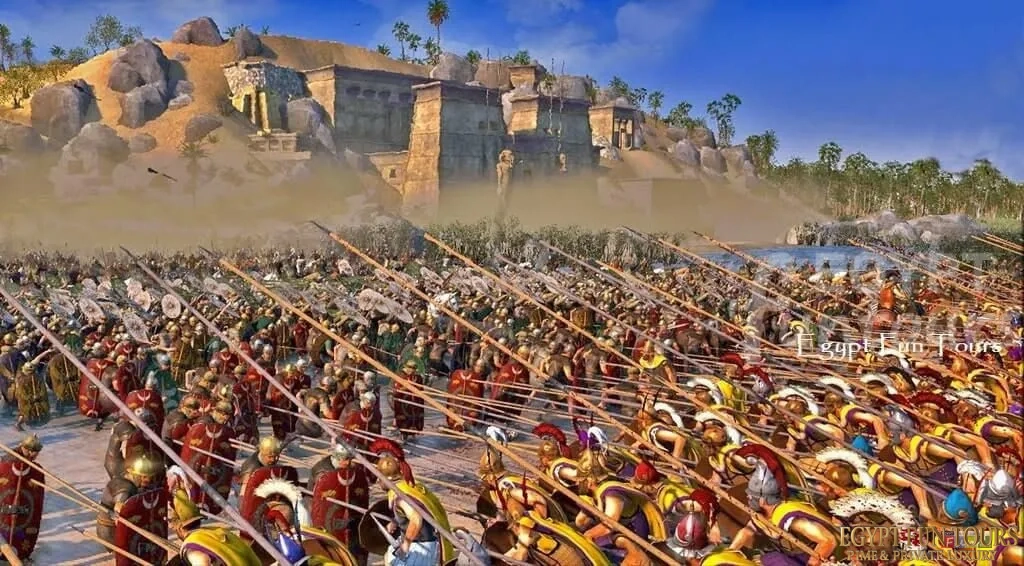
After Roman forces defeated Marcus Antony and the Ptolemaic Queen Cleopatra VII in the naval Battle of Actium, the history of Egypt during the Roman era began. Following this, Egypt became a Roman province, the richest in the Eastern Roman Empire. Alexandria served as the capital, with the largest port, and as the second-largest city in the entire Roman Empire.

FUN

History of Egypt during the Roman era

The history of Roman rule in Egypt began after the naval Battle of Actium. There, Roman forces defeated Marcus Antony and the Ptolemaic Queen Cleopatra VII. After the battle, Egypt became the Roman province of Aegyptus. This new province included most of modern-day Egypt, excluding the Sinai Peninsula. Egypt became the richest Eastern Roman province.

Alexandria:

The capital was by far the wealthiest province outside of Italy. It had the largest port and was considered the second-largest city in the Roman Empire. This was true during the rule of Augustus and many subsequent Roman emperors, who also acted as Roman pharaohs.
Priests of ancient Egyptian deities and Hellenistic religions in Egypt kept most of their temples and privileges, and therefore served the Roman emperors’ cult. The emperor was the one to appoint the Roman ruler of Egypt since the first century B.C.E. Augustus also established agrarian reforms that provided a greater entitlement to private land ownership and changed local administration into a Roman service structure throughout his multi-year term and the rank of Prefects.

He separated Roman Egypt’s people into social classes based on ethnic and cultural factors and exempted Roman citizens from the Egyptian population’s tax. The Romans initially gave the Egyptians religious freedom and treated them with care in this regard. Egypt, like other Roman republics, was enslaved by pagan religion, and the Egyptians remained so until Christianity originated in Palestine, and Egypt was the first country to be infiltrated by Christianity in the first century AD. Because of its proximity to Palestine, it bears the hand of Saint Mark. This religion began in Alexandria and Lower Egypt and eventually spread throughout Egypt.

FUN

Society of Egypt During the Roman Era

Society of Egypt During the Roman Era

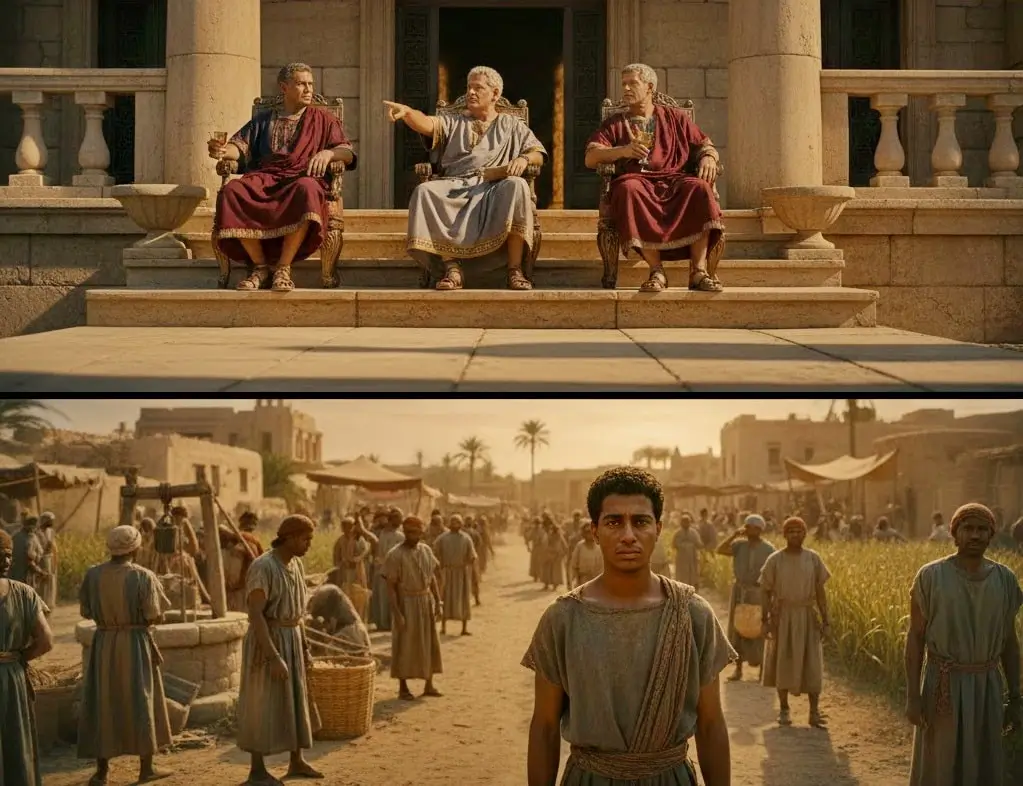
The Roman conquest of Egypt in 30 BCE marked a significant historical shift, locking Egyptian civilization into a deeply subjugated position. At this time, Egyptian society was highly stratified and under the firm control of a foreign elite. Authority, administration, and lucrative positions were entirely held by Romans, Greeks (who had maintained power since the Ptolemaic period), and a small minority of Jews. The Roman administration systematically barred the native Egyptian population from serving in the army or holding any position of power, effectively excluding them from civil and military authority.

This structure fundamentally divided the country into two distinct, rigid layers. The upper layer consisted of the ruling Romans and their favored Greek and Jewish administrators, who benefited enormously from the country’s wealth and resources. The lower layer, comprising the majority of the population, was the native Egyptian toiling class. These Egyptians endured widespread poverty and suffering, relegated primarily to agricultural labor and heavy taxation, serving the economic interests of the Roman Empire, which treated Egypt as its imperial breadbasket.

Roman Monuments and Innovations

The Romans used and discovered new agricultural techniques to strengthen Egypt’s position as the ancient world’s “bread basket.” They built dams and water channels to increase both grain and grape production. Many Roman monuments still exist today. They illustrate the Romans’ inventiveness and determination during this period.

The Profound Egyptian Influence on Greek Civilization

Egypt profoundly influenced ancient Greek civilization in various aspects. Key influences include religious syncretism, with...
Related post
FUN

1. Fortress of Babylon

Babylon Fortress - Roman Monuments - Egypt Fun Tours

The Roman governor, Tragam, constructed this fort in the middle of the second century A.D. He ordered its construction to create a strong defensive line for Egypt from the east. It was meant to ensure Roman military protection. Its strategic geographical placement distinguishes the fortress. The fortress was named in honor of one of the surrounding areas, specifically the Heliopolis region.

2. The Roman Theatre in Alexandria

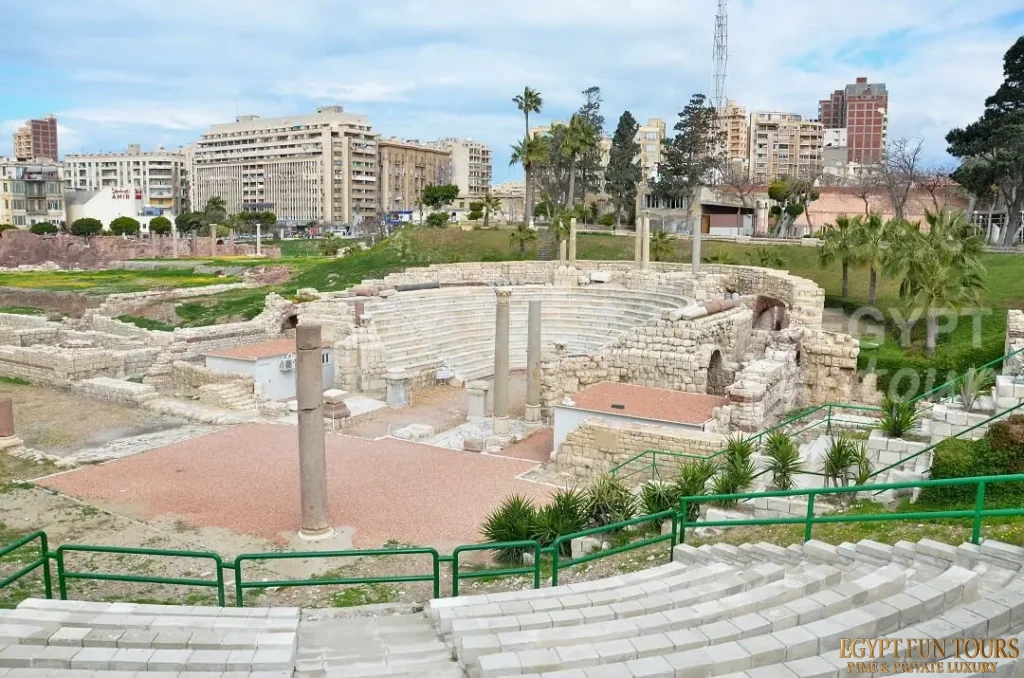
Roman Amphitheater - Alexandria

The theater is at Kom El-Dikka. People built the structure in the fourth century A.D. It resembles a horseshoe or the letter “U” in its most basic form. The theater has 13 rows of seats. Numbers and letters label them to make it easier to find a seat.

Builders constructed the lower stands from pink granite, while the rest were made of marble. Sleeping chambers are at the end of the runway, though none exist today. The ceilings of the cabins are built like domes. Columns support them, and a platform in the center holds the orchestra.

Ancient Egyptian Mummies: From Pharaohs to Powdered Medicine

This article explores the dark, two-sided history of Ancient Egyptian Mummies. Discover the staggering scale...
Related post
FUN

3. Catacombs of Kom El Shoqafa

Kom Esh Shokafa in Alexandria

Here is the largest Roman cemetery in Alexandria. It sits on the southern boundary of ancient Alexandria and dates back to the second century A.D.

Archaeologists accidentally discovered this cemetery in 1892 A.D. They only fully revealed it in 1955 A.D. A spiral staircase connects the three underground stories. The lower steps are higher than the upper steps. The higher the stairwell, the more the stairwell gradually becomes non-existent near the ground’s surface.

4. The Pillar of Pompey

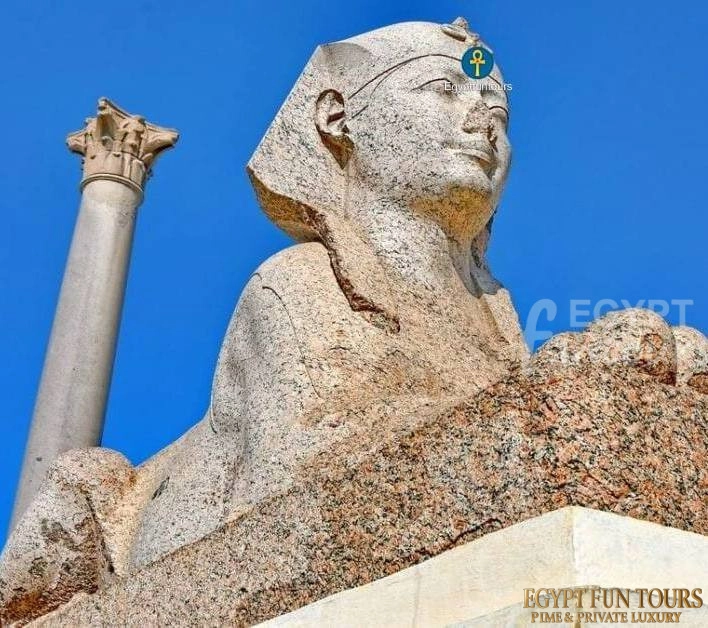
Pompey's Pillar - Alexandria -Egypt Fun Tours

This monument is one of Alexandria’s most well-known Roman structures because it was one of the city’s largest temples during the Greek and Roman periods. It is the only remaining remnant of King Ptolemy III’s Serapeum temple. Between the contemporary Muslim burial location known as the column tombs and the archaeological plateau of Kom El Shoqafa is Pompey’s Pillar. It is built of pink granite and measures 27 meters in length.

5. Philae Temple

Philae Temple in Aswan

This temple, known as the Temple of Isis, is one of Egypt’s last intact Greco-Roman remains, located in Aswan.
King Ptolemy II constructed the temple, which encompasses more than a fourth of the island’s surface area.

The Purity and Power of the Ancient Egyptian High Priest

The Ancient Egyptian High Priest was a powerful noble who served as the direct link...
Related post
FUN

6. Caesarion’s Temple

Caesarion's Temple - Alexandria

Queen Cleopatra started this temple to commemorate Marcus Anthony, but she died before its completion. So, Emperor Augustus finished it and dedicated it to his own devotion.

Only two obelisks survived after the temple’s destruction. People called them Cleopatra’s Needles. In 1877, they transported the first obelisk to London and placed it on the River Thames. In 1879, they brought the second obelisk to the United States and installed it in Central Park.

7. Area of Kom El-Dekka

Kom Ed Dekka Area - Egypt Fun Tours

This region, located in the heart of Alexandria, reflects the characteristics of Roman culture. Archaeologists discovered antiquities here, which revealed that the area was known for its exquisite architectural elements. Examples include large baths, theaters, lecture rooms, villas, and residences. The Roman baths and amphitheater were the first landmarks archaeologists discovered. The Arabic term for them is Kom al-Turab.

8. Ras El Soda Temple

Ras El Soda Temple Roman Monuments in Alexandria - Egypt Fun Tours

The Roman commander Isadros built this temple at the end of the second century. He built it as a show of thanks and devotion to the goddess Isis. Archaeologists discovered the temple in 1936. While removing sand from the Ras el-Soda area, archaeologists uncovered the temple. It is the only temple in Alexandria. Visitors reach a platform by ascending stairs. A small base sits in the middle.

A marble foot at the back of the platform depicts King Isadros’s foot. Four columns stand behind the platform. Five marble statues are in the middle. Stairs on both sides of the platform lead down to two rooms. One of the rooms has terraces on the side walls. This indicates that priests once used the room as a dwelling. Visiting Egypt is a once-in-a-lifetime experience. Consider one of our Egypt tour packages or a Nile River Cruise.

Deluxe tours

Weather in Egypt

Enjoy exploring the wonders of Cairo and Alexandria with your private guide to enjoy the pyramids tour, Cairo tour, and the Alexandria tour....
Explore the legendary landmarks and iconic tourist attractions....
6 Days Luxury Tour {Egypt Treasures} - Cairo and Nile Cruise Affordable Tour Package

A trip of a lifetime in a 10 hour layover!

We recently scheduled a layover tour in Cairo through Egypt Fun Tours. Our layover was 10 hours and we scheduled the tour just about a day and a half before our arrival. When we arrived in Cairo we very easily made our way out of the airport (after getting our

More »

Egypt Fun Tours makes the most out of your layover!

I had a really short layover in Cairo and didn’t want to be stuck in the Cairo Airport for several hours. It was like Mission Impossible: Egypt Fun Tours’ mission was to show me around Cairo during my short 5 hour layover which was made even shorter because my plane

More »
group tour of wonders

Solid Tour Company

Last year (2010) my wife and I did a 20 day trip in Egypt, mostly Do-It-Yourself. However, one of the first things we did was a trip to Bahariya oasis and to the White Desert — not so easy to do yourself, so we needed an agency. After e-mail back-and-forths

More »
Ancient Egyptian Sarcophagus - Egypt Fun Tours

Unforgettable experience with Fun Tours – Highly recommended!

Hello everyone! We would like to share our extremely positive experience with Fun Tours. Our tour was a complete success thanks to our guide, Osama, and our driver Hassan. Osama proved to be an enthusiastic and knowledgeable guide who answered all of our questions and catered to our individual wishes

More »

Amazing Experience

Hamada was incredible! So knowledgeable and kind. He had information about every item, street corner, and relic we looked at. Any questions we had, he had answers! He even made sure to give us tips while walking through the crowds so that we would feel more comfortable when being approached

More »
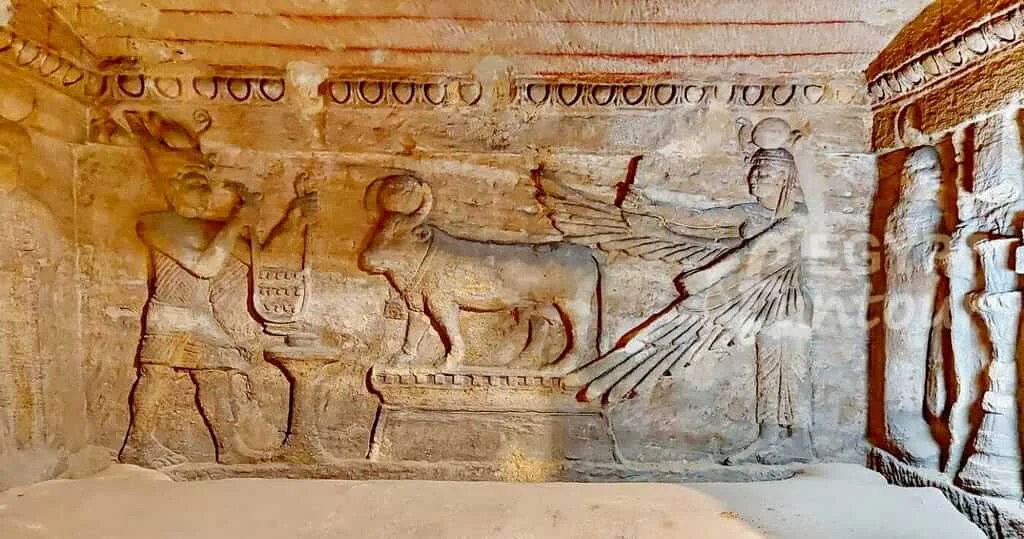
Isis with wings

Top-rated Tour Packages

Isis with wings