
Ramadan: History, Traditions, and the Spirit of Egypt’s Sacred Month

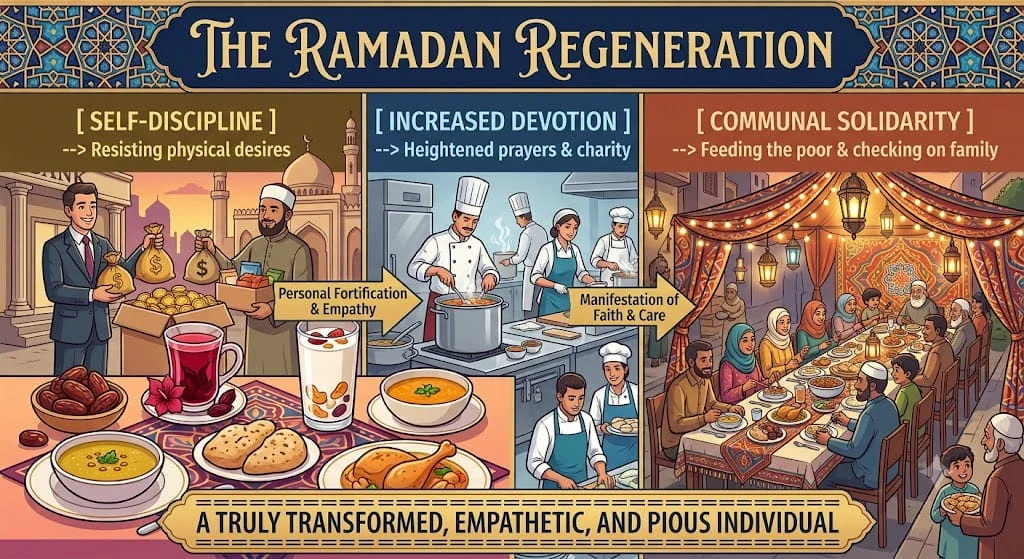
Ramadan is the holiest month of the Islamic lunar calendar, commemorating the divine revelation of the Quran to the Prophet Muhammad. Observed globally by over two billion Muslims, it stands as one of the Five Pillars of Islam, defined by a strict daily fast from dawn to sunset that cultivates self-restraint, spiritual mindfulness, and deep empathy for the less fortunate. Beyond the core religious acts of prayer and fasting, the month fosters profound communal unity and a radical spirit of street generosity, which shines with particular magic through Egypt’s unique cultural traditions—such as the glowing Fanous lanterns, lively Mawaed Al-Rahman public soup kitchens, and festive pre-dawn gatherings.
The eye of Horus
WhatsApp
Email
Print

Ramadan is a time of profound spiritual reflection, self-discipline, and communal warmth for over two billion Muslims worldwide. While observed globally, the atmosphere of this holy month takes on a uniquely vibrant, magical character in Egypt. This comprehensive guide explores the deep-rooted history of Ramadan, the mechanics of the lunar calendar, the spiritual anatomy of fasting, and the iconic cultural traditions—from shimmering lanterns to unparalleled street generosity—that make an Egyptian Ramadan truly unforgettable.

Divider

1. The Foundations of Holy Ramadan

The Foundations of Holy Ramadan

Ramadan: The Revelation of the Quran

At its core, Ramadan commemorates one of the most pivotal moments in Islamic history. It is the month in which the Prophet Muhammad received his first divine revelation from Allah (God). This sacred message was delivered by the Archangel Jibril (Gabriel) in the year 610 CE, while the Prophet was meditating in the Cave of Hira, located on the mountain of Jabal al-Nour near Mecca.

This inaugural revelation marks the birth of Islamic scripture. The Quran describes this momentous occasion in Surah Al-Baqarah (2:185):

“The month of Ramadan is that in which was revealed the Quran, a guidance for the people and clear proofs of guidance and criterion.”

The night this revelation first occurred is known as Laylat al-Qadr (The Night of Decree or Power). Deemed the holiest night of the year, it is traditionally sought during the last ten odd-numbered nights of Ramadan, and worship on this single night is believed to be better than a thousand months of devotion.

Ramadan: The Mechanics of the Islamic Lunar Calendar

Unlike the Gregorian calendar, which is based on the Earth’s orbit around the sun (solar), the Islamic calendar (Hijri) is strictly lunar, relying on the phases of the moon.

  • Month Duration: A lunar month begins with the sighting of the new crescent moon (hilal) and lasts either 29 or 30 days, depending on when the next crescent is spotted.
  • The 11-Day Shift: The lunar year is approximately 354 to 355 days long, making it roughly 11 days shorter than the 365-day solar year.
  • A Traveling Season: Because of this annual 11-day deficit, Ramadan is not anchored to a specific Gregorian season. It rotates backward through the seasons over a cycle of roughly 33 years. A Muslim will experience Ramadan in the crisp chill of winter, the mild breeze of spring, and the intense heat of mid-summer over the course of their lifetime.
Golden Scarab

2. Fasting: The Pillar of Self-Restraint and Devotion

Fasting during Ramadan, known as Sawm, is one of the Five Pillars of Islam, forming the bedrock of a Muslim’s faith and practice.

Ramadan: The Core Prohibitions

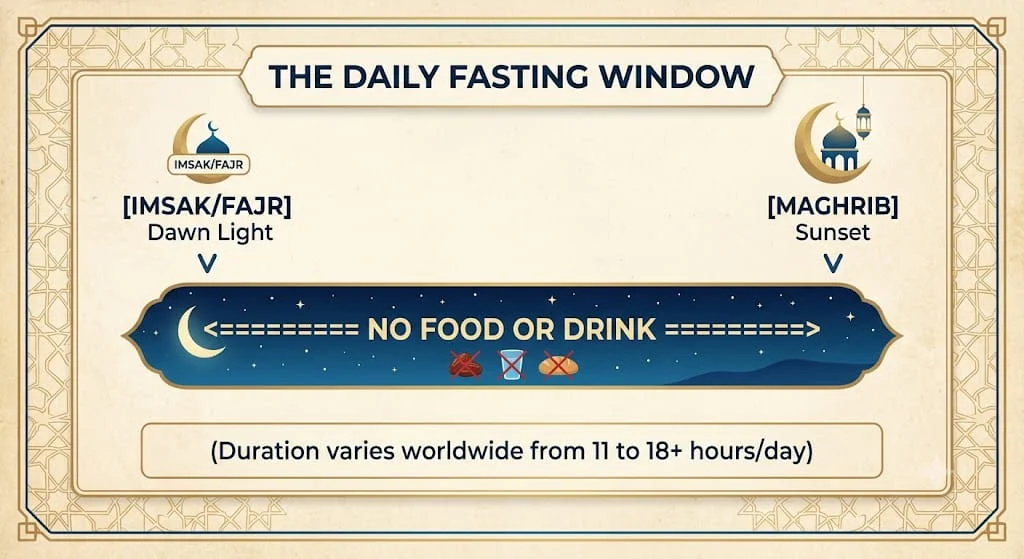
From the first light of dawn (Fajr) until the exact moment of sunset (Maghrib), fasting Muslims strictly abstain from:

  • All food and liquids (including water).
  • Marital sexual relations.
  • Smoking and tobacco use.
  • Oral medications (injections for medical necessity are generally permitted, subject to scholarly consensus).

Holy Islamic Ramadan,The Core Prohibitions

Ramadan: The Spiritual Anatomy of Sawm

Fasting is not merely an exercise in physical deprivation; it is a holistic detox of the mind, tongue, and soul. The physical hunger acts as a catalyst for a deeper spiritual awakening.

  • Cultivating Taqwa: The primary Quranic purpose of fasting is to achieve Taqwa, a state of God-consciousness, mindfulness, and piety.
  • The Fast of the Senses: True fasting requires guarding one’s character. Muslims are urged to refrain from gossiping, lying, backbiting, arguing, and using foul language. If insulted, the Prophet taught believers to respond calmly by saying, “I am fasting.”
  • Empathy for the Less Fortunate: Experiencing the physical pangs of hunger and thirst fosters a profound, immediate empathy for millions around the globe who endure involuntary poverty and starvation daily. It transforms abstract sympathy into concrete, charitable action.
  • Chaining of Evil: In Islamic theology, it is narrated that during Ramadan, the gates of Heaven are opened, the gates of Hell are closed, and the devils (shayatin) are chained. This signifies a period of divine mercy where the path to righteousness is unobstructed, leaving individuals to confront and master their own egos (nafs).

3. Braving the Summer Fast: Egypt’s Endurance and Adaptation

When the lunar cycle positions Ramadan in the peak of the Egyptian summer, the daily fast becomes an extraordinary test of physical and mental endurance.

Ramadan: The Physical Challenge

Summer in Egypt—particularly in Cairo, Luxor, and Aswan—frequently sees temperatures soaring between 40°C and 45°C (104°F to 113°F). Coupled with high humidity in coastal and delta areas, the dry heat of the desert makes going without water for up to 15 or 16 hours a monumental task. Despite the taxing climate, the daily rhythm of life persists, showcasing a remarkable collective resilience.

Ramadan: Societal Adaptations

To accommodate the physical demands of summer fasting, Egyptian society alters its daily operations:

  • Shifted Working Hours: Governments and private corporate sectors typically shorten official working hours, allowing employees to start later or leave early to rest before sunset.
  • The Afternoon Lull: In the scorching hours between 2:00 PM and 5:00 PM, streets naturally quiet down as people seek air-conditioned spaces, conserve their energy, and engage in Quranic recitation.
  • The Nocturnal Shift: The entire country undergoes a dramatic nocturnal transformation. Once the fast breaks, energy levels surge. Shoplifting, dining, socializing, and commerce peak late into the night, keeping the country vibrant well past midnight.
The eye of Horus

4. The Anatomy of an Egyptian Ramadan Night

As the afternoon sun dips below the horizon, the atmosphere in Egypt builds to an electric crescendo. The stillness of the late afternoon gives way to a joyous celebration of community, faith, and culinary heritage.

Ramadan: The Two Critical Meals

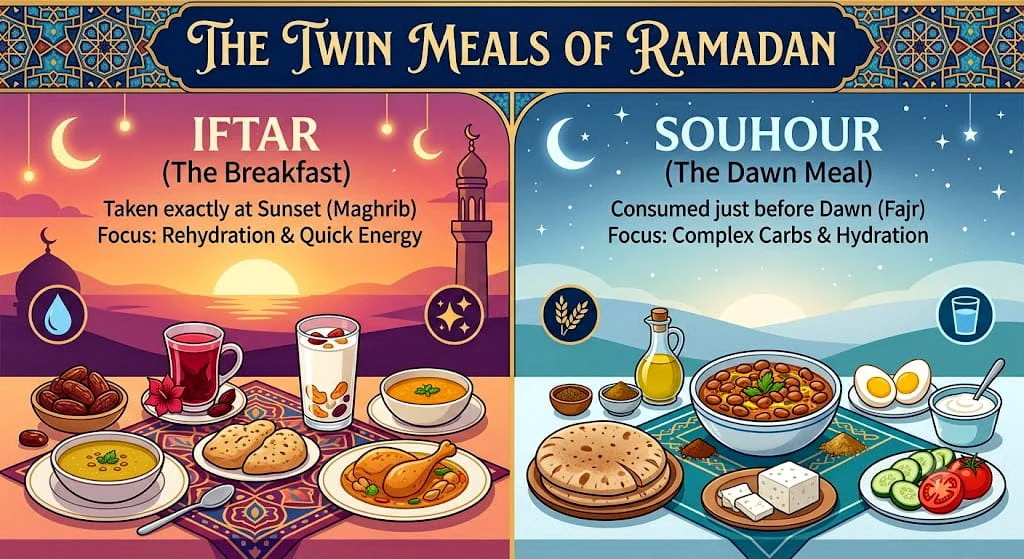
During Ramadan, the standard three-meal schedule is replaced by a strict two-meal framework designed to sustain the body through long hours of fasting.

The Two Critical Meals of Ramadan

1. Iftar (Breaking the Fast)

Egyptians colloquially call Iftar Breakfast, and it occurs precisely at the call to the sunset prayer (Azaan al-Maghrib). It brings a joyous explosion of flavor and family bonding.

  • The Sunnah Opening: Following the tradition (Sunnah) of Prophet Muhammad, Muslims break the fast gently. Before diving into a heavy meal, Egyptians drink a highly nutritious, sugary blend of dried fruits soaked in water or milk. This traditional mix includes dried brown dates, apricots (Qamar al-Din), figs, raisins, and shredded coconut. This blend delivers an immediate, natural glucose boost to a depleted system.
  • The Ritual: After this quick liquid refreshment, many perform the 10-minute sunset prayer before sitting down to the main meal.
  • The Spread: An Egyptian Iftar table displays grand culinary love. The meal almost always begins with a warm, comforting bowl of soup (such as Orzo soup or Lisan al-Asfour). Heavy main courses follow, featuring stuffed vegetables (Mahshi), grilled meats (Kofta and Kebab), baked pasta with béchamel (Macarona Béchamel), and traditional flatbreads.

2. Souhour (The Pre-Dawn Meal)

Souhour is the final meal people consume before the fast begins anew at dawn. This essential, highly blessed meal provides steady energy throughout the upcoming day.

  • The Menu: The undisputed king of the Egyptian Souhour table is Foul Mudammas (slow-cooked fava beans dressed with oil, cumin, and lemon). Rich in complex carbohydrates and protein, fava beans digest slowly, staving off hunger for hours.
  • Hydration Companion: Alongside Foul, Egyptians eat white cheeses, boiled eggs, fresh cucumbers, and plenty of yogurt. People widely believe that yogurt soothes the stomach and prevents intense thirst during hot afternoons.

The Vibrant World of Ramadan Tents (Kheymat Ramadan)

As evening turns to night, Egypt’s social scene shifts to Ramadan Tents. These are not rough wilderness shelters; luxury hotels, elite cafes, and historical venues across the country erect these lavishly decorated, expansive structures.

  • The Aesthetics: Khayamiya fabric—a distinct, colorful textile featuring intricate, geometric Islamic patterns—drapes the tents.
  • The Entertainment: Patrons gather in these tents from post-Iftar until the early hours of the morning to enjoy live performances by traditional musicians, Oud players, Tanoura (Sufi) dancers, and contemporary singers.
  • The Social Hub: Tents serve as the premier venue for socializing. Families and friends relax, sip traditional drinks like hibiscus (Karkadeh) or carob (Khroub), play backgammon, and enjoy the cool evening breeze.
Divider

5. Legendary Street Generosity: Radical Hospitality in Action

One of the most moving aspects of Ramadan in Egypt is the radical hospitality that flourishes on every street corner. The concept of charity ceases to be an abstract duty; it becomes a living, breathing reality that unifies the rich and people with low income alike.

The Commuter’s Lifeline: Fast-Breaking on the Road

If you find yourself caught in Cairo’s notorious traffic jams when the sunset prayer call echoes across the city, you have absolutely no need to panic. An army of volunteers—primarily young children and teenagers—surrounds cars, buses, and pedestrians. They fearlessly step into gridlocked intersections to hand out free packages to trapped commuters. These care packages contain:

  • Fresh mineral water or boxed juices.
  • Sweet traditional drinks like Tamarind (Tamr Hindi) or Dum palm fruit juice (Doum).
  • Small plastic bags packed with high-quality dates.

These volunteers affectionately insist, and sometimes playfully block your vehicle, until you accept their gift, ensuring that every single fasting person breaks their fast at the exact ordained minute.

Mawaed Al-Rahman: The Tables of the Most Merciful

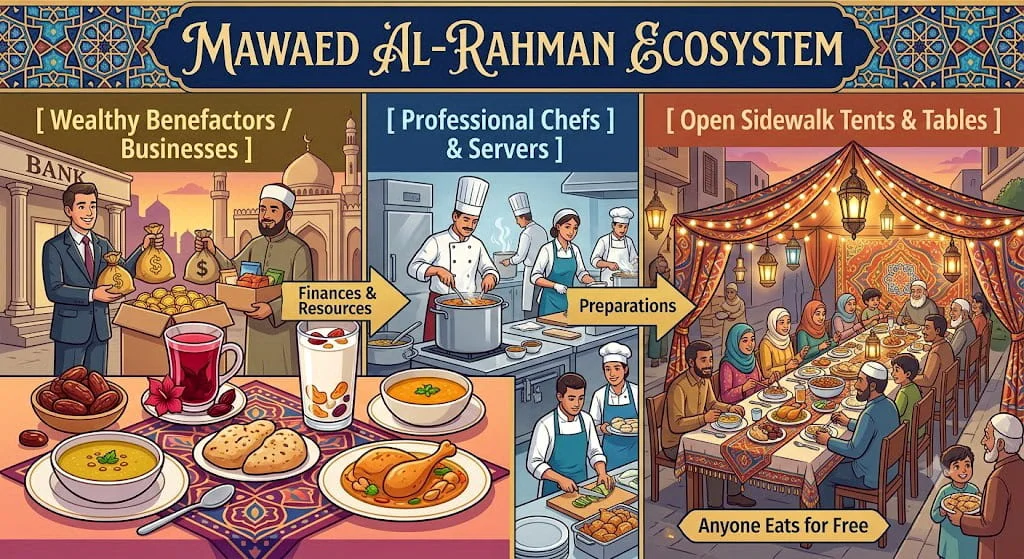
Perhaps the ultimate expression of communal solidarity in Egypt is the Mawaed Al-Rahman (literally: Tables of the Most Merciful). Local communities, businesses, and charities set up these massive, open-air soup kitchens on sidewalks, public squares, side alleys, and outside mosques across every city, village, and rural town in Egypt.

Mawaed Al-Rahman The Tables of the Most Merciful

  • An Open Invitation: These long tables are fully funded by wealthy individuals, local businesses, and anonymous donors. They hire professional cooks, chefs, and catering staff to set up industrial-sized kitchens right on the pavement.
  • Radical Equality: Anyone—regardless of economic standing, social background, or religion—is welcome to sit down and eat a high-quality, hot, multi-course meal completely free of charge. The low-income people, passing travelers, and working professionals who couldn’t make it home sit side-by-side.
  • Mosque Distribution: For those who prefer a quieter setting, almost every neighborhood mosque opens its doors at sunset, offering free dates, drinks, fresh milk, and boxed meals to anyone who enters.
The eye of Horus

6. Cultural Symbols and Timeless Traditions

While Ramadan is an ancient religious obligation, Egypt has contributed unique cultural traditions that have spread throughout the Arab world.

The Fanous: The Glowing Heart of Ramadan

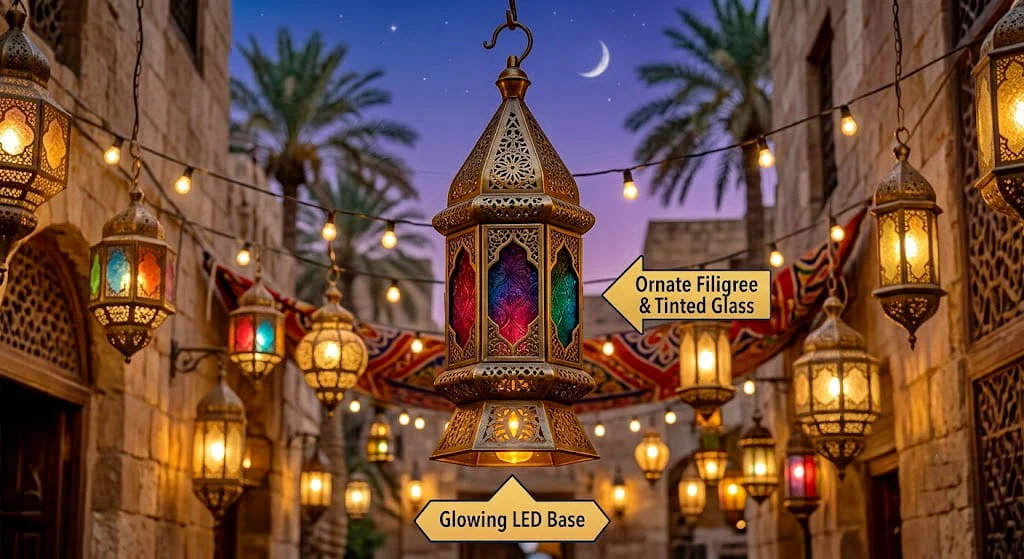
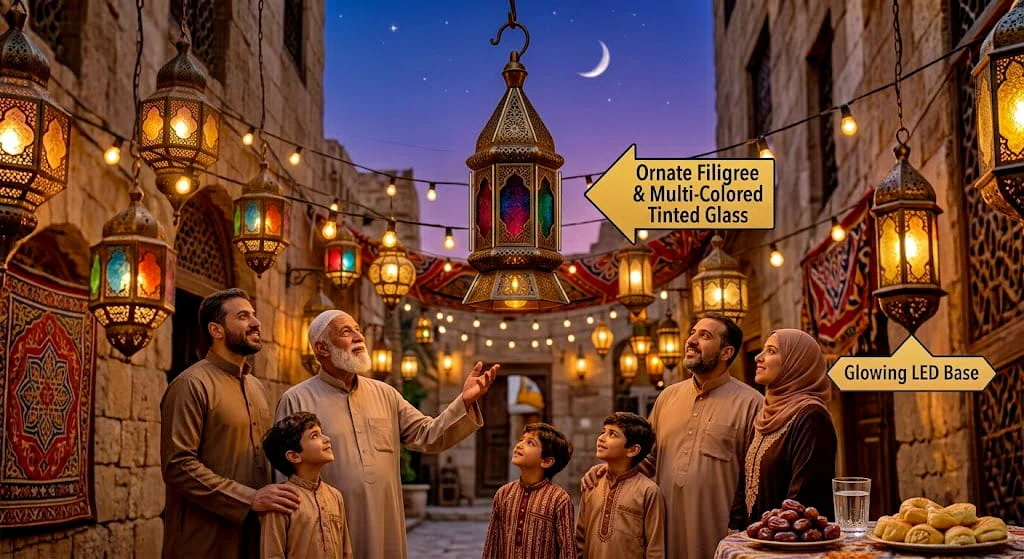
The definitive visual symbol of Ramadan in Egypt is the Fanous (plural: Fawanees)—an intricately designed lantern made of traditional tinted glass, brass, tin, or modern colorful plastics.

The Fanous The Glowing Heart of Ramadan

The Historical Origin of the Fanous

The tradition of the Fanous dates back to the Fatimid Caliphate on the 5th of Ramadan in the year 358 AH (969 CE). When the Caliph Al-Mu’izz li-Din Allah arrived at the outskirts of Cairo at night, the military commander Gawhar al-Siqilli ordered the city’s residents to hold lanterns to illuminate the dark pathways for the Caliph’s royal procession.

The children of Cairo walked alongside the procession, singing songs of joy while holding these glowing lanterns. The sight thoroughly charmed the Caliph, and from that night onward, the Fanous became an indelible symbol of the holy month.

The Modern Tradition

Today, weeks before Ramadan begins, massive outdoor markets spring up under historic gates like Bab al-Khalq and Sayeda Zeinab, selling thousands of lanterns.

  • Street Decorations: Residents string giant, handmade lanterns across narrow residential alleys, hanging them between balconies alongside colorful paper chains to illuminate entire neighborhoods.
  • Children’s Joy: Every Egyptian child expects a personal Fanous. Modern iterations often play traditional Ramadan folk songs (like the classic “Wahawi ya Wahawi”) via battery-powered LED chips, lighting up the night as children play in the streets.

The Mesaharaty: The Midnight Awakener

Long before modern smartphone alarms and digital clocks, a beloved figure known as the Mesaharaty held the responsibility of waking families in time for their pre-dawn Souhour meal.

  • The Ritual: Clad in traditional attire and carrying a small leather drum (Baza), the Mesaharaty walks through the quiet residential streets of Egyptian neighborhoods between 1:00 AM and 3:00 AM.
  • The Call: He rhythmically beats his drum and chants poetic, rhyming spiritual phrases, calling out: “Wake up, you sleepers, and declare the oneness of the Everlasting God.”
  • The Personal Touch: In smaller neighborhoods, residents provide the Mesaharaty with a list of the children’s names. He then chants out each child’s name individually into the night air, creating an unforgettable, magical childhood memory that connects generations to their heritage.

7. Comparative Overview: The Dual Nature of Ramadan

To fully understand the structural flow of this sacred month, we can look at how the religious duties and the rich cultural traditions balance each other:

Feature Spiritual Dimension (The Core Faith) Cultural Dimension (The Egyptian Experience)
Primary Focus Internal purification, Taqwa (piety), self-discipline, and direct connection with Allah. Communal unity, neighborhood bonding, celebration, and historical continuity.
Daytime Atmosphere Quiet reflection, reading the Quran, preservation of energy, and physical restraint. Shorter corporate hours, bustling markets, and preparation of charitable food.
Nighttime Atmosphere Extended congregational prayers (Tarawih and Tahajjud) inside packed mosques. Luminous Fanous lanterns, lively Kheymat (tents), street music, and bustling open-air cafes.
Key Culinary Element Breaking the fast simply with dates and water/milk as practiced by the Prophet. Lavish Iftar feasts, Mawaed Al-Rahman street dining, and specialized sweets like Kunafa and Qatayef.
Social Core Fulfilling obligatory charity (Zakat) and feeding the fasting poor. Midnight gatherings, neighborhoods decorated by hand, and children singing folk songs.

8. Embracing the True Spirit of Transformation

Ultimately, Ramadan is much more than a shift in diet or a change in sleeping schedules. It is a profound annual school for character development and personal transformation.

Embracing the True Spirit of Transformation

By removing everyday distractions and physical comforts, the month allows Muslims to step back, re-evaluate their lives, and work toward becoming kinder, more honest, and deeply compassionate individuals.

In Egypt, this internal transformation shines through on a grand scale. The brightly lit streets, the open tables welcoming strangers, the shared hunger under a scorching summer sun, and the collective joy at twilight all serve as a powerful reminder of what is possible when an entire society unites in the spirit of peace, generosity, and faith.

Divider

Great shore excursion of Cairo & Giza

We are glad that we arranged our private shore excursion with Egypt Fun tours in last week of October 2012. Booking process was very easy with Hamada and she took care of all our questions promptly just via E-mail. Our group was little worried about safety in Egypt especially because

More »

A great day!!!!

Thank you Hamada for an incredible day! Thank you for the stories and the history, you are so knowledgeable and we didn’t feel rushed at all or like we missed out on things, will definitely be recommending this tour to everyone 🙂

More »
A Royal Commission The History of Al-Rifa'i Mosque

Highly recommended

Salam, This company is very responsive and accommodating. From the moment we started to chat via email, to the moment we left Egypt at the airport, these fellows were very professional. The tour covered most of what we wanted to see! We customized it to our needs and added some

More »
12 Days Solo Woman Tour Package (Queen Cleopatra)

Mohamed is Very Kind Person

Mohamed. I just want to thank you again for your kindness. You made our trip memorable. Give your family and the Egypt Fun Tours crew all my love and thank them again for me. Take care. Enjoy the season! Love. Linda

More »

Absolutely the best

We visited Cairo over a 15-hour layover. Egypt Fun Tours organized a customized and wonderful experience for us. We could not be happier. The day included a visit to all the great sites, the marketplace, dinner, a boat ride on the Nile, and a host of other special requests. I

More »
God_Anubis_Icon

Top-rated Tour Packages

God_Anubis_Icon
WhatsApp
Email
Print