Khan el-Khalili Bazaar: The Ultimate Expert Guide to Cairo’s Living Souq

Khan el-Khalili Bazaar is one of the world's most famous historic markets, located in the heart of Islamic Cairo. Established in the 14th century as a trading hub for merchants, it remains a bustling center of Egyptian culture and commerce. This labyrinth of narrow alleys features thousands of shops selling everything from shimmering gold and Alluring spices to handmade leather and copper lanterns. Beyond the shopping, the bazaar is home to legendary landmarks like El Fishawy Café, where visitors have sipped mint tea for over 200 years. With its stunning Mamluk-style architecture and vibrant atmosphere, Khan el-Khalili offers a sensory journey back to the Middle Ages. It is an essential stop for anyone wanting to experience the authentic sights, sounds, and soul of Cairo.
WhatsApp
Email
Print

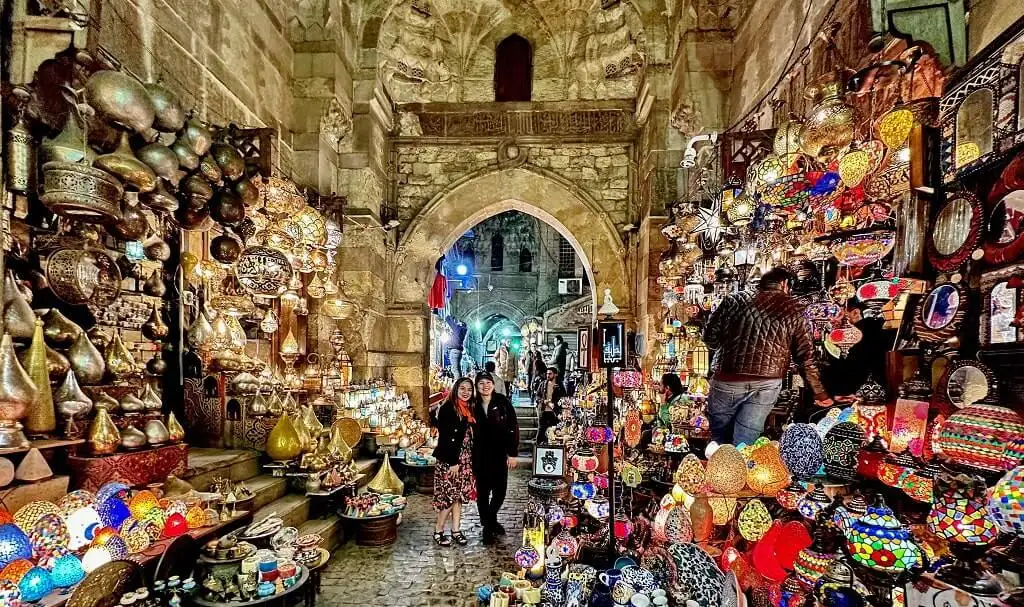
To step into Khan el-Khalili Bazaar is to cross the threshold of time itself. Located in the very heart of Islamic Cairo, this sprawling, medieval marketplace is more than just a destination; it is the living soul of Egypt’s capital. Established in 1382 during the Mamluk era as a grand caravanserai for international merchants, the bazaar has served as a vibrant crossroads of African, Asian, and Mediterranean trade for over 600 years.

Today, as a designated UNESCO World Heritage Site, Khan el-Khalili Bazaar offers a sensory journey unlike any other. Whether you are navigating the winding, narrow alleys in search of authentic Egyptian handicrafts, marveling at the intricate Mamluk and Ottoman architecture, or simply soaking in the timeless atmosphere of El Fishawy Café, the bazaar remains an essential stop for every traveler.

However, the sheer scale of this labyrinth can be overwhelming. From the rhythmic hammering in the copper workshops to the vibrant gold and spice markets, knowing how to distinguish mass-produced souvenirs from genuine artisanal goods is the key to a rewarding experience. As a professional Egyptology researcher and guide, I have walked these paths countless times. In this comprehensive guide, I will share the insider secrets to haggling like a local, navigating the best Cairo walking routes, and uncovering the hidden gems that most tourists miss. Join me as we explore the history, culture, and enduring magic of Cairo’s oldest and most iconic market.

The eye of Horus

The Historical Evolution: From Caravanserai to Cultural Icon

Khan El Khalili, The History Behind the Walls

To understand the vibrant chaos of Khan el-Khalili Bazaar today, one must look back to the late 14th century. The bazaar did not function merely as a marketplace; it served as an essential node in the global trade networks linking the East and the West.

1382: The Foundation by Emir Djaharks el-Khalili

The story of the bazaar began in 1382 during the reign of the Mamluk Sultan Barquq. The powerful Emir Djaharks el-Khalili, a prominent Master of the Horse, commissioned the site. Crucially, he chose a location with deep historical significance. He built the market on the ruins of the Fatimid Caliphs’ burial grounds. This strategic move repurposed a site of immense spiritual weight for the city’s burgeoning commercial needs.

Emir el-Khalili constructed a massive caravanserai—a fortified inn known as a khan—to house merchants traveling along arduous trade routes. These merchants brought spices, silks, and precious metals from far-flung reaches of the world. By providing a secure, centralized hub, the Emir turned this neighborhood into the economic engine of Cairo. Consequently, he established a commercial legacy that has survived for over six centuries.

Khan el-Khalili Bazaar: Mamluk and Ottoman Architectural Influence

The architectural aesthetic of Khan el-Khalili Bazaar serves as a masterclass in layered history. As you walk through the primary gates, known as Babs, you encounter structures that reflect the distinct signatures of the Mamluk and Ottoman eras.

Mamluk architects prioritized verticality and decorative stone masonry. If you look closely at the older building facades, you will notice the signature ablaq masonry. This style features alternating courses of light and dark stone. Furthermore, intricate muqarnas (honeycomb vaulting) defines the entrances to the historic wikalas.

Later, the Ottoman conquest of Egypt in 1517 triggered a transformation. The Ottomans introduced their own sensibilities, focusing on wider, functional commercial spaces. Additionally, they integrated residential quarters above the shop fronts. This blend of styles—the fortress-like strength of the Mamluks and the pragmatic utility of the Ottomans—creates the “labyrinth” effect visitors love today. Ultimately, this architecture provides a visual record of Cairo’s transition from a medieval sultanate to a key imperial province.

The Darker Chapters of Khan El Khalili Bazaar: The History of “Mummia”

Today, the scent of saffron, frankincense, and roasted coffee fills the air. However, the bazaar’s history once held a much more macabre reality. For several centuries, Khan el-Khalili Bazaar served as the epicenter of a bizarre global trade in medicinal human remains.

During the medieval and early modern periods, merchants traded a commodity called mummia. This dark, tar-like powder consisted of ground-up mummified remains. Physicians prized it highly, believing it could cure anything from broken bones to digestive ailments. Consequently, merchants in the Khan procured these remains from ancient tombs and processed them directly within the bazaar.

Although this trade disturbs modern sensibilities, it remains a crucial piece of the bazaar’s history. It highlights how Khan el-Khalili functioned as a place where traders sold anything of value. Whether they dealt in gold, alluring spices, or bizarre medicinal substances, they found a market here. Currently, the only “remains” you will find in the bazaar are the echoes of this shadowed, fascinating past. Therefore, history lovers from around the globe continue to feel drawn to its streets.

Golden Scarab

Navigating Khan El Khalili Bazaar: An Expert’s Walking Strategy

A feast of senses

Exploring Khan el-Khalili Bazaar requires strategy. Because it is a dense, labyrinthine network of alleys, visitors often feel overwhelmed. However, if you follow this expert plan, you will move through the market with the confidence of a local.

The Best Time to Visit (Avoiding the Tourist Crush)

Timing is everything. Most tourists arrive between 11:00 AM and 3:00 PM. Naturally, this creates gridlock and high prices. To experience the bazaar at its best, plan your arrival for 9:30 AM, just as the shops open. Alternatively, visit after 7:00 PM.

During the evening, the market truly comes alive. The lanterns glow against the night sky, and the temperatures drop, making for a much more comfortable stroll. Furthermore, many shopkeepers are more relaxed in the evening. Consequently, you will find it easier to engage in friendly, productive conversations. Please note that while many shops remain open daily, some businesses close on Sundays. Therefore, check your calendar before you head out.

Logistics: How to Arrive Like a Local

Arrival strategy significantly impacts your experience. If you take a taxi or Uber, do not ask to be dropped off at the main entrance near the Al-Hussein Mosque. Traffic there is almost always gridlocked. Instead, ask your driver to drop you at Al-Azhar Street. From there, it is a short, pleasant walk to the market gates.

Alternatively, for a more adventurous experience, use the Cairo Metro. Take the Green Line to Bab El-Shaaria Station. From the station, you can walk through the historic Muizz Street to reach the bazaar. This approach allows you to see significant medieval architecture before you even reach the market. For those prioritizing convenience, I recommend arranging a private car service. A professional driver will navigate the traffic for you and handle the drop-off logistics effortlessly.

Recommended 3-Hour “Deep Dive” Walking Route

To fully appreciate the bazaar, follow this curated route. First, start at the northern gate, Bab al-Futuh. This gate is a stunning piece of Mamluk architecture. Walk south down Al-Muizz Street, admiring the mosques and sabil-kuttabs along the way.

Next, turn left into the heart of the bazaar. Spend your first hour exploring the Goldsmiths’ Quarter (The Sagha). Even if you do not plan to buy gold, the craftsmanship is incredible. After that, spend an hour in the Spice Market. Engage your senses here, as the variety of herbs and perfumes is unmatched.

Finally, dedicate your last hour to the back alleys. Walk past the busy main thoroughfares to find the small, hidden copper workshops. Here, you will see artisans hammering metal by hand. End your tour at the historic El Fishawy Café. After three hours of walking, a cup of fresh mint tea is the perfect reward.

Aswan Botanical Garden: A Peaceful Paradise on Kitchener’s Island

Escape to the Aswan Botanical Garden, a floating, green paradise on the historic Kitchener's Island....
Related post
The eye of Horus

The Geography of the Souq: What to Find Where

Finding Your Way, What to Explore and Buy from Khan El Khalili

Khan el-Khalili is not a single store; it is a sprawling district divided into specialized quarters. Each alley typically focuses on a specific craft. By understanding this layout, you can navigate the market with efficiency and purpose.

The Goldsmiths’ Quarter (The Sagha): An Insider’s Guide to Quality

The Sagha, or Goldsmiths’ Quarter, is perhaps the most famous and prestigious part of the bazaar. As you enter, the sheer volume of gold on display can be breathtaking. However, you must prioritize quality over quantity.

In Egypt, gold purity is measured in karats. You will mostly encounter 18k (750) and 21k (875). Locals typically favor 21k gold for investment and traditional jewelry because it has a richer, deeper yellow hue due to the higher gold content. Conversely, 18k is often used for intricate, modern designs because the added alloy makes the metal more durable.

Always check for the government-stamped hallmark. Every authentic piece of precious metal in Egypt must bear a hallmark issued by the Assay Office. This stamp indicates the purity and the year of manufacture. If a seller refuses to show you the hallmark or tries to dismiss its importance, walk away immediately. Genuine craftsmanship in the Sagha is world-class, but it demands an informed buyer.

The Spice Market (Ataba & Al-Azhar surroundings): Sourcing the Authentic

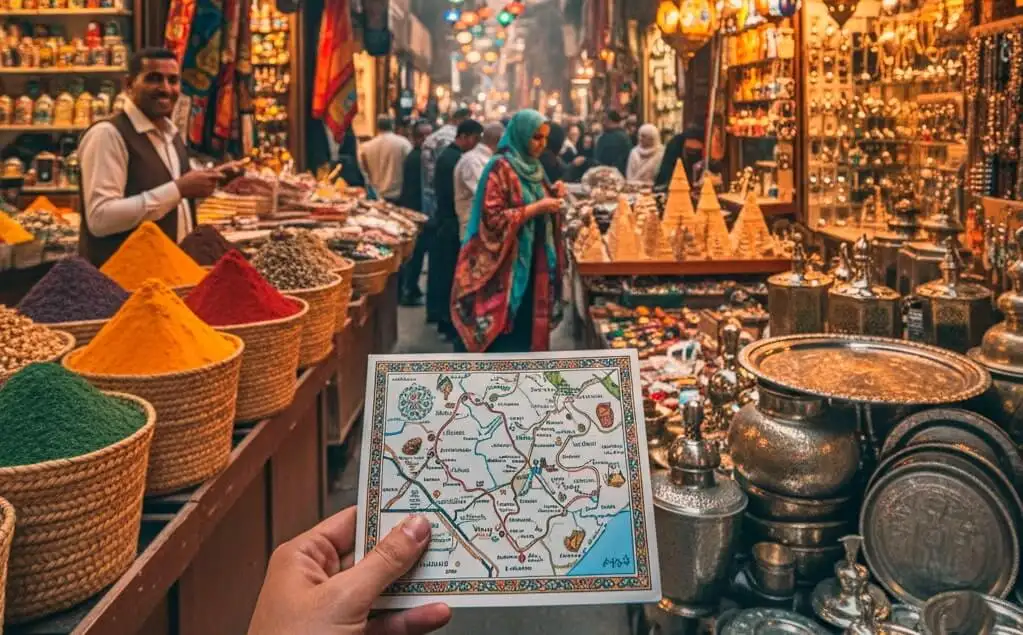
If you want to bring the flavors of Egypt home, head to the spice streets near the Al-Azhar surroundings. Here, you will find bags overflowing with vibrant colors and intoxicating scents.

When shopping for spices, prioritize the “freshness test.” Authentic saffron, for example, should have deep red threads; if it is mostly yellow, it is likely dyed corn silk. Similarly, high-quality cumin or cinnamon should be intensely aromatic the moment you approach the stall. Do not hesitate to ask the merchant to open a jar so you can smell the contents. Because this area is so busy, merchants sometimes display older, pre-packaged spices. Always choose the goods they weigh out from bulk sacks in front of you. This ensures you are getting the freshest product possible.

Copper, Brass, and Lantern Workshops in Khan El Khalili Bazaar

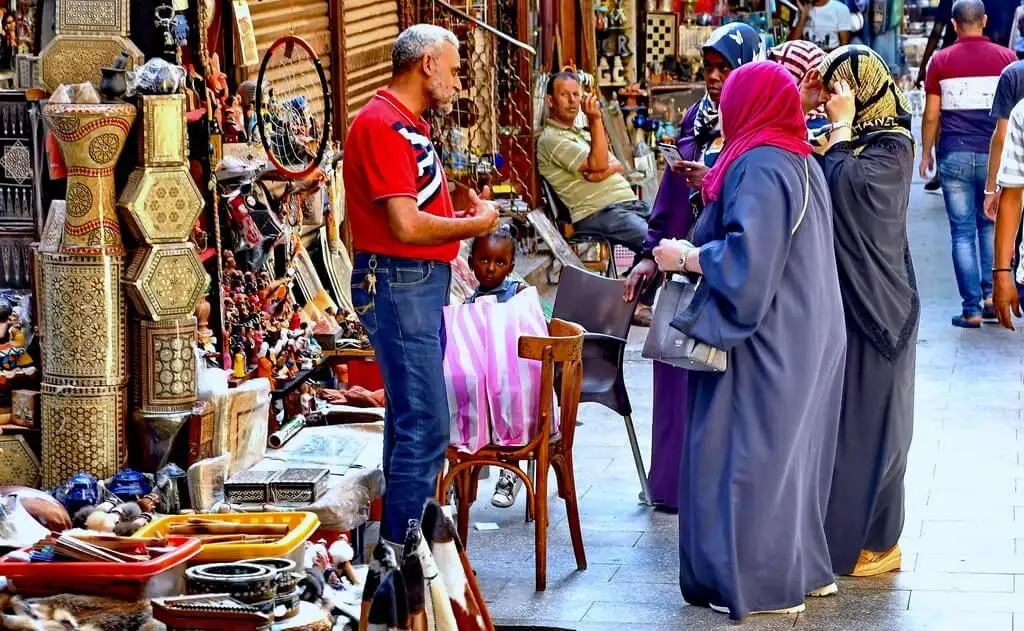
Deep within the bazaar, you will hear the rhythmic clink-clink-clink of hammers. This sound identifies the artisan workshops. These masters transform raw sheets of copper and brass into intricate plates, trays, and the iconic Egyptian lanterns known as fanous.

When evaluating metalwork, look at the back of the piece. If you see machine-stamped patterns, it is a mass-produced item. Conversely, if you see slight irregularities or the marks of a hand-held chisel, you are looking at authentic, handmade art. These unique pieces reflect hours of labor. Consequently, they carry a higher price point, but they represent a tangible piece of Egyptian heritage that will last a lifetime.

Textiles, Leather, and Traditional Jalabiyas

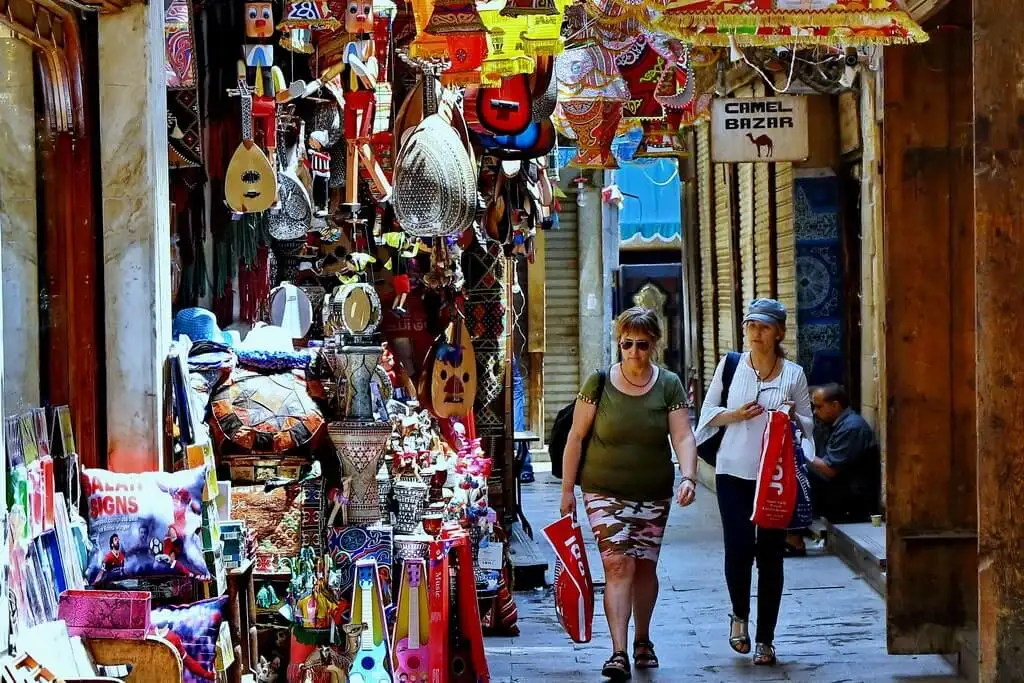
The textile and leather alleys are essential stops for those seeking high-quality garments. You will find a vast array of embroidered jalabiyas—the traditional, loose-fitting Egyptian robe—and various leather goods.

When selecting leather, check the texture and the smell. Genuine Egyptian leather is supple and earthy, whereas synthetic alternatives feel plasticky and uniform. Regarding jalabiyas, look closely at the stitching. Authentic pieces often feature hand-sewn embroidery or intricate needlework that distinguishes them from tourist-oriented, factory-made clothing. If you are buying cotton, look for the “Egyptian Cotton” label. Egypt is world-renowned for its long-staple cotton, which offers a superior, breathable softness that is perfect for the local climate.

The Giza Zoo: A Historic Journey Through Cairo’s Iconic Wildlife Park

The Giza Zoo, established in 1891 and historically recognized as one of the oldest and...
Related post
Golden Scarab

The Art of the Bargain: A Professional Guide for Visitors

The Art of the Bargain in Khan El Khalili

Many travelers find the prospect of haggling intimidating. However, in Khan el-Khalili, negotiation is not a conflict; it is a social ritual. By approaching the “game” with a smile, you transform a transaction into a memorable cultural exchange.

Understanding the “Game”: Why Haggling is Cultural, Not Confrontational

In Egypt, fixed prices are a relatively modern concept. For centuries, the bazaar has operated on the principle of dialogue. When a merchant quotes a price, they invite you to engage. They do not expect you to accept the initial offer, nor do they feel insulted by a counter-offer.

On the contrary, the shopkeeper often expects a back-and-forth conversation. This interaction allows both parties to assess each other and build a rapport. Therefore, view the process as a dance rather than a battle. If you remain polite, keep your sense of humor, and show genuine interest in the product, the merchant will respect you. Ultimately, a successful negotiation leaves both the buyer and the seller feeling satisfied.

5 Golden Rules for Fair Negotiation

To navigate these conversations successfully, follow these five proven guidelines:

  1. Keep it Friendly: Always start with a smile and a greeting like “Sabah el-khair” (Good morning). A friendly demeanor ensures the merchant treats you as a guest, not just a customer.
  2. Know Your Limit: Before you begin, decide exactly how much you are willing to pay. If the price does not reach your target, be prepared to walk away politely.
  3. The “Half-Price” Rule: As a starting point, offer about 50% of the initial quote. This provides room for both parties to meet in the middle, which is usually the ultimate goal.
  4. Bundle Your Items: If you want to purchase multiple goods, negotiate for the entire package. Merchants are far more likely to offer a significant discount when you buy several items at once.
  5. Be Ready to Walk: Walking away is your most powerful tool. If the price remains too high, thank the merchant and start to leave. Often, the merchant will call you back with a much lower, more realistic offer.

Knowing Your Worth: Price Benchmarks for Common Items

Price benchmarks fluctuate based on quality, material, and weight. However, these general ranges will help you avoid overpaying:

  • Spices: Prices are usually per 100 grams. High-quality saffron is expensive, while hibiscus and cumin are very affordable. Always ask for the price “per kilo” or “per 100 grams” before the merchant weighs the item.
  • Gold and Silver: Never negotiate the price of the precious metal itself, as it is tied to the international daily market rate. You should only negotiate the “workmanship fee” (mussagah). Ensure you know the current market price for gold per gram before entering the Sagha.
  • Leather Goods: A high-quality, handmade leather bag should cost significantly more than a mass-produced one. If a price seems too good to be true, the material is likely synthetic.
  • Small Souvenirs: For items like magnets or small trinkets, the markup is usually high. Never pay the first price, as these are mass-produced and should be quite inexpensive.

El-Mursi Abul Abbas Mosque: Alexandria’s Dazzling Seaside Sanctuary

Don't miss Alexandria's most famous and beautiful mosque: the El-Mursi Abul Abbas Mosque. With its...
Related post
The eye of Horus

Beyond Shopping: The Soul of the Khan El Khalili Bazaar

The true magic of Khan el-Khalili lies beyond the transactions. While shopping drives the economy of the bazaar, the culture creates its heartbeat. To truly understand the market, you must pause, taste, and observe.

El Fishawy Café: A 200-Year-Old Institutional Experience

No visit to the Khan is complete without a stop at El Fishawy Café. Established over 200 years ago, this legendary coffeehouse has never closed its doors. It served as the favorite haunt for Egypt’s greatest writers, such as Nobel laureate Naguib Mahfouz, and has welcomed kings and commoners alike for generations.

The café is famous for its ornate mirrors and vintage ambiance. When you sit at one of its small marble tables, order a glass of fresh mint tea or a robust Turkish coffee. As you sip your drink, take a moment to watch the world go by. The café offers a perfect vantage point to observe the constant ebb and flow of the bazaar. It is, quite simply, an institutional experience that defines the atmosphere of Old Cairo.

Culinary Delights: Where to Find Real Koshary and Street Sweets

The air in the bazaar is thick with the scent of delicious local food. If you want to eat like a Cairene, prioritize local staples.

Start with Koshary, Egypt’s national dish. It is a hearty, flavorful mix of lentils, rice, pasta, and chickpeas, topped with a zesty tomato sauce and crispy fried onions. While many upscale restaurants offer Koshary, the best versions often come from modest, specialized shops where the turnover is high, and the ingredients are fresh.

After your meal, satisfy your sweet tooth with traditional Egyptian desserts. Look for vendors selling Basbousa (a semolina cake soaked in syrup) or Konafa (a delicate, shredded pastry filled with cream or nuts). These sweets are best enjoyed warm. Consequently, they offer the perfect energy boost to continue your exploration of the winding alleys.

Khan EL Khalili Bazaar: The Hidden Mosques and Sabil-Kuttabs of the Area

The Khan is surrounded by some of the world’s most significant Islamic monuments. As you navigate the district, you will notice beautiful stone facades decorated with intricate geometric carvings. These belong to the historic mosques and sabil-kuttabs.

A sabil-kuttab is a unique structure from the Mamluk and Ottoman periods. It served a dual purpose: the sabil was a public fountain providing free water to the thirsty, while the kuttab was a school where children learned to recite the Quran. Today, these buildings stand as masterpieces of medieval urban planning.

When you see an open door, do not hesitate to peek inside. The architecture often features stunning marble floors, painted wood ceilings, and peaceful courtyards that stand in stark contrast to the busy market streets outside. These monuments remind us that the bazaar was always intended to be a place of both commerce and community service.
The eye of Horus

How to Spot Quality: The “Egypt Fun Tours” Authenticity Filter

In a market as vast as Khan el-Khalili, distinguishing genuine artistry from factory-made souvenirs is a vital skill. As the founder of Egypt Fun Tours, I have seen countless visitors fall for mass-produced imitations. To help you invest in real heritage, use these expert guidelines to evaluate your purchases.

Khan El Khalili Bazaar: Identifying Real Papyrus vs. Banana Leaf

Many shops sell “papyrus” that is actually painted banana leaf or palm fiber. Authentic papyrus is made from the stalks of the Cyperus papyrus plant. It possesses a distinct, fibrous grid pattern. You can easily spot the difference with these two simple tests:

  • The Fold Test: Gently roll or fold the piece. Real, high-quality papyrus is flexible and will not crack or break. Conversely, fake “papyrus” made from banana leaves is brittle and will snap or show distinct crease lines immediately.
  • The Texture Test: Hold the piece up to the light. You should clearly see the horizontal and vertical overlapping strips of the papyrus plant. If the texture looks perfectly smooth, uniform, or like heavy paper, you are likely looking at a mass-produced imitation.

Testing Leather and Stone: What to Avoid

The bazaar offers beautiful leather goods and alabaster carvings, but quality varies greatly. Follow these professional tips to avoid low-grade materials:

  • Leather: Genuine Egyptian leather has a rich, earthy scent and a slightly uneven, natural texture. If the item smells like plastic or chemicals, it is synthetic. Furthermore, check the edges. Genuine leather shows fibrous layers, whereas synthetic “leather” often reveals a fabric or foam backing.
  • Alabaster: Artisans carve traditional alabaster in the region near the Valley of the Kings. Authentic alabaster is translucent; if you hold a piece up to a light source, you should see the light glow through the stone. Many cheap souvenirs are made from painted resin or plastic. If the “stone” feels lightweight, cool to the touch, and opaque, it is likely a synthetic cast, not hand-carved stone.

The Importance of Supporting Local Artisans vs. Mass-Produced Imports

You will find many shops selling plastic lanterns, cheap keychains, and imported items that have no connection to Egyptian culture. While these items are inexpensive, they undermine the local economy.

When you buy from a local craftsman, you are doing more than purchasing a souvenir. You are directly supporting a family and helping preserve ancient techniques that have been passed down for generations. Look for workshops where you can actually see the artisans at work. When you see the craftsman’s hands at work, you know your money is supporting a sustainable, local livelihood.

In my professional opinion, the value of a handcrafted piece—such as a copper tray or an embroidered jalabiya—far exceeds the small price difference. These items carry the soul of Cairo. Consequently, they remain cherished memories long after your trip concludes. Always ask the vendor: “Is this made here in the bazaar?” Most honest shopkeepers will be proud to tell you the story of how their items were created.

The eye of Horus

Practical Tips & Local Etiquette

Visiting a historic bazaar requires more than just your wallet; it requires cultural awareness. By following these local norms, you ensure a smoother experience and demonstrate respect for the community that calls Khan el-Khalili home.

Khan El Khalili Bazaar: Safety, Security, and Handling Touts

Khan el-Khalili is generally very safe for tourists, as there is a constant, visible police presence. However, like any crowded global market, you must remain vigilant. Pickpockets sometimes target busy areas, so keep your wallet, phone, and camera in a secure, front-facing bag.

Regarding “touts”—the persistent vendors who may follow you to solicit a sale—the best approach is a firm but polite “La, shukran” (No, thank you). Do not feel obligated to stop or engage if you are not interested. Simply keep walking with a confident pace. Remember, you are a guest in their market; a polite but firm boundary usually keeps the interaction professional and stress-free.

Khan El Khalili Bazaar: Dress Code and Cultural Respect

While Cairo is becoming increasingly cosmopolitan, the area surrounding Khan el-Khalili remains traditional. It is located in the heart of Islamic Cairo, where modest dress is highly appreciated.

I always advise my guests to dress respectfully. For women, this typically means covering the shoulders and knees. A light scarf is a versatile accessory; it can provide sun protection while walking outdoors and serve as a respectful cover when visiting the mosques surrounding the bazaar. For men, while shorts are often seen, long trousers are generally preferred and will make you feel more comfortable in the historic, religious atmosphere of the area.

Tipping Culture in the Khan El Khalili Bazaar

Tipping, or baksheesh, is an integral part of Egyptian social life. It is not just about the money; it is a gesture of appreciation for service.

  • Small Services: If someone helps you find a specific shop or assists you with directions, a small tip of 10 to 20 EGP is a thoughtful gesture.
  • Cafés and Restaurants: A tip of roughly 10% is standard and appreciated for good service.
  • Artisans: You do not need to tip shopkeepers from whom you purchase items, as the price negotiation already covers the transaction. However, if a craftsman spends a significant amount of time showing you the technical details of their work, it is gracious to show your appreciation.

Always keep small denominations of local currency handy for these situations. It makes the exchange seamless and ensures you are always prepared to reward good service.

The eye of Horus

Frequently Asked Questions (FAQ)

Navigating a destination as unique as Khan el-Khalili naturally leads to questions. Below, I have answered the most common inquiries to help you prepare for your visit.

What is the best time to visit Khan el-Khalili Bazaar?

The ideal time to visit is in the late afternoon or evening. While most shops open by 10:00 AM, the market truly comes alive after the sun sets. The lanterns create a magical glow, and the cooler evening temperatures make walking much more enjoyable. Please note that many shops close on Sundays, so plan accordingly to experience the full vibrancy of the bazaar.

Is it necessary to haggle (bargain) at the bazaar?

Yes, haggling is an essential part of the culture. Most shopkeepers expect you to negotiate. A good rule of thumb is to offer roughly half of the starting price and work toward a fair middle ground. Always keep the conversation friendly, respectful, and lighthearted.

Is Khan el-Khalili safe for tourists?

The bazaar is very safe and features a strong police presence. However, because the area is extremely crowded, you should keep a close watch on your personal belongings. Keep your wallet and phone in a secure, front-facing bag to deter opportunistic pickpockets in busy alleys.

Where is the most famous place to get coffee in the market?

El Fishawy Café is the most iconic spot. Open for over 200 years, it has hosted famous writers, royalty, and travelers from around the world. It is the perfect place to enjoy traditional mint tea and soak in the atmosphere.

What should I buy at Khan el-Khalili?

The market is famous for high-quality spices (like saffron and hibiscus), genuine leather goods, gold and silver jewelry, and handcrafted items like copper lanterns, inlaid wood, and authentic papyrus.

Are there restrooms in the bazaar?

Public restrooms are scarce and can be difficult to find in the winding alleys. I recommend using the restrooms at one of the larger, reputable cafés or restaurants (like those near Al-Hussein Square) before you begin your deep-dive exploration.

Can I take photos of the workshops?

Most artisans are happy for you to take photos of their work, especially if you have shown interest or purchased an item. However, it is polite to ask for permission first. A simple “May I take a photo?” (or “Momken soura?”) is always appreciated.

Is it better to hire a guide?

While it is possible to explore on your own, hiring a professional guide offers a significant advantage. A guide can navigate you past the tourist traps, provide deep historical context about the Mamluk and Ottoman structures, and act as a translator during negotiations. If you want to move beyond the surface-level experience and truly understand the history of Islamic Cairo, a private guide is a worthwhile investment.

Why Khan el-Khalili Bazaar Defines the Cairo Experience

Khan el-Khalili is far more than a collection of shops; it is the beating heart of Cairo. From the rhythmic sounds of the metalworkers to the intoxicating scent of spices, it offers a sensory experience that remains unchanged by the centuries.

Whether you are a history enthusiast searching for the secrets of the Mamluk era, a shopper looking for authentic craftsmanship, or a traveler wanting to sip tea where poets have sat for generations, the bazaar welcomes you. I hope this guide helps you navigate its alleys with confidence and curiosity. The next time you walk through the Babs of the Khan, remember that you are not just a tourist—you are part of a 600-year-old story of trade, culture, and human connection. Enjoy your journey into the soul of Egypt.


God_Anubis_Icon

Early Layover Tour in Cairo

My husband, 2 sons – aged 9 & 11 – and I landed in Cairo at 5:15am on Saturday 12 January 2013. We had booked an early layover tour with Egypt Fun Tours after reading the great reviews in TripAdvisor. As promised he and his driver awaited us in a

More »

What an amazing day!

I had a 12 hour layover on my way to Dar es Salaam and wanted to take full advantage of my time in Cairo. After researching for many hours, I came across Egypt Fun Tours and emailed for more information. I received a prompt reply with full details of several

More »

Absolutely the best

We visited Cairo over a 15-hour layover. Egypt Fun Tours organized a customized and wonderful experience for us. We could not be happier. The day included a visit to all the great sites, the marketplace, dinner, a boat ride on the Nile, and a host of other special requests. I

More »

Great shore excursion of Cairo & Giza

We are glad that we arranged our private shore excursion with Egypt Fun tours in last week of October 2012. Booking process was very easy with Hamada and she took care of all our questions promptly just via E-mail. Our group was little worried about safety in Egypt especially because

More »
God_Anubis_Icon

Top-rated Tour Packages

God_Anubis_Icon
WhatsApp
Email
Print