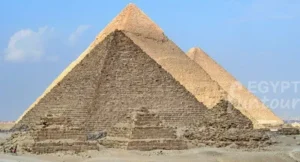

The Step Pyramid Complex: A Revolution in Stone

The Step Pyramid Complex of King Djoser, built around 2670 BCE by the architect Imhotep, was the first large-scale stone building in ancient Egypt. Its stepped design was a revolutionary innovation that transitioned from simple mastaba tombs to the pyramids that would follow, setting a new standard for monumental architecture.

The Step Pyramid: A Revolution in Stone

The Step Pyramid Complex is a groundbreaking monument in the history of ancient Egypt. It’s located at Saqqara, a vast necropolis southwest of modern Cairo. This complex represents a massive leap forward in architectural and engineering prowess. It was built during the reign of King Djoser (also spelled NetheriGhet) around 2670 BCE, at the beginning of the Third Dynasty.

The eye of Horus

The Genius Behind the Step Pyramid

Imhotep Egypt Fun Tours

The visionary behind this revolutionary structure was Imhotep, Djoser’s vizier and high priest. Imhotep receives credit as the first person to build a large-scale structure entirely out of stone. Before his work, Egyptians made tombs out of mudbrick. The design he created was completely new; he moved from the flat-topped mastaba tombs to the towering, stepped structure we see today. Consequently, people so revered Imhotep’s brilliance that they later deified him as a god of medicine and architecture.

Golden Scarab

From Mastaba to Step Pyramid

From Mastaba to Step Pyramid

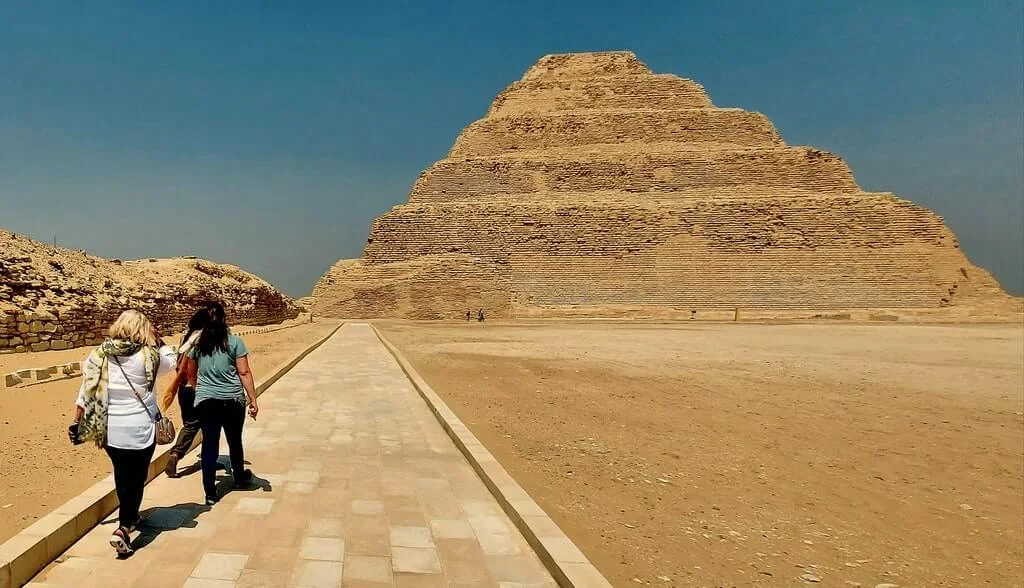
Imhotep did not build the Step Pyramid in one go. It started as a large, square mastaba, a flat-topped tomb with sloping sides. Imhotep then expanded this initial structure, adding more layers of stone on top of each other. He repeated this process six times, with each new layer slightly smaller than the one before it, which created the iconic stepped shape. This design marks the crucial transition from the traditional mastaba tomb to the true, smooth-sided pyramids that the Egyptians would later build at Giza.

Giza Zoo

The Giza Zoo: History and Collection Khedive Ismail constructed the Giza Zoo, opening it on...

Related post
The eye of Horus

The Great Enclosure: More Than Just a Tomb 🏛️

Saqqara step pyramid nobles tombs 17

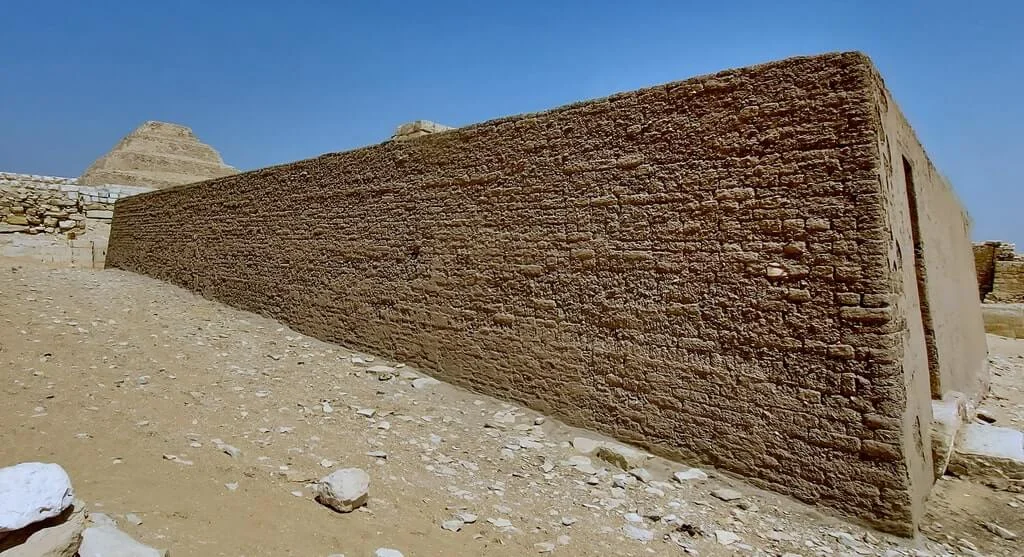
The Step Pyramid wasn’t a standalone monument. It was the centerpiece of a massive, rectangular complex enclosed by a 10.5-meter-high limestone wall. The wall was designed to mimic the palace walls of Djoser’s time, complete with false doors and bastions. This enclosure covered an area of about 15 hectares (37 acres) and served a dual purpose: it protected the tomb and provided a space for the king’s Ka (spirit) to perform rituals in the afterlife.

A World of False Doors and Ceremonial Courts ✨

Imhotep created an elaborate and symbolic landscape inside the complex. The Egyptians likely used the South Court for the king’s jubilee (Heb-Sed) festival. This ritual rejuvenated his power and confirmed his rule. Another area, the Heb-Sed Court, features many chapels and false doorways. The Egyptians designed them to look like temporary structures for the festival. The false entrances were for the king’s spirit to pass through. Additionally, a small, sealed room on the pyramid’s northern side, called the Serdab, contains a life-sized statue of King Djoser. The statue’s eyes peer through two small holes. This allowed his Ka to observe the daily rituals and offerings made in his honor.

The Valley of the Golden Mummies: A Desert Secret Unearthed

The Valley of the Golden Mummies in the Bahariya Oasis is one of the most...
Related post
Golden Scarab

The Burial Chamber: A Subterranean Labyrinth

The Burial Chamber A Subterranean Labyrinth

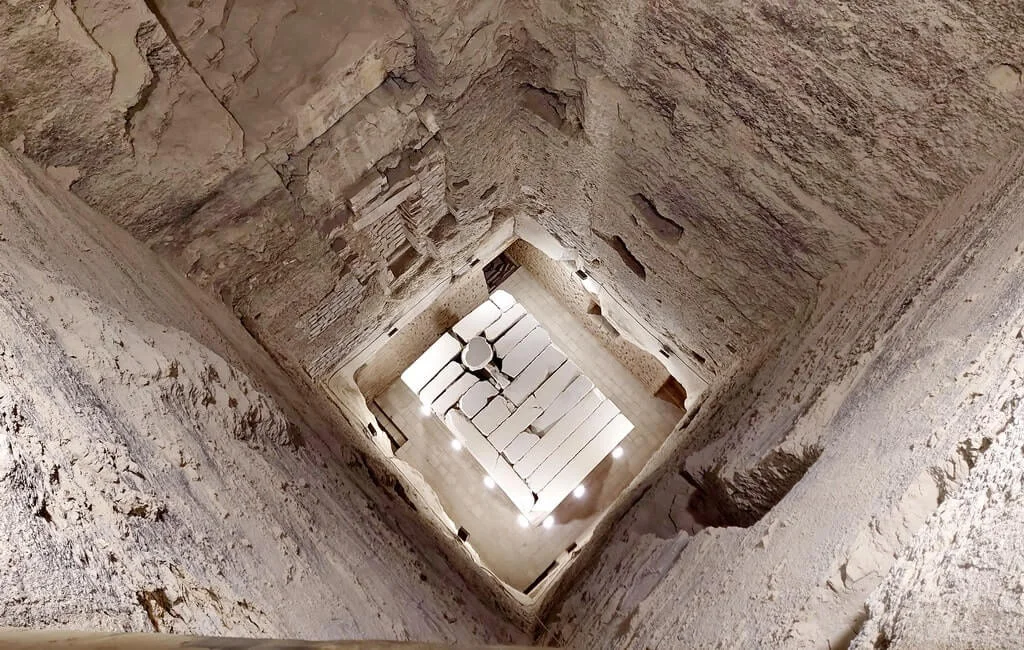
Beneath the Step Pyramid lies a vast and complex network of tunnels, shafts, and chambers. The main burial shaft, which is over 28 meters deep, leads to the granite burial chamber of King Djoser. Imhotep designed this intricate underground system to confuse would-be tomb robbers and protect the king’s eternal resting place and his grave goods.

The Discovery and Modern-Day Significance

The Discovery and Modern-Day Significance - Saqqara

The Step Pyramid Complex was a target for looters in antiquity, and its contents were largely plundered. However, archaeological excavations in the 19th and 20th centuries revealed its true complexity and significance. The complex’s design and its use of stone set the stage for all future pyramid-building in Egypt, making it a cornerstone of architectural history. Today, it remains a testament to the genius of Imhotep and the power of the first pyramid-building pharaoh.

The Tomb of Pabasa (TT279): A Masterpiece of Ancient Industry and Art

The Tomb of Pabasa (TT279) stands as a premier example of the Saite Renaissance, where...
Related post
The eye of Horus

Controversial Theories

Experts consider the Step Pyramid of King Djoser in Saqqara to be one of Egypt’s earliest pyramids. It has several controversial construction theories. Some experts believe builders used an internal ramp, while others think they used a series of external, spiraling ramps. Others still question whether slave labor or a skilled workforce built it. They also debate whether workers moved and placed the stone blocks using levers, ramps, or a combination of methods.

Despite the ongoing debate among scholars, the Step Pyramid remains an important historical monument and a symbol of ancient Egyptian architectural and engineering innovation. Egypt Fun Tours provides the best tours to the Step Pyramid of Saqqara with expert tour guides and Egyptologists.

Weather in Egypt

God_Anubis_Icon

Pyramids in the Mist, Egypt Adventure

Our long drive from Cairo turned into a terrifying flight through Alexandria’s impossibly crowded streets. Our minivan miraculously avoided hitting pedestrians, donkey carts, and old Lada cars. We arrived at the port gates with only 10 minutes to spare. But the guards ignored our U.S. passports, and they refused to

More »

Valley of the Kings, Hepchepsut

I never had a more positive experience and educational time than this tours. Learning about a variety of kings and queens was amazing! The tour guide was super nice and helped me and my friend every step of the way! Including bargaining for a few souvenirs! I will never forget

More »

My Dream Came True

I had waited 60 years to get to Egypt; in fact, it was my 60th birthday gift to myself. I went with my oldest daughter, and the experience was excellent. It was meticulously planned by the tour company and was designed for me and my daughter. I never had a

More »

What an amazing day!

I had a 12 hour layover on my way to Dar es Salaam and wanted to take full advantage of my time in Cairo. After researching for many hours, I came across Egypt Fun Tours and emailed for more information. I received a prompt reply with full details of several

More »
God_Anubis_Icon

Top-rated Tour Packages

God_Anubis_Icon