
The Coptic Museum in Cairo: A Definitive Guide to Egypt’s Christian Heritage

The Coptic Museum in Cairo is a world-class cultural landmark housing the largest collection of Coptic Christian artifacts globally. Located within the historic Roman Fortress of Babylon in Old Cairo, it serves as a "missing link" between Egypt’s Pharaonic past and its Islamic era.

Egypt is famous for its towering pyramids and golden pharaohs. However, another world-class treasure waits in the heart of Old Cairo. This treasure is the Coptic Museum in Cairo. It stands as the largest collection of Coptic Christian art globally. Furthermore, it bridges the gap between ancient Egyptian history and the Islamic era. This museum is not just a building. Instead, it is a living chronicle of a unique culture.

A Journey Through Time and Faith

The Coptic Museum in Cairo sits within a historic fortress. Specifically, it occupies the ancient Roman Fortress of Babylon. Because of this, history greets you before you even enter. The museum covers over 8,000 square meters. Inside, you will find more than 16,000 artifacts. These items tell the story of Egypt’s Christian community. Consequently, the museum is essential for anyone studying religious history.

Why This Museum Matters Today

Many travelers overlook this site for the Giza Plateau. However, doing so means missing a vital part of Egypt’s identity. The Coptic Museum in Cairo showcases a rare artistic fusion. You will see Pharaonic symbols transformed into Christian icons. Additionally, you will notice Greek and Roman influences in the stone carvings. This blend created a distinct style known as Coptic art. Therefore, the museum serves as a cultural bridge.

What to Expect From This Guide

In this guide, we dive deep into every wing. We will explore the world-famous Nag Hammadi Library. We will also examine the intricate “Coptic Stitch” textiles. Moreover, we provide practical tips for your visit in 2026. Whether you are a history buff or a casual tourist, this pillar post is for you. Let us begin our exploration of the Coptic Museum in Cairo.

The Architecture: Where History Meets Art

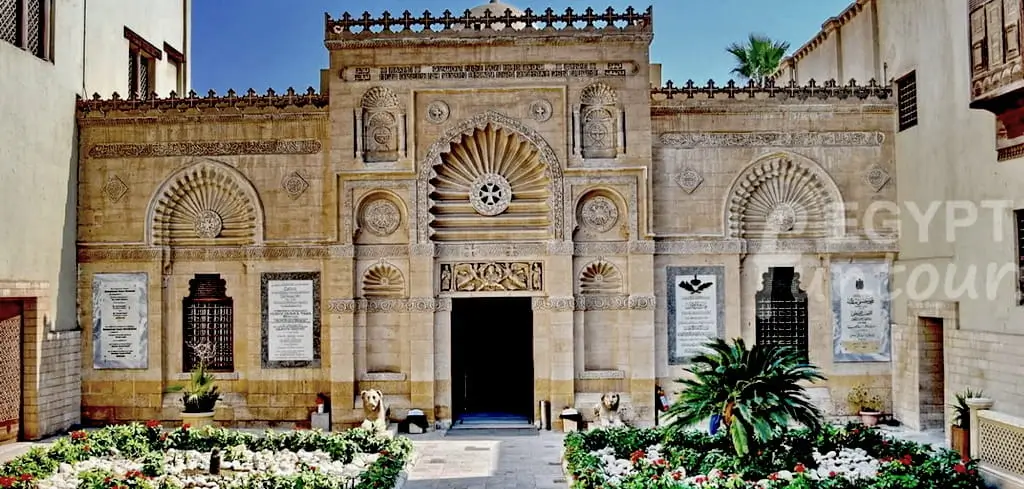
The first thing you notice is the stunning facade. It resembles a grand mosque but honors Christian heritage. This choice was intentional by the founder, Marcus Simaika Pasha. He wanted to show the unity of Egyptian culture.

  • The Woodwork: Look up at the mashrabiya screens. These carved wooden lattices filter the Cairo sun.
  • The Courtyards: Peaceful gardens separate the wings. They offer a quiet space for reflection.
  • The Fortress Walls: Part of the museum rests directly on Roman foundations.

In the next section, we will look at the earliest artifacts from the Graeco-Roman period.

The eye of Horus

The Nag Hammadi Library: Secrets of the Gnostic Gospels

The Nag Hammadi Library

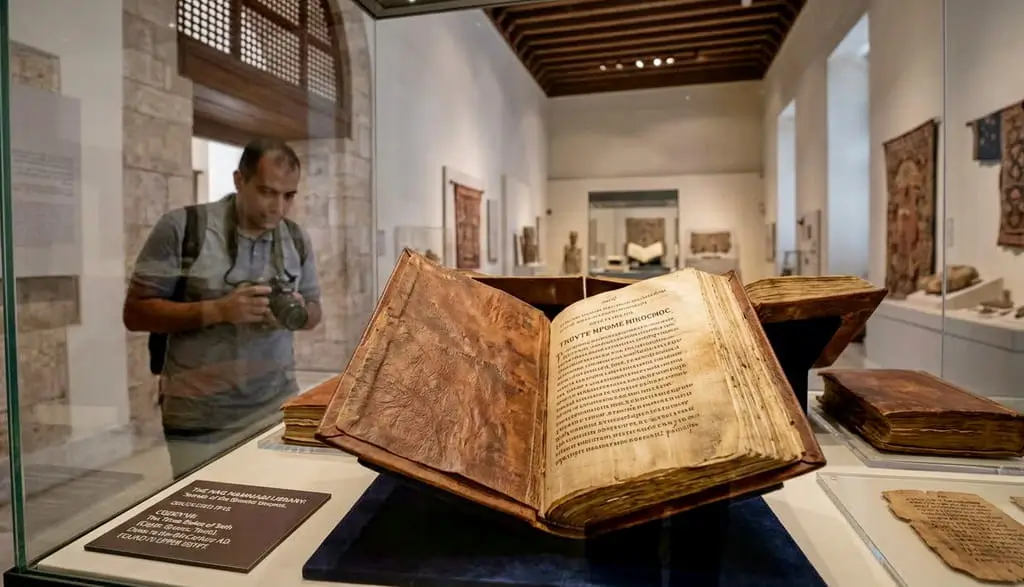
One of the most significant finds in the Coptic Museum in Cairo is the Nag Hammadi Library. These are 13 leather-bound papyrus codices. Local farmers found them in Upper Egypt in 1945. Since then, they have changed our view of early Christianity. These texts contain “Gnostic” gospels. Most notably, they include the Gospel of Thomas.

Furthermore, the physical books are masterpieces of early binding. They show how the world moved from scrolls to the modern book format. You can see these ancient pages behind protective glass. Therefore, scholars from all over the world visit the museum just for this room.

The Evolution of the Ankh: From Pharaohs to Christ

As you walk through the ground floor, look at the stone carvings. You will notice a famous Egyptian symbol: the Ankh. However, in the Coptic Museum in Cairo, the Ankh begins to change. Over time, the loop at the top becomes a circle for a cross. This symbol is known as the Crux Ansata.

This transition is not a coincidence. Instead, it shows how Coptic art adopted ancient Egyptian motifs. Early Christians used familiar symbols to express their new faith. Consequently, the museum feels like a bridge between two worlds. You see lotus flowers carved alongside grapevines. Both represent life, but in different religious contexts.

The Coptic Textile Collection: Art in Every Thread

Next, we move to the textile gallery. Many experts consider this the finest collection in the world. The dry climate of Egypt preserved these delicate fabrics for centuries. You will see tunics, wall hangings, and burial cloths.

  • The “Coptic Stitch”: This unique weaving technique created dense, colorful patterns.
  • Symbolism in Silk: Look for lions, peacocks, and geometric shapes. These were not just for fashion. Instead, they represented power and eternal life.
  • Dyeing Techniques: The vibrant reds and blues come from natural sources like madder root and indigo.

Because these items are so fragile, the lighting is dim. This creates a holy and quiet atmosphere. It allows you to appreciate the skill of weavers from 1,500 years ago.

Icons and Frescoes: Windows to the Soul

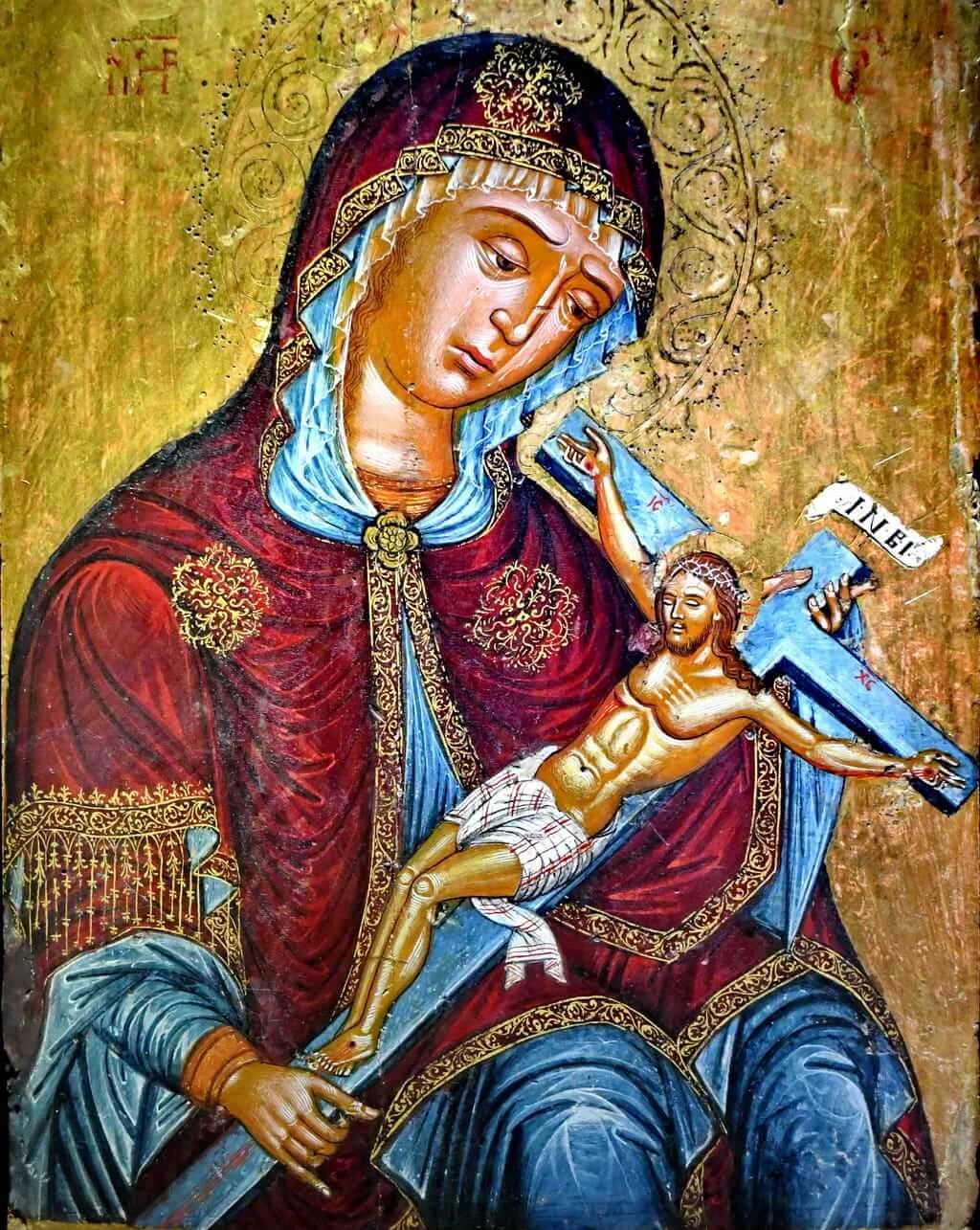
No visit to the Coptic Museum in Cairo is complete without the icons. Coptic icons have a very specific look. The figures have large, wide eyes and small mouths. This style emphasizes the spiritual over the physical.

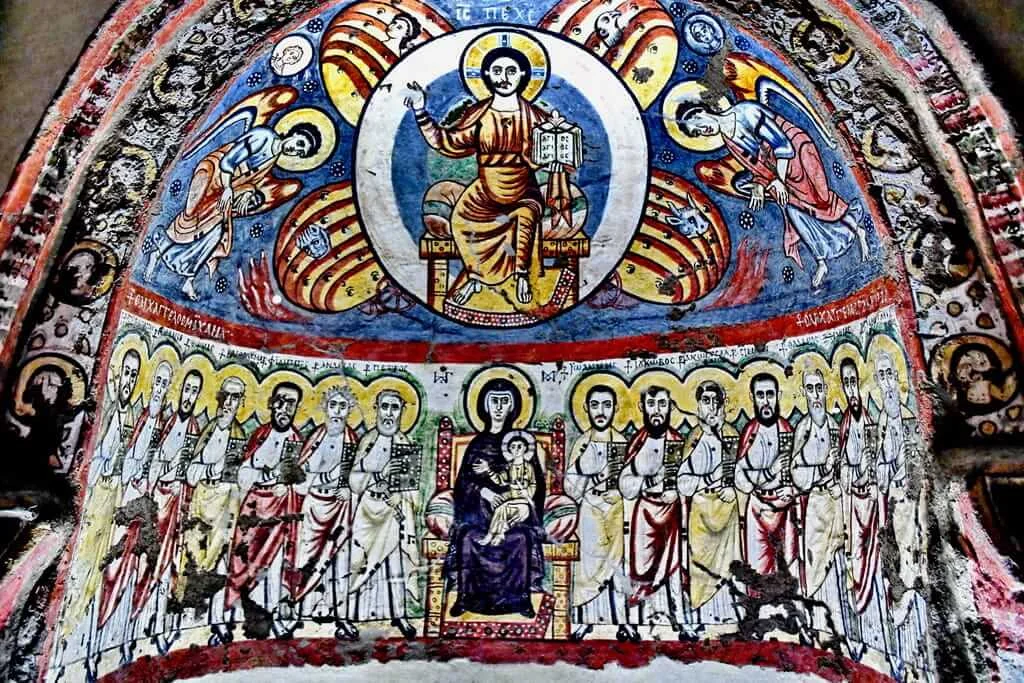
Moreover, the museum houses incredible frescoes from ancient monasteries. Specifically, look for the paintings from the Monastery of St. Apollo at Bawit. These wall paintings show Christ in Majesty. They use “tempera” paint made from egg yolk and pigment. Despite their age, the colors remain strikingly bright.

Golden Scarab

The Roman Fortress of Babylon: The Foundation of Faith

Roman fortress of babylon

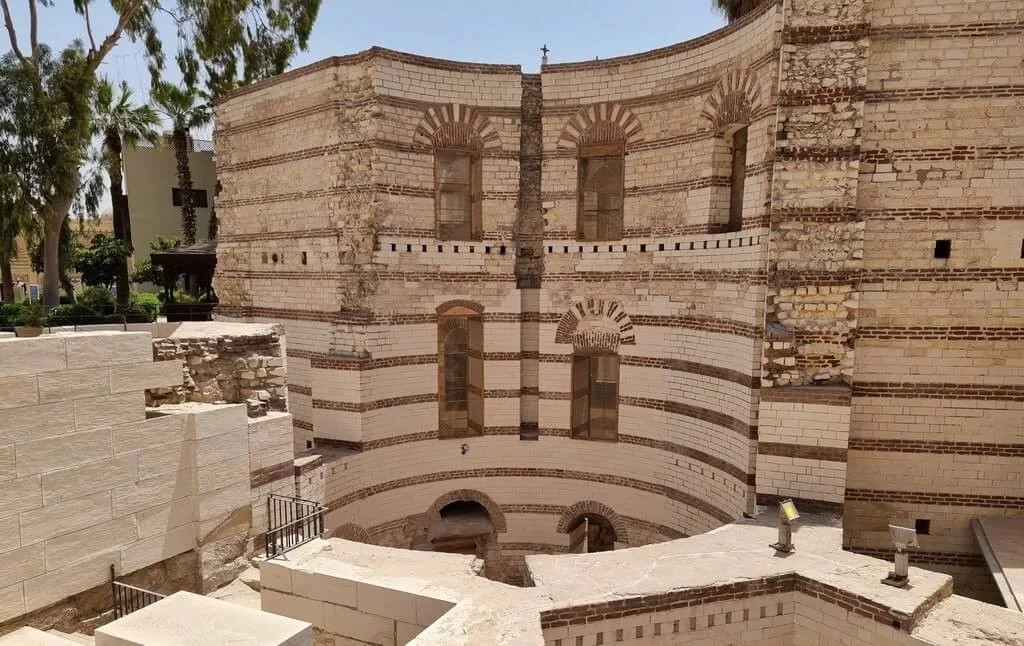
The Coptic Museum sits on a literal foundation of history. Specifically, it is built atop the Roman Fortress of Babylon. This fortress dates back to the late 3rd century AD. Emperor Diocletian ordered its construction to guard the Nile. Because of this, the museum’s architecture is a fusion of Roman military power and Christian art.

As you enter the museum, look down. You will see the massive stone walls of the southern gate. These walls are over 10 meters thick. Furthermore, the round towers of the fortress still stand today. They provide a dramatic backdrop for the museum’s gardens. Consequently, the site feels like a fortified sanctuary.

The Hanging Church (Al-Muallaka)

Adjacent to the Coptic Museum is the Hanging Church. It is the most famous Coptic church in Egypt. It gets its name because it is built “above” the gatehouse of the fortress. Because it is suspended over the Roman towers, it is an engineering marvel.

  • The Nave: The roof is shaped like an inverted wooden ark.
  • The Screen: It features a massive 12th-century marble pulpit and ivory-inlaid screens.
  • The Crypt: Many early Coptic patriarchs are buried here.

The Fortress of Babylon: Coptic Cairo’s Roman Origins

Discover the Roman Fortress of Babylon, the ancient stronghold that forms the nucleus of Coptic...
Related post
The eye of Horus

The Hall of Woodwork and Mashrabiya

The Hall of Woodwork and Mashrabiya

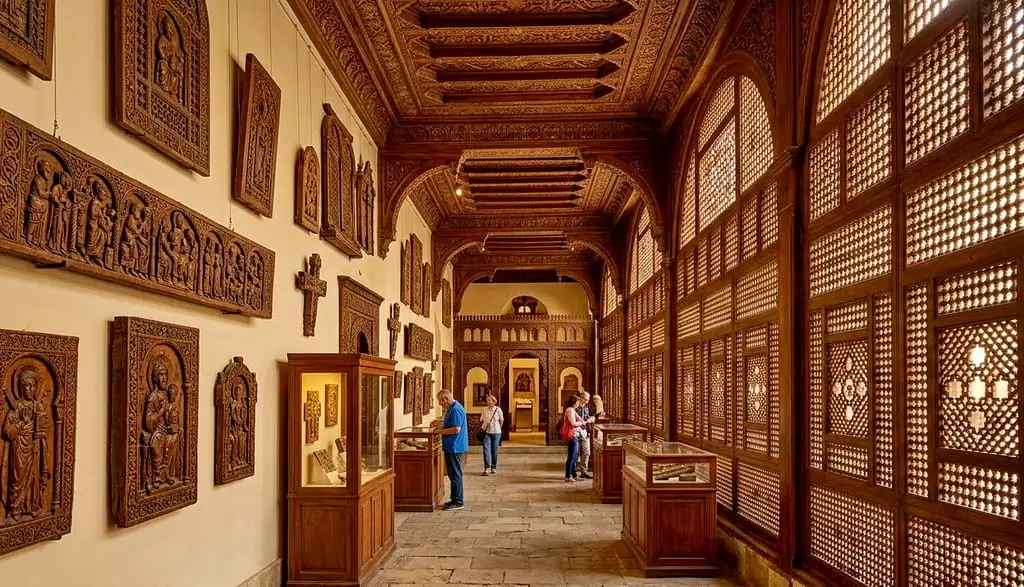
Inside the Coptic Museum in Cairo, the woodwork is a highlight. You will see massive doors from the 4th century. These doors are carved with scenes from the life of Christ. Additionally, the museum features extensive mashrabiya screens. These screens are made of thousands of hand-carved wooden pieces.

These screens served two purposes. First, they provided privacy for worshippers. Second, they allowed cool air to circulate through the halls. This technique was later perfected during the Islamic period. Therefore, the museum shows how Egyptian artisans shared skills across different religions.

The Metalwork and Bronze Collection

Next, explore the metalwork galleries of the Coptic Museum in Cairo. This section contains bells, censers, and lamps. Most of these items were used in daily church services.

  • Bronze Censers: These were used to burn incense during the Liturgy.
  • Processional Crosses: Look for the intricate bronze crosses used in parades.
  • The “Flabellum”: These are ceremonial fans made of silver or bronze.

These objects prove that Coptic Egypt was a wealthy and artistic society. Artisans used gold, silver, and copper to create sacred tools. Moreover, many pieces feature Greek and Coptic inscriptions. These inscriptions tell us who donated the items and when.

Hurghada Museum Guide: Discover Ancient Wonders in the Red Sea

The Hurghada Museum serves as a tranquil cultural oasis, offering a perfect balance to the...
Related post
Golden Scarab

Practical Visitor Information

Private Tour of the Coptic Museum; The World’s Largest Collection of Coptic Art

To help you plan your visit to the Coptic Museum in Cairo, follow these tips:

  • Location: Mar Girgis (St. George) Metro Station, Old Cairo.
  • Hours: Typically 9:00 AM to 5:00 PM daily.
  • Tickets: You can now buy tickets online via the Ministry of Tourism portal.
  • Photography: You may need a separate ticket for professional cameras. However, phone photos are usually allowed.

The Living Legacy of the Coptic Museum

Icon from the Coptic museum

The Coptic Museum in Cairo is more than just a collection of old objects. Instead, it is a testament to the resilience of Egyptian culture. It proves that history is a continuous flow. From the Roman Fortress of Babylon to the intricate “Coptic Stitch” textiles, every room tells a story. Furthermore, the museum highlights the peaceful coexistence of different faiths in Egypt.

By visiting this landmark, you gain a deeper understanding of the Middle East. You see how the Ankh became the cross. You witness how Greek, Roman, and Pharaonic styles merged into one. Consequently, your trip to Cairo becomes a complete historical journey. Do not leave Egypt without walking through these hallowed halls.

Imhotep Museum: Saqqara’s Modern Gateway to the First Pyramid

Start your Saqqara journey at the Imhotep Museum, the perfect introduction to the entire archaeological...
Related post
The eye of Horus

Frequently Asked Questions (FAQ)

Private Tour of the Coptic Museum; Coptic iconpgraphy

To wrap up our definitive guide, here are the most common questions about the Coptic Museum in Cairo.

  • Is the Coptic Museum in Cairo accessible to everyone? Yes. Most areas of the museum are wheelchair accessible. However, some sections of the Roman Fortress have uneven stone paths.
  • How much time should I spend at the Coptic Museum in Cairo? Plan for at least 2 to 3 hours. This allows you to see the main galleries and the nearby Hanging Church.
  • Can I take photos inside the Coptic Museum in Cairo? Yes. As of 2026, mobile phone photography is generally free. However, professional cameras or tripods usually require a paid permit at the entrance.
  • Is the Nag Hammadi Library always on display? Select pages and codices are usually on display. However, some original manuscripts are kept in climate-controlled archives for preservation.

Nearby Attractions to Visit Next

After you finish at the Coptic Museum in Cairo, explore the rest of Old Cairo. All these sites are within a 5-minute walk:

  1. Church of St. Sergius and Bacchus: Known for the crypt where the Holy Family stayed.
  2. Ben Ezra Synagogue: A beautiful site showing Egypt’s Jewish history.
  3. The Nunnery of St. George is famous for its massive wooden doors and spiritual atmosphere.

The Coptic Museum in Cairo remains a beacon of art and history. It invites you to step out of the busy city and into a world of quiet beauty. We hope this 3,000-word guide helps you appreciate every detail of your visit.

God_Anubis_Icon

Layover tour of Cairo Pyramids

On a recent trip, I had 8 hours from the time I landed in Cairo to when my next flight was scheduled to leave. Luckily, I arrived in the morning and left in the afternoon, so, not being one to sit around an airport for 8 hours, I visited the

More »

Day Trip to Alexandria

An enjoyable drive from Cairo to Alexandria. It was an enriching trip. I learnt so much history about the ancient civilisation. The tour guide explained the history of each site we visited. There is so much to see. I would definitely highly recommend visiting Alexandria. It’s rich in history. The

More »

Goes well beyond “tour”

I am tempted to say “my friend Hani” runs an amazing service, because that is how he makes you feel. I first went on the 9-hour layover tour in summer 2011. Hani and driver picked me up at the airport at 3am, and by the time I left at noon

More »
9-day tour package - Egypt Fun Tours

You’re in “GREAT HANDS” with Egypt Fun Tours!

We first went to Egypt in July 2010. We were to pass through Cairo on our way to Africa, and we had arranged to be picked up from the Cairo airport and shown around the city during our 6-hour layover. This was arranged through emails with Hamada, of Egypt Fun

More »

My Dream Came True

I had waited 60 years to get to Egypt; in fact, it was my 60th birthday gift to myself. I went with my oldest daughter, and the experience was excellent. It was meticulously planned by the tour company and was designed for me and my daughter. I never had a

More »
God_Anubis_Icon

Top-rated Tour Packages

God_Anubis_Icon