
The Tomb of Pashedu (TT3): Spirituality and the Palm Tree of Life
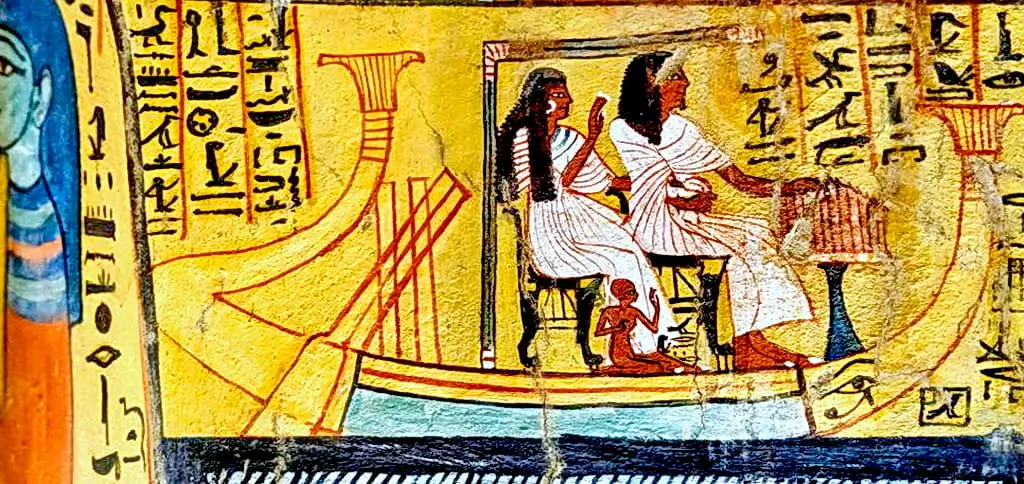
The Tomb of Pashedu (TT3) is a spiritual masterpiece in Deir el-Medina, famous for its vivid “Egyptian yellow” walls and emotional depth. As a royal artisan, Pashedu used his elite skills to paint the iconic scene of himself kneeling under a palm tree to drink from a cool pool of water. This intimate image captures the ancient hope for eternal peace and refreshment. Unlike the grand official tombs, Pashedu’s sanctuary offers a deeply personal look at the faith of the men who built the Valley of the Kings.
The Tomb of Nakht (TT52): A Masterpiece of Music and Celebration
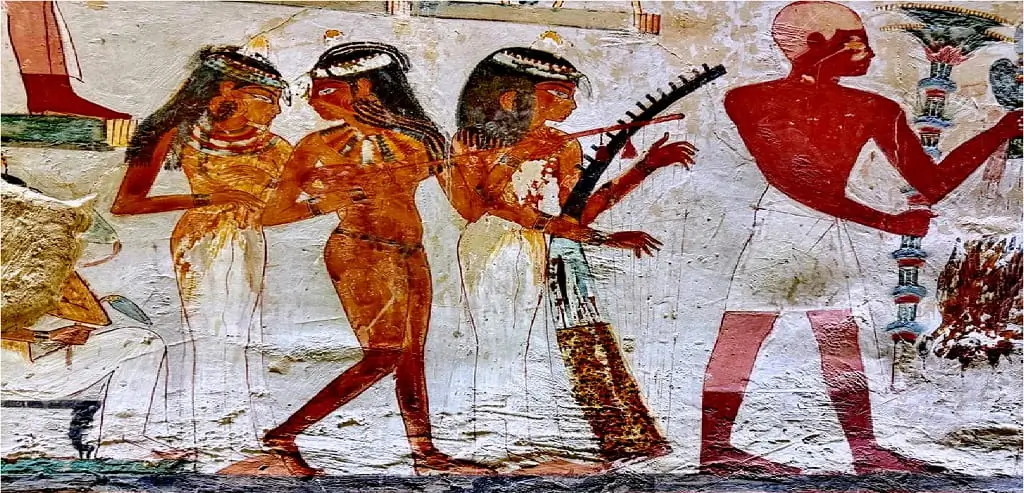
The Tomb of Nakht (TT52) is a “miniature masterpiece” that captures the elegance and joy of the 18th Dynasty. Although the burial chamber is small, its walls burst with iconic scenes of music, dancing, and high-society banquets. Nakht, the Astronomer of Amun, ensured his spirit would live forever surrounded by the finest things in life—from the rhythmic strumming of the blind harper to the vibrant purple grapes of the harvest. Today, the tomb remains one of Luxor’s most famous sites because its art feels deeply human, offering a rare and colorful window into the private world of the ancient Egyptian elite.
The Tomb of Menna (TT69): A Masterpiece of Ancient Egyptian Art
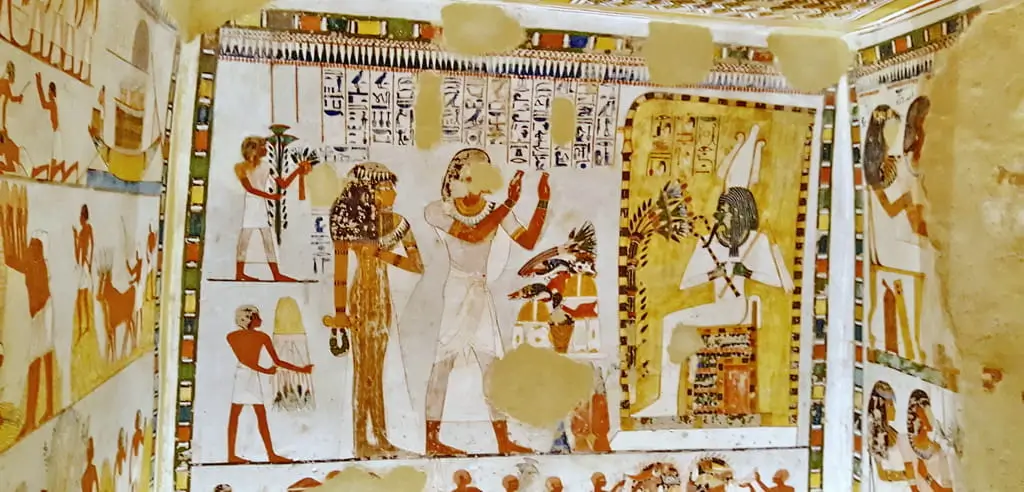
The Tomb of Menna (TT69) is the crown jewel of the Theban Necropolis. It offers a vivid, high-definition look at 18th Dynasty life through the eyes of the Pharaoh’s chief land surveyor. While ancient rivals tried to “blind” Menna by scratching out his eyes, they failed to erase his legacy. From the vibrant agricultural scenes to the symbolic marsh hunts, the tomb remains an essential masterpiece for anyone seeking the most human side of Ancient Egypt.
The Tomb of Rekhmire (TT100): An Authoritative Guide to 18th Dynasty Egypt
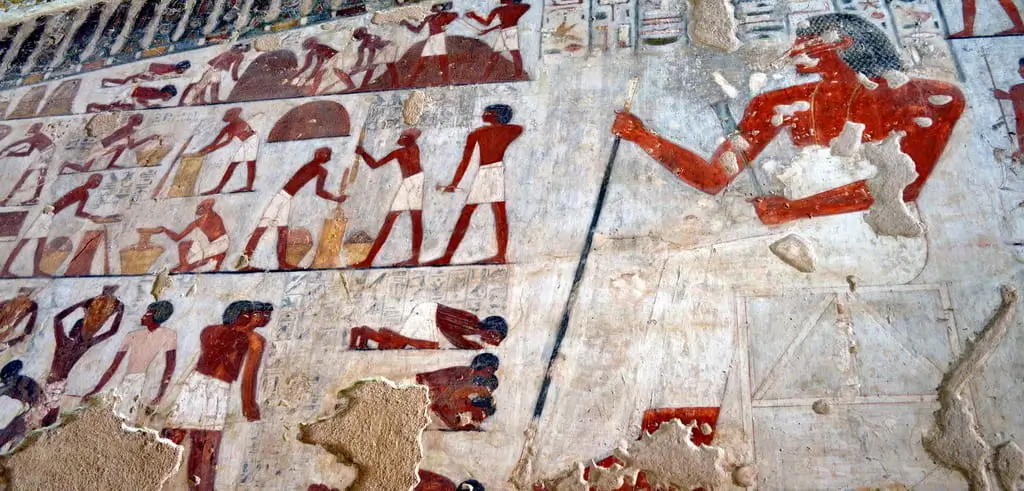
The Tomb of Rekhmire (TT100) is the definitive visual encyclopedia of 18th Dynasty Egyptian administration. Serving as a detailed “masterclass” in ancient governance, its wall scenes replace religious journeys with precise depictions of bureaucratic duty, legal protocol, and foreign tribute. Ultimately, TT100 offers irreplaceable evidence that the New Kingdom’s power rested upon a sophisticated, data-driven civil state.
The Tomb of Sennefer (TT96): Inside the Legendary Vineyard Tomb
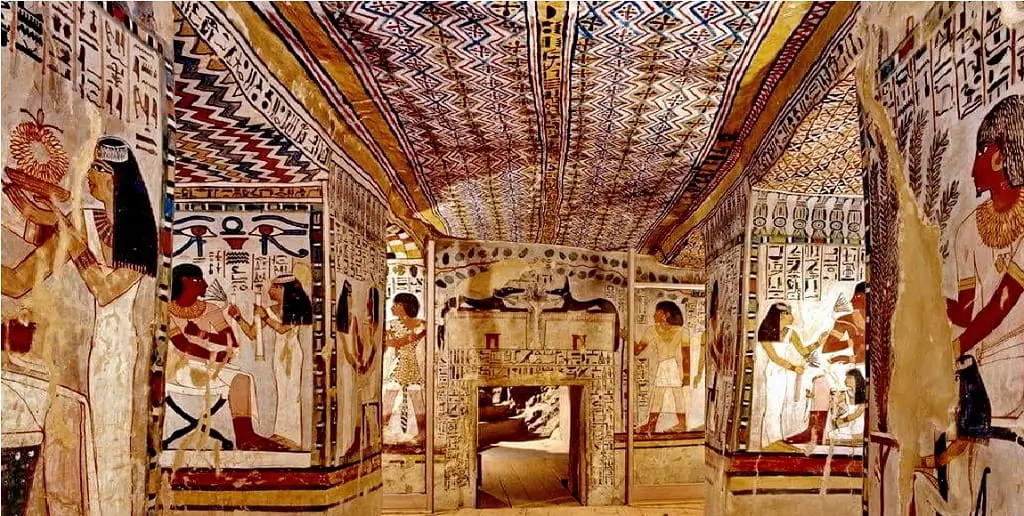
The Tomb of Sennefer (TT96), or the “Vineyard Tomb,” is a masterpiece of 18th-century artistry located in Sheikh Abd el-Qurna. Famous for its unique, undulating ceiling painted to mimic a lush grapevine trellis, the tomb transforms a subterranean burial chamber into an eternal garden. Because the murals focus heavily on the Mayor of Thebes and his wife, Meryt, the site provides an intimate look at New Kingdom social life and the symbolic link between nature and rebirth. Ultimately, its vibrant colors and organic design make it one of the most visually stunning private monuments in the Theban Necropolis.
The Tomb of Ramose (TT55): A Masterpiece of Artistic Revolution
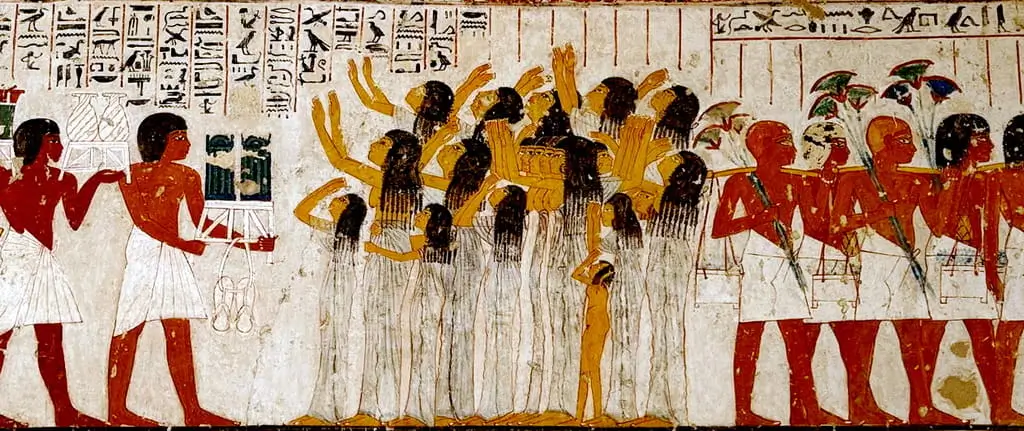
The Tomb of Ramose (TT55) acts as a rare artistic time capsule, capturing the transition from the classical elegance of Amenhotep III to the radical “Amarna” revolution of Akhenaten. As the Vizier of Upper Egypt, Ramose commissioned breathtaking limestone reliefs that experts consider the height of Egyptian draftsmanship. The tomb famously displays two competing styles: the refined, traditional carvings of the 18th Dynasty and the early, distorted aesthetics of the Sun Disk (Aten) cult. Even in its unfinished state, the site remains one of the most intellectually and visually rewarding monuments in the Theban Necropolis.
Theban Necropolis: The Ultimate Guide to Luxor’s West Bank Tombs & Temples
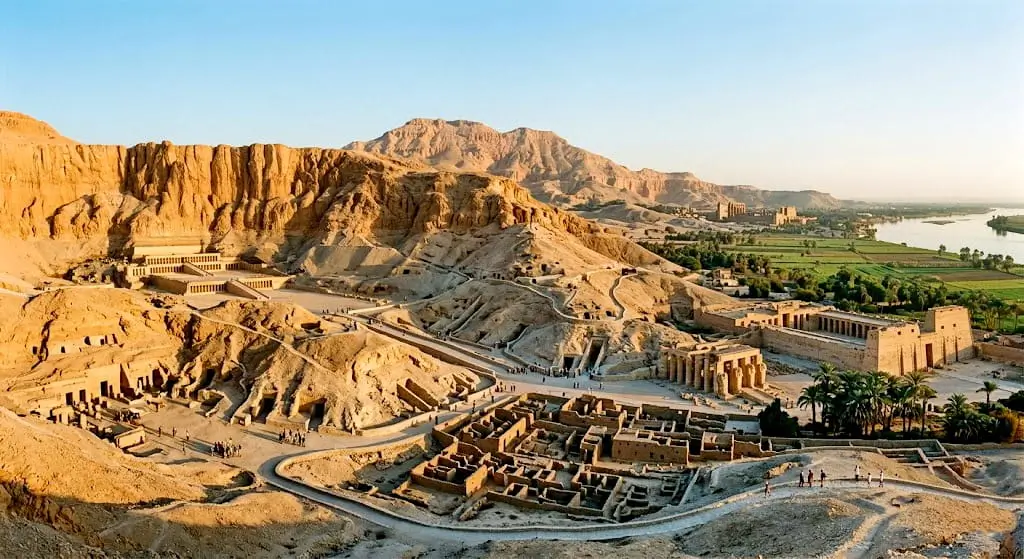
The Theban Necropolis is the premier “City of the Dead” on Luxor’s West Bank, serving as the eternal home for Egypt’s New Kingdom elite for over 500 years. This UNESCO World Heritage site encompasses the hidden rock-cut tombs of the Valley of the Kings, the vibrant Valley of the Queens, and the highly detailed Tombs of the Nobles. Beyond burial sites, the necropolis features massive mortuary temples like Deir el-Bahari and the artisan village of Deir el-Medina, where master craftsmen recorded daily life in stunning color. Ultimately, the site stands as the world’s most impressive monument to the ancient Egyptian pursuit of immortality.
Tomb of Sennedjem (TT1): Egypt’s Best-Preserved Artisan Tomb
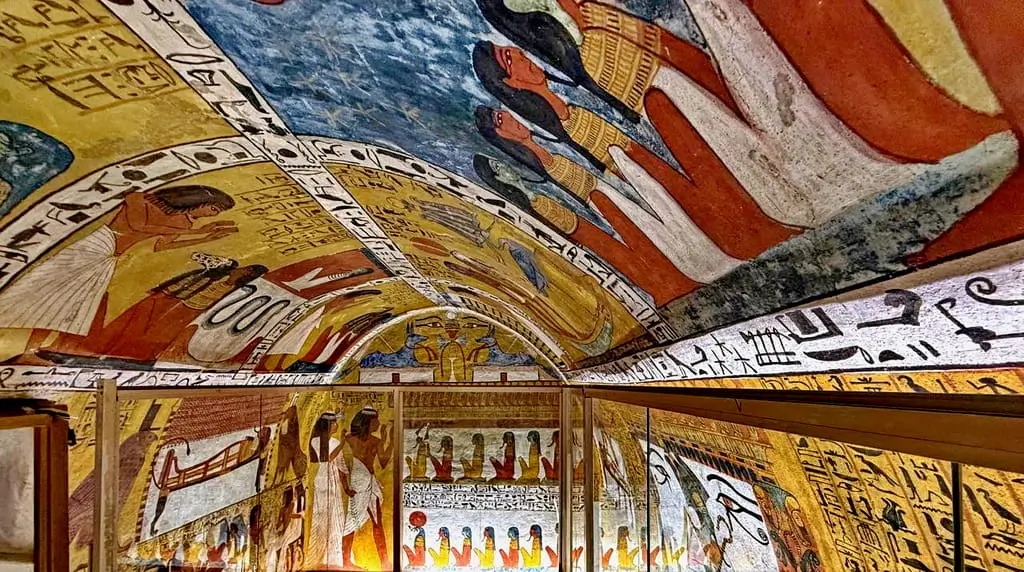
The Tomb of Sennedjem (TT1) is the best-preserved artisan tomb in the Deir el-Medina necropolis, dating to the 19th Dynasty. As a master craftsman who built the royal tombs of Pharaohs, Sennedjem decorated his own burial chamber with unparalleled skill, featuring vibrant ochre-yellow backgrounds that symbolize the “flesh of the gods.” Found entirely intact in 1886, the tomb is famous for its iconic Field of Reeds mural—a depiction of the Egyptian paradise—and its intimate look at the religious devotion and domestic life of a New Kingdom elite laborer.
El-Khokha Tombs: The Ancient Artistic Gateway of Thebes
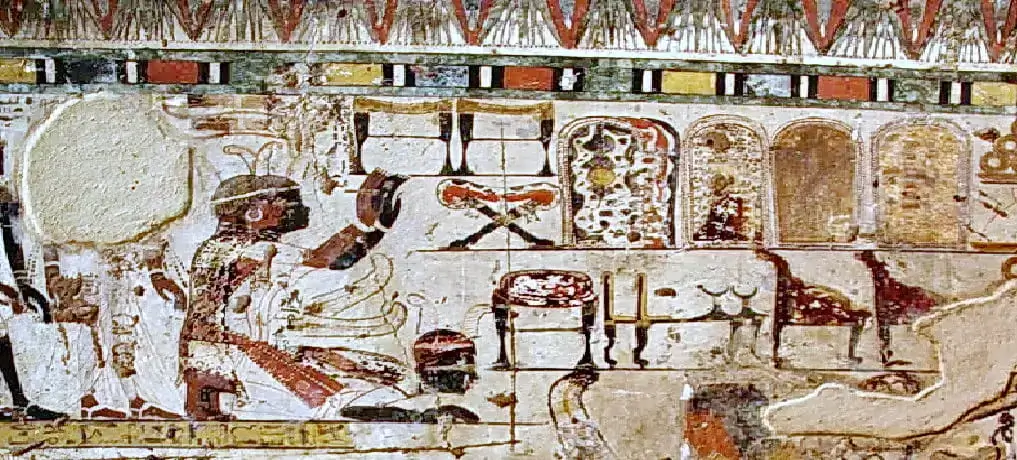
El-Khokha serves as a vital bridge across three thousand years of Egyptian history, offering a peaceful alternative to the West Bank’s more crowded sites. This hill features the El-Khokha tombs, where visitors can trace the evolution of art from the sturdy realism of the Old Kingdom to the refined elegance of the 18th Dynasty. By exploring the grand halls of Surer or the intricate details in the Tomb of the Two Sculptors, you witness the skill of the elite professionals who built the empire. This quiet sector rewards those who take the short drive south with a deep, private connection to the ancient heart of Thebes.
Qurnet Murai: The Silent Sanctuary of the Theban Necropolis
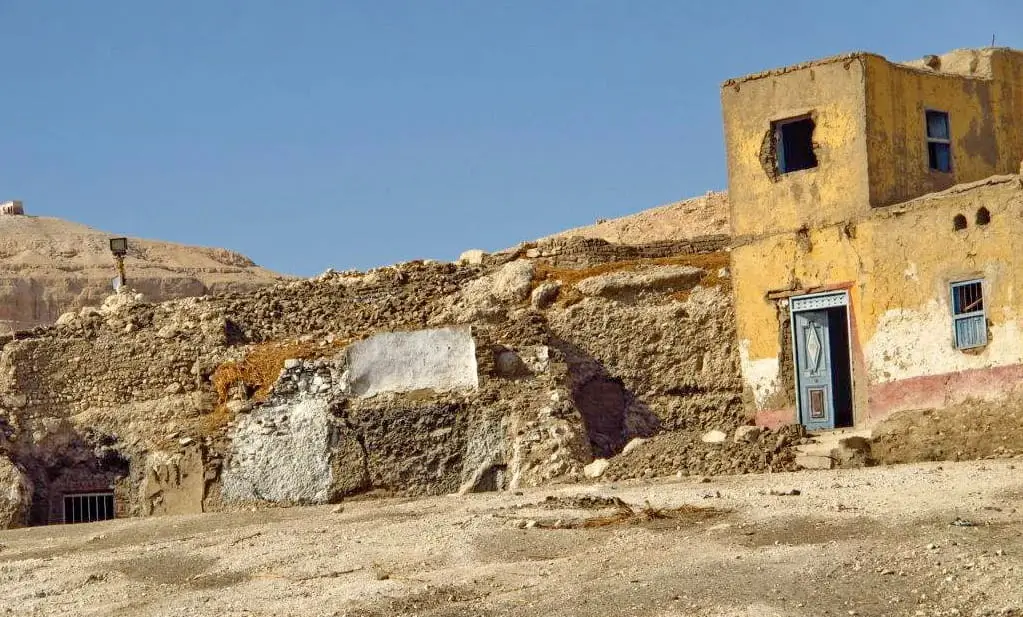
Qurnet Murai is the Theban Necropolis’s best-kept secret, offering a peaceful alternative to Luxor’s busier sites. This southern hill features the stunning Qurnet Murai tombs, where the vibrant artwork of high-ranking officials like Huy remains remarkably preserved. A visit here rewards travelers with a quiet, intimate look at New Kingdom history and the elite lives that once shaped the Egyptian Empire. It is a tranquil, essential stop for anyone seeking the hidden gems of the West Bank.
El-Assasif Tombs: The Majestic Palace Burials of the West Bank
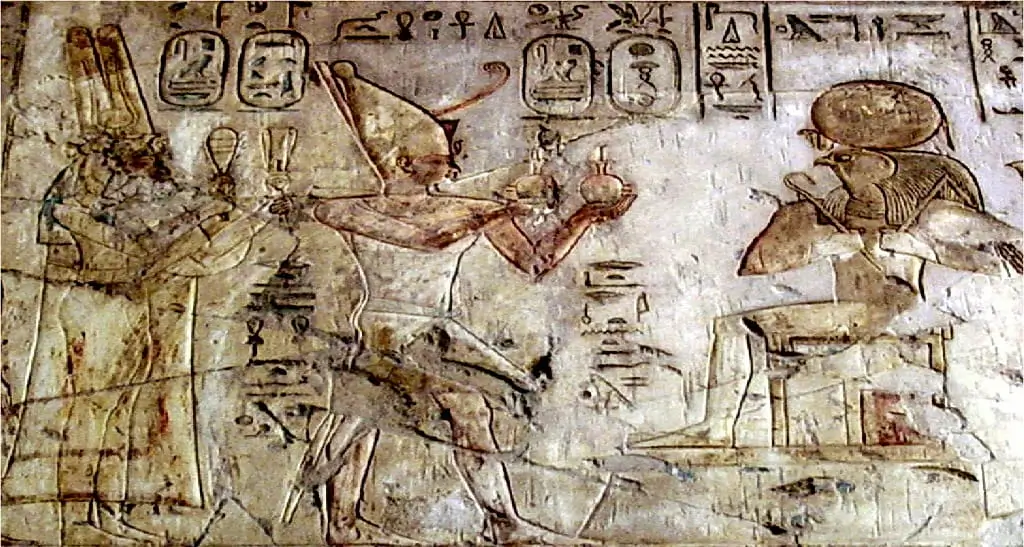
El-Assasif stands as a breathtaking monument to the “Renaissance” of ancient Egyptian art, where the grandest traditions of the past were reborn with massive architectural ambition. Located in the shadow of Deir el-Bahari, these sprawling palace tombs—such as the magnificent complexes of Pabasa and Kheruef—rival the temples of the Pharaohs in both scale and sophistication. From the unique, world-famous beekeeping scenes to the soaring open-air sun courts, El-Assasif offers a rare, high-definition look at the wealth and devotion of Egypt’s elite during the Late Period. For the 2026 traveler, it remains a vital, quiet masterpiece that completes the story of the Theban Necropolis.
Dra Abu el-Naga Tombs: The Hidden Gateway to the New Kingdom
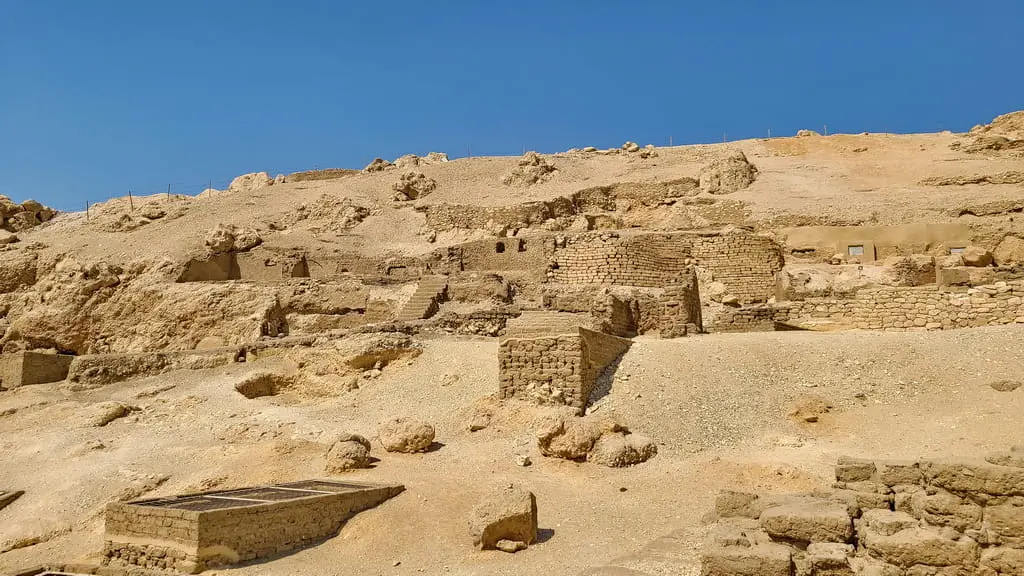
Dra Abu el-Naga serves as the essential gateway to the New Kingdom, preserving the legacy of the warrior kings and officials who rebuilt Egypt. By visiting the masterfully restored tombs of Roy and Shuroy, you witness vibrant art and historical milestones without the interference of large crowds. This site offers a rare, intimate look at the dawn of Luxor’s Golden Age, making it a “must-see” hidden gem for any itinerary.