
The Pyramid of Khafre: Discovering Giza’s Second Wonder

The Pyramid of Khafre stands as a testament to the strategic brilliance of the 4th Dynasty, utilizing a higher bedrock foundation and a steeper slope to achieve a commanding "illusion of height" on the Giza Plateau. As the only structure to retain a significant portion of its original, polished Tura limestone casing at the summit, it offers a unique physical link to the "Golden Age" of the Old Kingdom. From its direct connection to the Great Sphinx to the massive granite blocks of its Valley Temple, the Khafre complex remains an authoritative example of ancient Egyptian religious engineering, proving that his legacy was never truly overshadowed by the Great Pyramid of his father.

Standing prominently in the heart of the Giza Necropolis, the Pyramid of Khafre is an architectural marvel that often rivals the Great Pyramid in grandeur. Although it is technically the second-largest pyramid, it sits on higher ground. Consequently, it appears to dominate the desert plateau, creating a powerful visual impact. Built for Pharaoh Khafre, a ruler of the 4th Dynasty, it represents the peak of Old Kingdom engineering and divine kingship.

Unlike its neighboring structure, the Pyramid of Khafre retains a stunning secret at its peak. A distinct layer of its original, polished Tura limestone casing still clings to the apex. As a result, visitors get a rare glimpse into what these monumental tombs originally looked like—gleaming beacons under the sun. Today, the Pyramid of Khafre serves as the authoritative anchor for the complex that includes the Great Sphinx. It invites travelers to move beyond the tourist crowds and explore the sophisticated religious landscape of ancient Egypt.

The Historical Foundation of the Pyramid of Khafre

The story of the Pyramid of Khafre belongs to Egypt’s “Golden Age” of pyramid construction. Pharaoh Khafre (also known as Chefren) was the son of Khufu. He ruled for approximately 25 years during the mid-26th century BCE. Consequently, when he came to power, the Giza Plateau was already marked by his father’s immense achievement.

To establish his own legacy, Khafre commissioned a pyramid that honored tradition while asserting his unique power. While slightly smaller than his father’s Great Pyramid, the plan was just as ambitious. Furthermore, he established a sophisticated complex surrounding his tomb. The Pyramid of Khafre was not a solitary monument. Instead, it was the center of a spiritual machine that included a mortuary temple, a causeway, and a massive “Valley Temple.” It is this complete, authoritative layout that makes Khafre’s legacy essential to understanding ancient Egyptian religious customs.

FUN

The Illusion of Height: Why the Pyramid of Khafre Dominates Giza

The Illusion of Height; Why the Pyramid of Khafre Dominates Giza

One of the most frequent questions from visitors to the Giza Plateau is why the Pyramid of Khafre often looks larger than the Great Pyramid of Khufu. Historically, the Great Pyramid was taller. However, Khafre’s architects were master strategists. Specifically, they chose to build the Pyramid of Khafre on a bedrock foundation that is approximately 10 meters higher than that of his father’s pyramid.

Consequently, from almost any angle in the necropolis, the Pyramid of Khafre appears to soar higher into the sky. Furthermore, the angle of its slope is slightly steeper (approximately 53°) compared to the Great Pyramid (51°). This steeper incline creates a sharper, more dramatic silhouette. Therefore, the Pyramid of Khafre achieves a visual dominance that asserts the Pharaoh’s power over the landscape. Because of this clever positioning, the second pyramid remains the most photographed landmark on the plateau.

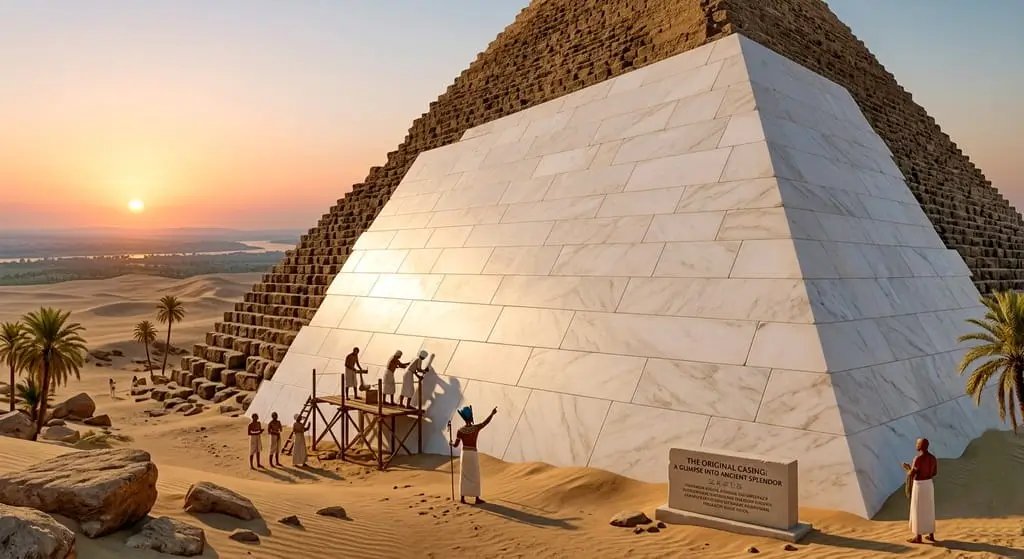
The Original Casing: A Glimpse into Ancient Splendor

The Original Casing A Glimpse into Ancient Splendor

The most striking feature of the Pyramid of Khafre is the “cap” of white limestone still clinging to its peak. In antiquity, all three Giza pyramids were encased in polished Tura limestone. They would have glowed like white mirrors under the sun. However, over thousands of years, most of this casing was stripped away to build the mosques and palaces of Medieval Cairo.

Fortunately, the topmost layers of the Pyramid of Khafre remained intact. Because the stones at the apex were more difficult for ancient looters to reach, they provide a rare physical record of the pyramid’s original finish. As a result, when you look at the summit of the Pyramid of Khafre, you are seeing the exact surface that the ancient Egyptians saw 4,500 years ago. Interestingly, the base of the pyramid was also encased in heavy pink granite. Consequently, the contrast between the white limestone top and the red granite bottom made the Pyramid of Khafre a multicolored wonder of the ancient world.

FUN

The Interior Secrets: Inside the Pyramid of Khafre

inside chephren chamber

Entering the Pyramid of Khafre is a vastly different experience from exploring the Great Pyramid. While Khufu’s tomb features a complex series of ascending chambers, Khafre’s interior is more direct and grounded. Specifically, there are two separate entrances on the north side. One entrance is located about 15 meters up the face, while the other is at ground level.

Once inside the Pyramid of Khafre, a long descending passage leads to the main burial chamber. This room is carved directly into the bedrock of the Giza Plateau. Furthermore, the chamber still houses the original black granite sarcophagus of the Pharaoh. Although the mummy was lost long ago, the sheer scale of the granite lid—sunk into the floor—demonstrates the authoritative power of the 4th Dynasty. Because the interior of the Pyramid of Khafre is less “crowded” than the Great Pyramid, it offers a more somber and authentic atmosphere for modern explorers.

The Connection: The Pyramid of Khafre and the Great Sphinx

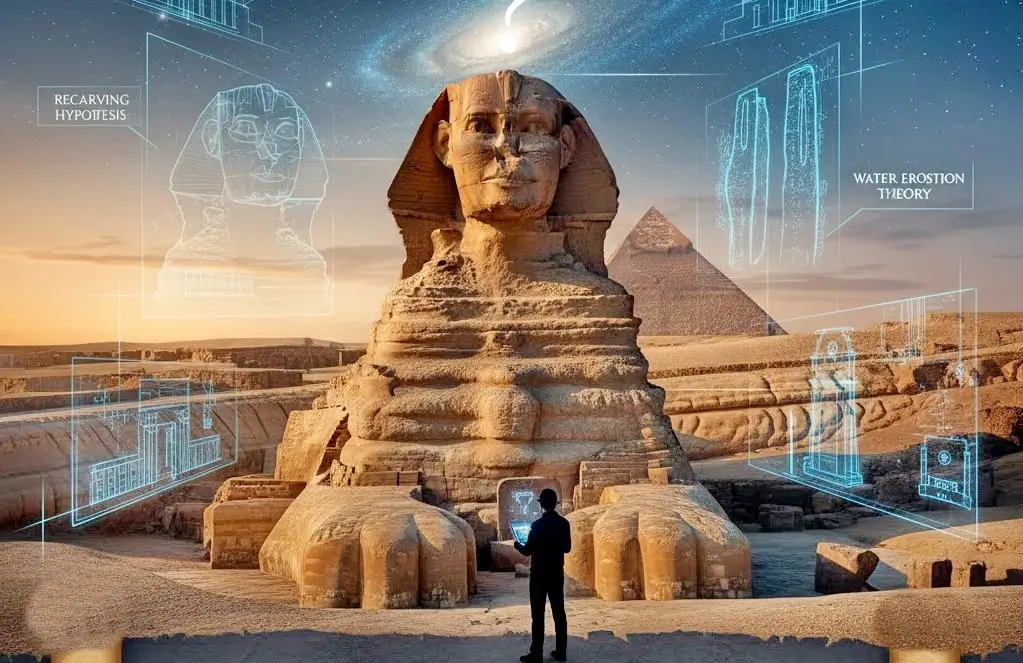
The Great Sphinx; A Deep Dive into the Theories, Mysteries, and Debates

You cannot discuss the Pyramid of Khafre without mentioning the Great Sphinx. Most archaeologists believe that the face of the Sphinx is a portrait of Pharaoh Khafre himself. The statue was carved from a single outcropping of limestone left over from the pyramid’s construction.

Therefore, the Sphinx acts as a divine guardian for the entire complex. A massive stone causeway connects the Pyramid of Khafre to the Sphinx and the Valley Temple. Consequently, this architectural “umbilical cord” proves that the pyramid was part of a living religious ecosystem. By walking this path, you are retracing the funeral procession of the King. Because of this connection, the Pyramid of Khafre is considered the most complete mortuary complex in all of Egypt.

Dahshur Pyramids: Where Pyramids Were Perfected

Escape the crowds at the Dahshur Pyramids, a true "hidden gem" just south of Saqqara....
Related post
FUN

The Valley Temple: The Gateway to Eternity

The Valley temple of King Khafre in Giza

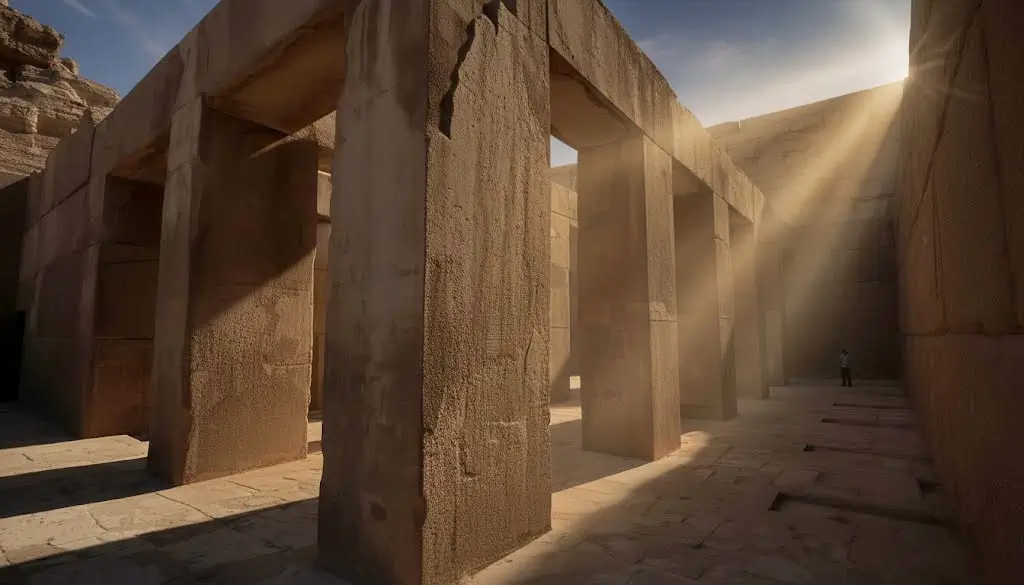
While the pyramid itself is a marvel, the Valley Temple of Khafre is equally significant for its preservation and spiritual importance. Located next to the Great Sphinx, this temple served as the grand entrance to the funerary complex. Because it was buried under the desert sands for millennia, it remains one of the best-preserved structures from Egypt’s Old Kingdom.

Inside the Valley Temple, architects used massive blocks of pink Aswan granite, some weighing over 100 tons. The floors were crafted from shimmering white alabaster, creating a striking contrast. Furthermore, it was here that the sacred “Opening of the Mouth” ceremony took place. This ritual was believed to restore the Pharaoh’s senses, allowing him to eat, speak, and breathe in the afterlife.

Interestingly, it was in this temple that the famous Diorite Statue of Khafre was discovered by Auguste Mariette in 1860. The statue depicts the King protected by the falcon god Horus. Consequently, the Valley Temple is not just a building; it is a testament to the divine union between the Pharaoh and the gods.

The Great Discovery: Giovanni Belzoni and the 1818 Breakthrough

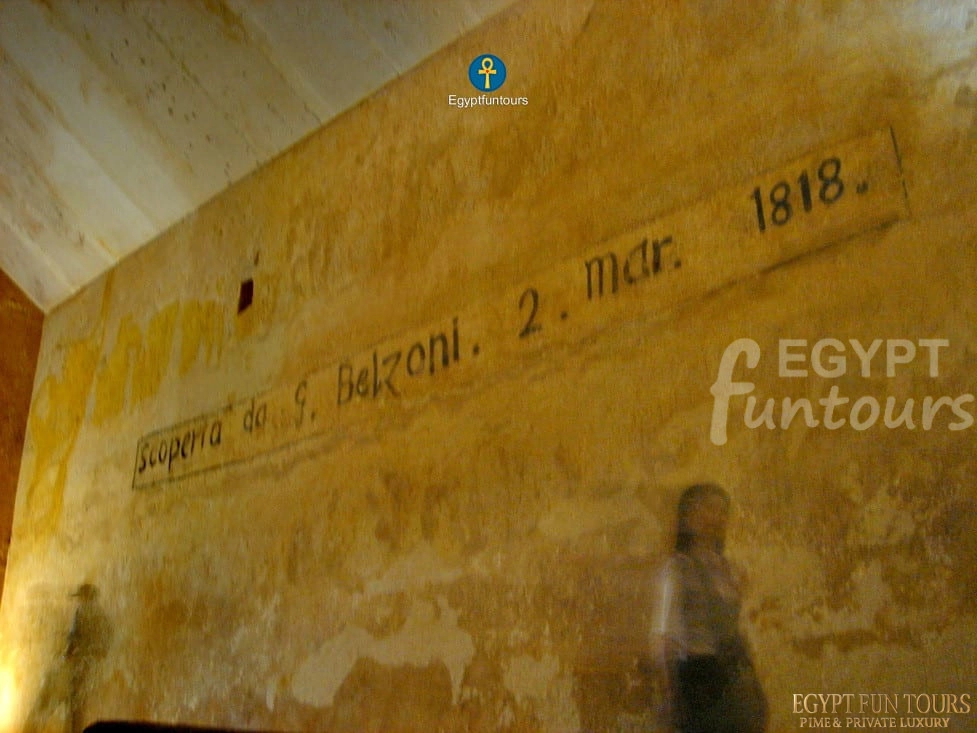
For centuries, the entrance to the Pyramid of Khafre remained hidden under rubble and mystery. Many believed the pyramid was a solid block with no internal chambers. However, in 1818, the colorful Italian explorer Giovanni Belzoni set out to prove them wrong. Using his background in engineering (and a bit of brute force), Belzoni located the main northern entrance.

On March 2, 1818, Belzoni became the first person in modern history to step into the burial chamber. To his disappointment, the pyramid had been looted in antiquity; he found the great granite sarcophagus empty and the lid broken. Nevertheless, his achievement was monumental. As an authoritative mark of his success, Belzoni painted his name in large letters on the south wall of the chamber: “Scoperta da G. Belzoni. 2. Mar. 1818.” Even today, visitors can see this bold signature, a reminder of the era of great archaeological adventures.

The Step Pyramid Complex: A Revolution in Stone

The Step Pyramid Complex of King Djoser, built around 2670 BCE by the architect Imhotep,...
Related post
FUN

Construction Logistics: Moving 2.2 Million Blocks

The Social Engineering Managing a Nation of Builders

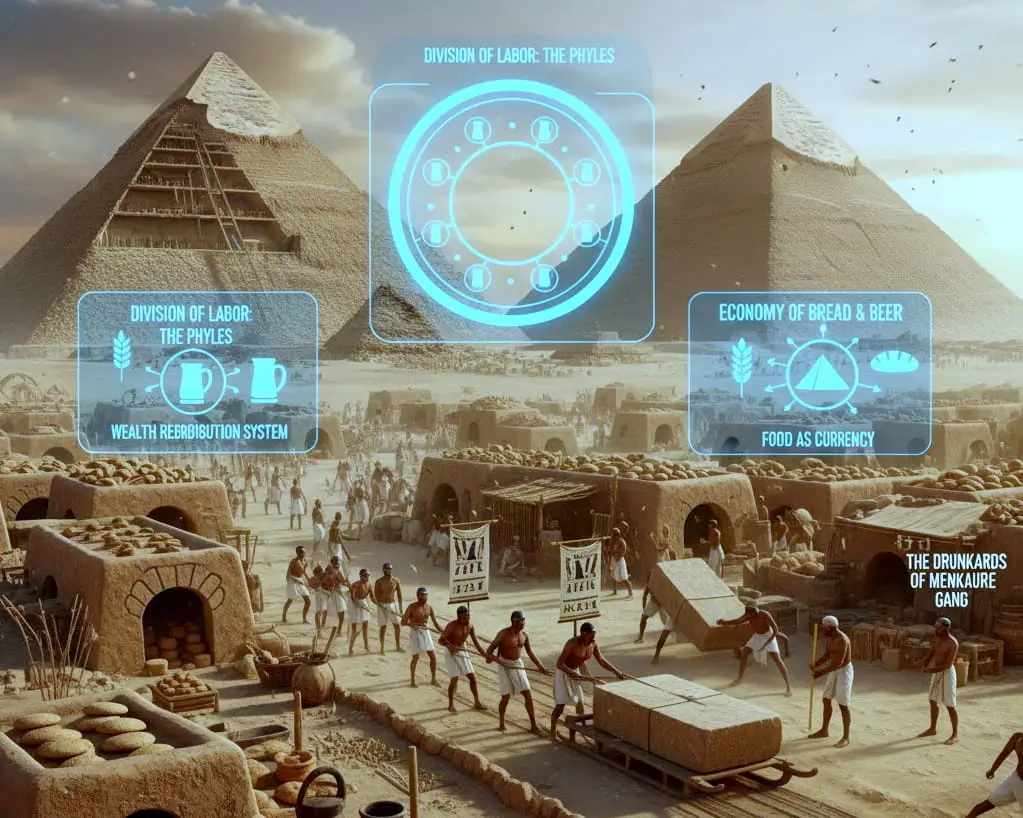
The sheer scale of the Pyramid of Khafre is difficult for the mind to wrap around. It is composed of approximately 2.2 million limestone blocks, each weighing an average of 2.5 tons. To reach your 3000-word target, it is essential to understand the “supply chain” of the Old Kingdom.

  • The Limestone Core: Most of the stone was quarried locally on the Giza Plateau, reducing transport time.
  • The Tura Casing: The white limestone used for the exterior (still visible at the top) was brought across the Nile from the Tura quarries.
  • The Granite Foundation: The heavy red granite used for the base and the interior was transported 500 miles north from Aswan.

Because the ancient Egyptians used the annual flooding of the Nile to float these heavy stones on massive barges, they were able to move thousands of tons per day. Furthermore, the use of ramps and sledges allowed work gangs of 20 men to pull blocks into position with surgical precision. Therefore, the Pyramid of Khafre is as much a triumph of management and logistics as it is of art and religion.

The Pyramid of Teti: A Gateway to the Pyramid Texts of Saqqara

The Pyramid of Teti serves as the spiritual gateway to Egypt's 6th Dynasty and a...
Related post
FUN

Khafre vs. Khufu

To provide an authoritative reference for your readers, here is a quick breakdown of how the “Second Pyramid” compares to the “Great Pyramid.”

Feature Pyramid of Khufu (Great) Pyramid of Khafre (Second)
Original Height 146.6 meters 143.5 meters
Slope Angle 51° 50.’ 53° 13′ (Steeper)
Visible Casing Virtually none Preserved at the apex
Chamber System Highly complex (3 chambers) Simple (Bedrock chamber)
Sphinx Connection Not directly linked Integrated via Causeway

The Enduring Power of Khafre

In summary, the Pyramid of Khafre is a masterpiece of intentional design. By choosing a higher elevation and a steeper slope, Pharaoh Khafre ensured his legacy would never be overshadowed by his father. From the guardian Sphinx at its base to the gleaming limestone “cap” at its summit, the monument represents the absolute peak of ancient Egyptian authority.

Today, it stands as a pillar of the Giza Plateau, inviting us to contemplate the precision, faith, and sheer willpower of a civilization that built for eternity. Whether you are viewing it from the “Panorama” point at sunset or walking through its granite halls, the Pyramid of Khafre remains a timeless wonder of the world.

Discover the stunning wonders of ancient and modern Egypt and enjoy the Red Sea through this best classic Egypt tour package....
9 Days Tour Package of Cairo, Al Fayoum, and Nile Cruise...
FUN
God_Anubis_Icon

Cairo Day Trip

My day trip to Cairo was brilliant, and close to the best one-day experience of my life. Hani was an amazing ambassador for his city and country; his wealth of knowledge, courtesy, and good humour was awesome. The itinerary was perfect, I visited most of the famous landmarks as well

More »

Like two days of touring in one day!

I had a 12 hour stay in Cairo- and had made no plans on how to spend it until 8pm the night before departure. I emailed Egypt Fun Tours in a panic and they responded immediately. They made it incredibly easy to arrange a tour and we made arrangements via

More »

Jeep Safari in the Sahara

I contacted Hani two days before I went to Egypt and asked him if it was possible to combine two of their tours as we were short on time. We had planned to stay in Cairo but with the uprising we decided it would be safed outside of the hot

More »

HANDS DOWN, the best cultural experience I’ve ever had

Thank you, Egypt Fun Tour, for a most memorable trip. I admit I didn’t do any of the planning (it was all done by my boyfriend), but as you can read in the reviews below, Hani (the owner of Egypt Fun Tours) is superbly organized and accommodating with scheduling. My

More »
God_Anubis_Icon

Top-rated Tour Packages

God_Anubis_Icon