The Tomb of Queen Meresankh III: A Masterpiece of Old Kingdom Art

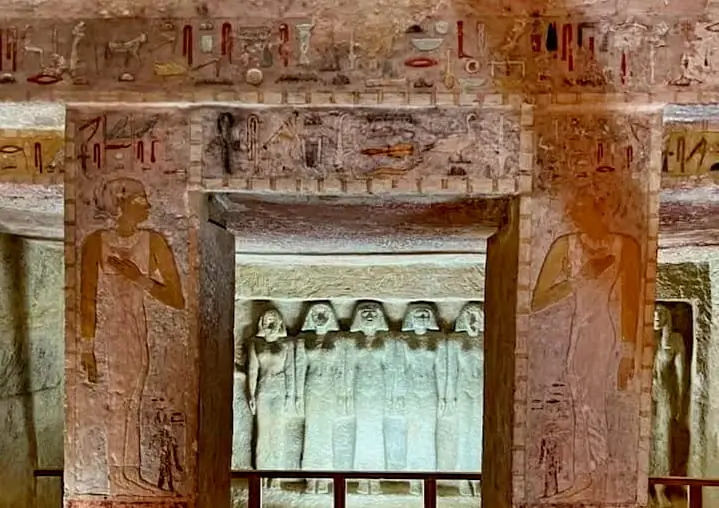
The Tomb of Queen Meresankh III represents the artistic peak of the Fourth Dynasty, shifting Giza’s funerary style from massive stone exteriors to intricate, subterranean mastery. While her mother, Hetepheres II, adhered to traditional mastaba construction, Meresankh’s architects carved a vibrant rock-cut chapel directly into the plateau. This monument is defined by its exceptionally preserved reliefs of Old Kingdom industry and its iconic row of ten life-sized female statues. Consequently, the tomb serves as an authoritative record of royal female power and the high-status artistic evolution that occurred in the shadow of the Great Pyramid.

The Vibrant Legacy of a Giza Queen

Located within the Eastern Cemetery of the Giza Plateau, the Tomb of Queen Meresankh III (designated G7530–7540) is widely regarded as one of the most beautiful and best-preserved private monuments of the Old Kingdom. As the granddaughter of Khufu and wife of Khafre, Meresankh III occupied a central position in the Fourth Dynasty. Her tomb, however, tells a story that is uniquely feminine and deeply personal. Unlike the austere, monumental scale of the nearby pyramids, this subterranean rock-cut chapel bursts with vivid, painted reliefs that have survived for over 4,500 years.

Discovered in 1927 by George Reisner, the tomb offers an unparalleled look at the daily and ritual life of the Egyptian elite. From scenes of papyrus harvesting to the iconic row of ten female statues carved directly into the bedrock, the monument emphasizes the high status of Meresankh and her mother, Hetepheres II. This authoritative guide examines the architectural innovations, the startling “blonde” depiction of royal hair, and the enduring mystery of the Queen’s unexpected death.

Fast Facts: Queen Meresankh III

Feature Detail
Dynasty 4th Dynasty (c. 2550 BC)
Location Eastern Cemetery, Giza (North of the Great Pyramid)
Tomb Type Rock-cut Mastaba (G7530–7540)
Discovery April 23, 1927, by George Reisner
Key Attraction Ten life-sized rock-cut female statues
Sarcophagus Black granite with “Palace Façade” decoration
FUN

The Mystery of the “Blonde” Queen: Hetepheres II

The Mystery of the Blonde Queen; Hetepheres II

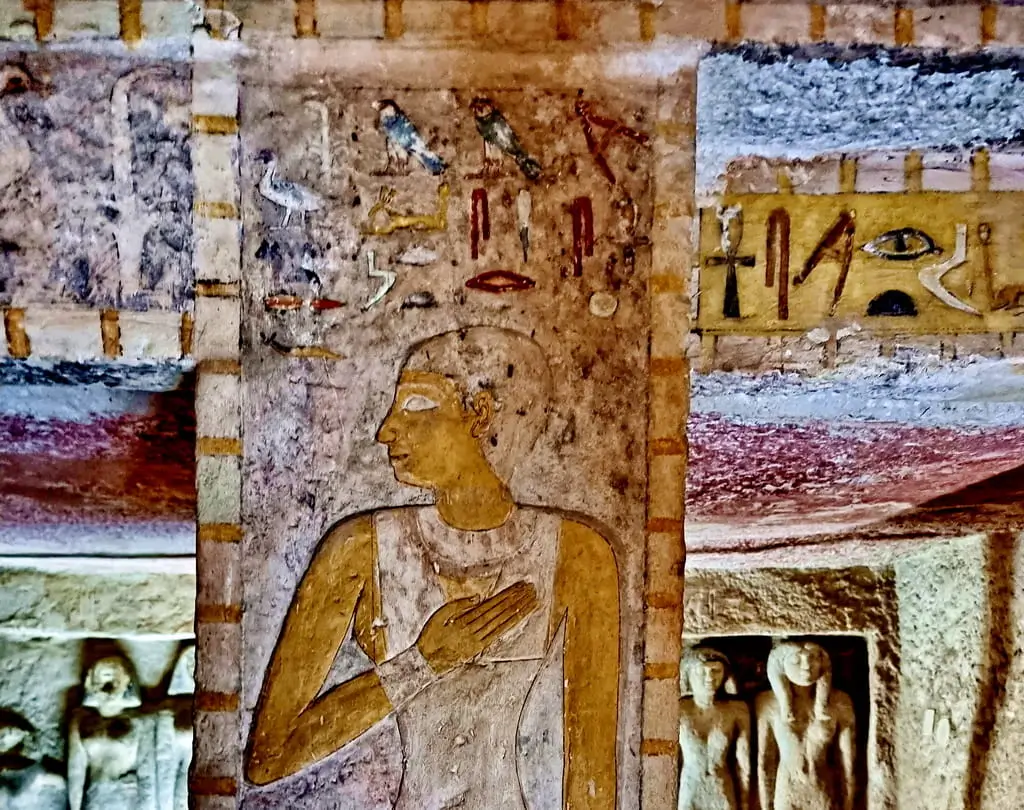
One of the most startling features inside the tomb of Queen Meresankh III is the depiction of the Queen’s mother, Hetepheres II. While ancient Egyptian art typically shows hair as jet black, artists painted Hetepheres with distinct yellow hair.

Consequently, this rare choice has sparked decades of scholarly debate. Some researchers argue that the yellow represents a wig made of blonde hair from a foreign land. Conversely, others believe it symbolizes a specific ritual significance or divine status. Regardless of the interpretation, this visual anomaly makes the tomb of Meresankh III a mandatory stop for any serious study of Old Kingdom iconography. Furthermore, it highlights the high degree of individuality that Meresankh’s artists achieved within the rigid standards of 4th Dynasty art.

The Ten-Statue Niche: A Row of Eternal Presence

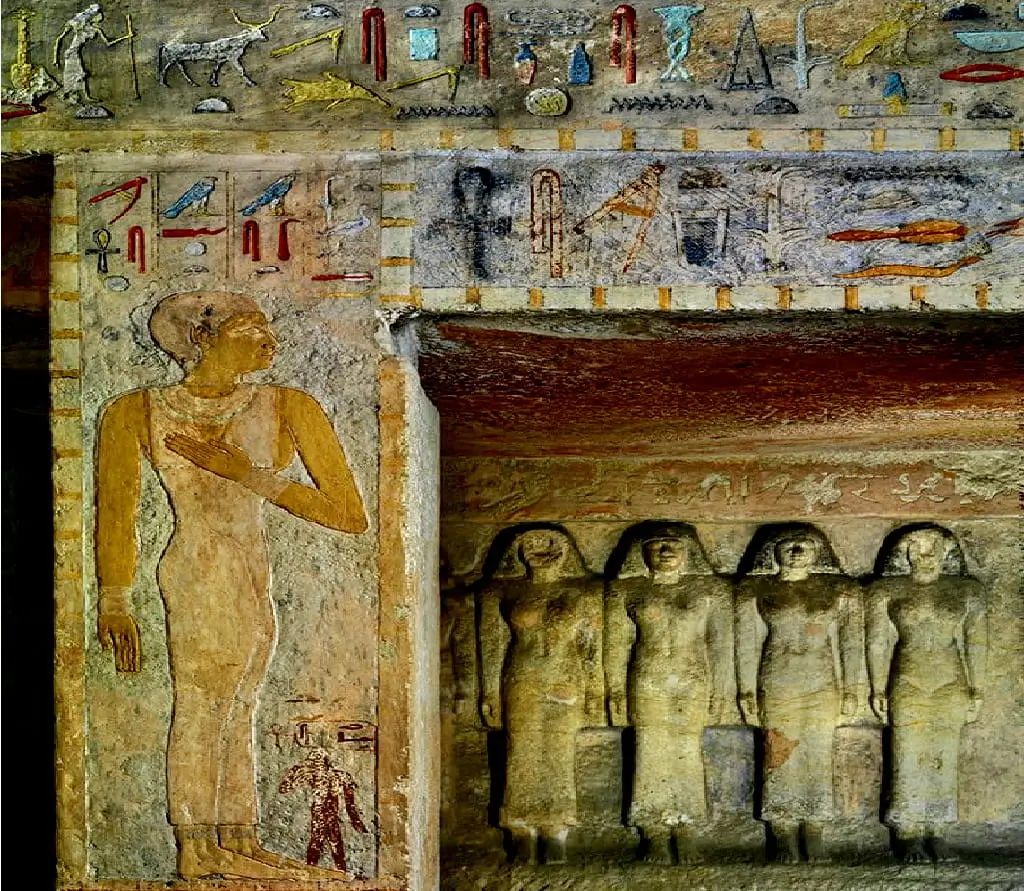
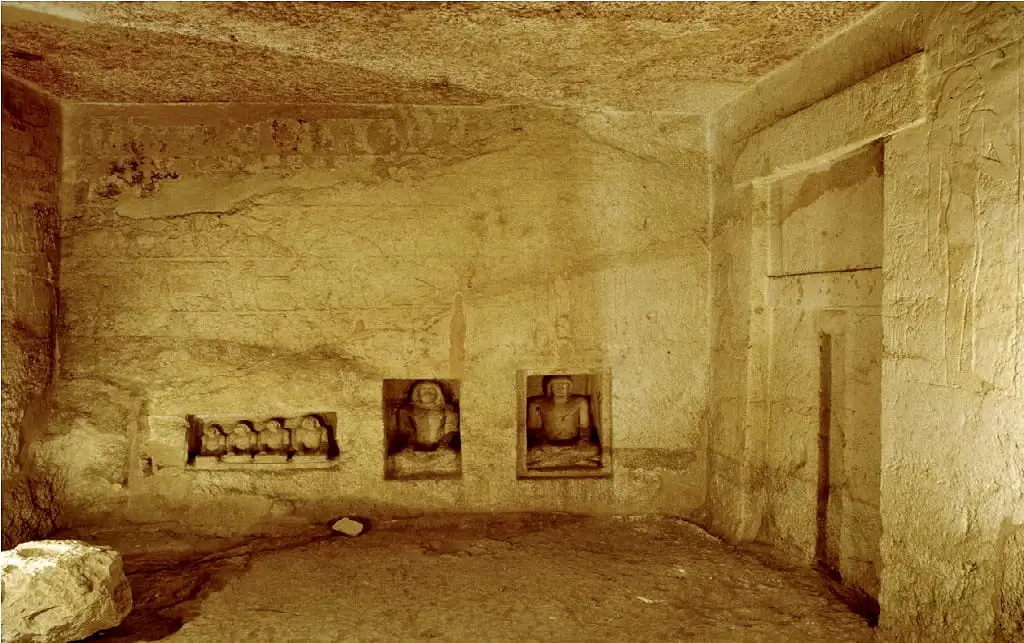
Beyond the vibrant wall paintings, the north wall of the main chamber features a breathtaking architectural feat. Sculptors carved ten life-sized female statues directly out of the living bedrock.

  • Family Unity: The figures likely represent Meresankh III herself, her mother Hetepheres II, and other female relatives.
  • Artistic Symmetry: They stand shoulder-to-shoulder, wearing identical tight-fitting white dresses and heavy wigs.
  • Ritual Purpose: These statues acted as “Ka” houses for the deceased. Therefore, they ensured the Queen could receive offerings and participate in the world of the living forever.

This massive row of statues creates an overwhelming “wow” effect for visitors. Moreover, it demonstrates the immense resources Meresankh commanded. Because rock-cutting requires precision and labor, this feature elevates the tomb from a standard mastaba to a royal masterpiece.

FUN

The 272-Day Mystery: An Unexplained Delay

The 272-Day Mystery An Unexplained Delay

The tomb also contains a fascinating, if somber, chronological record. An inscription near the entrance details the exact dates of the Queen’s death and her subsequent burial.

“The King’s daughter, Meresankh: Year 1, first month of the third season, day 21: her ‘Ka’ was at rest. The King’s daughter, Meresankh: Year 2, second month of the second season, day 18: she was escorted to her beautiful tomb.”

Consequently, we know that 272 days passed between her death and her interment. This timeline significantly exceeds the typical 70-day mummification period. Because of this, historians speculate that her death was unexpected. Perhaps her mother, Hetepheres II, spent those extra months enlarging the tomb or commissioned the black granite sarcophagus to ensure it was worthy of her daughter’s rank. Thus, the tomb itself serves as a silent witness to a mother’s grief and dedication.

The Black Granite Sarcophagus: A Giza Rarity

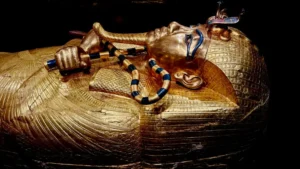
Finally, the burial chamber houses a massive black granite sarcophagus. This choice of material is highly significant. While most elite burials used limestone, the use of granite—usually reserved for Kings—reinforces Meresankh’s supreme status.

The exterior features a “Palace Façade” motif that mimics the architecture of the royal residence. Additionally, when George Reisner opened the sarcophagus in 1927, he found the Queen’s skeletal remains. Medical analysis later revealed that Meresankh was approximately 50 years old when she died. Therefore, this sarcophagus provides a direct physical link to a woman who lived through the reigns of multiple Giza Pharaohs.

The Catacombs of Kom Esh-Shokafa: Roman-Egyptian Underworld

Descend into one of the "Seven Wonders of the Middle Ages" at the Catacombs of...
Related post
FUN

The Papyrus Harvest: Symbolism and Industry

The Papyrus Harvest Symbolism and Industry

Artists decorated the walls with vibrant scenes of workers gathering papyrus from the marshlands. Because papyrus was the primary material for writing, boat construction, and ritual objects, its presence signaled immense wealth.

  • Active Labor: You can see laborers pulling the long stalks from the water and tying them into heavy bundles.
  • The Royal Connection: Meresankh III herself often appears in these marsh scenes, standing on a papyrus skiff. Consequently, these reliefs emphasize her role as a provider and a central figure in the agricultural success of her estates.

The Art of Bird Trapping: Precision and Abundance

Parallel to the harvesting scenes, the tomb of Queen Meresankh III features intricate depictions of bird trapping. These scenes display a high level of technical detail regarding ancient hunting methods.

  • The Hexagonal Net: Workers operate a large, hexagonal “clap-net” hidden in the reeds.
  • The Signal: A designated “lookout” stands at the edge of the scene, holding a piece of cloth. When the birds land, he drops the signal, and the team pulls the ropes to collapse the net.
  • Variety of Species: The artists carefully painted different types of waterfowl, from pintail ducks to geese. Therefore, these scenes prove that the 4th Dynasty possessed a deep understanding of local biodiversity.

Daily Life as a Ritual Act

Furthermore, the tomb of Queen Meresankh III includes scenes of craftsmen at work. You can observe carpenters building furniture, jewelers stringing beads, and metalworkers smelting gold. These images move beyond simple documentation; they illustrate the sophisticated supply chain of the Giza Plateau.

Because these reliefs retain their original pigments, they offer a rare chance to see the “colors of the Old Kingdom.” The vibrant greens of the papyrus and the deep blues of the water create a sense of movement and life that contrasts with the nearby, static, rock-cut statues. Thus, the Tomb of Meresankh III acts as a living bridge between the daily chores of the Egyptian worker and the eternal aspirations of the royal family.

The Eastern Cemetery: A Grid of Royal Power

The location of G7530–7540 is not accidental. Instead, it forms part of the “en échelon” (staggered) section of the Eastern Cemetery. Specifically, the tomb sits in the shadow of the Great Pyramid of Khufu, Meresankh’s grandfather.

  • The Double Mastaba: Meresankh’s tomb began as a standard double mastaba (G7520/7530). However, architects later expanded it into a cruciform rock-cut chapel.
  • Proximity as Status: By positioning her tomb here, Meresankh III signaled her proximity to the divine solar power of the Giza Kings. Consequently, the Eastern Cemetery acted as an exclusive residential district for the afterlife, reserved for the 4th Dynasty’s inner circle.

The Tomb of Ptahemwia: The Amarna Style in Saqqara

The Tomb of Ptahemwia Royal Butler at Saqqara serves as a vital historical record of...
Related post
FUN

Preservation in 2026: Technology vs. Time

Because the tomb’s primary value lies in its fragile pigments, the Ministry of Tourism and Antiquities has implemented a “Zero-Impact” conservation strategy for 2026.

  1. Multispectral Imaging: Conservators now use Multispectral Imaging (MSI) to map the chemical composition of the pigments without touching the walls. Specifically, this allows them to identify original binders and detect early-stage degradation before it becomes visible to the human eye.
  2. Environmental Shielding: A high-tech air-filtration system now maintains a constant 45% relative humidity and 22°C temperature inside the rock-cut chambers. Therefore, the system prevents the “salt-blossoming” that often destroys limestone reliefs.
  3. The Digital Twin: Through 3D laser scanning and photogrammetry, a high-resolution “Digital Twin” of the tomb now exists. Consequently, researchers can study the ten-statue niche in virtual reality, reducing the need for physical entry and minimizing the carbon dioxide levels inside the chapel.

Visitor Guide: Exploring G7530

Visitor Guide Exploring G7530

For those visiting Giza in 2026, the Tomb of Queen Meresankh III remains one of the plateau’s “hidden gems.”

  • Ticketing: Visitors must purchase a separate ticket for Meresankh’s tomb at the main Giza entrance (current cost is approximately 150 EGP).
  • Access: Because the tomb receives fewer visitors than the pyramids, you may need a local guardian to unlock the gate. Therefore, a polite inquiry at the Eastern Cemetery entrance is often necessary.
  • Photography: While non-flash photography is generally permitted, using a tripod requires a specialized permit.

The Eternal Presence of a Giza Queen

Ultimately, the Tomb of Queen Meresankh III serves as the most intimate record of female authority in the Old Kingdom. From the unique “blonde” depiction of her mother to the industrial detail of the papyrus harvests, the monument proves that life at Giza was as much about the living world as it was about the dead. By utilizing cutting-edge preservation technology in 2026, we ensure that Meresankh’s vivid colors and powerful statues will continue to tell her story for another four millennia.

The Intact Egyptian Royal Tombs: Egypt’s Ultimate Secret

While many believe Tutankhamun's tomb was the only intact royal burial discovered, this guide reveals...
Related post
FUN

The Architecture of Legacy: Meresankh III vs. Hetepheres II

Interior-of-the-Tomb-of-Meresankh-III

The relationship between these two women defines the Eastern Cemetery at Giza. Hetepheres II, the daughter of Khufu and mother of Meresankh, likely commissioned both structures. However, the design choices reflect a shift from the traditional stone mastaba to the innovative rock-cut chapel.

Feature Mastaba of Hetepheres II (G7110) Tomb of Meresankh III (G7530)
Construction Built-up Stone Mastaba Rock-Cut Chapel (Subterranean)
Orientation Traditional North-South Axis East-West Internal Focus
Artistic Style Formal, rigid reliefs Vibrant, descriptive paintings
Statuary Freestanding (often lost) Ten rock-cut statues (in situ)
Sarcophagus Red Granite (Khufu style) Black Granite (Palace Façade style)

Hetepheres II: The Traditional Foundation

Hetepheres II initially occupied a traditional mastaba. This structure utilized massive limestone blocks, mimicking the construction of the Great Pyramid.

  • Structural Austerity: Her tomb emphasized external mass and durability. Consequently, it projected a message of immovable royal power.
  • The “Double” Plan: Interestingly, Hetepheres II was originally intended to be buried with her first husband, Kawab. After his death, however, she pivoted her resources toward her daughter’s more elaborate rock-cut home.

By choosing a traditional mastaba first, Hetepheres II honored the architectural language of her father, Khufu. Yet, her decision to eventually build a rock-cut tomb for her daughter signals a major evolution in Giza’s design trends.

Meresankh III: The Artistic Revolution

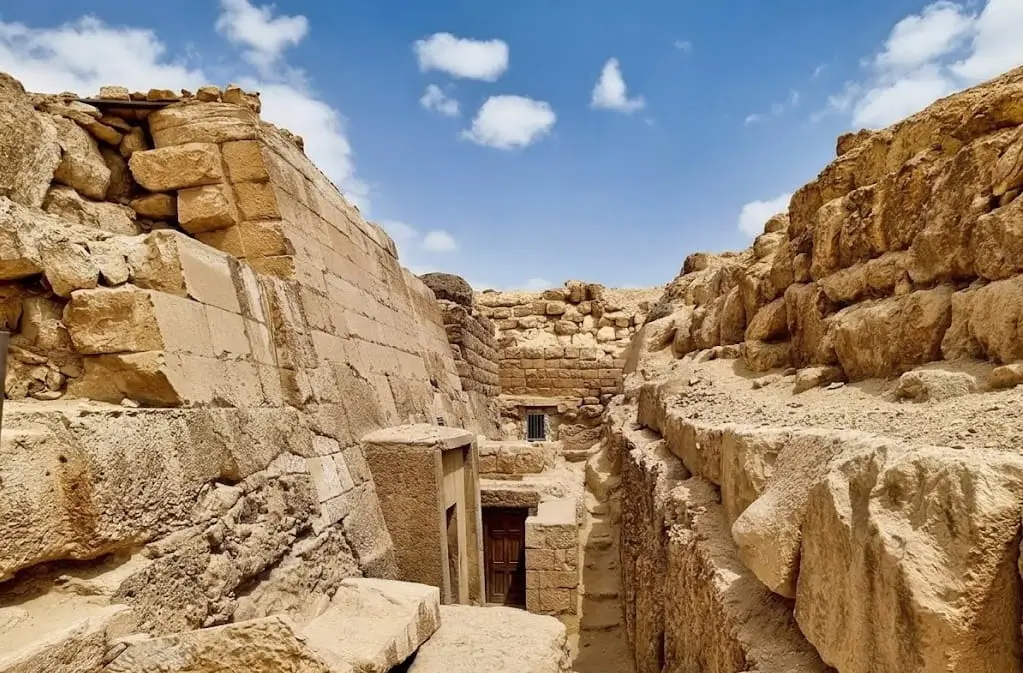
In contrast, the Tomb of Meresankh III abandoned the external “mountain” look in favor of an internal masterpiece. Instead of stacking blocks, workers carved the entire chapel directly into the Giza bedrock.

[Image comparing the external stone structure of a Giza mastaba with the interior rock-cut entrance of Meresankh III’s tomb]

  • Spatial Freedom: Because the tomb exists underground, the artists could create larger, more open rooms without worrying about the weight of stone blocks above. Therefore, they filled every inch of the walls with the papyrus harvests and bird-trapping scenes we discussed earlier.
  • The Shared Sarcophagus Mystery: Some evidence suggests that Meresankh III eventually used the black granite sarcophagus originally meant for her mother. Consequently, the two women’s legacies became physically intertwined in the burial chamber of G7530.
Explore the best of Egypt in two weeks including the Abu Simbel Sound and Light Show....
Witness the splendor of ancient Egypt on a 10 days tour....
God_Anubis_Icon

Alexandria! Wow!

Muhammad is the best! He showed me a world I never thought possible! The tombs in Alexandria, by far, were my favorite! I never knew there was a place on earth that contained both Greek and Egyptian carvings in the same tombs! The history and culture of Egypt is so

More »
Ancient Egyptian Sarcophagus - Egypt Fun Tours

Unforgettable experience with Fun Tours – Highly recommended!

Hello everyone! We would like to share our extremely positive experience with Fun Tours. Our tour was a complete success thanks to our guide, Osama, and our driver Hassan. Osama proved to be an enthusiastic and knowledgeable guide who answered all of our questions and catered to our individual wishes

More »

Outstanding layover tour

I had the opportunity to do a layover tour with Egypt Fun Tours this Friday, and it was amazing. I had a 10-hour layover tour in Cairo, and I was met by Mohamed on time at the airport. He picked me up in a clean, new, safe, and comfortable van.

More »

My Dream Came True

I had waited 60 years to get to Egypt; in fact, it was my 60th birthday gift to myself. I went with my oldest daughter, and the experience was excellent. It was meticulously planned by the tour company and was designed for me and my daughter. I never had a

More »
God_Anubis_Icon

Top-rated Tour Packages

God_Anubis_Icon