Re-Horakhty: The Sun God Fused with Horus and the Sphinx

The deity Ra-Horakhty ("Ra-Horus of the Two Horizons") represents the definitive culmination of Ancient Egyptian solar theology, fusing the supreme creator god Ra (the Sun) with Horus (the sky god and symbol of kingship). This syncretism resulted in a powerful deity who ruled the Akhet (Horizon), the cosmic gateway of the sun's daily birth and death. His iconic manifestation is Hor-em-akhet ("Horus in the Horizon"), represented by the Great Sphinx of Giza, which visually links solar power with royal authority and protection. Ra-Horakhty was a vital New Kingdom deity, ensuring the Pharaoh's legitimacy and guiding the deceased toward solar rebirth, embodying the daily cycle of creation and the eternal stability (Ma'at) of the universe.

Re-Horakhty: The Fusion of Solar Power and Celestial Dominion

Ancient Egyptian religion thrived on fluidity. Gods frequently merged, expressing greater, more comprehensive power. This process of syncretism forms the theological foundation for one of Egypt’s most powerful deities: Re-Horakhty. He perfectly embodies the sun and the sky, ruling the eternal solar cycle and guarding the royal line.

This composite god carries two key names. Hor-em-akhet translates directly as “Horus in the Horizon.” Re-Horakhty (or Re-Horakhti) means “Re-Horus of the Two Horizons.” Both names specifically define a deity who controls the critical borderland where the sun rises and sets, ruling the visible celestial journey.

This comprehensive guide now explores the full scope of this unified solar god. We uncover his divine origins, the precise theological reasons driving his creation, and his iconic manifestation as the Great Sphinx of Giza. We will trace his worship from the Old Kingdom’s foundations right through the imperial glory of the New Kingdom.

Therefore, to fully appreciate this powerful composite god, we must first understand the two mighty deities that create his essence.

FUN

Understanding Re and Horus of the Two Horizons

Re-Horakhty emerged from combining the two most important divine concepts in Egyptian cosmology: the all-creating Sun God and the God of Kingship.

Re: The Solar Creator

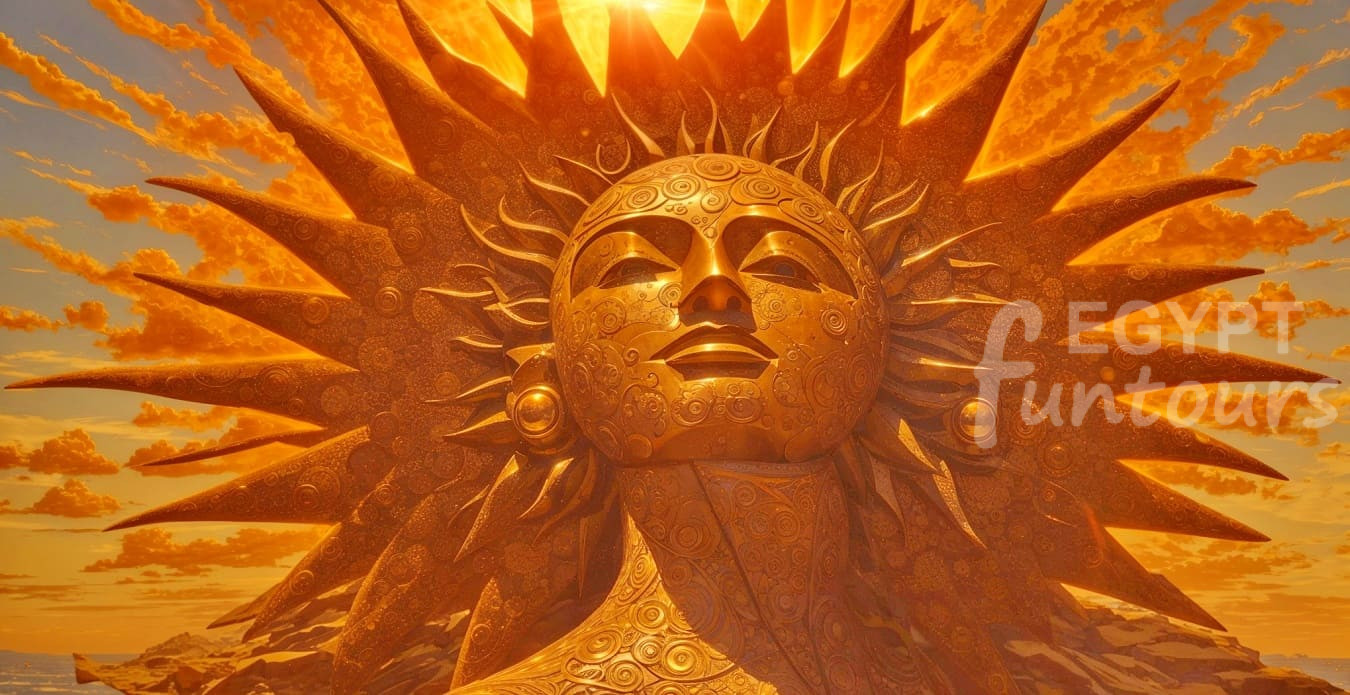
Why the ancient Egyptians worshipped the sun Egypt Fun Tours

Re (Ra) functioned as the fundamental source of life. He represented the sun itself. As the creator god (Demiurge), Re brought all things into existence and established the first order (Ma’at). His daily journey across the sky in his solar barque symbolized the cosmic cycle of life, death, and rebirth. Ultimately, Re represents the solar aspect of Re-Horakhty: the creative, life-giving, and powerful center of the universe.

Horus, The Sky, and the King

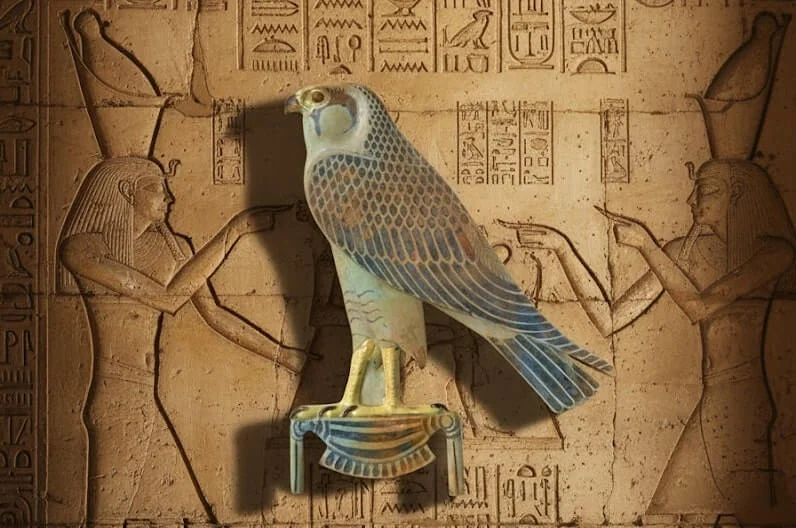
The Golden Horus Title - Hr Nbu

Horus, the sky god, appeared most often as a falcon. He was intrinsically connected to the living Pharaoh. Every Pharaoh served as the earthly manifestation of Horus, guaranteeing legitimacy and stability on the throne. Horus’s domain included the sky, the air, and the visible path of the sun. Thus, he represents the celestial dominion aspect of Re-Horakhty: the royal authority and the swift traversing of the heavens.

The Theological Necessity of Fusion (Syncretism)

The merger of Re and Horus became theologically essential. Priests created a deity with unparalleled scope by combining the two. Re gave him ultimate creative power. Horus lent him immediate, legitimate authority over the human world. Consequently, this fusion resulted in a comprehensive deity spanning creation (Re) and earthly rule (Horus). The Egyptians viewed this union as the most powerful possible articulation of divine support for the state.

Inevitably, this fusion created a specific, potent identity that famously localized at the greatest wonder of the ancient world.

FUN

Hor-em-akhet and the Enduring Mystery of the Great Sphinx

Sphinx

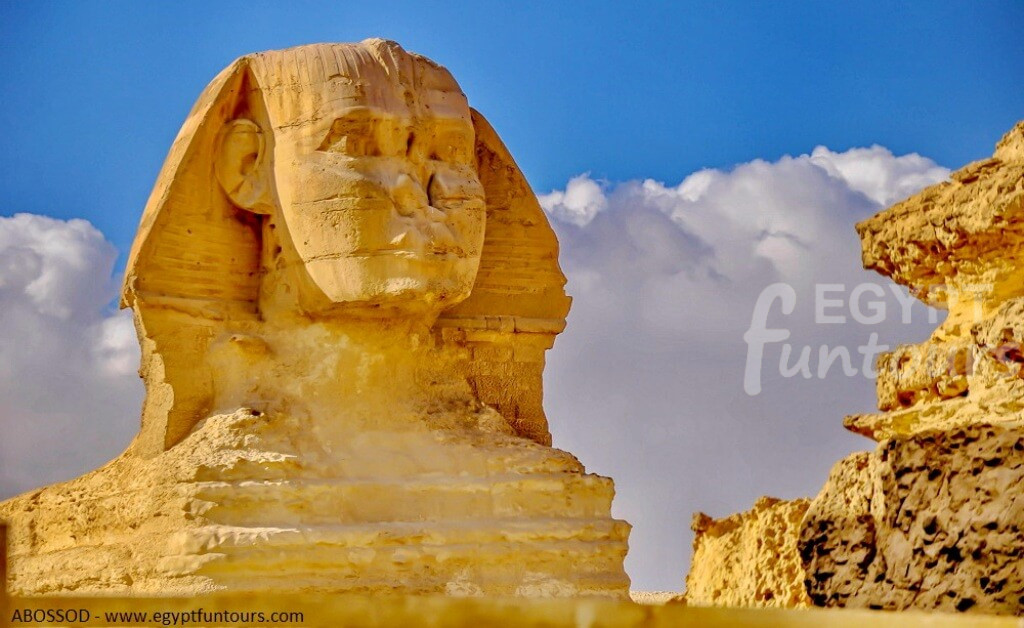
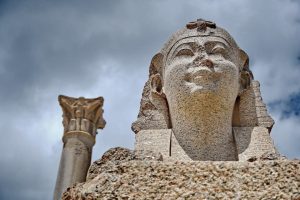
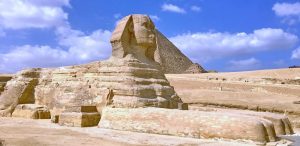
The majestic Great Sphinx of Giza provides the most famous and enduring physical manifestation of this solar fusion. Indeed, in this monumental form, Hor-em-akhet immediately became a major royal cult deity.

The Sphinx as Hor-em-akhet

The Sphinx originated during the Old Kingdom (c. 2500 BC) and traditionally connects to Pharaoh Khafre. Initially, it represented the Pharaoh as a lion and a man, guarding the pyramids. However, by the New Kingdom (c. 1550 BC onward), Egyptians definitively identified the Sphinx with the god Hor-em-akhet (“Horus in the Horizon”). The colossal statue transformed into the earthly image of the syncretic god.

The Solar Alignment

The Sphinx’s position facing the eastern sunrise powerfully supported the identification. Crucially, the “Horizon” (Akhet) functions not just as a geographical place, but as the cosmic gateway of rebirth. Hor-em-akhet, embodied by the Sphinx, served as the god watching over this critical gateway, awaiting the daily return of the sun god Re.

The Dream Stele of Thutmose IV

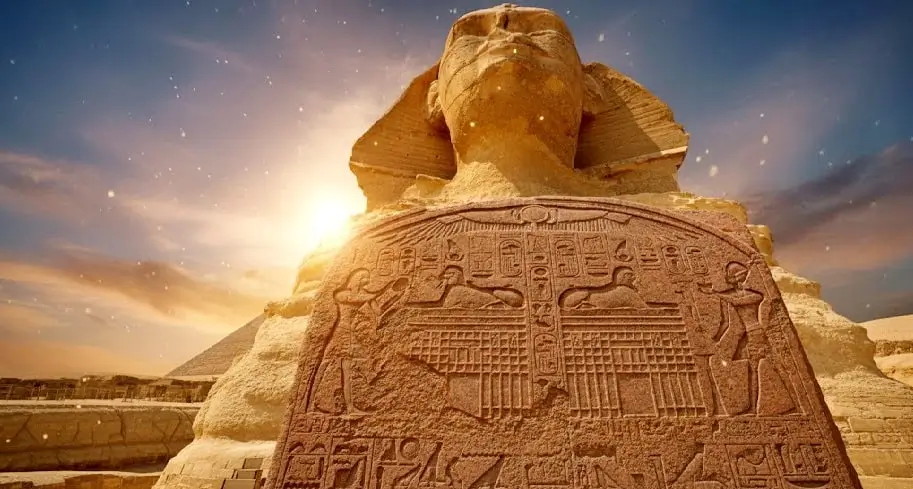
The Dream Stele of Thutmose IV; The Sphinx's Prophecy Explained

The cult of Hor-em-akhet received its greatest boost from Pharaoh Thutmose IV (c. 1401–1391 BC). When he was a prince, sand largely covered the Sphinx. A stele, which now stands between the Sphinx’s paws, records a pivotal event:

While resting in the shadow of the great image at midday, Thutmose fell asleep. The god Hor-em-akhet appeared to him in a dream, complaining that the sand was choking his body. The god promised Thutmose the throne of Egypt if he would clear the sand and restore the divine image.

Thutmose IV fulfilled his promise. His subsequent successful reign cemented the god’s authority. Ultimately, this event solidified the Sphinx’s identity as Hor-em-akhet and confirmed that Re-Horakhty guaranteed Egyptian kingship. Therefore, the Sphinx’s restoration marked the beginning of Re-Horakhty’s rise as a primary royal cult deity.

Egyptian Phoenix Bennu: Myth, Symbolism, and Legacy

Forget the fire. The original legend is even better. Meet the Bennu, the Egyptian Phoenix....
Related post
FUN

Iconography: The Appearance and Domain of Re-Horakhty

Re-Horakhty, The Sun God Fused with Horus and the Sphinx

Re-Horakhty’s iconography perfectly distills his dual identity, visually expressing the merger of solar power and celestial flight. Furthermore, his domain of the Horizon defines his crucial role in the cosmic cycle.

Appearance

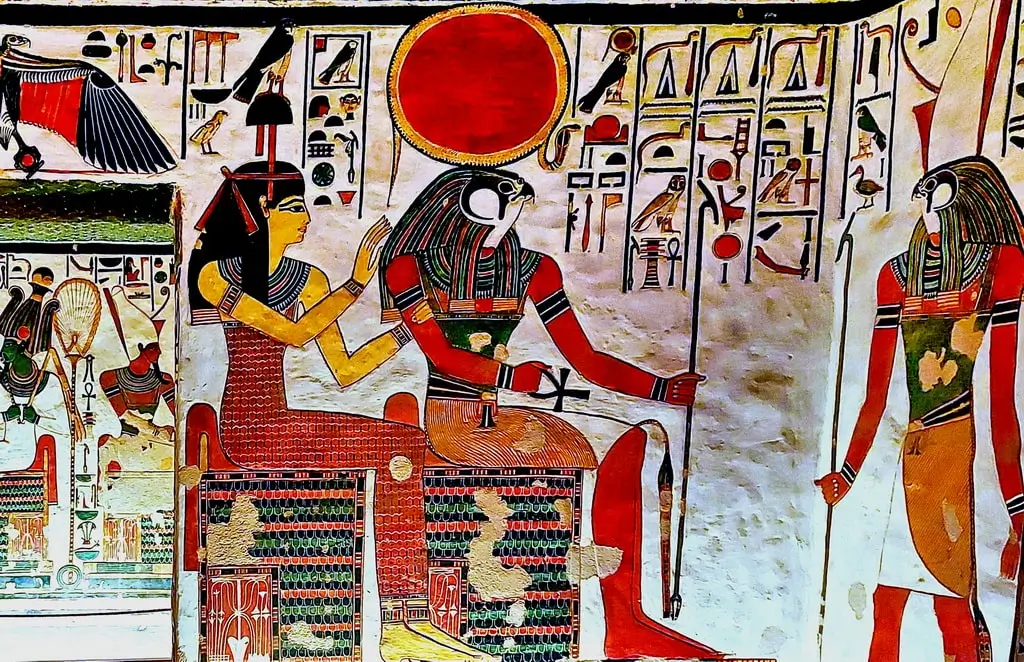
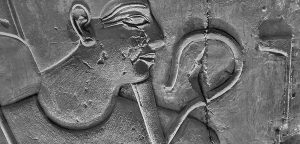
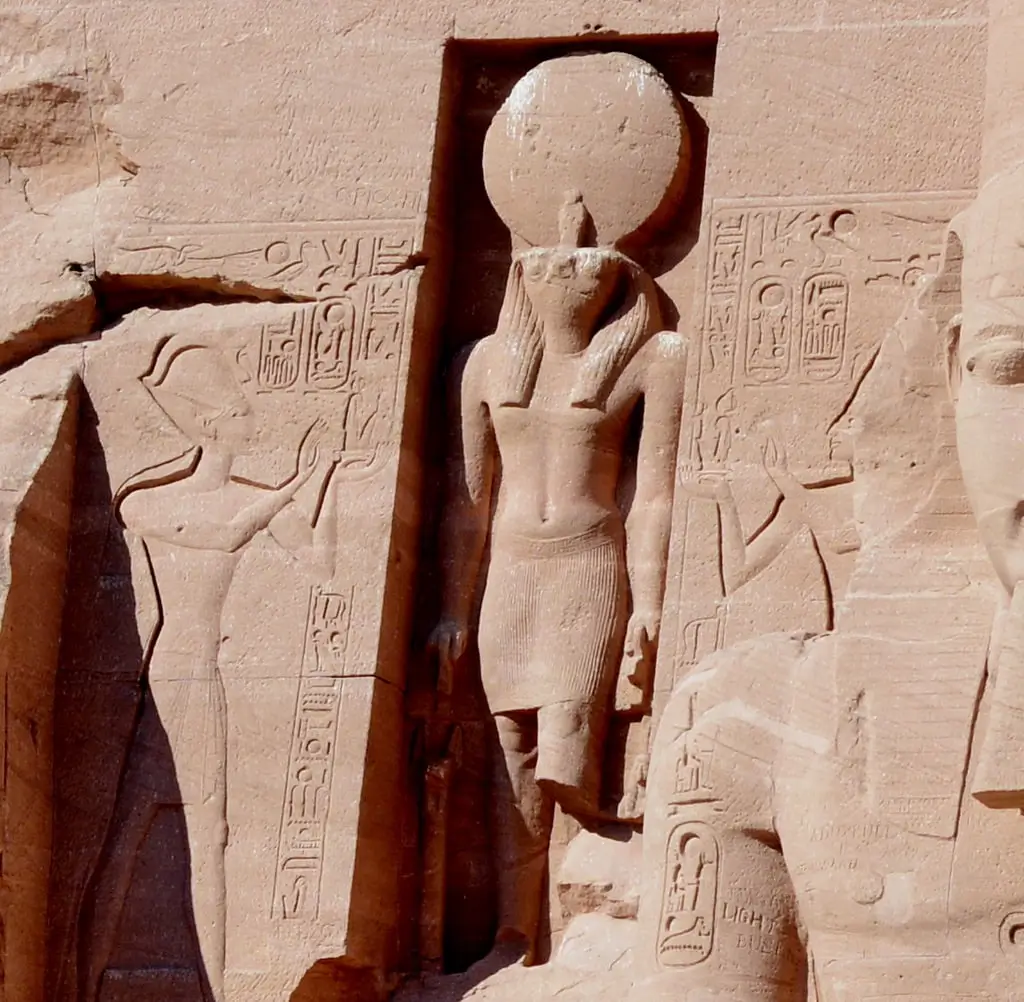
Re-Horakhty generally appears as a man with the head of a falcon. This immediately identifies him with Horus. Crucially, he wears the immense solar disk upon his head, often encircled by the sacred Uraeus (cobra). This crown combines the falcon-god of the sky (Horus) with the sun-god of creation (Re), leaving no doubt about his authority. The Sun Disk itself symbolizes the totality of the sun, and the Uraeus provides the defensive, royal fire of the goddess Wadjet.

The Domain of the Horizon (Akhet)

The Horizon (Akhet) defines Re-Horakhty’s most specific domain. This is not merely a geographic line; it functions as the sacred, liminal space where the sun appears at dawn and vanishes at dusk. The Akhet represents the gateway of cosmic transition, the boundary between the mortal world, the sky, and the underworld (Duat). Consequently, Re-Horakhty rules this critical boundary, making him the god of rebirth and the promise of renewal.

Solar Cycling and Kingship

Re-Horakhty plays a central role in the daily solar cycle. He embodies the sun at its most powerful point—its passage across the zenith, or its triumphant morning ascent. Significantly, this direct connection to the sky’s ruler legitimizes the living Pharaoh. The Pharaoh serves as the earthly embodiment of Horus, and Re-Horakhty provides the cosmic, solar backing for that rule. The King receives his daily mandate and vitality directly from the “Horus in the Horizon.”

Therefore, his power was not confined to Giza; his worship spread and integrated into major religious and political centers during periods of imperial glory.

Hathor, Sekhmet, and the Volatile Eye of Ra: Dual Power for Political Control

The pharaohs used the terrifying dual nature of the Volatile Eye of Ra as a...
Related post
FUN

Re-Horakhty’s Cult in the New Kingdom
Re-Horakhty's Cult in the New Kingdom

Re-Horakhty’s cult flourished during the New Kingdom (c. 1550–1070 BC). This era, characterized by powerful imperial Pharaohs, naturally embraced a god who so perfectly represented centralized, solar-sanctioned authority.

Temple Dedications

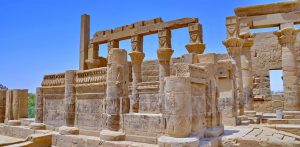
Pharaohs of the 18th and 19th Dynasties integrated Re-Horakhty into their major religious building projects. The god’s worship extended far beyond Giza.

  • Ramesseum: Ramesses II, known for his monumental building, dedicated parts of his mortuary temple, the Ramesseum, to Re-Horakhty. Here, the god connected with the Pharaoh’s own ka (life-force), emphasizing the king’s eternal divine nature.
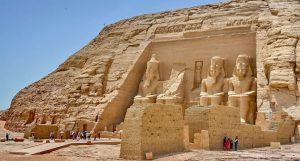
  • Abu Simbel: At the Great Temple of Abu Simbel, an entire seated figure represents the god. This statue appears beside the deities Ptah, Amun-Re, and Ramesses II himself, placing Re-Horakhty among the absolute most powerful gods.

Amarna and the Aten

Re-Horakhty played a critical, if controversial, role in the religious revolution of Pharaoh Akhenaten (formerly Amenhotep IV). Akhenaten promoted the near-exclusive worship of the Aten—the physical disk of the sun.

  • The Precursor: Akhenaten’s father, Amenhotep III, had already elevated the worship of solar gods, particularly Re-Horakhty, paving the way for a single solar focus.
  • The Transition: Akhenaten’s early name reflected this lineage: Amenhotep, servant of Amun, changed to Amenhotep, Ruler of Thebes, Great in his monuments of Re-Horakhty. This early title shows that Akhenaten initially identified the Sun Disk (Aten) with Re-Horakhty before rejecting the fusion with Horus and all other traditional gods. He removed the “Horus” element and all mythical narratives, focusing solely on the sun disk itself. Therefore, Re-Horakhty served as the last major orthodox solar deity before the Aten heresy.

Royal Names and Epithets

The god’s name frequently appeared in royal titulary. Pharaohs, particularly those of the Ramesside period, used epithets that invoked Re-Horakhty to emphasize their cosmic authority and control over the divine order. The connection proclaimed that the sun god of the horizon directly sanctioned the Pharaoh’s reign.

While Re-Horakhty represents a profound fusion, his influence extends to other famous composite gods and religious concepts.

The Syncretic Family: Re-Horakhty and the Fusion of Gods

Re-Horakhty’s development as a unified solar god shows Egypt’s sophisticated approach to theological complexity. Consequently, understanding his place requires comparing him to other powerful, composite deities who also defined the cosmic and political landscape.

Amun-Re and the Theban Triad
Amun ra king of gods NMEC Egypt Fun Tours

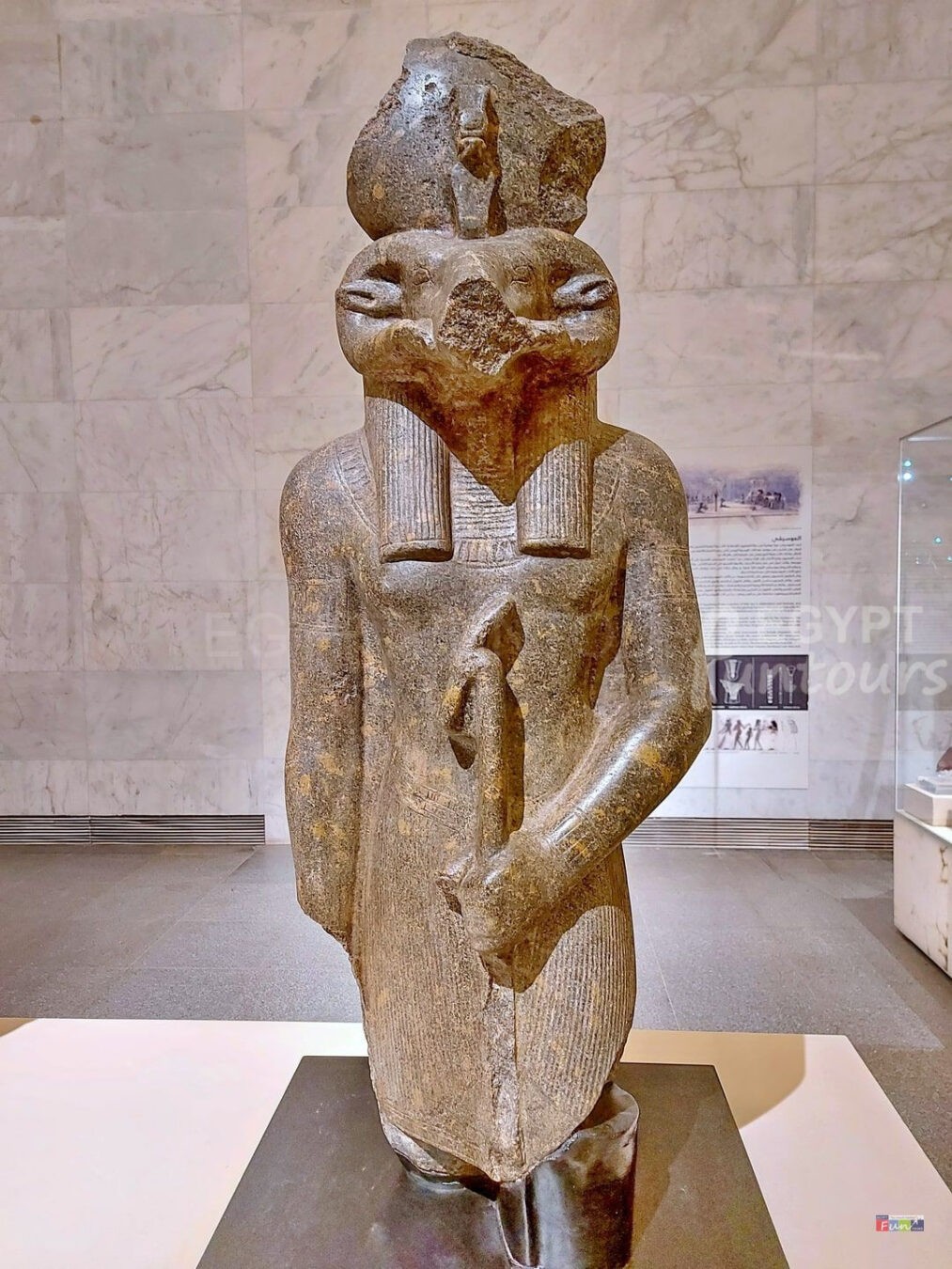
Re-Horakhty often stands in parallel with Amun-Re, perhaps the most famous syncretic god of the New Kingdom.

  • The Key Difference: Amun-Re fused the local Theban deity Amun (“the Hidden One”) with the solar god Re. Amun-Re thus represented the hidden source of creation that then manifested as the visible sun. His cult centered on Thebes and the Karnak Temple.
  • The Key Similarity: Both gods combine Re with a powerful localized deity to create an imperial god of massive scope. However, Re-Horakhty’s identity focuses specifically on the visible, celestial journey of the sun (Horus in the Horizon), while Amun-Re focuses on the hidden, unseen creative power.

Khepri, Atum, and the Solar Cycle
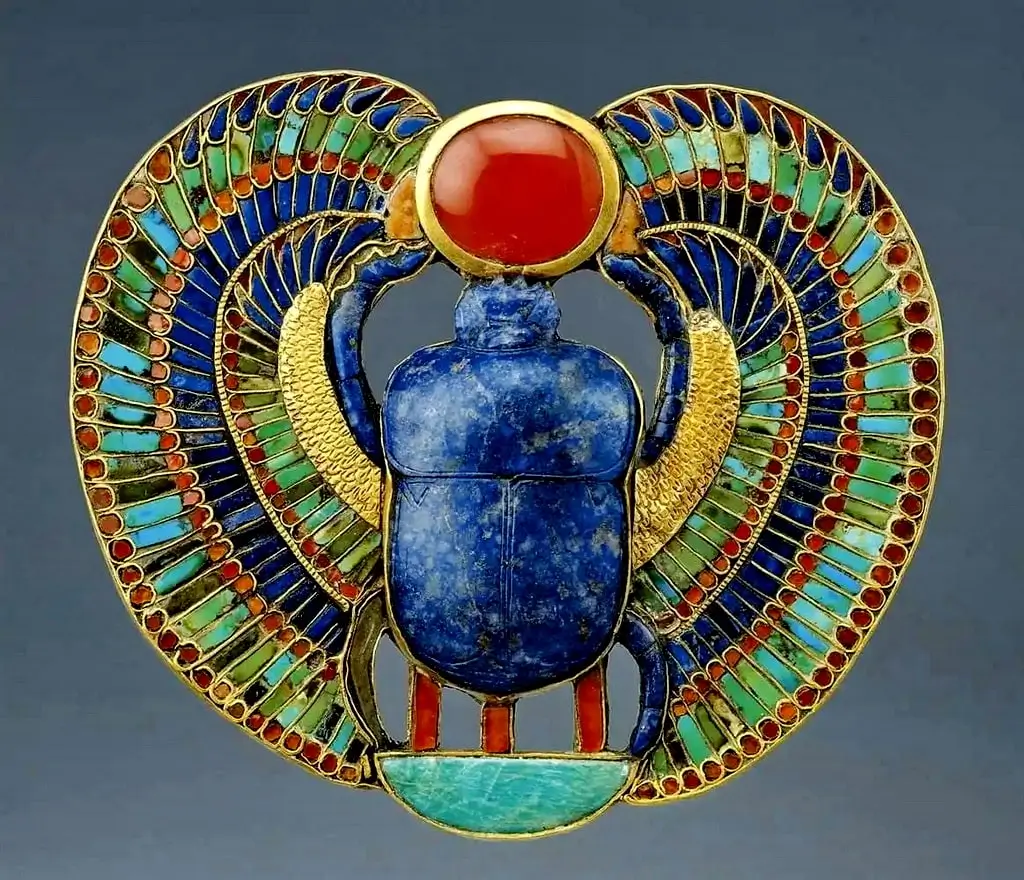
The Divine Beetle, Khepri and the Cycle of Rebirth

The Egyptians divided the sun’s daily life into three primary phases, each governed by a different god. Re-Horakhty fits seamlessly into this sequence, representing the most powerful solar phase:

  • Khepri (The Rising Sun): The god appears as a scarab beetle, symbolizing spontaneous creation and the sun’s vigorous birth at dawn.
  • Re-Horakhty (Midday Sun): He rules the middle, most active part of the day, embodying the sun’s strength and heat on its highest trajectory.
  • Atum (The Setting Sun): The god appears as an old man, representing the setting sun and the final stage before its descent into the underworld.

Therefore, Re-Horakhty defines the essential daily life and light of Egypt.

Osiris and the Afterlife
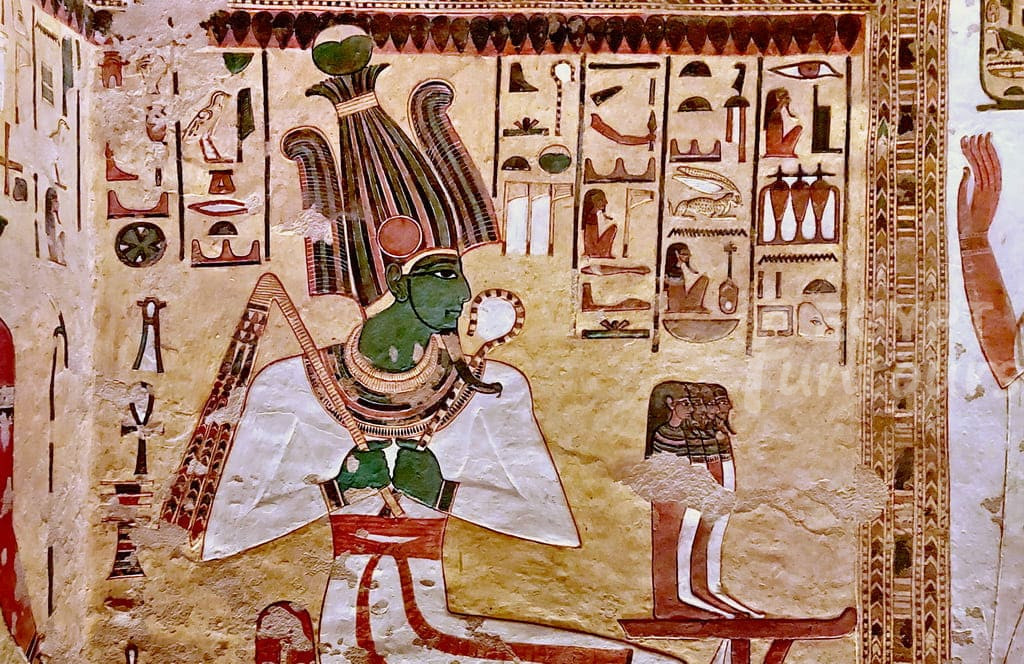
God Osiris Egyptian Mythology Egypt Fun Tours

While Re-Horakhty rules the day and the sky, his celestial father, Re, must unite with the god of the dead, Osiris, every night in the Duat (underworld). This union provides the cosmic guarantee of rebirth. Thus, Re-Horakhty operates as the guarantee of the daily return of light, while the cycle involving Osiris provides the guarantee of resurrection for the deceased. The two concepts support one another. [Image showing the three phases of the solar cycle: Khepri, Re-Horakhty, and Atum]

To fully appreciate his theological depth, we must examine the specific texts that grant him his power and his place in ritual life.

God Thoth: The Egyptian God of Wisdom, Writing, and the Moon

Thoth (or Djehuty) is one of the most important and powerful ancient Egyptian gods. He...
Related post
FUN

Re-Horakhty in Mortuary and Religious Texts

The Egyptians immortalized Re-Horakhty’s role and power in specific texts and hymns, ensuring his theology endured long after the New Kingdom. These documents confirm his protective and regenerative functions.

Hymns to Re-Horakhty

Temple walls and private tombs contain beautiful, elaborate hymns dedicated to Re-Horakhty. These prayers celebrate his daily solar triumph and his function as the source of light and life. Significantly, these hymns often praise him as the creator who rejuvenates himself on the horizon, emphasizing his connection to the concept of stability and the continuation of cosmic order (Ma’at).

The Book of the Dead

The Funeral Procession The Final Public Journey

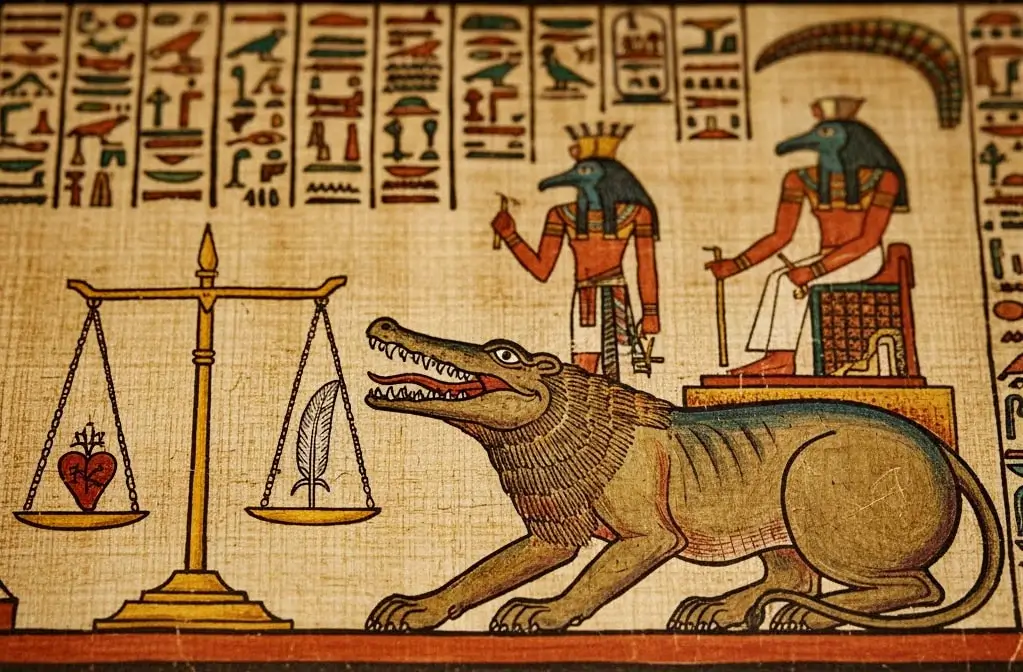
Re-Horakhty appears prominently in various spells within the collection known today as the Book of the Dead. This funerary text provided the deceased with the necessary knowledge and power to navigate the treacherous Duat (underworld).

  • Solar Rebirth: His inclusion ensures the deceased’s successful journey through the sky and their eventual union with the sun god. Spells often call upon Re-Horakhty to guide the soul to the eastern horizon, allowing the dead person to be reborn as a solar being, sharing in the god’s eternal cycle.
  • Protection: He also acts as a powerful protective deity, warding off the demons and dangers that threaten the soul’s progress toward the afterlife.

Daily Rituals

The priests performed daily rituals in every temple to greet the rising sun. Though the rituals might address the local deity (e.g., Amun or Ptah), they inherently involved Re-Horakhty. The moment the sun crested the eastern horizon and illuminated the sanctuary, the priests invoked Re-Horakhty as the visible, daily manifestation of divine light and creation. This continuous ritual reaffirmed the King’s authority and the god’s supreme place in the cosmic order.

Ultimately, from the moment the sun touches the Sphinx’s gaze at dawn to the final ritual prayers, Re-Horakhty remains a crucial figure in the Egyptian pantheon.

The Unified God: Re-Horakhty’s Enduring Legacy

The study of Re-Horakhty reveals the impressive sophistication of Ancient Egyptian theology. This composite deity, often overlooked in favor of his constituent parts, stands as a masterpiece of religious synthesis, defining the ultimate source of power for over two millennia.

This guide established three core pillars of his identity:

  1. Divine Fusion: Re-Horakhty represents the perfect union of the two greatest forces in the cosmos: the creative power of Re and the royal legitimacy of Horus.
  2. Iconic Manifestation: His identity as Hor-em-akhet permanently binds him to the Great Sphinx of Giza, positioning him as the powerful celestial guardian who oversees the vital transition of the sun at the Akhet (Horizon).
  3. Eternal Authority: Through the Book of the Dead and continuous temple rites, Re-Horakhty confirmed the Pharaoh’s authority and guaranteed the deceased’s safe passage and solar rebirth, embodying stability and cosmic renewal (Ma’at).

Though the revolutionary Amarna period momentarily challenged his prominence by isolating the sun disk (Aten), Re-Horakhty quickly reasserted his position. He remained the essential god who embodied the daily promise of the sun and the eternal stability of the throne. He proves that in Egyptian thought, the greatest strength often lay not in singularity, but in fusion.

Thank you for exploring this definitive guide on Re-Horakhty!

Which aspect of this syncretic god do you find most compelling—his specific connection to the Great Sphinx, or his theological distinction from Amun-Re? Would you like to explore another crucial god from the Egyptian pantheon, such as Thoth, the god of wisdom?

Outstanding deluxe tour featuring Cairo, Luxor, Aswan, and a Nile Cruise....
Enjoy meditation in the legendary cities of Egypt....

7 night Egypt Experience Cairo, Aswan, Luxor

Trip of a lifetime!! COVID SAFE!! Knowledgeable guide who loves to share the magic of Egypt with tourists. Friendly and accommodating. This company goes to the extreme to make clients feel welcome and help them. A family company that takes good care of its support staff. Must book the 7-night

More »

Tour of Cairo

Despite a late start due to car trouble, Mohamed more than made up for it with his incredible knowledge and dedication. His explanations were detailed and thoughtful, and he went above and beyond to make sure we had a great experience. A memorable and informative tour, thanks to Mohamed’s hard

More »
Souqs and Markets in Egypt - Egypt Fun Tours

Cairo walking tours

After a rocky start (the driver had been in an accident on his way to pick me up,) the company very quickly sent another driver/guide named Mohammed, who was a real pro. Thoroughly enjoyed my first day in Egypt!

More »

Absolutely the best

We visited Cairo over a 15-hour layover. Egypt Fun Tours organized a customized and wonderful experience for us. We could not be happier. The day included a visit to all the great sites, the marketplace, dinner, a boat ride on the Nile, and a host of other special requests. I

More »
Isis with wings

Top-rated Tour Packages

Isis with wings