The Complete Guide to Tell Basta (Bubastis): History, Temples, and Treasures

Article at a Glance: > Tell Basta—historically known as Bubastis—stands as one of the Nile Delta’s most vital archaeological treasures. Once the roaring capital of ancient Egypt during the 22nd Dynasty, this sacred city served as the epicenter for the cult of the feline goddess, Bastet. Over its 3,000-year history, the site evolved from an Old Kingdom sanctuary into a wealthy international trade hub. It famously welcomed hundreds of thousands of pilgrims for joyous annual festivals and later provided a safe haven for the Holy Family during their historic flight into Egypt. Today, the site operates as a breathtaking open-air museum. Visitors can explore massive red granite ruins, look down into sunken temple basins, and walk through extensive underground catacombs that once held thousands of sacred feline mummies.

Tell Basta-Bubastis: The Grand Delta Capital of Egypt’s Cat Goddess

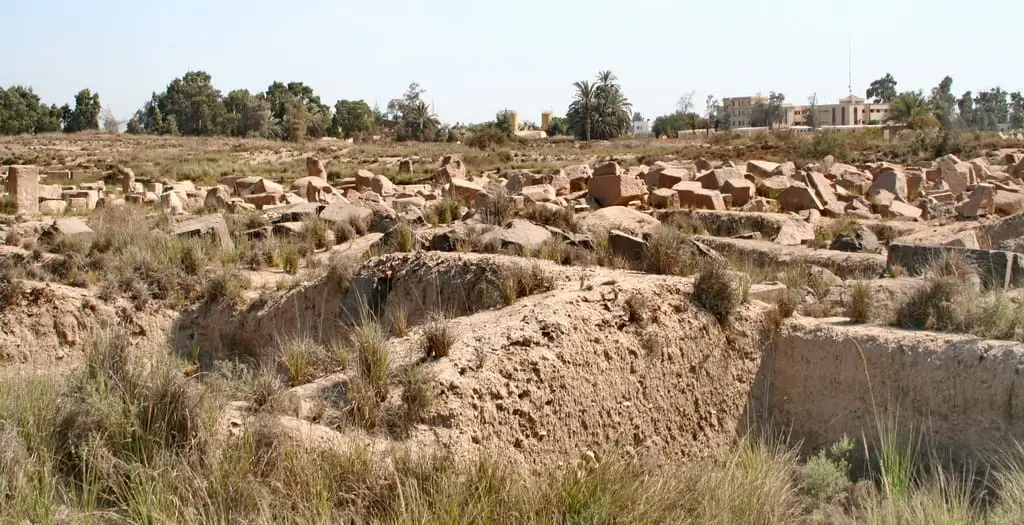
Hidden just beneath the bustling, modern streets of Zagazig lies a sprawling landscape of red granite and ancient mudbrick. This is Tell Basta, known to the classical world as Bubastis. Once a magnificent imperial capital, this site remains one of the most culturally significant archaeological treasures in Lower Egypt.

A Sacred Gateway to the East

In ancient times, Tell Basta served as a vital gateway between Egypt and the eastern world. The ancient Egyptians called it Per-Bastet, which means “The Domain of Bastet.” The city originally grew from an Old Kingdom sacred sanctuary into a soaring royal metropolis during the 22nd Dynasty.

Every year, hundreds of thousands of pilgrims arrive here by boat. They traveled down the Nile Delta to celebrate life, fertility, and the gentle protection of the domestic cat. Centuries later, during the Roman Period, the city welcomed the Holy Family during their historic flight into Egypt.

Exploring the Open-Air Museum

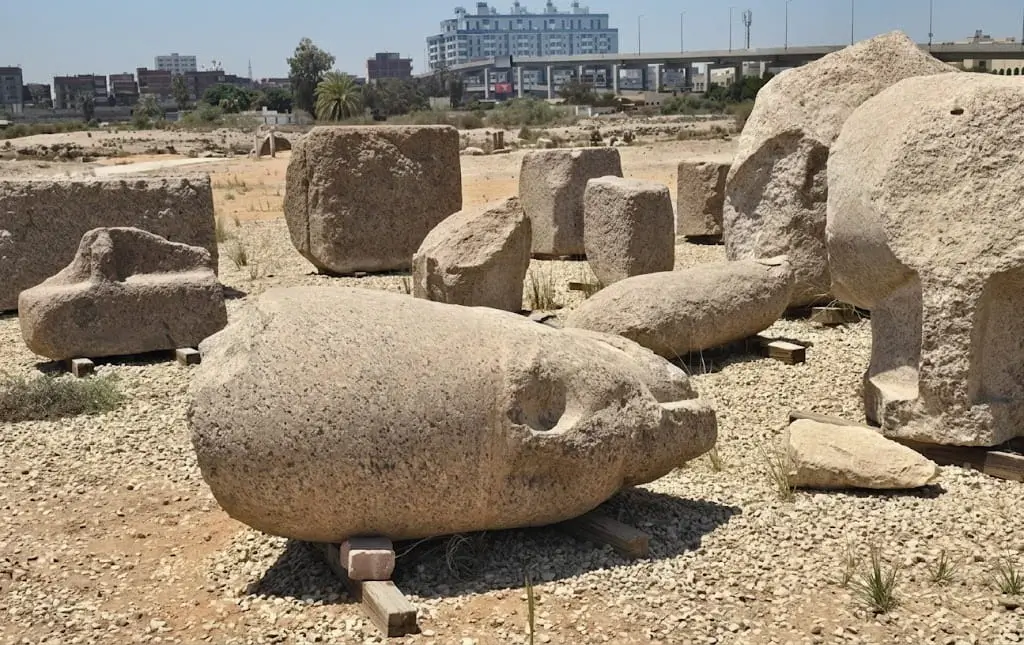
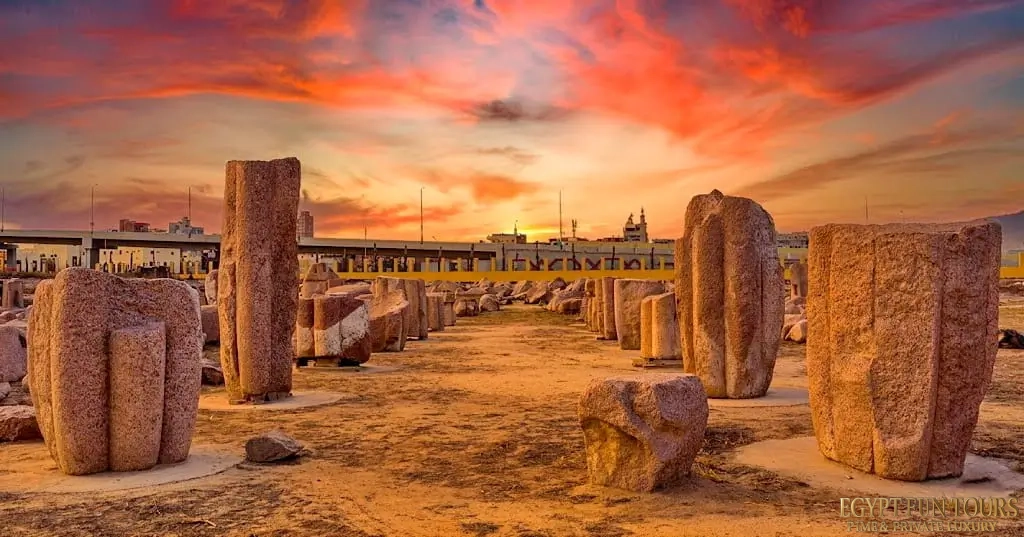
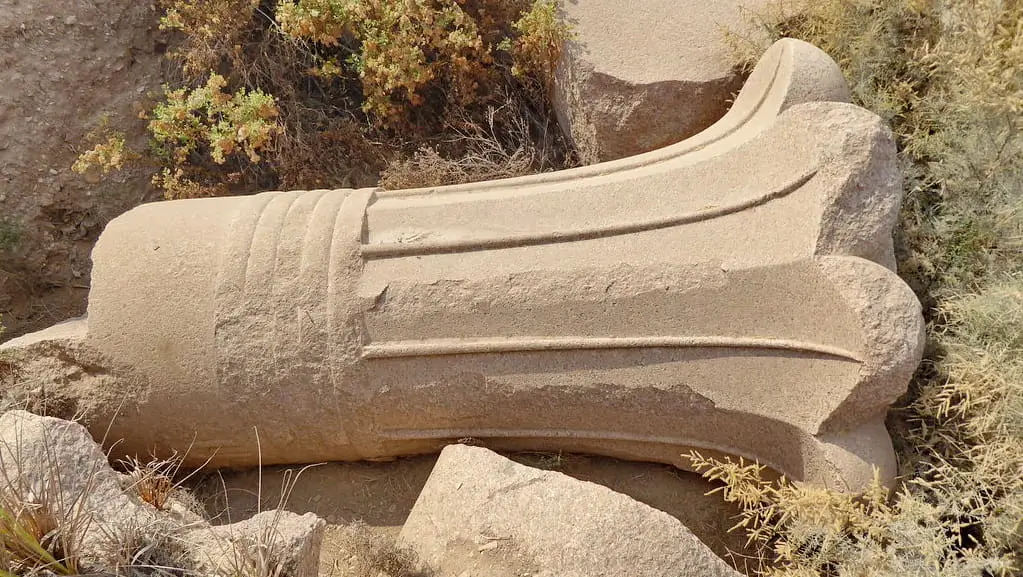
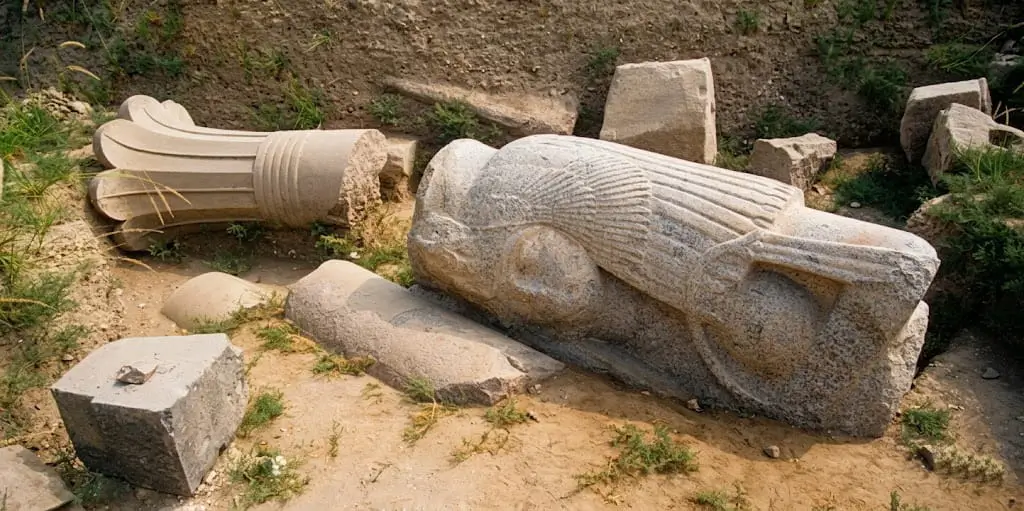
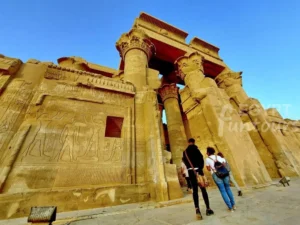
Today, Tell Basta functions as a captivating open-air museum. Massive stone fragments and shattered pharaonic monuments vividly tell the story of its glorious past.

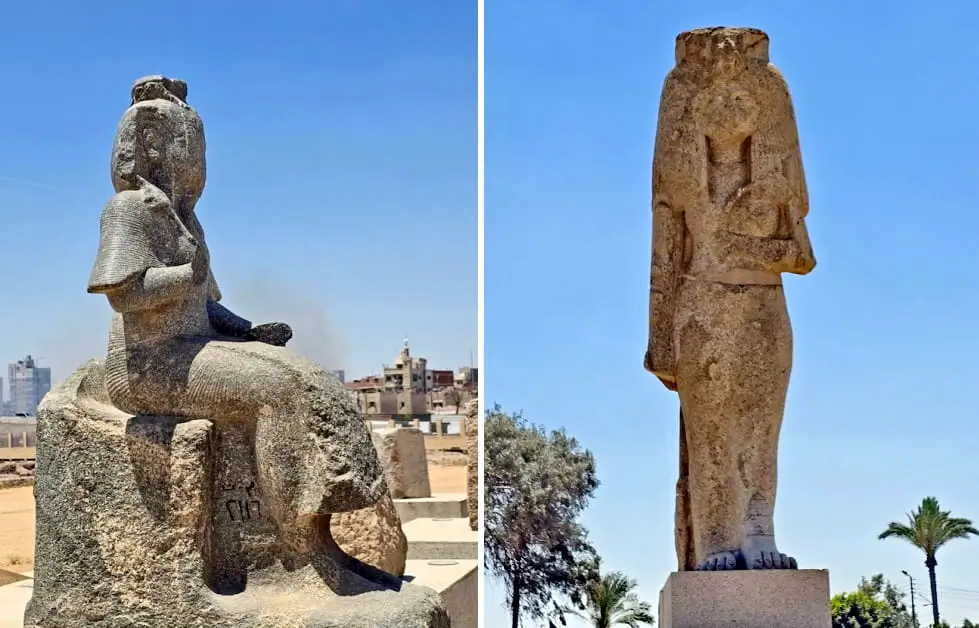
Visitors can explore extensive catacombs that once held thousands of sacred feline mummies. The site also features beautifully restored monumental statues of Ramesses II and his daughter, Queen Meritamun. These ruins offer a profound window into an era when the lines between humans, animals, and gods beautifully blurred. For any traveler or history lover, the story of Bubastis promises an unforgettable journey into the Nile Delta.

FUN

Etymology and Identity: From Per-Bastet to Tell Basta

Etymology and Identity From Per-Bastet to Tell Basta

The name of this ancient city changed across different languages and eras. However, its identity always remained tied to its patron deity.

The Pharaonic Roots

The ancient Egyptians originally named the city Per-Bastet ($Pr-Bꜣstt$). In their language, this phrase translates to “The House of Bastet” or “The Domain of Bastet.” This name clearly shows that the city functioned primarily as the earthly home for the famous goddess.

Classical and Biblical Names

As the city grew in international importance, neighboring cultures adapted the name into their own languages:

  • The Hebrew Bible: The Old Testament refers to the city as Pi-beseth (Ezekiel 30:17). The text groups it with Heliopolis as an influential Egyptian religious center.
  • The Greek World: In the fifth century BCE, the Greek historian Herodotus visited the Delta. He and his contemporaries Hellenized the name into Bubastis ($\text{Βούβαστις}$). This version became the standard name throughout the Western world.

The Modern Arabic Name

Today, locals and archaeologists call the site Tell Basta. The Arabic word Tell means “mound” or “hill.” Over thousands of years, the collapse of old mudbrick houses and temples created a giant artificial hill. Modern towns eventually grew around this historical mound, preserving the ancient name Basta at its core.

FUN

Historical Evolution Across the Dynasties

Historical Evolution Across the Dynasties

Tell Basta boasts a long, rich history that spans over 3,000 years. Archaeologists have uncovered architectural layers from nearly every major era of ancient Egypt.

The Old Kingdom: Royal Foundations

Monumental construction at Tell Basta began during the Pyramid Age. Excavators have found stone blocks bearing the names of the 4th Dynasty pharaohs Khufu and Khafre.

By the 6th Dynasty, the city gained immense political and spiritual weight. Pharaohs Teti and Pepi I built Ka-temples here to sustain their royal souls in the afterlife. During this early era, Bastet did not appear as a gentle domestic cat. Instead, artists depicted her as a fierce lioness who protected the pharaoh and unleashed the harsh power of the sun. Elite officials from this period built beautifully decorated, rock-cut tombs nearby.

The Middle Kingdom: The Administrative Hub

During the Middle Kingdom, the city transformed into a powerful regional administrative center. In the 1960s, Egyptian archaeologists uncovered a massive mudbrick palace complex here. This sprawling structure measured roughly 16,000 square meters.

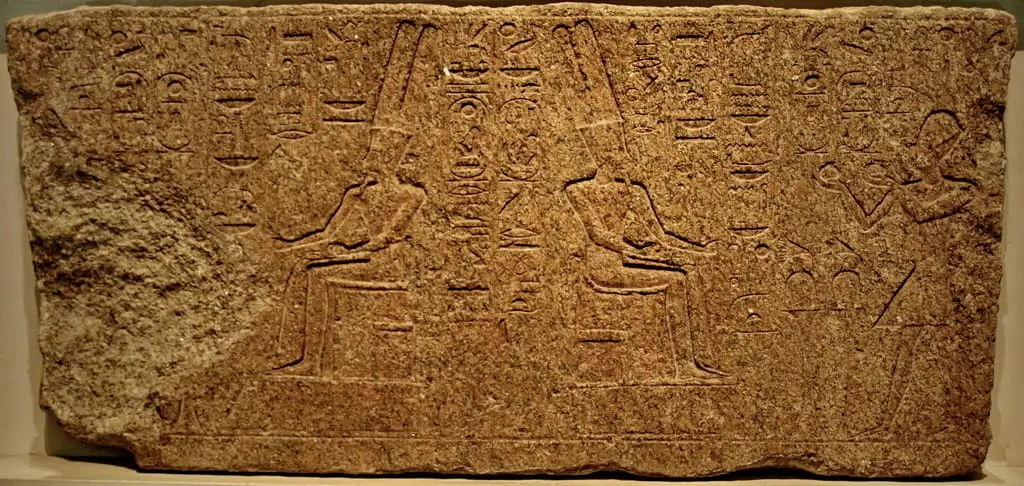
Inside the ruins, researchers found a beautifully carved stone door lintel. It shows Pharaoh Amenemhat III celebrating his Heb Sed (royal jubilee) festival. Scholars believe local governors (nomarchs) used this palace as their luxury seat. The pharaoh himself likely stayed here during royal tours of Lower Egypt.

The New Kingdom: Imperial Gateway

During the New Kingdom, Bubastis flourished as a vital military and trade base. Its strategic location allowed the pharaohs to control routes leading to the Sinai Peninsula and the Eastern Mediterranean.

Ramesses II took a special interest in the city. He heavily renovated the central Temple of Bastet and added a monumental stone gateway. He also scattered the temple grounds with colossal red granite statues of himself. Just north of the temple, wealthy nobles built elite tombs. These burials included Iuti, a high-ranking vizier, as well as Hori I and Hori II, two prominent nobles who served as the “Viceroy of Kush” during the 19th and 20th Dynasties.

The 22nd Dynasty: The Capital of Egypt

Tell Basta reached the absolute apex of its geopolitical power during the Third Intermediate Period. A powerful ruler of Libyan descentShoshenq I, founded the 22nd Dynasty. He officially elevated his ancestral home, Bubastis, to the capital city of all Egypt.

The city quickly transformed into a wealthy royal metropolis. Subsequent kings poured incredible riches into the local infrastructure. Osorkon II built a magnificent red granite Festival Hall (Heb Sed Portal) to celebrate his long reign. Craftsmen covered the portal with intricate reliefs showing the sacred rituals of the royal jubilee. Osorkon II also added a giant hypostyle hall and constructed a specialized temple adjacent to it for Maahes, a fierce lion god and the son of Bastet.

Ain Sokhna: Your Quick Guide to Cairo’s Red Sea Paradise

Discover Ain Sokhna, Cairo's closest Red Sea paradise, located just 1.5 hours away. This stunning...
Related post
FUN

The Central Temple of Bastet: Herodotus’ Account

The Central Temple of Bastet Herodotus’ Account

In the fifth century BCE, the famous Greek traveler and historian Herodotus visited Bubastis. He wrote extensively about the city in Book II of his Histories. He noted that while other Egyptian temples were larger or costlier, none offered a more beautiful visual experience than the Temple of Bastet.

An Island in the City

Herodotus described the temple as a unique island sanctuary. Over many centuries, citizens continuously rebuilt their mudbrick homes on top of older ruins. This process artificially raised the height of the surrounding city streets.

However, the temple itself remained at its original ground level. This clever layout created a sunken basin. As a result, people walking through the city could look down from the streets and view the entire sacred precinct from all sides.

The Twin Canals

Two broad canals branched off the Nile River to isolate the temple complex. Each waterway measured 100 feet wide. Dense groves of tall, leafy trees lined the banks of both channels.

The canals swept around opposite sides of the enclosure wall and met at the rear entrance. A stone wall carved with grand reliefs enclosed the square temple grounds. Inside, a beautiful grove of trees surrounded the innermost shrine, which housed the sacred statue of the goddess.

The Temples of Tanis: An Architectural Guide to Egypt’s Recycled Sanctuaries

The Tanis temples represent a monumental feat of architectural adaptation and religious ambition during Egypt’s...
Related post
FUN

The Great Festivals of Bubastis

The Great Festivals of Bubastis

During the Late Period, Bubastis became the most popular pilgrimage destination in Egypt. Herodotus claimed that up to 700,000 people traveled to the city each year to honor Bastet.

Joyous River Processions

The festival began with mass flotillas of boats packed with pilgrims traveling down the Nile Delta. People crowded onto the barges together.

As they drifted past local villages, women played the sistrum (a sacred bronze rattle) and men played flutes. Other pilgrims sang, clapped their hands, and shouted playful jokes at the villagers watching from the riverbanks.

Ritual Intoxication

When the boats arrived at Tell Basta, the crowds celebrated with massive animal sacrifices and grand feasts. Herodotus recorded that pilgrims consumed more grape wine during this short festival than during all the rest of the year combined.

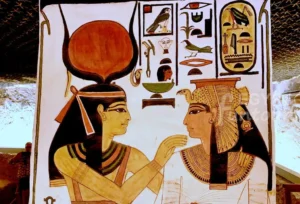
In ancient Egyptian theology, this heavy drinking served a profound spiritual purpose. The ritual revelry pacified the fiery, destructive wrath of the lioness goddess Sekhmet. The music and wine coaxed her to adopt the gentle, benevolent, and fertile persona of Bastet the cat.

The Cult of Feline Mummification

The Cult of Feline Mummification

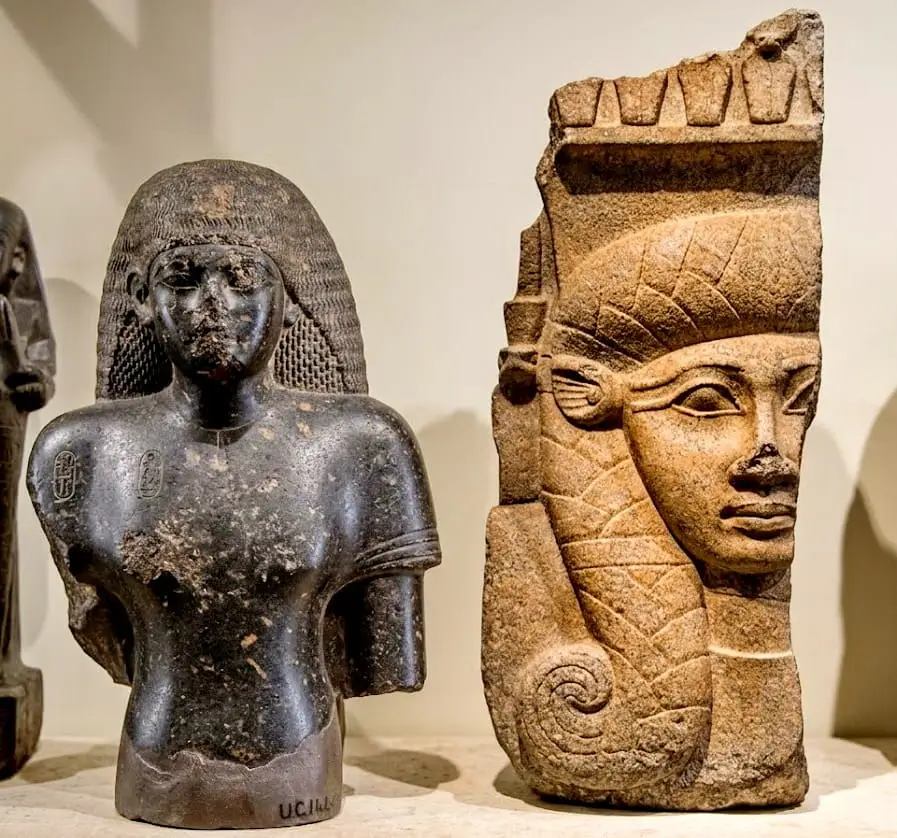
As domestic cats became essential members of Egyptian households, the visual image of Bastet changed. By the Late Period, artists stopped portraying her as a fierce lioness. Instead, they depicted her as a graceful domestic cat or a cat-headed woman holding a sistrum and a protective collar. This artistic shift triggered a massive religious industry centered around animal mummification.

Eternal Messengers to the Goddess

Pilgrims traveling to Tell Basta regularly bought mummified cats from the temple priests. Worshippers used these mummies as votive offerings. They believed the spirit of the cat would act as an eternal messenger, carrying personal prayers directly to the ears of Bastet.

+-------------------------------------------------------------+
|               THE FELINE VOTIVE OFFERING CYCLE              |
|                                                             |
|   [Pilgrim Arrives] ---> [Buys Mummy from Priest]           |
|                                 |                           |
|                                 v                           |
|   [Bastet Hears Prayer] <--- [Cat Embarks to Afterlife]     |
+-------------------------------------------------------------+

The Subterranean Catacombs

Excavations at Tell Basta have revealed an incredible network of subterranean, brick-lined catacombs. These underground galleries contained hundreds of thousands of mummified cats.

While some elite mummies rested inside beautifully carved wooden or bronze cat-shaped coffins, most received simpler treatment. Modern X-ray scans show that temple priests streamlined the process. They often used a basic drying process without even removing the animal’s internal organs.

Shatby: Where Ancient History Meets the Intellectual Heart of the City

Shatby represents more than a mere coordinate on a map; it stands as the physical...
Related post
FUN

Major Archaeological Breakthroughs

Major Archaeological Breakthroughs

Local builders frequently targeted Tell Basta for stone-quarrying over the centuries. Despite this destruction, formal excavations have yielded spectacular historic treasures.

The Rediscovery by Naville (1887–1889)

Swiss Egyptologist Édouard Naville initiated the first systematic excavations of the site in the late nineteenth century. He officially uncovered the grand ruins of the central Temple of Bastet. His work confirmed that Tell Basta was indeed the magnificent city of Bubastis that Herodotus had described.

The Bubastis Hoards (1906)

During the construction of a local railway line near the ruins, workers accidentally struck a buried treasure cache. Known today as the Bubastis Hoard, this discovery contained spectacular silver vessels and gold jewelry.

The find included a golden cup shaped like lotus petals. It bore the name of Queen Tawosret, a famous ruler from the late 19th Dynasty. A second nearby cache revealed heavy gold armlets belonging to Ramesses II. These discoveries proved that Bubastis functioned as a wealthy international trading hub that imported silver from distant lands like Greece.

The Decree of Canopus Copy (2004)

A joint German-Egyptian archaeological mission made history in 2004 by unearthing a well-preserved stone stela. The monument recorded the Decree of Canopus (238 BCE) from the reign of Ptolemy III.

Just like the famous Rosetta Stone, the decree featured the exact same text carved in three distinct scripts: Hieroglyphs, Demotic, and Ancient Greek. This invaluable find provided researchers with vital data to better understand and decipher the ancient Egyptian language.

The Colossal Statue of Queen Meritamun

In recent decades, archaeologists successfully recovered and restored a monumental red granite statue of Queen Meritamun. She was the beloved daughter and Royal Wife of Ramesses II. The massive statue stands nine meters tall and serves as the stunning centerpiece of the modern open-air museum today.

The Roman Well and the Holy Family
The Roman Well and the Holy Family

Tell Basta holds a sacred position in Christian history and Coptic tradition. During the Late Roman Period, the city remained a thriving urban center. According to biblical tradition, when the Holy Family fled Judea to seek safety, Bubastis served as their primary stop in the eastern Nile Delta.

The Falling Idols and the Miracle Spring

Local Coptic lore states that when the Virgin Mary, Joseph, and the infant Jesus entered the city gates, the heavy stone statues of the old pagan gods instantly shattered and fell to the ground. Needing fresh water for the child, Joseph struck the dry ground. A freshwater spring miraculously opened up at his feet.

The Archaeological Discovery

In 1991, archaeologists from Zagazig University officially located a deep, brick-lined Roman-era well on the temple grounds. The location and design perfectly matched ancient historical accounts.

Today, the Well of the Holy Family stands as a major pilgrimage site. Every year on the first of June, Christians gather here to mark the exact day Christ entered Egypt.

Visiting Tell Basta Today

Today, Tell Basta functions as a beautifully organized open-air museum. It offers a peaceful escape from the crowded streets of nearby Zagazig.

What to See

  • The Statue Garden: Walk among the monumental red granite statues of Ramesses II and the stunning, nine-meter-tall depiction of Queen Meritamun.
  • The Temple Ruins: Explore the sunken stone foundations of the central Temple of Bastet and trace the paths of the ancient canals.
  • The Indoor Museum: Visit the on-site indoor museum building. It securely houses smaller artifacts discovered during local excavations, including gold jewelry, coins, and beautifully preserved bronze cat statues.

Travel Tips

The site sits just eighty kilometers northeast of Cairo, making it an excellent option for a day trip. You can easily reach the ruins by taking a regional train or hiring a private car to Zagazig. The museum grounds feature clean walking paths and clear informational signs in both Arabic and English.

For the best experience, try to visit during the cooler morning hours. This timing allows you to photograph the red granite monuments under the best natural light.


FUN
God_Anubis_Icon
6 Days Luxury Tour {Egypt Treasures} - Cairo and Nile Cruise Affordable Tour Package

A trip of a lifetime in a 10 hour layover!

We recently scheduled a layover tour in Cairo through Egypt Fun Tours. Our layover was 10 hours and we scheduled the tour just about a day and a half before our arrival. When we arrived in Cairo we very easily made our way out of the airport (after getting our

More »

AMAZING TOUR, SOLO TRAVELER.

I am a California woman who traveled to Egypt alone, and thanks to Egypt Fun Tours, I had a great time. Hani, Mohammed, Kamal, and David (my driver) were very professional and very knowledgeable. I appreciate how respectful they were and how protective they were of me. They showed me

More »

Alexandria! Wow!

Muhammad is the best! He showed me a world I never thought possible! The tombs in Alexandria, by far, were my favorite! I never knew there was a place on earth that contained both Greek and Egyptian carvings in the same tombs! The history and culture of Egypt is so

More »

Very Considerate and Helpful

Guide and driver were on time, open to my requests and took care that I felt safe and saw the Pyramids and parts of old cairo during my less than 24 hour stay between flights. Office staff were great in communicating by email before and during the trip.

More »
God_Anubis_Icon

Top-rated Tour Packages

God_Anubis_Icon