The Story of the Two Brothers: A Guide to the Tale of Bata and Anubis

The Story of the Two Brothers is a sweeping epic of betrayal, supernatural endurance, and divine justice. The narrative begins with a domestic crisis: the wife of the elder brother, Anubis, fails to seduce the younger brother, Bata, and falsely accuses him of assault. This lie forces Bata to flee into exile in the mystical Valley of the Cedar, where he places his heart atop a tree for safekeeping. Despite finding a brief moment of peace with a divinely created wife, Bata is betrayed again when she becomes Pharaoh's Queen and orders his cedar tree to be cut down. What follows is a spectacular series of resurrections; Bata survives through multiple incarnations—first as a sacred bull, then as two towering Persea trees, and finally as a human prince born to the very Queen who tried to destroy him. Ultimately, Bata ascends the throne of Egypt, executes the treacherous Queen, and reunites with Anubis, proving that truth and the bond of brotherhood are more powerful than death itself.

The Story of The Two Brothers: The World’s Oldest Epic

Imagine a story that combines a family feud, a supernatural transformation, and a royal conspiracy. This is not a modern thriller. Instead, it is The Story of the Two Brothers, an ancient Egyptian masterpiece written over 3,000 years ago. Most scholars agree that this text, found in the famous Papyrus D’Orbiney, represents the earliest known example of the “fairy tale” genre. However, it is much more than a simple bedtime story.

First, the narrative serves as a window into the morality of the New Kingdom. Second, it explores complex themes like reincarnation and divine justice. Throughout this guide, we will analyze why this tale remains a cornerstone of world literature. We will look at the lives of the two protagonists, Bata and Anubis, and discover how their journey mirrors the eternal struggle between truth and deception. Consequently, by the end of this pillar, you will understand the deep cultural significance of this Egyptian legend.

The Domestic Betrayal: Loyalty Tested by Deceit
The Domestic Betrayal Loyalty Tested by Deceit - the story of the Two Brothers

The story begins in a rural setting, long before the brothers become legends. In this section, we meet Anubis, the elder brother, and Bata, his loyal sibling. Their relationship defines the Egyptian ideal of family unity—at least, in the beginning.

Life in Harmony
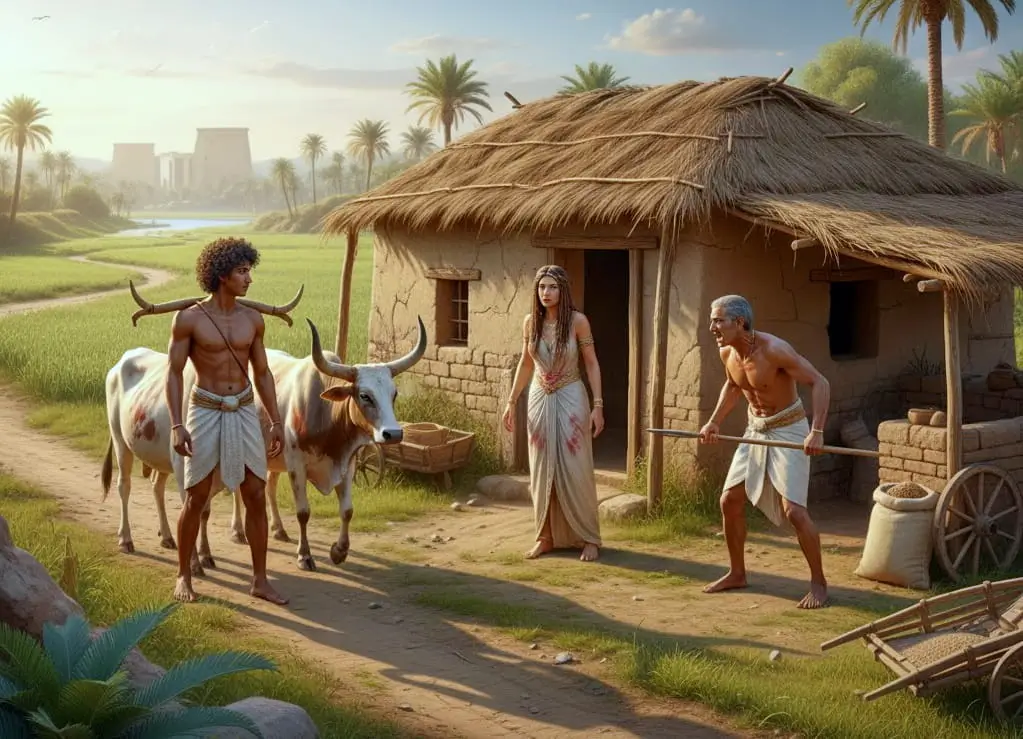
Life in Harmony, the story of the two brothers - the story of the Two Brothers

Anubis is a settled man with a home, a wife, and a steady life. Bata, the younger brother, lives with them. However, Bata is no ordinary laborer. He is described as having the “strength of a god.” He works the fields, tends the cattle, and performs every chore with perfection. Furthermore, the story tells us that Bata has a magical connection to nature. He can speak to his cows, and they, in turn, guide him to the best pastures. Because of this harmony, the household prospers. For many years, the two brothers lived in peace, showing that hard work and loyalty lead to a blessed life.

The Moment of Betrayal

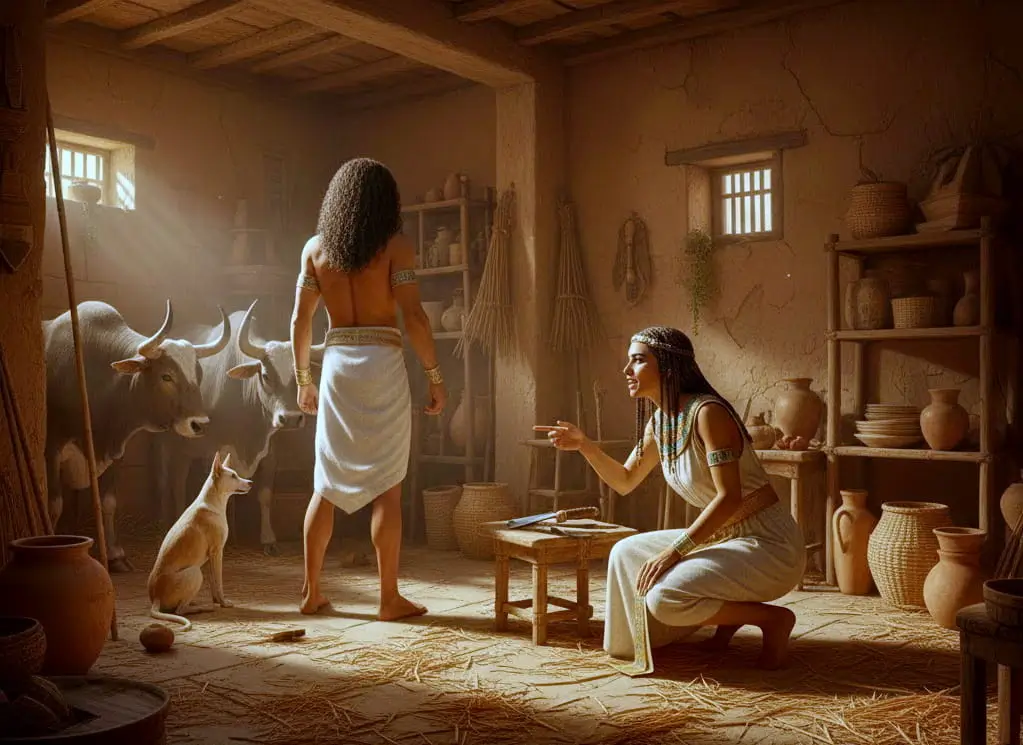
Peace, however, rarely lasts in ancient epics. One day, while the brothers are working in the fields, Anubis sends Bata back to the house to fetch more seed. When Bata arrives, he finds Anubis’s wife braiding her hair. In a sudden turn of events, she becomes overwhelmed by Bata’s strength and beauty. She asks him to stay with her and “lie with her.”

Bata reacts with immediate horror. He does not hesitate to defend his brother’s honor. He tells her plainly that Anubis is like a father to him, and she is like a mother. Therefore, he rejects her completely and returns to the fields. He promises to keep her secret, hoping to maintain the family’s peace.

The False Accusation

The False Accusation; the story of the two brothers

Unfortunately, the wife is consumed by fear and spite. She realizes that her rejected advances could lead to her own ruin. To protect herself, she devises a wicked plan. She applies grease and paint to her body to look like she has been beaten. When Anubis returns home at sunset, he finds his wife in tears.

She tells a devastating lie. She claims that Bata tried to seduce her and beat her when she refused. Because Anubis is blinded by sudden rage, he does not stop to investigate. Instead, he grabs a spear and hides in the shadows of the stable, waiting to kill his younger brother. This moment marks the transition from a domestic drama to a high-stakes survival story.

The Divine Intervention
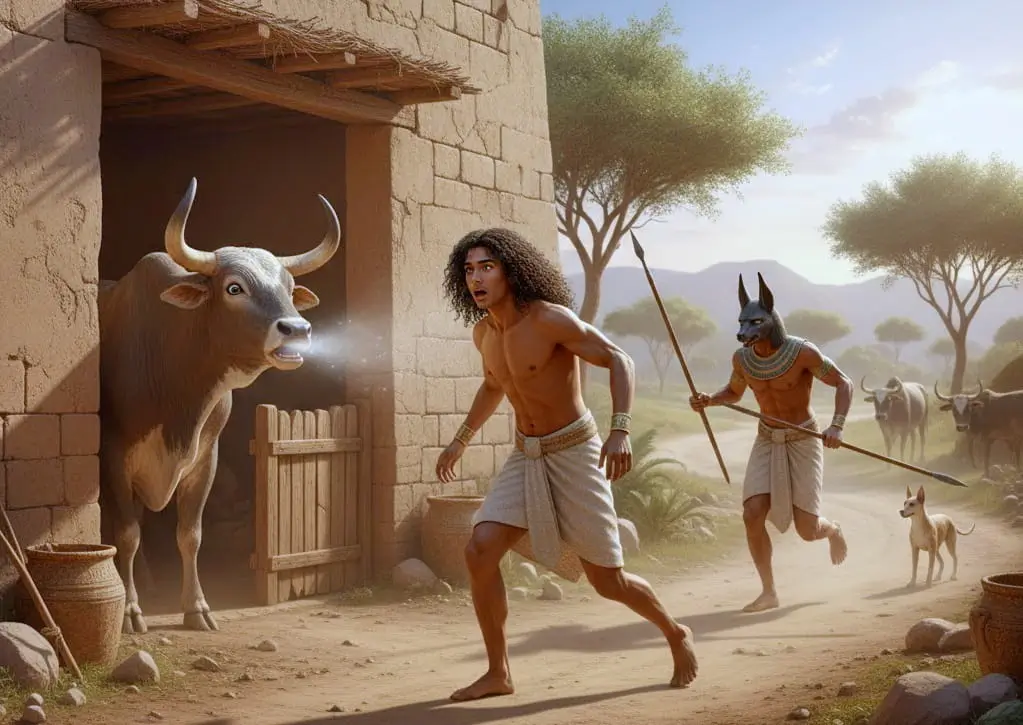
The Divine Intervention

As Bata approaches the stable with his cattle, the lead cow speaks to him. “Behold,” the animal warns, “your elder brother stands before you with a spear to kill you.” Immediately, Bata realizes the danger and begins to run. Anubis pursues him with the spear in hand, fueled by the lies of his wife.

At this critical moment, Bata cries out to the sun god, Re-Horakhty. He asks the god to judge between the righteous and the guilty. Because the gods favor the truth, Re-Horakhty creates a miraculous barrier: a massive body of water filled with hungry crocodiles. Suddenly, the brothers are separated by a literal river of divine judgment. This ensures that Anubis cannot reach Bata, allowing the truth to finally come to light.


FUN

The Valley of the Cedar: A Liminal Exile

The Valley of the Cedar A Liminal Exile - the story of the Two Brothers

Once the physical barrier separated the siblings, the truth emerged. Across the water, Bata revealed the wife’s deception. To prove his purity, he performed a symbolic act of self-mutilation and announced his departure. This marks a major shift in The Story of the Two Brothers, moving from the human world to the mystical “Valley of the Cedar.”

The Sacred Heart and the Cedar Tree

The Sacred Heart and the Cedar Tree

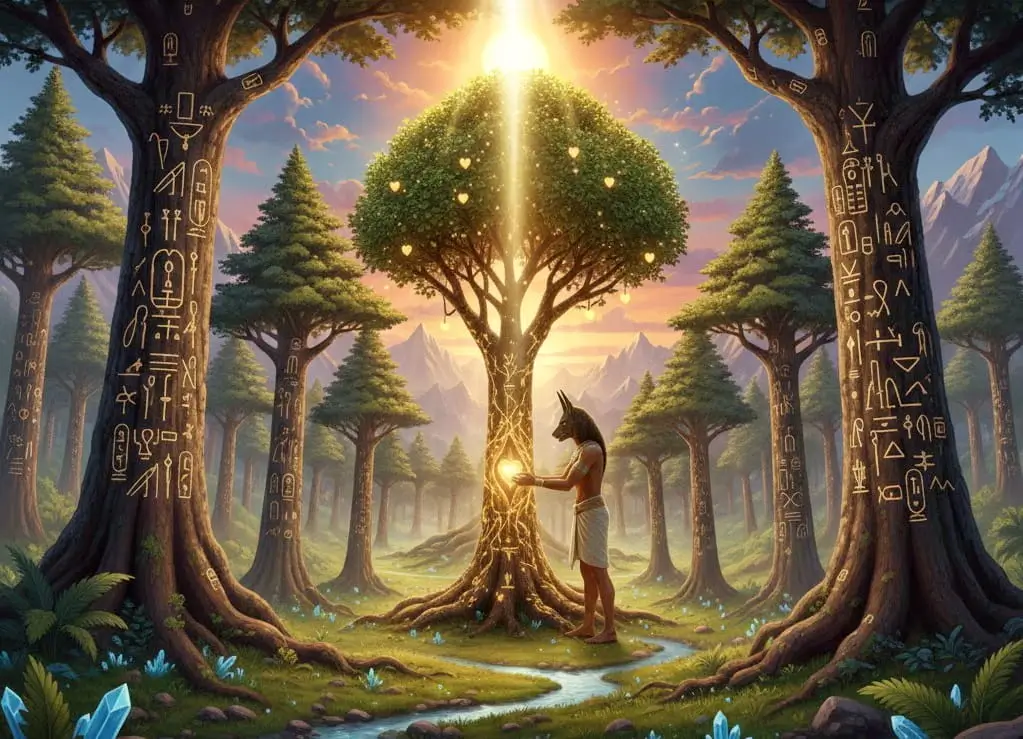
Bata journeyed to a distant land, likely modern-day Lebanon, which the Egyptians viewed as a place of mystery. There, he placed his heart on the highest flower of a great cedar tree. This act is crucial for two reasons. First, it protected his life force from his enemies. Second, it established a magical link: if the tree fell, Bata would die.

While Bata lived in isolation, Anubis returned home. Driven by the truth, Anubis finally saw his wife’s wickedness. Consequently, he executed her and cast her body to the dogs. This act restored justice in the household, but the bond between the brothers remained broken by distance and magic.

The Creation of the Divine Wife

The Creation of the Divine Wife - the story of the Two Brothers

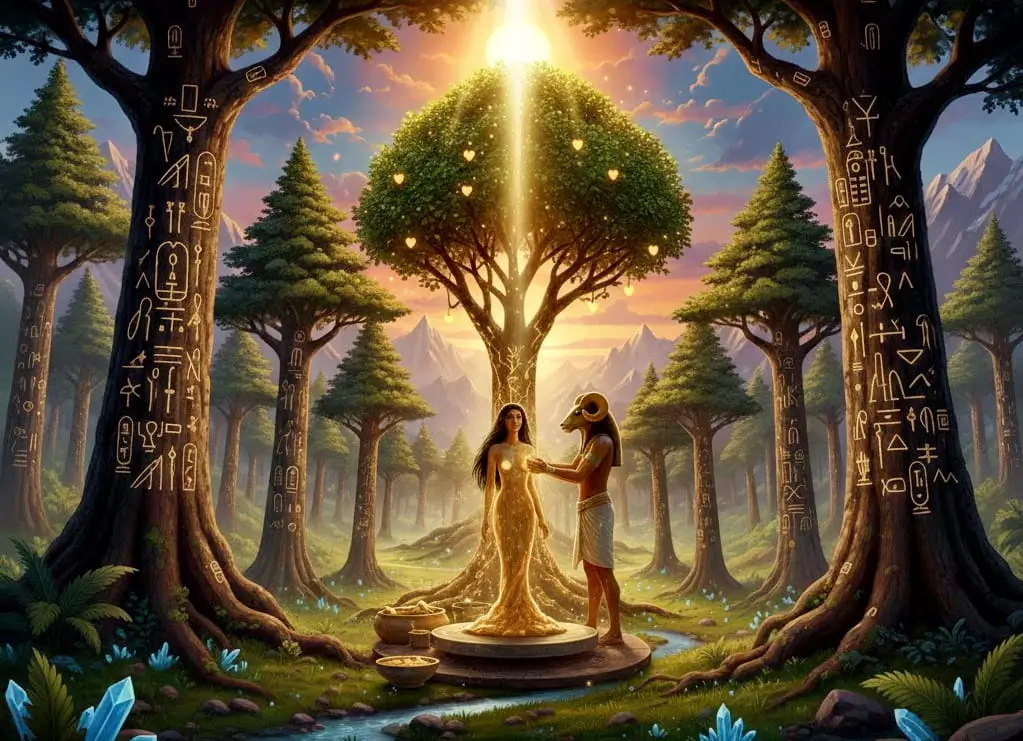
Even though Bata found peace in the valley, the gods felt his loneliness was unjust. Khnum, the god who fashions humanity on a potter’s wheel, decided to act. He created a woman for Bata who was more beautiful than any mortal. However, this gift came with a warning. The Seven Hathors—goddesses who decree one’s fate—prophesied that she would die a “sharp death.”

Initially, the couple lived happily. But soon, the wife’s curiosity led to disaster. Despite Bata’s warnings never to go near the sea, she wandered to the shore. The Sea (personified as a god) chased her, snatching a lock of her hair. This lock floated all the way to Egypt, where its divine scent alerted the Pharaoh to her existence.

The Ultimate Betrayal of the Heart

The Ultimate Betrayal of the Heart

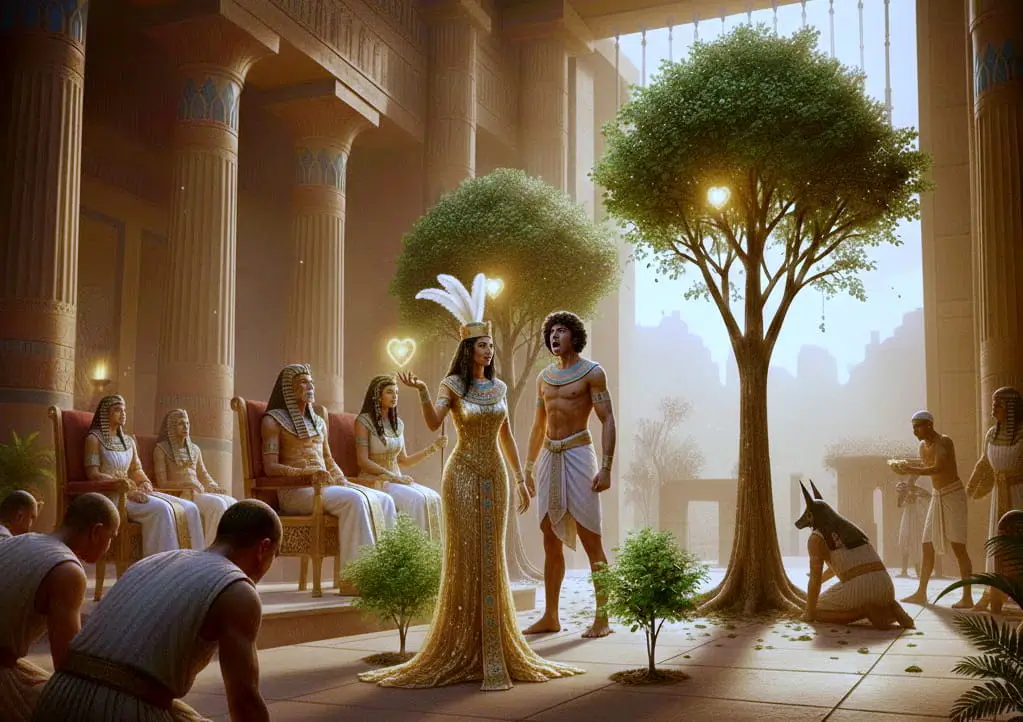
Pharaoh was captivated by the lock of hair and sent messengers to find the woman. Eventually, through bribes and soldiers, the wife was brought to Egypt. Unlike the loyal Bata, the wife quickly embraced her new life as a Queen. To ensure Bata could never reclaim her, she told Pharaoh his secret: the cedar tree. Following her instructions, Pharaoh’s men cut down the tree. As the cedar flower fell, Bata’s heart stopped, and he died in the distant valley.

FUN

Resurrection and the Power of Transformation

Resurrection and the Power of Transformation - the story of the Two Brothers

In many ways, The Story of the Two Brothers is a tale of cycles. Just as the sun sets and rises, Bata’s death was merely the beginning of a new phase.

Anubis’s Journey of Redemption

Anubis’s Journey of Redemption

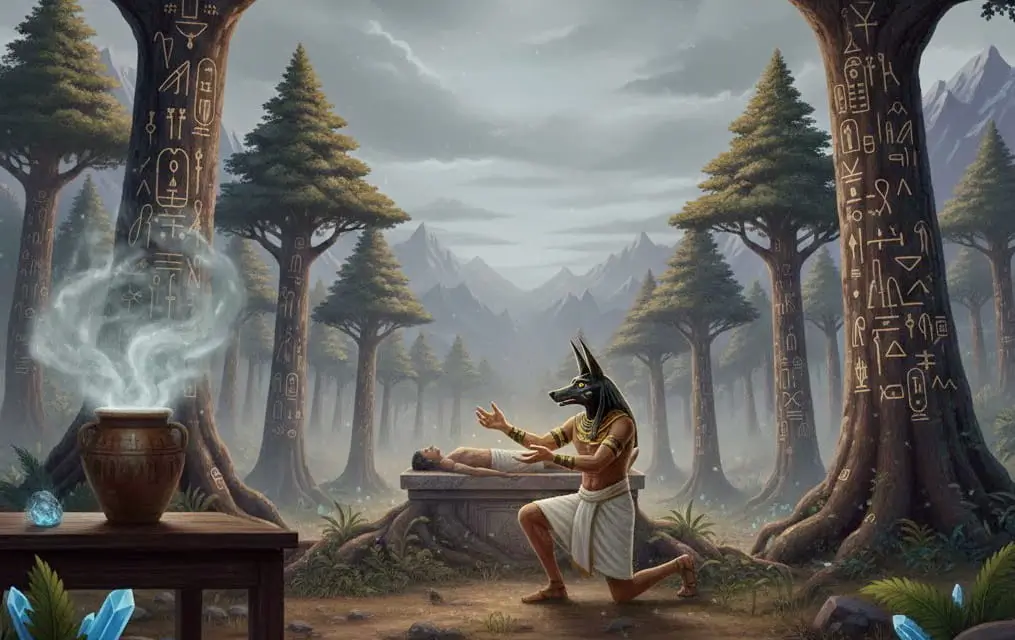
Back in Egypt, Anubis received a sign. His jar of beer turned cloudy—a prearranged signal that his brother was in danger. Without hesitation, Anubis traveled to the Valley of the Cedar. He found Bata’s lifeless body and spent three long years searching for the heart.

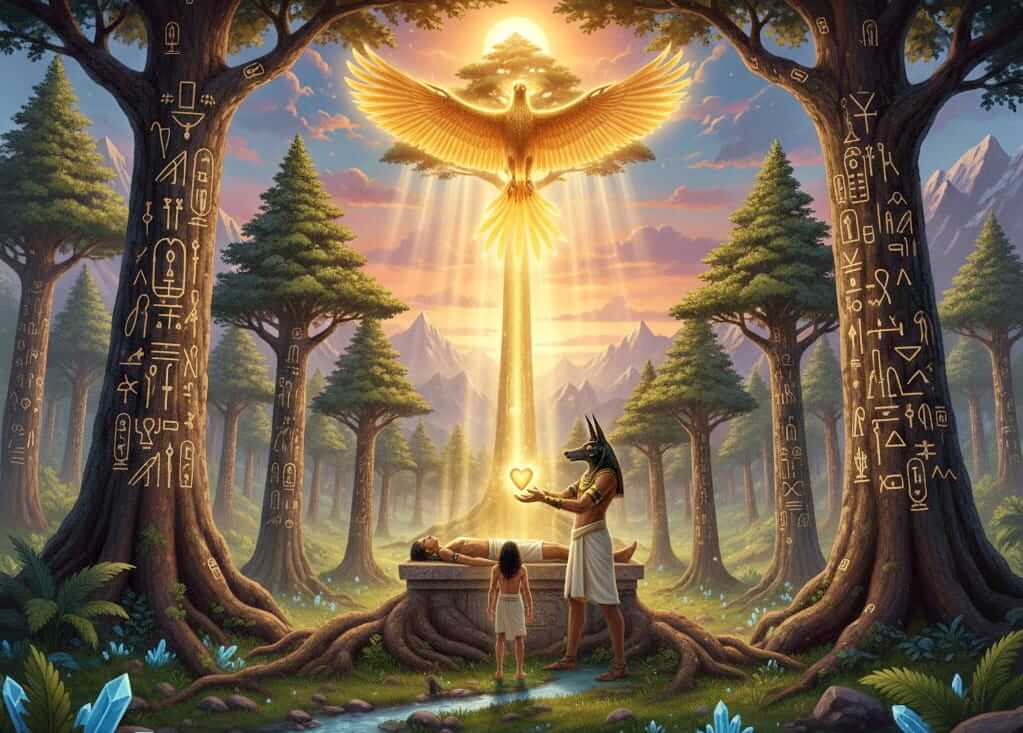
Finally, in the fourth year, he found a seed-like fruit beneath the cedar. He placed the “heart” into a bowl of cool water. As the heart absorbed the water, Bata’s body began to quiver. Eventually, he drank the water himself, and his soul returned to his body. The brothers embraced, marking the first of several resurrections in the story.

The Transformation into the Sacred Bull

The Transformation into the Sacred Bull - the story of the Two Brothers

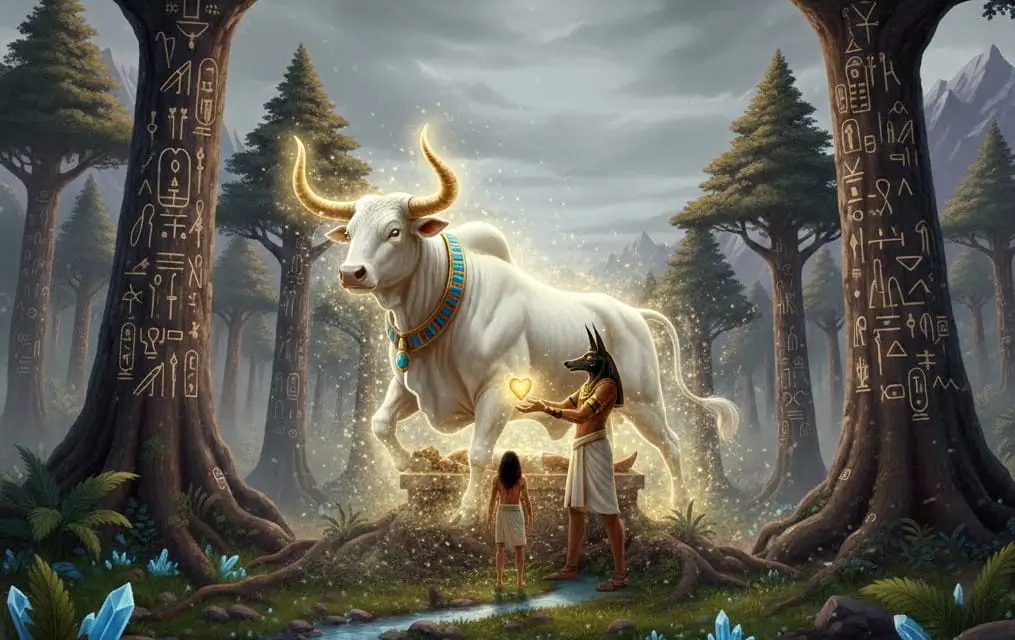
Bata did not want to remain in hiding. Instead, he sought to confront the Queen who betrayed him. Using his magical powers, he transformed into a massive, beautiful bull. Anubis led this sacred animal to the palace, where it became the favorite of the Pharaoh.

One day, while the Queen was admiring the bull, Bata leaned in and whispered to her: “Look at me, I am still alive.” Terrified, the Queen manipulated Pharaoh once again. She asked to eat the liver of the bull. Despite Pharaoh’s reluctance, he ordered the sacrifice. However, as the bull’s throat was cut, two drops of blood fell by the palace gates.

The Persea Trees and the Final Rebirth

The Persea Trees and the Final Rebirth

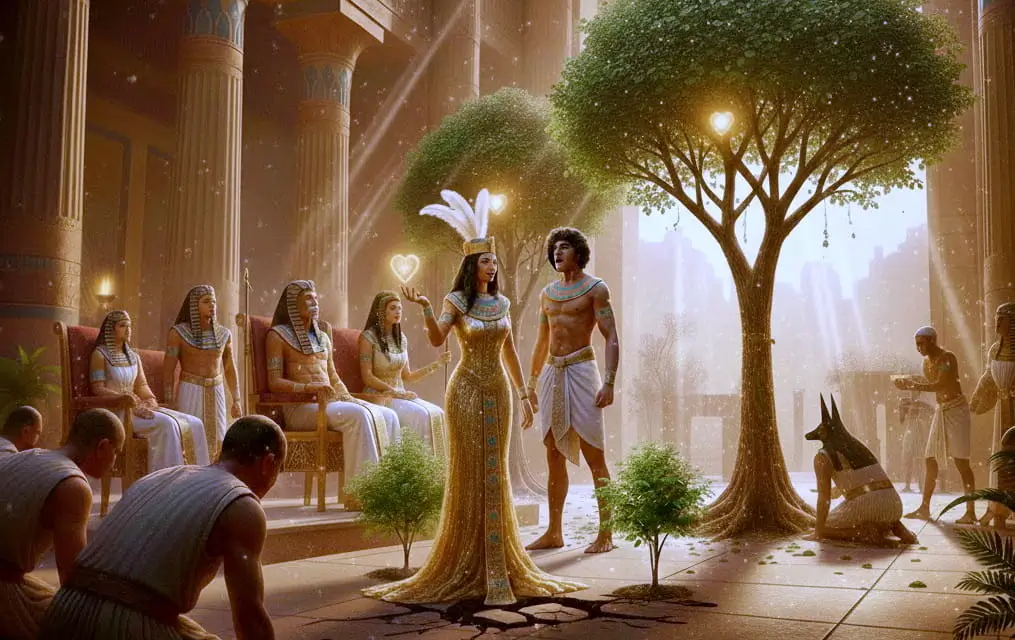
From those two drops of blood, two magnificent Persea trees grew overnight. This miracle shocked the entire court. Again, the trees spoke to the Queen, revealing Bata’s enduring spirit. Enraged, she ordered the trees to be cut down to make furniture.
However, fate would not be denied. As the carpenter felled the trees, a tiny splinter flew into the Queen’s mouth. She swallowed it and immediately became pregnant. This was not a normal pregnancy; it was the final stage of Bata’s plan to reclaim his rightful place.

The Unification Battle by King Narmer

The Unification Battle by King Narmer The unification battle of King Narmer is shown on...

Related post
FUN

The Prince, the King, and the Restoration of Order

The Prince, the King, and the Restoration of Order

The splinter that the Queen swallowed was not merely wood; it was the essence of Bata. Consequently, when she gave birth, she unknowingly brought her husband’s soul back into the world as her own son. Because the Pharaoh loved this child dearly, he named the boy the Crown Prince of Egypt.

The Ascendance of the New King

As the years passed, the boy grew in wisdom and strength. He was eventually appointed as the “Viceroy of the whole land.” When the old Pharaoh finally passed away, the prince ascended the throne. At this point, the true identity of the new King was still a secret to the public, but the time for justice had arrived.

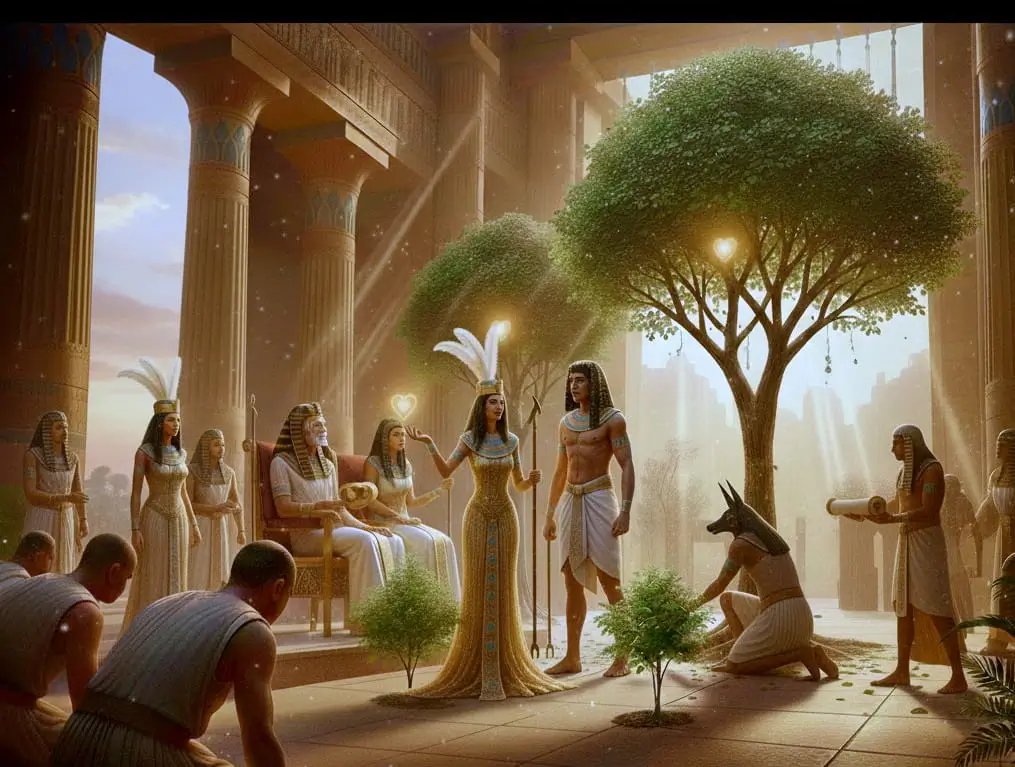
Bata, now the King of Egypt, summoned his high officials and the Great Council. He also ordered the Queen to be brought before him. In a dramatic revelation, he recounted the entire saga of The Story of the Two Brothers. He explained the false accusations from years ago, the magical cedar heart, and the various deaths he suffered at her hands.

The Final Judgment

The King’s testimony was undeniable. According to the text, the officials and the council agreed with his judgment. The Queen was executed, finally fulfilling the grim prophecy of the Seven Hathors. Her “sharp death” served as a warning against those who would break the sacred bonds of marriage and brotherhood.

Furthermore, Bata did not forget his elder brother. He sent for Anubis and brought him to the palace. He honored Anubis by naming him the Crown Prince. For twenty years, Bata ruled Egypt with wisdom and prosperity. When he eventually passed on to the afterlife, Anubis took the throne, ensuring that the two brothers remained the pillars of the Egyptian state even in death.

Horus vs Seth: The Epic 80-Year Battle for the Throne of Egypt

The Horus vs Seth saga represents the ultimate legal and cosmic struggle of Ancient Egypt,...
Related post
FUN

Why This Story Matters Today

Why This Story Matters Today; the story of the two brothers

The Story of the Two Brothers is more than just an ancient script; it is a fundamental piece of human psychology. It uses several “motifs” that appear in later cultures, such as the “Potiphar’s Wife” trope in the Bible and the “External Heart” trope in European folk tales.

Key Takeaways for the Reader:

  • The Power of Truth: No matter how many times the Queen tried to “kill” the truth, it transformed and returned stronger.
  • Divine Connection: The story shows that the ancient Egyptians believed the gods were deeply involved in human justice.
  • Brotherly Loyalty: Despite the spear and the separation, the bond between Anubis and Bata survived through the strength of forgiveness.

The Legacy of the Papyrus D’Orbiney

Tale_of_two_brothers; The Legacy of the Papyrus D’Orbiney

To wrap up, The Story of the Two Brothers stands as a testament to the sophistication of New Kingdom literature. It successfully blends domestic issues with cosmic transformations, making it a “pillar” of Egyptian mythological studies. By understanding the journey of Bata and Anubis, we gain a deeper appreciation for how the ancients viewed life, death, and the inevitable triumph of justice.

Pelusium: Military Strategy, Greek Mercenaries, and the End of Pharaonic Rule

The Battle of Pelusium (525 BCE) was the decisive engagement that led to the Persian...
Related post
FUN

FAQs: Deep Dive into the Tale

1. Is the “Tale of Bata and Anubis” based on real historical figures?

While the names Anubis and Bata are those of Egyptian deities, the story is considered a work of literary fiction or mythology rather than a historical record. However, it reflects the social reality of the New Kingdom (c. 1550–1070 BCE). During this time, the cult of the bull-god Bata was prominent in the 17th Nome of Upper Egypt. The story likely served to link local folklore with the grander Osirian myths that defined the Egyptian state.

2. How does this story compare to the Biblical story of Joseph and Potiphar’s wife?

The parallels are striking and often discussed by historians. In both stories:

  • A loyal young man is approached by the wife of his master (or brother).
  • The man rejects the advances based on moral integrity and loyalty.
  • The woman, fearing exposure, falsely accuses the man of the very crime she attempted.
  • The man suffers initial punishment or exile but eventually rises to a position of great power (King/Vizier).

This suggests that the “Seductress” motif was a common literary device across the ancient Near East, used to test the hero’s character before his transformation.

3. What is the significance of the “External Heart”?

The concept of Bata placing his heart on a cedar flower is a very early example of the “Soul in the Egg” or “External Soul” motif. This symbolizes that Bata’s physical body was merely a vessel. His true essence—his Ka or Ba—was stored safely in nature. This mirrors the Egyptian practice of mummification, where the body is preserved to ensure the soul has a home, but the story takes it a step further into the realm of magic.

4. Why did Bata perform self-mutilation?

This is one of the more jarring parts of the story for modern readers. In the context of the narrative, Bata’s act of emasculation was a radical proof of innocence. By physically removing the possibility of being a “lover,” he proved to Anubis that his wife’s accusations were biologically and morally impossible. It also signaled Bata’s transition from a “man of the world” to a supernatural being capable of divine transformation.

5. What does the “Valley of the Cedar” represent?

In ancient Egyptian geography, the “Valley of the Cedar” (often identified as Lebanon or the Phoenician coast) represented the edge of the well-mannered world. To the Egyptians, anything outside the Nile Valley was a place of chaos and magic. By moving there, Bata entered a “liminal space”—a doorway between the human world and the world of the gods where physical laws (like staying dead) no longer applied.

Literary Themes and Structural Analysis

The Symbolism of Water and Beer

Notice how liquids act as messengers in the story. The lock of hair travels via the Nile, and the sign of Bata’s death is a change in the Beer. For Egyptians, the Nile was the lifeblood of the earth, and beer was the staple of daily life. When these elements are “corrupted” or carry messages, it indicates that the natural order has been disrupted.

The Role of the “Talking Cattle”

The cows who warn Bata are not just fairy-tale elements. In Egyptian religion, the bull and the cow were sacred symbols of fertility and protection. By having the cattle speak, the scribe Ennana (the author of the papyrus) shows that Bata is in perfect harmony with Ma’at. Even nature itself will rise to protect the righteous man against human lies.

Final Summary of the Scribe’s Intent

The scribe Ennana, who signed the Papyrus D’Orbiney, likely wrote this for a royal audience—possibly during the reign of Seti II. The story reinforces a specific message: Truth is indestructible. No matter how many times the “villain” (the wife) attempts to bury Bata, he returns in a more glorious form—first as a bull, then as a tree, and finally as a King.

Historical Context: The Scribes and the Pharaohs

To truly understand the weight of The Story of the Two Brothers, we must look at the physical object itself. The Papyrus D’Orbiney is not just a transcript; it is a luxury artifact.

The Scribe Ennana

The manuscript was signed by the scribe Ennana, a high-ranking official who lived during the late 19th Dynasty. This was a time of political transition in Egypt. Interestingly, many scholars believe the story might be a political allegory. During the reign of Seti II and the usurper Amenmesse, the Egyptian court was filled with betrayal and shifting loyalties. Consequently, the story of a “rightful heir” being wronged and eventually reclaimed could be a subtle commentary on the royal succession of the time.

The Language of the New Kingdom

The text is written in Late Egyptian, the vernacular language of the New Kingdom. Unlike the formal Middle Egyptian used for religious monuments, Late Egyptian allowed for more fluid, emotional, and descriptive storytelling. This linguistic shift is why The Story of the Two Brothers feels more “modern” and readable compared to older texts like the Pyramid Texts.

Related Resources and Academic Bibliography

For readers, students, and researchers looking to verify the details of The Story of the Two Brothers, the following resources are the gold standard in Egyptology:

Primary Source

  • The Papyrus D’Orbiney (British Museum, EA 10183): The original scroll, measuring nearly 5 meters in length. It was purchased by the British Museum in 1857 from Elizabeth D’Orbiney.

Recommended Reading & Translations

  • Lichtheim, Miriam (2006). Ancient Egyptian Literature, Volume II: The New Kingdom. University of California Press. (This is considered the most authoritative English translation of the text).
  • Simpson, William Kelly (2003). The Literature of Ancient Egypt: An Anthology of Stories, Instructions, Stelae, Autobiographies, and Poetry. Yale University Press.
  • Brunner-Traut, Emma (1989). Altägyptische Märchen. (Crucial for those looking for the Germanic folklore connections to the tale).

Final Checklist for the Reader

As you finish this guide to The Story of the Two Brothers, keep these core narrative pillars in mind:

  1. The Moral Foundation: The story punishes adultery and rewards fraternal loyalty.
  2. The Magical Mechanics: The concept of the soul (the heart) being independent of the body is a precursor to later European “lich” or “horcrux” mythology.
  3. The Social Hierarchy: Even a man who has lost everything (Bata) can become Pharaoh if he is favored by the gods and maintains his Ma’at.
  4. The Divine Balance: Anubis, though initially the “villain” by mistake, finds redemption through his tireless search for his brother.

Final Word on Authority

In the world of Ancient Egyptian literature, few texts provide as much depth as The Story of the Two Brothers. It is a story of survival, of magic, and of the unbreakable bond between two men. By preserving this tale, the scribes of the New Kingdom ensured that the name of Bata—the man who would not be silenced by death—would live forever.

Enjoy the luxury sailing on the Nile river through our 8 days Dahabiya Nile cruise from Luxor where you will visit the best ancient places....
8 Days Wheelchair Tour To Cairo, Nile Cruise & Hurghada...
4 Days Egypt Experience for Solo Woman Egypt Fun Tours min 1

Amazing experience

My husband and I had a ten-hour layover in Cairo and luckily found Egypt Fun Tours while researching tour companies online. The owner, Hamada, picked us up from the airport and brought us around Cairo. He took us to see the pyramids, which was a memory I will never forget.

More »

AMAZING TOUR, SOLO TRAVELER.

I am a California woman who traveled to Egypt alone, and thanks to Egypt Fun Tours, I had a great time. Hani, Mohammed, Kamal, and David (my driver) were very professional and very knowledgeable. I appreciate how respectful they were and how protective they were of me. They showed me

More »
Ancient Egyptian Sarcophagus - Egypt Fun Tours

Unforgettable experience with Fun Tours – Highly recommended!

Hello everyone! We would like to share our extremely positive experience with Fun Tours. Our tour was a complete success thanks to our guide, Osama, and our driver Hassan. Osama proved to be an enthusiastic and knowledgeable guide who answered all of our questions and catered to our individual wishes

More »

What an amazing day!

I had a 12 hour layover on my way to Dar es Salaam and wanted to take full advantage of my time in Cairo. After researching for many hours, I came across Egypt Fun Tours and emailed for more information. I received a prompt reply with full details of several

More »

Day Trip to Alexandria

An enjoyable drive from Cairo to Alexandria. It was an enriching trip. I learnt so much history about the ancient civilisation. The tour guide explained the history of each site we visited. There is so much to see. I would definitely highly recommend visiting Alexandria. It’s rich in history. The

More »
Isis with wings

Top-rated Tour Packages

Isis with wings