Second Dynasty of Egypt: Crisis and the Dawn of the Old Kingdom

The Second Dynasty of Egypt represents a critical, formative era of state consolidation and theological evolution, marked by the political tension between Horus and Seth factions and the eventual reunification under King Khasekhemwy. By examining the era's sophisticated material culture—including the iconic seated statues of Khasekhem and the emerging solar iconography of King Raneb—archaeologists have pieced together how these early rulers established the bureaucratic and administrative foundations that would eventually empower the monumental achievements of the Old Kingdom. Through this transition, the dynasty served as a necessary bridge, refining the mechanisms of royal propaganda and state control that define the trajectory of ancient Egyptian civilization.
The eye of Horus
WhatsApp
Email
Print

The Second Dynasty of Ancient Egypt remains one of the most enigmatic periods in pharaonic history. This era concluded the Early Dynastic Period (c. 2890–2686 BCE). It bridged the foundational triumphs of the First Dynasty and the monumental achievements of the Old Kingdom.

However, this period was not a peaceful transition. Instead, it was defined by deep religious schisms, political fragmentation, and potential civil war. Despite these severe internal crises, the Second Dynasty ultimately laid the structural, religious, and architectural foundations for the age of the pyramids.

The eye of Horus

The Second Dynasty of Egypt: Chronology and the King List Mystery

Second Dynasty of Egypt: Chronology and the King List Mystery

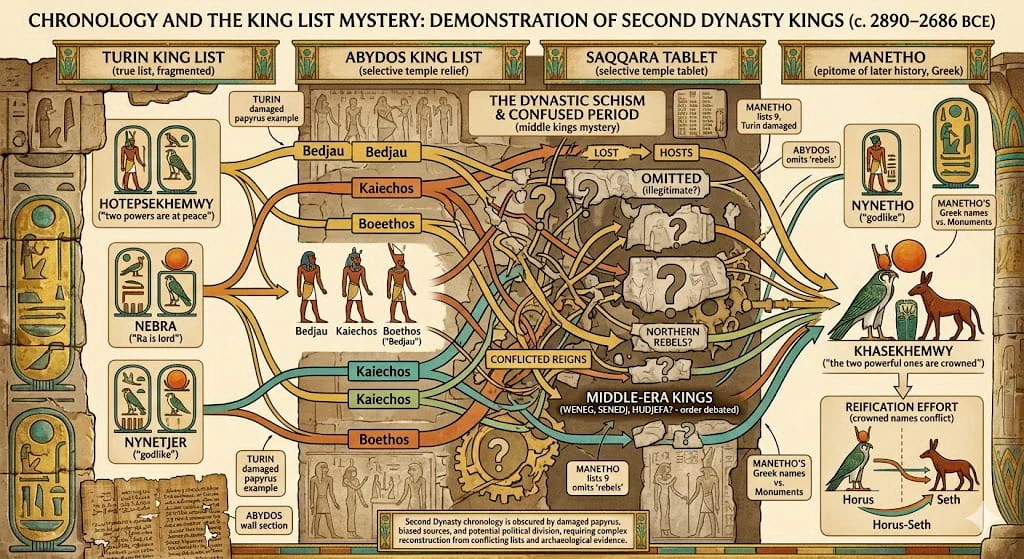
Reconstructing the sequence of rulers for the Second Dynasty is a major challenge for modern Egyptologists. Royal names appear inconsistently across ancient records. For instance, the Abydos King List, the Saqqara Tablet, and the Turin King List often contradict each other. Furthermore, contemporary archaeological evidence from clay seals and stone vessels frequently challenges these later administrative documents.

The Royal Sequence of the Second Dynasty

The following table provides the generally accepted sequence of kings. It combines contemporary archaeological data with classical historical sources.

Horus / Seth NameClassical Name (Manetho)Estimated ReignPrimary Burial Location
HotepsekhemwyBoethosc. 2890 – 2865 BCESaqqara (Gallery Tomb A)
Raneb (Nebra)Kaiechosc. 2865 – 2850 BCESaqqara (Gallery Tomb B)
NynetjerBinothrisc. 2850 – 2810 BCESaqqara (Gallery Tomb C)
Weneg-NebtyTlasc. 2810 – 2800 BCEUnknown / Saqqara
SenedjSethenesc. 2800 – 2790 BCESaqqara (Unconfirmed)
Seth-Peribsen(Omitted from north lists)c. 2790 – 2754 BCEAbydos (Tomb P)
Sekhemib-PerenmaatChairesc. 2754 – 2734 BCEAbydos (Tomb P vicinity)
KhasekhemwyCheneresc. 2734 – 2707 BCEAbydos (Tomb V)
Golden Scarab

The Great Shift: From Abydos to Saqqara

The Great Shift From Abydos to Saqqara

The Second Dynasty began with a radical geographic and political departure from the First Dynasty. To understand this change, we must look at the choices made by the dynasty’s founder, King Hotepsekhemwy.

Second Dynasty of Egypt: The Abandonment of Umm el-Gaab

For centuries, the rulers of the First Dynasty chose the sacred desert of Abydos for their final resting places. This choice firmly connected their spirits to the ancestral lands of Upper Egypt. However, Hotepsekhemwy deliberately abandoned this tradition. He chose to build his massive underground tomb at Saqqara instead.

The Strategic Value of Memphis

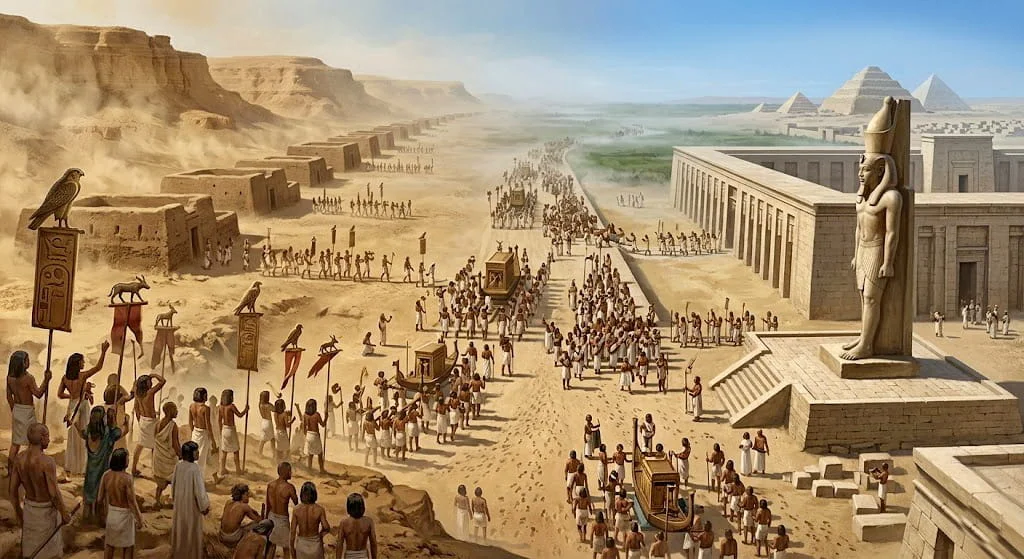
This geographic shift was a highly calculated political move. By placing the royal necropolis at Saqqara, the early kings of the Second Dynasty anchored their administrative focus to Memphis. Memphis sat at the crucial apex of the Nile Delta. From this strategic position, the royal court could effectively monitor the economic output of Lower Egypt. Additionally, they could control trade routes leading into the Levant.

The eye of Horus

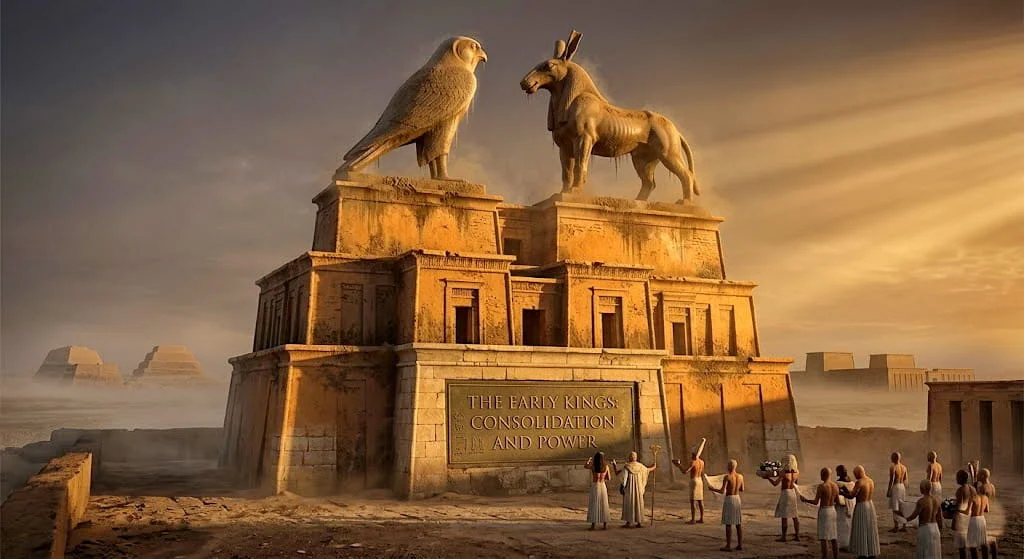
The Early Kings: Consolidation and Power

The Early Kings Consolidation and Power

The first three pharaohs focused heavily on political stabilization and religious harmony. Their names directly reflect their core political agendas.

Hotepsekhemwy: “The Two Powers are At Peace”

Hotepsekhemwy came to power during a time of significant instability. His name translates to “The Two Powers are At Peace.” This name strongly implies that he settled a major conflict between competing factions. Alternatively, it may mean he successfully resolved a succession crisis following the death of King Qa’a.

During his reign, Hotepsekhemwy stabilized the central government. He also patronized the priesthoods of both Upper and Lower Egypt to ensure national cohesion.

Raneb (Nebra): “Lord of the Sun”

Raneb succeeded Hotepsekhemwy. His name is deeply significant to religious historians. It is the first royal name in Egyptian history to incorporate the name of the sun god, Ra, explicitly.

Consequently, his reign marks the very beginning of a major theological shift. The solar cult began its long ascent to national dominance. This movement eventually culminated in the solar theology of the Old Kingdom pyramids.

Raneb (Nebra) Lord of the Sunv

Nynetjer: “Godlike”

Nynetjer was undoubtedly the most powerful ruler of the early Second Dynasty. He ruled during a period of exceptional prosperity. The Palermo Stone preserves extensive records of his administration.

Specifically, Nynetjer instituted regular national cattle counts to systematically calculate agricultural taxes. He also established major religious festivals. For example, he popularized the Apis Bull’s running.

However, late in his lengthy reign, the centralized state began to fracture. The Palermo Stone notes civil unrest and the ceremonial destruction of rebellious cities in Lower Egypt.

Golden Scarab

The Middle Dynasty Crisis: The Horus-Seth Schism in the Second Dynasty of Egypt

The Middle Dynasty Crisis The Horus-Seth Schism

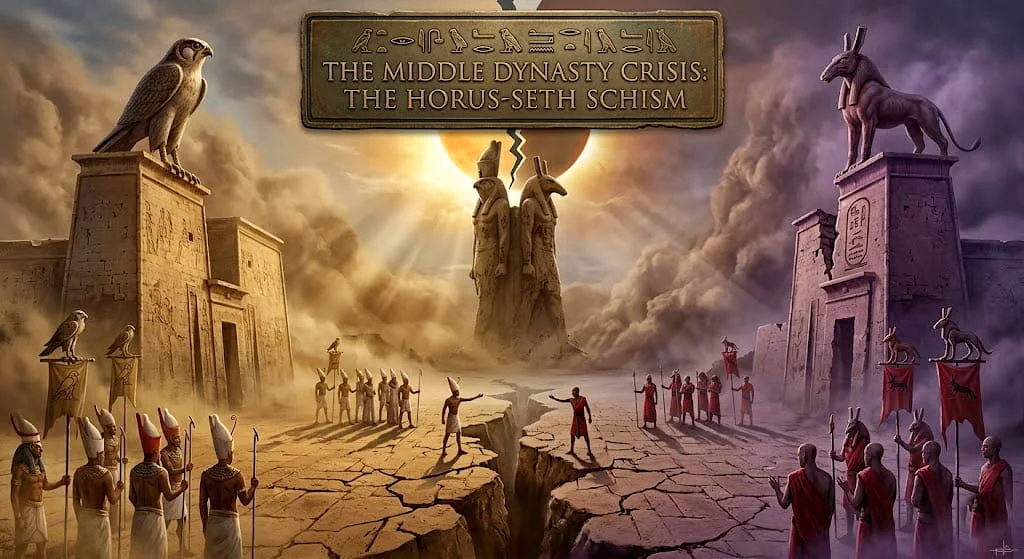
Following the long reign of Nynetjer, Egypt entered a dark age of internal division. This political fracture manifested as a unique religious rebellion led by a king named Peribsen.

Second Dynasty of Egypt: The Seth Rebellion

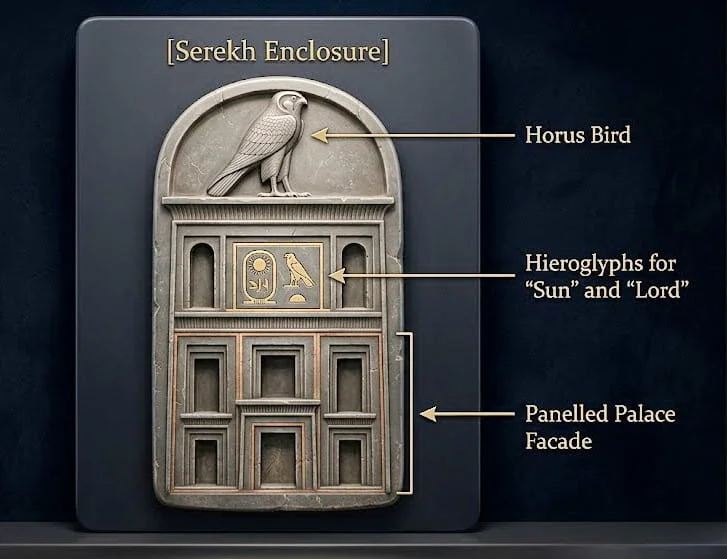
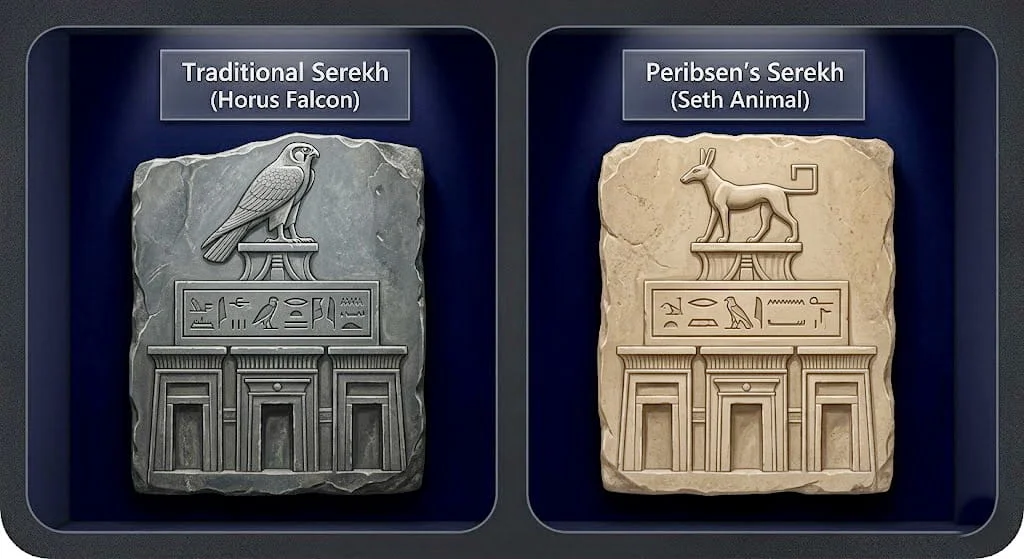
Traditionally, every Egyptian pharaoh wrote their primary royal name inside a serekh. This rectangular enclosure represented the palace facade. Crucially, a falcon representing the god Horus always sat on top of this enclosure. Horus was the divine patron of living kingship.

However, Peribsen did something completely unprecedented. He intentionally removed the Horus falcon from his serekh. In its place, he installed the enigmatic, long-eared animal representing Seth. Seth was the god of storms, chaos, desert wastes, and foreign lands.

The Seth Rebellion

The Political Meaning of the Schism

This symbolic modification was not a simple aesthetic choice. Rather, it indicates a profound ideological split within the unified state. Historians have developed several compelling theories to explain this transformation:

  1. Upper Egyptian Nationalism: Seth was historically the patron deity of Ombos in Upper Egypt. By adopting the Seth title, Peribsen may have championed a conservative political rebellion. This movement likely originated in the south to challenge the power of the Memphite court.
  2. Religious Reformation: Peribsen may have attempted a sweeping religious overhaul. He tried to reduce the growing influence of the Horus priesthood by elevating a competing deity.
  3. Geographic Division: During this middle period, Egypt likely split into two independent kingdoms. A Horus-worshipping dynasty continued to rule Lower Egypt from Memphis. Meanwhile, Peribsen controlled Upper Egypt from the ancient base at Thinis.

Khasekhemwy: The Great Reunified State

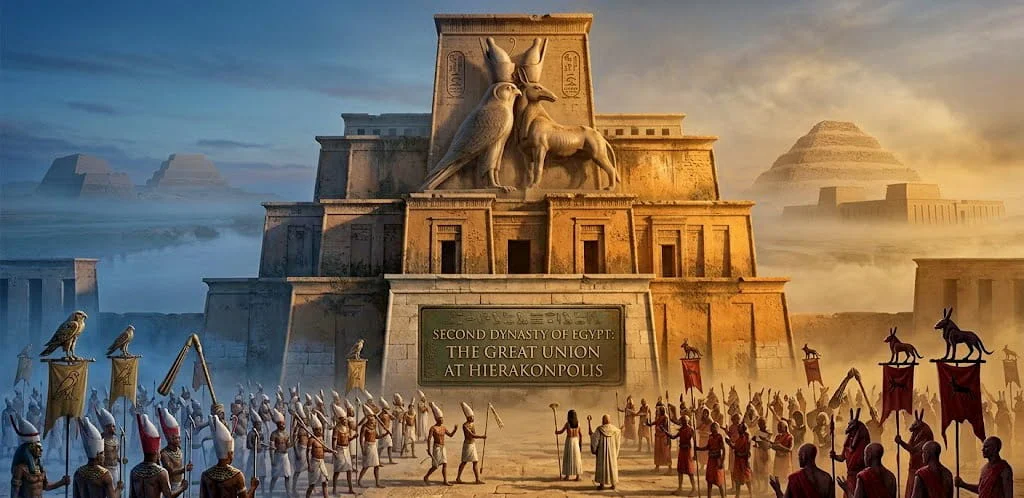
The crisis of the Second Dynasty reached its dramatic conclusion under the rule of a military genius named Khasekhem. He originally ruled exclusively in Upper Egypt. However, he launched a massive, successful military campaign to forcefully reclaim the north.

The Destruction of the North

Khasekhem documented his brutal pacification of Lower Egypt based on two famous seated stone statues. These statues are now housed in the Cairo Museum and the Ashmolean Museum.

The inscriptions provide terrifyingly precise statistics. They record that the king slaughtered exactly 47,209 northern rebels during his campaigns. This decisive military victory thoroughly crushed the northern separatist movement.

Khasekhemwy The Great Reunified State

The Ultimate Visual Compromise

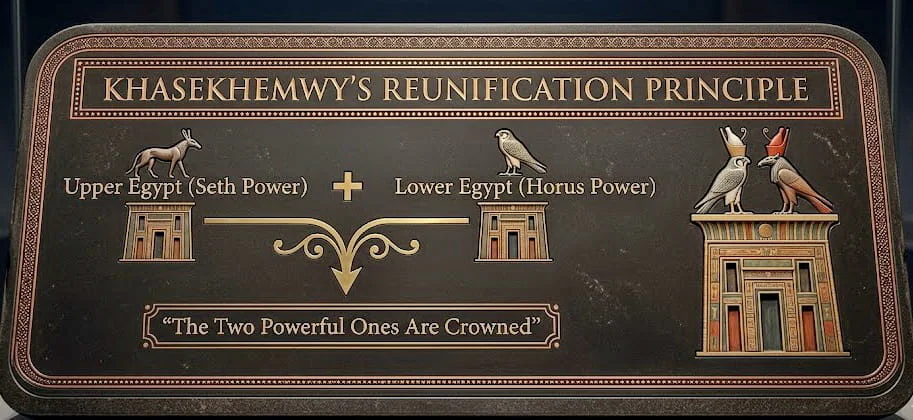
Following his complete military victory, the king changed his name from Khasekhem (“The Power Appears”) to Khasekhemwy. This revised name translates directly to “The Two Powerful Ones Are Crowned.”

To visually reinforce this message of absolute national reconciliation, he altered his serekh in a highly creative way. He placed both the Horus Falcon and the Seth Animal together on top of his royal name. This balanced iconographic statement effectively announced the end of the civil war. It proved that the competing religious and political factions were finally unified under a single ruler.

The eye of Horus

Second Dynasty of Egypt: Architectural and Technological Milestones
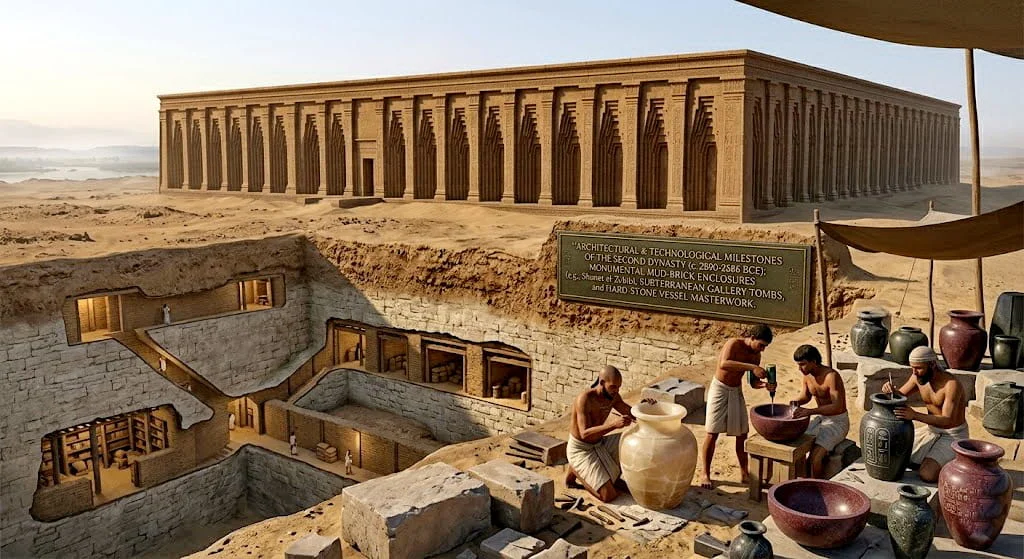
Architectural and Technological Milestones: Second dynasty of Egypt

The Second Dynasty is frequently overshadowed by the later pyramid builders. However, this era achieved monumental advancements in construction technology, engineering, and administrative organization.

Second Dynasty of Egypt: The Underground Galleries of Saqqara

The tombs of Hotepsekhemwy and Nynetjer at Saqqara are marvels of subterranean engineering. Workers tunneled deep into the solid limestone bedrock to carve out sprawling networks of corridors, storage magazines, and royal chambers.

The tomb of Nynetjer, for example, features over a dozen complex galleries. These subterranean rooms mimic the layout of a real royal palace. These massive undertakings required a highly sophisticated, disciplined labor force.

Shunet el-Zebib: The Mud-Brick Fortress

At Abydos, Khasekhemwy constructed a colossal funerary enclosure known today as the Shunet el-Zebib (“Storehouse of the Raisins”). This structure is one of the oldest surviving monumental mud-brick buildings in the world.

  • Dimensions: The enclosure walls measure over 120 meters long and 65 meters wide.
  • Height: The massive walls still tower over 11 meters into the desert sky.
  • Design: The exterior walls feature intricate, recessed niching. This decorative technique directly copied the “palace facade” style seen on early serekhs.

The sheer scale of the Shunet el-Zebib proves that the centralized state possessed immense wealth. It also demonstrates an extraordinary ability to mobilize large numbers of laborers. This project served as the immediate architectural precursor to Djoser’s Step Pyramid complex.
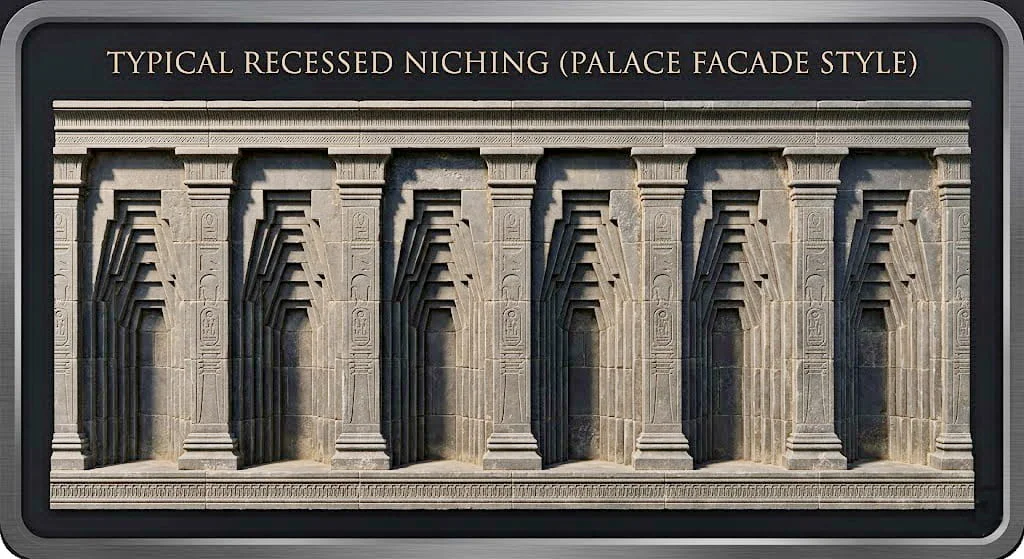
Shunet el-Zebib The Mud-Brick Fortress

Masterwork Stone Carving

During the Second Dynasty, Egyptian artisans achieved a level of mastery in hard-stone vessel carving that was never surpassed. Excavators have recovered thousands of beautifully polished bowls, plates, and jars from this period.

These vessels were crafted from incredibly difficult materials. Artisans successfully carved diorite, schist, porphyry, and translucent alabaster. Many of these items bear delicate, incised inscriptions of Second Dynasty royal names, providing modern historians with invaluable chronological clues.

Key Artifacts of the Second Dynasty: Silent Witnesses to History
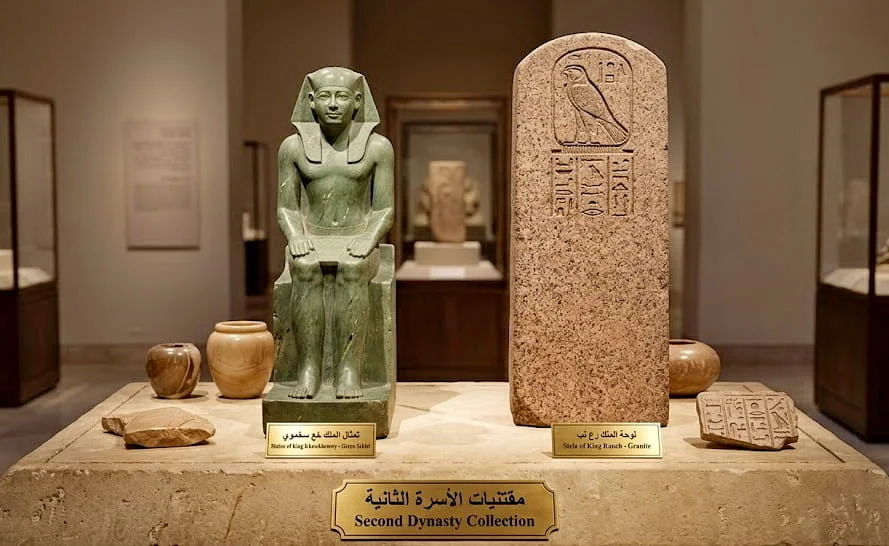
Key Artifacts of the Second Dynasty Silent Witnesses to History

Because written narrative texts from the Early Dynastic Period are virtually non-existent, Egyptologists rely heavily on contemporary material culture to reconstruct the political and religious landscape of the Second Dynasty. The surviving artifacts from this era are not merely decorative objects; they are deliberate pieces of royal propaganda, administrative tools, and theological statements carved into enduring stone.

Second Dynasty of Egypt: The Definitive Artifact Archive of the Era

The following masterworks represent the most historically significant objects recovered from Second Dynasty contexts, offering a physical blueprint of a divided—and ultimately reunified—nation.

Artifact NameMaterialCurrent LocationHistorical Significance
Seated Statues of KhasekhemGreen Schist / LimestoneCairo Museum & Ashmolean Museum (Oxford)Features the earliest detailed depictions of a ruling pharaoh; bases are inscribed with the body counts of defeated northern rebels.
Funerary Stela of King PeribsenGreywacke / SandstoneBritish Museum & Cairo MuseumThe definitive archaeological proof of the religious schism, displaying the enigmatic Seth animal atop the royal serekh.
Granite Stela of Raneb (Nebra)Pink GraniteMetropolitan Museum of Art (New York)Features the earliest known monumental usage of the Ra hieroglyph, marking the birth of solar theological influence.
The Khasekhemwy Reconstructed JambHard Limestone / GraniteHierakonpolis (Main Deposit) / Cairo MuseumShowcases the rapid evolution of complex, raised-relief monumental temple architecture just before the Old Kingdom.

1. The Seated Statues of Khasekhem: Propaganda in Stone

Discovered by James Quibell at Hierakonpolis in the late 19th century, the two seated statues of Khasekhem represent a monumental leap forward in the history of Egyptian royal portraiture.

  • The Iconography: The king is depicted wearing the tightly fitted Heb-Sed jubilee cloak and the white crown (Hedjet) of Upper Egypt. His posture is rigid, projecting absolute, divine authority.
  • The Political Graphic: The bases of these statues are etched with the contorted, chaotic bodies of northern enemies. The inscriptions record precisely 47,209 fallen rebels from Lower Egypt. This is one of the earliest examples of art being utilized as a precise tool of political intimidation and victory documentation in human history.
2. The Funerary Stela of Peribsen: The Heretic’s Signature

Recovered from the royal tomb (Tomb P) at Umm el-Gaab in Abydos, this round-topped stone stela stood outside the king’s burial complex to mark the place where offerings were to be made.

Instead of the traditional Horus falcon, the top of the serekh prominently features the long-eared, fork-tailed hound of Seth. The carving is clean, crisp, and unambiguous. It confirms that the religious shift from Horus to Seth was an official, state-sanctioned mandate during Peribsen’s reign, rather than a posthumous slander by his successors.

3. The Monumental Stela of Raneb: Solar Beginnings

This massive, round-topped pink granite monument was originally erected at Saqqara to mark the superstructure of Raneb’s massive gallery tomb.

The stela lacks complex text, focusing entirely on the king’s name inside the palace facade enclosure. The presence of the sun disk directly above the neb (“lord”) sign demonstrates that even while the physical administrative capital was resting securely in Memphis, theological eyes were beginning to track toward Heliopolis and the solar doctrines that would define the upcoming Fourth Dynasty.

4. The Subterranean Stone Vessel Hoards

Among the most awe-inspiring archaeological yields of the Second Dynasty are the thousands of stone vessels recovered from the underground tunnels beneath Djoser’s Step Pyramid, where they had been gathered and ceremonially cached.

  • Material Mastery: These vessels were hollowed out using weighted copper drills and abrasive sand, transforming unyielding rocks like diorite, metamorphic schist, and porphyry into paper-thin bowls and delicate jars.
  • Historical Anchors: Many of these vessels feature highly detailed, scratch-incised serekhs of Hotepsekhemwy, Nynetjer, and alternative ephemeral rulers like Senedj and Bird-Nebty. These vessels acted as an ancestral archive, which Djoser buried to legally and spiritually link his new Third Dynasty line back to the historic rulers of the Second Dynasty.

The Second Dynasty of Egypt: Paving the Way for the Old Kingdom

The Second Dynasty did not collapse into chaos. Instead, it concluded with an era of absolute state control and architectural ambition.

Khasekhemwy married a powerful northern princess named Nymaathap. History records Nymaathap as a highly influential queen. Crucially, she gave birth to the next pharaoh, Djoser.

Djoser inherited a completely pacified, wealthy, and highly centralized state from his parents. He moved the royal burial ground back to Saqqara. There, working closely with his legendary architect Imhotep, he transformed the traditional mud-brick enclosures of his ancestors into stone. He built the Step Pyramid, the world’s first true skyscraper.

Therefore, the Second Dynasty was not a historical detour. It was a vital crucible of statehood. Through its intense political crises, Egypt successfully forged the administrative tools and ideological resilience necessary to build the Pyramids.

Bibliographic Foundations and Recommended Reading

To provide this comprehensive overview of the Second Dynasty, research was synthesized from the leading academic authorities on Early Dynastic Egypt. For further independent study or to expand your personal research library, the following foundational texts are highly recommended:

God_Anubis_Icon

Valley of the Kings, Hepchepsut

I never had a more positive experience and educational time than this tours. Learning about a variety of kings and queens was amazing! The tour guide was super nice and helped me and my friend every step of the way! Including bargaining for a few souvenirs! I will never forget

More »

11 Wonderful Hours in Cairo

I had an 11 hour layover in Cairo, and it couldn’t have been better spent than with Manal from Egypt Fun Tours. I was able to adjust my tour once we left the airport and Manal had some really great suggestions when I told her what it was I wanted

More »

Highly Recommend Egypt Fun Tours!

Several weeks ago, I reached out to Egypt Fun Tours regarding a 9-hour layover in Cairo. From the very beginning, Hani Ahmed was responsive and professional, quickly providing a well-organized itinerary tailored to our limited time. The itinerary included a visit to the pyramids, other historical sites, a delicious dinner,

More »
God_Anubis_Icon

Top-rated Tour Packages

God_Anubis_Icon
WhatsApp
Email
Print