

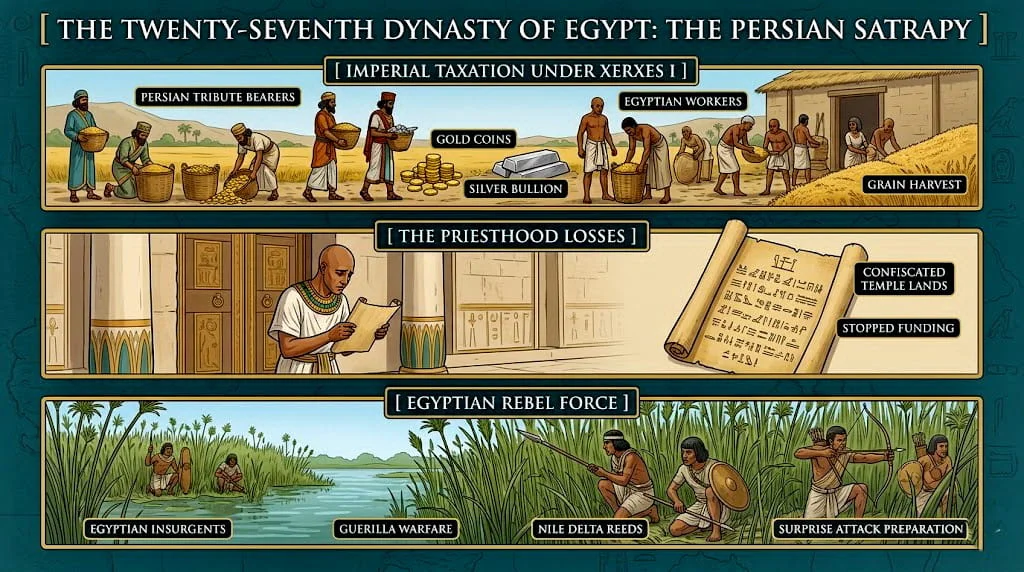
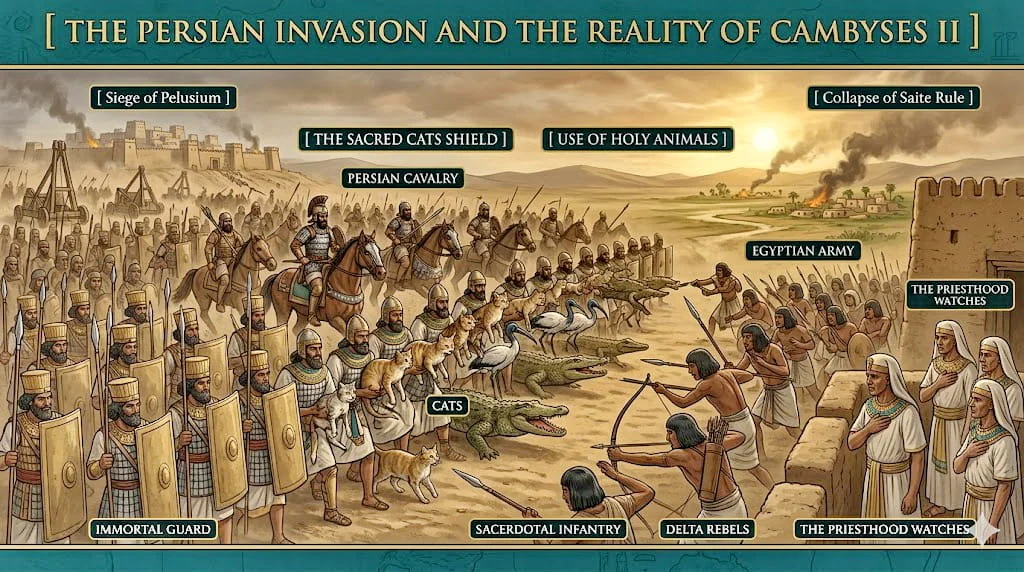
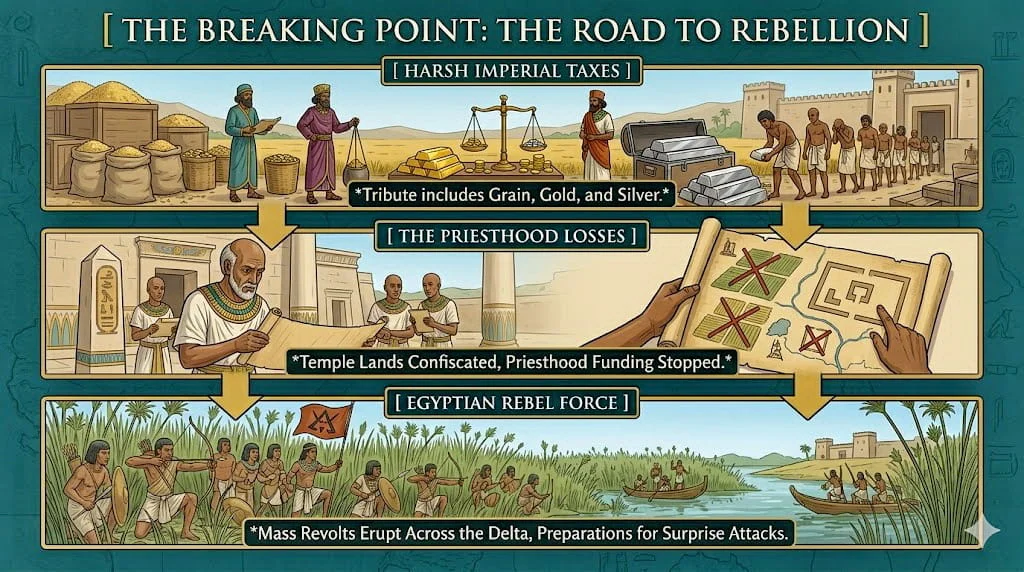
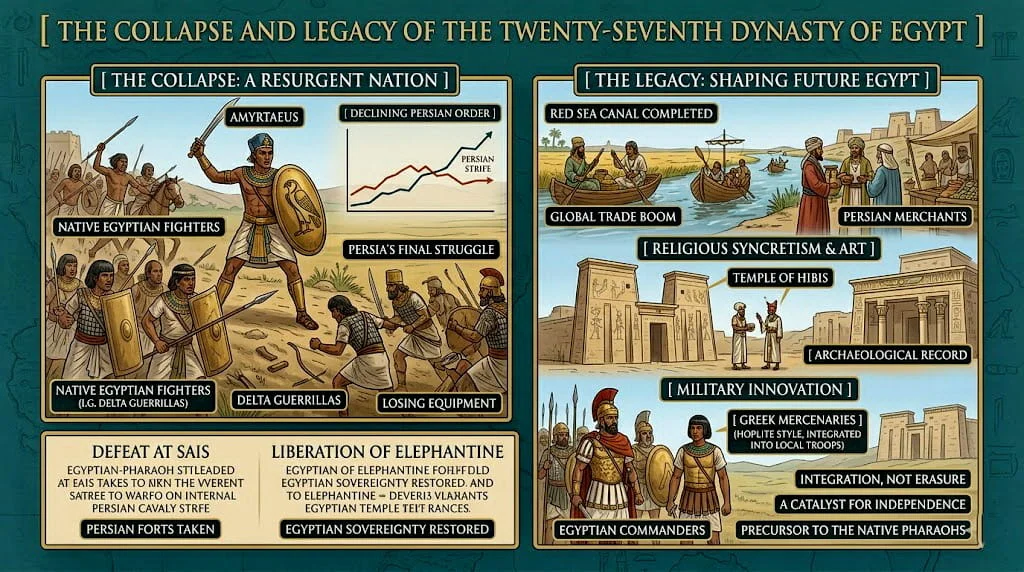
The Twenty-seventh dynasty of Egypt (c. 525–404 BCE) marks a dramatic and controversial turning point in the Late Period, introducing Egypt’s first prolonged era of foreign imperial rule. Following the sudden collapse of the Saite Renaissance at the Battle of Pelusium, the vast Achaemenid Persian Empire absorbed the Nile Valley into its global domains. Yet, this period was far more complex than a simple military occupation. Rather than ruling from afar as detached conquerors, powerful Persian emperors like Cambyses II and Darius the Great took up the traditional titles, crowns, and religious duties of native Egyptian pharaohs. For over a century, Egypt became the ultimate crown jewel of the Persian Empire, serving as a vital nexus where Near Eastern imperial ambition met millennia of deeply rooted pharaonic tradition.

Easily the best two days of the year!
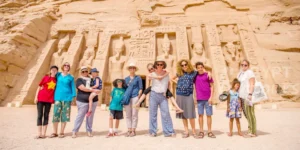
We were doing the 14-day Mediterranean cruise and were in Egypt for two days. I was searching the internet for about 4 days and finally found Egypt Fun Tours as my guide in Egypt. It ended up being the best 2 days of the entire cruise trip. Since this is