Pompey’s Pillar: The Last Standing Monument of the Great Serapeum

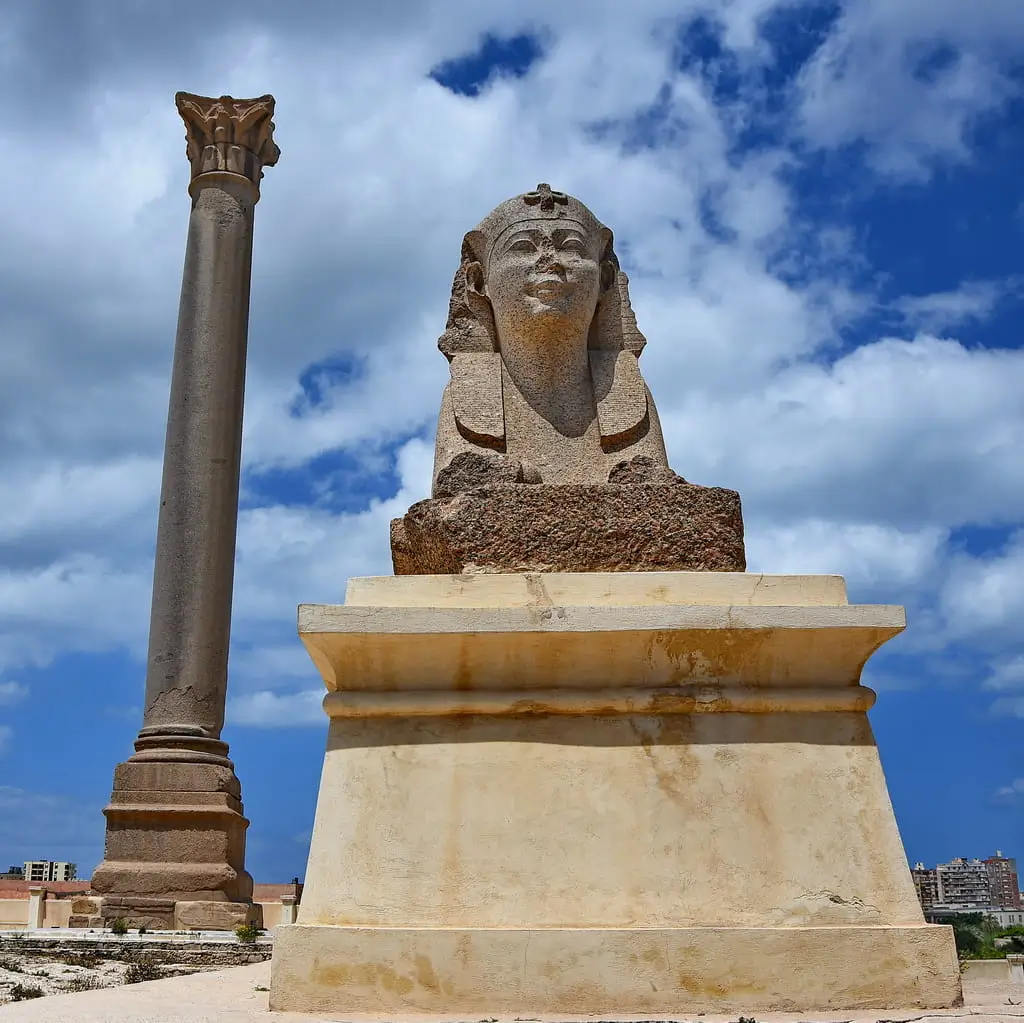
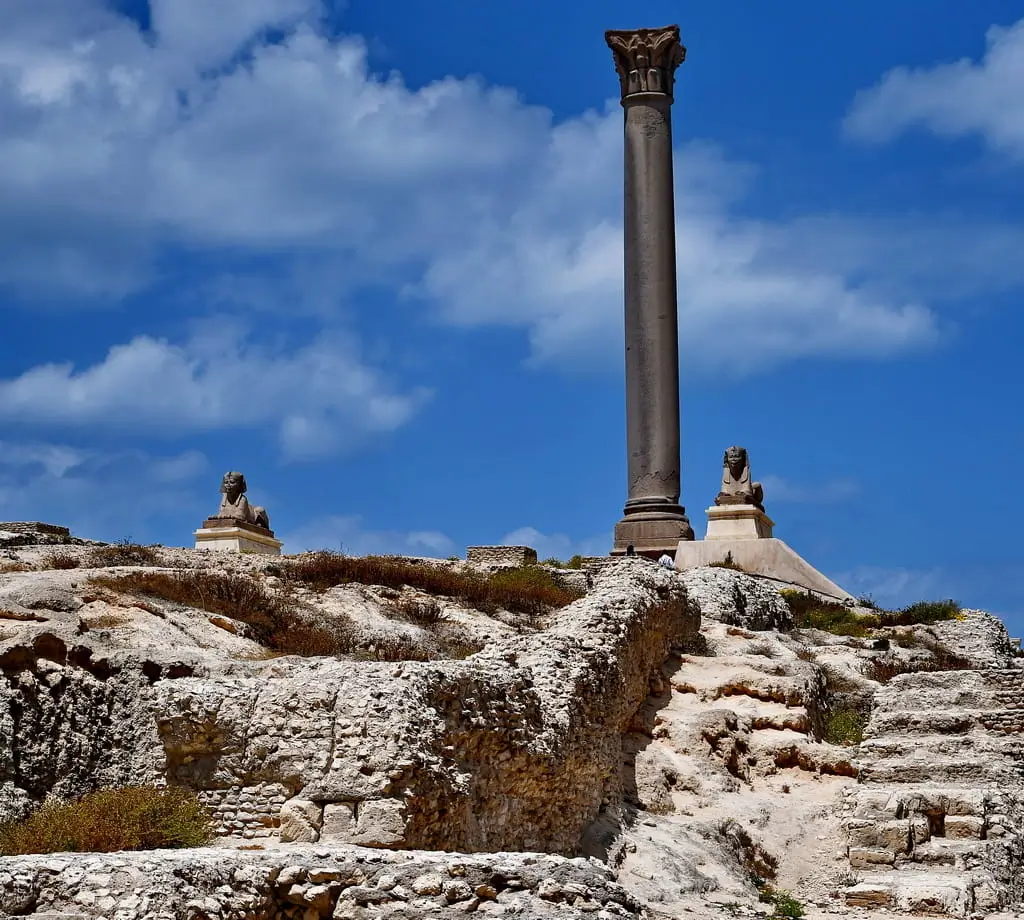
Pompey’s Pillar stands as the last great monolithic monument of the ancient world still situated in its original location in Alexandria. Standing nearly 27 meters tall atop the Rhacotis Hill, this massive shaft of red Aswan granite is a misnomer; while medieval legends linked it to the Roman general Pompey, it was actually erected in 298 AD to honor the Emperor Diocletian. The pillar serves as the final surviving remnant of the Serapeum, once the most magnificent temple in the Greek world and home to the "Daughter Library" of Alexandria. Visitors today can explore the surrounding pink granite sphinxes and descend into the subterranean tunnels and library niches that sit beneath the column’s 285-ton base. As a triumph of Roman engineering and a witness to the violent transition between the pagan and Christian eras, the pillar remains a towering symbol of Alexandria’s enduring historical complexity.

Pompey’s Pillar: The Last Giant of the Rhacotis Hill

The Pompey’s Pillar is the only ancient monument still standing in its original location in Alexandria. It sits atop the Rhacotis Hill, the oldest part of the city. This massive column of red Aswan granite stands nearly 27 meters tall. It is one of the largest monolithic columns ever erected outside of Rome and Constantinople.

When you stand at its base, you feel the sheer scale of Roman ambition. However, the name of the monument is a historical mistake. For centuries, people believed that the Roman general Pompey was buried here after his defeat by Julius Caesar. In reality, the column represents a much later period of Roman history. It stands as a victory monument for the Emperor Diocletian, but it also serves as a tombstone for one of the greatest temples in human history: the Serapeum.

The Great Misnomer: Who Actually Built Pompey’s Pillar?

History often remembers the wrong names. Travelers in the Middle Ages looked at this massive pillar and needed a legend to explain it. They chose Pompey. However, modern archaeology has corrected the record through the study of the Greek inscription on the pillar’s base.

The Diocletian Connection

In 297 AD, Alexandria revolted against Roman rule. A general named Domitius Domitianus declared himself Emperor. The true Roman Emperor, Diocletian, marched on Alexandria and besieged the city for eight months. The city suffered greatly from famine and war.

  • The Act of Mercy: After Diocletian conquered the city, he chose not to destroy it completely. Instead, he organized a grain supply from the rest of Egypt to feed the starving Alexandrians.
  • The Victory Column: To thank the Emperor for his “mercy,” the people of Alexandria erected this pillar in 298 AD.

Pompey’s Pillar: The Evidence in Stone

The western side of the pedestal contains a Greek inscription. It explicitly dedicates the column to “the most holy Emperor, the guardian of Alexandria, Diocletian the Invincible.” Consequently, the pillar is a political monument, not a tomb for a fallen general.

FUN

The Lost Sanctuary: The Serapeum of Alexandria

The Lost Sanctuary The Serapeum of Alexandria - Pompey's Pillar

To truly appreciate Pompey’s Pillar, you must look below your feet. The column does not stand in a vacuum; it occupies the center of what was once the Serapeum, the most magnificent temple in the Greek world.

Pompey’s Pillar: The Cult of Serapis

Sultan Qaitbay built his fort on a lighthouse, but the Romans built this pillar on a holy hill. The temple was dedicated to Serapis, a god created by Ptolemy I.

  • A Political God: Ptolemy I wanted to unite his Greek soldiers and his Egyptian subjects. He combined the Greek god Zeus with the Egyptian bull-god Apis and the god of the afterlife, Osiris.
  • The Result: Serapis became the patron deity of Alexandria. He represented healing, the sun, and the fertility of the Nile.

The Daughter Library

The Serapeum was more than a church; it was a university. It housed the “Daughter Library,” which contained the overflow of scrolls from the Great Library of Alexandria.

  1. The Collection: Historians believe it held over 42,000 papyrus scrolls.
  2. Access: While the Great Library was for royal scholars, the Serapeum library was open to the public. It was the intellectual heart of the city’s common people.

Technical Marvel: Engineering the Monolith

Technical Marvel Engineering the Monolith - Pompey's Pillar

Pompey’s Pillar is a miracle of ancient logistics. It is a monolithic column, meaning the entire shaft is a single piece of stone. It did not come from Alexandria; it traveled hundreds of kilometers to reach this hill.

Material Science: The Aswan Connection

The shaft consists of red granite. This specific stone only exists in the quarries of Aswan, located nearly 1,000 kilometers to the south.

  • Weight and Scale: The shaft alone weighs approximately 285 tons.
  • The Journey: Workers carved the stone in the quarry and loaded it onto a massive barge. They floated the monolith down the Nile during the Akhet (flood season) when the water was deep enough to carry the weight.

Pompey’s Pillar: The Physics of Elevation

How did Roman engineers raise a 285-ton stone onto a 6-meter-high pedestal without modern engines?

  • The Sand Ramp Method: Many archaeologists believe the Romans used a “sand box” technique. They built a massive wooden box around the pedestal and filled it with sand. They dragged the column up a ramp until it sat horizontally on the sand.
  • Controlled Descent: Workers slowly removed the sand from one side. This caused the column to tilt upright by the force of gravity.
  • The Precision Fit: The pillar sits so perfectly on its base that it does not use mortar. Its own massive weight keeps it stable against the coastal winds of Alexandria.
FUN

The Guardians of the Hill: The Sphinxes and Statues

The Guardians of the Hill The Sphinxes and Statues - Pompey's Pillar

The pillar does not stand alone on the hill. It is surrounded by silent guardians that reveal the site’s mixed heritage.

The Ptolemaic Sphinxes

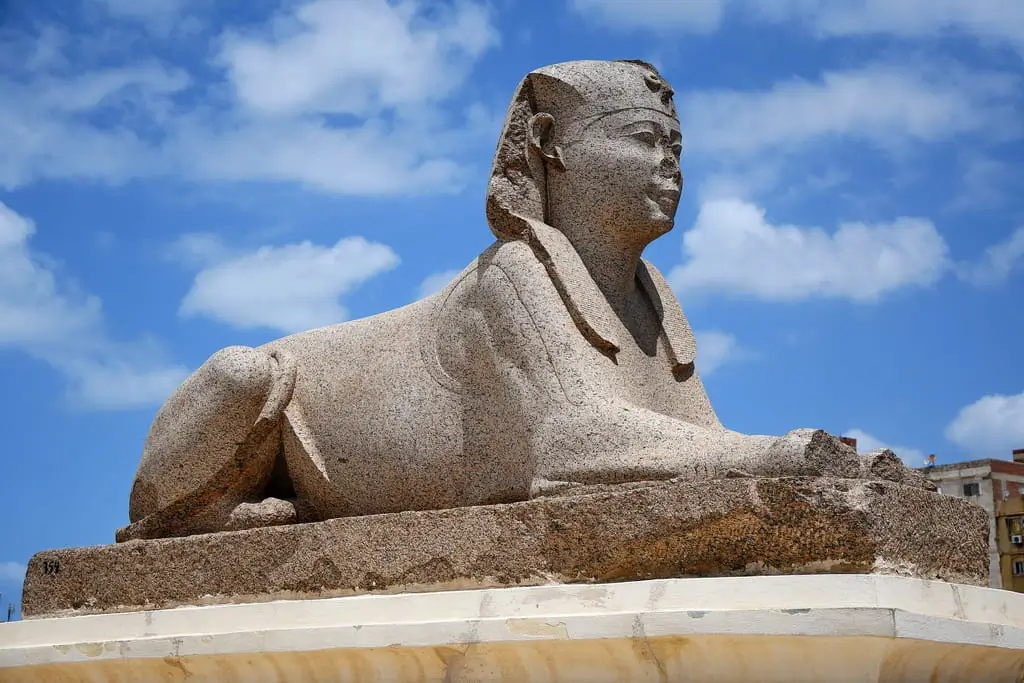
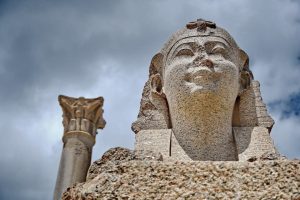
Two beautiful sphinxes carved from pink granite flank the pillar.

  • Stylistic Fusion: These sphinxes are “Egyptian” in shape but “Greek” in the way their faces are carved. This reflects the multicultural nature of Alexandria.
  • The Location: Archaeologists found these sphinxes buried in the sand nearby. They originally guarded the entrance to the inner sanctuary of the Serapeum.

The Missing Crown

If you look at the top of the pillar, you will see a massive Corinthian capital. This floral stone crown is beautiful, but it is actually a base.

  • The Colossal Statue: Historical records suggest a giant statue of the Emperor Diocletian in full armor once stood on top of the pillar.
  • The Fragments: In the 19th century, researchers found a large granite thigh and fragments of a foot near the base. These pieces suggest the statue was nearly 7 meters tall. Imagine the sight: a 27-meter red column topped with a 7-meter golden or painted emperor, visible from every ship in the harbor.

The Subterranean Mystery: The Serapeum Tunnels

The Subterranean Mystery The Serapeum Tunnels

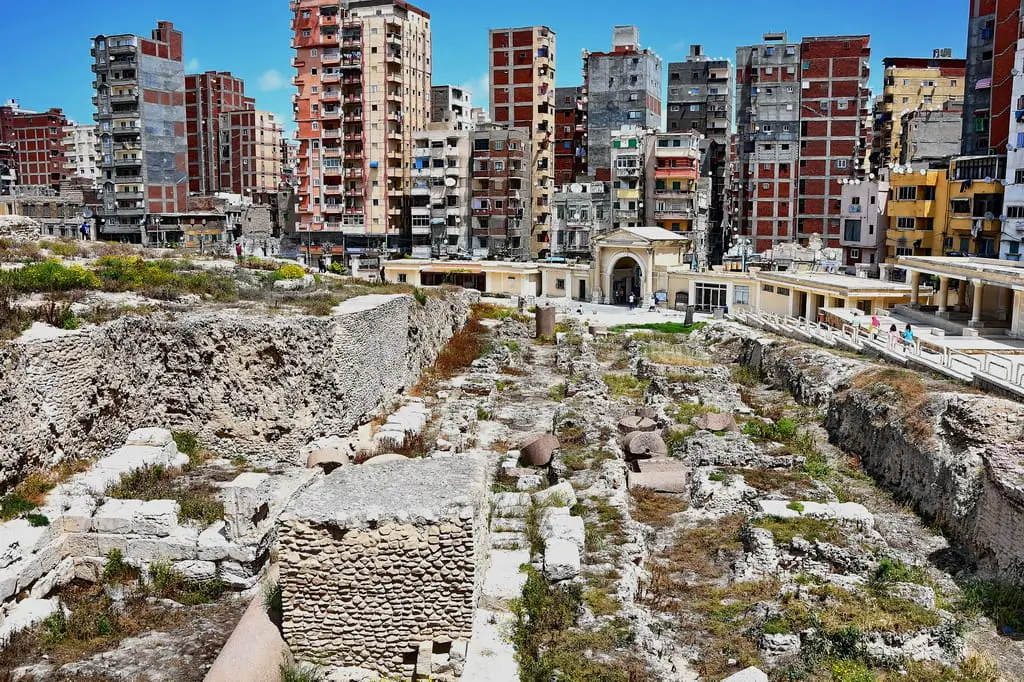
The most atmospheric part of the site lies underground. Below the pillar, a network of dark, rock-cut tunnels snakes through the limestone hill.

The Sacred Galleries

These tunnels served several purposes over the centuries.

  • The Apis Bull Burials: Like the Serapeum at Saqqara, this site held the remains of sacred bulls. You can still see the niches where the stone sarcophagi once sat.
  • The Library Shelves: Look closely at the walls of the tunnels. You will see rectangular niches cut into the stone. These were the “bookshelves” of the Daughter Library. Scribes stored papyrus scrolls here to keep them cool and dry.
  • The Secret Passages: Priests used these tunnels to move unseen through the temple complex. Some legends suggest these tunnels once connected the hill directly to the Royal Quarter near the sea.
FUN

The Fall of the Temple: Religious Conflict and Destruction

The Fall of the Temple Religious Conflict and Destruction

The end of the Serapeum marks one of the most dramatic and tragic turning points in world history. By the 4th century AD, the religious landscape of the Roman Empire shifted. Christianity became the official state religion, and the old pagan temples became targets for reform.

The Decree of Theodosius (391 AD)

Emperor Theodosius I issued a decree to close all pagan temples and stop their rituals. In Alexandria, this led to a massive conflict between the pagan philosophers, who viewed the Serapeum as the heart of ancient wisdom, and the Christian population led by Bishop Theophilus.

  • The Siege of the Hill: The pagan community retreated to the Rhacotis Hill. They turned the temple into a fortress to protect the statue of Serapis.
  • The Destruction: Eventually, the Christians stormed the hill. They smashed the colossal statue of Serapis to pieces to prove the god had no power to defend himself. They demolished the temple walls, leaving only the massive red granite pillar standing because it was too heavy to knock down easily.

The End of Ancient Wisdom

The destruction of the Serapeum was not just the end of a temple; it was the end of the Daughter Library.

  1. The Loss of Knowledge: While the Great Library’s fate is debated, the destruction of the Serapeum library is well-documented. Thousands of scrolls containing ancient science, philosophy, and history were burned or scattered.
  2. The Dark Age Transition: Many historians point to this event as the symbolic start of the Middle Ages in Egypt. The transition from a center of Hellenistic learning to a purely religious landscape was complete.

The “Nilometer”: Measuring the Sacred River

On the grounds of the site, you will find a deep, square shaft lined with stone. This is a Nilometer.

  • The Purpose: Ancient Egyptians and Romans used this tool to measure the height of the Nile during the annual flood.

  • The Connection: Even though the temple was on a hill, it was connected to a canal from the Nile. By measuring the water level here, priests could predict the harvest for the coming year. Consequently, they could calculate the taxes the people would owe the Emperor.

FUN

Visitor Pro-Tips: Navigating the Site

To get the most out of your visit to Pompey’s Pillar, follow these expert suggestions:

  • The Best Photography Angle: Do not just photograph the pillar from the entrance. Walk to the far western edge of the site. From there, you can capture the pink sphinxes in the foreground with the pillar towering behind them.
  • The “Black Hole” Exploration: Bring a small flashlight. While the tunnels are partially lit, a personal light will help you see the library niches and the mason marks in the darker corners of the underground galleries.
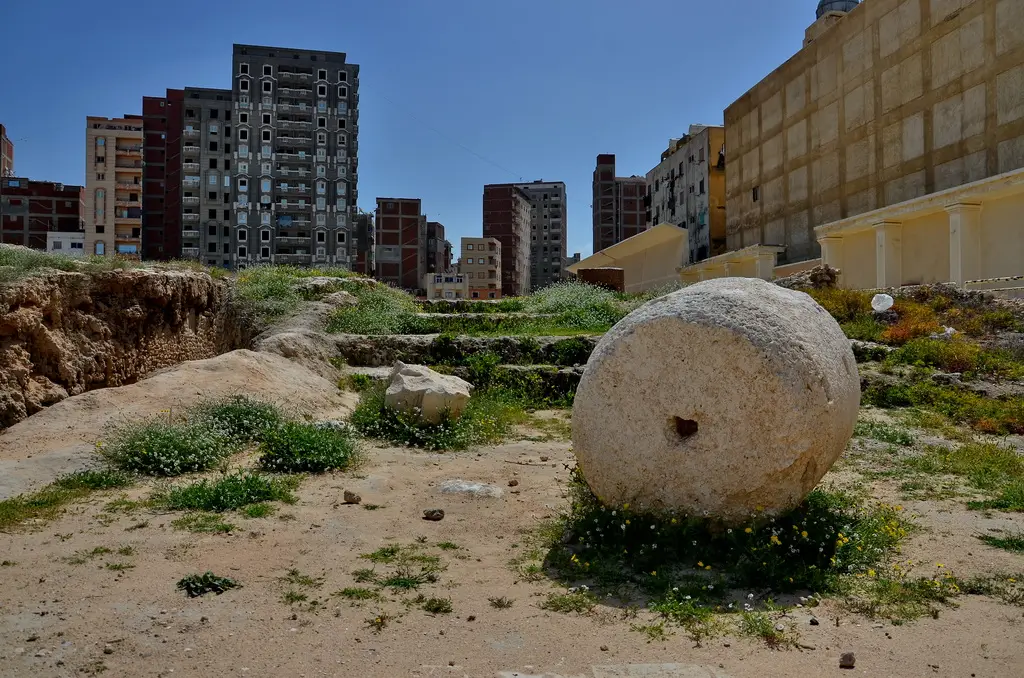
  • The Surrounding Ruins: Look for the scattered white marble fragments around the pillar. These were once the columns of the Great Stoa that surrounded the temple courtyard. They give you a sense of just how large the complex was.
  • Logistics: The site is located in the Karmouz district. It is a busy, traditional neighborhood. It is best to take an Uber directly to the gate. After your visit, you are only a 10-minute drive from the Catacombs of Kom El Shoqafa, making these two sites a perfect “History of Alexandria” morning tour.

Pompey’s Pillar (FAQs)

Why is it called Pompey’s Pillar if Pompey didn’t build it? Medieval crusaders and travelers found the column and assumed it must be a monument to a famous Roman. They chose Pompey because he died in Egypt. The name stuck in maps and literature, even though we now know it belongs to Diocletian.

Can I climb the pillar? No. In the 1800s, some brave travelers used ropes to climb to the top for “tea parties,” but today it is strictly protected.

How long does it take to see the site? Plan for about 45 to 60 minutes. This gives you enough time to walk the perimeter, explore the tunnels, and view the sphinxes.

FUN

The Survivor of the Rhacotis Hill

Pompey’s Pillar is a survivor. It outlived the temple that surrounded it, the god it was built near, and the Empire that commissioned it. It stands as a 285-ton reminder of the scale of Roman engineering and the complexity of Alexandria’s soul. When you visit this red granite giant, you are not just looking at a stone column; you are looking at the last standing witness to the greatest library and the most magnificent temple of the ancient world.

Fantastic Deluxe experience and wonderful adventure trip of Egypt....
Tour from Port Ghalib to Egypt Highlights...

Perfect layover Tour

I had a 10 hour layover in Cairo so booked a tour with Hani at Egypt Fun Tours. The tour was brilliant. I saw exactly what I wanted to see during the day which included the pyramids, Sphinx, Egyptian museum and the Bazaar. Hani was very knowledgeable and was the

More »
3-day desert safari trip from Cairo—Egypt Fun Tours

Book with Egypt Fun Tours!!

In April 2011, my husband and I, after great debate, took a trip to Egypt. Because of the political situation, we decided to book a tour for our time in Cairo and Luxor. We are very happy that we did, since these are two cities that should not be missed.

More »
Souqs and Markets in Egypt - Egypt Fun Tours

Cairo walking tours

After a rocky start (the driver had been in an accident on his way to pick me up,) the company very quickly sent another driver/guide named Mohammed, who was a real pro. Thoroughly enjoyed my first day in Egypt!

More »

Egypt Fun Tours makes the most out of your layover!

I had a really short layover in Cairo and didn’t want to be stuck in the Cairo Airport for several hours. It was like Mission Impossible: Egypt Fun Tours’ mission was to show me around Cairo during my short 5 hour layover which was made even shorter because my plane

More »
A Royal Commission The History of Al-Rifa'i Mosque

Highly recommended

Salam, This company is very responsive and accommodating. From the moment we started to chat via email, to the moment we left Egypt at the airport, these fellows were very professional. The tour covered most of what we wanted to see! We customized it to our needs and added some

More »
Isis with wings

Top-rated Tour Packages

Isis with wings