Egyptian Hieroglyphs: The 24 Signs & How to Write

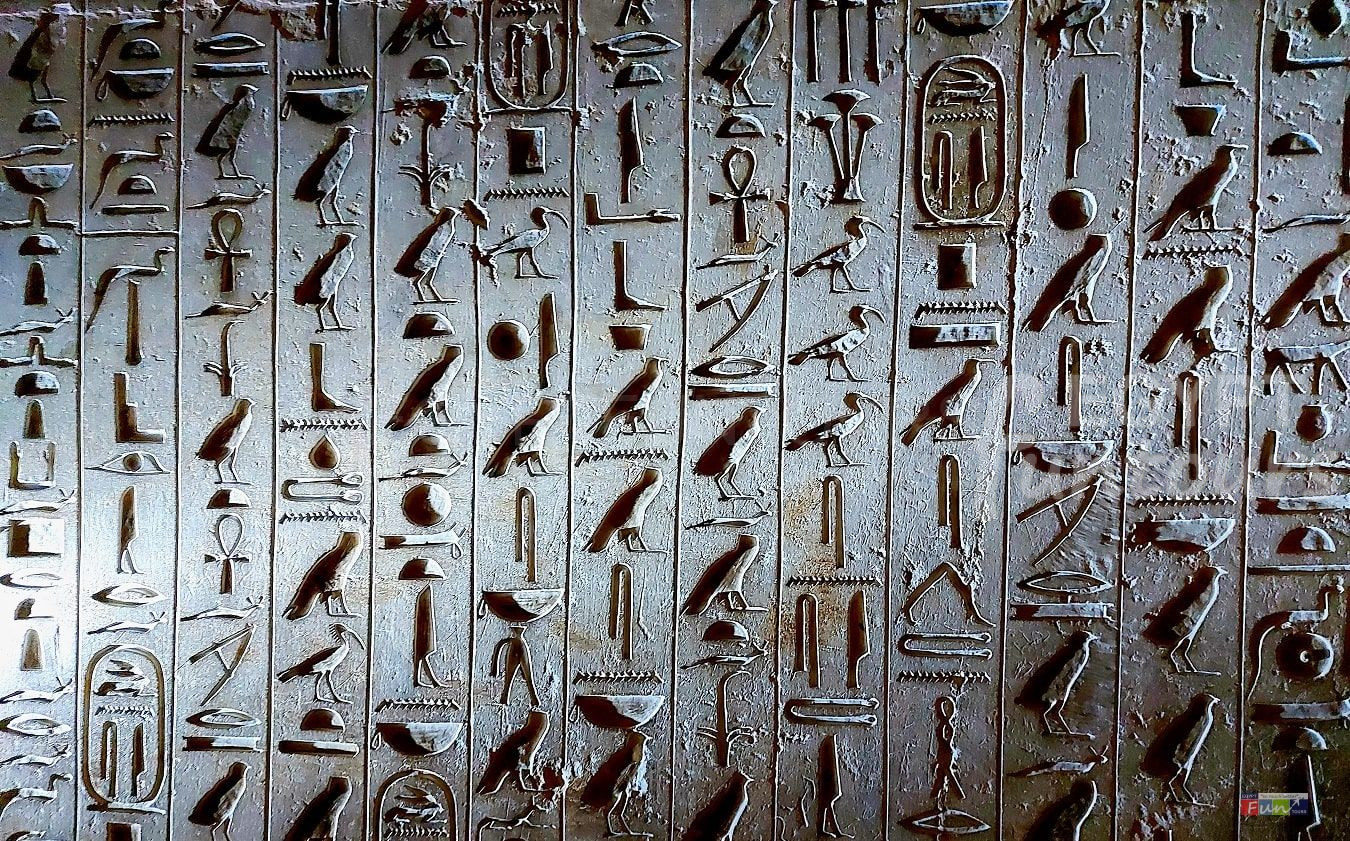
Ancient Egyptian writing used hieroglyphs, a system combining phonetic (alphabetic) and pictorial elements. These "sacred carvings" were primarily used for monumental inscriptions on temples and tombs, recording history, religion, and daily life.
The eye of Horus
WhatsApp
Email
Print

Unlock the Secrets of the Pharaohs Before Your Trip

Hieroglyphs—the elegant symbols carved into Egypt’s temples—are often called the “Ancient Egyptian Alphabet.” While this is a common misconception, these signs are truly the key to unlocking the language of the pharaohs and understanding ancient civilization.

The hieroglyphic system was complex, utilizing images in three ways: as pictures of objects, as symbols for sounds, and as contextual clues. This unique system was lost for 1,500 years until the discovery of the Rosetta Stone.

Ready to uncover the mystery? We will guide you through the hieroglyphs system, provide you with the 24 key signs, and show you exactly how to spell your own name like a Pharaoh!
Divider

The Egyptian Writing System: Three Types of Signs

Ancient Egyptian Alphabet

The hieroglyphic script is beautiful precisely because it is complex. It works by combining three different types of signs in almost every word. Unlike a modern ancient Egyptian alphabet, a single hieroglyph could serve three distinct roles:

1. Phonograms (Sound Signs)

These signs represent one or more consonant sounds. They are the closest equivalent to our letters. The system includes:

  • Uniliteral Signs: One symbol = one consonant (The 24 hieroglyph “alphabet” signs).
  • Bi- and Triliteral Signs: One symbol = two or three consonants.

2. Logograms (Word Signs)

When used as a logogram, the hieroglyph image represents the object itself (e.g., a picture of a sun means “sun”). These are typically followed by a single stroke to show the word is complete.

3. Determinatives (Clarity Signs)

These silent signs are placed at the end of a word to clarify its meaning. Since the hieroglyphic script omits vowels, determinatives are essential for distinguishing between words that are spelled the same (e.g., a symbol for “seated man” clarifies a name or profession).

Golden Scarab

The 24 Uniliteral Signs: The Egyptian Consonantal Key

Ancient Egyptian Alphabet

This chart represents the 24 hieroglyphs used to denote single consonant sounds. If you are learning how to write your name, these are the signs you will use! Note that this “key” is often referred to as the ancient Egyptian alphabet

How to Write Your Name in Hieroglyphs (3 Simple Rules)

Learn how to write your name in Ancient Egyptian hieroglyphics Alphabet

Writing your name using hieroglyphs is much simpler than translating ancient texts. You simply use the uniliteral signs (from the chart above) that match the sounds of your name, following these three critical rules:

  1. No Vowels: The Egyptian script did not record most vowels (like A, E, I, O, U). When spelling your name, you only need to match the consonants. For example, the name “Robert” would be spelled using signs for R-B-R-T.
  2. Directionality: Hieroglyphs can be written from left to right, right to left, or even vertically. To know which way to read, simply look at the figures (people, animals, birds)—they always face the beginning of the line.
  3. The Final Clarification (Determinatives): When writing a personal name in the ancient Egyptian alphabet style, it is proper to end the name with a determinative sign that clarifies the person’s gender. Use the sign of a seated man () or a seated woman () after the last letter of the name.
The eye of Horus

The Key to Understanding: The Rosetta Stone

Rosetta stone Ancient Egyptian Artifacts Egypt Fun Tours

For over 1,500 years, the meaning of hieroglyphs was completely lost. Scholars and rulers believed the elegant symbols were purely mystical, and the ability to read the language died out with the rise of Greek and Roman rule.

The ability to read the ancient script was finally unlocked by one of the most important archaeological discoveries ever made: the Rosetta Stone.

  • What is it? Discovered in 1799, the Rosetta Stone is a single slab of rock containing the same decree written in three different scripts: Hieroglyphic (formal script), Demotic (common script), and Ancient Greek.
  • The Code Breaker: It was the French scholar Jean-François Champollion who realized the breakthrough in 1822. He noticed that the cartouches (ovals) in the hieroglyphic text contained the names of Greek rulers like Ptolemy, and he used the known Greek letters to phonetically decode the hieroglyphs. He proved that the script was not just picture-writing but a phonetic system.
Divider

The Evolution of Egyptian Script

The Evolution of Egyptian Script

While hieroglyphs were always used for monumental, religious, and formal inscriptions, the Egyptians developed simpler scripts for faster writing:

  • Hieratic: A cursive, handwriting script used by priests and scribes for everyday documentation and religious literature on papyrus.
  • Demotic: A very cursive, “popular” script that replaced Hieratic for general and business use, later influencing the Coptic Alphabet (which uses the Greek alphabet plus a few signs derived from Demotic).
The eye of Horus

Frequently Asked Questions About Hieroglyphs

Q: Was the Ancient Egyptian alphabet written with vowels?

A: No, the ancient Egyptian alphabet (or uniliteral signs) only recorded consonants. Vowels were generally omitted from the script, which is one reason why scholars today must rely on context and reconstruction to determine the exact pronunciation of many ancient Egyptian words.

Q: Who finally decoded the hieroglyphs?

A: Hieroglyphs were decoded by the French scholar Jean-François Champollion in 1822, using the Rosetta Stone as his key reference.

Q: How many symbols are in the hieroglyphic system?

A: The full hieroglyphic system contains over 1,000 distinct characters, but only 24 of these are the uniliteral signs that correspond to single consonants (the “alphabet” signs).

Q: Can I still see hieroglyphs in Egypt today?

A: Absolutely! The best preserved and most beautiful hieroglyphs can be seen carved on the walls of temples like Karnak, Luxor, and Abu Simbel, and inside the tombs in the Valley of the Kings.

Divider
Ancient Egyptian Sarcophagus - Egypt Fun Tours

Unforgettable experience with Fun Tours – Highly recommended!

Hello everyone! We would like to share our extremely positive experience with Fun Tours. Our tour was a complete success thanks to our guide, Osama, and our driver Hassan. Osama proved to be an enthusiastic and knowledgeable guide who answered all of our questions and catered to our individual wishes

More »

Excellent Adventure

These guys put together an amazing itinerary that allowed me see the sunrise at the sun festival in Abu Simbel, King Tut’s tomb, and mask! That was just the tip of the iceberg. Aswan, Kom Ombo, Edfu and Luxor. So much visited with plenty of rest time. An amazing trip

More »
9-day tour package - Egypt Fun Tours

You’re in “GREAT HANDS” with Egypt Fun Tours!

We first went to Egypt in July 2010. We were to pass through Cairo on our way to Africa, and we had arranged to be picked up from the Cairo airport and shown around the city during our 6-hour layover. This was arranged through emails with Hamada, of Egypt Fun

More »

Jeep Safari in the Sahara

I contacted Hani two days before I went to Egypt and asked him if it was possible to combine two of their tours as we were short on time. We had planned to stay in Cairo but with the uprising we decided it would be safed outside of the hot

More »
Premium Cairo Tour Package Egypt Fun Tours

THE MOST AMAZING TRIP

Hi Hamada! Sorry, we were so quick to say goodbye—my mom was fading 🙂 I just wanted to say thank you for THE MOST AMAZING trip… You thought of every detail, improvised, adapted, overcame every challenge, multitasked personalities, and did it all with grace, intelligence, and kindness. From the bottom

More »
God_Anubis_Icon

Top-rated Tour Packages

God_Anubis_Icon
WhatsApp
Email
Print