The New Kingdom Zenith (18th–20th Dynasties)
The 18th through 20th Dynasties marked Thebes’ undisputed golden age. After expelling the Hyksos, the Theban royal line established the New Kingdom, transforming Egypt into an international empire. Pharaohs devoted unprecedented wealth—sourced from gold mines and conquered territories—to the glory of Amun-Ra and the construction of temples and funerary monuments at Thebes.
The most famous pharaohs who contributed to Thebes’ monumental scale include:
- Ahmose I: Founder of the 18th Dynasty and the New Kingdom.
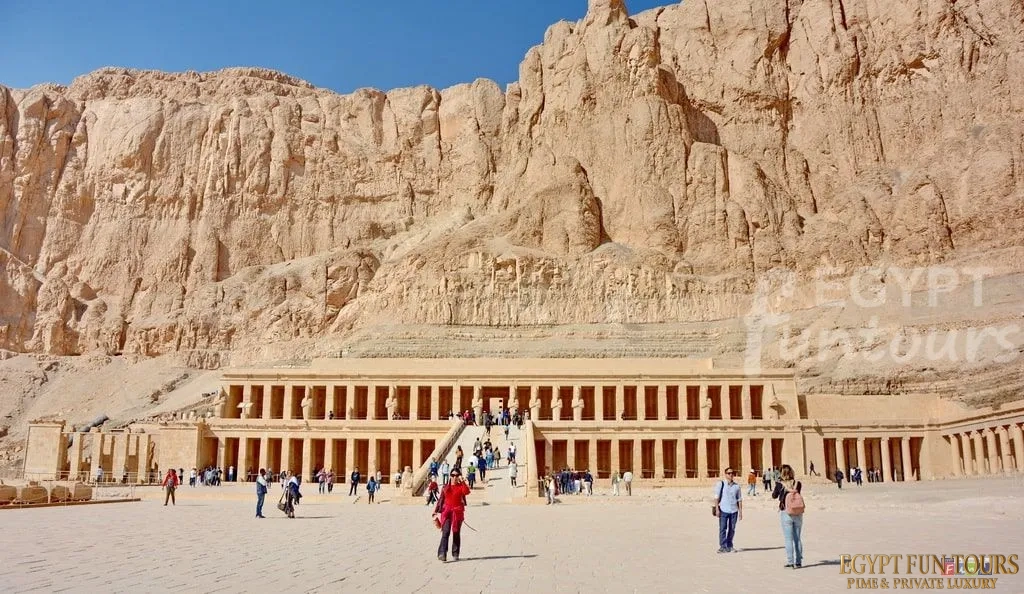
- Hatshepsut: The powerful female pharaoh who initiated major building projects on the West Bank.
- Thutmose III: The “Napoleon of Egypt,” whose conquests brought massive wealth to the Temple of Amun.
- Amenhotep IV (Akhenaten): Though he temporarily abandoned Thebes for Amarna, his rule dramatically impacted the city’s religious structure.
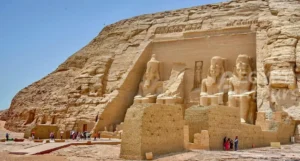
- Ramesses II (The Great): A prolific builder who significantly expanded the Luxor Temple and the Karnak complex.
This era cemented the division of Thebes into its functional halves: the East Bank for the living city and worship, and the West Bank for the dead and eternal memory.
The East Bank: Temples of the Gods
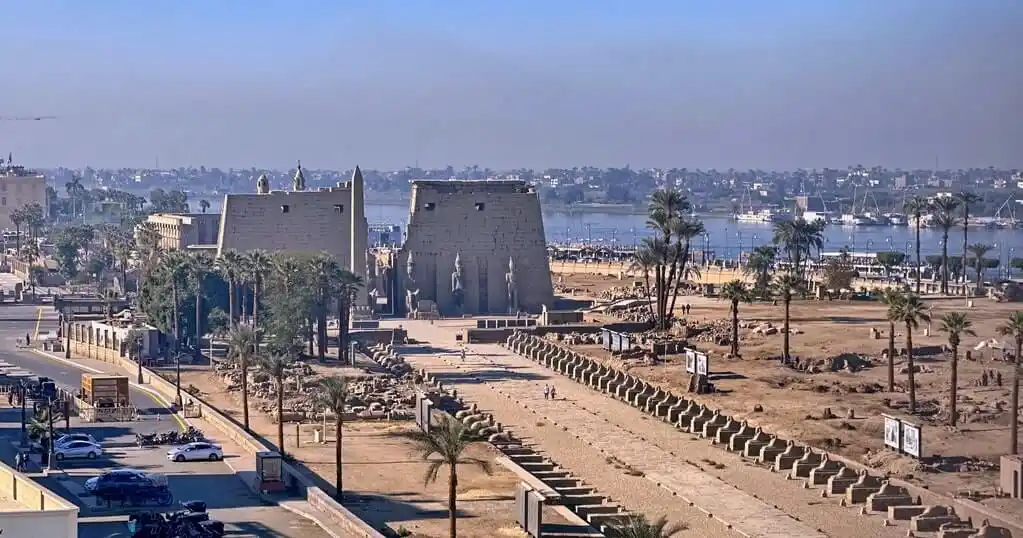
The East Bank of the Nile River, the site of the ancient city of Waset, served as the active hub of Thebes. Here, the pharaohs built the magnificent temples dedicated to the patron gods of the city, where daily rituals were performed and major festivals, like the spectacular Opet Festival, took place.
Karnak Temple Complex: The Most Select of Places (Ipet-isut)
The Karnak Temple Complex is not a single temple but a vast collection of sanctuaries, chapels, pylons, and obelisks built and expanded over a period of nearly 2,000 years, beginning in the Middle Kingdom. It covers over 200 acres and served as the chief place of worship for the Theban Triad: Amun-Ra, his consort Mut, and their son Khonsu.
The complex is oriented along two main axes: the main sanctuary dedicated to Amun-Ra faces the Nile, while another axis runs south toward the Temple of Mut.
The Great Hypostyle Hall: An Architectural Marvel
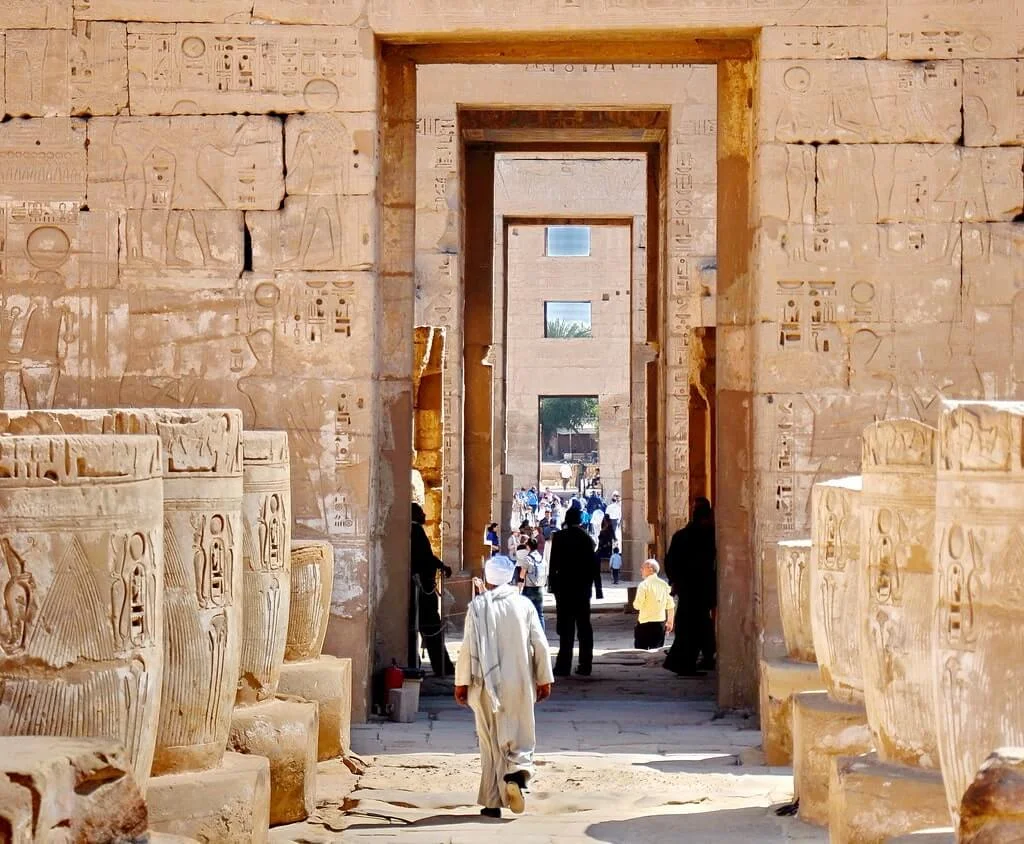
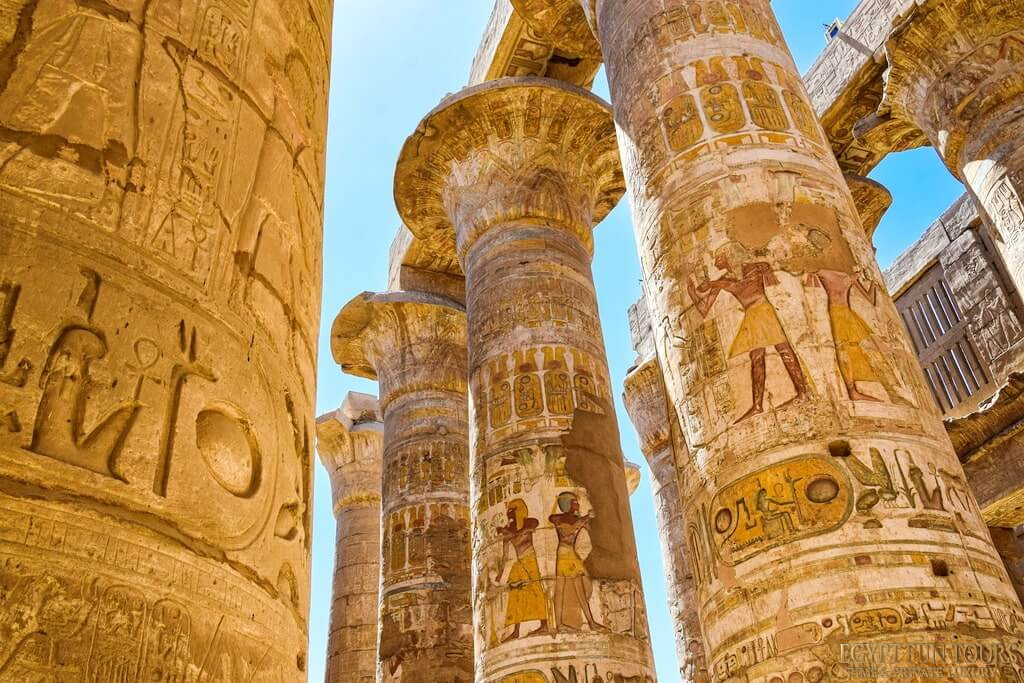
The greatest architectural achievement at Karnak, and perhaps in all of ancient Egypt, is the Great Hypostyle Hall in the Temple of Amun-Ra.
- Scale and Scope: Completed largely under the reigns of Seti I and Ramesses II, the hall measures 103 meters long and 52 meters wide. It remains the largest room of any religious building in the world.
- The Columns: The hall contains 134 massive sandstone columns, arranged in 16 rows. The central aisle features 12 towering columns, each 21 meters high, designed with open capitals (resembling open papyrus flowers). The remaining columns are 13 meters tall and feature bud capitals.
- Clerestory Lighting: The difference in height between the central columns and the side columns allowed for clerestory windows—slotted stone panels that filtered light down into the hall. This innovative lighting created a mesmerizing atmosphere, symbolizing the creation of the world emerging from the primordial darkness (Nun).
The Sacred Triad of Thebes: Amun, Mut, and Khonsu

The three principal deities of Thebes define the overall layout of Karnak. Each god commands a distinct area within the massive complex.
- Amun-Ra: The central and largest precinct belongs to this supreme god. Specifically, it houses the spectacular Hypostyle Hall and a sacred lake. Amun-Ra provided the primary source of the pharaoh’s political and military authority.
- Mut: Located south of Amun’s domain, Mut’s temple features a crescent-shaped sacred lake. In addition, an avenue of ram-headed sphinxes connects her sacred ground directly to the main temple complex. This grand pathway honors her role as the divine mother.
- Khonsu: Tucked into the southwest corner, his smaller temple honors the moon god. He represents the divine child of the Theban triad.
The Power of the Priesthood
Consequently, the sheer scale of Karnak reflects the unparalleled wealth of the New Kingdom. Vast resources flowed directly to the priesthood of Amun during this golden age. As a result, this priesthood became one of the most influential institutions in the ancient world. In fact, their immense power often rivaled the pharaoh’s own authority.
Luxor Temple: The Festival Temple (Ta-Apet)
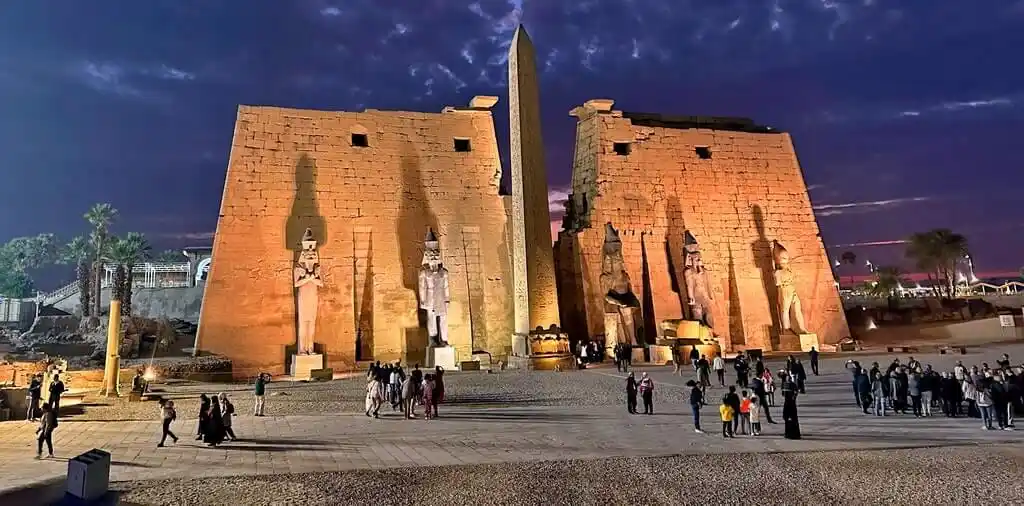
Located about three kilometers south of Karnak, the Luxor Temple is an exquisite structure dedicated to the rejuvenation of kingship, rather than the worship of a deity in the traditional sense. It was primarily the focus of the annual Opet Festival.
The Opet Festival: Celebrating Divine Kingship
The Opet Festival was the most important religious event in Thebes, running for several weeks (sometimes over 20 days).
- Procession: The festival involved a magnificent procession where the sacred statues of Amun, Mut, and Khonsu were ritually transported from their shrines in Karnak down to Luxor Temple. This journey could be made on foot along the Avenue of Sphinxes or, more commonly, by ceremonial barges sailed down the Nile.
- Rebirth: The procession symbolized the mystical union of the pharaoh with the god Amun, effectively reaffirming the divine nature of the king and legitimizing his rule for another year.
Architectural Features and Royal Contributions
Unlike Karnak, which was continuously expanded, Luxor Temple has a more cohesive structure, though it also received additions from many different rulers:
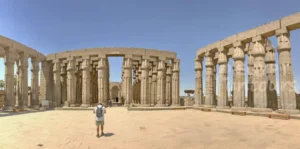
- Amenhotep III: The main body of the temple, including the great colonnade and the inner sanctuary, was constructed by Amenhotep III (18th Dynasty).
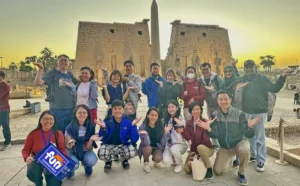
- Ramesses II: The massive forecourt, the first pylon, and the impressive statues that front the entrance were added by Ramesses II (19th Dynasty). Originally, two colossal granite obelisks stood before the pylon; only one remains, as the other now stands in the Place de la Concorde in Paris, France.
- The Colonnade: This architectural element, filled with 74 massive columns, was intended to evoke the papyrus thicket through which the sacred barges would pass.
The Avenue of Sphinxes
Connecting the two great temples—Karnak and Luxor—was the Avenue of the Sphinxes (Ipet-Ro), a magnificent, nearly three-kilometer-long ceremonial road. Flanked by hundreds of human-headed sphinx statues, this route was built primarily by Pharaoh Nectanebo I (30th Dynasty). Its recent full excavation and restoration now allow modern visitors to walk the same grand processional path used by priests and pharaohs during the Opet Festival.