Tyet Knot of Isis: An Ancient Egyptian Symbol of Protection and Life

Unravel the secrets of the Tyet, the enigmatic "Isis Knot" of ancient Egypt. This summary highlights an article discussing the amulet's potent connection to the goddess Isis, its role in funerary practices, and its symbolic power believed to grant protection and harness the forces of life.
The eye of Horus
WhatsApp
Email
Print

An Ancient Egyptian Symbol of Protection and Life

The Tyet, often called the “Knot of Isis” or “Blood of Isis,” is a powerful and enigmatic ancient Egyptian symbol. This intricate knot, resembling a looped piece of cloth, held profound religious and magical significance, primarily associated with the goddess Isis. It functioned as an amulet for protection, particularly in the afterlife, and symbolized life, welfare, and resurrection. Its presence in tombs and on mummies underscored the Egyptians’ deep belief in its protective qualities.
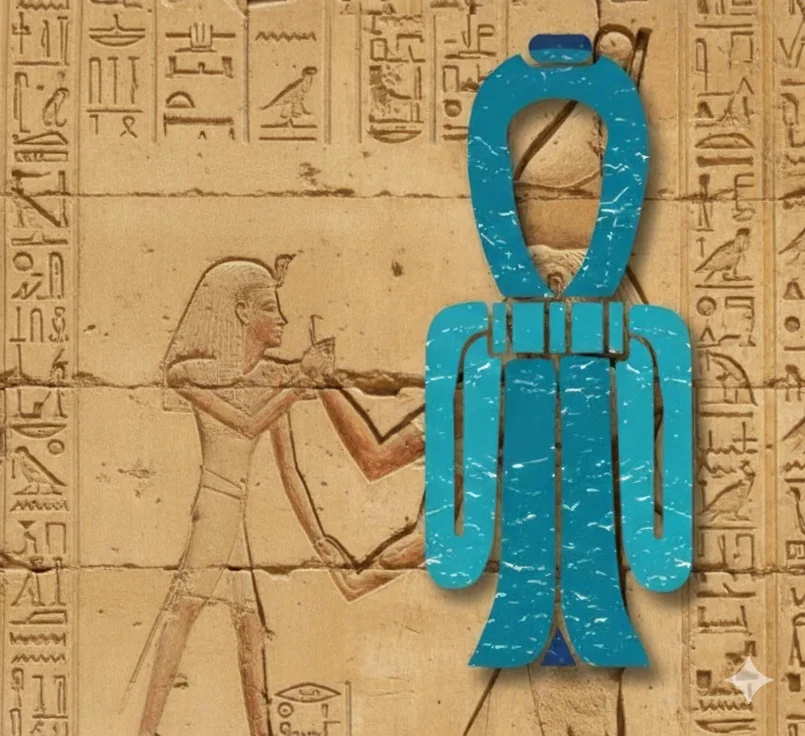
The eye of Horus

What is the Tyet Knot?

What is the Tyet Knot of Isis

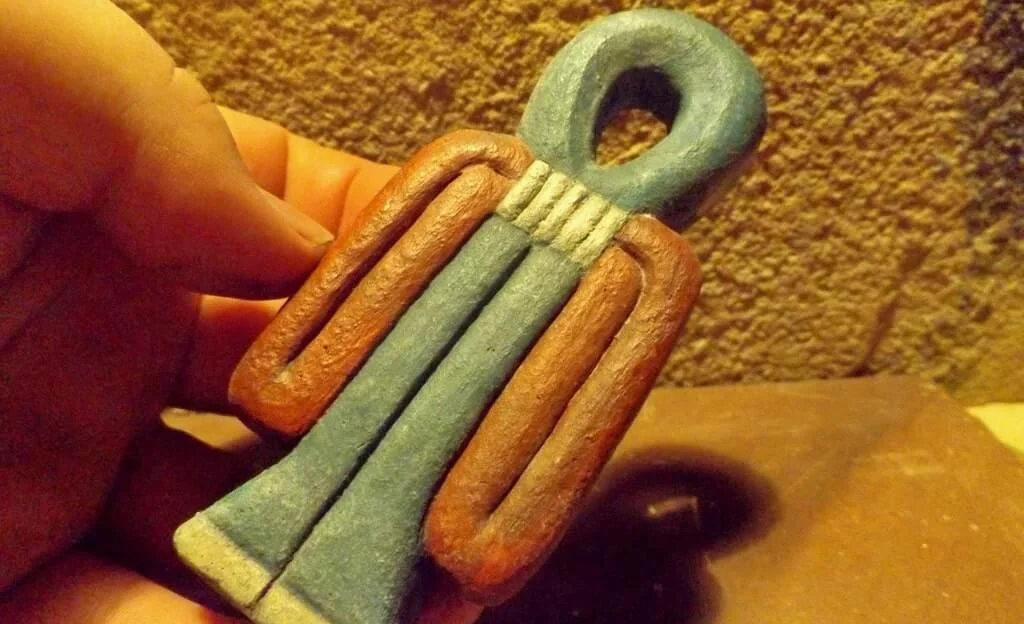
The Tyet (pronounced “tie-et”), also transliterated as “Tiet,” “Tit,” or “Thet,” is a hieroglyphic symbol that visually resembles a knot or bow made from fabric. It often looks like a folded cloth, cinched in the middle, with a loop at the top and two arms hanging down. Its appearance is similar to the ankh, the symbol of life, but with the horizontal bar moved downwards and the arms hanging rather than forming a cross. This visual similarity to the ankh further emphasizes its connection to life and well-being.

Golden Scarab

The Goddess Isis and the Tyet

The Tyet knot is inextricably linked to the goddess Isis, one of the most important and beloved deities in the ancient Egyptian pantheon. Isis was revered as the goddess of magic, motherhood, healing, and funerary rites. She was the divine mother, wife of Osiris, and mother of Horus. The Tyet became her distinctive symbol, representing her immense power, particularly her magical ability to protect and revive. Its association with her underscored its role as a potent amulet against harm and a source of divine protection.

Symbolic Meaning of the Tyet Knot

Symbolic Meaning of the Tyet Knot

The Tyet knot carried a rich array of symbolic meanings:

  • Protection: This was its foremost function. Egyptians believed the Tyet amulet provided powerful protection for both the living and the dead. It guarded against evil forces, sickness, and all forms of danger.
  • Life and Welfare: Like the ankh, the Tyet symbolized life itself, good health, and general welfare. It ensured the vitality of the wearer or deceased.
  • Resurrection and Regeneration: Given its strong link to Isis, who resurrected her husband Osiris, the Tyet was deeply connected to the concepts of resurrection and eternal life. In funerary contexts, it helped the deceased achieve rebirth in the afterlife.
  • Isis’s Power: The knot embodied Isis’s magical powers, wisdom, and maternal care. It was a tangible representation of her divine influence.
  • Textually, some people refer to the Tyet as the “Blood of Isis.” This interpretation connects it to the goddess’s vital essence or her blood’s protective power, which could ward off evil. The red color artisans often used for Tyet amulets reinforced this association.
The eye of Horus

Tyet Knot in Funerary Practices and the Book of the Dead

The Tyet knot played a crucial role in ancient Egyptian funerary practices. It was a common amulet placed on mummies, particularly over the neck or chest. Chapter 156 of the Book of the Dead, an ancient Egyptian funerary text, specifically details the ritual for placing a Tyet amulet made of red jasper on the neck of the deceased. This chapter states:

“You have your blood, O Isis; you have your power, O Isis; you have your magic, O Isis. The amulet is a protection for this Great One, which will repel anyone who would perform any hostile act against him.”

This powerful incantation highlights the amulet’s function as a protective charm, imbued with Isis’s own protective blood and magic, ensuring the deceased’s safety in the perilous journey through the underworld.

Appearance and Materials of Tyet Amulets

Tyet amulets were crafted from various materials, though red jasper was particularly favored due to its color, which reinforced the “Blood of Isis” association. Other materials included carnelian, red glass, gilded wood, and faience. The size of the amulets varied from small, personal charms worn by the living to larger pieces placed on mummies. The craftsmanship ranged from simple, stylized forms to intricately carved examples, often incorporating the characteristic loop and flowing “arms.”

The eye of Horus

The Tyet Knot and the Djed Pillar

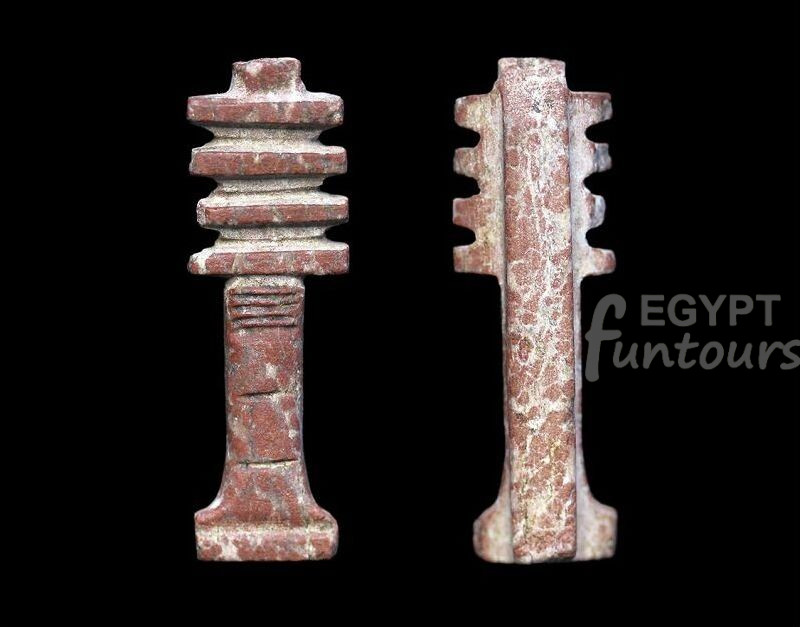
Djed Pillar Egypt Fun Tours

The Tyet often appears alongside the Djed pillar, another significant Egyptian symbol representing stability and the backbone of Osiris. While the Tyet symbolized life and protection (associated with Isis), the Djed represented endurance and resurrection (associated with Osiris). Together, they formed a powerful pair, symbolizing the complementary aspects of life, death, and rebirth, and the enduring power of the divine couple, Isis and Osiris. You can frequently see these two symbols side-by-side in tomb decorations and temple reliefs.

The eye of Horus

The Legacy of the Tyet Knot of Isis

The Tyet knot remains a fascinating and enduring symbol from ancient Egypt. Its intricate design and deep symbolism continue to intrigue Egyptologists and enthusiasts alike. It reminds us of the profound beliefs ancient Egyptians held regarding life, death, magic, and the protective power of their gods, especially the revered goddess Isis. The Tyet stands as a testament to their complex worldview and their quest for eternal well-being. From amulets worn in life to protective charms in death, the Tyet truly embodied the essence of Isis’s benevolent and powerful magic, offering solace and security throughout existence.

Weather in Egypt

Divider

Egypt Fun Tours makes the most out of your layover!

I had a really short layover in Cairo and didn’t want to be stuck in the Cairo Airport for several hours. It was like Mission Impossible: Egypt Fun Tours’ mission was to show me around Cairo during my short 5 hour layover which was made even shorter because my plane

More »

Excellent Layover Tour

I would recommend Egypt Fun Tours to everyone who is looking for either a cultural or relaxing trip in Egypt. I was recently on a private layover tour and could not have been any happier with my day in Cairo. My tour guide, Hani was waiting just outside immigration and

More »

Alexandria! Wow!

Muhammad is the best! He showed me a world I never thought possible! The tombs in Alexandria, by far, were my favorite! I never knew there was a place on earth that contained both Greek and Egyptian carvings in the same tombs! The history and culture of Egypt is so

More »

11 Wonderful Hours in Cairo

I had an 11 hour layover in Cairo, and it couldn’t have been better spent than with Manal from Egypt Fun Tours. I was able to adjust my tour once we left the airport and Manal had some really great suggestions when I told her what it was I wanted

More »

HANDS DOWN, the best cultural experience I’ve ever had

Thank you, Egypt Fun Tour, for a most memorable trip. I admit I didn’t do any of the planning (it was all done by my boyfriend), but as you can read in the reviews below, Hani (the owner of Egypt Fun Tours) is superbly organized and accommodating with scheduling. My

More »
God_Anubis_Icon

Top-rated Tour Packages

God_Anubis_Icon
WhatsApp
Email
Print