The Legacy of Islamic Medieval Cairo: A City of a Thousand Minarets

Islamic Medieval Cairo, a UNESCO World Heritage site, represents the densest and most spectacular collection of Islamic architecture in the world. Founded in the 7th century and reaching its architectural zenith during the Fatimid, Ayyubid, and Mamluk dynasties, this "City of a Thousand Minarets" serves as a living chronicle of the Islamic Golden Age. Beyond the towering gates of Bab Zuweila and the colossal stone arches of the Sultan Hassan Mosque, visitors find a vibrant, functioning metropolis where medieval wikalas and sabils still pulse with the energy of modern Cairene life. It is not merely a collection of monuments; it is an atmospheric labyrinth of history, trade, and spirituality that has remained the beating heart of Egypt for over a millennium.

Islamic Medieval Cairo, also known as Historic Cairo, stands as a UNESCO World Heritage Site of unparalleled global significance. Since the 7th century, this urban heart has served as the architectural and cultural pulse of Egypt. Unlike many ancient cities that exist only as ruins, Historic Cairo remains a living, breathing metropolis. Today, 21st-century life flows through 10th-century gates, creating a unique “living museum” experience that challenges the traditional boundaries between history and modernity.

The city reached its “Golden Age” between the 9th and 15th centuries. During this Islamic Renaissance, Cairo became the focal point of the Islamic world, often surpassing Baghdad and Cordoba in influence. It attracted scholars, merchants, and architects from across the Mediterranean and Asia. These stunning mosques, madrasas, and fortifications reflect a history of governance and learning that shaped the modern Middle East.

A City of Unparalleled History: The Dynastic Layers

A City of Unparalleled History The Dynastic Layers

In 1951, the Survey of Egypt indexed 651 historic buildings within this district. This staggering number included mosques, madrasas (schools), mausoleums, khanqahs (Sufi retreats), wikalas (merchant inns), and private residences. While time and urban expansion have taken their toll, experts estimate that 450 medieval structures still stand today. This concentration of pre-modern architecture remains unmatched by any other city in the world.

To understand the city, one must view it as a chronological “palimpsest”—a canvas where each dynasty wrote over the last without erasing it.

The Tulunid Period (868–905 AD)

Ahmad ibn Tulun, sent from Samarra in modern-day Iraq, brought a new aesthetic to Egypt. He moved away from the traditional Roman and Byzantine “spolia” (reused columns) and utilized brick and stucco. This era introduced the pointed arch to Cairo, a feature that eventually migrated to Europe and influenced Gothic architecture.

The Fatimid Era (969–1171 AD)

The Fatimids founded “Al-Qahira” (The Victorious) as a royal enclosure for the Caliph. They introduced the walled city model, utilizing massive stone fortifications and monumental gates. Their architecture prioritized ceremonial grandeur, characterized by keel-arched niches and the birth of the Mashhad (shrine) culture.

The Ayyubid Period (1171–1250 AD)

When Saladin took power, he shifted the city’s focus to defense. He built the Citadel and a grand wall meant to encompass all previous capitals (Fustat, Al-Askar, Al-Qata’i, and Al-Qahira). This period transitioned Cairo from a royal Fatimid palace-city into a fortified Sunni metropolis.

The Mamluk Era (1250–1517 AD)

The “Slave Kings” (Mamluks) represented the most prolific builders in Cairo’s history. They mastered Ablaq masonry (alternating layers of red and white stone) and perfected the complex dome. Mamluk sultans funded these grand complexes through the Waqf system (charitable endowments), ensuring their legacy survived through hospitals, schools, and water fountains.
FUN

Strategic Navigation: How to Explore the Historic Streets

Strategic Navigation How to Explore the Historic Streets

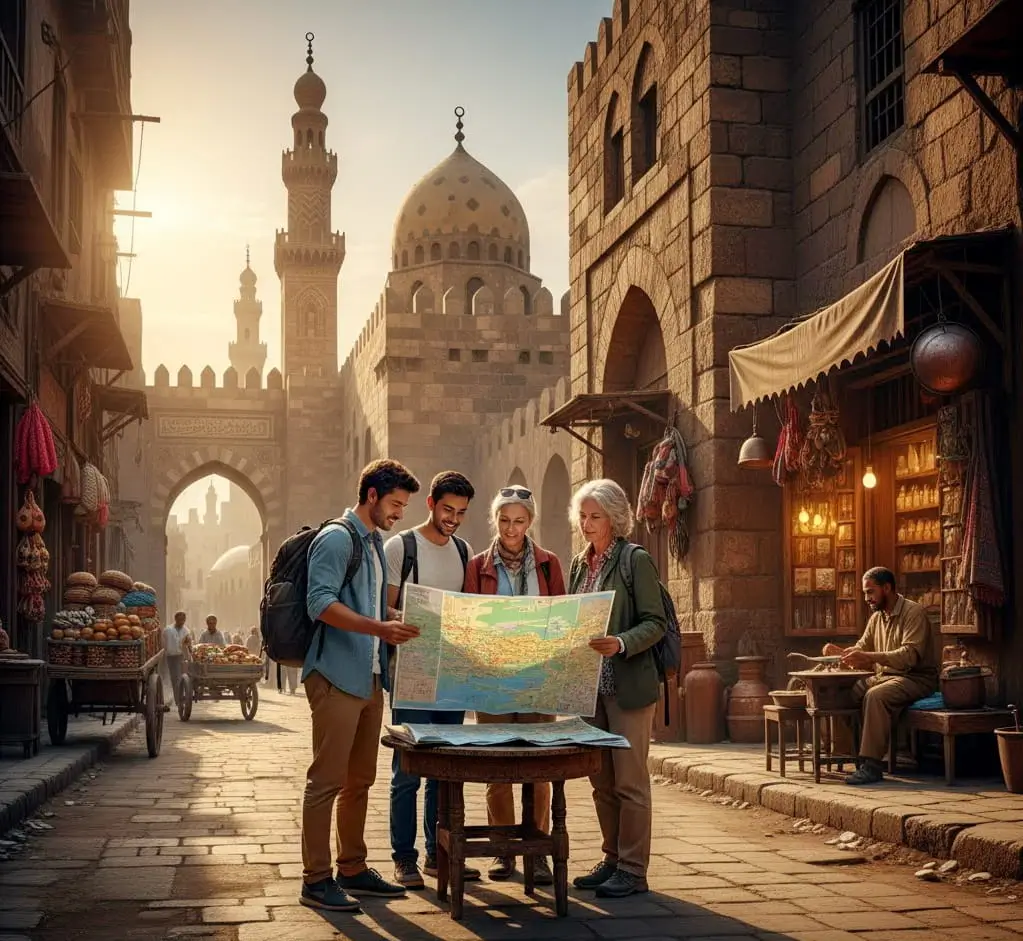
You cannot experience the riches of medieval Cairo from a car window. To truly grasp the scale of this district, you must walk. The streets here remain narrow, winding, and bustling, just as they were centuries ago. Most tourist vans cannot navigate these “tiny streets,” making walking tours the only viable option for those seeking authenticity.

The Concept of the “Living Museum.”

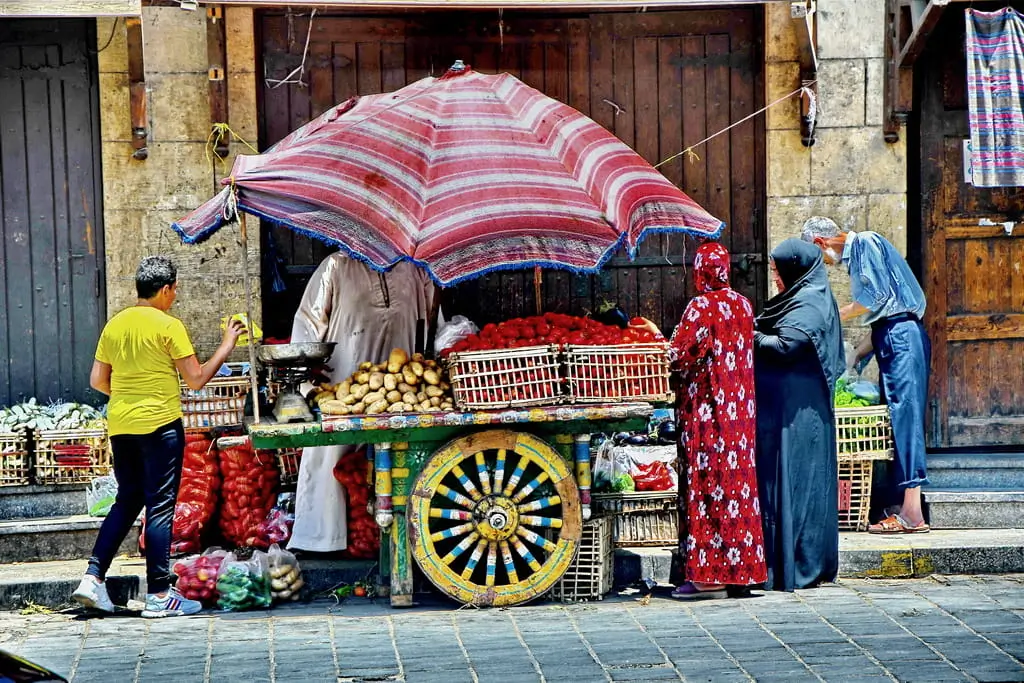
Unlike the Pyramids, which exist in a desert vacuum, Islamic Cairo is a “Living Museum.” This means you must navigate the modern traffic of Tuk-Tuks and street vendors while observing 800-year-old monuments. This intersection creates a “User Experience” (UX) that is both chaotic and deeply rewarding.

Zonal Exploration Strategies

Because the area is so vast, wise travelers divide their visit into manageable zones. Splitting the city into segments allows you to appreciate the architectural details without succumbing to “monument fatigue.”

Route Start Point End Point Primary Focus
Route 1: The Royal Way Saladin’s Citadel Bab Zuweila Mamluk Grandeur, Sultan Hassan, and the Tent-makers’ Market.
Route 2: The Heart of the City Bab Zuweila Al-Azhar Mosque The Al-Muizz thoroughfare, the Ghoriyya Complex, and the Spice Market.
Route 3: The Fatimid Core Khan El-Khalili Bab El-Futuh The Qalawun Complex, Al-Hakim Mosque, and the northern fortifications.
The Architectural Pillars: Key Sites Deep-Dive

The Al-Azhar Mosque - Mosques in Egypt

Al-Azhar Mosque: The Beacon of Knowledge

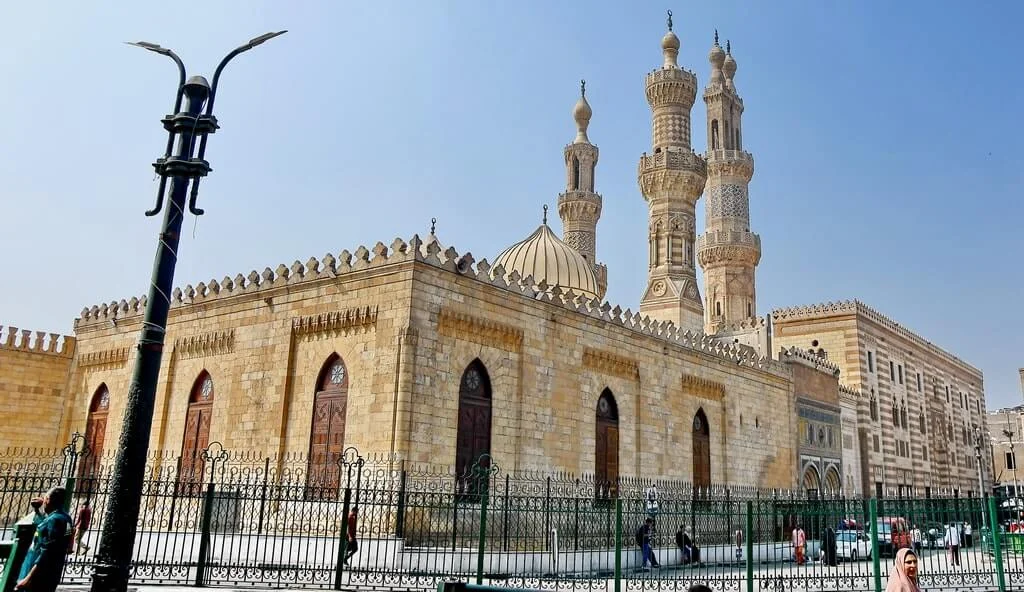
The Fatimids founded Al-Azhar Mosque in 970 CE. It quickly evolved from a simple place of worship into the world’s most prestigious center for Islamic scholarship.

  • The Evolution of the Minaret: Al-Azhar features five distinct minarets. If you look closely, you can see the shift from the square-based Mamluk style to the “pencil-thin” Ottoman style. This visual timeline demonstrates the mosque’s survival through dozens of political upheavals.
  • The Keel Arch: The mosque’s original Fatimid section features the “keel arch,” which resembles the hull of a ship. This architectural signature distinguishes Fatimid work from the later, more jagged Mamluk arches.

The Citadel of Cairo: The Bastion of Power

The Citadel of Cairo The Bastion of Power

Salah ad-Din (Saladin) constructed this medieval fortress in the 12th century to protect the city from Crusader threats. It served as the seat of the Egyptian government for nearly 700 years.

  • Military Engineering: The Citadel features a “double wall” system and a 90-meter-deep well (Joseph’s Well) carved directly into the limestone to ensure a water supply during sieges.
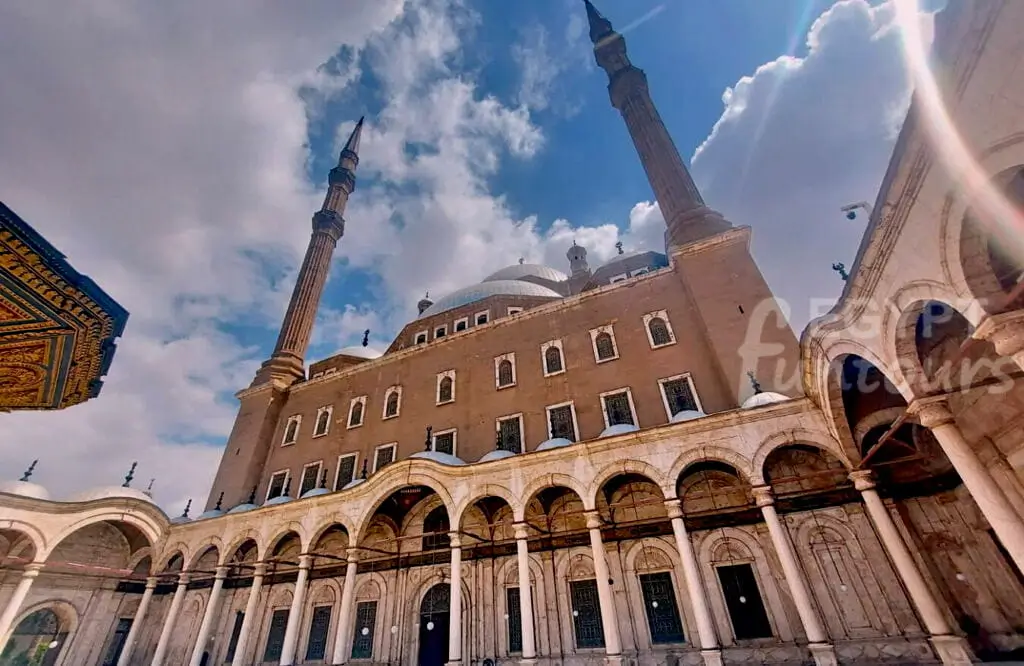
  • The Mosque of Muhammad Ali: While built in the 19th century, this mosque uses the Ottoman “Imperial” style. Its cascading domes and twin “pencil” minarets define Cairo’s silhouette.
FUN

The Mamluk Masterpieces: Engineering the Infinite

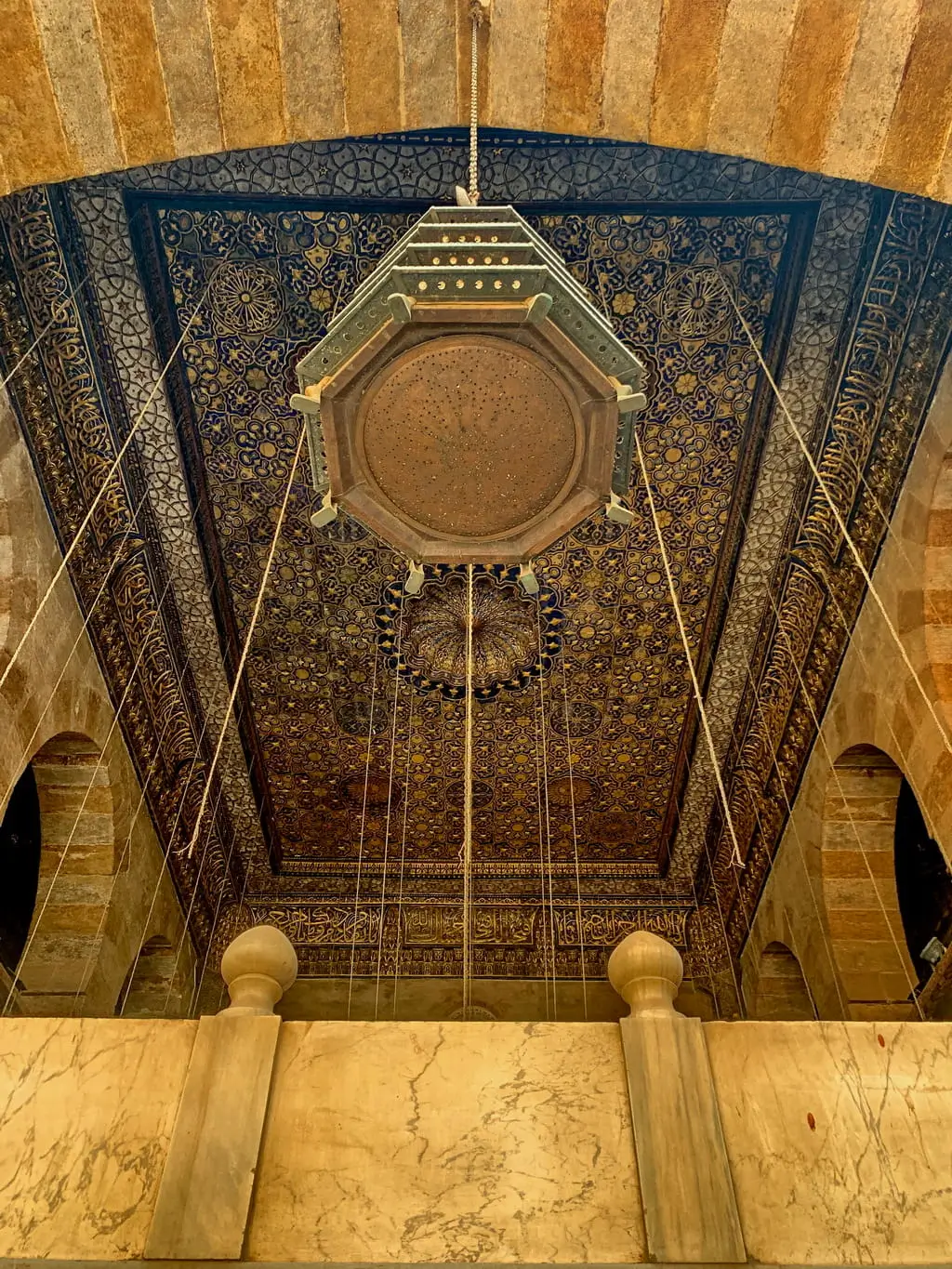
The Mamluk era (1250–1517 AD) represents the pinnacle of stone craftsmanship in Cairo. Unlike earlier brick-and-stucco structures, Mamluk buildings utilized massive limestone blocks, allowing for soaring heights and intricate geometric carvings that have survived earthquakes and urban decay.

The Mosque-Madrasa of Sultan Hassan: The “Fourth Pyramid.”

The Architectural Marvel A Fusion of Style - Sultan Hassan Mosque

Commissioned in 1356 AD, the Complex of Sultan Hassan is arguably the most iconic building in Islamic Medieval Cairo. Historians often refer to it as the “Fourth Pyramid” because of its colossal scale and architectural audacity.

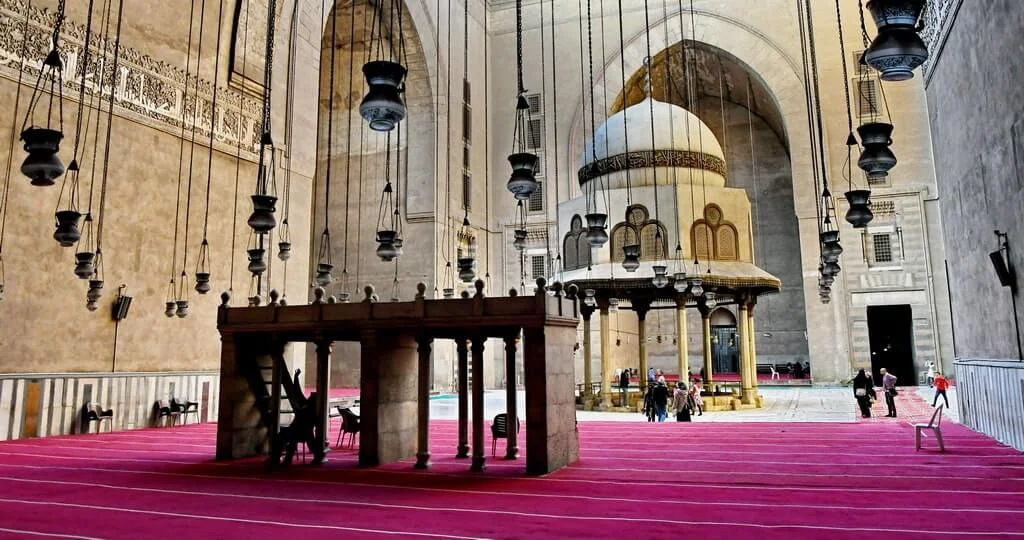
  • The Four-Iwan Plan: The mosque features a central open courtyard surrounded by four massive vaulted halls (iwans). Each hall represents one of the four schools of Sunni Islamic law (Shafi’i, Maliki, Hanafi, and Hanbali). This layout reflects the building’s primary function as a university.
  • The Portal of Grandeur: The entrance portal rises nearly 38 meters high. It features muqarnas (honeycomb vaulting) and intricate stone carvings. If you look closely at the masonry, you will see alternating colored stones—the Ablaq technique—which creates a rhythmic, visual vibration.
  • Acoustic Engineering: The architects designed the qibla iwan (the hall facing Mecca) to carry the imam’s voice across the massive courtyard without the need for modern amplification.

The Mosque of Al-Rifa’i: The Neo-Mamluk Companion

Standing directly opposite Sultan Hassan is the Al-Rifa’i Mosque. Although builders completed it in 1912, they used a “Neo-Mamluk” style to harmonize with its 14th-century neighbor.

  • The Royal Mausoleum: This mosque serves as the final resting place for the Egyptian Royal Family and the last Shah of Iran.
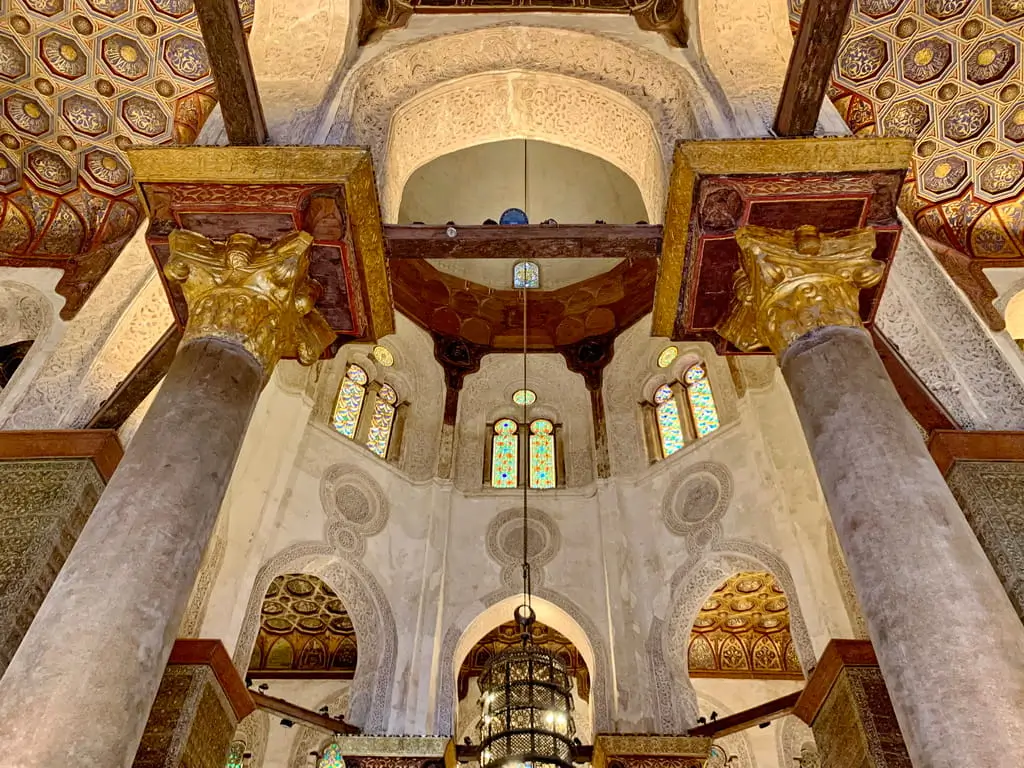
  • The Contrast: Comparing Sultan Hassan to Al-Rifa’i allows you to see how architectural styles evolved over 500 years, moving from purely structural stone to highly decorative marble and gold-leaf interiors.

Al-Muizz Street: The Spine of a Civilization

A Walker's Guide; The Treasures of Al-Muizz Street

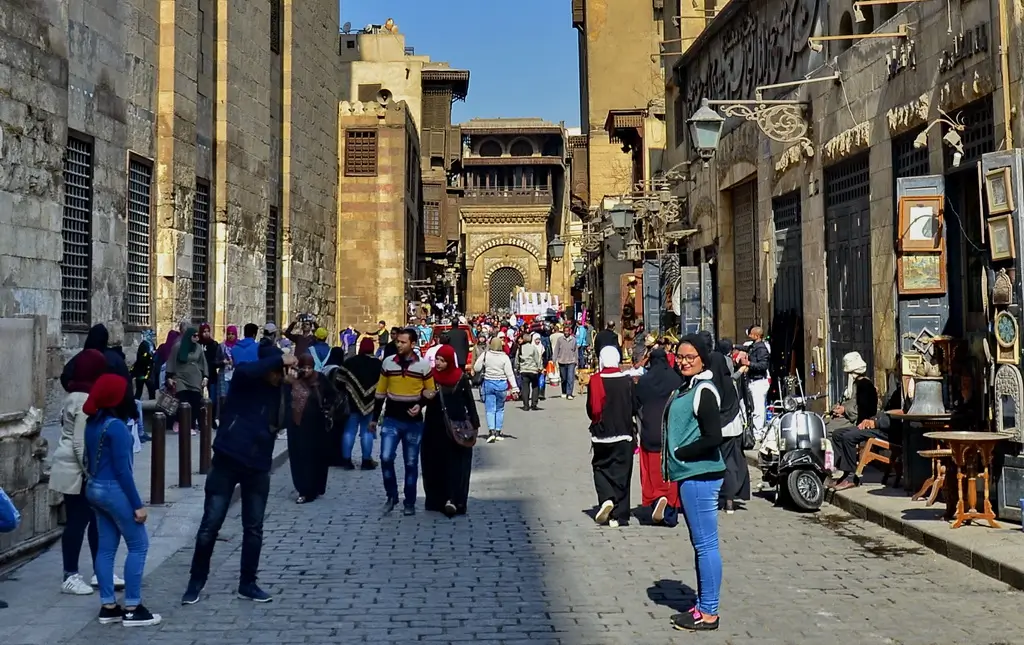
Al-Muizz Li-Din Allah al-Fatimi Street serves as the central artery of the original Fatimid city. It is often cited as the world’s most dense collection of medieval architecture.

The Qalawun Complex (1284–1285 AD)

The Sultan Qalawun complex is a masterpiece of multi-functional design. It originally housed a Mosque, a Madrasa, and a Bimaristan (Hospital).

  • Global Medical History: The Bimaristan was one of the most advanced medical centers of the Middle Ages. It offered free treatment to people with low income, specialized wards for different diseases, and utilized “music therapy” to treat mental health patients.
  • The Facade: The exterior walls feature high, recessed arches and windows that resemble Gothic cathedrals. Some historians believe these designs directly influenced European architecture during the Crusades.

The Sabil-Kuttab of Katkhuda

The Sabil-Kuttab of Katkhuda

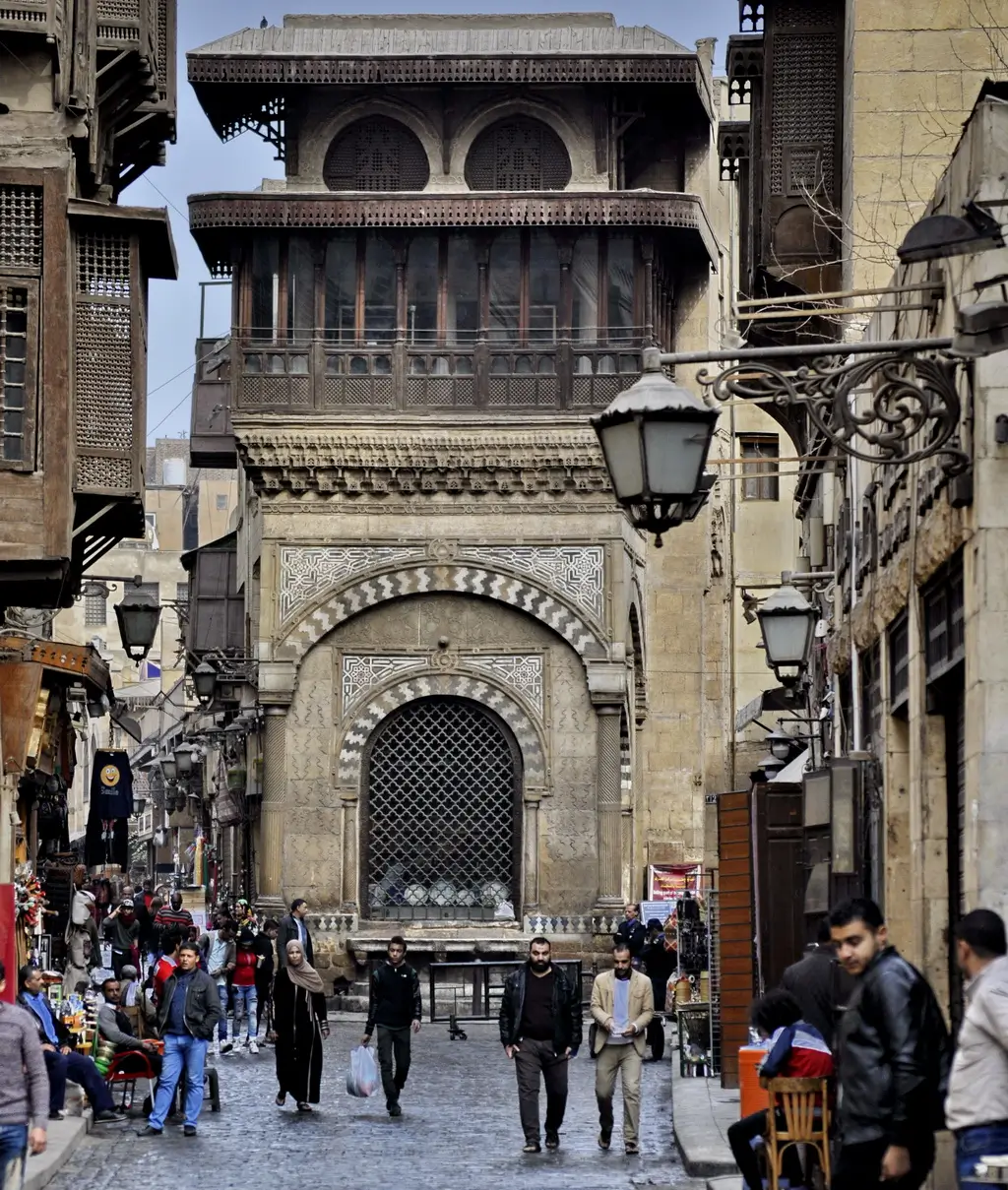
At the fork of the road stands the most photographed building on Al-Muizz Street. The Sabil-Kuttab of Abdel Rahman Katkhuda perfectly illustrates the “social architecture” of the time.

  • The Sabil (Ground Floor): A public water fountain where citizens could drink for free. In a desert city like Cairo, providing water was the highest form of charity.
  • The Kuttab (Upper Floor): A primary school where orphans and local children learned the Quran, literacy, and mathematics.
  • UX Design of the Past: The building sits on a triangular plot to catch the breeze from two different streets, ensuring the children stay cool during their lessons.
FUN

The Great Gates: Securing the Victorious City

The Great Gates Securing the Victorious City

The Fatimid vizier Badr al-Jamali commissioned three massive stone gates in the late 11th century to protect the royal enclosure. These gates utilized Byzantine masonry techniques, making them nearly indestructible.

Bab al-Futuh (The Gate of Conquests)

Located at the northern end of Al-Muizz Street, this gate features rounded towers and intricate geometric carvings. It served as the entry point for victorious armies returning from battle.

Bab al-Nasr (The Gate of Victory)

A more rectangular, fortress-like gate located near Al-Futuh. It features shields and military symbols carved into the stone, warning enemies of the city’s strength.

Bab Zuweila: The Gateway of the South

Bab Zuweila The Gateway of the South

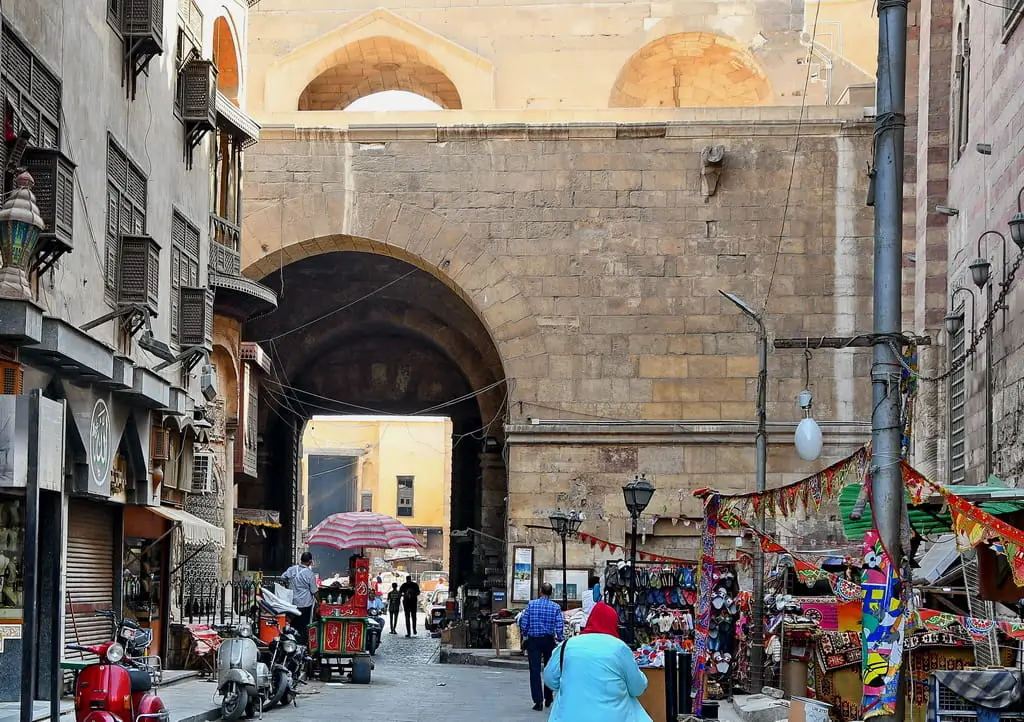
As discussed earlier, this gate is the only one you can climb. It represents the transition between the royal Fatimid city and the bustling commercial districts of the south.

Khan el-Khalili: The Economics of the Middle Ages

Khan El Khalili, The History Behind the Walls

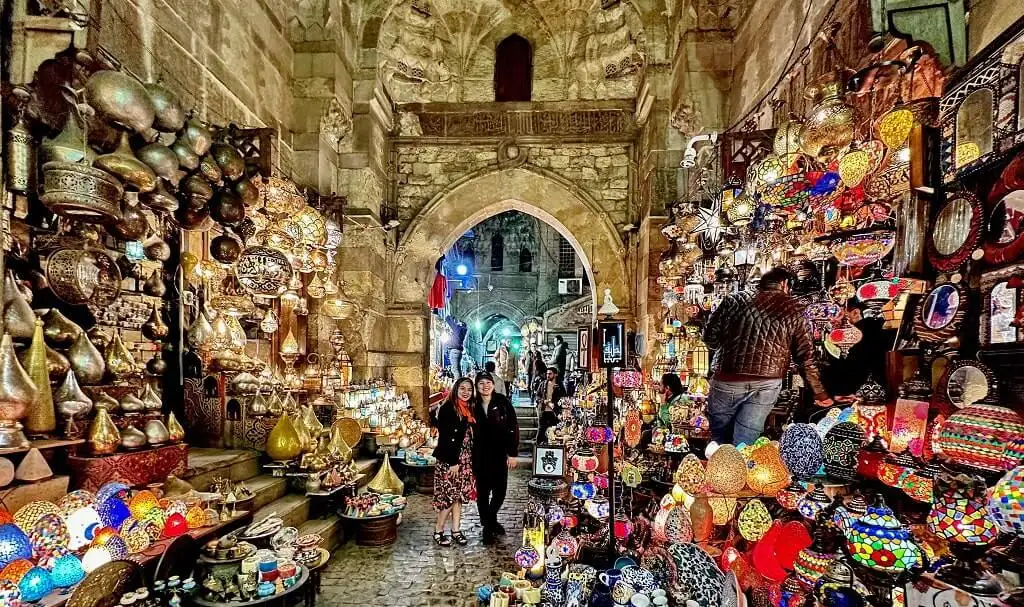
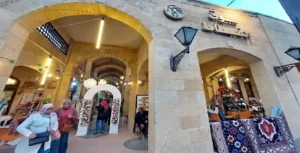
To understand the UX of the medieval bazaar, you must look past the souvenirs. Khan el-Khalili was a strictly organized economic engine.

  • The Wakala: These were the “Amazon Warehouses” of the 14th century. A Wakala featured a ground floor for storage and animal stalls, while the upper floors provided lodging for foreign merchants.
  • Specialization Zones: The market remains divided by trade. You will find the Jewelry District, the Copper-smiths’ Alley, and the Spice Market. This grouping allowed for easier regulation and price control by the Muhtasib (the market inspector).
FUN

The Sufi Khanqahs: Spiritual Sanctuaries

The Sufi Khanqahs Spiritual Sanctuaries

While mosques served as public centers for prayer, the Khanqah provided a private retreat for Sufi mystics. These buildings combined a mosque, a dormitory, and a dining hall, reflecting the communal and ascetic nature of Sufi orders during the Mamluk era.

The Khanqah of Faraj ibn Barquq

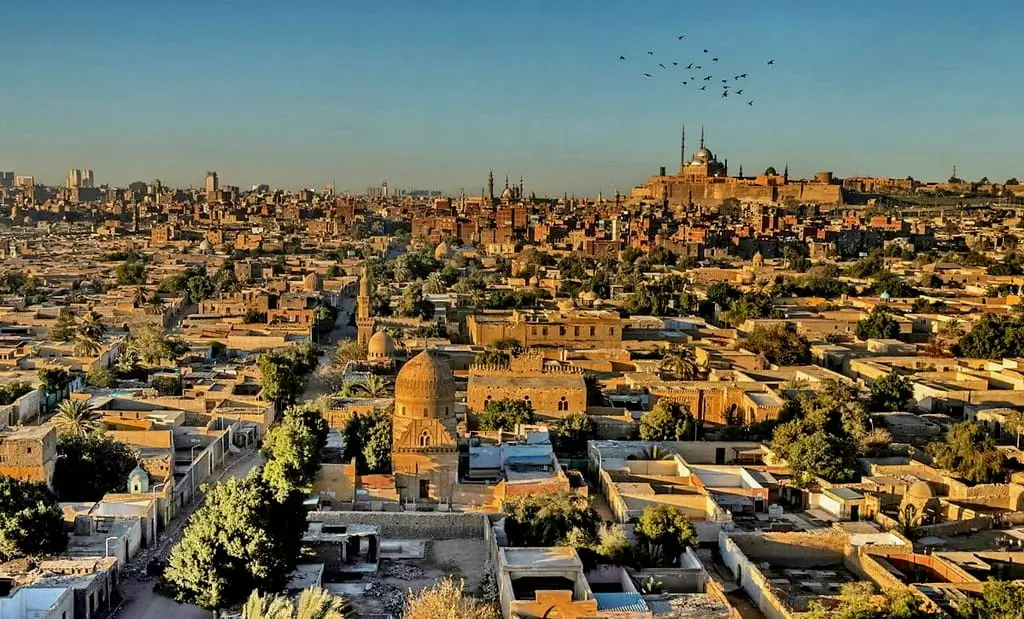
Located in the Northern Cemetery (The City of the Dead), this massive complex represents one of the largest Sufi institutions ever built.

  • The Twin Domes: This structure features two identical, massive stone domes. Architects carved these domes with a “zigzag” chevron pattern, a technical feat that required incredible precision in stone cutting.
  • The Living Quarters: You can still see the small cells where Sufi students lived, prayed, and meditated. This highlights the building’s dual role as both a tomb and a vibrant educational community.

A Technical Guide to Medieval Materials

A Technical Guide to Medieval Materials

The durability of Islamic Medieval Cairo stems from the sophisticated use of locally sourced and imported materials. Understanding these materials provides insight into the “Passive Design” that keeps these buildings cool and standing.

Limestone: The Bone of the City

Architects sourced the majority of the city’s stone from the Muqattam Hills.

  • Structural Integrity: This high-quality limestone is soft enough to carve when first quarried but hardens over time as it reacts with the air.
  • Thermal Mass: The thick limestone walls act as a thermal battery, absorbing the heat of the Egyptian sun during the day and releasing it slowly at night.

Stucco and Plaster

In the earlier Tulunid and Fatimid periods, builders used stucco (a mixture of lime, sand, and water) to create intricate lace-like designs.

  • The Ibn Tulun Friezes: The Mosque of Ibn Tulun features nearly 2.5 kilometers of Quranic inscriptions carved into stucco. This material allowed for more fluid, organic shapes than hard stone.

Marble and Porphyry

Mamluk sultans used marble primarily for “visual impact” in the Qibla walls and floors.

  • Marble Mosaic (Cosmati Work): Artisans cut small pieces of colored marble, mother-of-pearl, and red porphyry to create complex geometric patterns. This wasn’t just decorative; the smooth marble floors felt cool to the touch for worshippers walking barefoot.

Wood: Cedar and Sissoo

Because Egypt lacks large forests, wood was a luxury material.

  • Mashrabiyya: Artisans used turned wood—often Cedar imported from Lebanon—to create the famous window screens.
  • Structural Beams: Large ceilings often utilized palm trunks or imported timber, covered with painted and gilded panels.

Navigating the “City of the Dead”: The Northern Cemetery

Navigating the City of the Dead The Northern Cemetery

To reach full authoritative depth, we must address the Northern Cemetery. This is not merely a graveyard; it is an urban extension of the city where the most sophisticated Mamluk funerary architecture exists.

The Complex of Sultan Qaitbay (1474 AD)

The Mosque of Qaitbay is widely considered the “jewel” of late Mamluk art.

  • The Dome: The dome features a “geometric interlace” pattern carved directly into the stone. Unlike earlier domes that were smooth or ribbed, Qaitbay’s dome represents the moment when stone carving reached the complexity of lace.
  • The Minaret: Notice the transition from a square base to an octagonal mid-section, ending in a circular top. This “three-tier” minaret design became the standard for Egyptian mosques for centuries.

Practical Logistics for Travelers

To conclude this guide, we provide the final “User Experience” (UX) layer for those visiting today.

Accessing the “Hidden” Sites

Many smaller mosques and sabils require you to find the “Key Holder” (Ghaffir). A small tip (baksheesh) is culturally expected and provides you with access to rooftops or hidden minarets that are otherwise closed to the public.

Cultural Etiquette

  • Photography: Most mosques allow photography, but avoid filming people during prayer.

  • The Sabil Ritual: If you see a modern water dispenser outside a shop, this is the contemporary version of the medieval Sabil. It remains a core part of Cairene hospitality.

FUN

The Enduring Pulse of Cairo

The Enduring Pulse of Cairo

Islamic Medieval Cairo provides an unbroken link to a millennium of human history. It is a place where SEO-friendly keywords like “architecture” and “history” transform into tangible stone, cooling breezes, and the smell of ancient spices. Whether you stand in the shadow of the Sultan Hassan Mosque or navigate the narrow alleys of Al-Muizz Street, you are participating in a living legacy that continues to define the identity of the Arab world.

Frequently Asked Questions (FAQs)

1. Is Islamic Medieval Cairo the same as “Old Cairo”?

Not exactly. While people often use the terms interchangeably, “Old Cairo” technically refers to the Coptic Cairo area (the Roman Fortress of Babylon and the Hanging Church), which predates the Islamic city. Islamic Medieval Cairo refers to the historic districts founded from 641 AD onward, including Fustat and the walled city of the Fatimids.

2. Can non-Muslims enter the mosques in Historic Cairo?

Yes. Most mosques in the historic district welcome non-Muslim visitors outside of prayer times. However, you must follow specific etiquette:

  • Attire: Wear modest clothing (shoulders and knees covered).
  • Shoes: Remove your shoes before entering the carpeted prayer halls.
  • Prayer Times: Avoid visiting during the Friday noon prayer, as the mosques become extremely crowded with worshippers.

3. Is it safe to walk through the “City of the Dead”?

Yes. The Northern and Southern Cemeteries (The City of the Dead) are active residential neighborhoods where people have lived for generations. While the area looks unconventional, the residents are generally welcoming to tourists. It is best to visit during daylight hours and consider hiring a local guide to help you navigate the complex mausoleums.

4. How much time do I need to see the main sites?

Because the area is so dense, you cannot see everything in one day.

  • A “Highlights” Tour: (Citadel, Sultan Hassan, and Al-Muizz Street) takes roughly 5–6 hours.
  • A Deep Dive: To explore the gates, the hidden wikalas, and the City of the Dead, you should plan for 3 full days.

5. Do I need a guide for Al-Muizz Street?

While you can walk Al-Muizz Street independently, a guide is highly recommended for the first visit. Many of the most interesting features—like the hidden “secret” doors in the Gayer-Anderson Museum or the history of the Sabil-Kuttabs—lack English signage. A guide can also help you navigate the aggressive (but friendly) bargaining in Khan el-Khalili.

6. What is the “Well of the Bats” legend?

This legend belongs to the Gayer-Anderson Museum (adjacent to the Ibn Tulun Mosque). Local lore claims the well is a portal to another world guarded by a King of the Jinn. It is one of the “Twelve Legends of the House” that Major Gayer-Anderson famously documented.

7. What is the best way to get to the historic district?

The most efficient way to reach the heart of the district (Al-Azhar or the Citadel) is via Uber or Careem. Avoid driving yourself, as parking is nonexistent and the traffic in Sayyida Zeinab and Al-Hussein is among the most congested in the world.

Discover the unique artifacts in the land of Pharaohs and enjoy Hurghada....
Explore UNESCO world's heritage sites in Egypt with expert Egyptlogist Tour guides....

The best holiday ever!

The Nile cruise, Luxor, and Aswan were amazing sites to see, especially when you have the best tour guide in Egypt. Hamada was absolutely fantastic, lots of information, and some of it not spoken by others. This guy was not only a simple tour guide for us, but he also

More »
Premium Cairo Tour Package Egypt Fun Tours

THE MOST AMAZING TRIP

Hi Hamada! Sorry, we were so quick to say goodbye—my mom was fading 🙂 I just wanted to say thank you for THE MOST AMAZING trip… You thought of every detail, improvised, adapted, overcame every challenge, multitasked personalities, and did it all with grace, intelligence, and kindness. From the bottom

More »
Souqs and Markets in Egypt - Egypt Fun Tours

Cairo walking tours

After a rocky start (the driver had been in an accident on his way to pick me up,) the company very quickly sent another driver/guide named Mohammed, who was a real pro. Thoroughly enjoyed my first day in Egypt!

More »

Goes well beyond “tour”

I am tempted to say “my friend Hani” runs an amazing service, because that is how he makes you feel. I first went on the 9-hour layover tour in summer 2011. Hani and driver picked me up at the airport at 3am, and by the time I left at noon

More »
Isis with wings

Top-rated Tour Packages

Isis with wings