King Khufu: The Pharaoh Who Built the Great Pyramid (Complete Biography)

King Khufu is the greatest paradox of Ancient Egypt. He built the single largest stone monument in human history—the Great Pyramid of Giza—yet his only surviving portrait is a tiny 3-inch ivory statue. While Greek historians like Herodotus later labeled him a cruel tyrant who enslaved his people, modern archaeology reveals a different truth. King Khufu was a brilliant administrator who led a highly organized, well-paid workforce to define the Golden Age of the Old Kingdom.

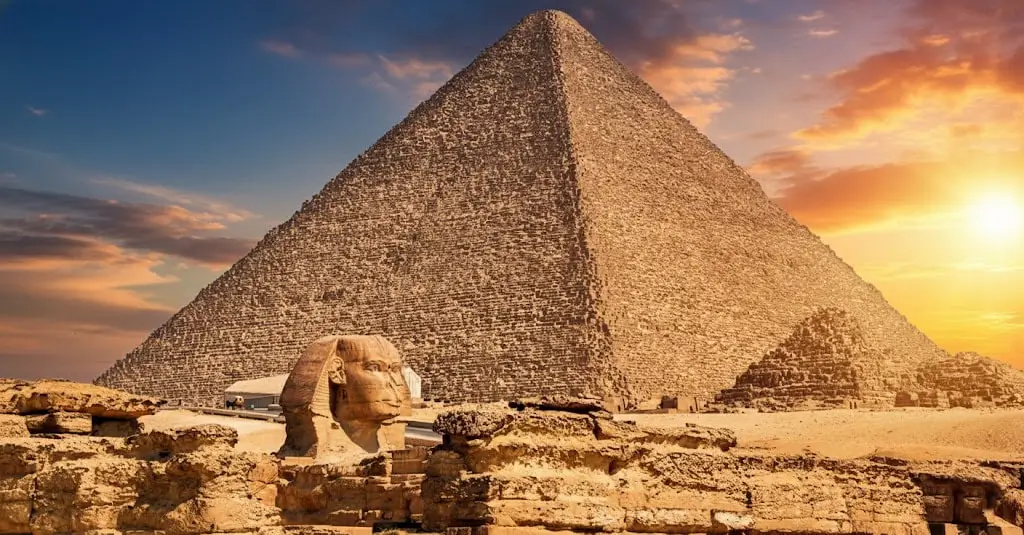
Stand on the Giza Plateau, and you are standing in the shadow of one man’s ambition. King Khufu, his name is synonymous with the Great Pyramid. For 4,500 years, his monument has stood as the tallest artificial structure on Earth. It consists of 2.3 million stone blocks and aligns with the stars. It is the only surviving Wonder of the Ancient World.

But here is the catch: Despite the mountain of stone he left behind, we know almost nothing about the man himself. If you search the museums of the world for a face to match this colossal achievement, you will find only one which is not a towering colossus like Ramses II. It is a tiny, chipped ivory statuette found at Abydos. It fits in the palm of your hand. This is the central mystery of King Khufu. How can the world’s biggest builder have the smallest legacy?

FUN

The Man Behind the Mountain

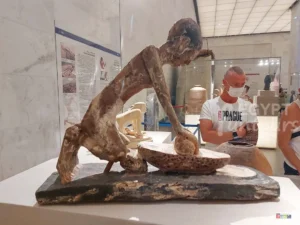
King Khufu statue ancient egyptian artifacts egypt fun tours

To understand the pyramid, you must understand the Pharaoh.

Khufu (known as Cheops to the Greeks) ruled during the Fourth Dynasty of the Old Kingdom (c. 2589–2566 BC). This was the “Golden Age” of pyramid building.

However, his reputation has suffered for thousands of years.

  • The Myth: Ancient Greek historians described him as a heretic and a tyrant who closed the temples and forced his daughter into prostitution to pay for stones.
  • The Reality: Archaeological evidence suggests he was a highly respected “God-King.” He commanded an economy so robust that he could feed, house, and pay 20,000 workers without bankrupting the state.

In this comprehensive guide, we will dig past the legends. We will explore the engineering, the family drama, and the archaeological truth of King Khufu.

The Rise to Power

Khufu did not invent the pyramid. He inherited the obsession from his father. To understand King Khufu, we must look at his predecessor, King Sneferu.

  • The Father: Sneferu was the greatest builder before Khufu. He built three massive pyramids (including the Red Pyramid and the Bent Pyramid).
  • The Lesson: Sneferu spent his reign figuring out the engineering physics of how to build a smooth-sided pyramid.

Consequently, when Khufu took the throne, the trial-and-error phase was over. He had the blueprint. He just needed to scale it up.

The Fourth Dynasty Legacy

Khufu came to power fully prepared. The Fourth Dynasty was a time of absolute centralized power. The Pharaoh was not just a ruler; he was the living link between the gods and the people.

Therefore, building the pyramid was not vanity.

It was a national project to ensure the cosmic order (Ma’at). If King Khufu could ascend to the stars and join the sun god Ra, Egypt would remain stable forever.

The Family Tree

Khufu’s royal court was a tight-knit family affair. He appointed his closest relatives to the highest positions of power to ensure loyalty.

  • Queen Hetepheres I (The Mother): Khufu’s mother was a powerful figure. Her tomb was found hidden near the Great Pyramid, filled with gold-encased furniture and silver bracelets. This treasure proves the immense wealth available to King Khufu at the start of his reign.
  • Hemiunu (The Architect): The man responsible for the Great Pyramid was likely Khufu’s nephew. As the Vizier, Hemiunu controlled all the royal works.

Why does this matter? It shows that the construction of the Great Pyramid was a family business. King Khufu did not trust strangers. He relied on bloodlines to execute the most complex architectural feat in human history.

FUN

The Great Pyramid (The Project)

The Great Pyramid (The Project)

Khufu did not just want a tomb. He wanted a mountain. His father, Sneferu, had built pyramids at Dahshur. However, King Khufu moved his project north to a limestone plateau known as Giza. He named his monument Akhet-Khufu, which means “The Horizon of Khufu.”

Why Giza? Location is Everything

The move to Giza was a masterstroke of engineering.

  • The Foundation: The plateau provided a solid bedrock capable of supporting 6 million tons of stone.
  • The Materials: The site itself was a quarry. They probably cut the bulk of the pyramid right from the ground next to the construction site.
  • The View: Located high above the Nile valley, the white limestone casing would have reflected the sun, making King Khufu‘s monument visible from miles away.

The Architect: Hemiunu

Behind every great king is a great genius. For King Khufu, that man was Hemiunu. Hemiunu was the Vizier and the “Overseer of All Royal Works.” His statue, found at Giza, shows a man of significant weight. In Ancient Egypt, being  a higher-weight was a sign of prosperity and high status. It meant you did not have to do manual labor.

Hemiunu faced a logistical nightmare. He had to organize the delivery of roughly 800 tons of stone every single day for 20 years to finish on time.

The Workforce: Slaves vs. Citizens

This is the biggest myth in Egyptian history. King Khufu did not use slave labor. Hollywood movies often show slaves being whipped while dragging stones. However, archaeology proves otherwise. Excavations at the “Lost City of the Pyramid Builders” (discovered by Mark Lehner) reveal a different story.

The Evidence:

  • Diet: The workers ate prime cuts of beef, sheep, and goat. Slaves would never be fed such expensive protein.
  • Medical Care: Skeletons show signs of set bones and successful surgeries (like amputations that healed). This indicates King Khufu provided state-sponsored healthcare.
  • The System: The workers were organized into teams or “gangs” with names like “The Drunkards of Menkaure” or “The Friends of Khufu.”

These were peasants fulfilling their tax obligations (Corvée labor) during the flood season when they could not farm. They were paid in beer, bread, and cloth. They were building for their god, not a tyrant.

Logistics of a Mountain

To build the pyramid, King Khufu required materials from across the known world.

The core was made of local limestone. However, the outer casing was made of high-quality white limestone from Tura, located across the river.

  • The Transport: When the Nile flooded, boats carried these massive stones almost to the base of the pyramid.
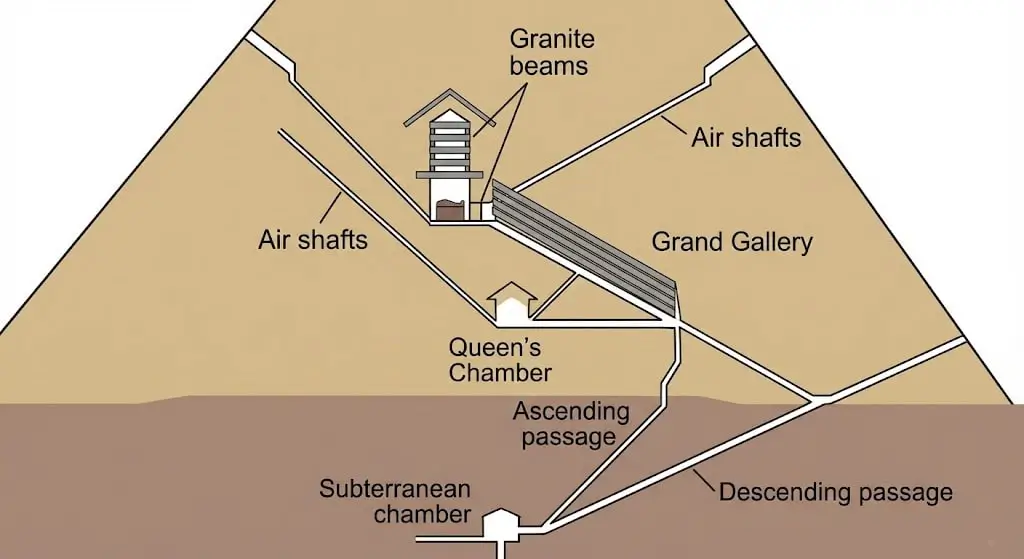
  • The Granite: The King’s Chamber required massive granite beams. These were quarried in Aswan, over 500 miles (800 km) south, and floated down the river on barges.

The organization required to coordinate mining, shipping, feeding, and cutting suggests that King Khufu‘s administration was more efficient than many modern governments.

Alexander the Great: Travel the Path of a Pharaoh-King

Alexander the Great became Pharaoh in Egypt (332 BC). He founded Alexandria, a world capital,...
Related post
FUN

The Artifacts & Archaeology

King Khufu's Burial Chamber and Beyond

What did King Khufu leave behind besides a mountain of stone? Surprisingly little. Robbers looted his tomb in antiquity. Consequently, we have few clues about his life. However, three specific artifacts reveal more about him than any text.

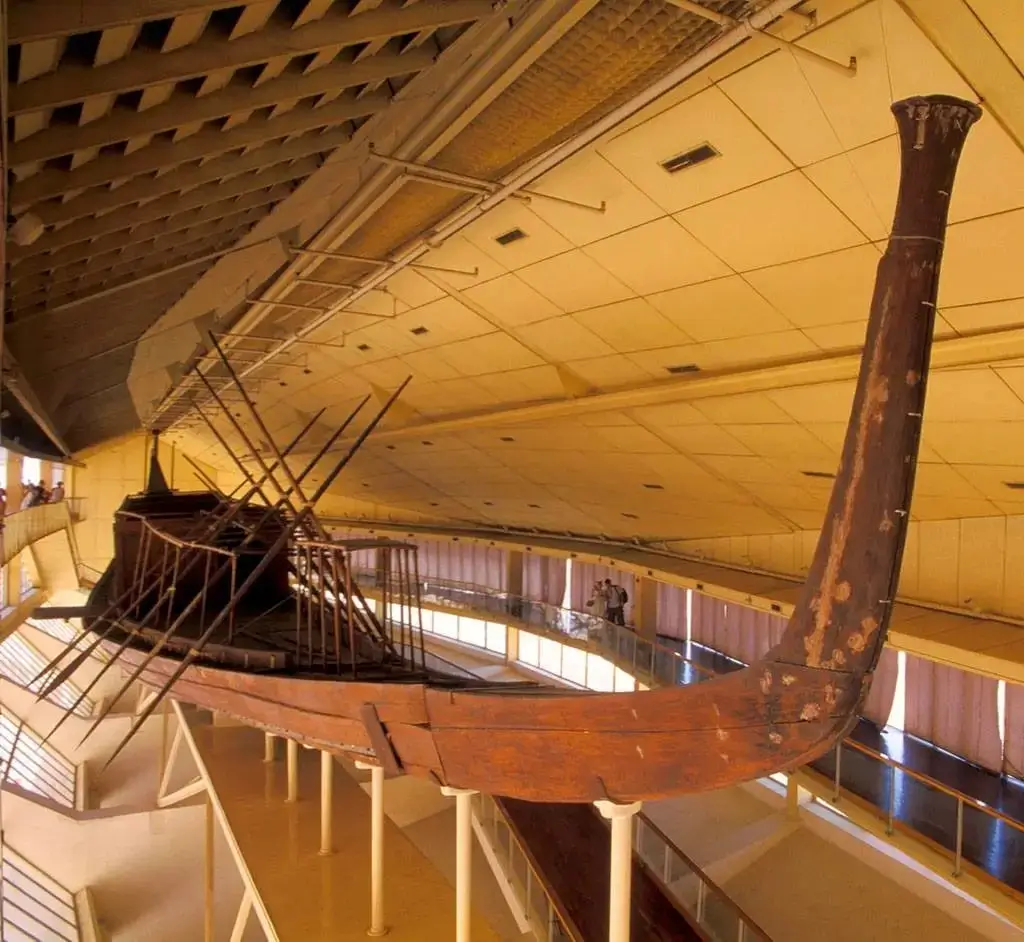
1. The Khufu Ship (The Solar Boat)

In 1954, archaeologists dug near the base of the Great Pyramid. They found something incredible. A sealed pit contained 1,224 pieces of wood.

It was a puzzle.

Experts reassembled the pieces. They formed a magnificent cedar ship, over 140 feet (43 meters) long.

  • The Purpose: This was not a river barge. It was a ritual vessel called a “Solar Barque.”
  • The Symbolism: King Khufu planned to sail across the sky with the sun god, Ra, in the afterlife.

The Solar Boat Museum in Giza Pyramids befor moving it to the Grand Egyptian Museum

The preservation shocks experts. The wood, imported from Lebanon, remains intact after 4,500 years. This proves King Khufu commanded trade routes stretching far beyond Egypt.

2. The Tiny Ivory Statuette

Here lies the greatest irony of Egyptology. The builder of Earth’s largest tomb left the smallest royal statue. Archaeologists found this ivory figure in the temple ruins of Abydos. It stands only 7.5 cm (3 inches) tall.

  • The Look: Khufu sits on a throne. He wears the Red Crown and holds a flail.
  • The Face: Despite the size, the detail is sharp. He looks calm, confident, and stern.

Why is this the only one? King Khufu likely commissioned hundreds of life-sized statues. However, later generations destroyed them, or time erased them. This tiny survivor is our only glimpse of the man himself.

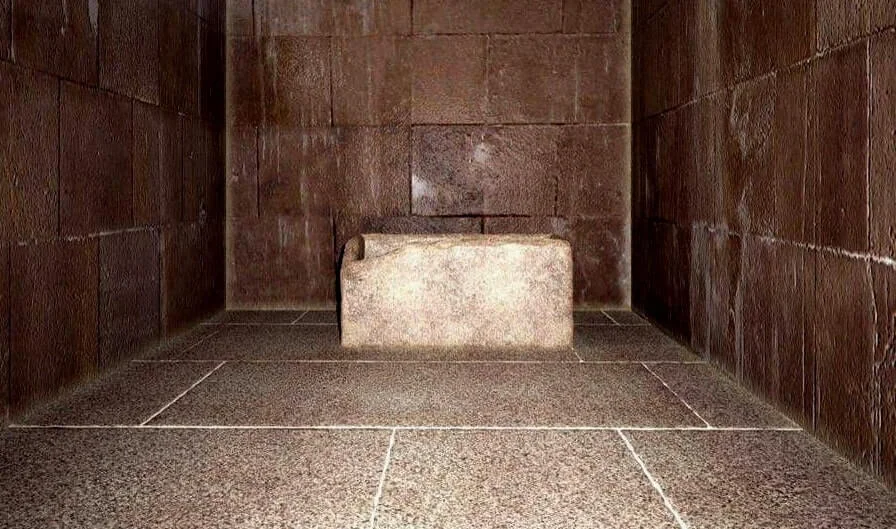
3. The Empty Sarcophagus

Climb deep into the Great Pyramid. You eventually reach the King’s Chamber.

In the center stands a dark, red granite box. This is King Khufu‘s sarcophagus.

  • The Mystery: It is roughly hewn. Historians believe the original broke during transport, so workers used a rough replacement.
  • The Engineering: It is too wide for the door. Therefore, builders constructed the pyramid around the coffin.
  • The Body: It is empty. No one ever found King Khufu‘s mummy. Robbers likely stole it centuries ago.

The Black Pharaohs: The Kushite Kings of Nubia’s 25th Dynasty

For nearly a century, the Kushite Kings from Nubia, known as the Black Pharaohs, established...
Related post
FUN

The Reputation (Tyrant or God?)

King Khufu has a split personality in history books. Was he a cruel tyrant or a wise god-king? The answer depends on whom you ask.

The Herodotus Account (The Tyrant)

Greek historian Herodotus created most of the negative stories. He visited Egypt around 450 BC. This was 2,000 years after King Khufu died. Herodotus claimed:

  • Khufu closed all temples to force labor.
  • He forced his daughter into prostitution to buy stones.

The Reality Check: Modern historians reject these claims. Herodotus likely listened to “tall tales” from local guides. No archaeological evidence supports the idea that King Khufu was a hated tyrant.

The Westcar Papyrus (The Magician)

The Westcar Papyrus offers a true Egyptian perspective. In these stories, King Khufu is not a villain. He is a curious, intelligent monarch. He asks a magician named Djedi about the universe and the god Thoth. This depicts a Pharaoh obsessed with knowledge, not cruelty.

The Cult of Khufu

Finally, the Cult of Khufu disproves the “tyrant” theory. Archaeologists found evidence that priests offered sacrifices to King Khufu‘s spirit 2,000 years after his death.

  • The Logic: People do not worship a tyrant for two millennia.
  • The Conclusion: His people viewed him as a divine ruler who brought prosperity.

The Horizon of Khufu

The Horizon of Khufu

Look at the Great Pyramid today. You see a tomb. However, the Ancient Egyptians saw an “Akhet”—a horizon where the king became a star.

King Khufu remains a mystery. He is a man of contradictions:

  • He built the biggest monument but left the smallest statue.
  • Greeks called him a tyrant; Egyptians worshiped him as a god.
  • He has the most famous name in history, yet his mummy is gone.

One thing is certain. King Khufu defined the absolute peak of the Old Kingdom. He organized the workforce, the resources, and the architecture. He proved that with enough will, humanity could build mountains.

Queen Hatshepsut: The Woman Who Became Pharaoh and Defined an Empire

Uncover the legend of Queen Hatshepsut, the history-making woman who defied tradition to rule as...
Related post
FUN

Frequently Asked Questions (FAQ)

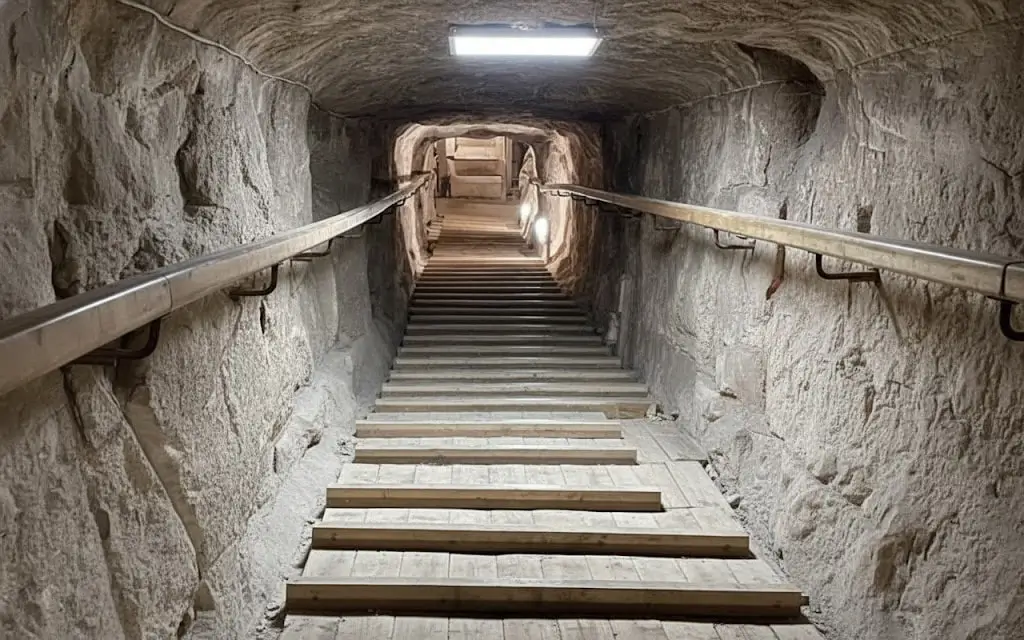
Inside the Great Pyramid - A Journey Through Its Chambers

How tall is King Khufu’s pyramid?

The Great Pyramid stood 146.6 meters (481 feet) tall originally. Today, due to erosion, it stands at approximately 138.5 meters (454 feet).

Did slaves build Khufu’s pyramid?

No. Archaeology proves the workers were paid laborers and citizens. They ate meat, lived in a nearby village, and received medical care.

Where is King Khufu’s mummy?

No one has found the mummy of King Khufu. His sarcophagus sits empty. Robbers likely looted the pyramid in antiquity.

What is the Khufu Ship?

The Khufu Ship is a fully intact, 143-foot-long cedar vessel. Archaeologists found it buried in a pit at the pyramid’s foot. Khufu intended to sail the heavens with the sun god Ra.

Discover the best historical & Coptic attractions....
Explore Cairo, Luxor, and Aswan through this amazing trip...

Amazing layover Tour

We had 12 hour layover in Cairo, and our guide Hani waited patiently for us when we had a few visa issues entering the country! We got on our tour, and had the best experience ever! We saw the pyramids, the sphinx, Islamic Cairo and rode through the city! We

More »

My Dream Came True

I had waited 60 years to get to Egypt; in fact, it was my 60th birthday gift to myself. I went with my oldest daughter, and the experience was excellent. It was meticulously planned by the tour company and was designed for me and my daughter. I never had a

More »
Memnon colossi of king amenophis III 4 min

Book with them, they are Professionals

It has always been my dream to visit Egypt. This was a beautiful tour, almost two years later, I can’t stop thinking about my time in Egypt, Valley of the Kings, Temple of Kom Ombo, Edfu, Luxor! I was able to add an eighth day to see Abu Simbel (a

More »

Absolutely the best

We visited Cairo over a 15-hour layover. Egypt Fun Tours organized a customized and wonderful experience for us. We could not be happier. The day included a visit to all the great sites, the marketplace, dinner, a boat ride on the Nile, and a host of other special requests. I

More »
Top 10 restaurants in cairo Egypt Fun Tours 2

Tour & Overnight camping with Mohamed

The breathtaking views and the isolation with a night under the stars! The trip was memorable with Mohamed, our tour guide, who drove us to all the sites on the way to the White Desert, and is clearly someone who knows the desert inside out. He also cooked a delicious

More »
Isis with wings

Top-rated Tour Packages

Isis with wings