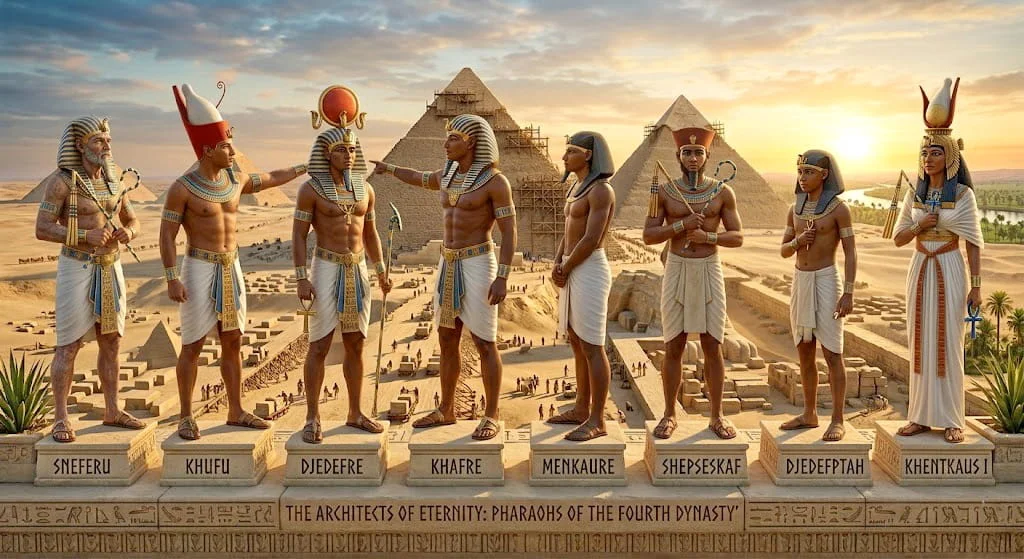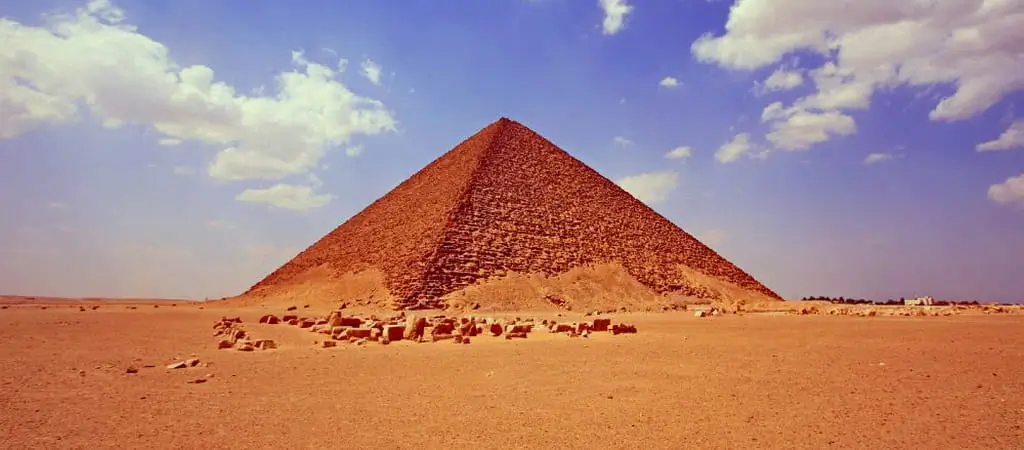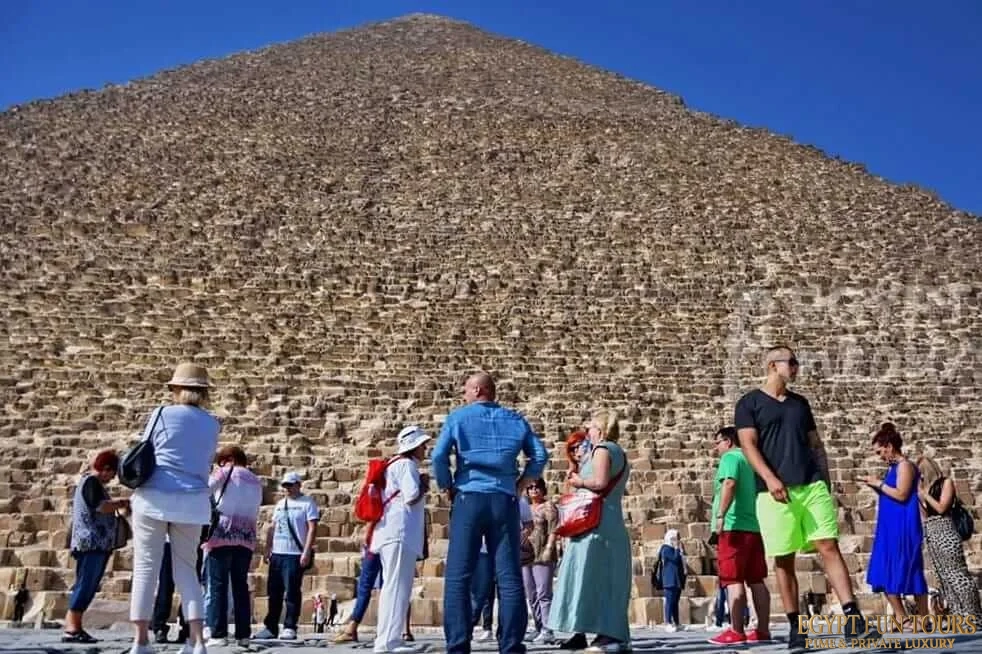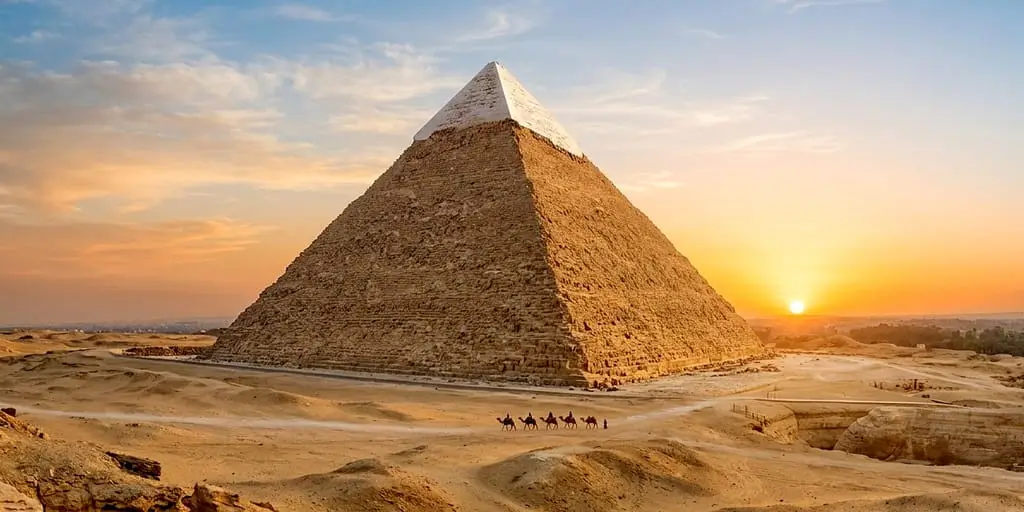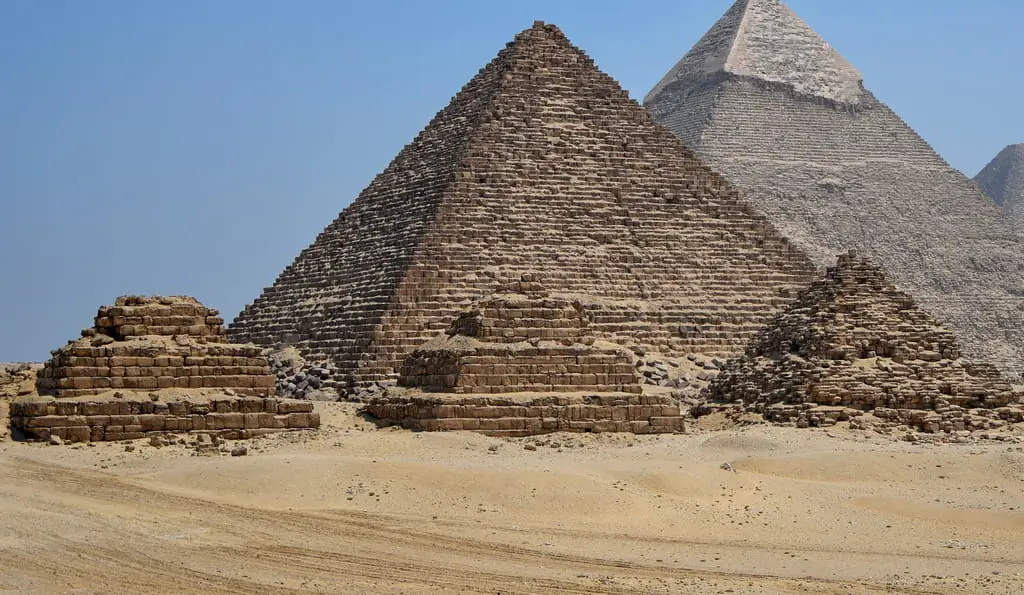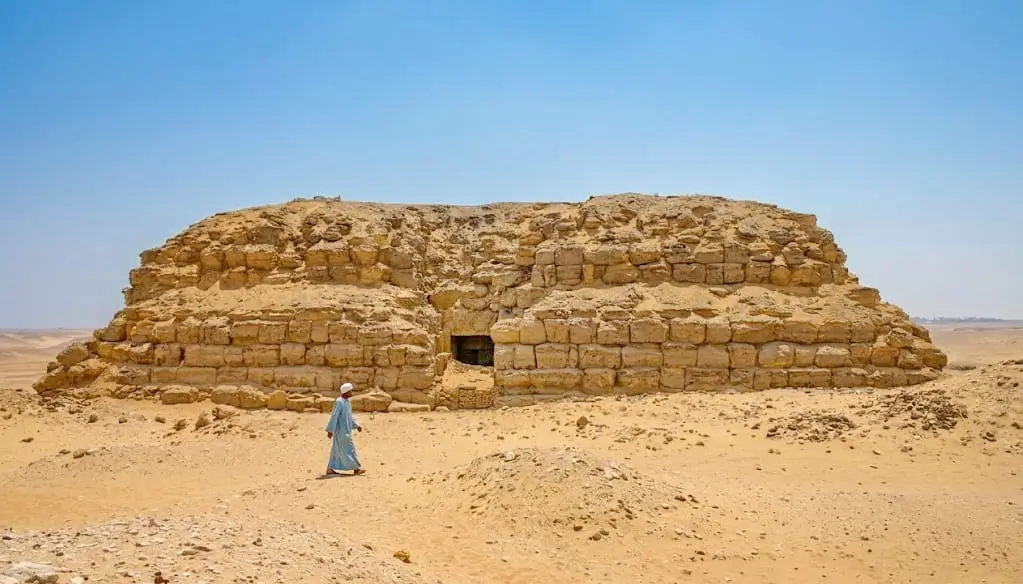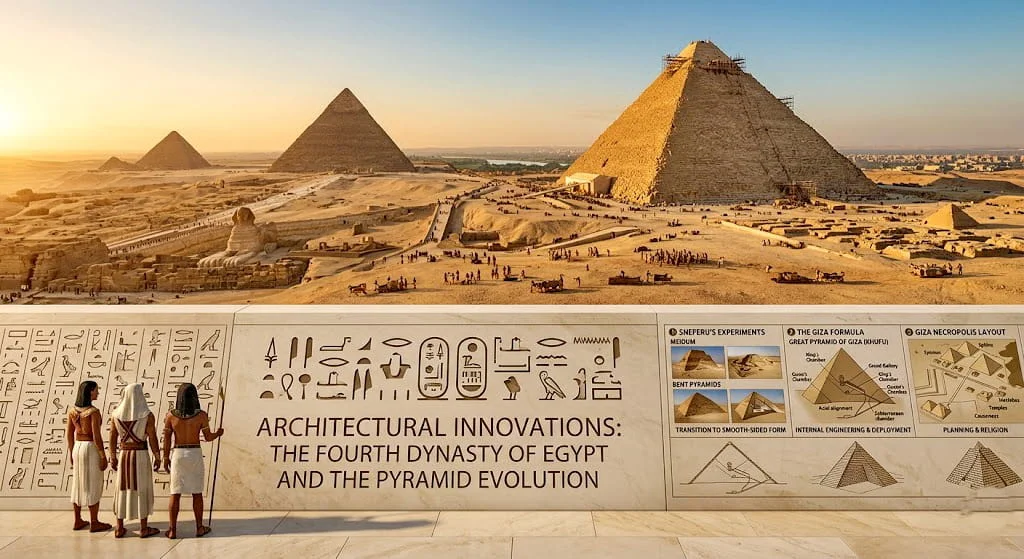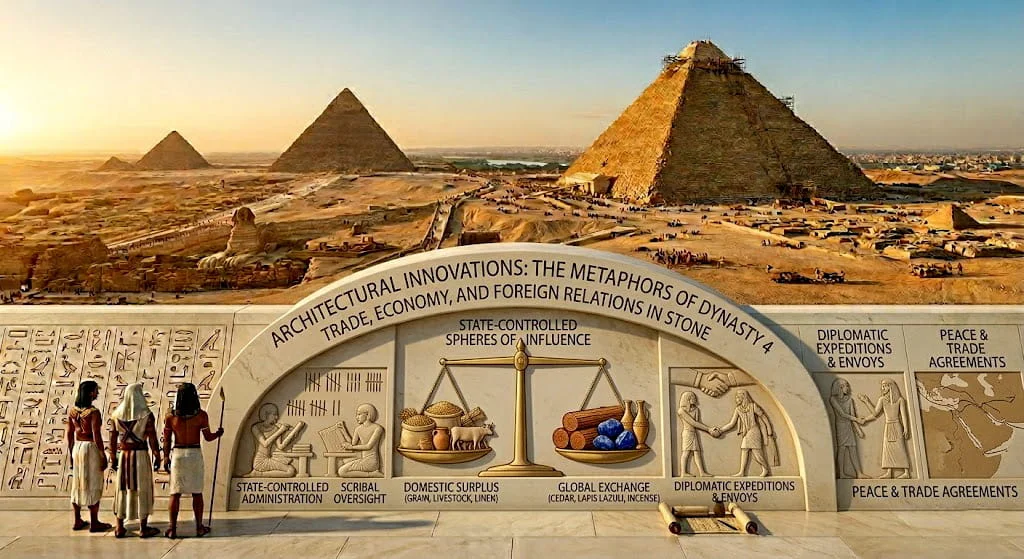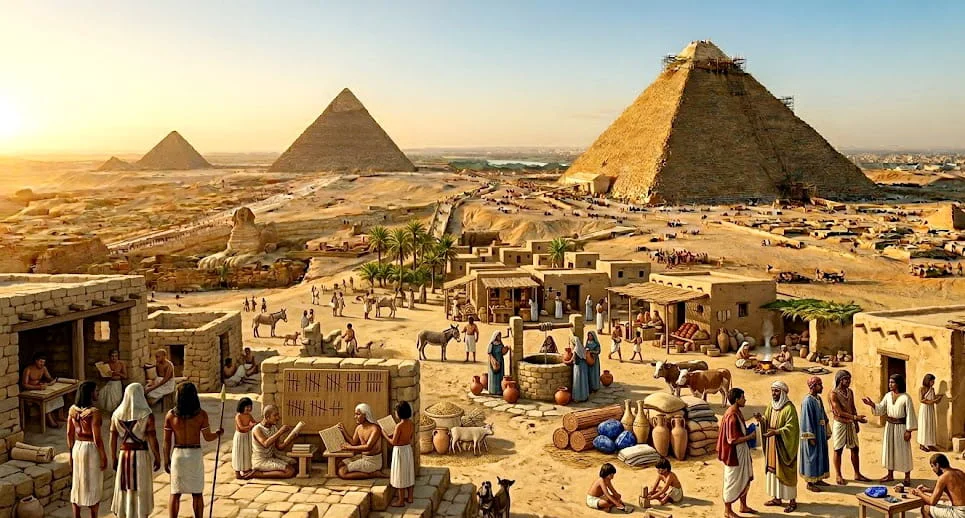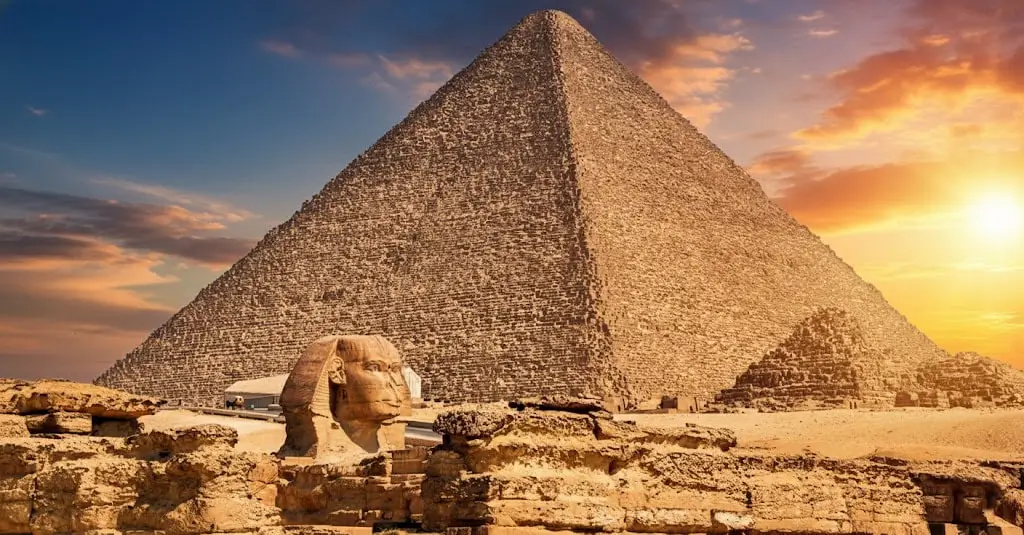


The Fourth Dynasty of ancient Egypt (c. 2613–2494 BC) represents the peak of pharaonic architectural ambition. Historians often call this era the “Age of the Pyramids.” It witnessed a massive shift in human engineering. The Third Dynasty laid the conceptual groundwork with the Step Pyramid of Djoser. However, the monarchs of the Fourth Dynasty—Sneferu, Khufu, Khafre, and Menkaure—perfected the form. They moved from terraced stone designs to the smooth-sided geometric giants that define the Giza Plateau.
These rulers created more than just stone monuments. They solidified divine kingship. The Pharaoh evolved from a powerful earthly ruler into a living god. Consequently, he became the cosmic pivot point responsible for maintaining Ma’at (order and harmony). Below, we explore how this civilization reached the height of its administrative, logistical, and religious power.
A Legacy of Grandeur: Defining the Fourth Dynasty of Egypt
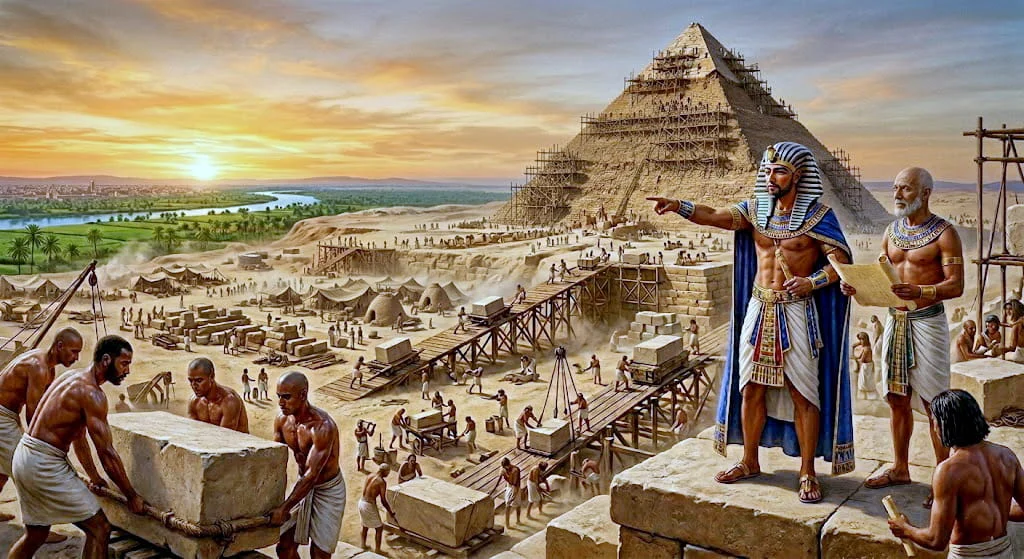
To understand the Fourth Dynasty, we must view it as a concentrated burst of cultural and technical evolution. This period featured absolute centralization. Because the king controlled the nation’s immense resources, he could mobilize labor forces on a massive scale.
Historical Context: The Transition from the Third Dynasty
The transition between these two dynasties marked a shift in royal focus. Imhotep, Djoser’s architect, mastered stone architecture during the Third Dynasty. Yet, his successors continued to experiment with shape and structural integrity. King Sneferu began the Fourth Dynasty. He inherited a stable, wealthy kingdom that lacked a standardized architectural vision. Eventually, the dynasty created a permanent “formula” for the pyramid complex. This included the temple, the causeway, and the towering monument.
The Political and Social Landscape of the Old Kingdom
The Fourth Dynasty relied on a highly organized bureaucracy. The king appointed members of the royal family as viziers and high officials. This familial control ensured that the state managed resources with ruthless efficiency. Contrary to popular myths, the workforce likely consisted of highly skilled artisans and seasonal farmers. They viewed their work on the king’s tomb as a vital civic duty.