Re-Horakhty’s Cult in the New Kingdom
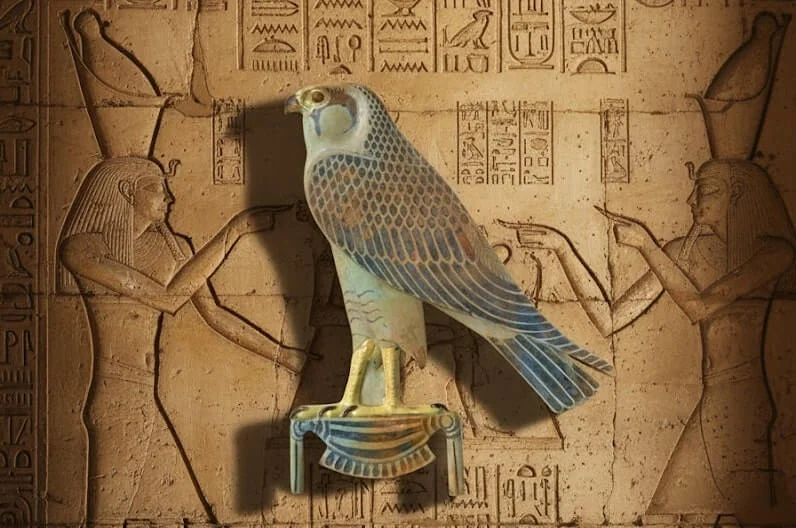
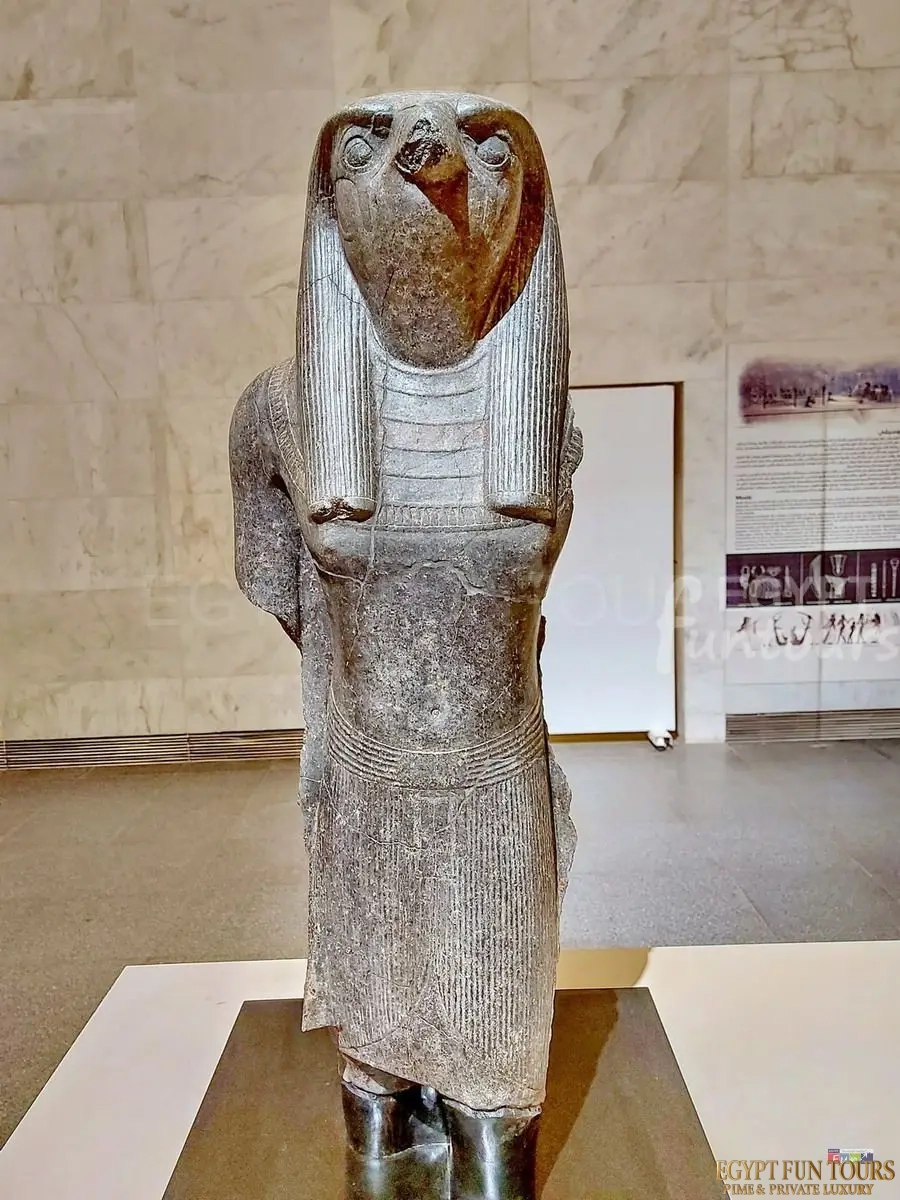
Re-Horakhty’s cult flourished during the New Kingdom (c. 1550–1070 BC). This era, characterized by powerful imperial Pharaohs, naturally embraced a god who so perfectly represented centralized, solar-sanctioned authority.
Temple Dedications
Pharaohs of the 18th and 19th Dynasties integrated Re-Horakhty into their major religious building projects. The god’s worship extended far beyond Giza.
- Ramesseum: Ramesses II, known for his monumental building, dedicated parts of his mortuary temple, the Ramesseum, to Re-Horakhty. Here, the god connected with the Pharaoh’s own ka (life-force), emphasizing the king’s eternal divine nature.
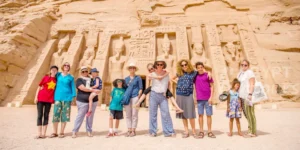
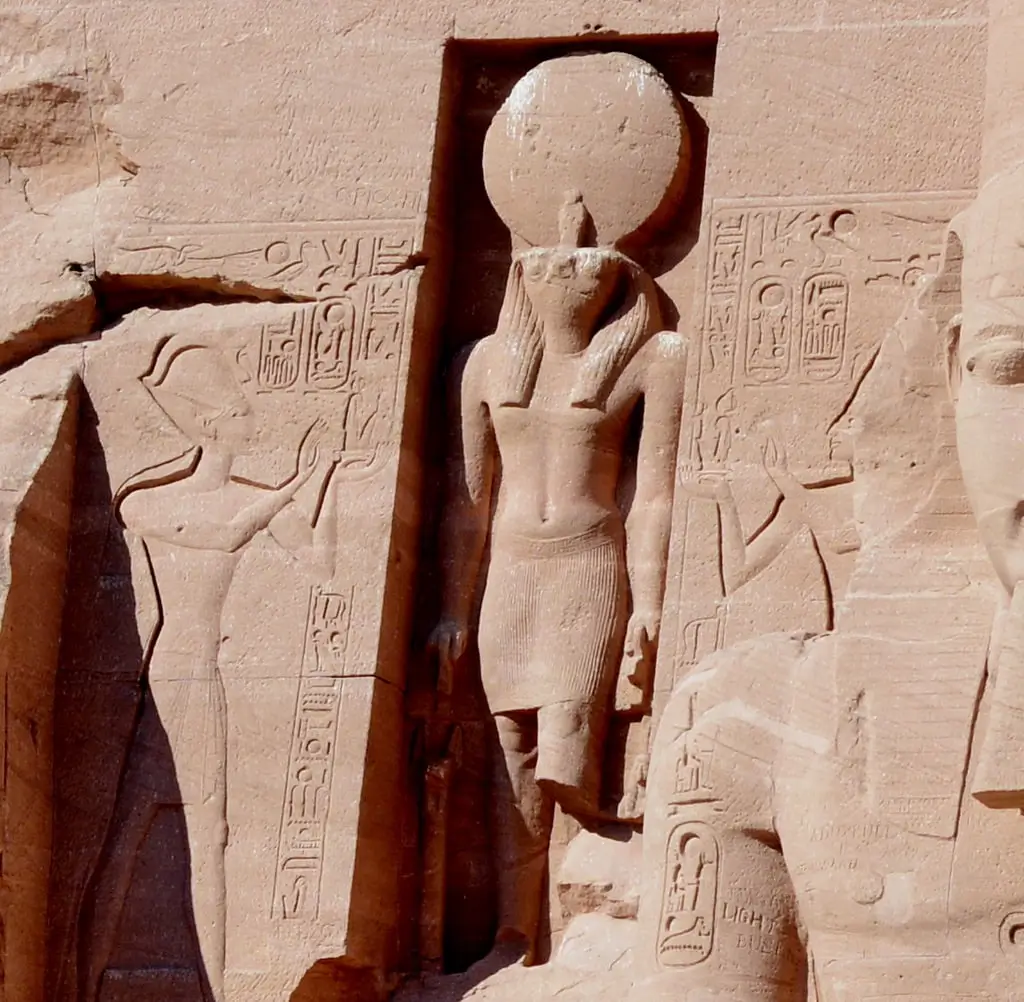
- Abu Simbel: At the Great Temple of Abu Simbel, an entire seated figure represents the god. This statue appears beside the deities Ptah, Amun-Re, and Ramesses II himself, placing Re-Horakhty among the absolute most powerful gods.
Amarna and the Aten
Re-Horakhty played a critical, if controversial, role in the religious revolution of Pharaoh Akhenaten (formerly Amenhotep IV). Akhenaten promoted the near-exclusive worship of the Aten—the physical disk of the sun.
- The Precursor: Akhenaten’s father, Amenhotep III, had already elevated the worship of solar gods, particularly Re-Horakhty, paving the way for a single solar focus.
- The Transition: Akhenaten’s early name reflected this lineage: Amenhotep, servant of Amun, changed to Amenhotep, Ruler of Thebes, Great in his monuments of Re-Horakhty. This early title shows that Akhenaten initially identified the Sun Disk (Aten) with Re-Horakhty before rejecting the fusion with Horus and all other traditional gods. He removed the “Horus” element and all mythical narratives, focusing solely on the sun disk itself. Therefore, Re-Horakhty served as the last major orthodox solar deity before the Aten heresy.
Royal Names and Epithets
The god’s name frequently appeared in royal titulary. Pharaohs, particularly those of the Ramesside period, used epithets that invoked Re-Horakhty to emphasize their cosmic authority and control over the divine order. The connection proclaimed that the sun god of the horizon directly sanctioned the Pharaoh’s reign.
While Re-Horakhty represents a profound fusion, his influence extends to other famous composite gods and religious concepts.
The Syncretic Family: Re-Horakhty and the Fusion of Gods
Re-Horakhty’s development as a unified solar god shows Egypt’s sophisticated approach to theological complexity. Consequently, understanding his place requires comparing him to other powerful, composite deities who also defined the cosmic and political landscape.
Amun-Re and the Theban Triad

Re-Horakhty often stands in parallel with Amun-Re, perhaps the most famous syncretic god of the New Kingdom.
- The Key Difference: Amun-Re fused the local Theban deity Amun (“the Hidden One”) with the solar god Re. Amun-Re thus represented the hidden source of creation that then manifested as the visible sun. His cult centered on Thebes and the Karnak Temple.
- The Key Similarity: Both gods combine Re with a powerful localized deity to create an imperial god of massive scope. However, Re-Horakhty’s identity focuses specifically on the visible, celestial journey of the sun (Horus in the Horizon), while Amun-Re focuses on the hidden, unseen creative power.
Khepri, Atum, and the Solar Cycle
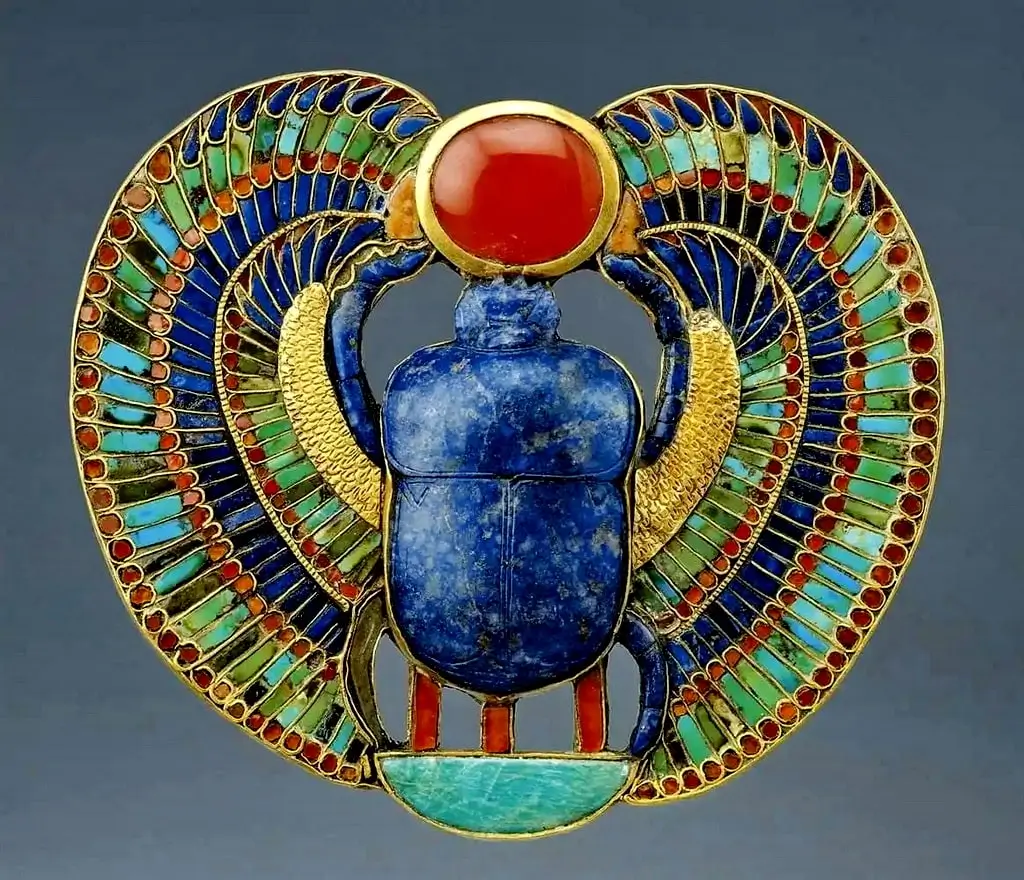
The Egyptians divided the sun’s daily life into three primary phases, each governed by a different god. Re-Horakhty fits seamlessly into this sequence, representing the most powerful solar phase:
- Khepri (The Rising Sun): The god appears as a scarab beetle, symbolizing spontaneous creation and the sun’s vigorous birth at dawn.
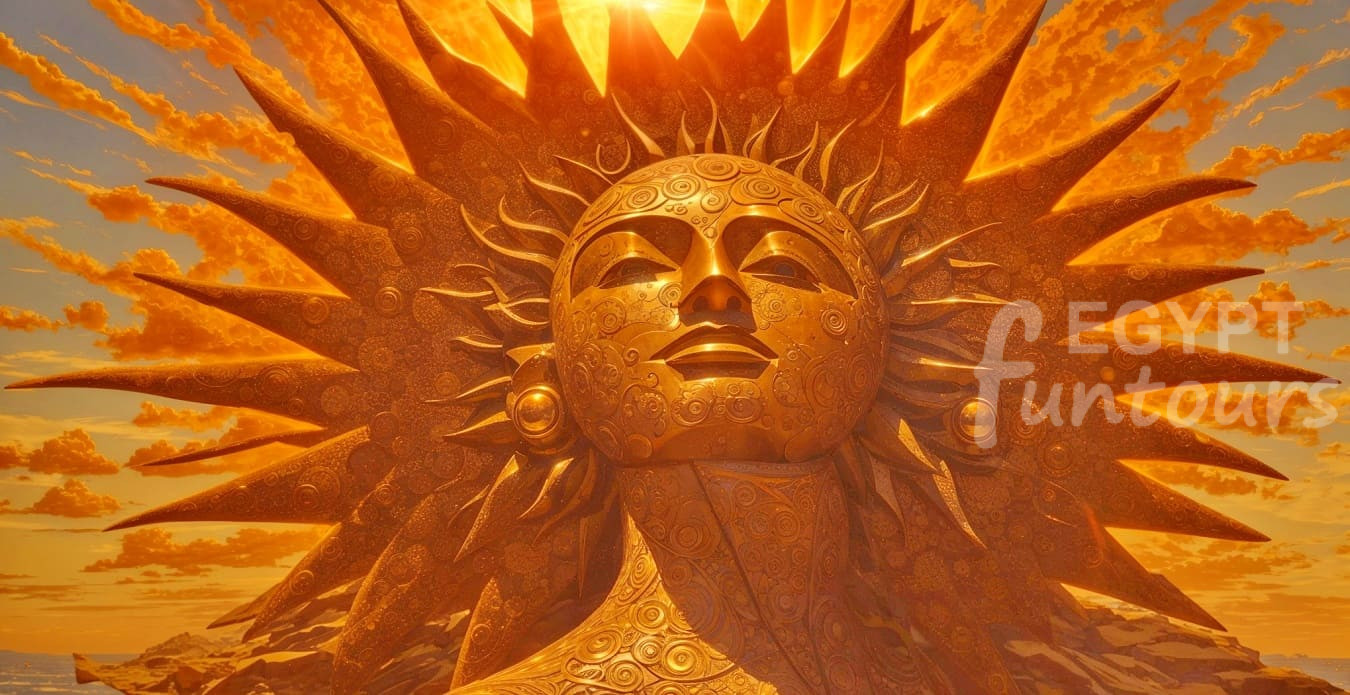
- Re-Horakhty (Midday Sun): He rules the middle, most active part of the day, embodying the sun’s strength and heat on its highest trajectory.
- Atum (The Setting Sun): The god appears as an old man, representing the setting sun and the final stage before its descent into the underworld.
Therefore, Re-Horakhty defines the essential daily life and light of Egypt.
Osiris and the Afterlife

While Re-Horakhty rules the day and the sky, his celestial father, Re, must unite with the god of the dead, Osiris, every night in the Duat (underworld). This union provides the cosmic guarantee of rebirth. Thus, Re-Horakhty operates as the guarantee of the daily return of light, while the cycle involving Osiris provides the guarantee of resurrection for the deceased. The two concepts support one another. [Image showing the three phases of the solar cycle: Khepri, Re-Horakhty, and Atum]
To fully appreciate his theological depth, we must examine the specific texts that grant him his power and his place in ritual life.