Abydos: Royal Tombs, City of Osiris, and the Birthplace of Egyptian Kingship

The Enduring Significance of Abydos

Abydos holds a unique status in Egypt. Indeed, it is one of the oldest and most sacred ancient sites. Consequently, its significance rests on two pillars. Firstly, it is the birthplace of royal funerary architecture (the Abydos Royal Tombs). Secondly, it functioned as the primary, revered cult center of Osiris (the spiritual heart of Egypt).

This double importance spans millennia. Thus, Abydos played a pivotal role from the Predynastic period straight through the New Kingdom. Therefore, exploring this Abydos Ancient Site is essential. We examine how the earliest kings defined their power here, and how a nation later sought eternal life in its holy soil.

The Dawn of Dynastic Egypt: Abydos Royal Tombs (Umm el-Qa’ab)

The Dawn of Dynastic Egypt; Abydos Royal Tombs (Umm el-Qa'ab)

Abydos first earned its prominence as a necropolis. Early burials here paved the way for grand royal traditions. Significantly, this site established the model for pharaonic interment.

A. Abydos Royal Tombs: Predynastic Precursors and Early State Formation

Predynastic burials laid the foundation for royal practices. Before the First Dynasty, the local elite chose this area, known as Cemetery U. Their simple graves signaled status differentiation. Importantly, early ritual activity focused on offering deposits. These deposits included fine pottery, ritual mace-heads, and foreign goods, such as Mesopotamian cylinder seals. Hence, the site quickly gained prestige as a preferred resting place, indicating early trade networks and wealth consolidation. Consequently, this established the conceptual groundwork for the later royal cemetery, demonstrating the merging of spiritual and political authority.

Crucially, Tomb U-j, dated to Naqada III (c. 3200 BCE), is often cited as belonging to an early ruler, possibly the legendary Scorpion King. Its significance rests on the hundreds of imported wine jars it contained. Furthermore, these jars held small bone and ivory tags bearing the earliest proto-hieroglyphic inscriptions. These labels recorded places of origin and quantities. Thus, the burial proves that sophisticated administration and taxation existed even before the formal First Dynasty.

B. Abydos Royal Tombs: The First Kings and Umm el-Qa’ab

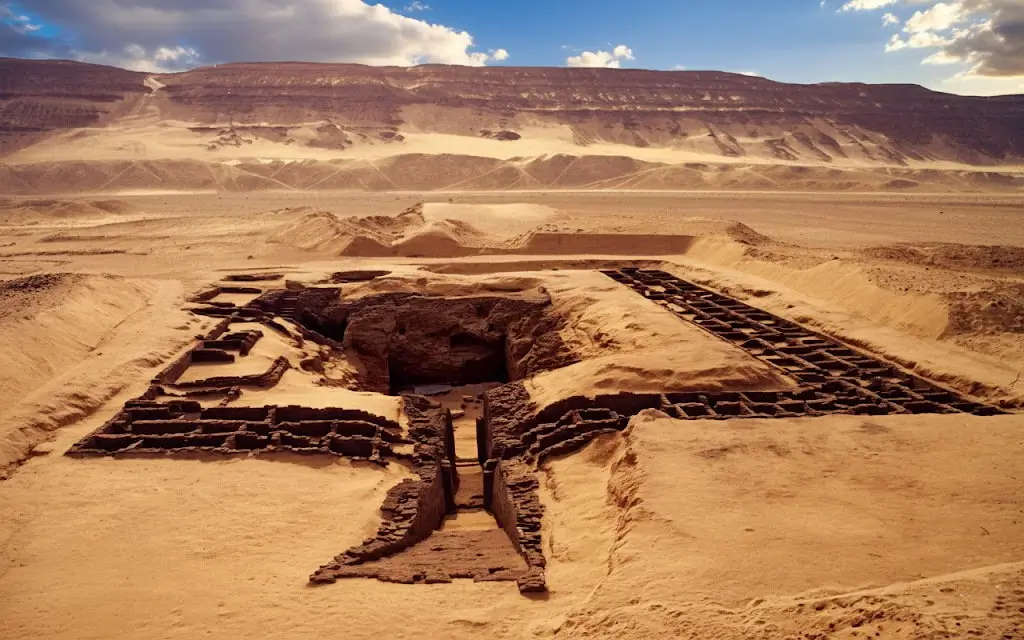
The necropolis site is known today as Umm el-Qa’ab, meaning “Mother of Pots.” Crucially, it holds the tombs of Egypt’s earliest rulers, the true Abydos Royal Tombs. In fact, this includes the kings of Dynasties 0, I, and II. These tombs are vast, multi-chambered pits. Typically, they used wood and mudbrick construction, featuring internal storage rooms surrounding a central burial chamber.

Consider King Aha: His massive tomb complex consists of three chambers, labeled B10, B15, and B19. Furthermore, these burial sites contained thousands of jars. These jars held offerings of beer, wine, and food. Significantly, the tombs featured surrounding rows of smaller graves. These belonged to retainers, servants, and even dogs—evidence of human sacrifice, a practice quickly discontinued after the First Dynasty. Clearly, these structures signaled the king’s power over life and death, reinforcing the divine mandate of the pharaoh.

Moreover, the kings of Dynasty I, such as Djet, Den, and Queen Merneith, did not just build a subterranean tomb. They erected massive, freestanding funerary enclosures (or ‘forts’) approximately one mile away on the desert edge. These enclosures were ritual palaces for the Ka (spirit) of the king. Therefore, the site employed a dual system: the tomb for the body and the enclosure for the soul. This established the essential pattern of the royal mortuary complex for the next three millennia.

C. Abydos Royal Tombs: The Tomb of Khasekhemwy (Dynasty II)

The tomb of King Khasekhemwy marks a monumental transition, signaling the end of the Early Dynastic period. Specifically, his tomb (Tomb V) became the largest at Umm el-Qa’ab, measuring approximately 70 meters long. Uniquely, it stands out due to its immense size and elaborate mudbrick structure. Moreover, it contained a fully lined limestone burial chamber. This chamber is the earliest known use of cut stone for a funerary structure in Egypt. Thus, it acts as the direct architectural precursor to the step pyramid complex of Djoser.

Furthermore, Khasekhemwy’s funerary complex included a massive, separate enclosure, the Shunet ez-Zebib. This enclosure was over 120 meters long. Its walls, featuring buttresses and niches, mimicked the royal palace façade (serekh). Effectively, it represented his palace for eternity. Crucially, the funerary enclosures from the First and Second Dynasties are the last monuments built at Abydos exclusively for the living king’s worship before the shift to the Osiris cult. Ultimately, Khasekhemwy’s tomb represents a moment of architectural evolution, moving towards larger, more complex royal identity statements.

FUN

Abydos as the Cult Center of Osiris

Osireion; Unearthing the Ultimate Egyptian Mystery at Abydos

Following the Early Dynastic period, royal burials ceased at Abydos. Instead, kings chose Memphis (Saqqara) for interment. Nevertheless, the site transitioned. It became the most vital spiritual pilgrimage site in Egypt. This shift relates entirely to the deity Osiris, the god of the afterlife.

A. The Osiris Myth Connection and Identification

Abydos became central to the core Egyptian myth of Osiris. Specifically, tradition held it as the burial place of Osiris’s head or even his entire body after his murder by his brother, Seth. Therefore, the ground here became intrinsically linked to death, resurrection, and eternal life.

Crucially, this identification was not immediate. During the Middle Kingdom (Dynasty XII), the non-royal tomb of King Djer (from Dynasty I) was mistakenly re-identified as the mythical Tomb of Osiris. Consequently, the area of Umm el-Qa’ab acquired profound new religious significance. Pilgrims began to treat the entire area as the site of the god’s passion and resurrection. Thus, the tombs of the First Dynasty pharaohs ceased being just historical graves. They became sacred portals to the afterlife, guarded by the great resurrected god.

B. The Annual Mysteries of Osiris and National Pilgrimage

The city hosted the Mysteries of Osiris, the most important annual religious festival. Consequently, its importance transcended local borders. Egyptians from all social strata undertook a pilgrimage here. They believed participating in the procession guaranteed them a closer connection to Osiris. Evidently, this was an essential spiritual undertaking for the populace.

The Procession Itself: The festival involved moving a boat shrine bearing a statue of Osiris (often in the form of the god Khentiamentiu, “Foremost of the Westerners”). It traveled from the main temple to the area of Umm el-Qa’ab. Importantly, priests and actors reenacted the god’s death, dismemberment, and resurrection, culminating in his victory over Seth. This public performance was highly emotional, involving ritual lamentation, battles, and joyous restoration. Moreover, it highlighted the ultimate triumph of order (Ma’at) over chaos (Isfet).

C. Funerary Structures for the Elite and Eternal Participation

Non-royal elites sought proximity to the resurrected god. Therefore, they practiced building cenotaphs (false tombs) or chapels at the Abydos Ancient Site. Clearly, this act guaranteed them ritualistic closeness to Osiris in the afterlife.

Cenotaphs and Stelae: These structures rarely contained the actual body. Instead, they housed beautifully inscribed stelae or offering tables. Specifically, these inscriptions commissioned the recitation of eternal offerings for the deceased. The texts often included the “Abedju Formula,” a specific prayer requesting offerings at Abydos. Furthermore, many individuals erected stelae along the processional route itself. This ensured their names were constantly read by pilgrims, placing them eternally within the sacred flow of the Mysteries. Thus, they ritually participated in the Mysteries forever, guaranteeing their own resurrection. Ultimately, their presence reinforced the site’s status as a national spiritual sanctuary, not just a royal graveyard.

FUN

The New Kingdom Splendor: Seti I and Ramesses II

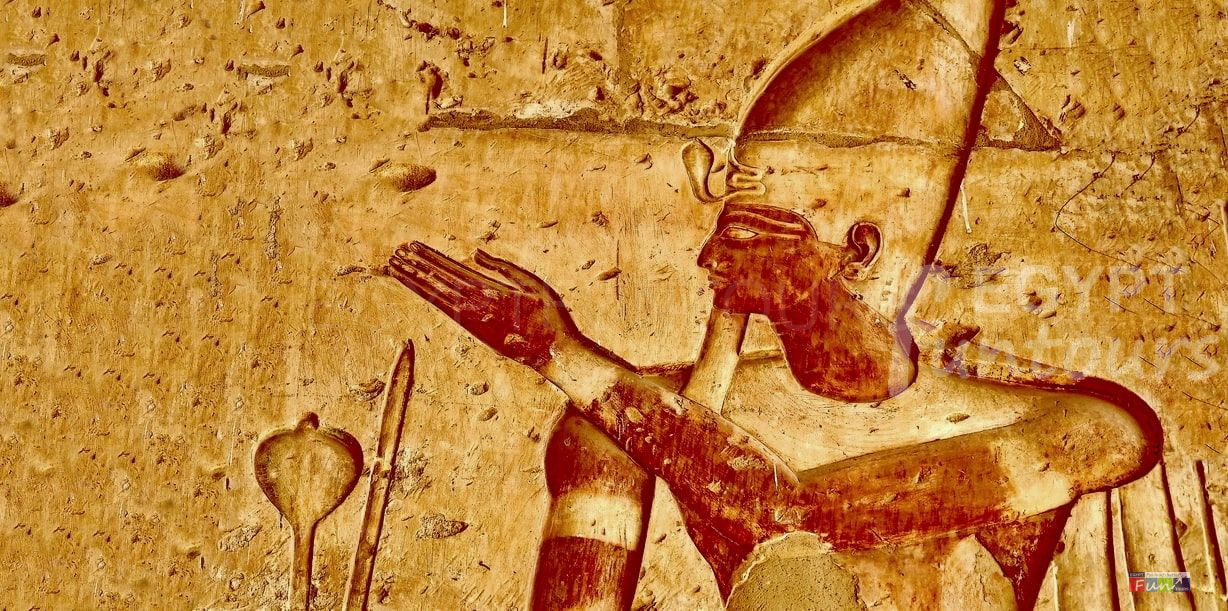
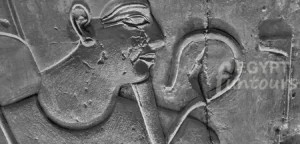
King Seti I Egypt Fun Tours 1

The New Kingdom revitalized and monumentalized Abydos. Kings constructed massive temples, solidifying the city’s religious prestige. Especially, the Ramesside kings (Dynasty XIX) invested heavily in this sacred land, connecting their dynasty to both the Old Kingdom’s royal roots and the Middle Kingdom’s spiritual center.

A. The Temple of Seti I (The Memnonium)

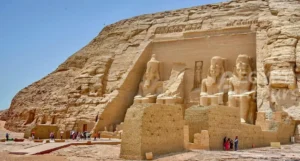
The Temple of Seti I remains a masterpiece. Notably, it features an unusual L-shaped plan. Furthermore, its reliefs are considered the finest, most detailed, and most conservative examples of New Kingdom art. Seti I aimed to create a place of unsurpassed sanctity, honoring his predecessors and the great gods.

Seven Sanctuaries: The temple structure includes seven sanctuaries, all aligned on the main axis. Crucially, these were dedicated to six principal deities: Ptah (creator), Re-Horakhty (sun-god), Amun-Re (state god), Osiris, Isis, and Horus (the Osirian triad). The seventh sanctuary was dedicated to the deified Seti I himself. Therefore, the temple placed the king alongside the great gods. This act reaffirmed his divine legitimacy and ensured the most powerful deities received his eternal cult.

Reliefs and Symbolic Purity: The walls depict the king undertaking ritual acts. Furthermore, they show him making offerings to the deities. Specifically, the reliefs retain a remarkably low, subtle style, utilizing deeply incised lines filled with vibrant color. This style, reminiscent of Old Kingdom work, emphasizes quality and reverence over the sheer monumental scale often favored by Ramesses II. Thus, the entire complex becomes a vibrant, eternal prayer of royal piety.

B. Key Feature: The Abydos King List Seti I

The Abydos King List (Rewriting History)

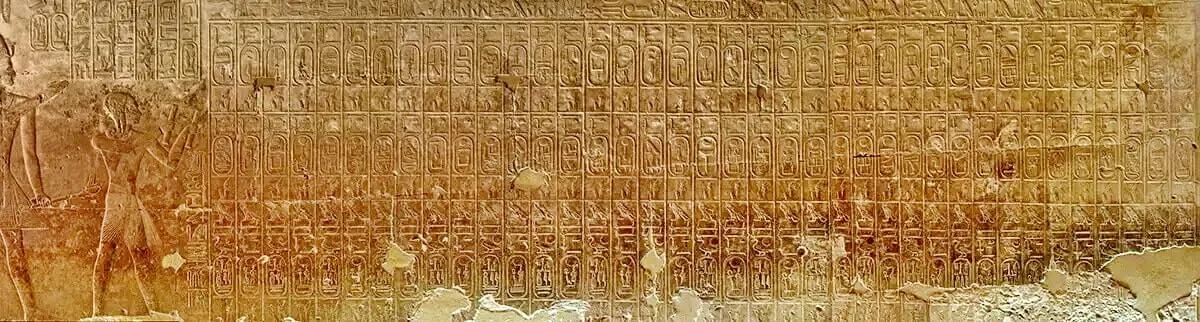
The temple houses the famous Abydos King List Seti I. Crucially, this inscription is a foundational historical document. It appears in a secluded corridor leading to the Osireion. Significantly, it depicts Seti I and his young son, Ramesses II, offering to a list of royal names.

The List’s Content and Omissions: The list records 76 kings, stretching from Menes (the unifier) to Seti I. However, it serves as a powerful political document, not a comprehensive historical one. Specifically, it omits female pharaohs (like Hatshepsut). It also removes rulers of the Second Intermediate Period and, most importantly, the “Amarna Heretics” (Akhenaten, Smenkhkare, Tutankhamun, and Ay). Hence, the list defined historical orthodoxy. It legitimized Seti I by linking him directly to the purest, unbroken line of divine kingship established at the Abydos Royal Tombs. Consequently, the list acts as a political statement embedded in a religious sanctuary, affirming the legitimacy of the new Ramesside dynasty.

C. The Enigmatic Osireion (Expansion)

The Enduring Power of the Osireion

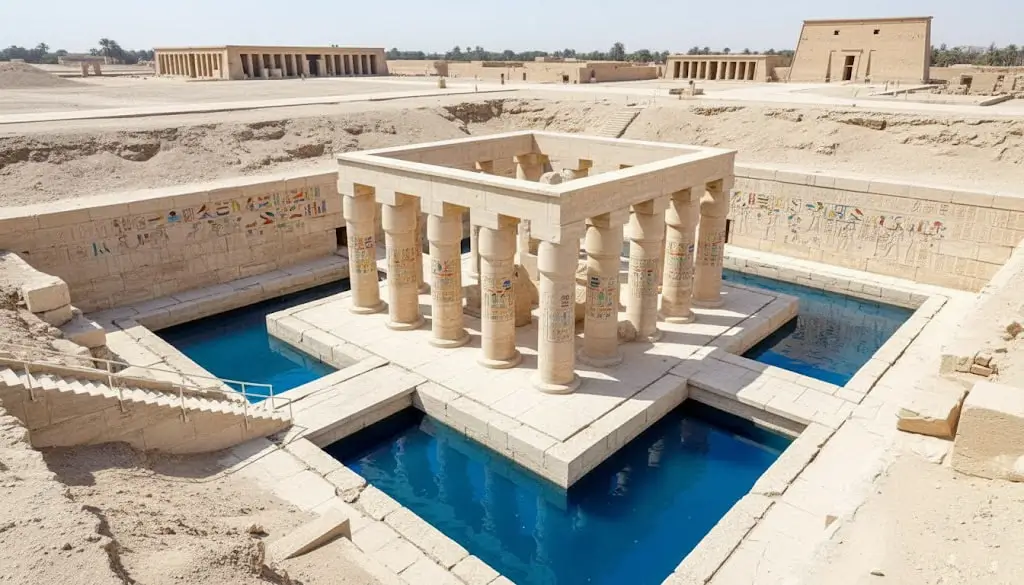
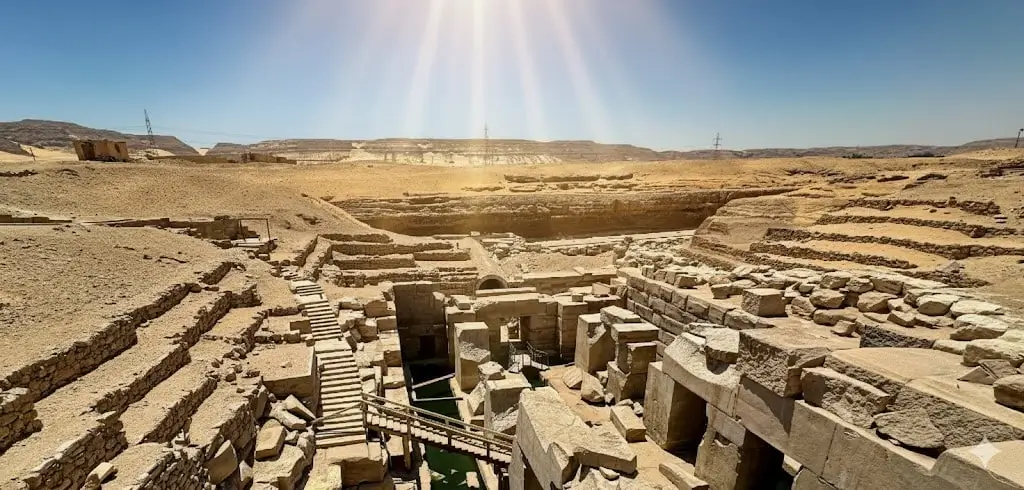
The Osireion is a vast, subterranean structure adjacent to the Seti I temple. Although often attributed to Seti I, its exact purpose generates debate. Nevertheless, it clearly functions as Osiris’s symbolic, mythical tomb. It is reached via a long, descending corridor from the back of the Seti Temple.

Primal Architecture: The structure features immense cyclopean blocks of quartzite. Significantly, water often fills its central area, creating an island effect. This design evokes the initial chaotic waters (Nun). Furthermore, a central island symbolically represents the primordial creation mound (the ben-ben). Therefore, the Osireion connects the king and the site directly to the beginning of time and creation itself. It serves as a guarantee of eternal regeneration, essential for the cult center of Osiris. Stylistically, it looks far older than the temple, suggesting the ancient Egyptians deliberately employed an archaic design to emphasize the Osireion’s primal, foundational importance.

D. The Temple of Ramesses II

Ramesses II, Seti’s son, also built a smaller, adjacent temple, dedicated primarily to his own cult and to the great gods. Thus, he continued the royal tradition of veneration at Abydos. Crucially, this temple largely mirrors the design and dedication of his father’s. However, the workmanship is generally less refined, reflecting the massive scale and speed of Ramesses’s numerous building projects nationwide. Furthermore, its reliefs focus more heavily on the deeds of Ramesses II himself, including his famous Battle of Kadesh. Ultimately, his building efforts reinforced the dynastic commitment to the cult center of Osiris and solidified his own reign by intertwining his military achievements with the site’s spiritual power.

The Profound Egyptian Influence on Greek Civilization

Egypt profoundly influenced ancient Greek civilization in various aspects. Key influences include religious syncretism, with...
Related post
FUN

Archaeological Legacy and Historical Insights

The Abydos Ancient Site provides critical evidence for understanding Egypt’s foundational periods. Archaeological work here has shaped our modern historical narratives.

A. Key Excavators and Discoveries

Pivotal figures defined the archaeology here. For instance, the French consul Émile Amélineau conducted defining early excavations in the 1890s. However, his methods lacked precision, and he sold many artifacts on the open market. Conversely, Sir Flinders Petrie brought meticulous scientific methods to the site shortly afterward.

Petrie’s Contributions: Petrie’s work at Umm el-Qa’ab provided the first solid, sequential archaeological framework for the First Dynasty. He used pottery typology and small finds to date the tombs precisely. Consequently, his research confirmed the identities of the early kings. Furthermore, his detailed recording established the standard for Egyptian archaeology, transforming the site from a treasure-hunting ground into a historical database.

B. Significance of Early Inscriptions

The material found at Abydos is invaluable. Specifically, ceramic labels, ivory tags, and early inscriptions have helped date and define the entire early dynastic period.

Writing’s Genesis: The tombs yielded the earliest attested forms of the hieroglyphic script. Moreover, these labels documented economic activities, like taxes, oil production, and the royal travels. Therefore, the site is not just a place of tombs; it is a vital repository of written history and early administrative practice. Crucially, these tags help us understand the evolving bureaucracy supporting the early monarchy, demonstrating that a functional central state existed from the very beginning of Dynastic Egypt.

C. Abydos Today: Ongoing Research

Archaeological work continues at this complex Abydos Ancient Site. However, the focus shifts today. Modern techniques aim to understand the entire ritual landscape surrounding the temples and tombs, often using geophysical surveys. For example, recent excavations investigate the vast early funerary enclosures, such as the Shunet ez-Zebib, and the relationship between the royal and non-royal cemeteries. Furthermore, researchers continue to analyze the debris and offerings around the Osiris tomb area to quantify the sheer volume of pilgrimage offerings deposited over 3,000 years. Ultimately, the continuing exploration unearths deeper layers of Abydos’s theological and political importance.

The Sun God Political Role: A 3000-Year History of Kingship and Solar Deities

The Sun God's political role in Ancient Egypt was not static, but a dynamic, 3000-year...
Related post
FUN

Abydos, The Eternal Royal Gateway

Abydos remains unparalleled. It serves as the nexus of kingship (defined by the earliest Abydos Royal Tombs) and eternal life (guaranteed by the cult center of Osiris). In summary, the site’s dual identity gave Egyptian pharaohs their political and religious blueprint. The Abydos King List, Seti 1st formalized the past. The pilgrimages guaranteed the future. Thus, Abydos is more than an ancient site; it is the spiritual and historical gateway to understanding Egyptian civilization.

Duat’s Geography: A Map of the Ancient Egyptian Underworld

Discover the real map of the afterlife! Plunge into the Ancient Egyptian Underworld Geography (Duat),...
Related post
FUN
10 Days Egypt Trip of Cairo, Luxor, and Hurghada...
Cairo and Hurghada tour for older people in 7 days...
15-Day Historical Egypt Tour Package

all good!

we took pyramid and Cairo city tours and all went smoothly. The were very flexible to adapt to our requirements. Car, car driver and guide were great. very knowledgable and professional tour. Very recommendable

More »

Valley of Whales – Wadi El Hitan and Wadi El Rayan

What a blast! It was an amazing day and a 5-star day trip. Everything was organised from A to Z by Hamada and Mohamed at Egypt Fun Tours in a timely manner. Pick up/drop off from/to the hotel, exquisite lunch and snacks, 4×4 jeep. Everything was as advertised. Also, the

More »

Great one day tour in Cairo

My husband and I had a long layover in Cairo on our way to Kenya in 2010. Since we had never been to Egypt, we decided to sign up for a one-day tour with Egypt Fun Tours Day Trips. Our guide was there when we arrived and quickly guided us

More »
Tailored Services for Corporate Business Transportation Needs

On time, adaptable, and fun!

My friend and I planned a whirlwind trip to Dubai, the Dead Sea, Petra, Cairo, Luxor, and Sharm el Sheikh for early November 2011 – 6 cities in 10 days! We allotted one afternoon and evening for Cairo, and we wanted to see as much as we could! We drove

More »

Day trip to Wadi el Hitan and Wadi el Rayan

We went on a full-day trip to Wadi el Hitan and Wadi el Rayan with Mohamed (Hamada). Mohamed was a wonderful guide, always making sure we had plenty of water and enough to eat, and providing us with information about the area and Egypt more generally. He also gave us

More »
Isis with wings

Top-rated Tour Packages

Isis with wings