The Origin Point: The Smart Man Atum and the Creator Ra
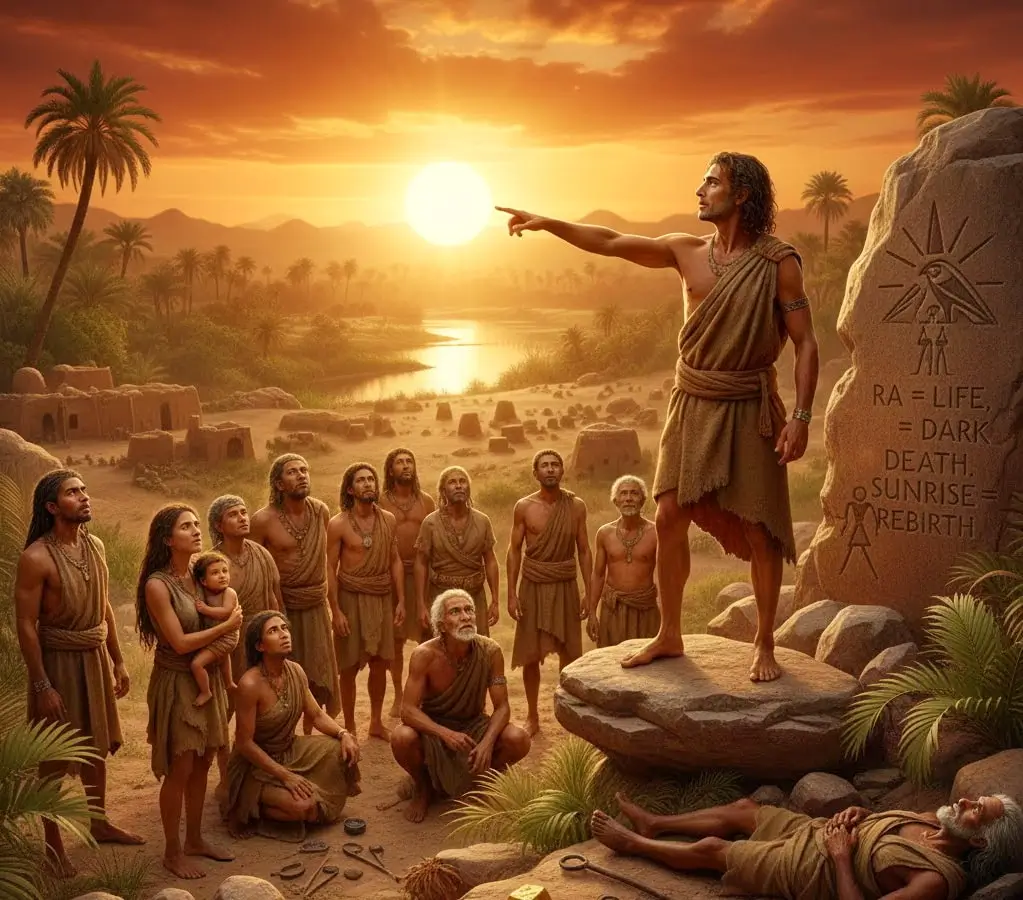
First, the entire religious system originated with the birth of human sanity. Homo Sapiens looked at the observable world and began to ask rational questions. This essential difference between humans and animals immediately started the evolution of Egyptian afterlife beliefs.
The earliest questions were fundamental, focused on survival: Who created us? Who are we?
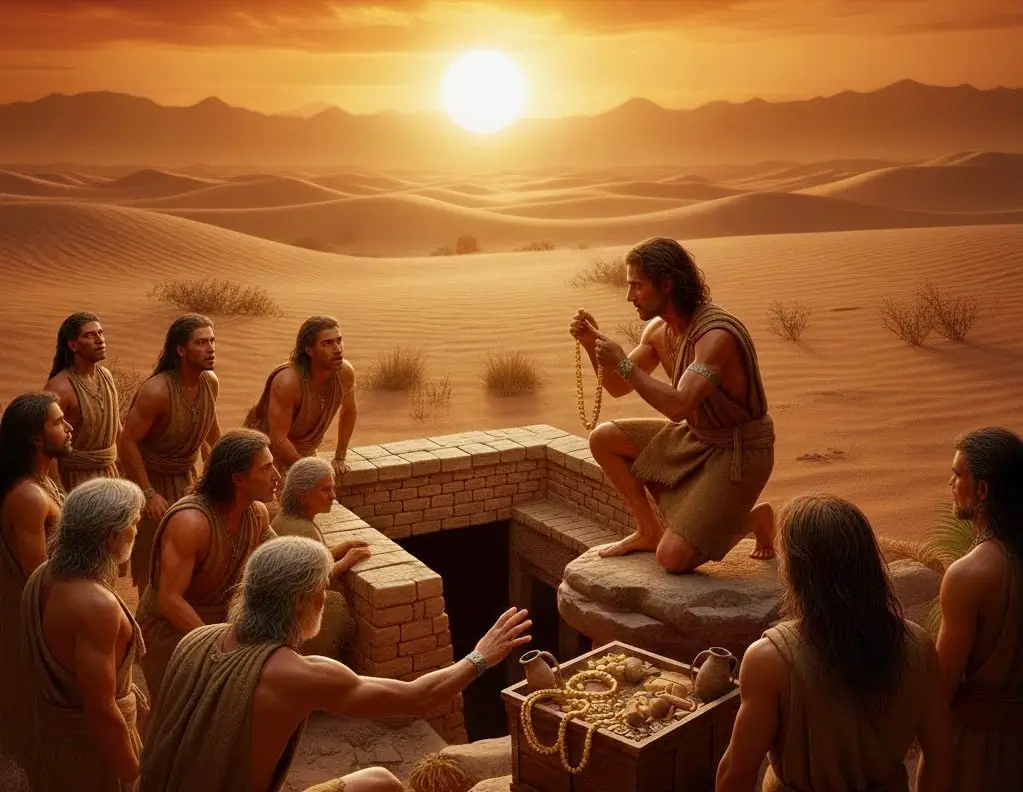
The smart man, Atum, provided the first logical, actionable answer. Day meant life; when the Sun was visible, they were active and alive. Conversely, when the Sun disappeared, it became dark, and they slept (died).
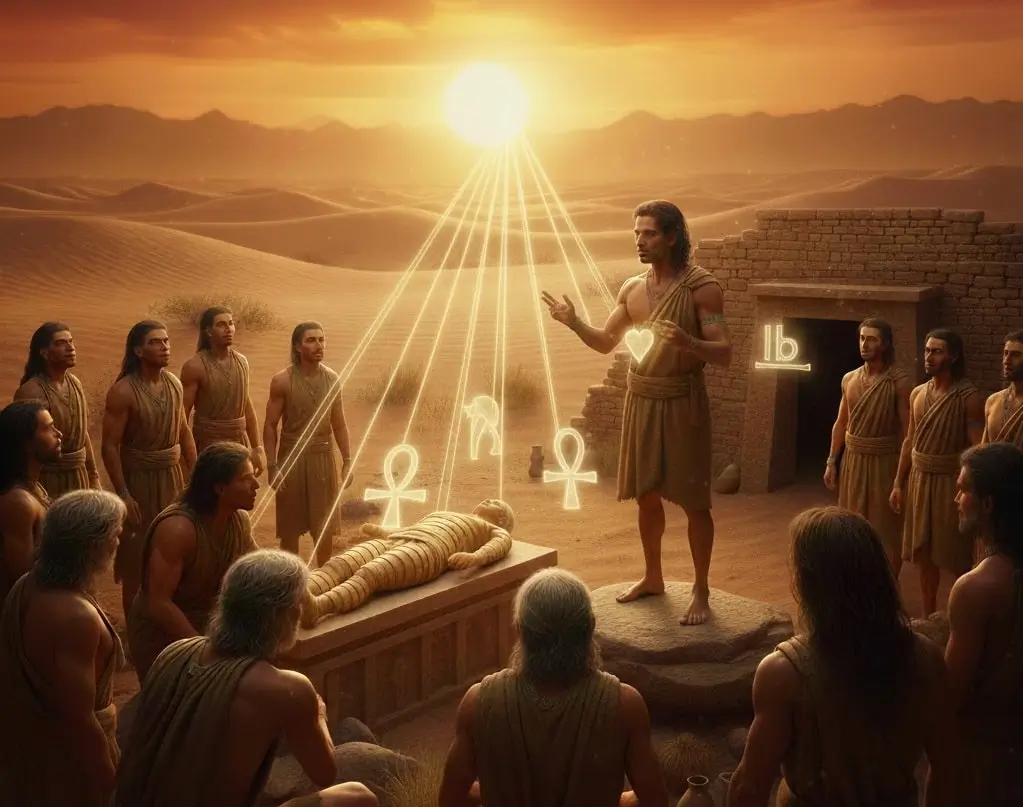
Therefore, the Sun’s predictable return constituted the daily miracle. It made them alive again (resurrection). Consequently, Atum identified the Sun as the undeniable Creator, naming him Ra. Ra brought life back every morning. Atum became the first man to grasp and articulate this simple, essential truth, so everybody considered him a messenger of the creator (The Sun). Crucially, this established the simple, non-negotiable rule: The Creator Ra will make the dead alive again. This initial observation formed the fundamental starting point for the complex evolution of Egyptian afterlife beliefs.
The Core Equations of Eternity
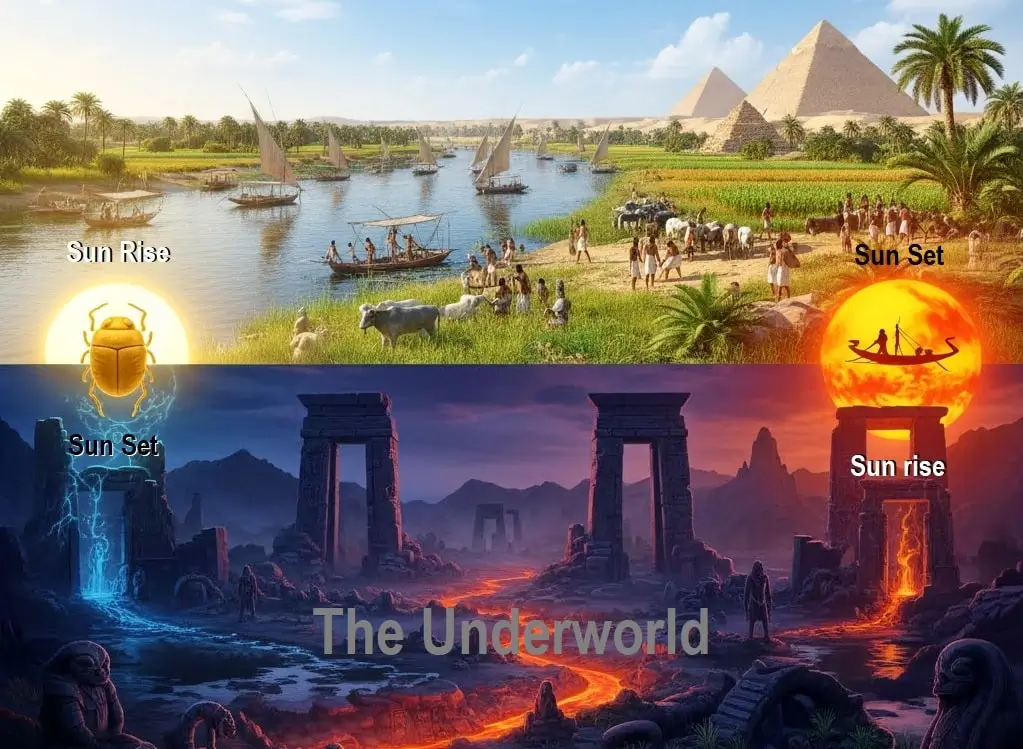
Building upon this clear observation, the Egyptians established four simple yet profound facts about existence that guided all subsequent development and monumental construction:
- Sleep = Death: Night is the period when consciousness stops; it is the observable form of death.
- Resurrection = Waking Up in the Morning: Sunrise brings them back; it is the guaranteed return of life.
- Afterlife = Tomorrow After Sunrise: A new life is given by the creator every morning because the Sun appears in the sky and gives light.
- Underworld = Where the Sun Goes and Comes From: This is the path Ra travels beneath the earth (the Duat) to restart the cosmic cycle.
These literal interpretations dictated every massive step the civilization took. Ultimately, the entire massive effort became a logical, dedicated investment in a perpetually recurring sunrise.
The First Necessity: Mummification to Wait for the Sun
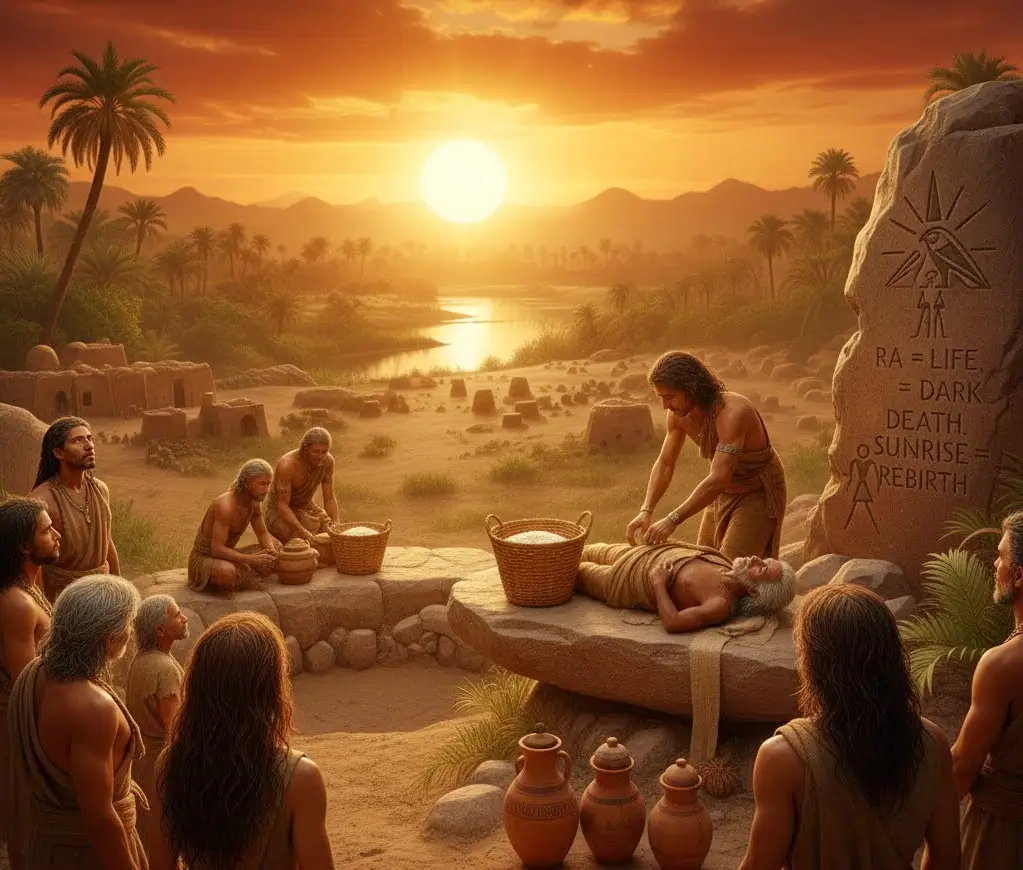
Next, they faced a crucial, unsettling practical problem: some people did not wake up in the morning. They were not gone forever; they were simply waiting. They waited for the Creator Ra to choose their specific sunrise for resurrection. However, the body had to be ready for that specific, unpredictable day. The physical container needed to remain whole and instantly recognizable to the invisible life-force returning.
The fundamental requirement, then, was to keep the physical body ($Khat$) whole and preserved while it waited. Consequently, they realized they needed a preservation method. They initially observed the naturally mummified bodies in the desert sand and recognized this as the desired state. Observing this natural process, they discovered a crucial, surprising agent: the wild jackal. They noticed that when the jackals came to consume the fresh deceased’s body, the animal’s powerful saliva acted as an antiseptic, killing the bacteria that caused decomposition. Furthermore, the jackals would remove the internal organs and leave the body cavity coated with the preservative saliva. This gave the Egyptians the blueprint for artificial preservation: they started mimicking the jackal’s actions to preserve the body, which they named mummification. This direct observation and practical imitation is precisely why the Jackal God, Anubis, became the deity of embalming and the protector of the deceased.
The Mummification Process: A Preservation Checklist
The elaborate, time-consuming steps of mummification served as a detailed checklist to achieve maximum preservation for the long wait:
- Drying is Key: They packed the body and covered it completely in Natron salt for up to 40 days. This step proved crucial. It removed all moisture, which causes immediate decay, thereby preserving the physical container against the harsh desert elements.
- Organ Removal: They removed vital internal organs—the parts that decay fastest. They preserved these separately and stored them in special Canopic Jars. This was a highly practical step, eliminating the quickest sources of internal corruption.
- Stuffing and Shaping: They stuffed the body and wrapped it tightly with hundreds of meters of linen bandages. This restored the person’s shape and provided necessary external protection. This was essential because the returning Ba (personality) absolutely had to recognize its original body immediately upon its return.
The goal remained simple: keep the physical body stable and whole until the sun made it alive again. Therefore, mummification formed a core pillar in the evolution of Egyptian afterlife beliefs. It was, plainly, a necessary piece of life-readiness infrastructure.