Horus vs Seth: The Epic 80-Year Battle for the Throne of Egypt

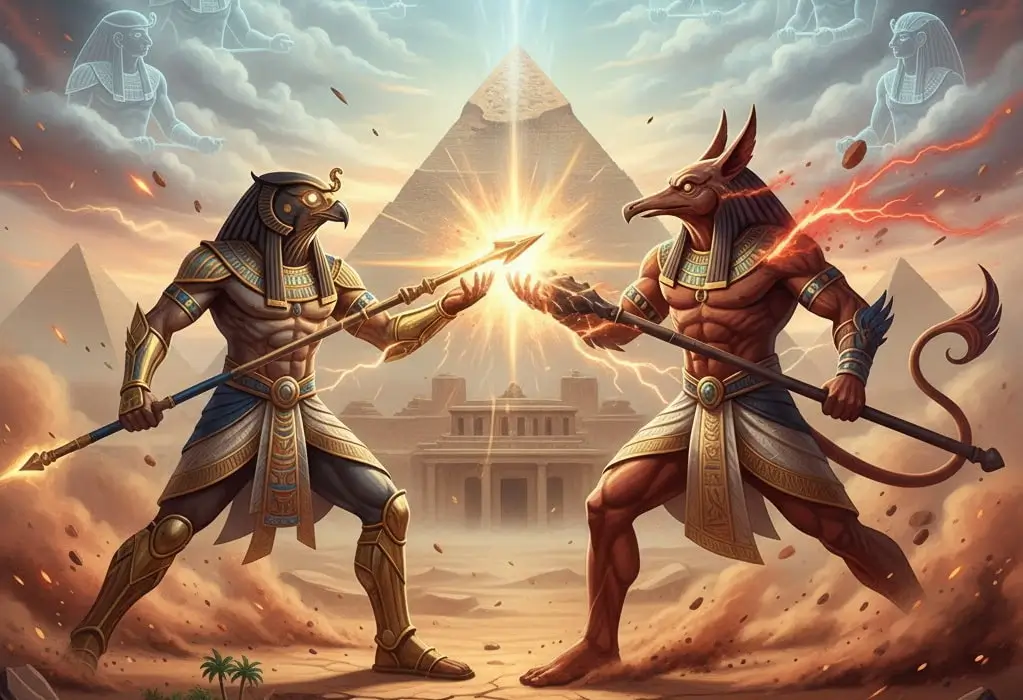
The Horus vs Seth saga represents the ultimate legal and cosmic struggle of Ancient Egypt, chronicling an eighty-year battle for the throne following the murder of Osiris. Beyond a simple tale of revenge, the "Contendings" established the fundamental laws of patrilineal succession and the divine legitimacy of the Pharaonic line. By navigating a series of brutal ordeals and a complex trial before the Ennead, the victory of Horus transformed the Egyptian state, proving that true leadership requires the perfect balance of inherited right, strategic cunning, and the integration of chaotic forces under a singular, ordered rule.

The story of Horus vs Seth is the most significant legal drama in human history. It is not just a myth about gods; it is the blueprint for how civilization survives chaos. For eighty years, a nephew and an uncle fought a bitter war—both in the courtroom and on the battlefield—to decide who would lead the world.

Today, this saga remains a masterclass in political strategy, divine law, and the eternal struggle between order (Ma’at) and chaos (Isfet). To understand the Pharaohs, you must first understand the trial of Horus vs Seth.

The Origins of the Horus vs Seth Conflict

Every great war starts with a grievance. In Ancient Egyptian theology, the conflict began with a brutal act of betrayal that split the divine family and the cosmos itself.

The Murder of Osiris

The roots of the Horus vs Seth feud lie in the death of Osiris, the first king of Egypt. Osiris was a wise and just ruler who brought agriculture and law to the Nile Valley. His brother, Seth, grew consumed by jealousy.

Seth represented the harsh, unpredictable nature of the desert. In a bid for power, Seth murdered Osiris, hacked his body into pieces, and scattered them across Egypt. This act of violence created a “power vacuum” that threatened to plunge the universe back into darkness.

The Birth of a Challenger

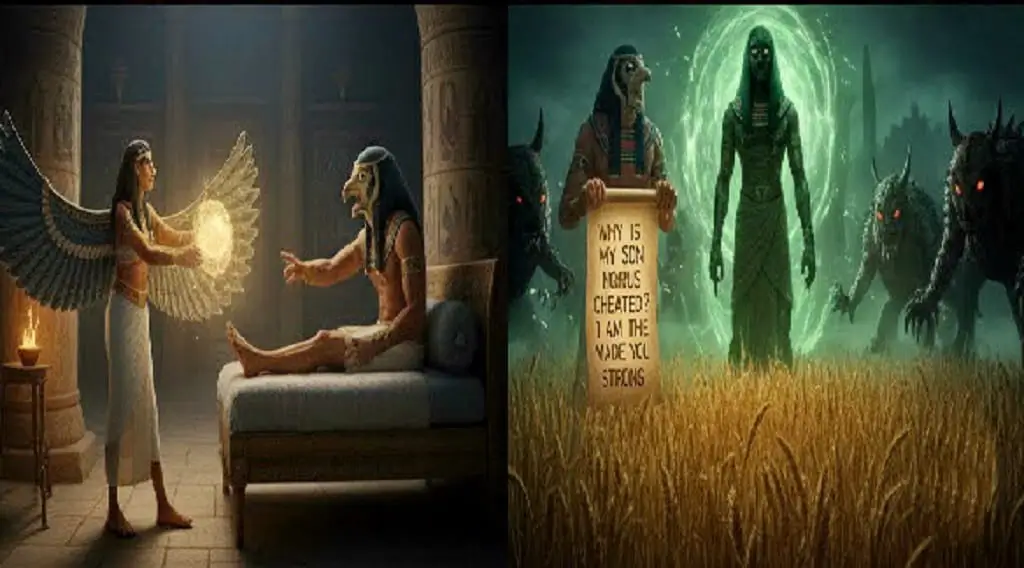
While Seth claimed the throne by force, he ignored the power of Isis, Osiris’s wife. Through high magic, Isis recovered the pieces of her husband and posthumously conceived a son: Horus.

From his birth in the papyrus marshes of the Delta, Horus was hidden away. He was raised with a single, burning purpose: to avenge his father and reclaim the “Office of the King.” Consequently, when Horus reached adulthood, he stepped out of the shadows to challenge his uncle. This marked the official beginning of the Horus vs Seth struggle.

Primogeniture vs. The Right of the Strong

The core of the Horus vs Seth debate was a legal one. It forced the gods to ask a difficult question that still resonates in modern law: Who has the right to lead?

  • The Argument for Horus: As the biological son of the previous king, he represented Patrilineal Succession. In his view, the throne was a piece of property to be inherited.
  • The Argument for Seth: As the elder brother and a seasoned warrior, he represented Seniority and Might. Seth argued that a “mere boy” like Horus could not protect the world from the chaotic forces that lurked at the borders of Egypt.

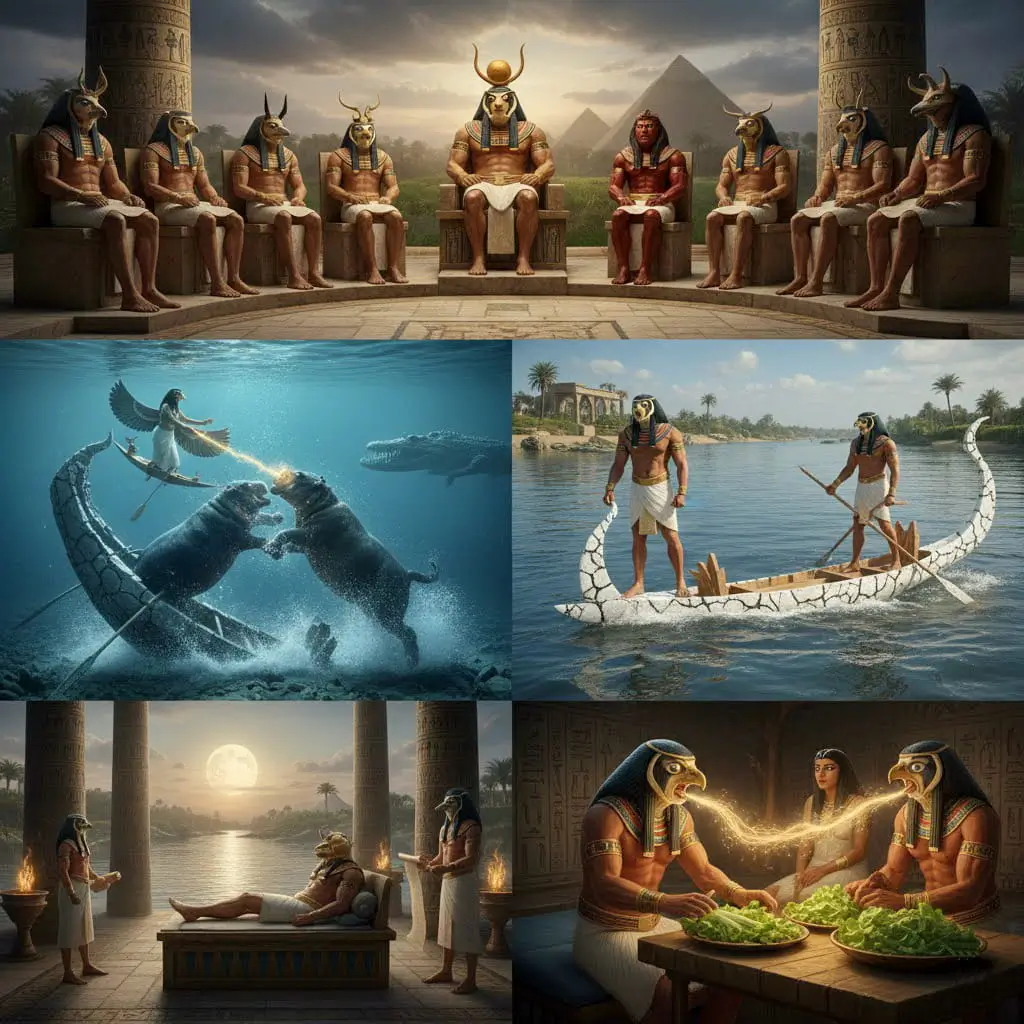
Because neither side would back down, the dispute was taken before the Ennead, the supreme council of the nine great gods of Heliopolis. This set the stage for eight decades of cosmic litigation.
FUN

The 80-Year Trial Before the Ennead

The 80-Year Trial Before the Ennead; Horus vs Seth

Furthermore, the legal battle did not end with a simple decree. Instead, the Horus vs. Seth case became a decades-long stalemate that tested the gods’ patience. The Ennead, the supreme council of deities, met on the “Island in the Midst” to hear the arguments. However, instead of finding clarity, they found themselves deeply divided.

The Divine Deadlock

Initially, most of the gods favored Horus. They believed the son should naturally inherit his father’s estate. Conversely, Ra-Horakhty, the Sun God and head of the council, remained stubborn. He viewed Horus as too young and physically weak. He preferred Seth’s raw power because Seth stood at the prow of the solar barque every night to repel the chaos-serpent, Apophis.

Because Ra held the ultimate veto, the court could not reach a verdict. This created a cycle of frustration. Whenever the council leaned toward Horus, Seth would fly into a rage, demanding a physical contest. Whenever Seth seemed to gain the upper hand, Isis would use her superior wit to trick the council back to her son’s side.
The Role of Thoth as Arbitrator

To break the deadlock, the gods relied on Thoth, the god of wisdom and writing. Thoth acted as the court’s clerk. He meticulously recorded every argument in the Horus vs Seth dispute. Moreover, Thoth represented the intellectual side of the law. He argued that if the gods allowed Seth to steal the throne through murder, they would destroy the very foundation of Ma’at (universal order).

Consequently, Thoth’s involvement ensured that the trial remained a legal process rather than a total war. He kept the gods talking, even when they wanted to strike one another.

The Ordeals: Physical Battles for Divine Favor

The Enduring Authority of the Ennead

Eventually, the verbal arguments exhausted the Ennead. Ra-Horakhty decided that the two rivals must prove their worth through a series of “ordeals.” These were not mere athletic games. These tests were dangerous, magical, and designed to show who possessed the true spirit of a king.

The Underwater Hippopotamus Contest

In the first major ordeal, Seth challenged Horus to a test of endurance. Both gods transformed themselves into hippopotamuses. They dived into the deep waters of the Nile. The rules were simple: the first one to surface would lose his claim to the throne.

While they were submerged, Isis grew anxious. She feared Seth would use his greater strength to drown her son. To prevent this, she fashioned a copper harpoon and threw it into the water. First, she accidentally hit Horus, then she hit Seth.

However, a strange thing happened. When Seth cried out in pain, calling her “sister,” Isis felt a surge of pity. She released him. This act of mercy enraged Horus. In a fit of fury, he surfaced and attacked his own mother, demonstrating that even a “rightful heir” could lose himself to chaos.

The Race of the Stone Boats

Following the hippopotamus disaster, Seth proposed a second race. He demanded they build boats made of solid stone. Clearly, Seth intended to use his massive strength to propel a heavy vessel.

But Horus proved he was the more “intelligent” candidate for the throne. He built a boat out of cedar wood and covered it in a thick layer of white gypsum. To the naked eye, it looked like heavy stone. When the race began, Seth’s genuine stone boat sank like a rock to the bottom of the Nile. Horus, meanwhile, sailed effortlessly past his uncle.

As a result, the council saw that Horus possessed the “cunning” required for leadership. Nevertheless, Seth refused to concede. He claimed that trickery did not prove the right to rule. This led to the most infamous chapter of the Horus vs Seth saga: the direct physical and sexual confrontation.

FUN

The Strategic Deception: The “Lettuce Incident”

The Strategic Deception The Lettuce Incident

Because the physical contests failed to produce a clear winner, Seth attempted a different strategy. He decided to humiliate Horus to prove his dominance. In the ancient world, sexual dominance was often used as a metaphor for political power. Therefore, Seth invited Horus to his villa under the guise of a truce.

Seth’s Failed Humiliation

During the night, Seth attempted to overpower Horus. However, Horus was prepared. He caught Seth’s seed in his hand and immediately sought the counsel of his mother, Isis. Next, Isis performed a clever counter-strategy. She cut off the hand of Horus to cleanse him, then helped him place his own seed onto Seth’s favorite food: heads of crisp Romaine lettuce.

Consequently, when the rivals appeared before the Ennead the next morning, Seth confidently claimed he had dominated Horus. But Thoth, the god of magic, called forth the seed of the gods. To the shock of the council, the seed of Horus answered from within Seth’s body. As a result, Seth suffered a massive blow to his reputation. The council finally saw that Horus could outwit and outmaneuver the god of chaos.

The Final Verdict: The Intervention of Osiris

legend osiris abydos temple 1

Despite the clear victory in the lettuce incident, Ra-Horakhty still hesitated. The trial had now lasted eighty years. The world was exhausted. To end the stalemate, the council decided to take a radical step: they wrote a letter to the spirit of Osiris in the Underworld.

The Authority of the Dead

Soon, the messenger returned with a terrifying reply. Osiris did not beg the gods; he commanded them. He reminded the Ennead that he was the god of the grain that fed the living. Furthermore, he reminded them that every soul—even the souls of the gods—must eventually pass through his halls of judgment.

“Why is my son Horus being cheated?” Osiris wrote. “I am the one who made you strong. I am the one who created the barley and the emmer to sustain the gods and the cattle.”

Because Osiris held the power over life and death (and the food supply), the Ennead realized they could no longer ignore the rightful heir. Immediately, the council’s mood shifted. They feared the “untamed-faced messengers” that Osiris threatened to send if justice was not served.

Ma’at: Harmony, Order, and Cosmic Balance in Ancient Egypt

To stand amidst the wonders of Egypt is to encounter an entire civilization rooted in...
Related post
FUN

The Coronation and the Resolution

The Coronation and the Resolution; Horus vs Seth

Finally, the long-awaited moment arrived. The Ennead summoned Horus and placed the “White Crown” of the South and the “Red Crown” of the North upon his head. As the new King of Egypt, Horus represented the triumph of order over chaos.

The Integration of Seth

Interestingly, the myth does not end with the execution of Seth. Ancient Egyptians believed that chaos (Isfet) could never be fully destroyed—it could only be harnessed. Therefore, Ra-Horakhty took Seth under his protection. He placed Seth at the front of the solar barque. Now, Seth would use his aggression to protect the sun from the great serpent Apophis.

The Establishment of Royal Lineage

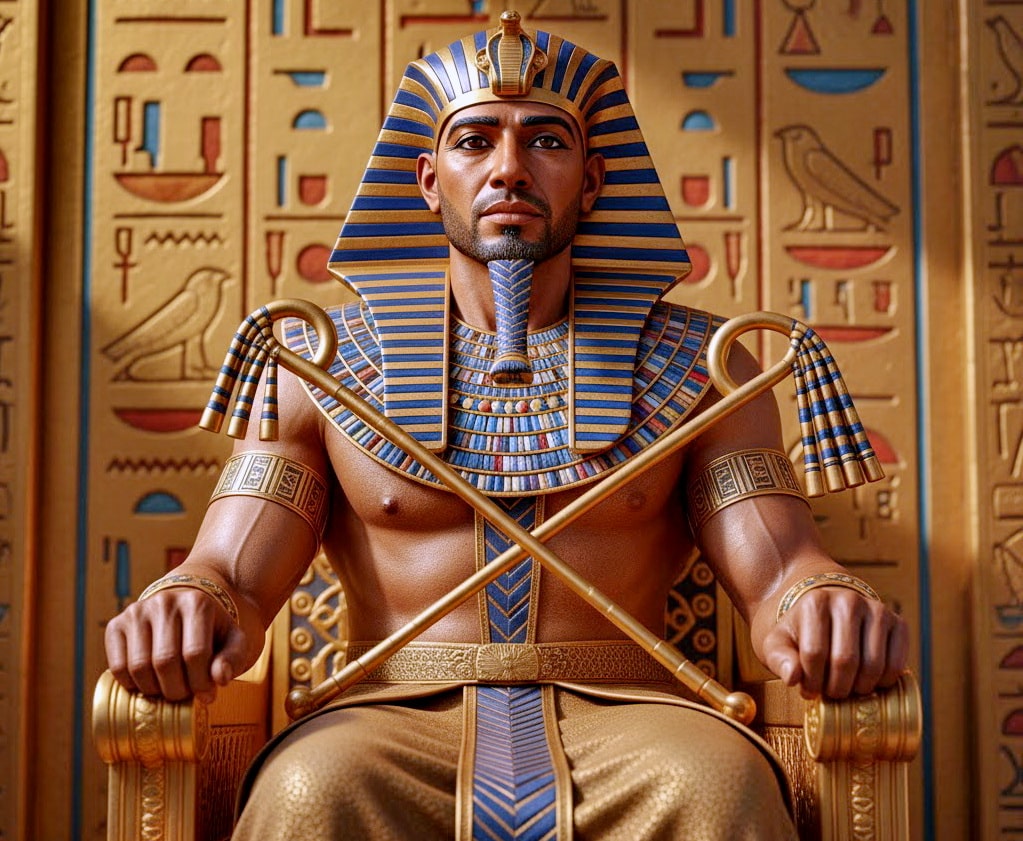
Ultimately, the resolution of the Horus vs Seth struggle created the legal framework for all future Pharaohs. Every king who sat on the throne became a “Living Horus.” This ensured several things for Egyptian society:

  1. Stability: The transition from father to son was now a divine law.
  2. Identity: The Pharaoh was the bridge between the human world and the divine council.
  3. Unity: By acknowledging both the victory of Horus and the utility of Seth, the Egyptians balanced the “Two Lands.”

In summary, the Horus vs Seth saga is more than a story of sibling rivalry. It is a profound exploration of how societies manage power, law, and the inevitable presence of chaos. Because Horus won the eighty-year struggle, Egypt entered a period of unprecedented cultural and political stability that lasted for millennia.

Archaeological Evidence: From Papyri to Temple Walls

horus fighting evil

While the Chester Beatty Papyrus No. 1 gives us the most colorful narrative, it is not the only record of the Horus vs Seth struggle. Archaeologists have found traces of this conflict throughout the Nile Valley. Consequently, these findings prove that the myth was a living part of Egyptian life for over 3,000 years.

The Temple of Edfu: The Drama of Victory

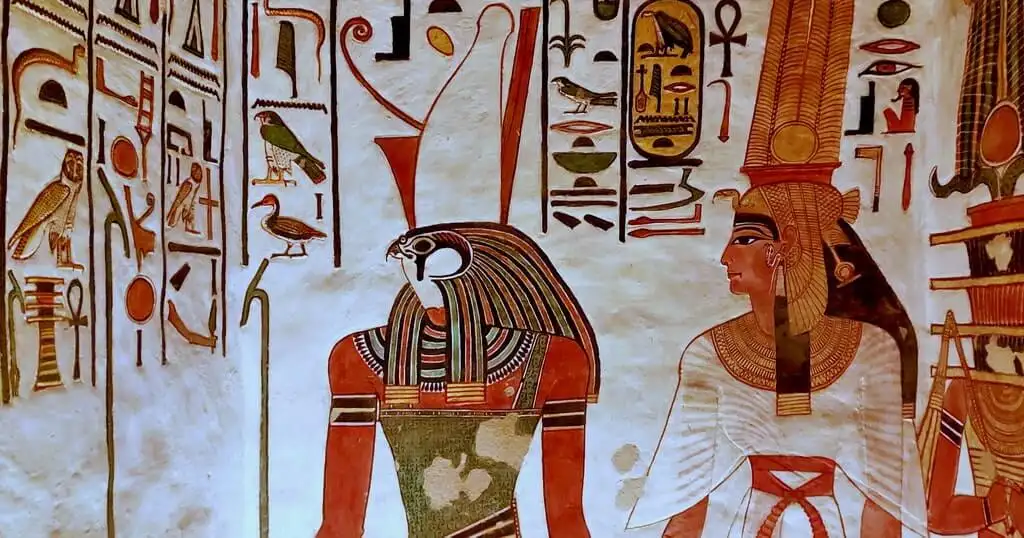
One of the most impressive sites is the Temple of Edfu, dedicated to Horus. The walls of this temple contain a massive “Sacred Drama” or play. Specifically, the reliefs depict the “Victory of Horus over his Enemies.”

In these scenes, Horus stands on a boat, harpooning a tiny, captive hippopotamus that represents Seth. Furthermore, the inscriptions describe the cheers of the crowd as Horus triumphs. This proves that the Horus vs Seth conflict was reenacted in public festivals to reassure the people that order was still in control.

The Pyramid Texts and Coffin Texts

Long before the New Kingdom papyri, the Pyramid Texts of the Old Kingdom mentioned the “two combatants.” Even then, the king identified himself with the “Eye of Horus” and sought protection from the “testicles of Seth.” Because these mentions appear in the earliest religious writings, we know that the Horus vs Seth rivalry is one of the oldest themes in human literature.

The Story of the Two Brothers: A Guide to the Tale of Bata and Anubis

The Story of the Two Brothers is a sweeping epic of betrayal, supernatural endurance, and...
Related post
FUN

Theological Nuances: Why Seth Wasn’t “Evil”

Theological Nuances Why Seth Wasn’t Evil

To truly understand this pillar, you must look at the nuance of Ancient Egyptian morality. In many modern religions, the “villain” is simply destroyed. However, the Horus vs Seth resolution is different.

The Necessity of Chaos

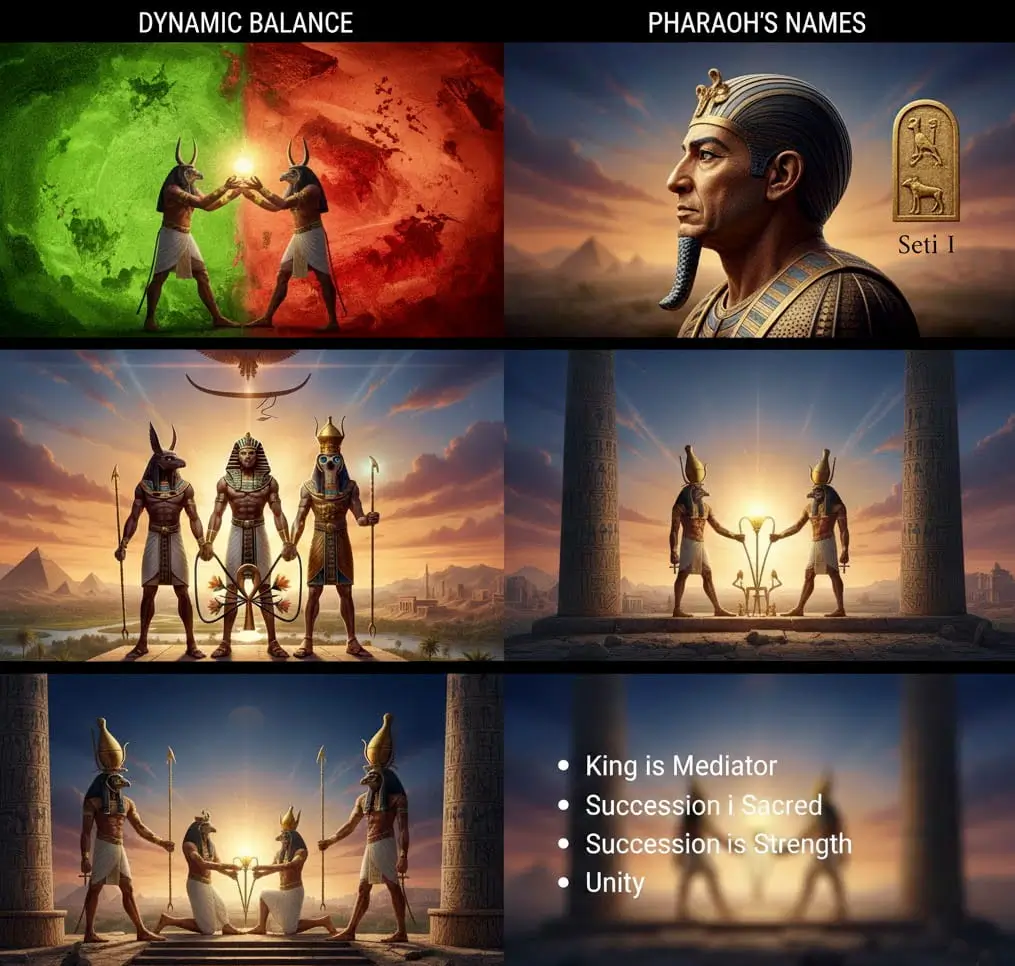
In the Egyptian mind, Seth was not “Satan.” He was a necessary force. Because the desert is harsh, the Egyptians believed the king needed a touch of Seth’s “Red Land” energy to be a strong military leader. As a result, many Pharaohs, such as Seti I and Ramesses II (the Ramesside kings), actually took Seth’s name as their own.

By integrating Seth, the Egyptians taught a vital lesson: you do not defeat chaos by ignoring it. You defeat chaos by bringing it into the service of order. Thus, the Horus vs Seth struggle ends with a “Dynamic Balance” rather than a total execution.

Political Legacy: The “Living Horus”

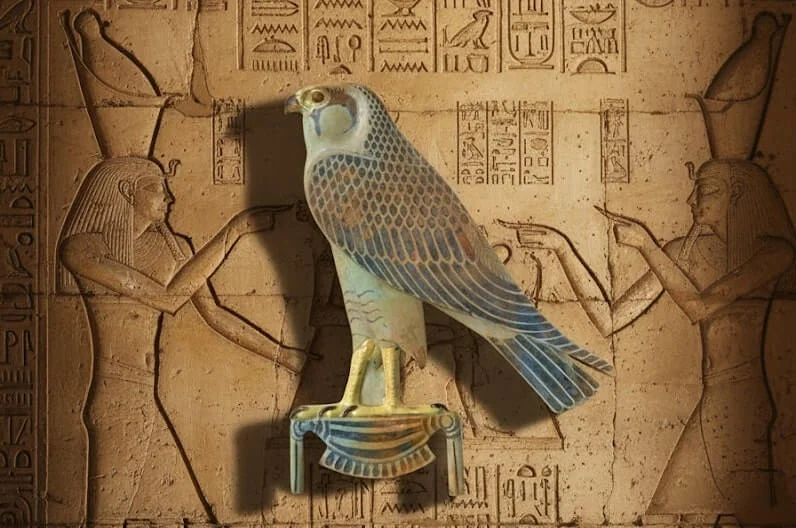
The Golden Horus Title - Hr Nbu

Finally, we must address the political impact of this myth. The Horus vs Seth trial established the “Office of the King” as a divine institution.

The Sema-Tawy: The Union of Two Lands

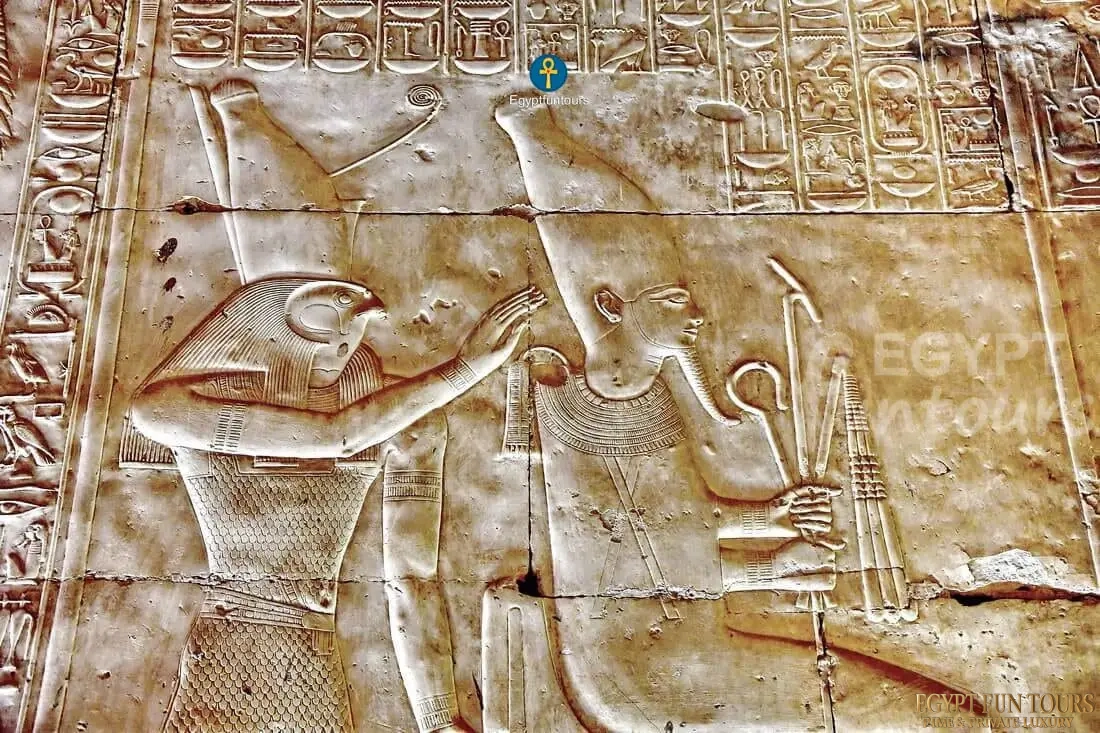
Throughout history, the coronation of a Pharaoh involved the Sema-Tawy ritual. In this ceremony, the “Two Powerful Ones” (Horus and Seth) are shown tying the papyrus and lotus plants around the symbol for “Union.” This imagery sent a clear message to the Egyptian people:

  1. The King is the Mediator: He is the only one who can keep these two warring gods at peace.
  2. Succession is Sacred: To challenge the Pharaoh’s son is to challenge the verdict of the Ennead.
  3. Unity is Strength: Egypt is only strong when the “Black Land” (Horus) and the “Red Land” (Seth) work together.

Hathor, Sekhmet, and the Volatile Eye of Ra: Dual Power for Political Control

The pharaohs used the terrifying dual nature of the Volatile Eye of Ra as a...
Related post
FUN

The Eternal Relevance of Horus vs Seth

Chaos vs. Order; The Contendings of Horus and Seth

Ultimately, the Horus vs Seth saga is a story about the birth of law. It shows a civilization moving away from the “rule of the jungle” and toward a system of courts, evidence, and divine justice.

Because the Egyptians documented this 80-year struggle so thoroughly, we gain a window into their deepest values. They valued lineage, they respected cunning, and they understood that peace is a fragile balance between opposing forces.

In summary, every time you see the Great Pyramids or a golden mask of a Pharaoh, you are looking at the legacy of this myth. The Horus vs Seth battle didn’t just end in the courtroom of the gods—it built the longest-lasting civilization in history.

Key Takeaway Table for Quick Reference

Mythic Element Political Meaning
Murder of Osiris The disruption of legitimate power.
80-Year Trial The importance of legal process over violence.
The Lettuce Incident The triumph of intelligence over brute force.
Final Coronation The birth of the Pharaonic lineage.
Integration of Seth The use of power for protection rather than destruction.

FAQs: The Horus vs Seth Rivalry

God Horus

1. Who won the battle between Horus and Seth?

Horus officially won the battle and the right to the throne. After eighty years of legal disputes and physical trials, the council of the gods (the Ennead) ruled in his favor. However, the victory was a compromise. While Horus became the King of the Earth, Seth was not destroyed. Instead, the sun god Ra took Seth into the sky to serve as his protector and the god of thunder.

2. Why did Horus and Seth fight for 80 years?

The fight lasted eighty years because the gods could not agree on the law of succession. Initially, Horus claimed the throne because he was the son of the previous king, Osiris. Conversely, Seth argued that he should rule because he was the elder brother and physically stronger. This deadlock between “right of birth” and “right of might” took nearly a century of divine litigation to resolve.

3. What is the “Lettuce Incident” in the Horus vs Seth myth?

The “Lettuce Incident” was a strategic psychological battle. Seth attempted to humiliate Horus to prove dominance. However, Horus and his mother, Isis, tricked Seth by placing Horus’s seed on Seth’s favorite food—lettuce. When the gods called for the seed to appear, it emerged from Seth, proving that Horus had outsmarted his uncle. This incident essentially served as a legal “checkmate” in the trial.

4. What happened to Horus’s eye during the struggle?

During one of their many fights, Seth tore out Horus’s left eye and broke it into pieces. This eye represented the moon. Later, the god Thoth (or Hathor, in some versions) healed and restored the eye. This restored eye became the Wadjet or the “Eye of Horus,” one of the most powerful symbols of protection and healing in Ancient Egyptian culture.

5. What is the significance of the “Contendings of Horus and Seth” papyrus?

The Chester Beatty Papyrus No. 1 is the primary source for this myth. It is significant because it is written in a satirical and humorous tone, which was rare for ancient religious texts. It provides a rare look at the human-like flaws of the gods and serves as a foundational text for understanding Egyptian legal philosophy and royal lineage.

6. Did Seth kill Osiris?

Yes, the entire Horus vs Seth conflict began because Seth murdered his brother, Osiris. Seth was jealous of Osiris’s power and drowned him in the Nile (later hacking his body into pieces). This act of “regicide” (killing a king) was the original sin that Horus had to avenge to restore order to the universe.

7. How did the Horus vs Seth myth influence the Pharaohs?

The myth established that every Pharaoh was a “Living Horus.” Consequently, the king was seen as the legitimate protector of Egypt who had successfully overcome the forces of chaos. The coronation rituals and the symbols of the crown were all based on the final resolution of the Horus vs Seth trial, ensuring a stable transition of power from father to son.

Discover Egypt gems in 7 days honeymoon adventure, visit ancient Egypt attractions in Cairo & Luxor, then move to Hurghada to enjoy Red Sea holidays...
Live across the immortal wonders of these blessed lands....
13-day Egypt guided tour package - Egypt Fun Tours

Easily the best two days of the year!

We were doing the 14-day Mediterranean cruise and were in Egypt for two days. I was searching the internet for about 4 days and finally found Egypt Fun Tours as my guide in Egypt. It ended up being the best 2 days of the entire cruise trip. Since this is

More »

Great Walking Tours!

My husband & I were very very happy with the walking tour we took with Egypt Fun on Nov 26. Our guide (Manal) was amazing & very very knowledgeable. Thanks to Manal, we were able to really get a very good understanding of the city, its history & its great

More »

Valley of the Kings, Hepchepsut

I never had a more positive experience and educational time than this tours. Learning about a variety of kings and queens was amazing! The tour guide was super nice and helped me and my friend every step of the way! Including bargaining for a few souvenirs! I will never forget

More »

Amazing Experience

Hamada was incredible! So knowledgeable and kind. He had information about every item, street corner, and relic we looked at. Any questions we had, he had answers! He even made sure to give us tips while walking through the crowds so that we would feel more comfortable when being approached

More »

7 night Egypt Experience Cairo, Aswan, Luxor

Trip of a lifetime!! COVID SAFE!! Knowledgeable guide who loves to share the magic of Egypt with tourists. Friendly and accommodating. This company goes to the extreme to make clients feel welcome and help them. A family company that takes good care of its support staff. Must book the 7-night

More »
Isis with wings

Top-rated Tour Packages

Isis with wings