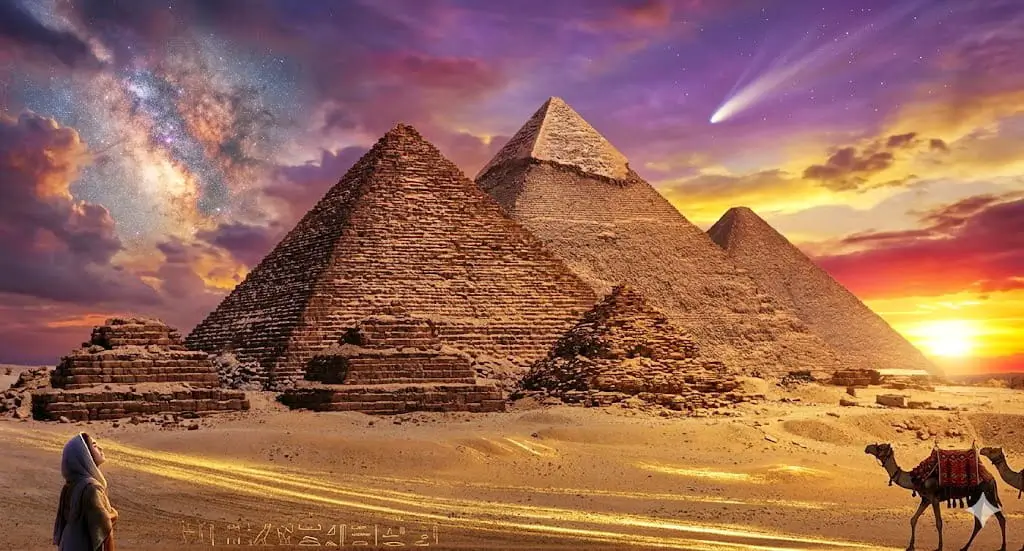
Standing prominently in the heart of the Giza Necropolis, the Pyramid of Khafre is an architectural marvel that often rivals the Great Pyramid in grandeur. Although it is technically the second-largest pyramid, it sits on higher ground. Consequently, it appears to dominate the desert plateau, creating a powerful visual impact. Built for Pharaoh Khafre, a ruler of the 4th Dynasty, it represents the peak of Old Kingdom engineering and divine kingship.
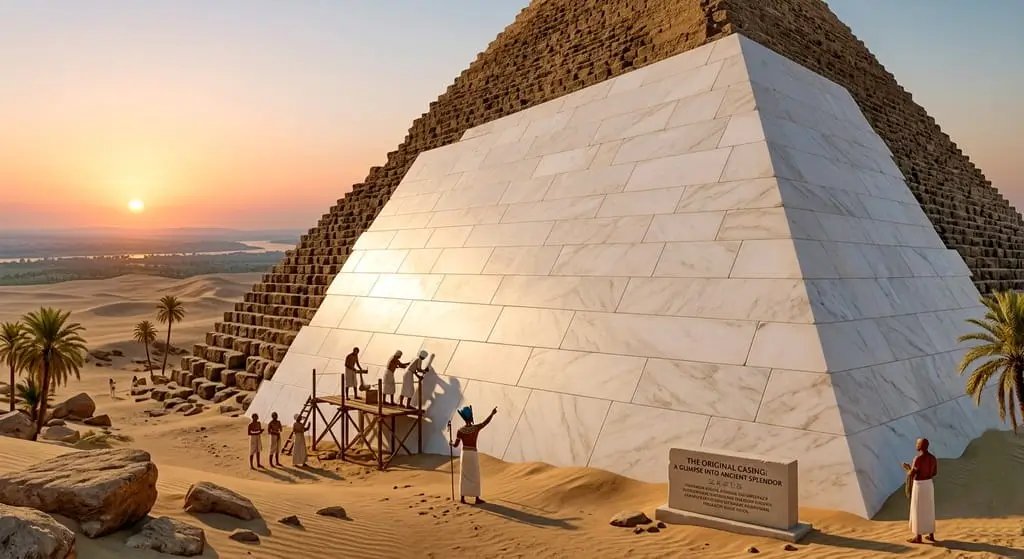
Unlike its neighboring structure, the Pyramid of Khafre retains a stunning secret at its peak. A distinct layer of its original, polished Tura limestone casing still clings to the apex. As a result, visitors get a rare glimpse into what these monumental tombs originally looked like—gleaming beacons under the sun. Today, the Pyramid of Khafre serves as the authoritative anchor for the complex that includes the Great Sphinx. It invites travelers to move beyond the tourist crowds and explore the sophisticated religious landscape of ancient Egypt.
The Historical Foundation of the Pyramid of Khafre
The story of the Pyramid of Khafre belongs to Egypt’s “Golden Age” of pyramid construction. Pharaoh Khafre (also known as Chefren) was the son of Khufu. He ruled for approximately 25 years during the mid-26th century BCE. Consequently, when he came to power, the Giza Plateau was already marked by his father’s immense achievement.
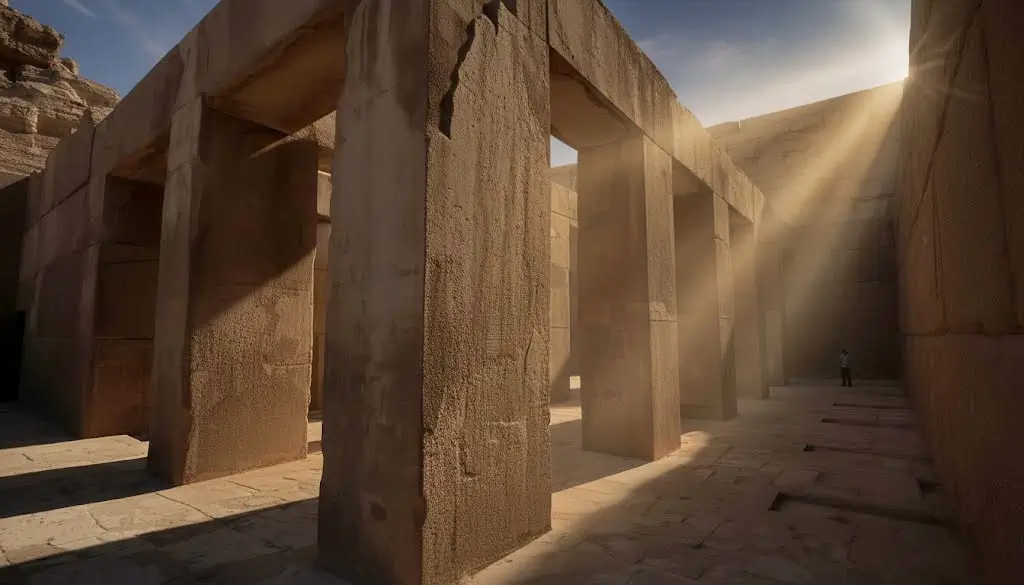
To establish his own legacy, Khafre commissioned a pyramid that honored tradition while asserting his unique power. While slightly smaller than his father’s Great Pyramid, the plan was just as ambitious. Furthermore, he established a sophisticated complex surrounding his tomb. The Pyramid of Khafre was not a solitary monument. Instead, it was the center of a spiritual machine that included a mortuary temple, a causeway, and a massive “Valley Temple.” It is this complete, authoritative layout that makes Khafre’s legacy essential to understanding ancient Egyptian religious customs.