The Pyramid of Pepi II: The Twilight of the Old Kingdom

The Pyramid of Pepi II represents the final architectural masterpiece of Egypt’s Old Kingdom, marking the transition from centralized power to regional decentralization. During his legendary 94-year reign, Pepi II standardized the Pyramid Texts, filling his burial chamber with nearly 700 blue-pigmented spells to ensure his celestial resurrection. Although environmental shifts and economic strain eventually caused the empire to decline, the complex remains a technical triumph, featuring innovative satellite pyramids for his queens and a sprawling mortuary temple that preserved the sacred traditions of the 6th Dynasty.

The Pyramid of Pepi II: A Monument to an Ending

The Pyramid of Pepi II marks the final, grand expression of Egypt’s Old Kingdom. While the Great Pyramids of Giza symbolize raw Pharaonic ambition, this South Saqqara complex represents a sophisticated theological climax. King Pepi II ascended the throne as a child and maintained his rule for nearly a century, making his reign the longest in human history. Consequently, his “House of Eternity” serves as a vital time capsule for the 6th Dynasty.

Furthermore, the interior of this monument contains a revolutionary spiritual technology. The burial chambers feature a massive “blue wall” of Pyramid Texts, consisting of nearly 700 religious utterances. These inscriptions functioned as a celestial map to guide the aging King toward immortality. Although the exterior has suffered from the passage of time, the internal artistry remains a masterpiece of ancient precision.

In this guide, we explore the legacy of Pepi II from an expert perspective. We will analyze the expansive library of spells, examine the unique tombs of his queens, and decode the architectural shifts that signaled the end of the Pyramid Age.

King Pepi II: The Man Behind the 94-Year Reign

Understanding the pyramid requires an investigation into the Pharaoh himself. Pepi II (Neferkare) navigated one of the most complex periods in Egyptian history. Because he ruled for over nine decades, his life bridged the gap between a stable, centralized empire and the eventual decentralization of the First Intermediate Period.

Initially, Pepi II relied on the guidance of his mother, Queen Ankhnesmeryre II, and his uncle, Djau. However, as he matured, he asserted his own authority over a sprawling bureaucracy. During his early years, he encouraged daring expeditions to the Land of Punt and the turquoise mines of Sinai. These missions brought immense wealth to the royal court and provided the exotic materials found within his funerary complex.

Nevertheless, the length of his reign eventually created significant challenges. As the King reached his eighties and nineties, the provincial governors (Nomarchs) began to seize more local power. Therefore, the Pyramid of Pepi II stands as a testament to a ruler who fought to maintain divine order even as the world changed around him.

FUN

Architectural Grandeur: The Design of the Pepi II Complex

Architectural Grandeur-The Design of the Pepi II Complex

The Pyramid of Pepi II represents the final peak of Old Kingdom architectural planning. Although the builders used a core of smaller, locally quarried limestone blocks, they encased the entire structure in high-quality Tura limestone. This choice ensured that the monument would shimmer under the desert sun, even if the internal structure remained more economical than the giants at Giza.

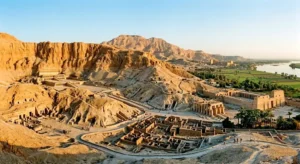
Beyond the pyramid itself, the mortuary complex spans a vast area in South Saqqara. The layout includes a Valley Temple, a massive open-air courtyard, and an inner sanctuary. To reach the burial site, visitors originally walked through a covered causeway that stretched nearly 400 meters. This path shielded the royal funerary procession from the public, creating a sense of sacred isolation as they approached the King’s final resting place.

Innovation in the Mortuary Temple

Within the mortuary temple, architects introduced several refinements that became the standard for late 6th Dynasty construction. For instance, the courtyard features 18 quartzite pillars, each meticulously carved with the King’s names and titles. Furthermore, the temple includes a dedicated “Sanctuary of the Five Statues.” This room served as the spiritual engine of the complex, where priests performed daily rituals to nourish the King’s ka throughout eternity.

FUN

Inside the Pyramid of Pepi II: A Celestial Library

The true mastery of this site lies beneath the surface. Once you descend the northern entrance passage, you enter a series of chambers that redefine ancient Egyptian funerary art. The architects transformed the burial chamber into a literal book of stone, ensuring that the King possessed every magical tool required for his resurrection.

The Expansion of the Pyramid Texts

The Pyramid of Pepi II contains the most extensive collection of Pyramid Texts ever discovered. While his predecessors used fewer than 300 spells, Pepi II’s scribes expanded the corpus to nearly 700 utterances. These inscriptions cover the walls in dense, blue-painted columns, creating a rhythmic visual environment. Because the scribes standardized the text layout, the spells flow logically from the “Offering Rituals” on the north wall to the “Ascension Spells” on the east wall.

In addition to the sheer volume of text, the artistic quality remains exceptional. The hieroglyphs exhibit a level of precision that demonstrates the court’s continued access to master craftsmen. Consequently, the chamber acts as a “theological encyclopedia,” preserving the total sum of Egyptian religious knowledge at the close of the Old Kingdom.

The Queens’ Pyramids: A Family Legacy in South Saqqara

The Queens' Pyramids, A Family Legacy in South Saqqara

The complex surrounding the Pyramid of Pepi II is unique because it honors the King’s royal family on an unprecedented scale. Architects constructed three smaller, independent pyramid complexes for his primary wives: Neith, Iput II, and Udjebten. This arrangement transformed South Saqqara into a massive family necropolis, ensuring that the King remained surrounded by his closest allies in the afterlife.

Among these, the Pyramid of Queen Neith remains the most historically significant. For the first time, a queen’s tomb included its own set of Pyramid Texts, a privilege previously reserved only for the Pharaoh. This innovation suggests that the royal family’s role in religious life expanded during Pepi II’s long reign. Consequently, these smaller monuments provide essential clues about the shifting social and spiritual hierarchy of the late 6th Dynasty.

Dahshur Pyramids: Where Pyramids Were Perfected

Escape the crowds at the Dahshur Pyramids, a true "hidden gem" just south of Saqqara....
Related post
FUN

The Twilight of an Empire: Decline and Environmental Shift

The Twilight of an Empire, Decline and Environmental Shift

While the Pyramid of Pepi II appears as a symbol of permanence, its construction coincided with a period of significant national stress. Historians often view this monument as the final achievement before the collapse of the Old Kingdom. Several factors contributed to this decline, many of which are visible in the archaeological record of the site.

Economic Strain and the Rise of Local Power

Because Pepi II ruled for over nine decades, the central government eventually struggled to maintain its authority. Local governors, known as Nomarchs, began to divert tax revenue away from the capital at Memphis to fund their own lavish tombs. As a result, the royal court lacked the resources to build another monument of this scale after Pepi II’s death. Therefore, the architectural ambition of the Pyramid of Pepi II represents a final, defiant display of royal power.

Climate Change and the “Low Niles”

Furthermore, modern geological surveys indicate that Egypt faced a series of catastrophic droughts during this era. Low Nile floods led to widespread famine, which undermined the Pharaoh’s status as the provider for his people. Some scholars believe these environmental pressures accelerated the political collapse that followed Pepi II’s reign. Consequently, this pyramid stands as the last major royal project before Egypt entered the decentralized era known as the First Intermediate Period.

The Pyramid of Unas: The Birthplace of the Pyramid Texts

The Pyramid of Unas is a revolutionary landmark in Saqqara, marking the first time in...
Related post
FUN

Visitor Guide: Exploring South Saqqara

In 2026, visiting the Pyramid of Pepi II offers a peaceful alternative to the busier sites in Northern Saqqara. Because the site is located further south, it receives fewer tourists, allowing for a more contemplative experience of the ancient ruins.

  • Accessing the Chambers: The Ministry of Tourism recently upgraded the lighting and ventilation inside the burial chambers. These improvements allow you to see the vibrant blue pigments of the Pyramid Texts with exceptional clarity.
  • The View from the Plateau: After exploring the interior, walk to the top of the nearby dunes. From this vantage point, you can see the entire family complex and the distant ruins of the pyramids of the Middle Kingdom, providing a sense of the site’s long history.
  • Photography Tips: Use a high-ISO setting for interior shots to capture the fine details of the hieroglyphs without using a flash. The soft, ambient light installed in late 2025 creates a dramatic effect for professional-grade photography.

The Enigma of Meidum Pyramid: Egypt’s Forgotten Stairway to the Stars

The Meidum Pyramid stands as Egypt's most significant "missing link," documenting the daring transition from...
Related post
FUN

FAQs: The Pyramid of Pepi II

1. Why is the Pyramid of Pepi II historically significant?

It represents the final major royal monument of the Old Kingdom. Because Pepi II ruled for nearly a century, his funerary complex serves as the ultimate evolution of 6th Dynasty architecture and religious literature before the central government collapsed.

2. Can I go inside the Pyramid of Pepi II?

Yes. In 2026, the burial chamber will be open to the public. Visitors can descend the northern passage to witness the extensive Pyramid Texts and the massive granite sarcophagus firsthand.

3. What are the Pyramid Texts found inside?

The Pyramid Texts are a collection of nearly 700 sacred spells and incantations. Scribes carved them into the walls to provide the King with the magical “passwords” and protections needed to transform into a celestial being in the afterlife.

4. How does this pyramid differ from the Pyramid of Unas?

While the Pyramid of Unas was the first to feature these texts, Pepi II’s version is far more extensive. Furthermore, the complex includes three additional small pyramids for his queens, making it a much larger family necropolis than the Unas site.

5. Is the pyramid in good condition?

The exterior has suffered significantly over 4,000 years and currently looks like a mound of rubble. However, the interior chambers are remarkably well-preserved, featuring sharp carvings and original blue pigments that remain vibrant today.

6. Where exactly is it located?

It is located in South Saqqara, approximately 3 kilometers south of the Step Pyramid of Djoser. It is a quieter, more remote area of the Saqqara plateau, perfect for those who want to avoid the main tourist crowds.

7. Who were the queens buried next to Pepi II?

Pepi II built three satellite pyramids for his wives: Neith, Iput II, and Udjebten. Notably, Queen Neith’s pyramid also contains Pyramid Texts, which were a revolutionary shift in Egyptian funerary tradition.

8. How long was the reign of Pepi II?

Historical records, such as the Turin King List, suggest he reigned for 94 years. This makes him one of the longest-reigning monarchs in human history, covering nearly the entire final century of the Old Kingdom.

9. What happened to Egypt after Pepi II died?

His death marked the end of the 6th Dynasty and the beginning of the First Intermediate Period. The central authority in Memphis dissolved, leading to a century of decentralized rule and regional conflict before the Middle Kingdom arose.

10. Do I need a special ticket to visit South Saqqara?

Typically, a standard Saqqara site ticket includes access to the general plateau, but always check with your Egypt Fun Tours guide. Some specific interior chambers in South Saqqara may require a supplementary pass or are included in “All-Access” premium packages.

Fascinating Egypt Tour of Cairo, Luxor, & Hurghada....
12 Day Egypt Tour Package of Cairo, Alexandria, and Sharm...
God_Anubis_Icon

Layover tour of Cairo Pyramids

On a recent trip, I had 8 hours from the time I landed in Cairo to when my next flight was scheduled to leave. Luckily, I arrived in the morning and left in the afternoon, so, not being one to sit around an airport for 8 hours, I visited the

More »
Premium Cairo Tour Package Egypt Fun Tours

THE MOST AMAZING TRIP

Hi Hamada! Sorry, we were so quick to say goodbye—my mom was fading 🙂 I just wanted to say thank you for THE MOST AMAZING trip… You thought of every detail, improvised, adapted, overcame every challenge, multitasked personalities, and did it all with grace, intelligence, and kindness. From the bottom

More »

Amazing layover Tour

We had 12 hour layover in Cairo, and our guide Hani waited patiently for us when we had a few visa issues entering the country! We got on our tour, and had the best experience ever! We saw the pyramids, the sphinx, Islamic Cairo and rode through the city! We

More »
God_Anubis_Icon

Top-rated Tour Packages

God_Anubis_Icon