Wadi el-Sebua: Exploring the Sun Temple of Ramesses II in Nubia

The Temple of Wadi el-Sebua, or the "Valley of the Lions," is a spectacular New Kingdom monument built by Ramesses II. It features a famous avenue of sphinxes leading to a sanctuary carved directly into the desert rock. This "hidden gem" also reveals a unique history, as early Christians later converted the space into a church, layering Coptic art over Pharaonic reliefs. Saved by a massive UNESCO rescue mission, it remains an essential stop for travelers seeking the most well-preserved and atmospheric sites along Lake Nasser.

Wadi el-Sebua: The Majestic Valley of the Lions

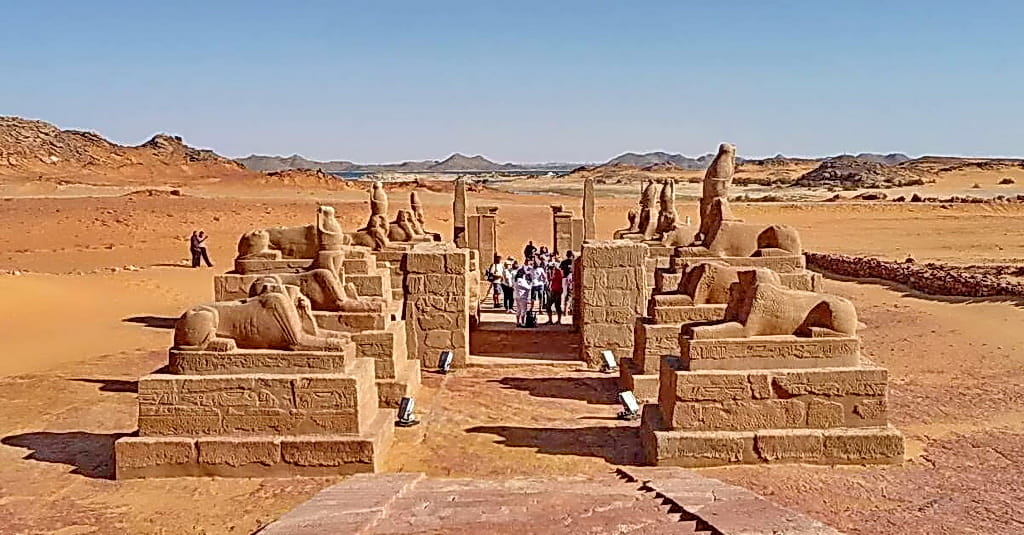
Welcome to your complete guide to Wadi el-Sebua, one of the most atmospheric and enigmatic sites in all of Ancient Egypt. Deep in the heart of Nubia, this spectacular monument stands as a testament to the grand vision of Ramesses II. While many travelers flock to Abu Simbel, those who journey here discover a unique landscape where history and myth truly come to life. In fact, the name itself—Arabic for the “Valley of the Lions”—perfectly describes the stunning avenue of sphinxes that guards the temple entrance.

Furthermore, Wadi el-Sebua is more than just an architectural wonder; it is a story of survival. Originally built in the 13th century BC, the temple faced total destruction during the construction of the Aswan High Dam. Fortunately, a massive international rescue mission successfully relocated the structure to its current home above Lake Nasser. Today, it offers a rare look at the transition from Pharaonic worship to early Christian heritage.

In this authoritative guide, we will explore every detail of this rock-cut masterpiece. First, we examine the artistic precision of the New Kingdom reliefs. Then, we reveal the secret “Coptic” paintings hidden within the sanctuary walls. Finally, we provide the essential travel logistics you need to experience this “hidden gem” on your next luxury tour.

FUN

Wadi El-Sebua: The 19th Dynasty and Nubian Expansion

Wadi El-Sebua The 19th Dynasty and Nubian Expansion

Historically, Ramesses II constructed Wadi el-Sebua to solidify Egyptian control over the Nubian region. During the 19th Dynasty, Pharaohs viewed Nubia as more than a source of gold and resources; they saw it as a vital spiritual extension of the Egyptian empire. Consequently, grand monuments in this territory served as constant reminders of the Pharaoh’s divine right to rule.

Moreover, this temple formed part of a larger building program that honored the gods while immortalizing the King’s military triumphs. Specifically, Ramesses II dedicated Wadi el-Sebua to the gods Amun-Re and Re-Horakhty. However, as you explore the reliefs, you will notice that the artists often depicted Ramesses II as a god among gods, showcasing his unique status in the ancient world.

The Divine Connection

Within the temple’s narrative, the king acts as the primary mediator between the heavens and the earth. Therefore, the artwork achieves several goals:

  • Legitimization: It confirms the King’s authority through divine favor.
  • Theology: It emphasizes the solar aspects of the gods, which played a crucial role in Nubian worship.
  • Legacy: It ensures that people speak the Pharaoh’s name for eternity.

As a researcher and professional guide, I often point out that the artistic style here represents the “peak” of the 13th-century BC aesthetic. While workers built the outer pylons from sandstone, they carved the inner sanctuary directly into the living rock, creating a seamless blend of architecture and nature. Next, we will examine the physical layout of the site, starting with the iconic avenue that gives the temple its name.

FUN

The Avenue of Sphinxes: Walking Through the “Valley of the Lions”

The Avenue of Sphinxes Walking Through the Valley of the Lions

Immediately upon arrival, the iconic Avenue of Sphinxes captures your attention. This grand entryway gives the temple its modern name, as the rows of stone guardians resemble a pride of lions watching over the desert sands. Unlike the human-headed sphinxes you see at Giza, these statues often feature the bodies of lions with the heads of either hawks or the Pharaoh himself.

As you walk between these ancient guardians, you follow the same path that priests and royalty took thousands of years ago. Specifically, the avenue consists of two distinct sections:

  • The Outer Court: Here, you find sphinxes with hawk heads, representing the god Re-Horakhty.

  • The Inner Court: Closer to the pylon, the sphinxes take on the features of Ramesses II, wearing the sacred Double Crown of Egypt.

The Pylon and Colossi

Beyond the avenue, a massive mud-brick and stone pylon marks the entrance to the first courtyard. Originally, four colossal statues of Ramesses II stood against this pylon, though only one remains standing today. Interestingly, this lone statue perfectly demonstrates the “blocky” yet powerful artistic style of the 19th Dynasty. Furthermore, the pylon walls contain detailed carvings of the King smiting his enemies, a classic theme designed to show the Pharaoh maintaining Maat, or divine order.

Once you pass through this gateway, the transition from open sunlight to the shaded courtyards begins. However, the most impressive transition occurs further inside, where the architecture shifts from free-standing stone to a temple carved entirely into the mountain. Next, we will step inside the Rock-Cut Sanctuary to explore the vibrant reliefs and the unique Christian history hidden within.

Abydos Temple: The Sacred Home of Osiris & the Masterpiece of Seti I

Take a pilgrimage to Abydos, the sacred "home" of the god Osiris and the spiritual...
Related post
FUN

The Inner Sanctuary: Where Rock and Ritual Meet

The Inner Sanctuary Where Rock and Ritual Meet

Transitioning into the heart of the temple, you leave the open courtyards and enter the Rock-Cut Sanctuary (the Speos). Here, the architects carved the chambers directly into the sandstone mountain, a signature style of the New Kingdom’s Nubian monuments. By moving from the bright desert sun into these cool, dimly lit halls, you experience the same sense of mystery that ancient worshippers felt.

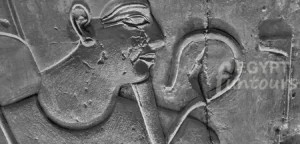
Inside, twelve square pillars support the ceiling of the transverse hall. Notably, the front of each pillar features a colossal figure of the King in the form of Osiris. These statues reinforce the Pharaoh’s eternal presence within the sacred space. Furthermore, the walls display high-quality reliefs showing Ramesses II offering incense, libations, and flowers to various deities, primarily Amun-Re and Re-Horakhty.

The Coptic Transformation: A Layer of History

The Coptic Transformation A Layer of History

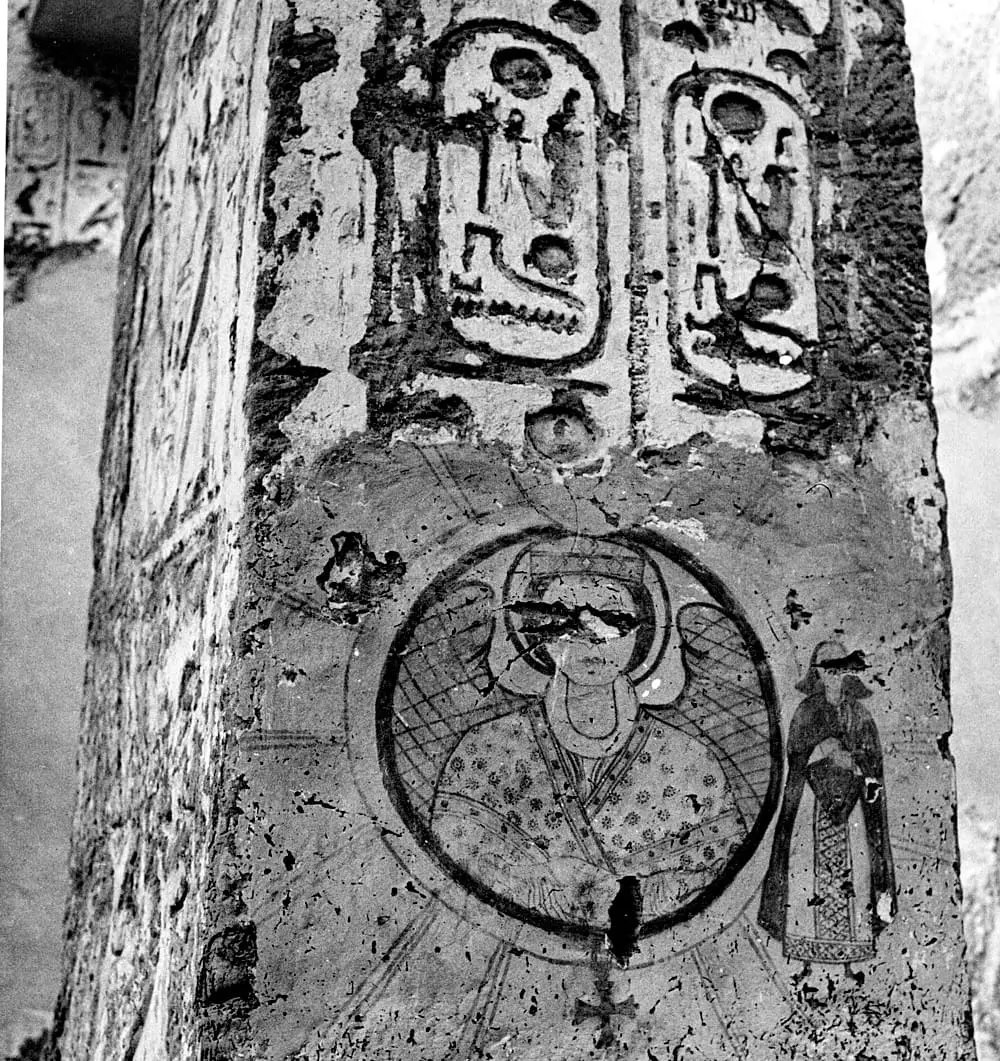
Perhaps the most fascinating feature of the inner sanctuary is the evidence of its later use. During the early Christian era, local communities converted the temple into a church. To adapt the space for Christian worship, they covered the original Pharaonic reliefs with a layer of plaster and painted Christian iconography over them.

Today, visitors can witness a remarkable historical coincidence:

  • The Overlap: In one famous scene, the plaster has peeled away to reveal Ramesses II offering a bouquet.
  • The Saint: Directly on top of the original god, the Coptic painting depicts Saint Peter holding the keys to heaven.
  • The Visual Result: It appears as if the great Pharaoh is presenting an offering to the Christian Saint.

This unique layering makes Wadi el-Sebua an essential stop for anyone interested in the religious evolution of Egypt. However, the temple’s journey did not end in antiquity. Next, we will discuss the incredible 20th-century effort to save this monument from the rising Nile.

Beit el-Wali: The Vibrant Military Masterpiece of Ramesses II

The Temple of Beit el-Wali, the oldest of the Nubian monuments built by Ramesses II,...
Related post
FUN

The UNESCO Rescue: A Modern Engineering Miracle

The UNESCO Rescue A Modern Engineering Miracle

Consequently, the construction of the High Dam in the 1960s threatened to bury Wadi el-Sebua under the massive reservoir of Lake Nasser forever. To prevent this cultural tragedy, the Egyptian government and UNESCO launched an international appeal to save the Nubian monuments. While the world focused heavily on Abu Simbel, the relocation of Wadi el-Sebua required equally impressive technical precision.

Specifically, French engineers spearheaded the mission to save this “Valley of the Lions.” Unlike other temples that teams dismantled block by block, the rock-cut nature of this sanctuary presented a unique challenge. Therefore, the rescue team had to move the entire interior structure in large sections to preserve the delicate Coptic paintings and Pharaonic reliefs.

Relocation by the Numbers

Today, the temple sits on much higher ground, approximately 4 kilometers west of its original location. The rescue mission achieved several milestones:

  • The Distance: Engineers moved the structure nearly 4 kilometers to ensure it remained safely above the new water levels.
  • The Grouping: To create a better experience for travelers, authorities relocated the smaller Temple of Dakka and Temple of Maharraqa to the same site.
  • The Preservation: By moving the rock-cut sections carefully, experts kept the 3,500-year-old pigments intact for future generations.

Now, visitors can explore these three temples in one location, often referred to as “New Wadi el-Sebua.” As you stand at the new site, you can look out over the vast expanse of Lake Nasser and appreciate the scale of the effort required to keep this history accessible. Next, we will conclude this guide with practical travel tips and logistics to help you plan your visit to this extraordinary site.

The Temple of Kom Ombo: The Symmetry of Duality

The Temple of Kom Ombo stands as a unique architectural marvel on the banks of...
Related post
FUN

Planning Your Visit: Logistics and Expert Travel Tips

Planning Your Visit Logistics and Expert Travel Tips

Ultimately, reaching Wadi el-Sebua requires a bit of planning, but the reward is a tranquil experience far from the crowded tourist hubs. Because the temple sits on the remote banks of Lake Nasser, you cannot reach it by traditional land transport from Aswan. Instead, you must approach the site by water, which adds to the sense of adventure and discovery.

How to Reach the Valley of the Lions

Currently, the most popular and luxurious way to see the temple is via a Lake Nasser Cruise. Typically, these cruises run between Aswan and Abu Simbel, stopping at various “New Nubia” sites along the way.

  • Cruise Itineraries: Most four-day or five-day cruises include a dedicated morning stop at Wadi el-Sebua.
  • The Walk: Once your boat docks, you will enjoy a short, scenic walk through the desert sand to reach the Avenue of Sphinxes.
  • Private Boats: For those seeking a more tailored experience, private charters offer flexible timing to avoid other tour groups.

Best Time for Photography and Exploration

Best Time for Photography and Exploration

To capture the best cinematic images for your own collection, timing is everything. During the early morning or late afternoon, the low sun casts long shadows behind the sphinxes, highlighting the rugged textures of the sandstone.

  • The Golden Hour: The warm light enhances the gold and ochre tones of the desert, making the “Valley of the Lions” look truly majestic.
  • Seasonal Advice: Visit between October and April to enjoy comfortable walking temperatures, as the Nubian sun becomes quite intense during the summer months.

Why Wadi el-Sebua Belongs on Your Itinerary

Why Wadi el-Sebua Belongs on Your Itinerary

In summary, Wadi el-Sebua offers a rare combination of Pharaonic grandiosity, early Christian history, and modern engineering success. By exploring this site, you gain a deeper understanding of how Ramesses II transformed the landscape of Lower Nubia and how international cooperation saved that legacy for the world.

Whether you are a dedicated researcher of ancient history or a traveler seeking the most beautiful “hidden gems” of Egypt, this temple will leave a lasting impression. We invite you to step off the beaten path and walk the Avenue of Sphinxes yourself.

Are you ready to see the Valley of the Lions in person? Contact us today to include Wadi el-Sebua in your next custom Egyptian journey.

Discover the wonders of ancient and modern Egypt....
Witness the best attractions in Luxor and Aswan....
FUN
God_Anubis_Icon

Islamic cairo and khan el khalili- great tour

Wonderful tour with the guide Hamada. I did not feel rushed at all. He explained a lot of facts about the city, the mosque, the water storage room, and also brought me to no-hassle shops. He picked a great place to eat and have Turkish coffee and a cold lemon

More »

Goes well beyond “tour”

I am tempted to say “my friend Hani” runs an amazing service, because that is how he makes you feel. I first went on the 9-hour layover tour in summer 2011. Hani and driver picked me up at the airport at 3am, and by the time I left at noon

More »

Excellent Tour

Really excellent tour from Mohamed, and we learned so much about Egypt and went to places we never would have found as tourists at home. My girlfriend had a 12 hour stop over on the way to Ethiopia and it was the perfect way to see Cairo. I hope people

More »
Souqs and Markets in Egypt - Egypt Fun Tours

Cairo walking tours

After a rocky start (the driver had been in an accident on his way to pick me up,) the company very quickly sent another driver/guide named Mohammed, who was a real pro. Thoroughly enjoyed my first day in Egypt!

More »

Very Considerate and Helpful

Guide and driver were on time, open to my requests and took care that I felt safe and saw the Pyramids and parts of old cairo during my less than 24 hour stay between flights. Office staff were great in communicating by email before and during the trip.

More »
God_Anubis_Icon

Top-rated Tour Packages

God_Anubis_Icon